

The first stalls on Temple Street go up around 14:00, but the market only earns the trip after dark, when the food stalls inside the Jordan Road arch are frying skewers and the claypots at the far end are going on the charcoal. In between are 900 metres or so of T-shirts, phone cases, fortune tellers and one of the oldest temples in Kowloon.
Temple Street Night Market (廟街夜市) runs along Temple Street in Jordan and Yau Ma Tei, Kowloon, every night of the year, and walking it costs nothing. Stalls trade from about 14:00 until about 23:00, and the street is at full strength from 19:00 to 22:00. Take the MTR to Jordan station, Exit A, for the southern arch on Jordan Road, or to Yau Ma Tei station, Exit C, for the northern end and the Tin Hau temple.
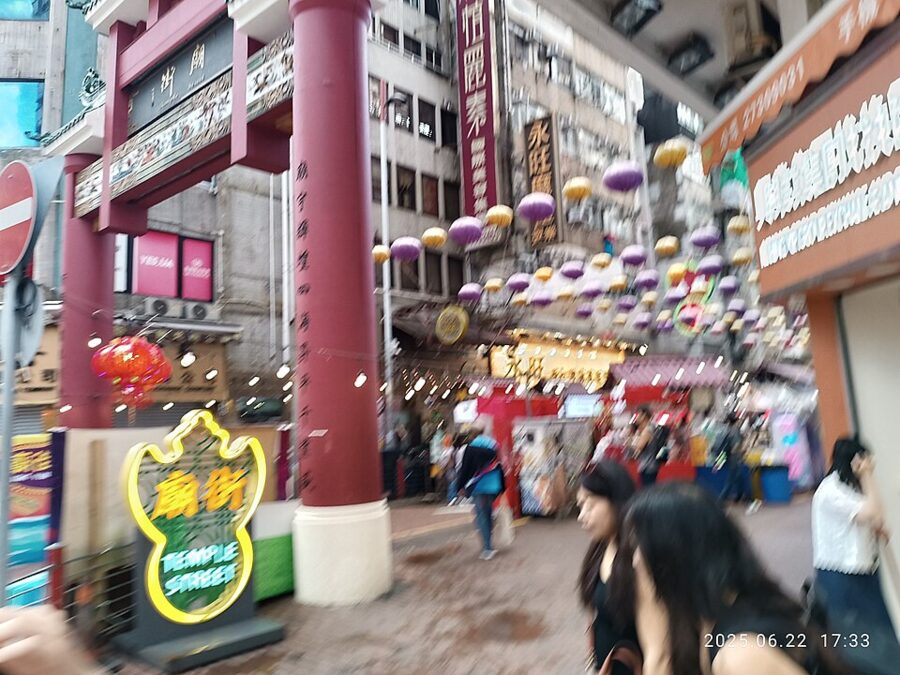
Come for dinner and an hour’s walk, not for serious shopping. The food is the reason to go: snack stalls at the Jordan end, wok dishes and seafood at the Woosung Street cooked food hawker bazaar one block east, and claypot rice at the Yau Ma Tei end. The goods are cheap and cheerful, and fine for small souvenirs; anything branded, electronic or sold as real jade is a different matter.
I’d pick a weeknight and arrive around 18:30: early enough to eat before the queues, late enough that every stall is lit. Allow two hours for the food, the walk and the temple end. If the No. 8 typhoon signal is up, the stalls do not open.
In this article
How the street is laid out
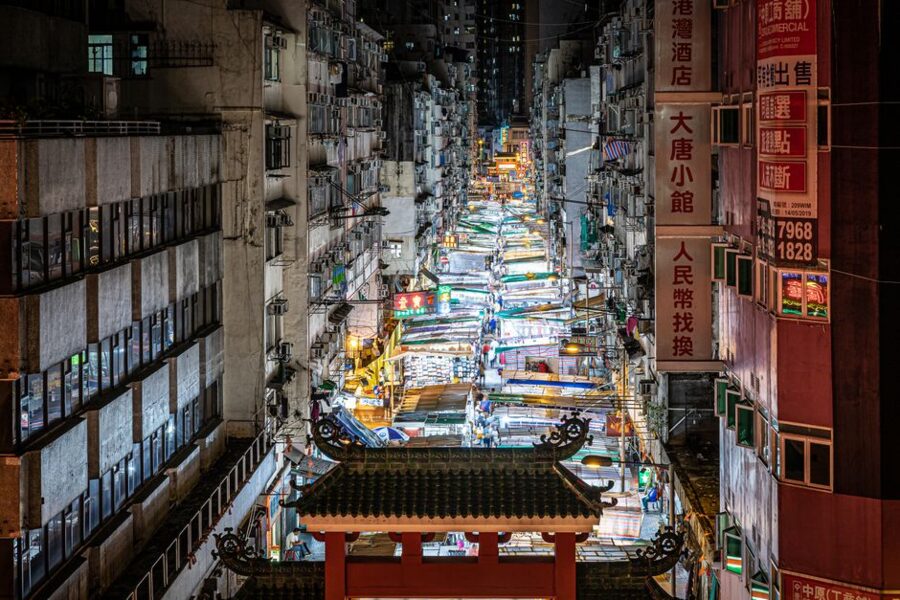
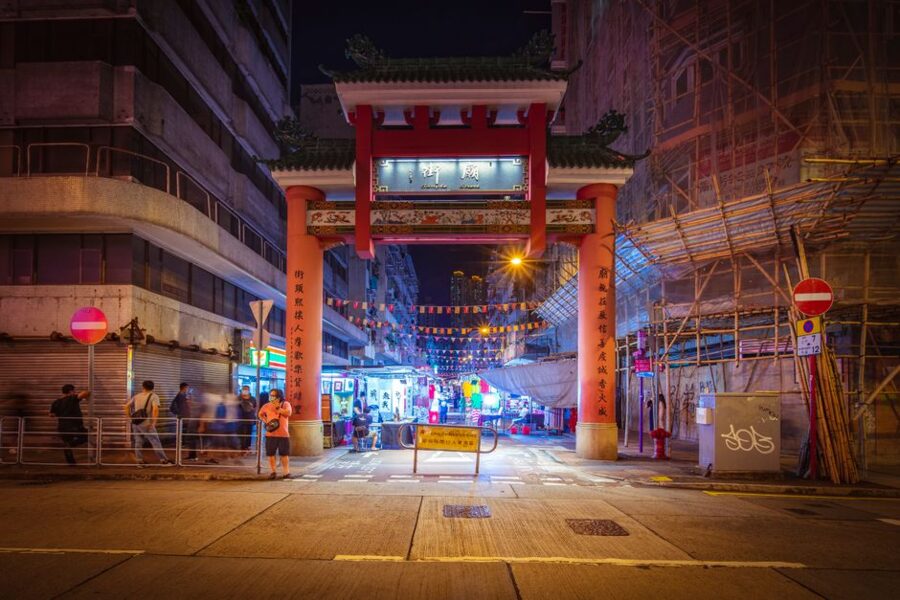
Temple Street (廟街) runs north from Jordan Road to Man Ming Lane, and the Tin Hau temple complex sits across it at Public Square Street, splitting the market in two. The southern half, from Jordan Road to Kansu Street, is the main market, with a red arch at each end. North of the temple the street is quieter, with restaurants rather than stalls.
Walk it south to north and the order is food first, shopping second, temple and fortune tellers last, with claypot rice waiting at the far end. The table below is the evening in the order I would do it.
| Time | What is happening |
|---|---|
| 08:00–17:00 | Tin Hau temple open (Tung Wah Group of Hospitals hours) |
| 14:00 | Stalls start setting up; the food street at the Jordan Road arch opens |
| 17:00 | Wing Fat in the Woosung Street bazaar starts dinner service |
| 17:30 | Hing Kee starts its evening claypot service at the Yau Ma Tei end |
| 19:00–22:00 | The market at its fullest; fortune tellers and singers out |
| 23:00 | Stalls close and pack down |
If you want the temple, go before 17:00, then come back for dinner. Its gates shut well before the market gets going.
The stalls: what is sold and how to haggle
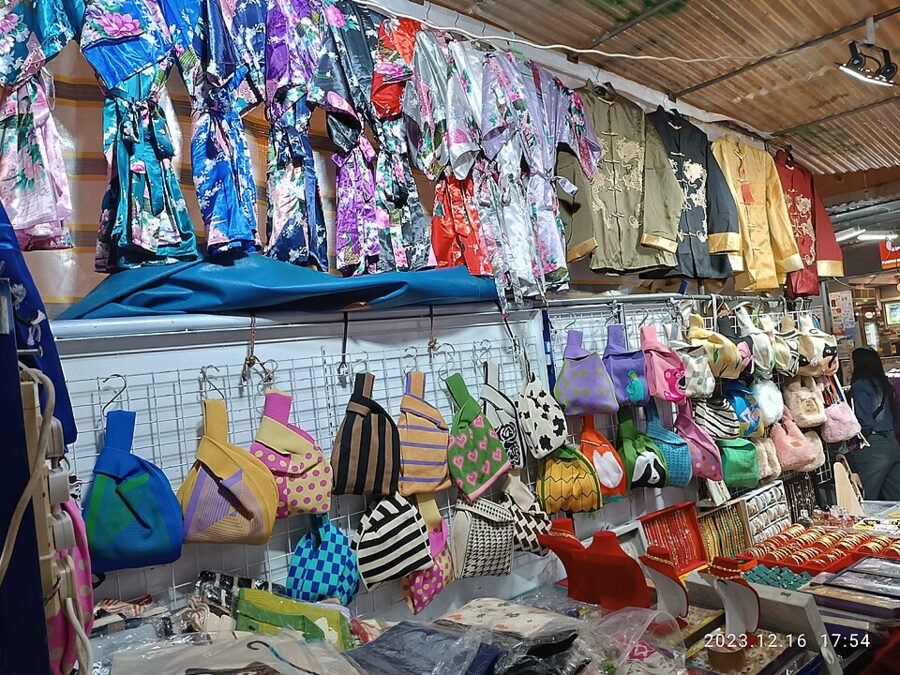
The stock is the same across most stalls: T-shirts with Hong Kong slogans, magnets and keyrings, chopstick sets, bags, scarves, sunglasses, phone cases and chargers, watches, paintings, and a few tables of second-hand oddments and jade-coloured trinkets. Temple Street was long nicknamed Men’s Street (男人街) for its stalls of men’s clothes and gadgets, though today it sells to everyone.
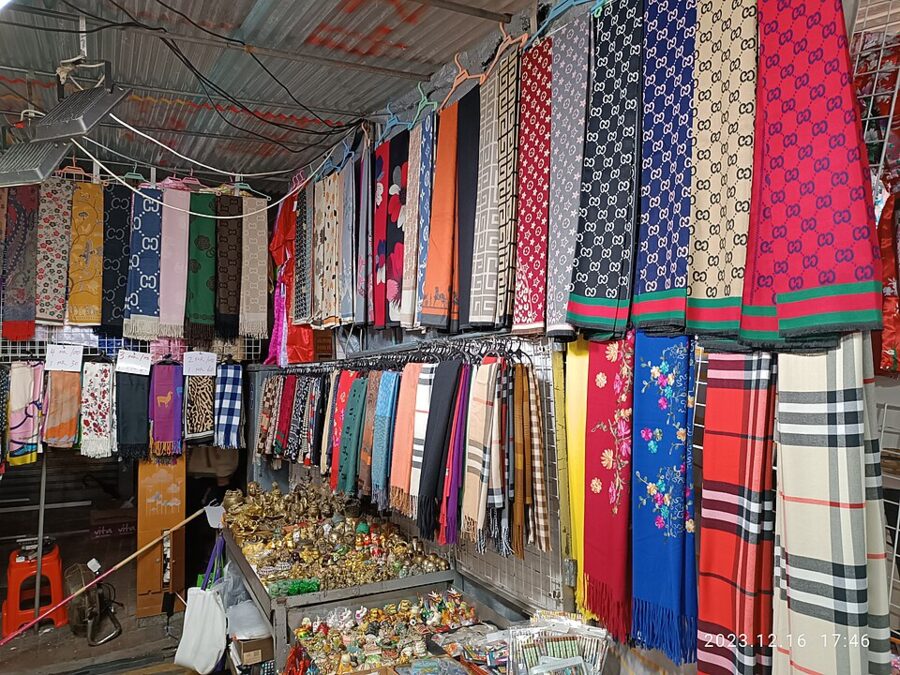
Every price is a starting offer, and the way to haggle is the same as at the Ladies’ Market and the other Hong Kong markets: ask, look unconvinced, offer around two-thirds for anything over HK$100, and buy once the seller agrees. Stalls want cash, though more of them now show a QR code; carry a few hundred Hong Kong dollars in small notes.
Fake designer goods are illegal to sell in Hong Kong under the Trade Descriptions Ordinance, and your own customs can seize them on the way home. Skip the electronics too: a charger from a stall has no warranty and no one to take it back to.
Where to eat
Eating is what Temple Street does best, and there are three ways to do it: snacks on your feet at the Jordan end, a sit-down wok dinner in the Woosung Street bazaar, or claypot rice at the Yau Ma Tei end. Do the first as a starter and one of the other two as the main event.
The food street inside the Jordan Road arch
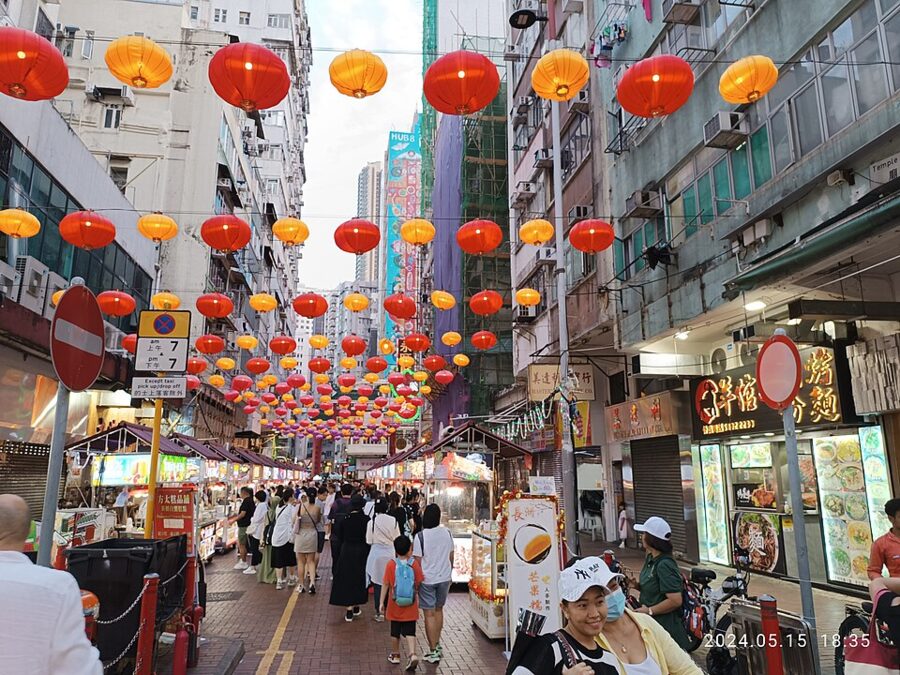
The Hong Kong Tourism Board relaunched Temple Street on 15 December 2023 as part of its Night Vibes Hong Kong campaign, adding 22 food stalls at the arch and about ten carts selling old-style snacks. It was billed as a six-month trial. As of 2026 the food street is still trading every afternoon and evening, with around 30 stalls between Jordan Road and Nanking Street.
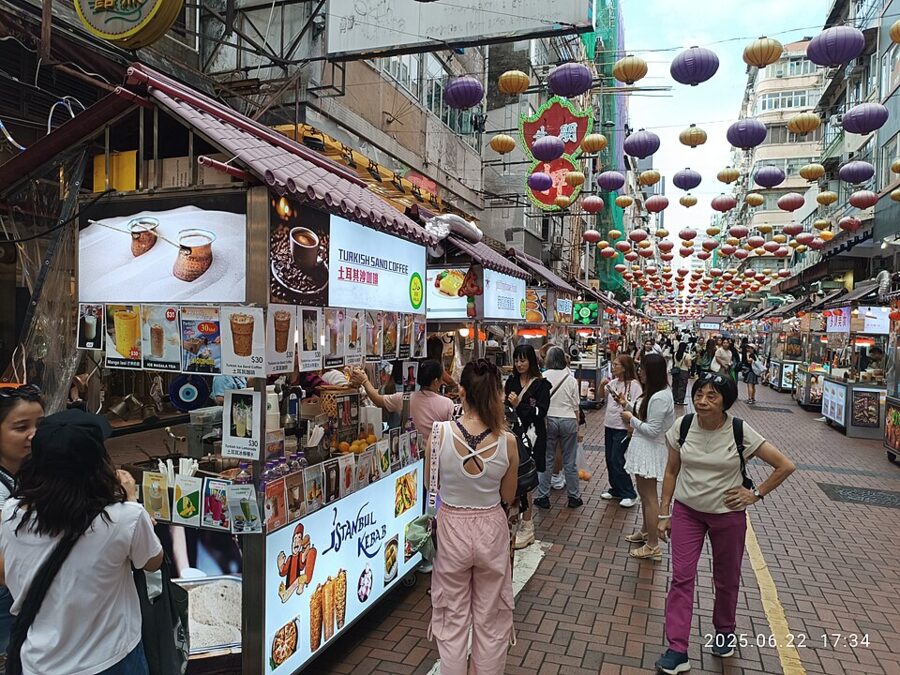
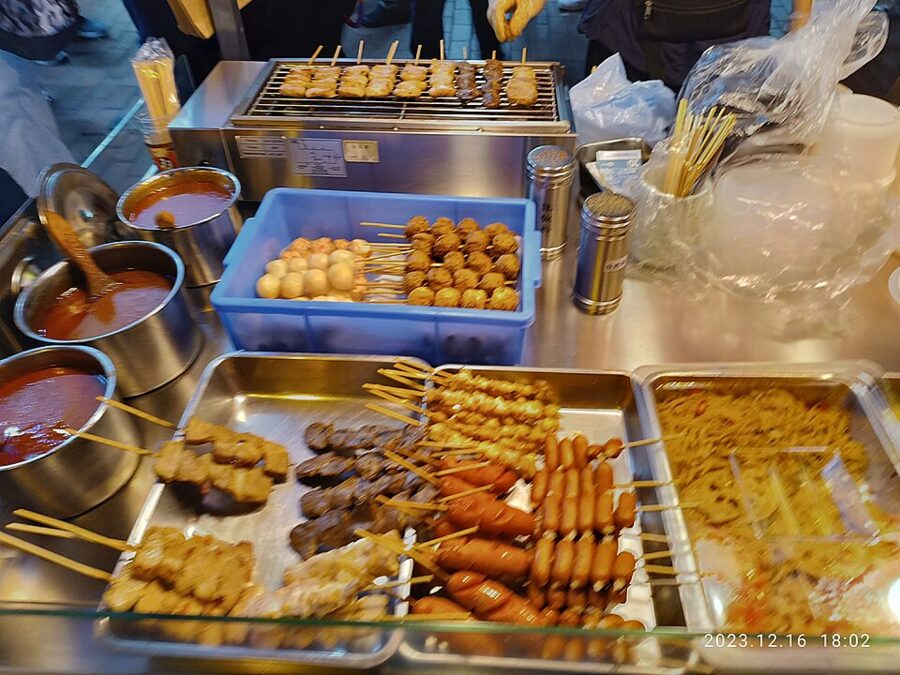
The menu mixes Hong Kong street snacks with the city’s other kitchens: curry fish balls, siu mai, beef offal, snake soup, egg waffles and oyster omelettes next to Turkish lamb, Pakistani dishes, spicy skewers and pepper buns. In spring 2026 a skewer of satay pork or squid cost about HK$20, and most snacks were under HK$40. Pay as you go, and eat standing or at the few stools along the kerb.
The Woosung Street cooked food hawker bazaar
For a proper dinner with a table and a beer, walk one block east to the Woosung Street Temporary Cooked Food Hawker Bazaar (吳松街臨時熟食小販市場) at 29–39 Woosung Street. It is a round, open-sided building at the Pak Hoi Street end of the block, with a handful of licensed seafood kitchens and their tables spilling out under the canopy. Cut across from Temple Street on Pak Hoi Street.
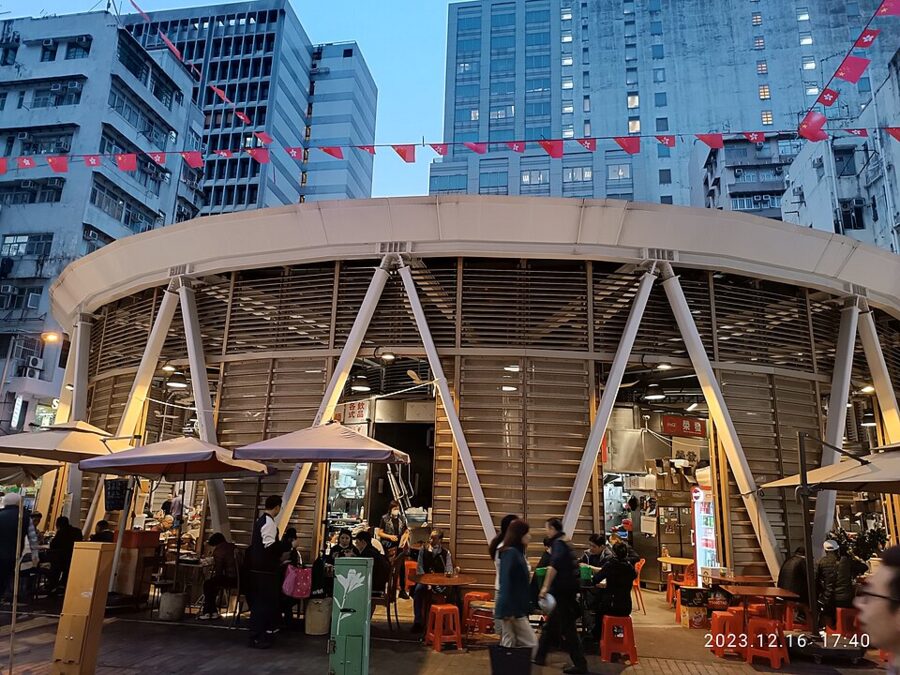
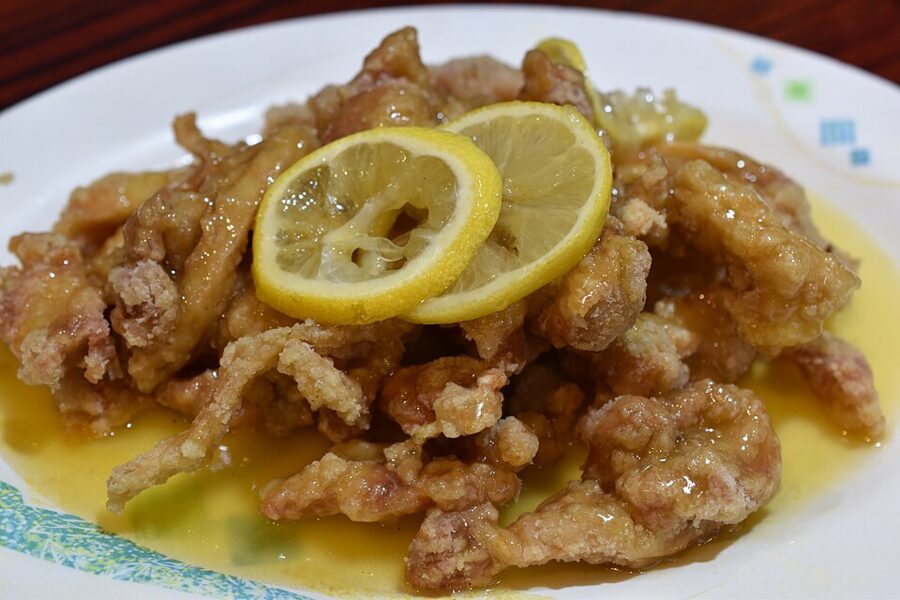
Wing Fat (榮發大排檔) is the stall most people come for, open 11:00–14:00 and 17:00–22:00. In April 2026 its salt and pepper mantis shrimp cost HK$128, black pepper beef short ribs HK$118 and a claypot rice HK$85, which is the price range of the whole bazaar. Order two wok dishes and a plate of greens between two, ask the price of anything marked as seasonal before it is cooked, and bring cash.

Claypot rice at the Yau Ma Tei end
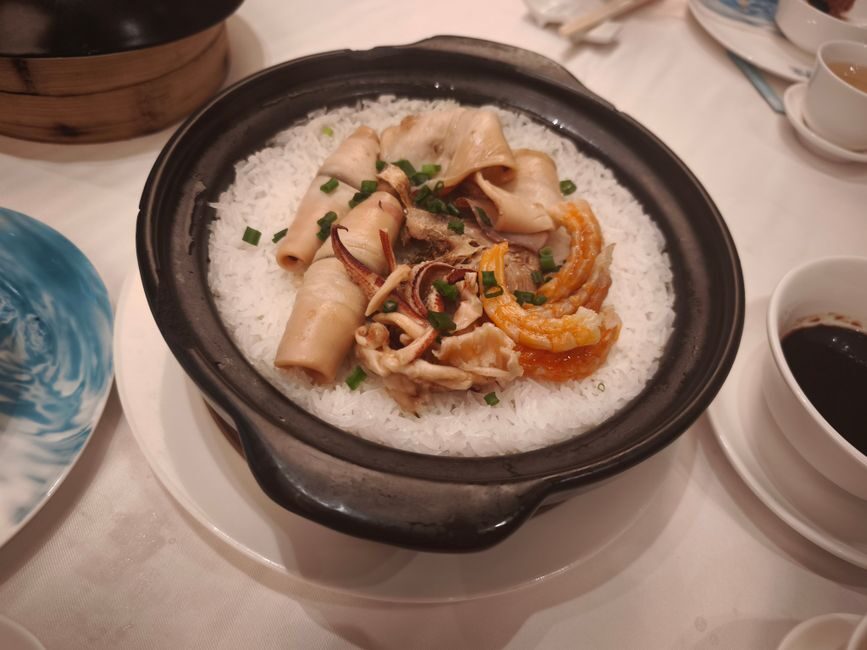
Claypot rice (煲仔飯) is rice cooked in a small clay pot over a flame until the bottom crusts, with the topping steamed on top: Chinese sausage, chicken, minced beef with an egg cracked in. Hing Kee (興記菜館), at 15 Temple Street near Yau Ma Tei Exit C, still cooks it over charcoal and fills several shopfronts and the pavement every night. It opens 13:30–15:30 and 17:30–24:00, and the queue starts before the evening session.
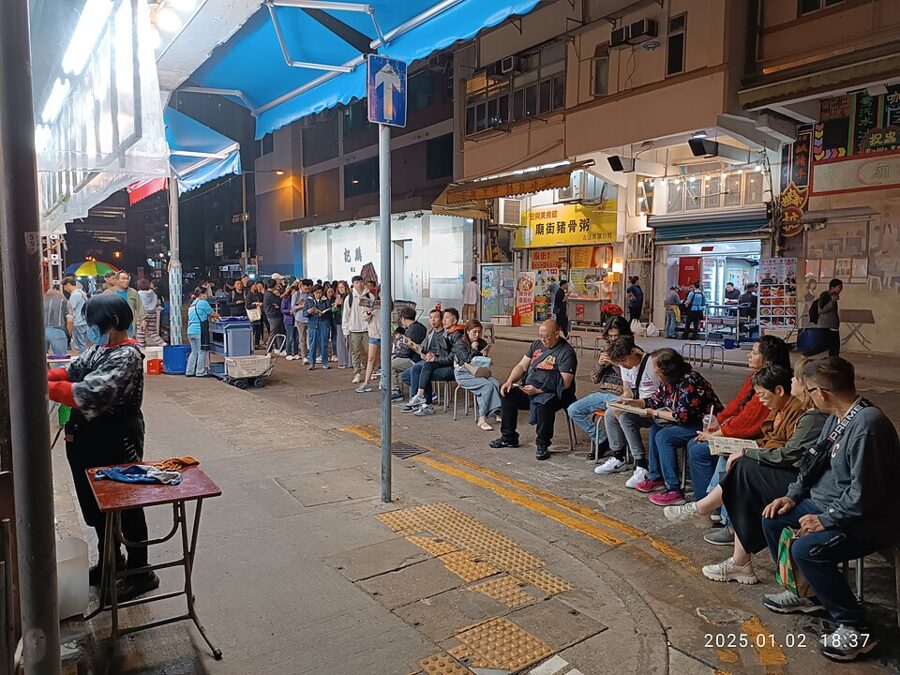
When the pot arrives, pour the sweet soy sauce over the top, put the lid back on for a minute, then stir. Leave the crust until last and scrape it off the sides with the spoon; that is the part people queue for.
Fortune tellers, opera and the Tin Hau temple
North of Kansu Street, around the temple and under the flyover, the fortune tellers set up their booths after dark. They read palms and faces, work from your date of birth, and a few still use a trained bird to pick a card. Readings start at around HK$100; agree the price before you sit down, and ask whether the reader works in English, because most work in Cantonese.
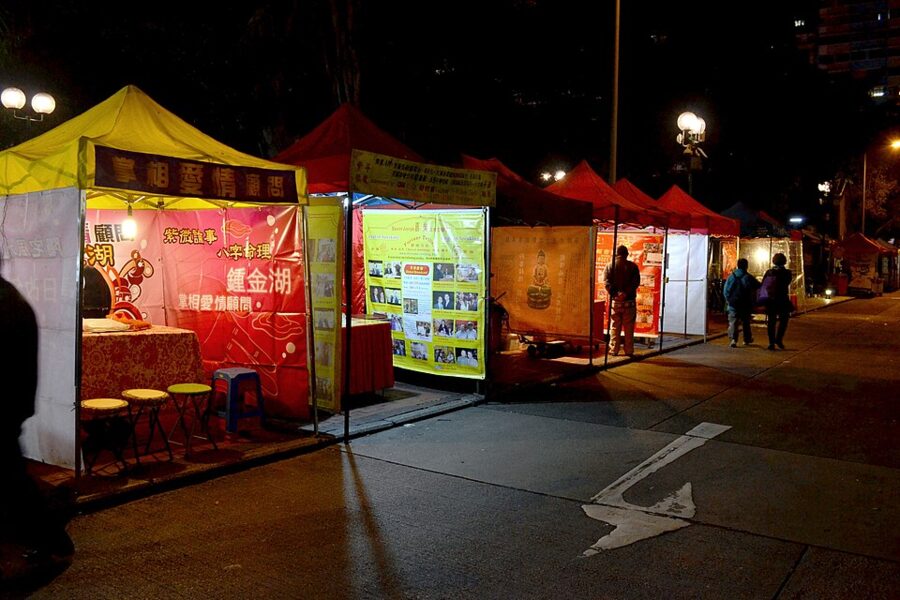

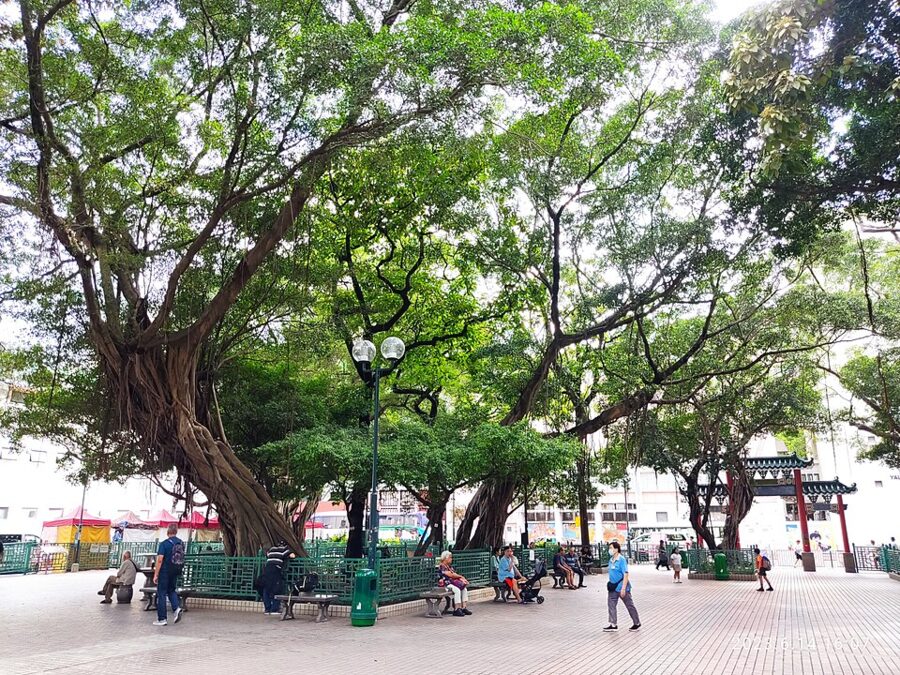
The singing comes from the same corner. Around Public Square Street, by the banyan trees locals call Yung Shue Tau (榕樹頭), amateur singers perform Cantonese opera excerpts and old pop songs on some nights. Listening is free, and a small tip in the box is the custom if you stay for more than one song.

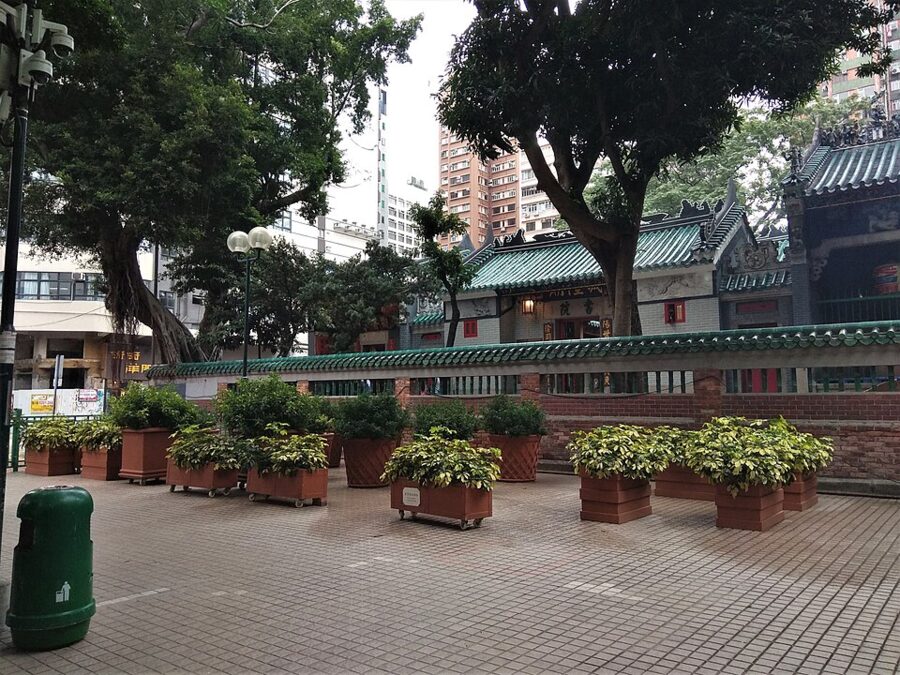
The temple is the one the street is named after. The Yau Ma Tei Tin Hau temple (油麻地天后廟) was first built around 1865 by the boat people of the harbour and moved to this site in 1876, and it now stands in a row of five temples and halls run by the Tung Wah Group of Hospitals. It is free to enter and open 08:00–17:00, so see it before the market rather than during it.

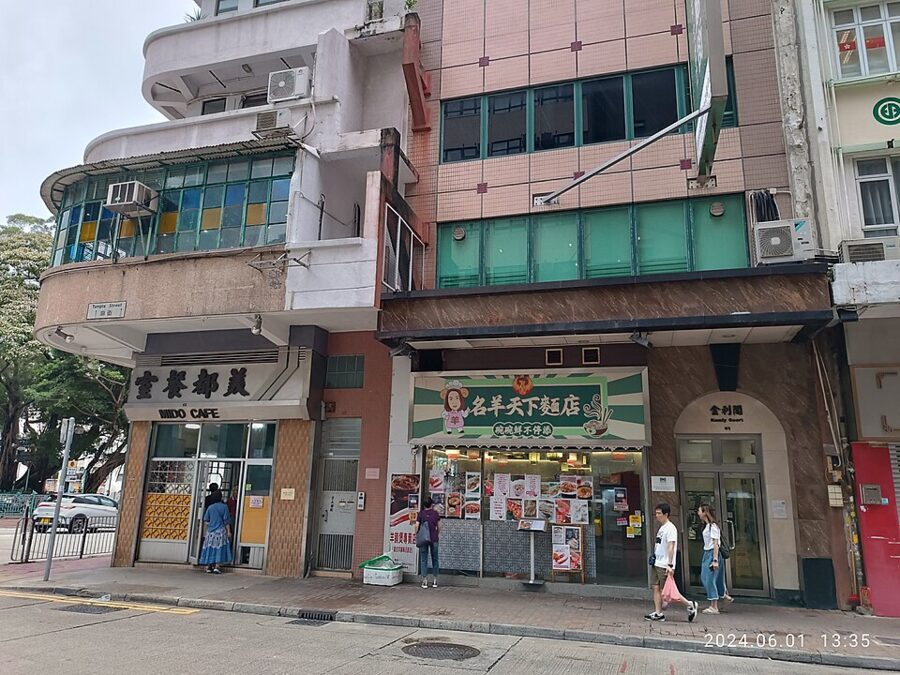
On the corner of Temple Street and Public Square Street, Mido Cafe (美都餐室) has been serving milk tea and baked pork chop rice since 1950, in a tiled corner building that film crews keep coming back to. It is the place to sit down between the temple and the claypot queue.
Nearby: the Jade Market, the fruit market and Mong Kok
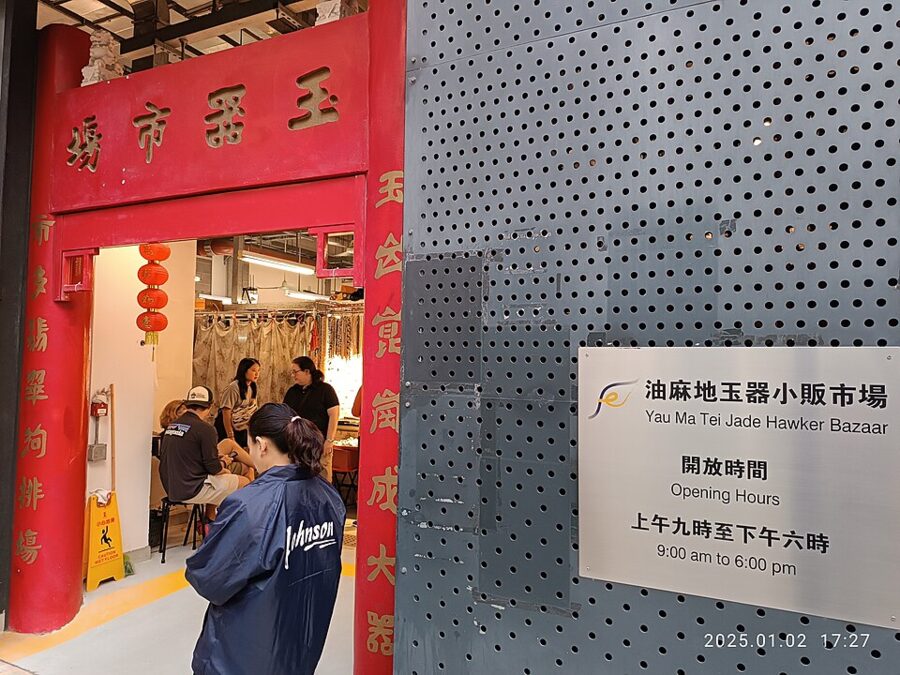
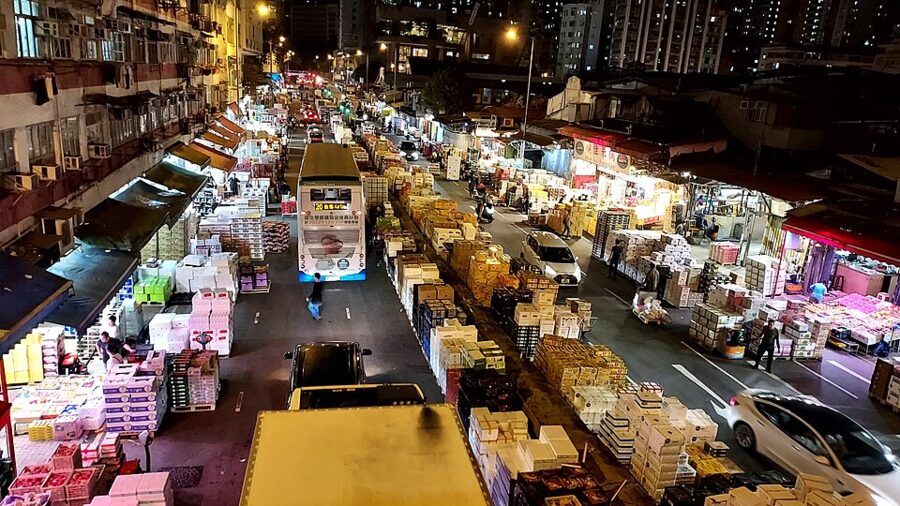
Three more markets are within a ten-minute walk. The jade market now trades from the Yau Ma Tei Temporary Jade Hawker Bazaar (油麻地臨時玉器小販市場) at 251 Shanghai Street, one block west of Temple Street, and closes in the early evening, so do it first. The Yau Ma Tei Fruit Market (油麻地果欄), by Reclamation Street and Waterloo Road, is the opposite: a wholesale market whose real business happens in the small hours, and the place to go after Temple Street if you are still awake. A stop north on the MTR, Mong Kok has the Ladies’ Market on Tung Choi Street and the specialist streets around it. For the evening as part of a longer plan, see the Hong Kong itinerary.

Getting there, getting back and staying safe
Both stations are on the Tsuen Wan Line, and Yau Ma Tei is on the Kwun Tong Line too; the MTR guide covers fares and Octopus. From Jordan, take Exit A to Jordan Road and walk west to the arch. From Yau Ma Tei, Exit C brings you out beside the north end of the street, a minute from Hing Kee and the temple. I would arrive at one and leave from the other.
The crowd is the main risk. Keep your phone in a front pocket and your bag zipped and in front of you between the food stalls, where everyone is looking at the menus and not at their pockets. At any seafood stall, check the price per weight before the fish goes in the wok. If you are choosing where to stay, Jordan and Yau Ma Tei put the market on your doorstep; for the other things to do in Hong Kong after dark, the harbour front is two stops south.
So: Jordan Exit A at 18:30, a skewer at the arch, dinner at the Woosung Street bazaar or in the Hing Kee queue, and the singers by the temple before you walk up to Yau Ma Tei Exit C.