

Two trains leave Hong Kong West Kowloon (香港西九龍站) for Beijing West (北京西站) without a change. The G382 goes every day at 11:19 and arrives at 19:30, eight hours and eleven minutes later, with a second-class seat at HK$1,458. The G898 sleeper leaves at 20:25 on Fridays, Saturdays, Sundays and Mondays only and pulls into Beijing at 06:53, with a berth in a four-bed compartment from about RMB 1,020.

Coming back, the G381 leaves Beijing West daily at 10:00 and reaches West Kowloon at 18:12, and the G897 sleeper leaves at 21:01 on the same four nights and arrives at 07:19. Tickets go on sale 15 days ahead on China Railway’s 12306 website and app, at the West Kowloon ticket counters and through MTR’s appointed agents in Hong Kong. Your passport or permit is the ticket: there is nothing to collect.

Mainland immigration happens at West Kowloon before you board, so the passport rules apply in Kowloon, not in Beijing. Most foreign visitors need a Chinese visa, a passport on the 30-day visa-free list, or a ticket out to a third country for the 240-hour transit. If your dates fall on a Friday to Monday night, I would take the sleeper: an upper berth costs less than a second-class seat on the day train, and you save a night in a hotel.

Times, fares and rules here are as of November 2026. China Railway can change times with any new timetable, so check the train on 12306 before you plan around it.
In this article
- The four trains, and when they run
- What it costs
- Booking, and which document to book with
- West Kowloon: arriving, the checks, and how early to come
- On board the sleeper
- Visas, and which passport the rules are about
- Arriving at Beijing West
- What happened to the Z97 and Z98
- Train or plane, and my pick
The four trains, and when they run
One train each way by day, one each way by night, and no night trains on Tuesdays, Wednesdays or Thursdays.
| Train | Runs | Departs | Arrives | Journey |
|---|---|---|---|---|
| G382 West Kowloon to Beijing West | Daily | 11:19 | 19:30 | 8 h 11 min |
| G898 sleeper, West Kowloon to Beijing West | Fri, Sat, Sun, Mon | 20:25 | 06:53 next day | 10 h 28 min |
| G381 Beijing West to West Kowloon | Daily | 10:00 | 18:12 | 8 h 12 min |
| G897 sleeper, Beijing West to West Kowloon | Fri, Sat, Sun, Mon | 21:01 | 07:19 next day | 10 h 18 min |
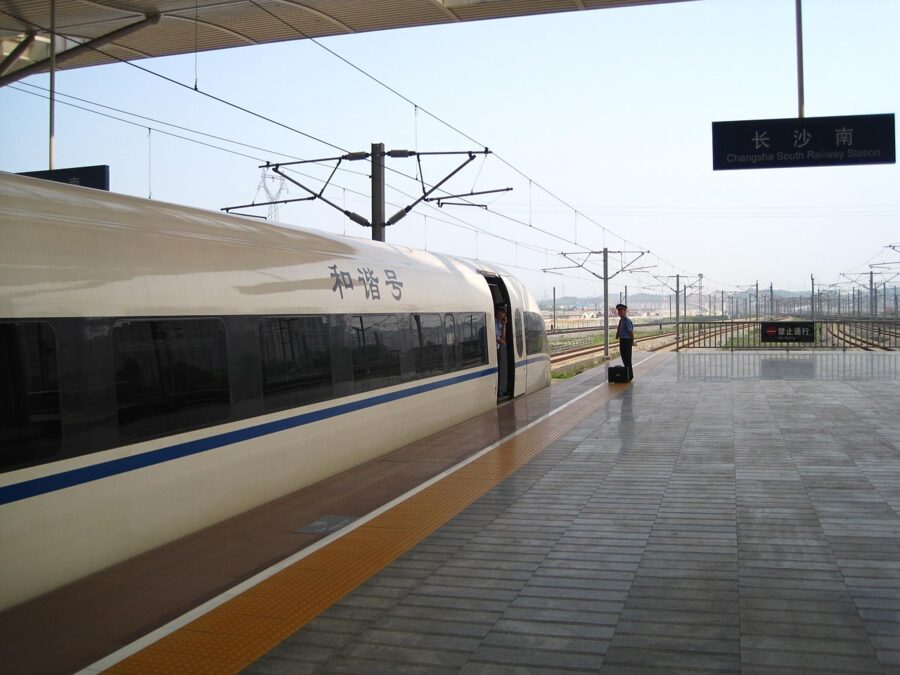
The G382 stops at Shenzhen North, Guangzhou South, Changsha South, Wuhan, Zhengzhou East and Shijiazhuang. The G898 calls at Shenzhen North at 20:43 and Guangzhou South at 21:21, then Changsha South before midnight and Shijiazhuang at 05:28. You cannot buy a sleeper ticket just between West Kowloon and Shenzhen North or Guangzhou South; those seats are kept for long-distance passengers.
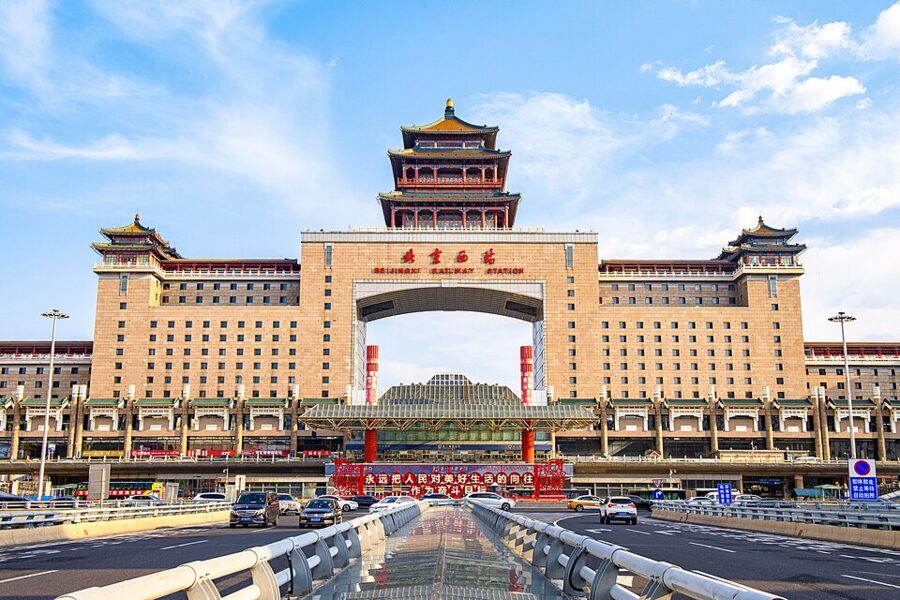
Beijing West is the only Beijing station with a direct train from Hong Kong. Journeys sold to Beijing East, Fengtai or Daxing involve a change of train on the way.
What it costs
Fares are set in renminbi by China Railway. MTR converts them to Hong Kong dollars once a month at the prevailing rate, and a ticket bought in Hong Kong dollars carries that month’s price. These are the November 2026 adult fares to Beijing West.
| Train and class | HK$ (MTR, November 2026) | RMB |
|---|---|---|
| G382 second class | HK$1,458 | RMB 1,248 |
| G382 first class | HK$2,140 | RMB 1,832–1,997 |
| G382 business class | HK$4,133 | RMB 3,539–4,262 |
| G898 second-class seat | about HK$1,090 | RMB 936 |
| G898 premium-class seat | about HK$1,180 | RMB 1,011 |
| G898 upper berth | about HK$1,190–1,340 | RMB 1,020–1,150 |
| G898 lower berth | about HK$1,300–1,510 | RMB 1,115–1,290 |
Where there is a range, the price moves with the date. China Railway prices the sleeper by demand: 12306 was asking RMB 1,020 for an upper berth on some late-November nights and RMB 1,150 on others, against a published ceiling of RMB 3,195 (upper) and RMB 3,596 (lower). On the G382, 12306 quoted first and business class above MTR’s chart for the same weeks. The price on the screen when you pay is the one that counts.

Children aged 6 to 13 pay a child fare: half the adult price in second and first class, 80% in premium and business, 70% for a berth. A child under 6 travels free with an adult as long as they share the adult’s seat or berth, but must still be declared with their own document when you book. From 14, the fare is adult.
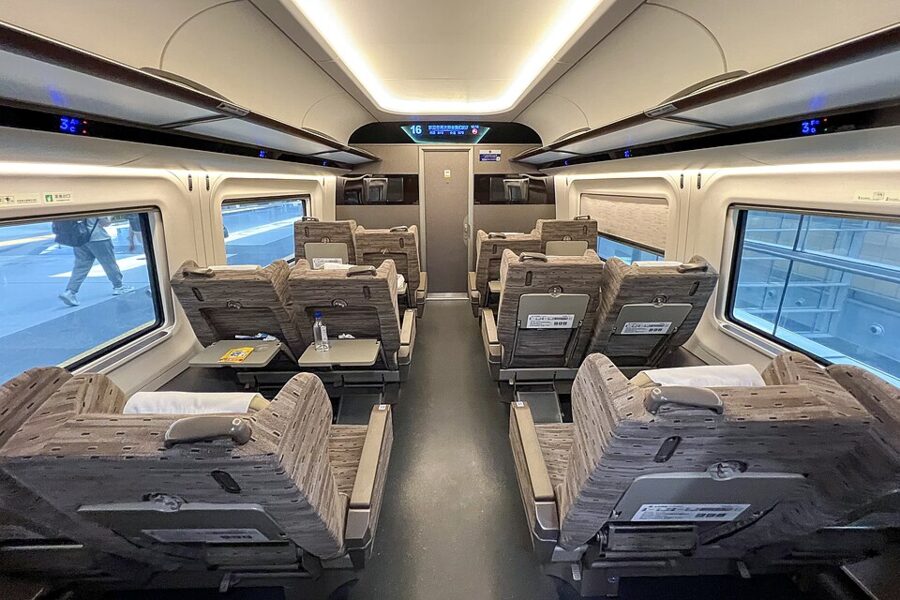
The sleeper’s seat cars are the cheapest way to Beijing, and I would not bother: ten hours upright overnight saves as little as RMB 84 against an upper berth.
Booking, and which document to book with
Each ticket is tied to one identity document, and you show that same document at the gate and on board. Book with the one you will cross the border on:
- Hong Kong permanent residents who are Chinese citizens: the Home Return Permit (回鄉證). On 12306, enter your name in simplified Chinese and register with a Hong Kong mobile number.
- Hong Kong permanent residents who are not Chinese citizens: the Mainland Travel Permit for Non-Chinese Citizens, accepted on 12306, at the counters and through agents. Holders use the staff channel, not the automatic gates, at the station.
- Visitors: your passport, the same one you will show mainland immigration.
12306 is the channel I would use. It takes Visa and Mastercard and handles changes and refunds online; foreign passport holders register on the English site with an email address. Sales run 05:00–01:00 (05:00–24:00 on Tuesdays).
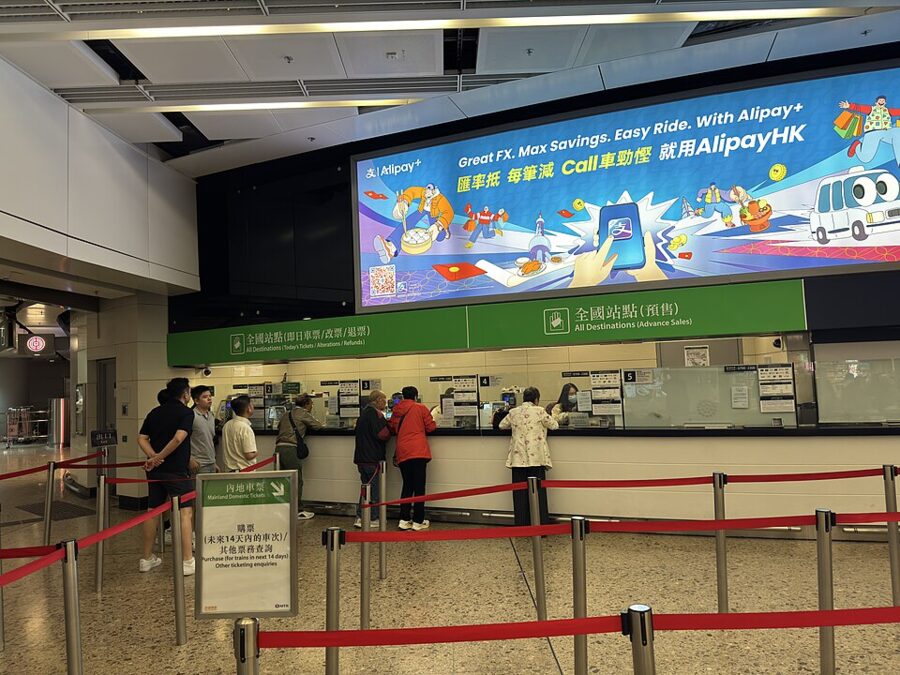

If 12306 refuses your card or your phone number, buy at the station counters or through one of MTR’s designated ticket agents, which charge no handling fee. Ticket machines at West Kowloon work too, but they assign the berth at random. To choose upper or lower, or to put a group in one compartment, book on 12306, at a counter or through an agent.
A ticket can be changed once (date, train or class), up to 45 minutes before departure from Hong Kong, and a changed ticket cannot then be refunded.
West Kowloon: arriving, the checks, and how early to come
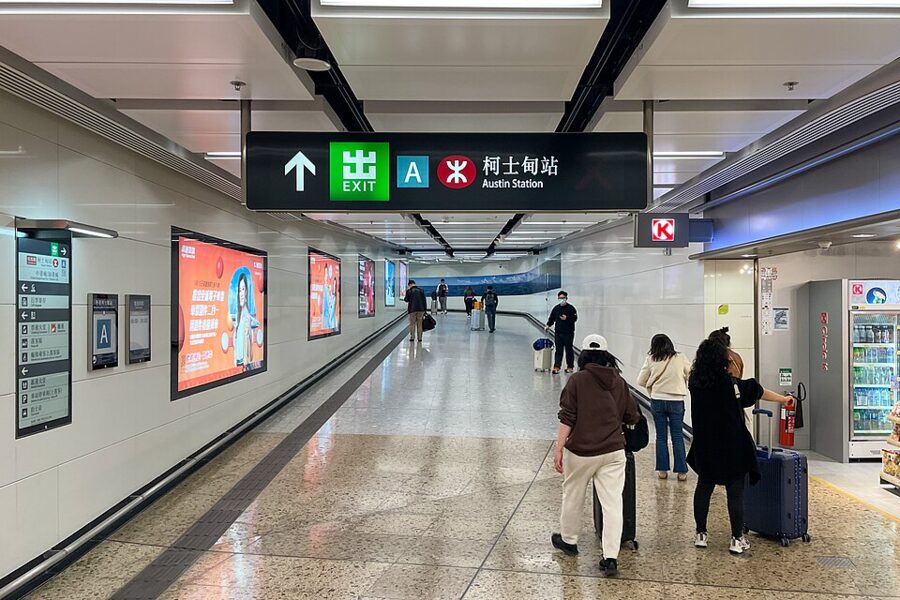
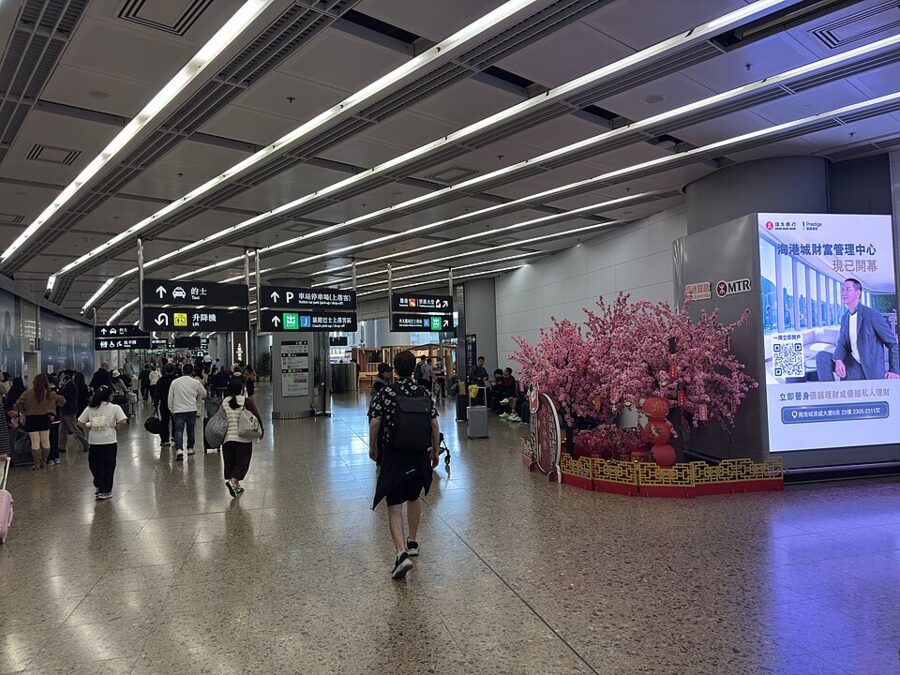
West Kowloon station is underground beside Austin station on the Tuen Ma Line, and connected by footbridge and tunnel to Kowloon station on the Tung Chung Line and Airport Express. A taxi drops you on Level B1, the ticketing concourse. The station is open 06:00–24:00.

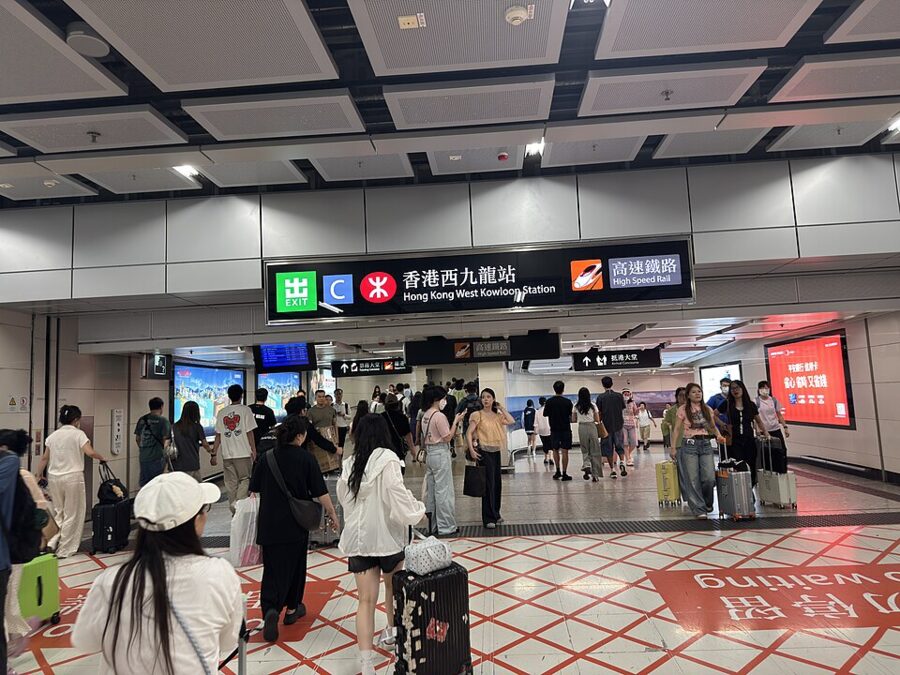

- Level B1, ticket check. Scan or hand over your document at the self-service gates or the staff counter. This closes 30 minutes before departure, and there is no later way in.
- Security. Bags through the scanner, phone and keys out of your pockets.
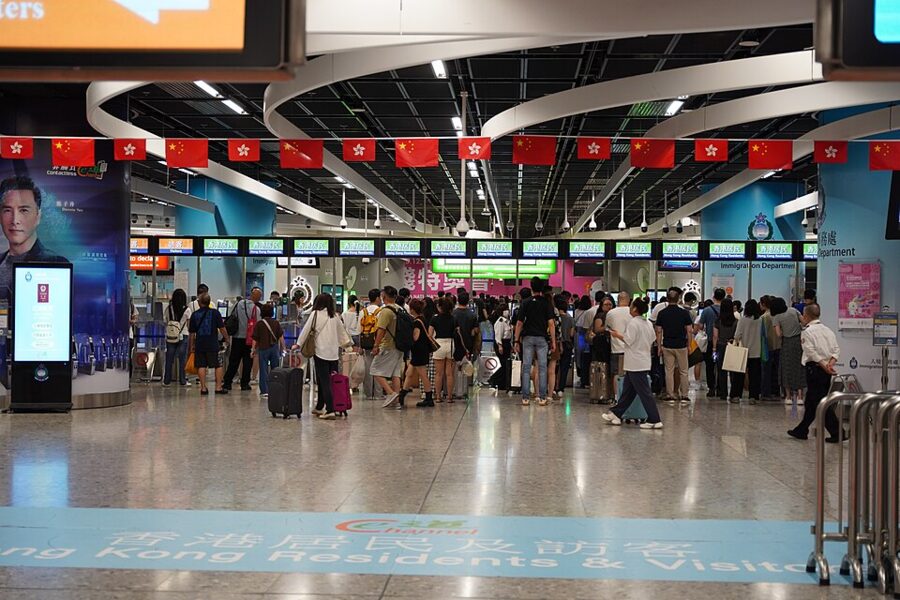
- Level B3, immigration. Hong Kong departure first, then mainland entry a few steps further on. From here you are legally in the mainland.
- Boarding gates on B3. They open 15 minutes before departure and close five minutes before.
You can start the process 90 minutes before the train. MTR reckons on 30–45 minutes for all of it and tells passport holders, weekend travellers and anyone on the last train of the day to allow more. For the 20:25 sleeper on a Friday, on a foreign passport, I would be at B1 by 19:00.

The luggage limit is 20 kg in total for an adult and 10 kg for a child, with no single piece over 130 cm in length plus width plus height. There is no checked baggage: whatever you bring, you lift onto the rack. Alcohol hand sanitiser is banned on board, gel or spray, so pack wipes instead.
Sort out a Hong Kong SIM or eSIM with mainland data before you leave. You will want a working phone at Beijing West, and the eight hours on the G382 are long ones without it.
On board the sleeper
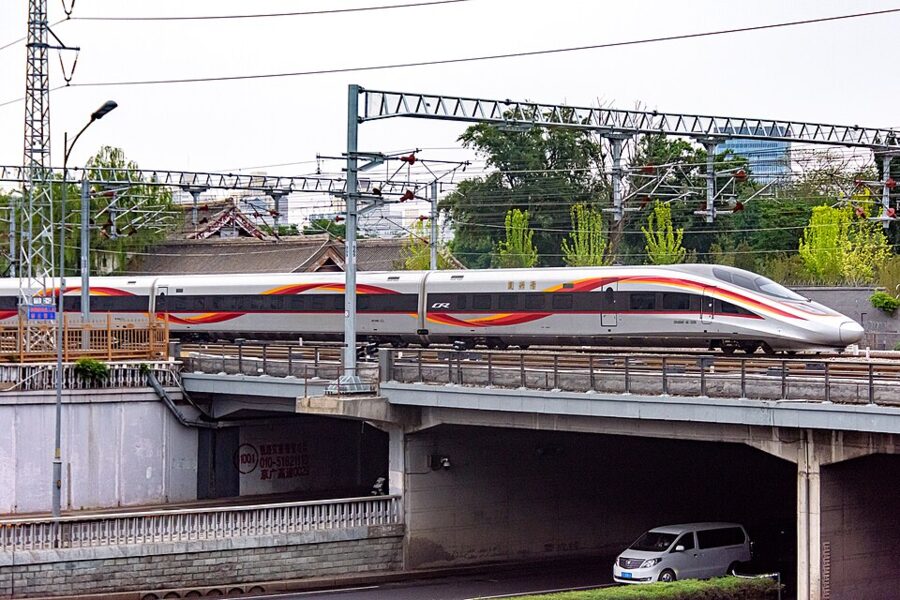
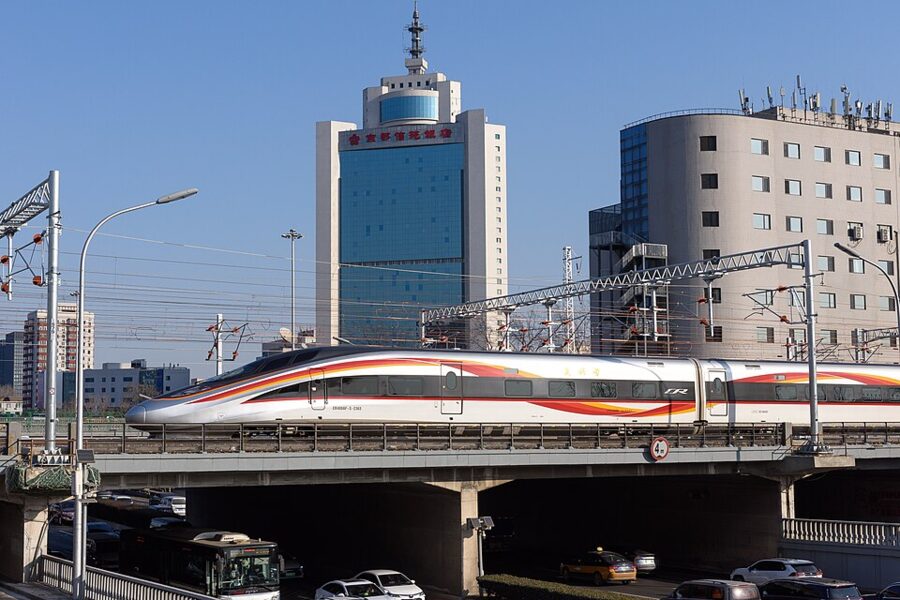
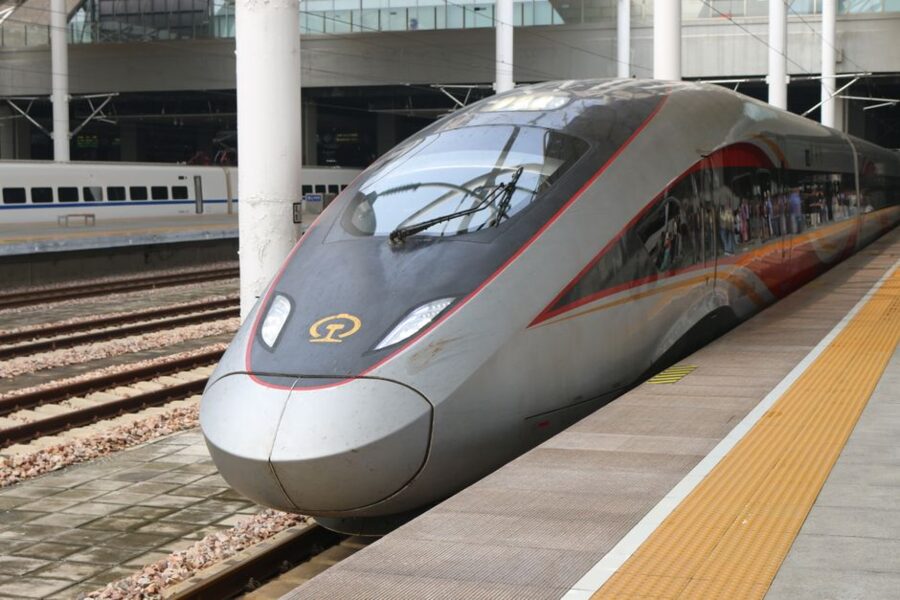
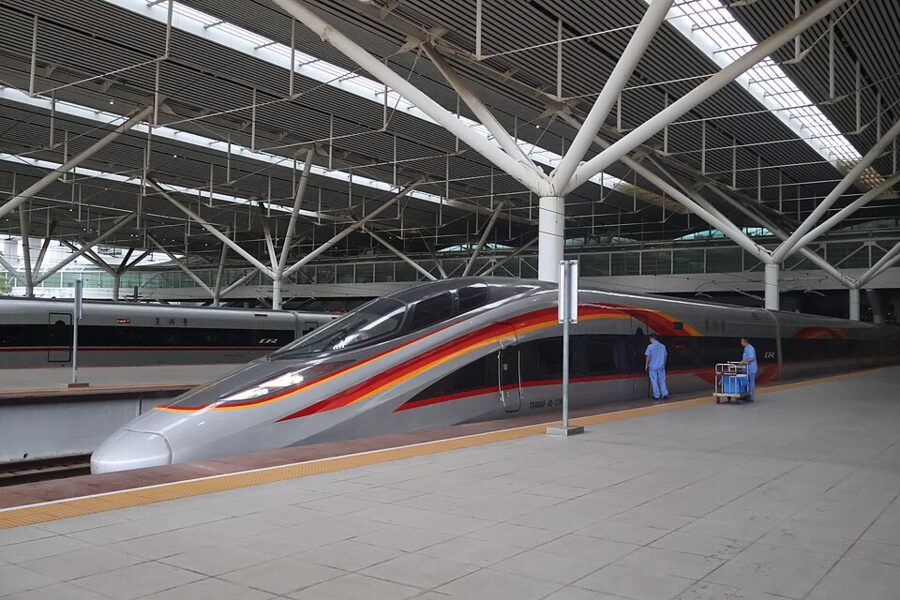
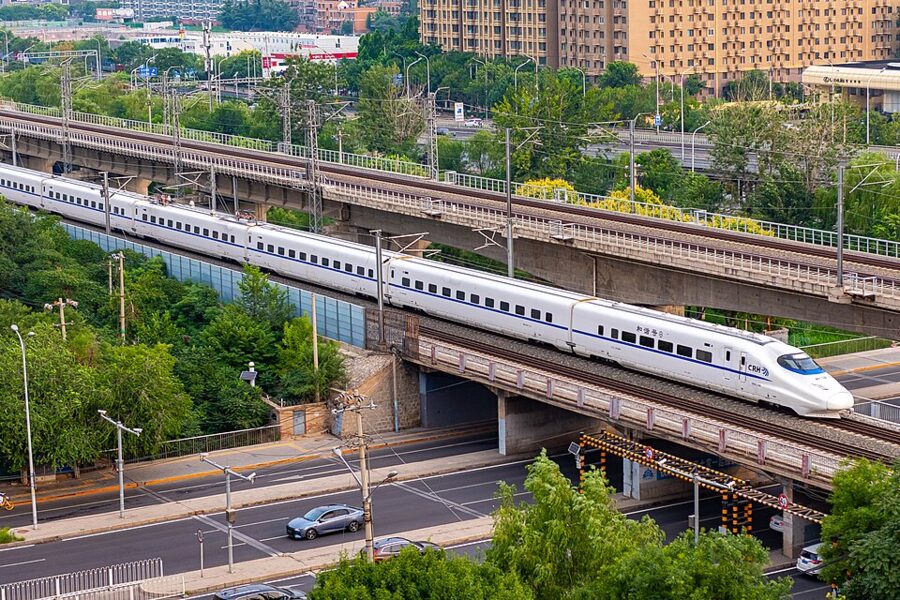
The G898 and G897 use the Fuxing CR400AF-AE, a sixteen-car sleeper running at up to 300 km/h that went into service on this route on 1 October 2024. Fourteen cars are sleepers and two carry seats, premium class and second class.
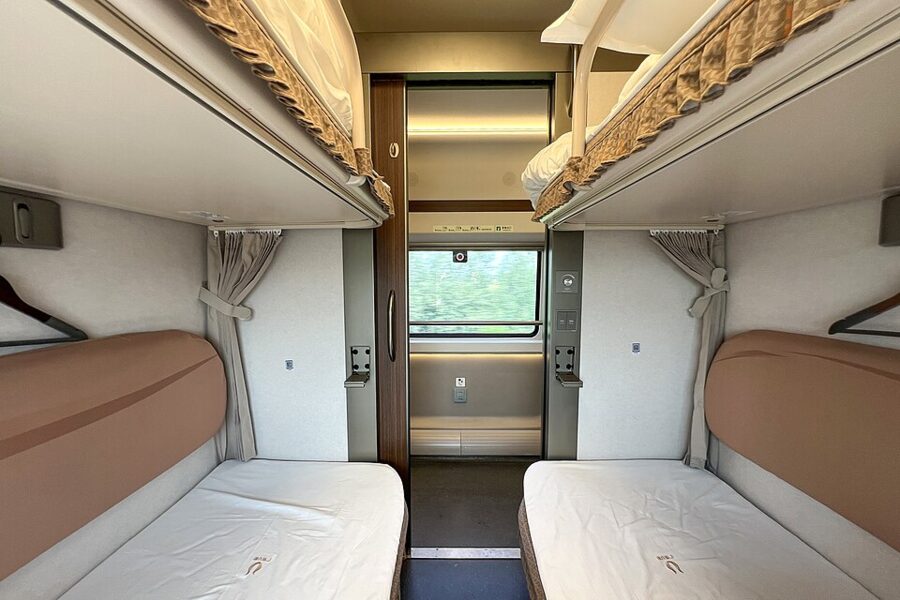
Each compartment has four berths, two up and two down, a sliding door to the corridor, a small table and a shared kettle. Every berth has a reading light, Hong Kong and mainland sockets, and USB-A and USB-C ports; slippers, a toiletries pack and a hanger are provided. Suitcases go under the lower berths.
Even berth numbers are upper berths and odd numbers lower. Ignore the blue number above the door, which is the room.
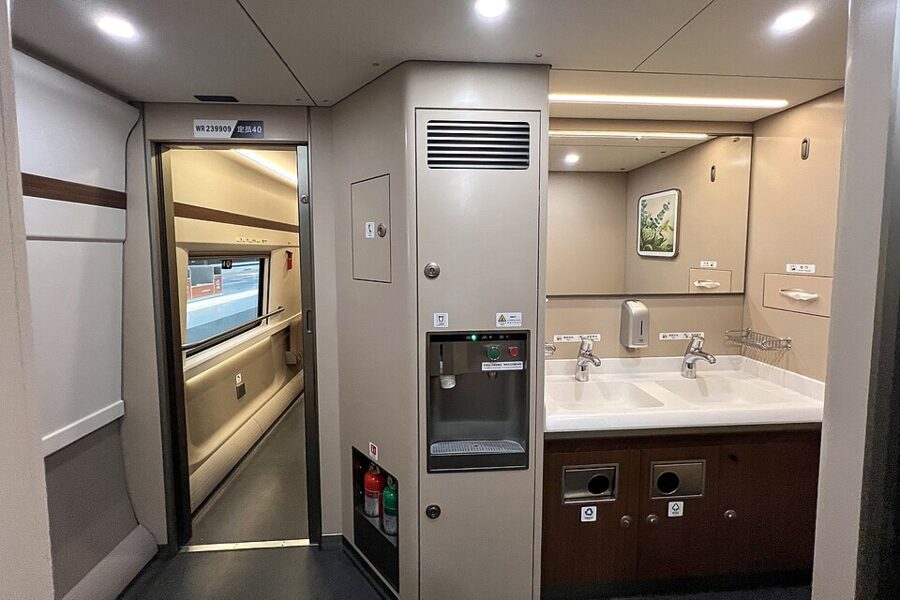

Food and drink are sold from a counter in Car 8, and MTR says plainly that supplies are limited. Eat at West Kowloon before the checks, or bring a light supper and breakfast. Hot water is free; bring a cup or a bottle.
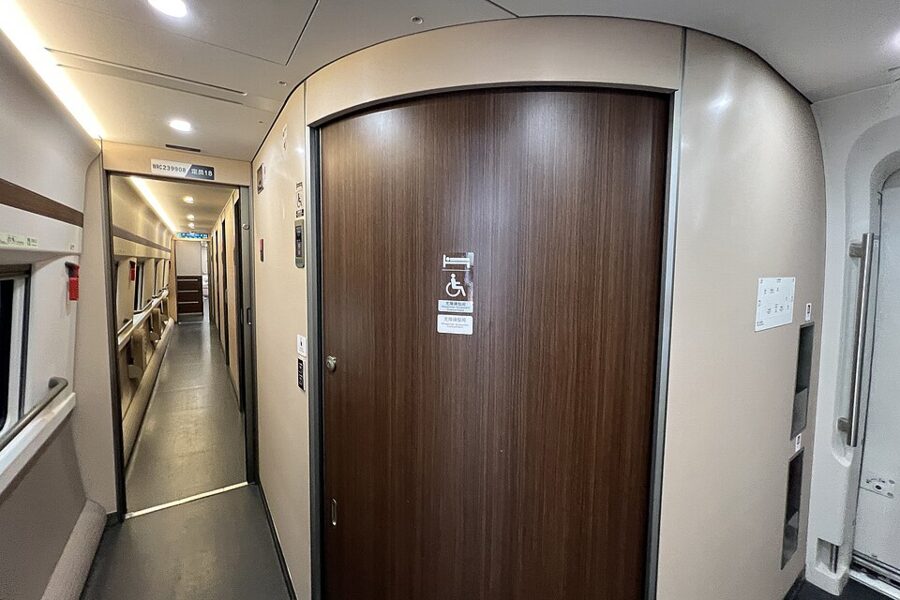
Car 8 also has an accessible two-berth room with a powered door and space for a wheelchair; book it through the staff at a West Kowloon counter.

What to bring
A power bank, because the corridor sockets are mainland-only. Earplugs and an eye mask, since you are sharing with three strangers and the train stops at Shijiazhuang at 05:28. Wipes instead of sanitiser gel, and your own cup.
Visas, and which passport the rules are about
The rules depend on the document, not on where you live. Hong Kong Chinese residents cross on the Home Return Permit and need nothing else. Non-Chinese permanent residents can cross on the Non-Chinese Citizens permit instead of a visa. Everyone else needs one of the three routes below, and needs it before the B3 counters.

Visa-free for 30 days. Ordinary passports from 50 countries can enter for up to 30 days without a visa, including the UK, Canada, Australia, New Zealand, Japan, South Korea and most of the EU, under a scheme that for most of them runs to 31 December 2026. The United States is not on the list. The National Immigration Administration’s list is the one to check.
The 240-hour transit. Passports from 57 countries, American ones included, can stay up to ten days without a visa with a confirmed, dated onward ticket to a third country or region. Hong Kong counts as a region, which cuts both ways: Hong Kong to Beijing by train and a flight on to Seoul qualifies, but a return to Hong Kong does not. Beijing and Guangdong are both inside the permitted area, and travel between the covered provinces has been allowed since December 2024.
A visa. Everyone else, and anyone staying longer, applies for a China visa in Hong Kong through the visa centre in Wan Chai. The five-day Shenzhen visa on arrival is no use here: it is issued at Lo Wu and covers Shenzhen only.
Foreign visitors also fill in an arrival card. Do it on the National Immigration Administration’s arrival card site the day before, with your Beijing hotel’s address to hand.
Arriving at Beijing West
You have already cleared immigration in Kowloon, so at Beijing West you walk off the platform and out through the exit gates like any domestic passenger, using the same document you boarded with. At 06:53 the subway is already running.

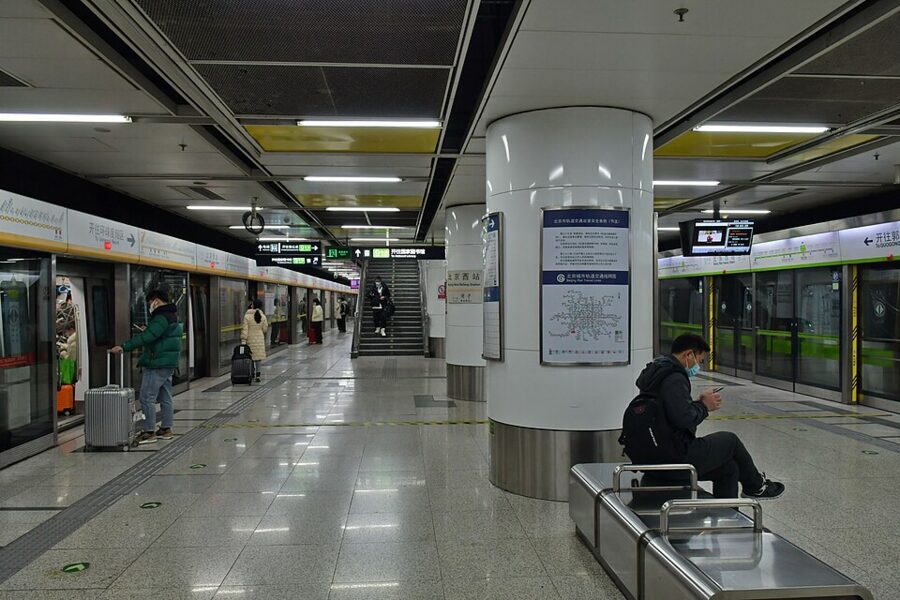
Two subway lines run beneath the station: Line 9, which connects with Line 1 at Military Museum for central Beijing, and Line 7, which runs east past Caishikou and Qiaowan towards Universal Beijing.

What happened to the Z97 and Z98
For 23 years the way to Beijing by rail was the intercity through train from Hung Hom. The Z98 left Hong Kong every other day, the Z97 came back on the alternate days, and the trip took about 24 hours on conventional track, in hard or soft sleepers, with border checks at each end. It first ran in May 1997.
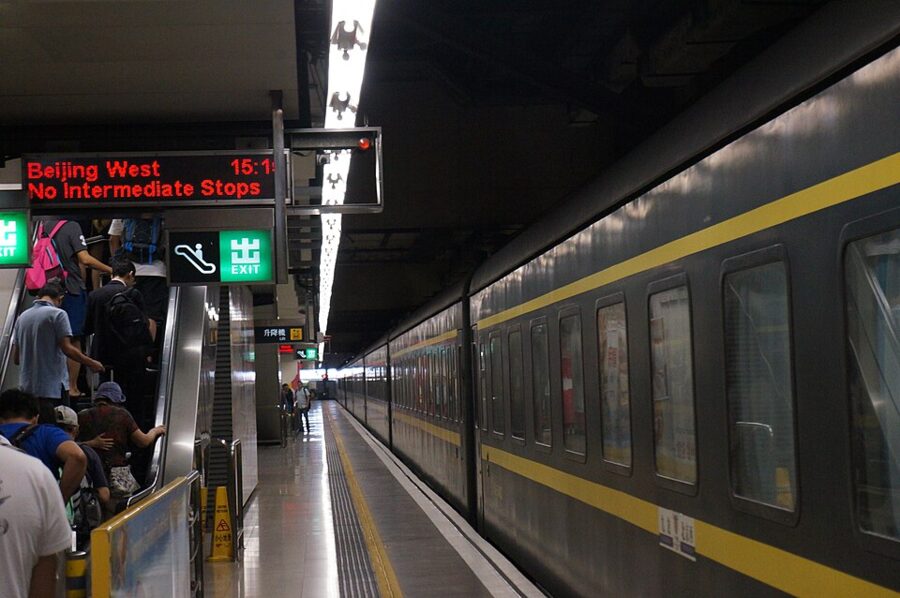

All through trains stopped in January 2020, when Hong Kong closed the Hung Hom control point at the start of the pandemic, and they never came back. On 4 June 2024 China Railway announced that the Beijing and Shanghai through trains would be replaced by high-speed sleepers from West Kowloon, and the first one left on 15 June 2024. At the end of July 2024 China’s customs administration closed the through-train border posts at Beijing West, Shanghai, Guangzhou and Dongguan, which settled it.
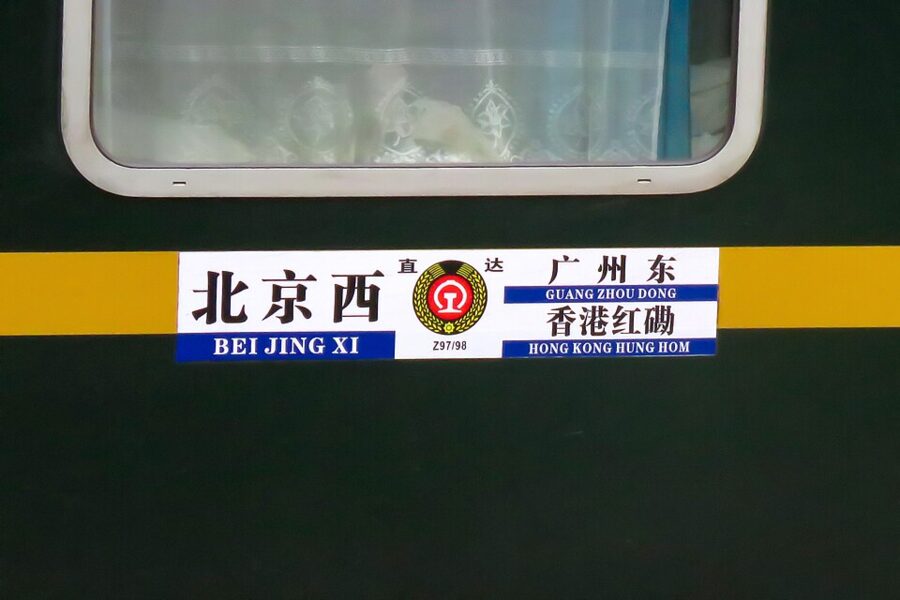

The first sleepers were older CRH2E trains numbered D909 and D910, at about 12.5 hours. On 1 October 2024 the new Fuxing sleepers took over as G897 and G898, and from 5 January 2025 the departure from Hong Kong moved to 20:25, the time it keeps today. Against the old Z98, the trip takes half as long, and the border checks happen once, in Kowloon.

Train or plane, and my pick
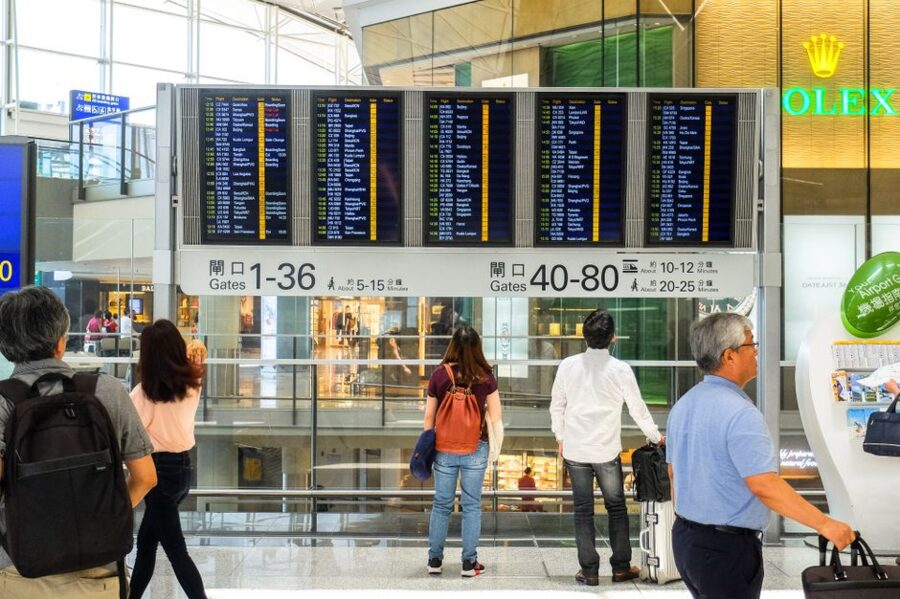
The flight is about three and a half hours in the air, and a one-way economy seat booked a few weeks ahead often costs less than the train’s HK$1,458 second class. Add the trip out to Chek Lap Kok by Airport Express or the cheapest bus to the airport, check-in and security, and the ride in from Capital or Daxing airport at the far end. Door to door, the G382’s eight hours look a lot less lopsided.
My pick is the sleeper, whenever the calendar allows it. Leave work, eat at West Kowloon, sleep, and step off at 06:53 without paying for a hotel that night or losing a day to airports. On a Tuesday, Wednesday or Thursday I would take the G382 for the scenery and the legroom, or fly if the fare is low and the day matters more than the view.
Book the berth on 12306 the morning sales open, fifteen days out, and choose a lower one if you have a big case. Then be at Level B1 by 19:00, passport in hand, for the 20:25.