

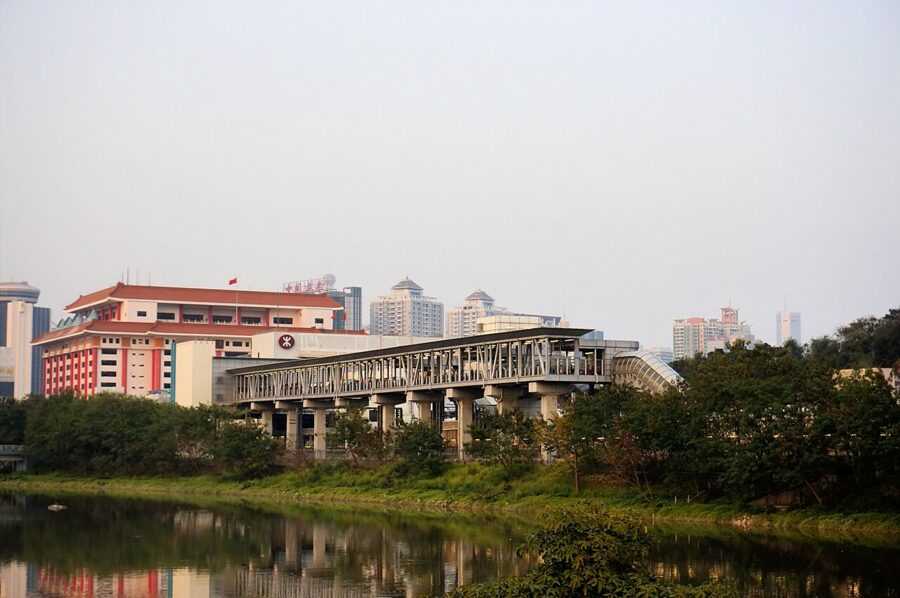
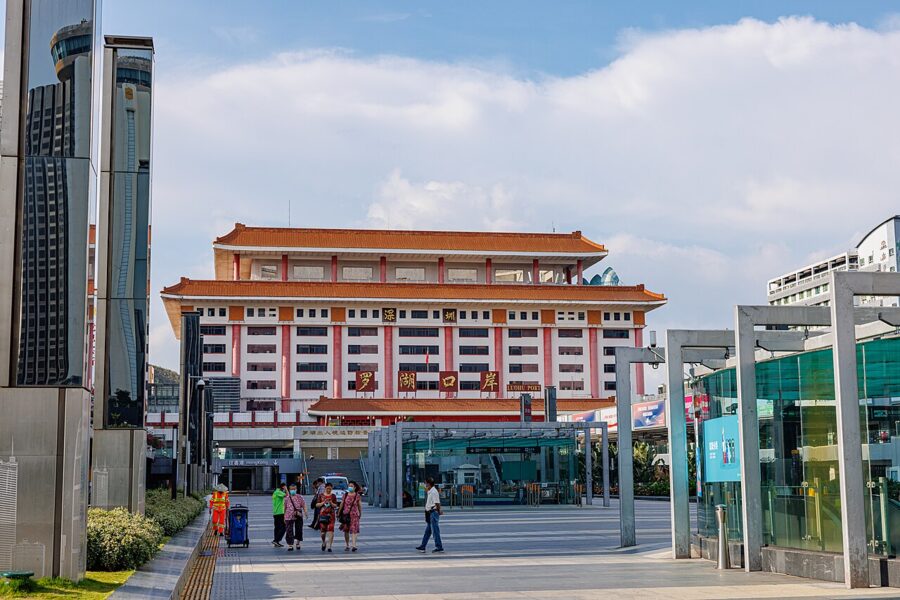
Clear Hong Kong departures at Lo Wu, walk the covered bridge over the Shenzhen River, and on the far side, before the immigration queue, an escalator climbs to a hall most people walk straight past. That is the port visa office at Luohu Port (罗湖口岸), and for a shrinking list of passports it is still the cheapest way into Shenzhen: a five-day visa, issued in about an hour, that is good for the city and nowhere else.
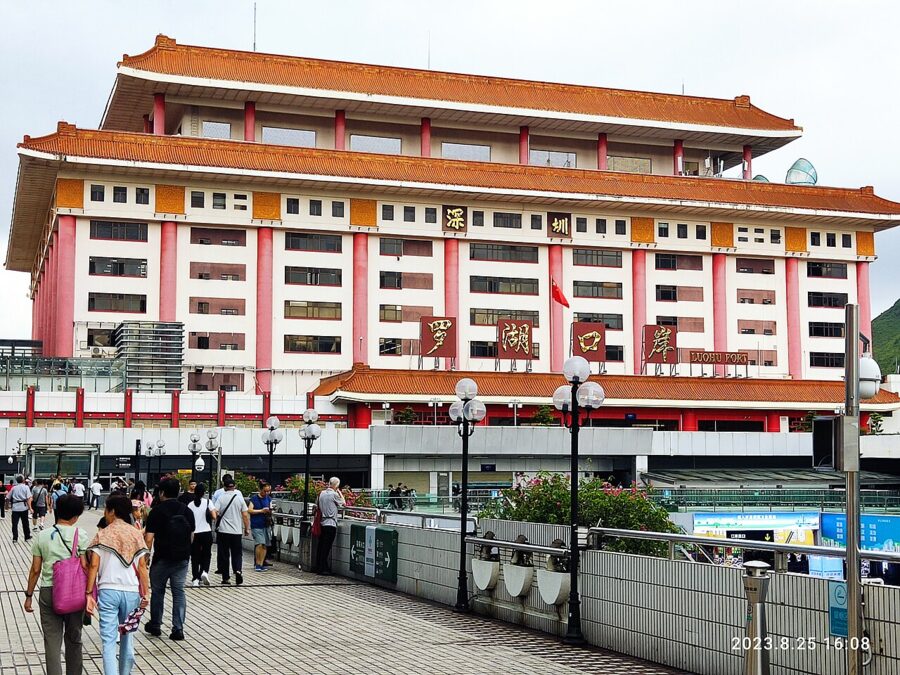

Most people crossing today do not need it. Since February 2026 British and Canadian passports have joined Australia, New Zealand, Japan, South Korea and most of the European Union on China’s 30-day visa-free list, and they walk past that escalator without a second look. The visa matters now for US passport holders on a Hong Kong round trip, for the many nationalities on no list at all, and for anyone whose plans fall outside the visa-free rules.
Every rule below is as it stands in November 2026, with the body that sets it. Border policy here moves every few months, so check that source the week you travel.

In this article
What the five-day Shenzhen visa is
Its formal name is the Shenzhen Special Economic Zone tourist visa (深圳经济特区旅游签证). China’s port visa rules allow the visa authorities at Shenzhen, Zhuhai and Xiamen to issue special economic zone tourist visas of three or five days, and they bind the holder to the administrative area of the city where the entry port sits. Shenzhen issues the five-day version. It is a sticker in your passport, valid for one entry, and the clock starts on the day after it is issued.
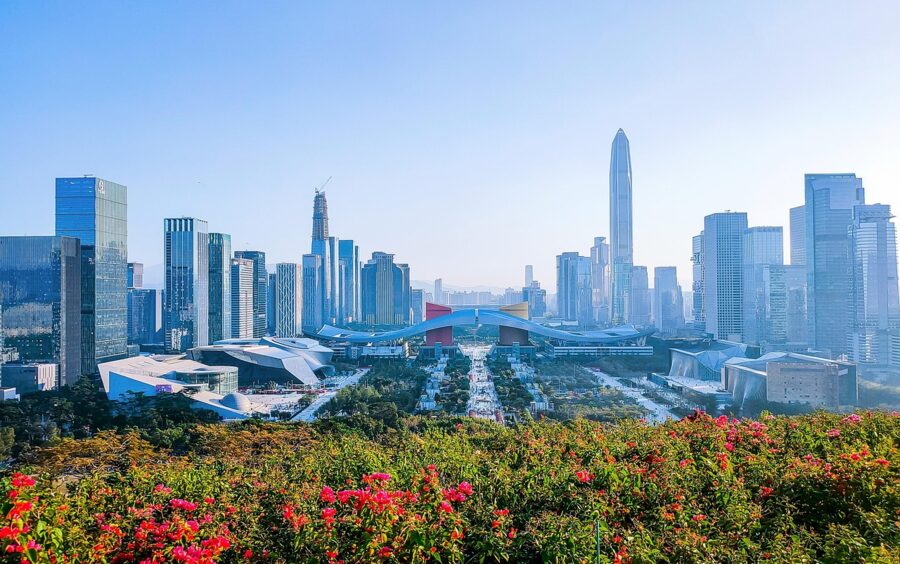
“Special economic zone” confuses people who remember the old internal checkpoint that once cut Shenzhen in two. That line is gone, and the rule speaks of the city’s administrative area, so the visa covers all of Shenzhen: Luohu and Futian, Nanshan and Shekou, Bao’an and the airport, Longgang, Longhua and out to Dapeng. It does not cover Dongguan, Huizhou or Guangzhou, and nothing on the ground tells you when you have crossed into them.
Who can get it
Here the official record runs thin. China publishes no list of nationalities refused the Shenzhen visa, and the National Immigration Administration’s own guidance treats every port visa as a decision for the officer at the counter. Guides still repeat a list of excluded passports from years ago that was never official in the first place.
What can be shown is recent practice. In May 2026 a US passport holder got the five-day visa at Luohu after a short interview about his plans, and another American reported the same routine in August 2026. Nationalities with a history of overstays face more questions and more refusals. Whatever your passport, a refusal leaves you standing in the arrivals hall with Hong Kong a short walk behind you, so do not book a non-refundable Shenzhen hotel on the assumption that you will get it.
One rule now has teeth. Under the State Council’s exit-entry regulation, in force since 15 September 2026, a foreigner who gives false information when applying for a visa at a port can be barred from entering China for one to five years. Tell the officer what you are actually doing in Shenzhen.
The fee, and how it is paid
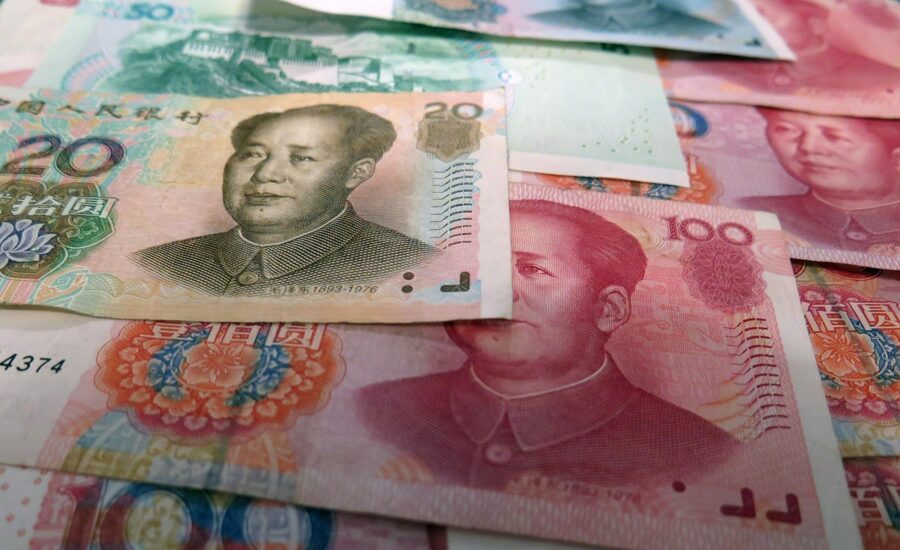
No official page publishes the current fee for the five-day visa, and the guides that print one disagree with each other by several hundred renminbi. The most recent first-hand reports, from Luohu in May 2026, give RMB 130, paid by a US passport holder with a Visa card at the counter. Fees for port visas in China are set by nationality on a reciprocal basis, so yours may differ.
Bring a credit card and a few hundred renminbi in cash as well. Card payment at the counter has worked this year, but a card machine that is down is not a risk worth taking at 07:00, and cash also covers the metro token on the other side.
Which crossings issue it, and which do not
Shenzhen has more crossings from Hong Kong than any other city, and only some of them have a port visa office. The Shenzhen police named four in June 2025, with hours: Huanggang and the airport around the clock, Luohu from 06:00 to 24:00, and Shekou from 07:00 to 22:30. The National Immigration Administration’s directory of port visa offices also lists the Fuyong ferry terminal. No later list has been published, so treat these as the last official word rather than a guarantee.
| Crossing (Hong Kong side / Shenzhen side) | Hong Kong control point hours | Shenzhen visa office? |
|---|---|---|
| Lo Wu / Luohu 罗湖 | 06:30–24:00 | Yes. The usual choice from Hong Kong. |
| Huanggang 皇岗 (new joint building since 12 October 2026) | 24 hours | Listed before the move; not yet confirmed in the new building. |
| Shekou 蛇口 (ferry) | Depends on the departure terminal | Yes, 07:00–22:30 when last published. |
| Lok Ma Chau Spur Line / Futian 福田 | 06:30–22:30 | No. |
| Shenzhen Bay 深圳湾 | 06:30–24:00 | No. |
| Heung Yuen Wai / Liantang 莲塘 | 07:00–22:00 | No. |
| Man Kam To / Wenjindu | 07:00–22:00 | No. |
| West Kowloon high-speed rail | 06:30–23:30 | No. |
The Hong Kong hours come from the Immigration Department’s control point page, updated on 29 October 2026. Sha Tau Kok is closed to passengers until further notice. The old Lok Ma Chau Control Point and its yellow shuttle bus to Huanggang stopped carrying passengers at 06:30 on 12 October 2026, when the rebuilt Huanggang Port opened.
Lo Wu: the reliable one
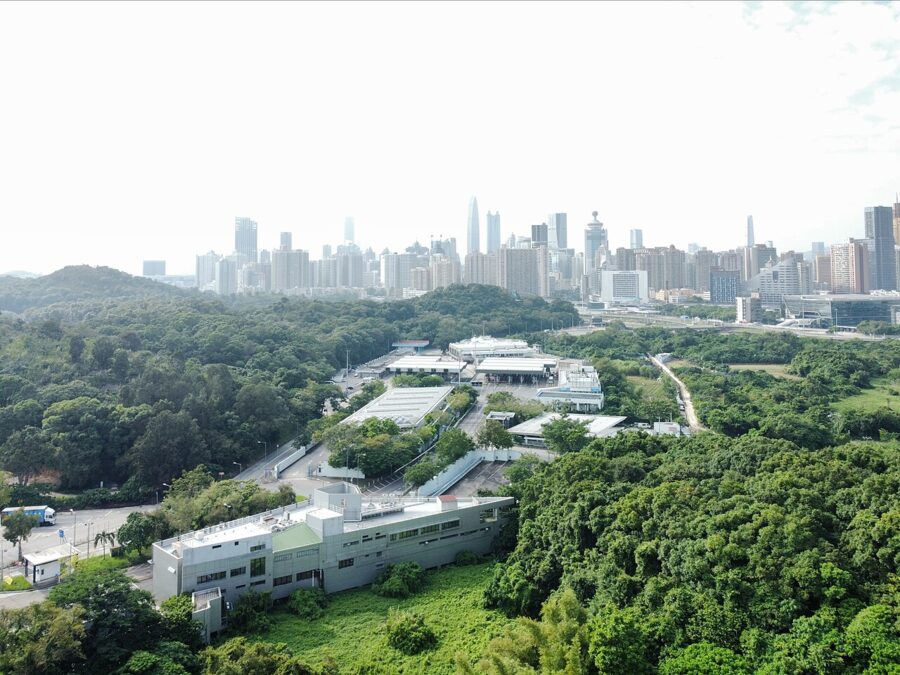
Lo Wu has the busiest visa office, the most experience with walk-in tourists and a train from central Hong Kong that drops you at the door. It is where I would apply. The drawbacks are the stairs, the morning crowds and a Hong Kong control point that shuts at midnight.
Huanggang: open all night, but new
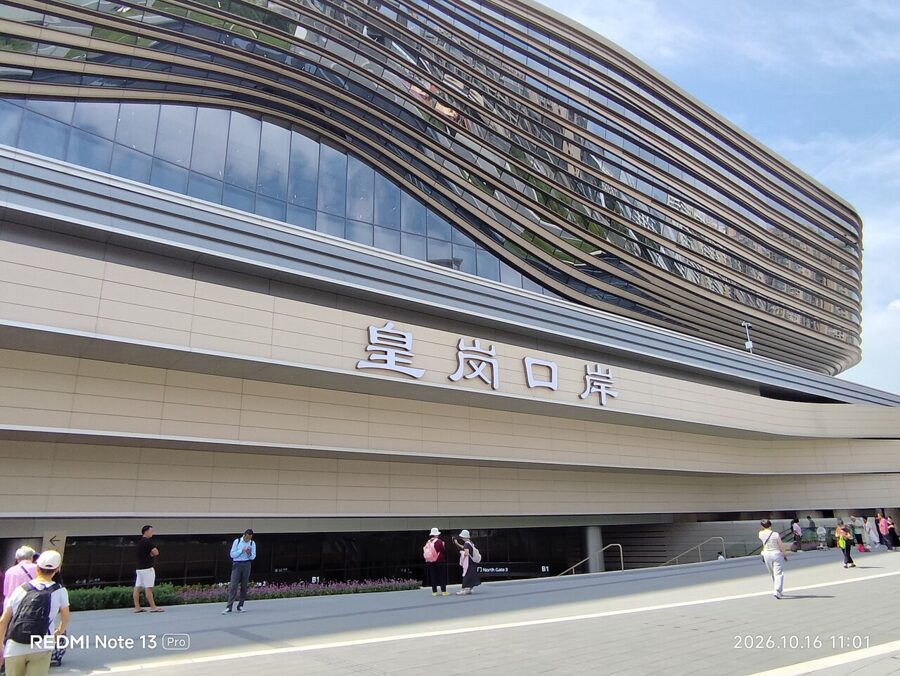
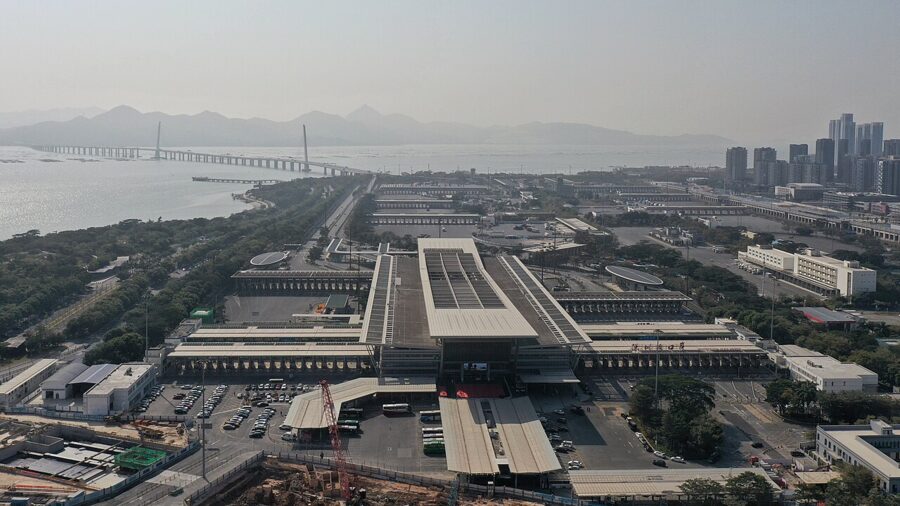
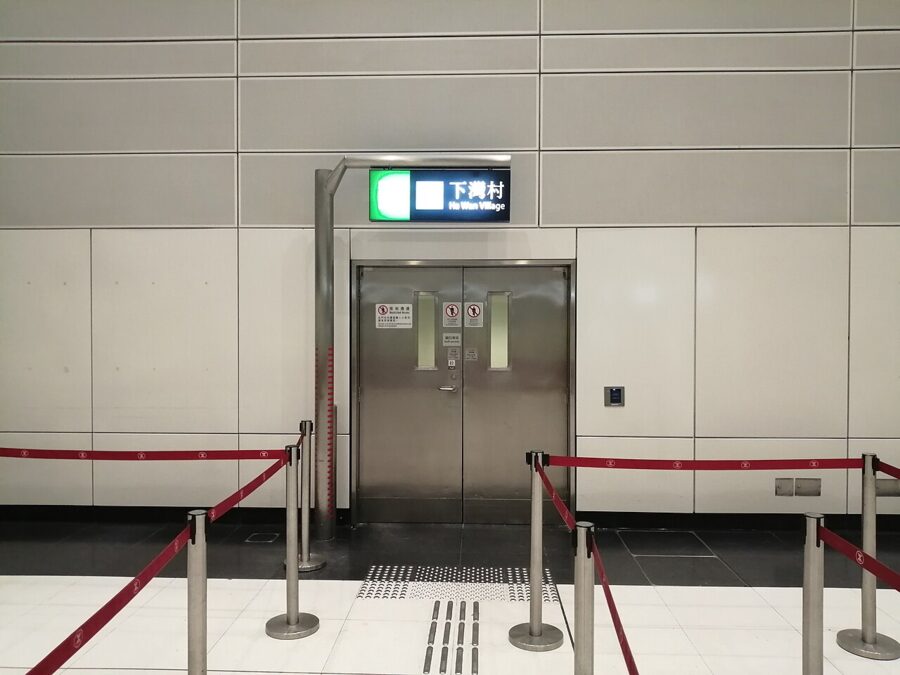
The rebuilt Huanggang Port (皇岗口岸) opened on 12 October 2026 with a joint inspection model: Hong Kong and Shenzhen officers sit at neighbouring counters, and residents with the right documents pass both sides through one automated gate. Under the old arrangement Huanggang had a 24-hour visa office on the Shenzhen side. Whether a port visa counter has opened in the new building, and where in it, has not been announced, so I would not plan a late-night visa run here until someone reports one.
Shekou: by water
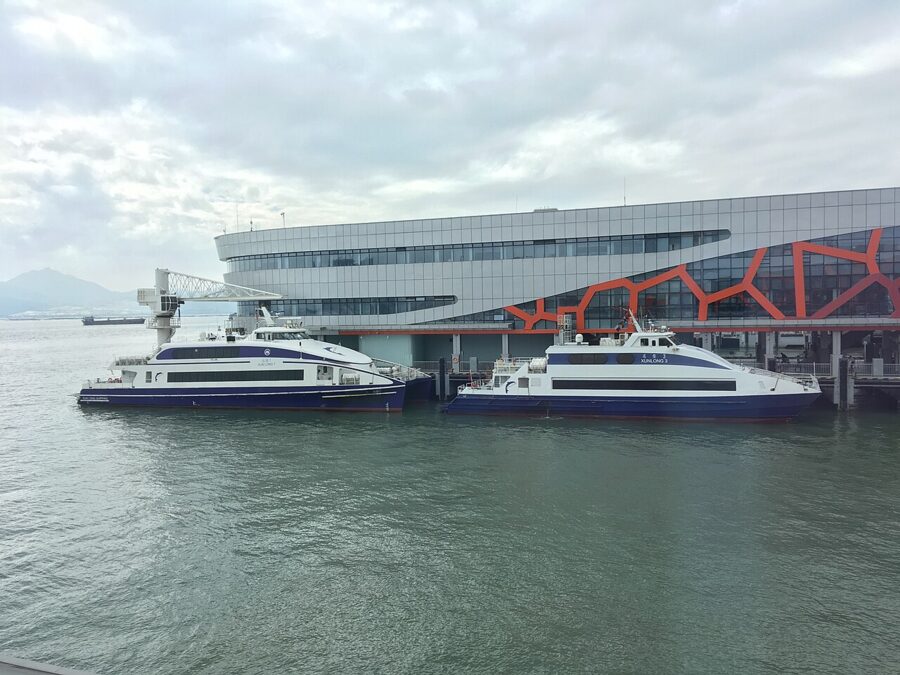
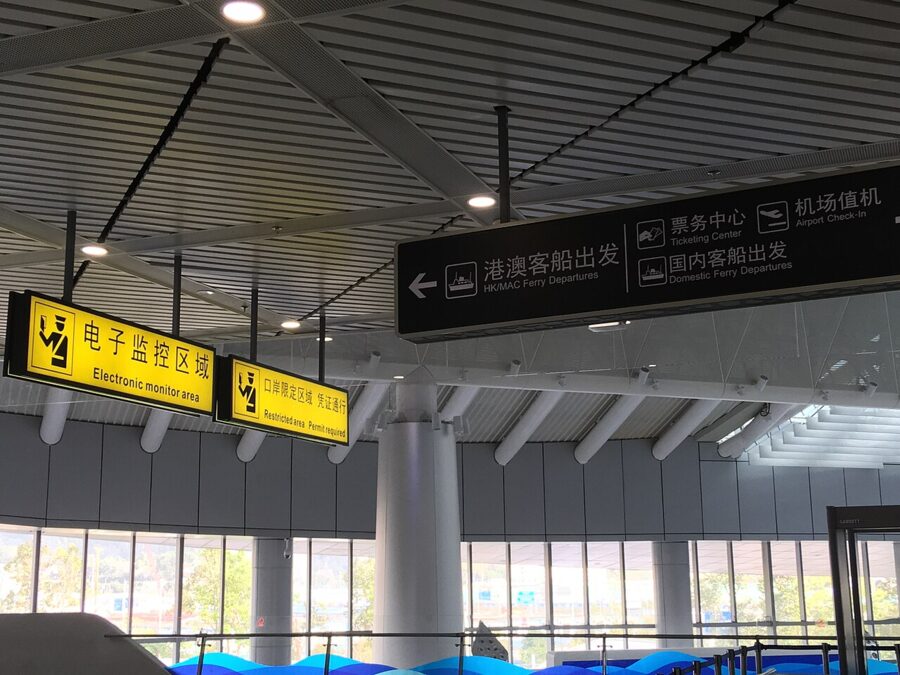
Shekou Cruise Center (蛇口邮轮中心) in Nanshan handles the ferries from Hong Kong and Macau, and it has its own visa office. It suits you if you are coming straight from Hong Kong International Airport or heading for western Shenzhen. Queues are usually shorter than at Lo Wu.

The crossings with no visa office
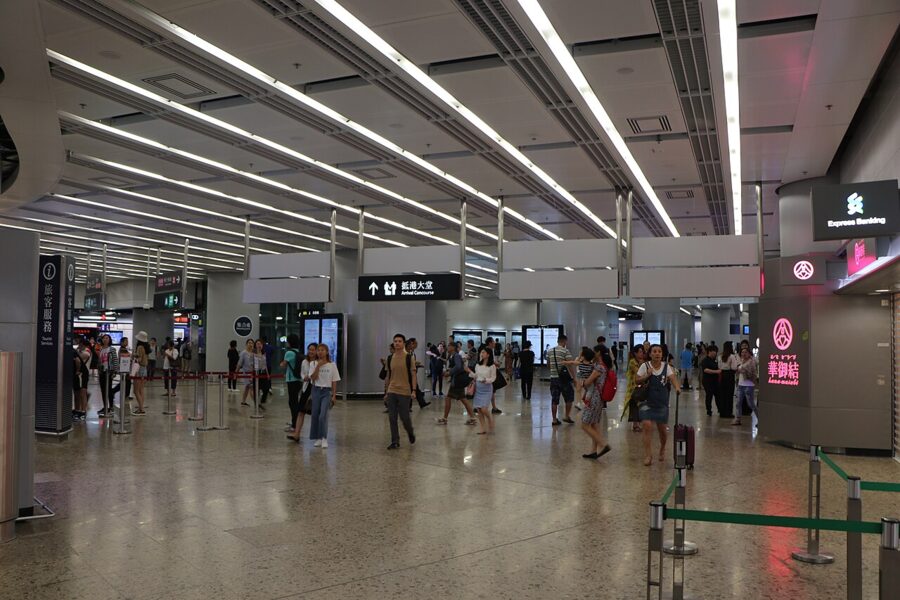
Futian, Shenzhen Bay, Liantang and Wenjindu are fine if you are visa-free or already hold a Chinese visa, and useless if you are counting on the five-day visa. So is the high-speed train from West Kowloon, where mainland immigration happens before you board. Arrive at any of them without a visa and the mainland officers will send you back to the Hong Kong side.


Step by step at Lo Wu
Do three things the night before. Check that your passport has a blank page for the visa sticker. Book a room and keep its address in Chinese on your phone, because the arrival card asks where you will stay. Fill in the arrival card online on the National Immigration Administration’s site, which is free; the agency warns that look-alike sites have been charging for it.
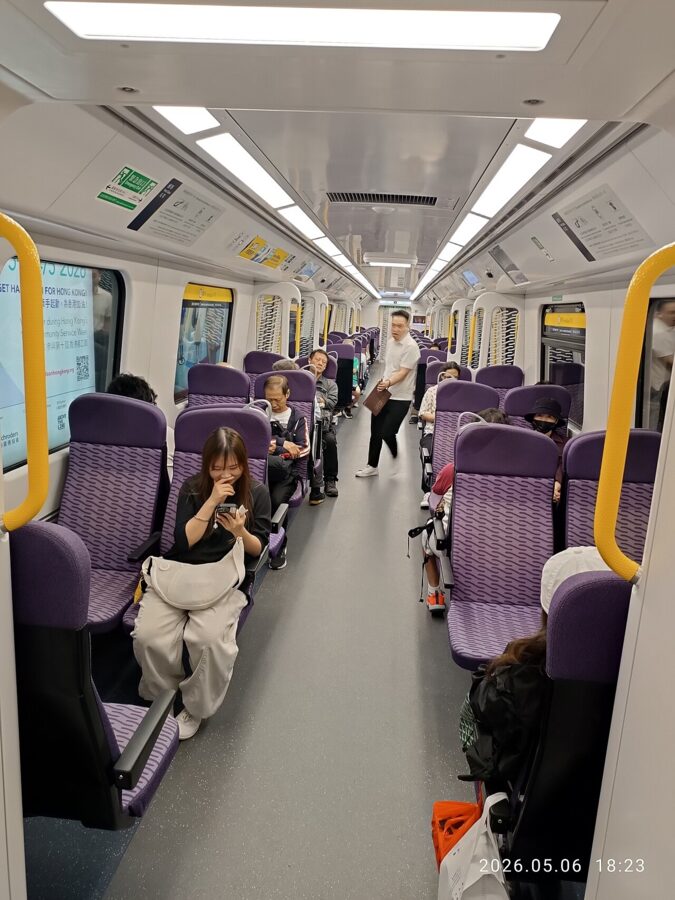
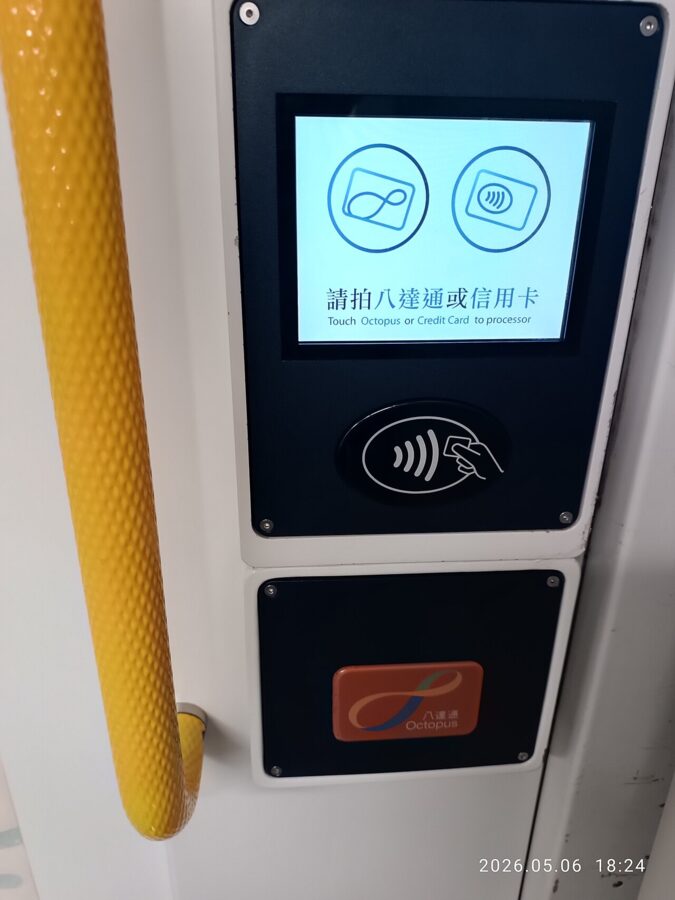
- Take the East Rail Line to Lo Wu. From Admiralty it takes about 45 minutes and costs HK$52.20 on an adult Octopus or HK$55.50 as a single ticket. The first train from Admiralty to Lo Wu leaves at 06:04.
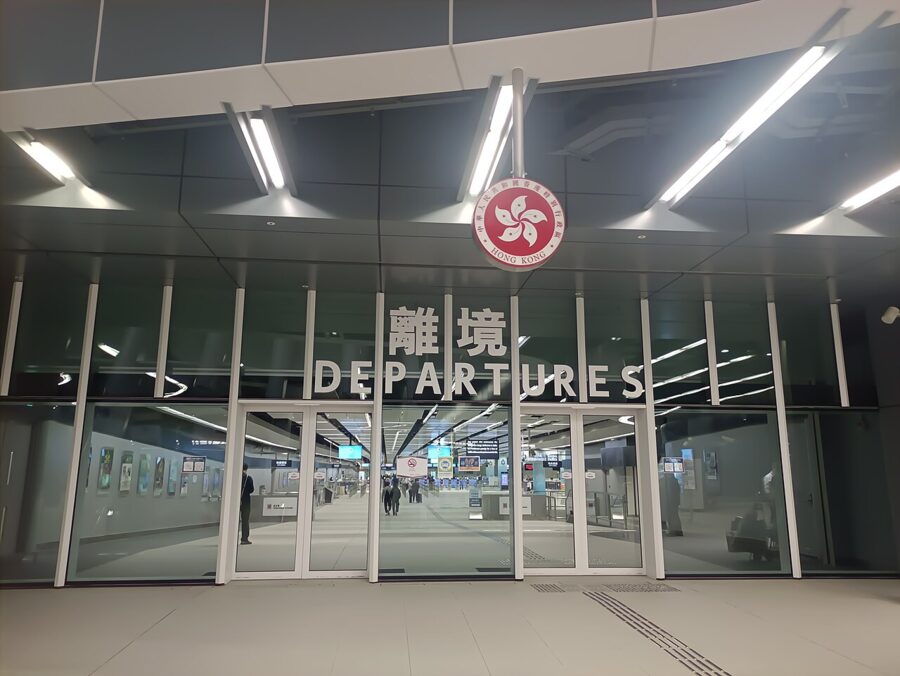
- Leave Hong Kong. Visitors use the departure counters or, if enrolled, the e-Channel at Lo Wu Control Point. Keep your Hong Kong landing slip with your passport.
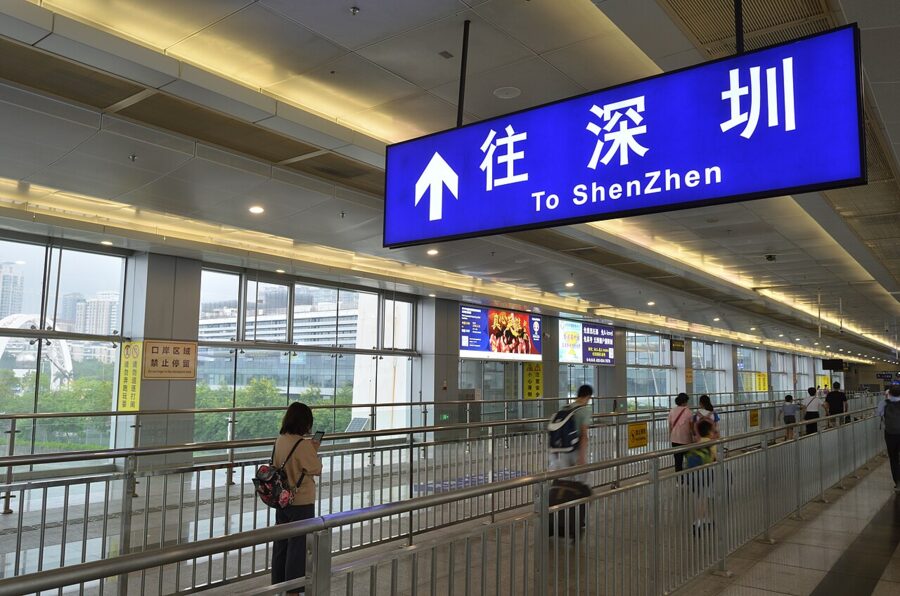
- Cross the bridge. A covered footbridge takes you over the Shenzhen River into Luohu Port.
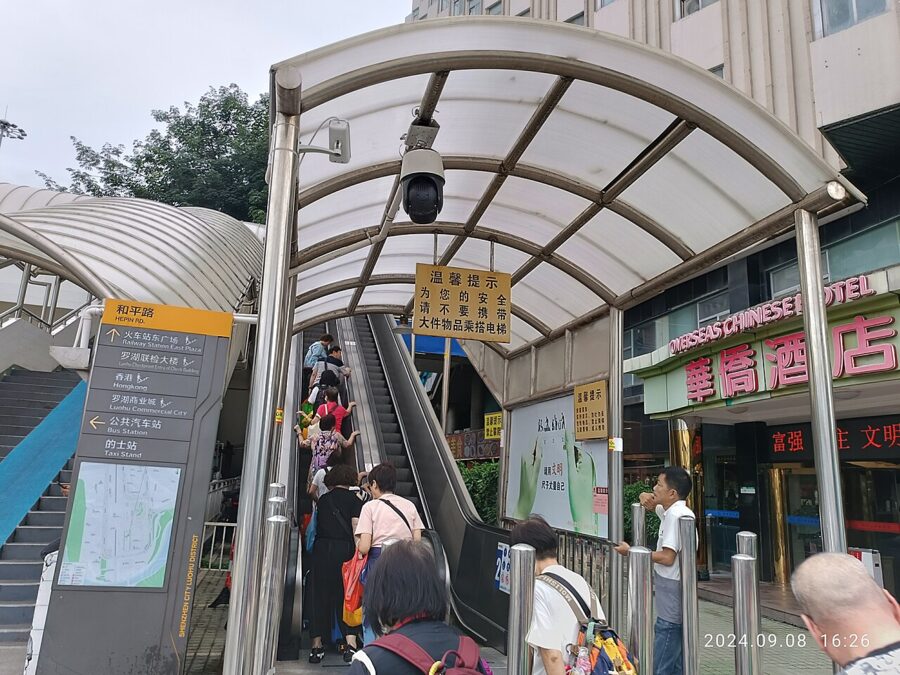
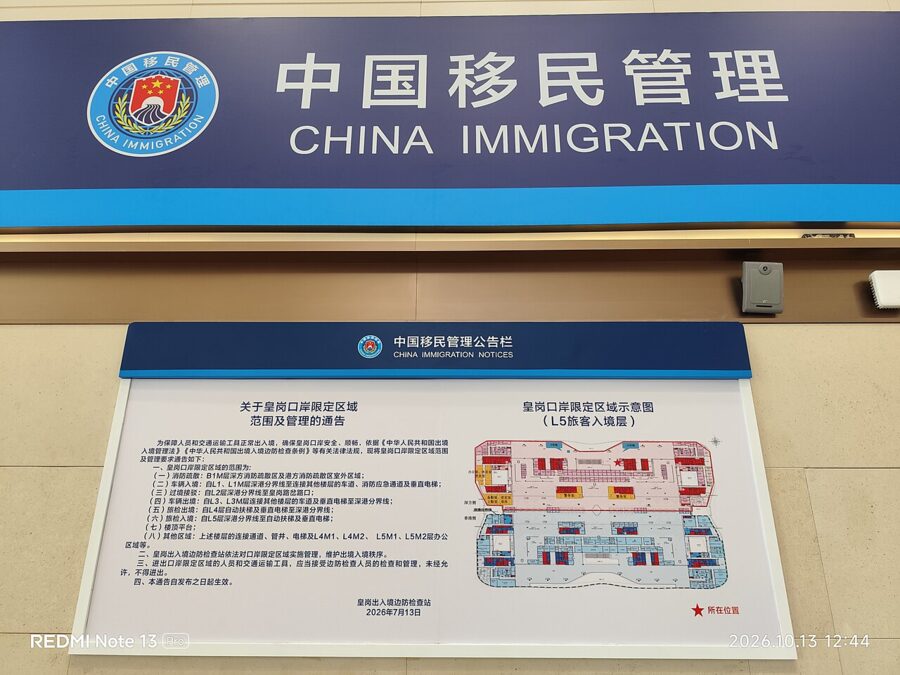
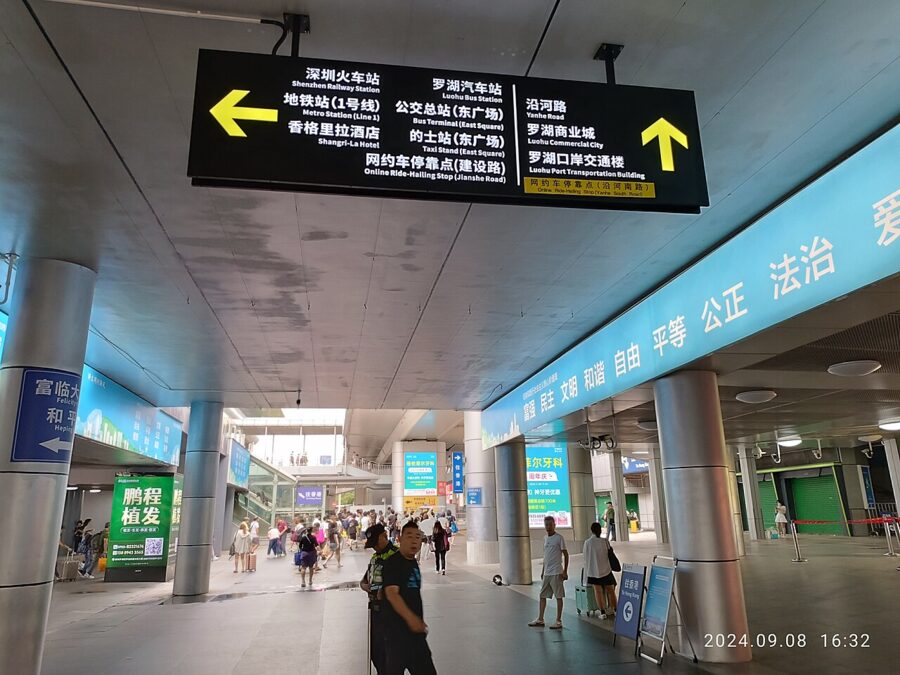
- Go up to the visa office before you queue. Look for the signs for the port visa office (口岸签证). Applicants this year found it upstairs, reached by escalator, and one in August 2026 had to ask an officer, because it sits to the left of and behind the immigration area.
- Photo, form, ticket. Use the free self-service photo machine in the office, fill in the one-page application form, and take a queue number.
- At the window. Hand over your passport, photo and form, answer a few questions about your plans, and pay. Then wait. In May 2026 an applicant who reached the window at 07:10 had his passport back at 08:00.
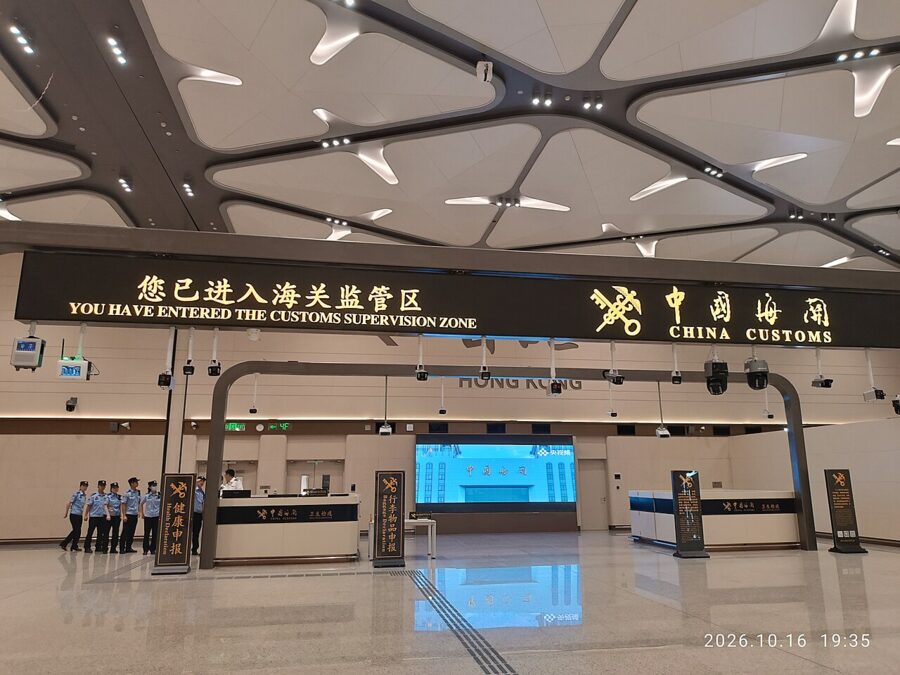
- Back down to immigration. Join the foreigners’ line, have your fingerprints taken, and show your arrival card. If you did not fill it in online, there are screens and paper cards in the hall.
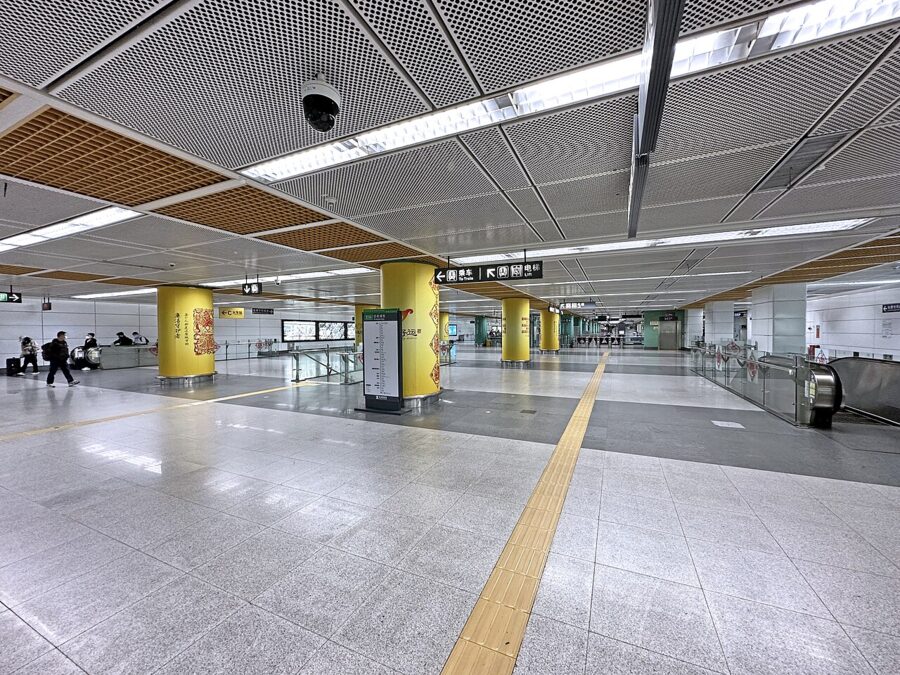
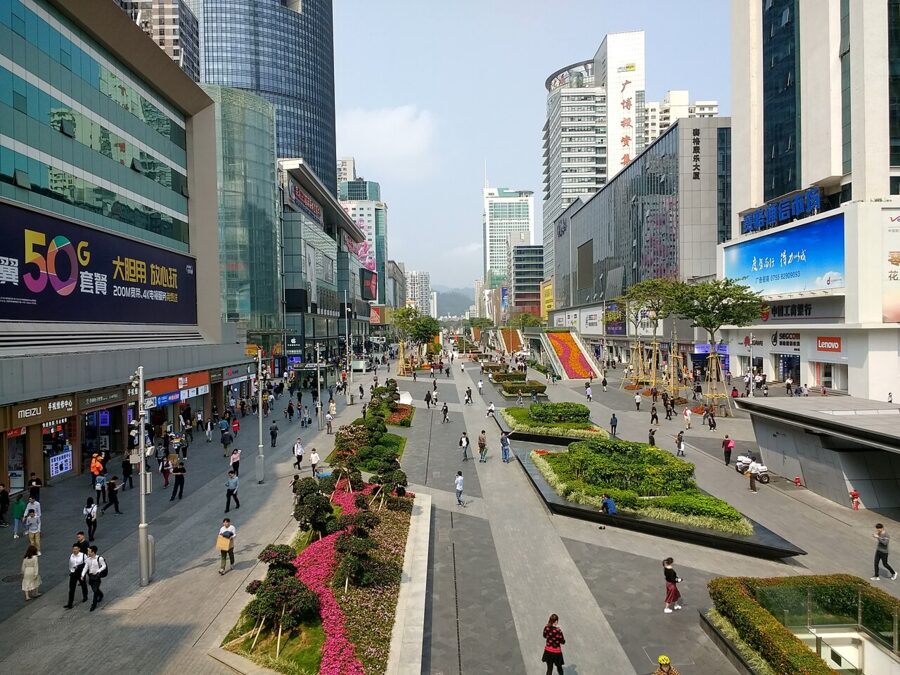
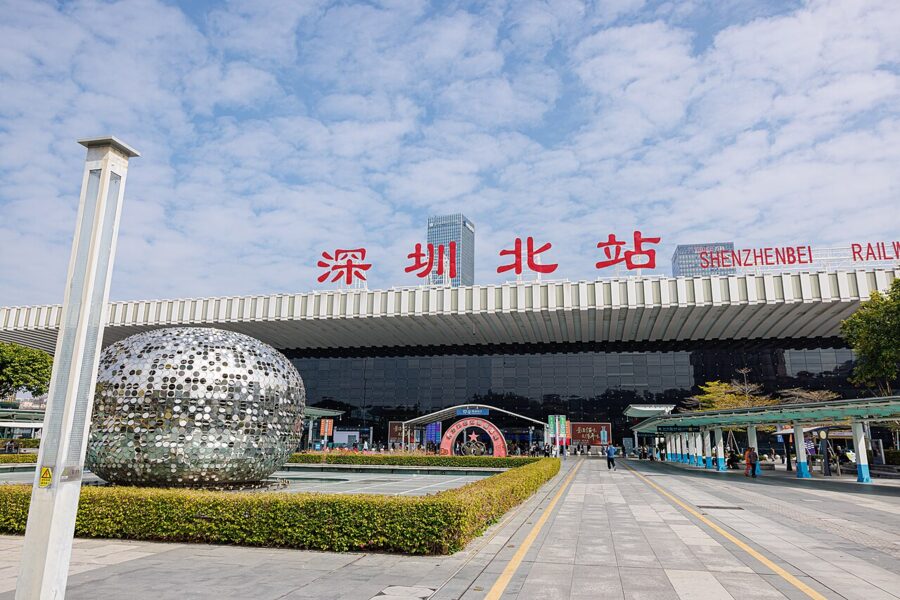
- Customs, then out. Walk through customs to Luohu’s square. Shenzhen Railway Station is on your right and the Line 1 metro is below you.
The officer at the immigration counter, not the visa window, has the last word on how long you may stay. One American applicant in May 2026 told the immigration officer he was on a day trip and came away with permission for one day rather than five. Say how long you actually plan to stay.

Do you need it at all? The other ways in
The five-day visa is the fallback. Check these three first, in this order, against your passport and your plans.
Visa-free entry for 30 days
Holders of ordinary passports from 50 countries can enter China without a visa for up to 30 days for business, tourism, family visits, exchanges or transit, according to the National Immigration Administration’s list of unilateral visa exemptions, last updated on 17 February 2026. The days count from midnight after you enter, there is no limit on the number of entries, and the whole country is open to you, not just Shenzhen.
The list covers most of Europe, including the United Kingdom, Ireland, France, Germany, Italy, Spain, the Netherlands, Switzerland, the Nordic countries and Russia, and adds Australia, New Zealand, Japan, South Korea, Brunei, Canada, Brazil, Argentina, Chile, Peru, Uruguay, Saudi Arabia, Oman, Kuwait and Bahrain. It runs until 31 December 2026 for most of them, to the end of 2027 for Russia, and with no end date for Brunei. Whether it is renewed for 2027 had not been announced by late November 2026, so anyone crossing in January should check again.
Singapore, Malaysia and Thailand sit outside that list because they have mutual visa-exemption agreements with China, which also allow 30-day stays. The agreements carry an extra rule: no more than 90 days in any 180.
The 240-hour visa-free transit
Nationals of 57 countries, including the United States, the United Kingdom, Canada, Mexico, Indonesia and, since 20 August 2026, Vietnam and Kyrgyzstan, can stay up to ten days without a visa if they are passing through China to a third country or region. You need an ordinary passport and an onward ticket with a confirmed seat and date. The rules and the full list are on the National Immigration Administration’s transit page.
Two details catch people coming from Hong Kong. You have to enter through one of 65 designated ports, and in Shenzhen those are only Bao’an airport and Shekou; Lo Wu, Huanggang, Futian and Shenzhen Bay are not on the list, although West Kowloon’s high-speed rail port is. And the onward journey has to take you somewhere other than where you came from, so Hong Kong in and Hong Kong out is a round trip, not a transit.
Where it shines is a stopover. A US passport holder can take the ferry from Hong Kong to Shekou, spend a week anywhere in Guangdong, and fly out of Bao’an to Hanoi or Seoul. If the next stop is Vietnam, sort out the Vietnam e-visa before you leave Hong Kong, since the airline will ask for it at check-in.

The six-day tour group from Hong Kong
Any foreigner with an ordinary passport from a country that has diplomatic relations with China can enter Guangdong visa-free as part of a tour group of two or more people organised by a travel agency registered in Hong Kong or Macau. The group enters and leaves together, may visit Shenzhen, Guangzhou, Dongguan, Foshan, Huizhou, Zhuhai, Zhongshan, Jiangmen, Zhaoqing and Shantou, and may stay up to six days. The National Immigration Administration lists it among its regional visa-free policies.
This is the option for passports that qualify for nothing else, and it is clearly in use: Lo Wu’s border station counted large numbers of these groups in the first half of 2026. The trade-off is freedom. You go where the itinerary goes.
A full visa from Hong Kong
If you want more than five days, more than Shenzhen, or more certainty than an officer’s discretion, apply for a regular Chinese visa in Hong Kong before you go. That has its own process, documents and fees, set out in the guide to getting a China visa in Hong Kong.
Which option fits your passport
| Passport (ordinary) | Best way into Shenzhen from Hong Kong, November 2026 |
|---|---|
| United Kingdom, Canada, Australia, New Zealand, Ireland, France, Germany, Italy, Spain, Netherlands, Switzerland, Nordic countries, Japan, South Korea | Visa-free for 30 days at any crossing, until 31 December 2026 |
| Russia | Visa-free for 30 days, until 31 December 2027 |
| Singapore, Malaysia, Thailand | Visa-free for 30 days under mutual agreements |
| United States, Mexico, Indonesia, Czech Republic, Lithuania, Ukraine | Round trip from Hong Kong: five-day Shenzhen visa at Lo Wu. Onward to a third country: 240-hour transit via Shekou, Bao’an or West Kowloon |
| India, the Philippines, South Africa and others on no list | Five-day Shenzhen visa (at the officer’s discretion), a six-day tour group from Hong Kong, or a full visa |
| HKSAR passport | Home Return Permit, no visa |
Hong Kong residents: the permit is not a visa
If you hold an HKSAR passport, none of the above applies to you. You are a Chinese citizen, the passport is not used to enter the mainland, and you cross on the Mainland Travel Permit for Hong Kong and Macao Residents (港澳居民來往內地通行證), the card everyone calls the Home Return Permit.
Permanent residents who are not Chinese citizens can hold a separate version of the permit for non-Chinese citizens. Holders of that card do not fill in the foreigners’ arrival card. Without it, a foreign national with a Hong Kong permanent identity card is treated by mainland immigration exactly like any other visitor on that passport: visa-free if the passport qualifies, five-day visa or full visa if it does not.
Mixed households trip over this at the counter. A family of three with one HKSAR passport, one British passport and one US passport is crossing under three different sets of rules, and only one of them may need the visa office.
Getting to the border from central Hong Kong
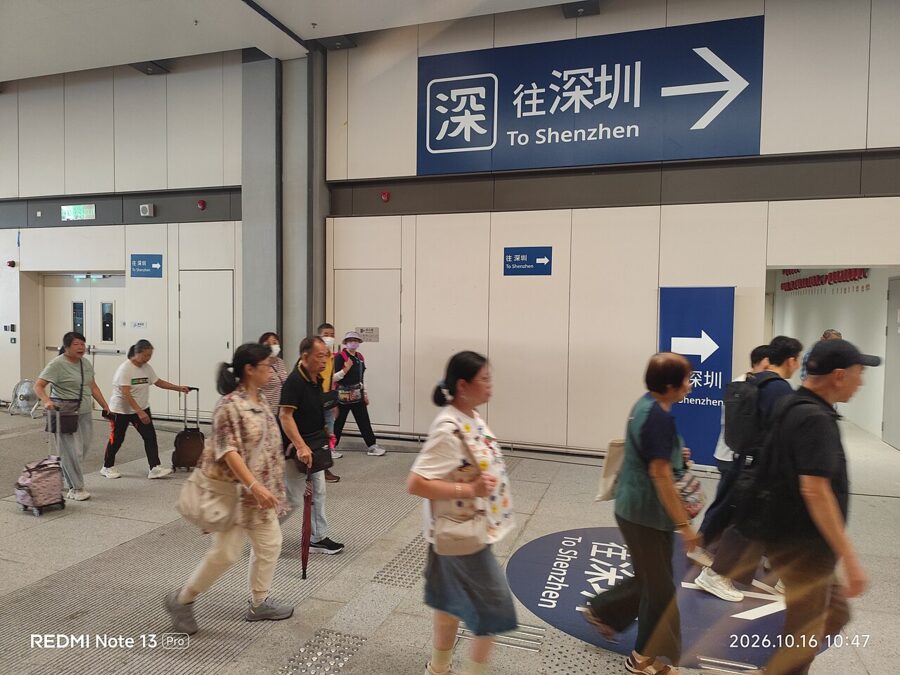
East Rail Line to Lo Wu
The East Rail Line runs from Admiralty through Exhibition Centre, Hung Hom and Kowloon Tong to Lo Wu, with a branch to Lok Ma Chau. From Admiralty the standard adult fare is HK$52.20 on Octopus; from Hung Hom or Kowloon Tong it is HK$41.60 and HK$41.50. The MTR’s journey planner gives 45 minutes from Admiralty.
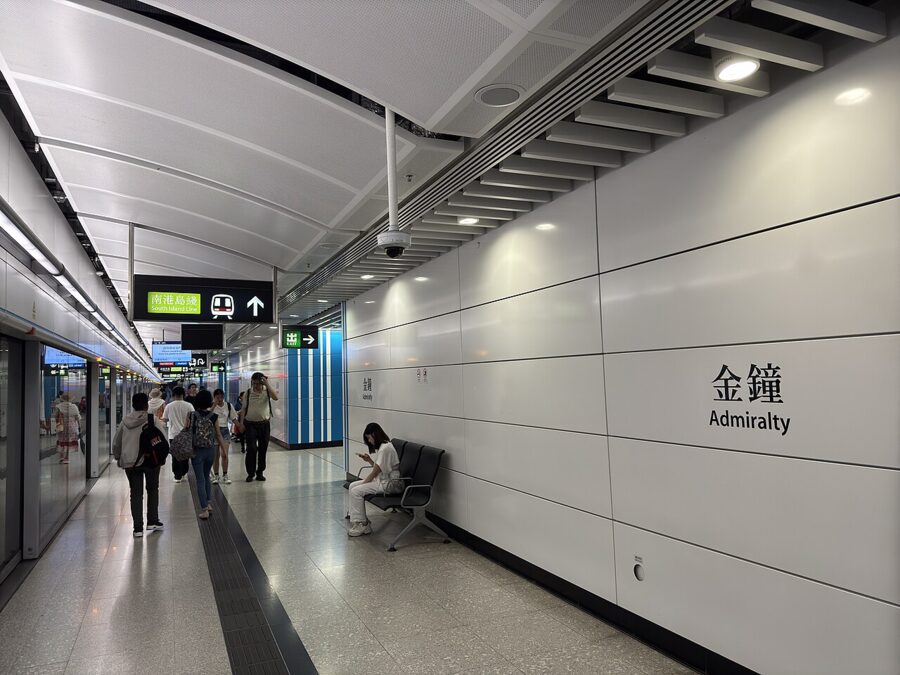

Coming back, the last train from Lo Wu to Admiralty leaves at 00:00, timed for the control point’s midnight closing. If you are cutting it fine, be in the Shenzhen departure hall by 23:15 at the latest; the queue on a Sunday night does not care about your train.

Lok Ma Chau Spur Line to Futian
The same fare takes you to Lok Ma Chau, where the crossing to Futian Port is faster and calmer than Lo Wu. It closes earlier, though: the control point runs 06:30–22:30, the last train from Admiralty to Lok Ma Chau leaves at 21:29, and the last one back from Lok Ma Chau to Admiralty at 22:55. There is no visa office at Futian, so this route is for the visa-free and for anyone who already holds a Chinese visa.

Coaches and buses to Huanggang
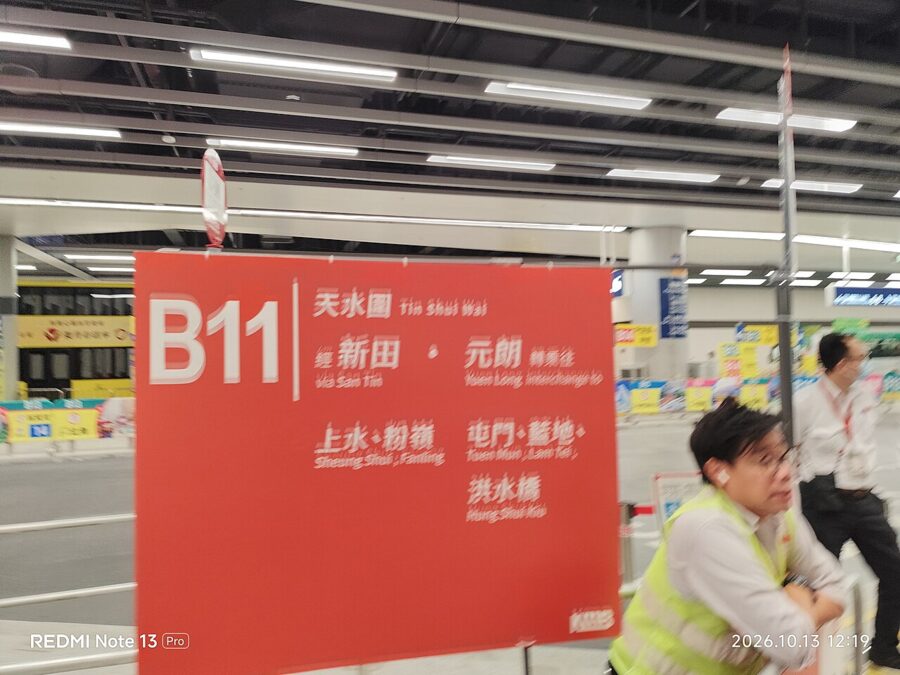
Huanggang has no railway from Hong Kong, but the Transport Department’s arrangements for the new port give it five short-haul cross-boundary coach routes running 24 hours. They leave from Austin Road in Jordan, from the public transport interchange at Exhibition Centre Station in Wan Chai, from Arran Street in Mong Kok, from Lam Tin Station and from Tsuen Wan. Citybus B13 runs by day from Siu Sai Wan through Central and Sheung Wan, and KMB B11 and NLB B12 come in from the New Territories via San Tin.
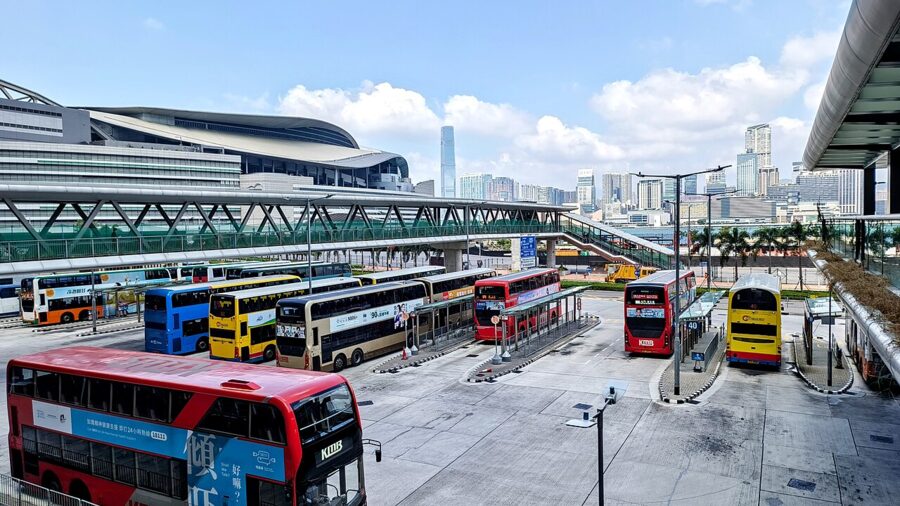

Coach fares were not published with the arrangements. If you want the five-day visa, I would still take the train to Lo Wu until the visa counter at the new Huanggang is confirmed.
Ferry to Shekou
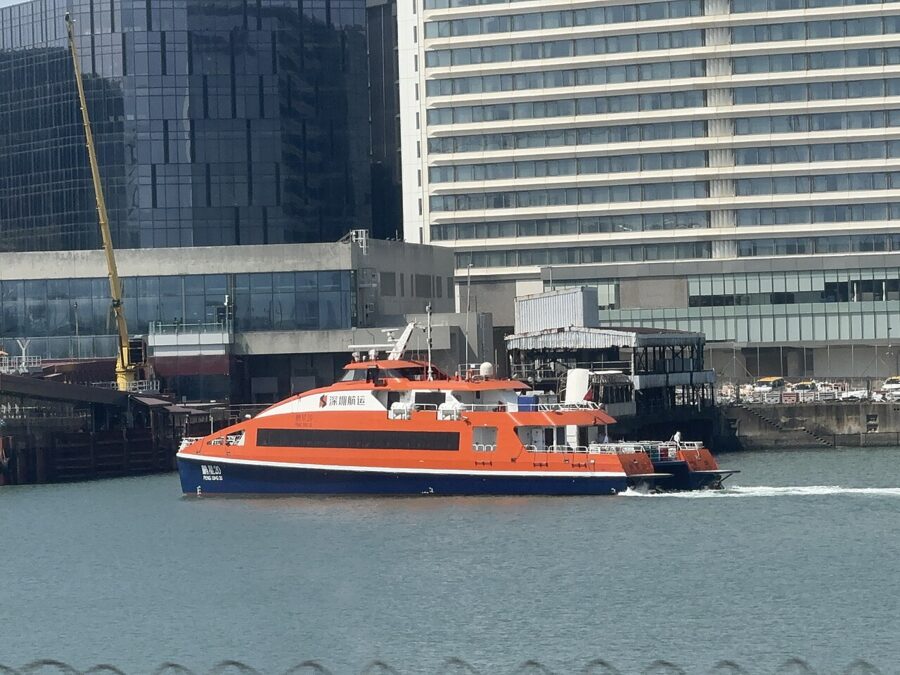
Ferries link Shekou with SkyPier at Hong Kong International Airport, and Hong Kong’s city ferry terminals in Sheung Wan and Tsim Sha Tsui handle mainland sailings. Which of them runs to Shekou on your day, and when, is on the operators’ current timetables. The ferry is the sensible route if you land at Chek Lap Kok and want to be in Nanshan that evening.


Onward in Shenzhen
From Luohu, Metro Line 1 runs west through Futian towards Bao’an. Change for Huaqiangbei’s electronics markets, the Futian business district or Nanshan. The Shenzhen Metro sells single-journey tokens from machines that take cash; in May 2026 the ten stops from Luohu to Chegongmiao cost RMB 4.
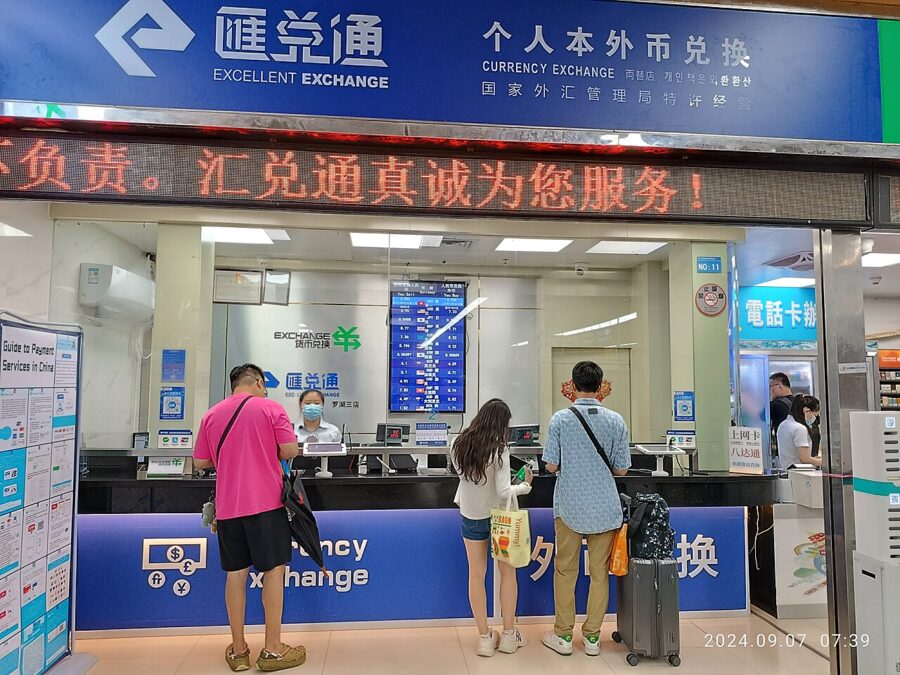
Payment is where first-time visitors stall. Most of Shenzhen pays by Alipay or WeChat Pay, both of which accept foreign credit cards once set up on your phone, so do that in Hong Kong where your data is good. A Hong Kong SIM with mainland data saves you from relying on hotel wifi; the guide to Hong Kong prepaid SIM cards covers which ones include it.

If you sleep in a hotel, it registers you with the police. If you stay with friends, the law gives you or your host 24 hours to register, and since 21 September 2026 that can be done online through the National Immigration Administration’s 12367 app or mini-programme instead of at a police station. A missed registration surfaces when you try to leave, which is the worst possible moment.
What goes wrong
Leaving the zone
The visa ends at the city boundary. The usual slip is a high-speed train from Futian or Shenzhen North to Guangzhou, or a taxi into Dongguan for a factory visit. Leaving Shenzhen on this visa breaks its conditions, and you are the one explaining it to a border officer on the way out. If Guangzhou is on the plan, you need a different way in.

Overstaying
Count the days from the day after the visa is issued, and leave on or before the fifth. Under the Exit-Entry Administration Law, a foreigner who stays illegally can be warned, fined RMB 500 a day up to RMB 10,000, or detained for five to fifteen days. The visa cannot be stretched; plan to be back across with a day in hand.
The wrong crossing
People arrive at Futian or Shenzhen Bay because a map app said it was quicker, then find there is no visa office. The mainland side sends them back, Hong Kong readmits them, and the morning is gone. Use Lo Wu, or Shekou by ferry.

Peak-hour queues
Lo Wu handled more than 36 million crossings in the first half of 2026, close to 200,000 a day, and Shenzhen’s border police describe it as having two peaks a day, morning and evening, with another rush between 21:30 and 23:00 as people head home. Weekends and Hong Kong public holidays are worse. The visa office adds its own wait on top, so arrive early, and accept that early still means an hour.
Paying
Cards worked at the Luohu visa counter this year, but do not test your luck with only one way to pay. Carry RMB in notes as well, change it in Hong Kong, and set up a mobile wallet before you cross rather than in a queue on the other side.
The wrong document
The visa-free and transit schemes need an ordinary passport; emergency and temporary travel documents are not accepted. A passport damaged or full enough that there is nowhere for a visa sticker is an easy refusal at the visa window, and one with an old overstay in it is a harder conversation.
So: fill in the arrival card tonight on the official site, put the hotel address in your phone, and catch the 06:04 from Admiralty. At Lo Wu, cross the bridge and take the escalator up, not the queue ahead.