

The only left-luggage counter inside Tan Son Nhat airport is a desk between columns 13 and 14 on the ground floor of the international arrivals hall, and it charges by the hour: VND 27,500 a bag for each hour up to ten, then a flat VND 275,000 for anything from ten hours to a full day. It opens at 07:00 and shuts at 23:00. There are no self-service lockers, and nothing like it in the two domestic terminals.
That one desk decides most of what follows. A Hong Kong flight lands at the international terminal, T2, a few steps from it. A domestic flight leaves from T3 or T1, and the counter is nowhere near T3. And if you want the afternoon in town, the bag can stay at the airport, go into a shop near Ben Thanh Market, or ride with you to a hotel that will hold it.
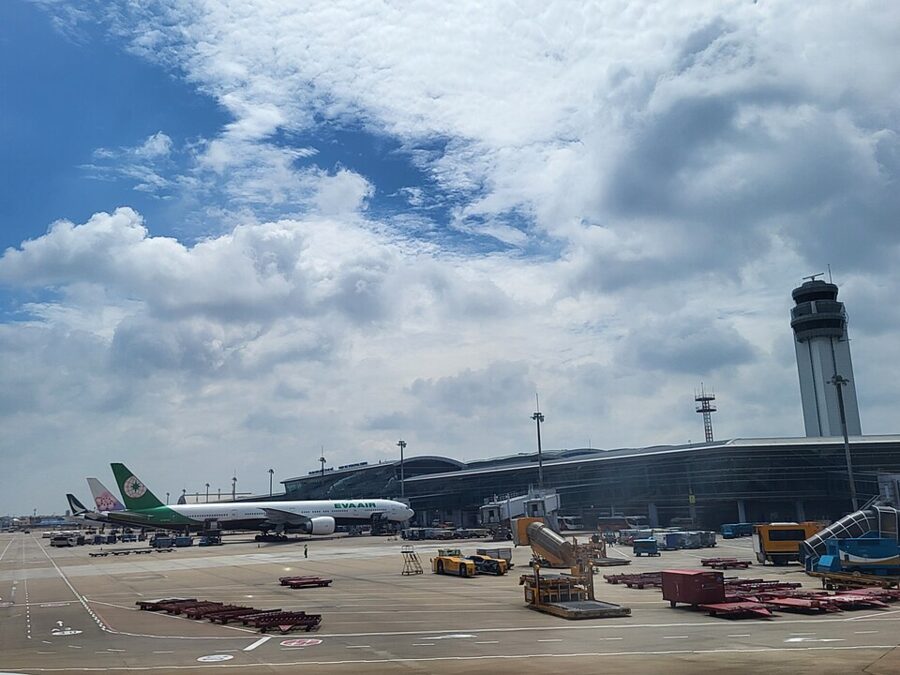

Every fee, hour and rule below is the one the operator, the airport or the Vietnamese press gives as of November 2026. The airport is Sân bay Tân Sơn Nhất on Vietnamese signs, and 新山一國際機場 if you are reading the Chinese on your boarding pass.


In this article
The storage counter in the international terminal (T2)
The service is run by SASCO, the Southern Airports Services company that also runs the airport’s lounges and duty-free shops, and it is listed on SASCO’s own facilities page. Staff take the bag, tag it and keep it behind the desk. You pay when you hand it over, not when you collect.
Where it is
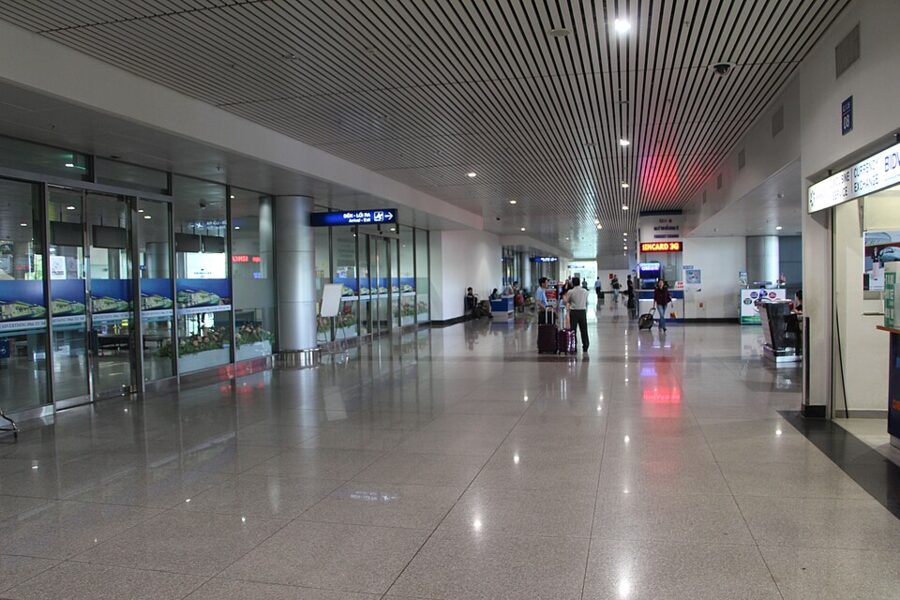
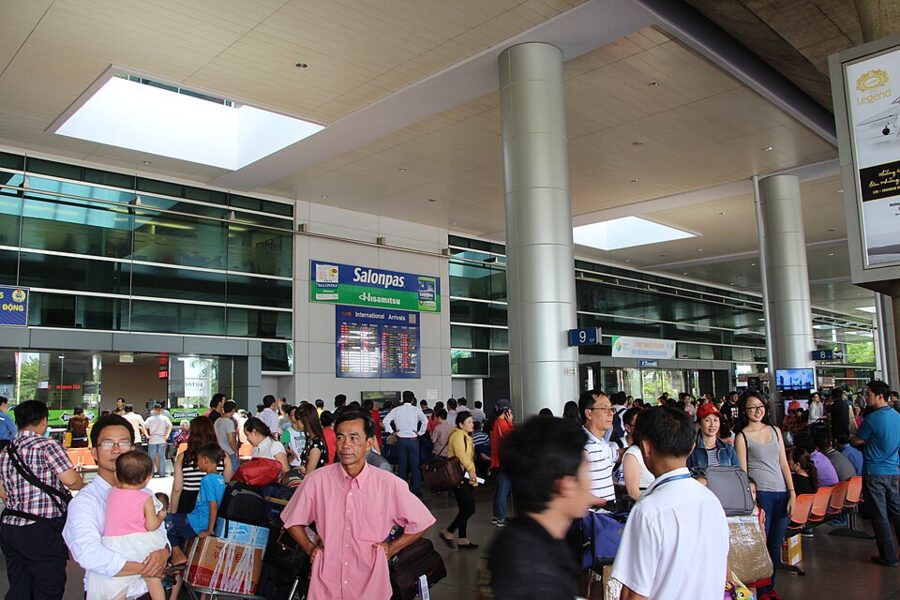
Ground floor, international arrivals, at columns 13 and 14. In Vietnamese the sign reads Quầy giữ hành lý, and the hall is Ga quốc tế đến. It is on the public side, so anyone can walk in from the street or down from departures upstairs; you do not need a boarding pass.
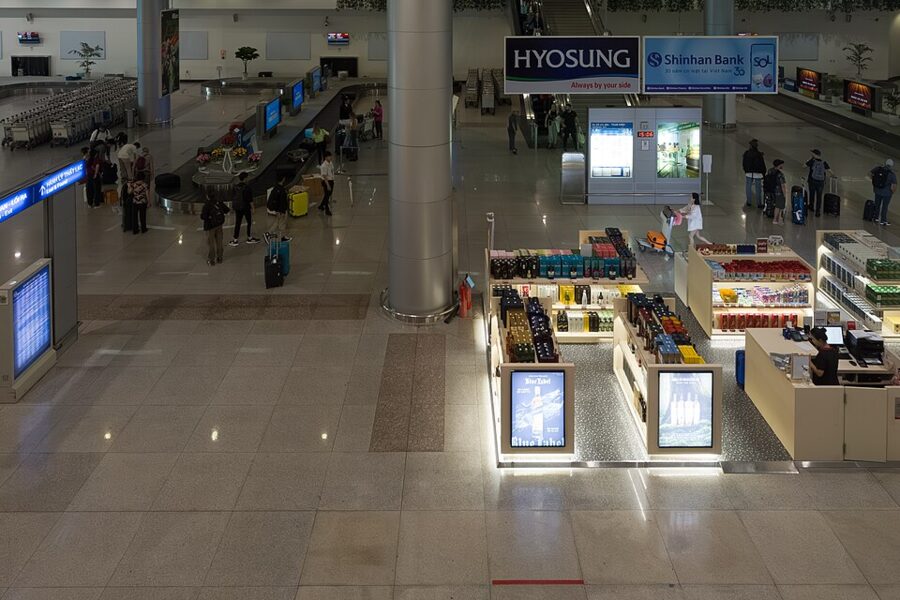
Two useful things sit beside it. SASCO lists four ATMs at column 14 and a fifth at column 3 on the same floor, so you can get dong out before you pay. And the bus stops and meeting point are on this floor too, so the counter is on your way out of the building, not a detour.

What it costs
The price is per piece, not per size. A cabin bag and a 30 kg suitcase cost the same, which makes the counter good value for a big case and poor value for a small one. SASCO’s price list has three bands.
| Time stored | Price per bag | About |
|---|---|---|
| Under 10 hours | VND 27,500 per hour | HK$8.50 an hour |
| 3 hours | VND 82,500 | HK$25 |
| 6 hours | VND 165,000 | HK$51 |
| 10–24 hours | VND 275,000 | HK$85 |
| Over 24 hours | VND 275,000 for each day | HK$85 a day |
| Maximum | 48 hours |
Work it out before you hand the bag over. Nine hours costs VND 247,500, so a long day in town at the hourly rate comes within a few thousand dong of the full-day price. Two suitcases for a day is VND 550,000, about HK$170, and at that point a hotel or a city storage shop starts to look better.
The same three bands have been quoted for years, and SASCO’s page still gives them in November 2026. Bring cash in dong as well as a card, because the price list says payment is due at drop-off and says nothing about which cards the desk takes.
Hours, and the 48-hour limit
The counter is staffed 07:00–23:00. A bag cannot go in or come out outside those hours, and that is the detail that catches people. Land on an early flight and you will be standing in the hall before it opens; come back for a late departure and you need to be at the desk before 23:00, whatever time your flight leaves.
The rules allow 48 hours at most. That covers a night in the city or a quick domestic hop, and nothing longer. For a week in the Mekong Delta, leave the case at your Saigon hotel, not here.
What they refuse, and what they pay if it goes missing
The counter will not take explosives, anything flammable or toxic, or valuables: cash, jewellery and important papers stay with you. Your passport and your e-visa printout fall into that last group anyway. Take them out of the case before you hand it over.
If the counter loses a bag, compensation is capped at VND 4,200,000 a piece, about HK$1,290. That is the whole of SASCO’s liability, so anything worth more than that, a laptop or a camera, goes in the bag you carry.
Compared with other airports a short hop from Hong Kong, this is a small operation. Taoyuan has left-luggage counters in each terminal, two of them open round the clock, and Fukuoka has banks of coin lockers on two floors. Tan Son Nhat has one desk, in one terminal, that keeps shop hours.
The domestic terminals: T3 and T1
Ho Chi Minh City’s airport now has three terminals, and only one of them has the storage desk. Domestic flights moved in 2025. T3, the new domestic terminal, opened in April 2025 and handles about 80% of domestic passengers; T1, the old domestic building next to T2, is now used only by Vietjet.
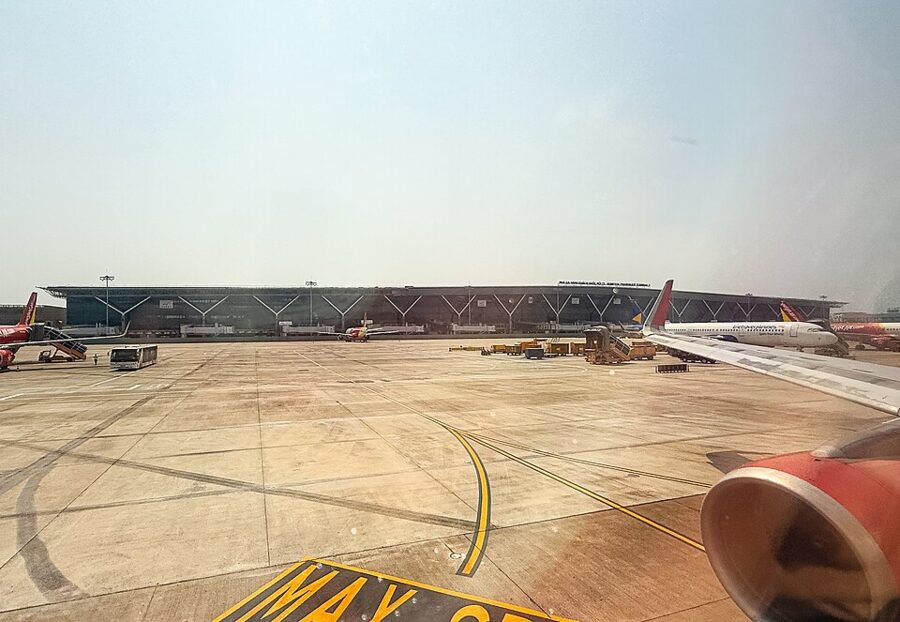

T3: Vietnam Airlines and most domestic flights
T3 (Nhà ga T3) serves Vietnam Airlines, Pacific Airlines, VASCO, Bamboo Airways, Vietravel Airlines and Sun PhuQuoc Airways on domestic routes. It has 90 staffed check-in counters, 20 self bag-drop machines and 42 check-in kiosks. What it does not have, on any list from SASCO or the airport as of November 2026, is a left-luggage counter.
So a bag you want to park while flying domestic from T3 has to go to T2, or stay in the city. If you are heading on to Da Nang or Phu Quoc and back within two days, the T2 desk can hold the big case while you fly with a cabin bag. Over 48 hours, it cannot.
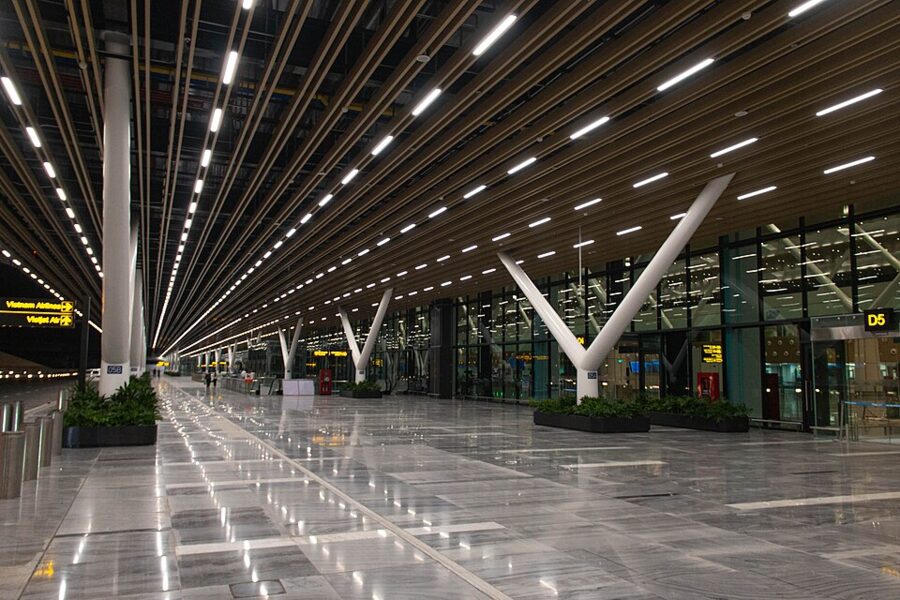

T1: Vietjet only
Vietjet moved its domestic check-in to hall A of T1 from 13 January 2026, and many drivers still drop at the old hall B out of habit. T1 is about 100 metres from T2, and since late August 2026 an internal road has linked the two so cars no longer loop round on Truong Son Street. For a Vietjet passenger, the T2 storage desk is a short walk.
The arrangement may not last. Vietjet’s lease on T1 runs for about twelve months at a time, and in June 2026 the Airports Corporation of Vietnam told shareholders it plans to rebuild T1 and may move part of Vietjet’s flying to T3 while it does. No date has been set. Check your terminal in the airline’s app on the day.
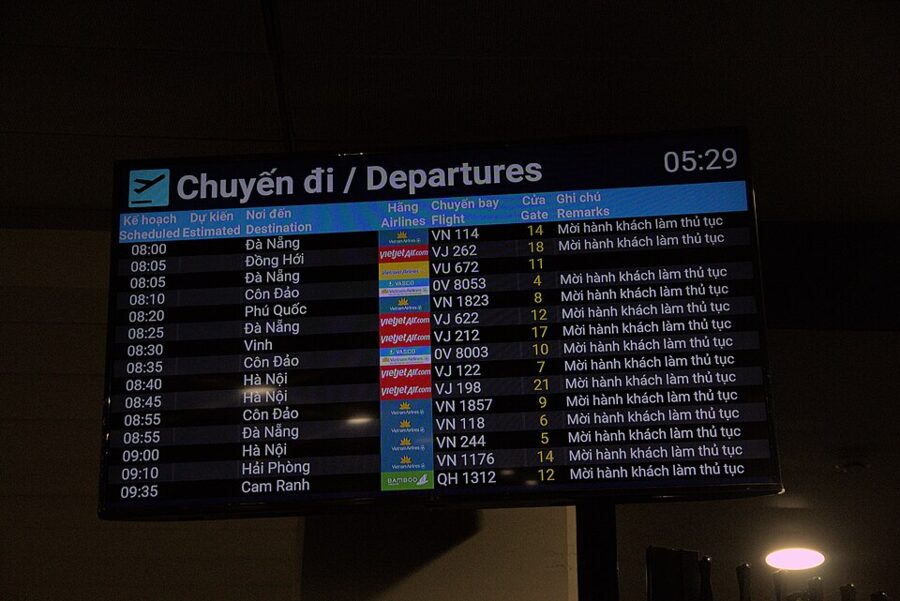
Moving between T2 and T3, and where that leaves your bag
You cannot sensibly walk from T2 to T3. Use the free shuttle bus, which the airport runs between all three terminals from 06:00 until 02:00 the next morning, every 10–15 minutes. At T2 it stops at columns B12–B16; at T3, at columns 17–20 on the first floor; at T1, at columns B17–B20.
Going to the wrong terminal costs 10–30 minutes, and up to an hour in traffic. Tuổi Trẻ, the Ho Chi Minh City daily, reported in February 2026 that drivers were still taking Vietjet passengers to the wrong hall. Tell the driver the terminal number, not just the airport.
The practical rule follows from the shuttle hours and the desk hours. If you land at T2 from Hong Kong and fly domestic from T3 later the same day, check the bag through on the domestic flight instead; leaving it at T2 only makes sense if you are coming back through T2 within 48 hours and before 23:00.
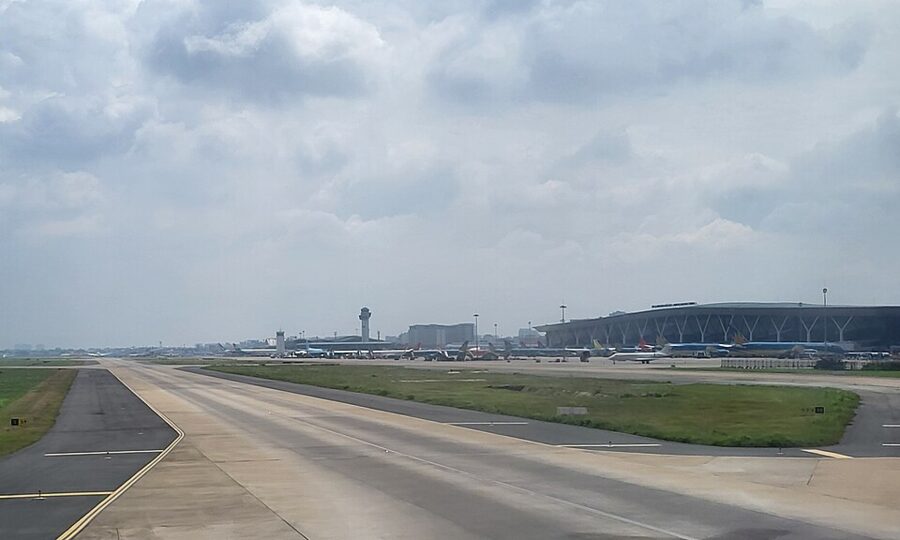

Leaving bags in the city
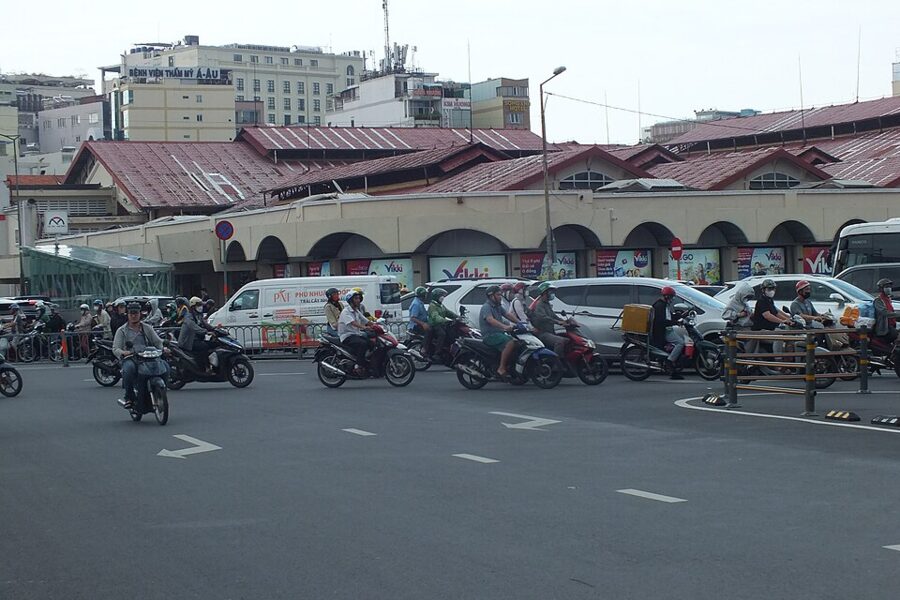
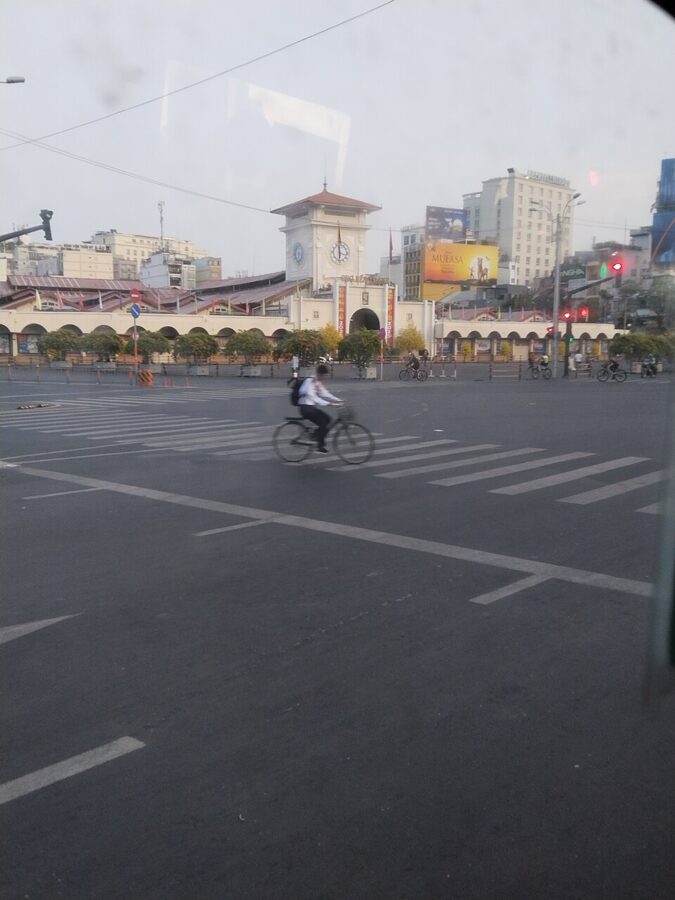
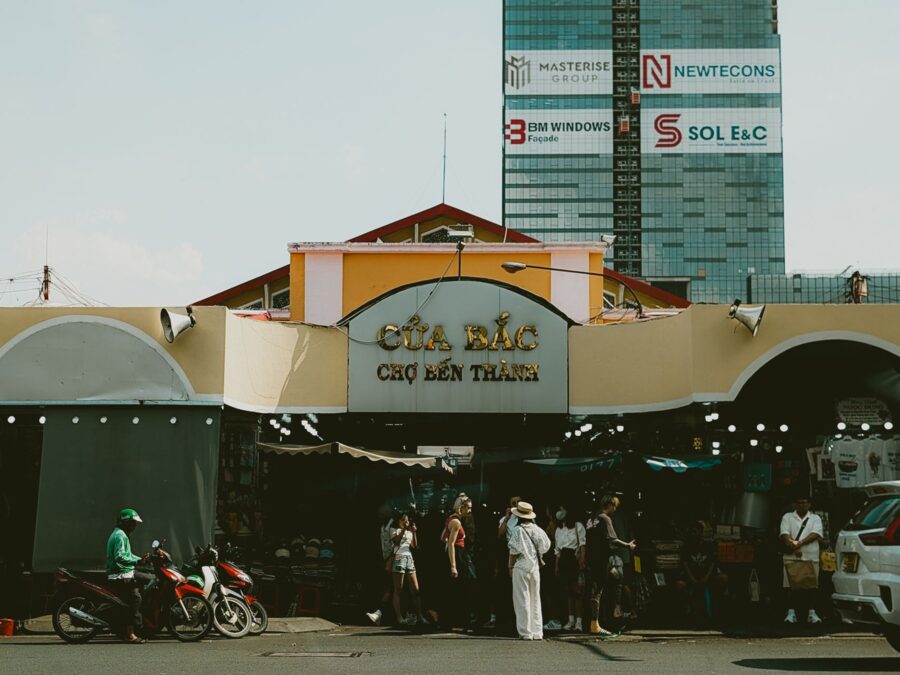
The old District 1, the centre around Ben Thanh Market, is where most visitors sleep, eat and shop, and it is where the cheaper storage is. One thing to know before you type an address: on 1 July 2025 Ho Chi Minh City abolished its districts. Under National Assembly Standing Committee Resolution 1685/NQ-UBTVQH15, the ten wards of District 1 became four: Sài Gòn, Bến Thành, Tân Định and Cầu Ông Lãnh.
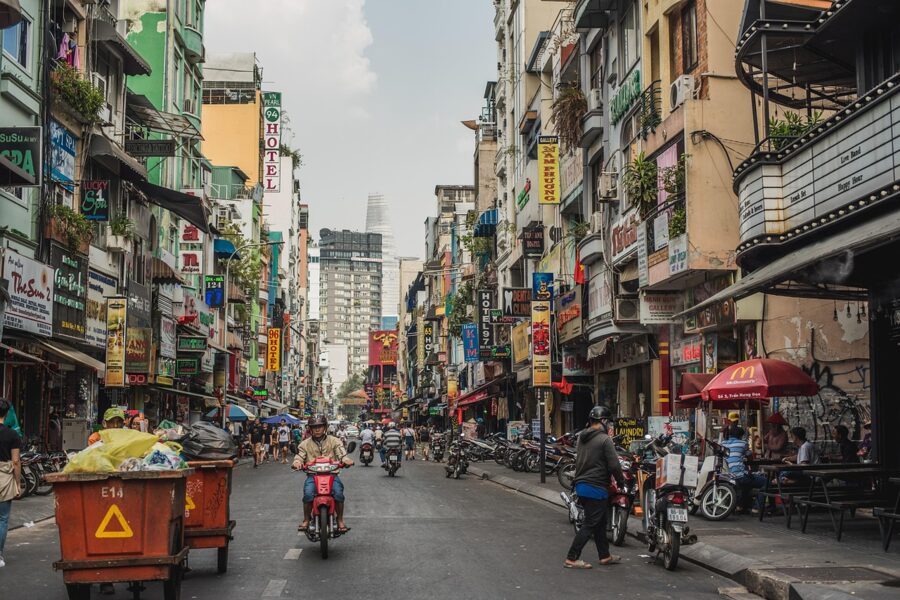
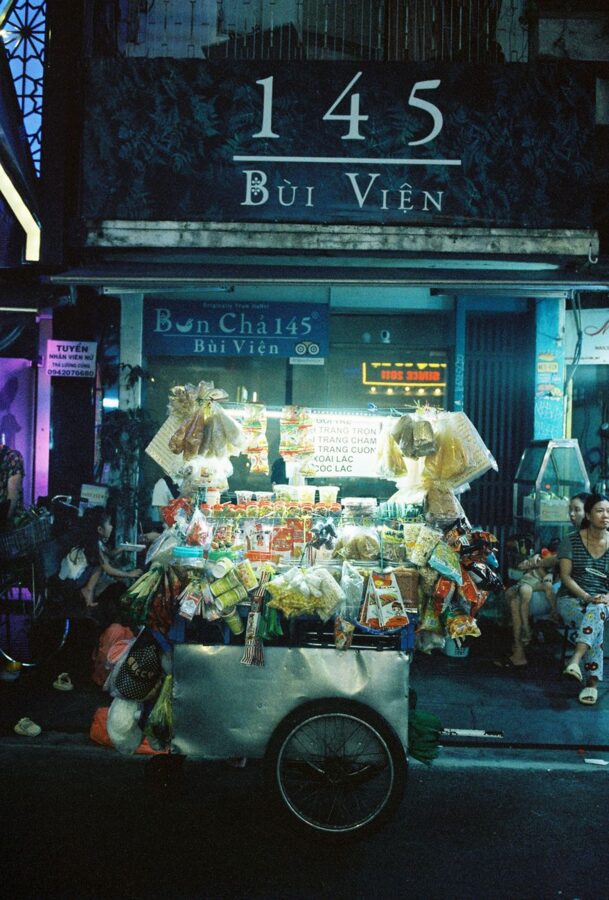
Everyone still says Quận 1, District 1, and so do most signs and taxi drivers. But a hotel’s official address now reads “phường Bến Thành” or “phường Sài Gòn” with no district, and the backpacker streets of Phạm Ngũ Lão and Bùi Viện are now part of Bến Thành ward. If a map app cannot find an old address with “Quận 1” in it, drop the district and search the street and number.

Your hotel
The first place to ask is the hotel you are staying in, before you arrive or after you check out. Holding bags at reception is routine in District 1, from the backpacker guesthouses to the tower hotels, and for guests it usually costs nothing. Ask when you book, and ask whether the room is locked or the bags just stand behind the desk.
A hotel hold beats the airport on two counts. It has no 23:00 deadline at a 24-hour reception, and it has no 48-hour limit if you are coming back to stay again. If your plan is Saigon, then the Mekong, then Saigon again, this is the answer.

Storage shops booked by app
If you have no hotel, or it will not help, the international storage booking services each list partner shops in the city. You book and pay in the app, get a code, and hand the bag to a shopkeeper or receptionist who has signed up. The prices below are the ones each service listed in November 2026.
- Bounce lists a shop at 99 Bùi Viện, open 24 hours, from US$2.95 a bag per day, with cover up to US$10,000.
- Radical Storage lists more than 28 places across the city, including one near Ben Thanh, from about VND 65,000 a bag per day, plus a fee of about VND 56,000 a bag at checkout that pays for its VND 300,000,000 guarantee. In practice that is about VND 121,000, around HK$37, a bag for the first day.
- Stasher lists a shop near Bùi Viện open 09:00–21:00 and a hotel reception near Saigon railway station open 24 hours, from US$1.49 a bag per day.
Each one is a fraction of the airport’s VND 275,000 for a day. The catch is that you have to haul the case into town first, and the opening hours belong to the shop, not the service: a corner shop that shuts at 21:00 will not open again because your flight leaves at midnight. Check the hours on the listing for the exact day.
Getting between the airport and the centre
The airport is inside the city, about 7 km north-west of Ben Thanh Market as the crow flies. In normal traffic a car takes 25–45 minutes; in the evening rush or a monsoon downpour, allow an hour. Trường Sơn, Cộng Hòa and Bạch Đằng, the roads round the airport, jam most afternoons.
Ride-hailing and taxis
Grab, Be and Xanh SM all work from the airport, and the app quotes a fixed price before you book. Expect roughly VND 150,000–250,000 for a car from T2 to Ben Thanh in normal traffic, more late at night or in heavy rain, plus any airport gate fee the app adds. App cars do not pull up at the kerb outside arrivals; follow the signs to the pick-up zone the app names.
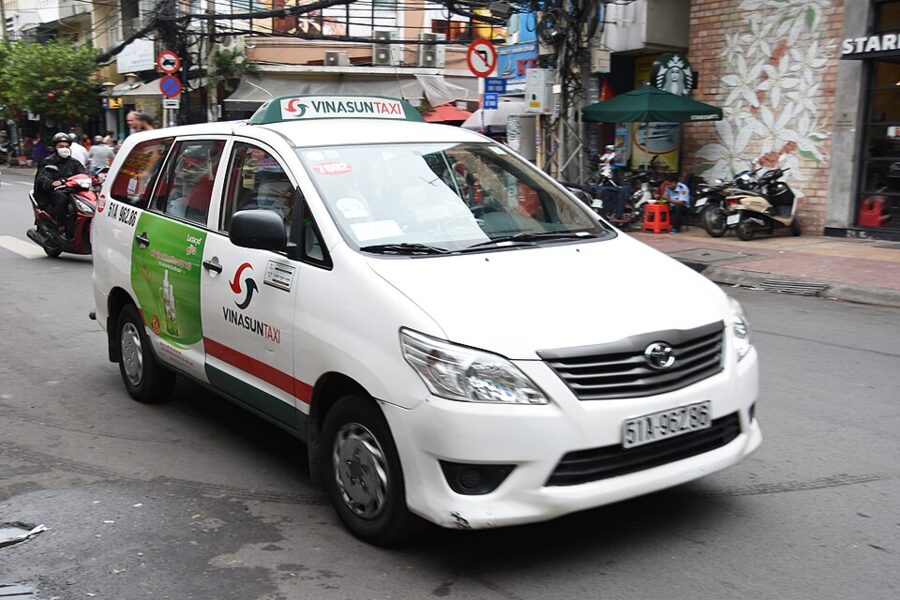
The metered taxi firms, Vinasun and Mai Linh, queue outside arrivals and cost about the same as a car booked by app. Use the meter and the company’s own cars, white with red and green stripes for Vinasun, green for Mai Linh. With a suitcase on a day trip, I’d book the car in the app before you reach the doors.

Bus 109, and why it is a T3 bus now
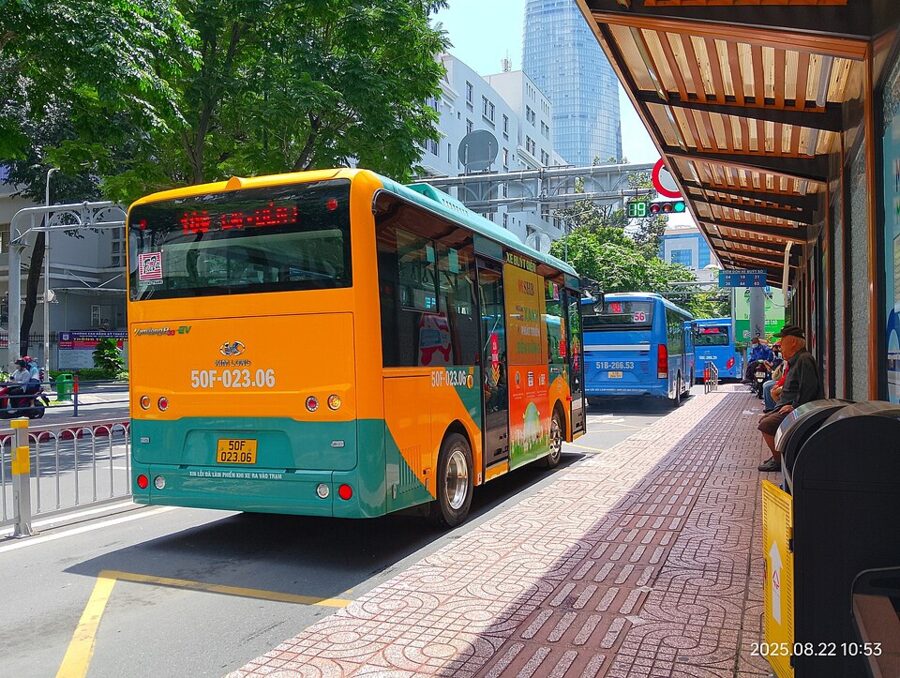
Bus 109, run by FUTA Bus Lines (Phương Trang) with electric buses, links the airport with the Saigon bus terminal (Bến xe buýt Sài Gòn) beside September 23 Park, a few minutes’ walk from Ben Thanh Market. Since 28 April 2025 it has served T3 only and no longer stops at T1 or T2. From the Hong Kong arrivals hall, that means the free shuttle to T3 first, then the bus.
When the route changed, the city’s public transport centre gave its first departure from T3 as 05:30 and its last as 22:40. With a suitcase and the shuttle change, the bus saves money and costs you half an hour. If your bag is already at the T2 desk and you are carrying only a day pack, it is a fine way into town.


A layover or a day in Saigon from a Hong Kong flight
First, the visa. On an HKSAR passport you cannot leave the airport without a Vietnamese e-visa, US$25 for a single entry, applied for at least a week ahead; the passports that get in visa-free, and how arrival at Tan Son Nhat works, are in Vietnam’s e-visa and arrival at Tan Son Nhat. If you are changing planes on one ticket and not entering Vietnam, you stay airside and the storage desk is out of reach.

How the day runs
Work backwards from the flight home. Airlines ask you to be at the airport about three hours before an international departure. Add up to an hour for the ride from Ben Thanh, and you know when to leave the city.
- Land at T2, clear immigration and customs, and come out into the arrivals hall.
- Take dong from the ATMs at column 14, then leave the case at the desk at columns 13–14, open from 07:00, paying when you drop it.
- Book a car in the app and ride into the centre with a day bag: 25–45 minutes in normal traffic.
- Leave the centre about four hours before your flight, an hour earlier on a weekday evening or in rain.
- Collect the case at columns 13–14 before 23:00, then go up to the departures floor to check in.
The 23:00 closing matters most on the late flights back to Hong Kong. If your flight leaves around midnight, the three-hour rule puts you at the airport by about 21:00 anyway, so the bag is out with time to spare. The trap is the traveller who spends the evening in town and turns up at 23:15.
Which option, compared
| Option | Where | One bag, one day | Hours | Best for |
|---|---|---|---|---|
| SASCO counter | T2 arrivals, columns 13–14 | VND 275,000 (VND 27,500 an hour under 10 hours) | 07:00–23:00, 48 hours at most | A day in town between two Hong Kong flights |
| Your hotel | Reception, wherever you stay | Usually free for guests | The hotel’s | Before check-in, after check-out, and trips out of the city and back |
| App-booked shop | Bến Thành ward and around | About VND 121,000 with fees, or from US$1.49–2.95 | The shop’s, some 24 hours | No hotel, and a flight after the airport desk shuts |
| Take it with you | In the car | The fare only | Any | A cabin bag on a short stop |
My pick for a day in Saigon between flights from Hong Kong is the SASCO counter. You pass it twice anyway, the bag never leaves the airport, and VND 275,000 for one case is the price of a taxi you no longer need to load. Switch to a hotel the moment you are staying a night, and to an app-booked shop only if you have several bags or will not be back in T2 before 23:00.
Long Thanh, from 24 December 2026
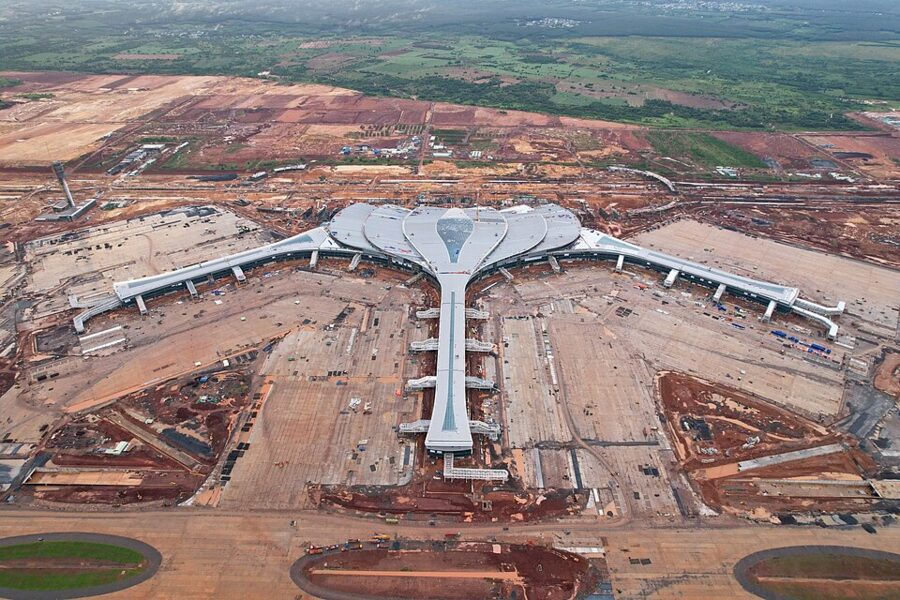
Ho Chi Minh City’s second airport, Long Thanh, about 40 km east of the centre in Đồng Nai, is due to start commercial flights at 00:00 on 24 December 2026, according to the airport corporation’s notice reported by Tuổi Trẻ on 30 October. It starts small, with a ceiling of 366 flights a week, 44 of them international.
Under the government’s phased plan, Tan Son Nhat keeps its existing international routes, Northeast Asia included, until the end of October 2027, while Long Thanh takes long-haul flights and new routes first. So a Hong Kong flight booked today should still land at T2. Check the airport on your ticket all the same: nothing above about left luggage applies at Long Thanh, and a car between the two airports is a long ride.

Get your dong at column 14, hand the case over at columns 13 and 14 with your passport in your pocket, and write the closing time on the receipt: 23:00, whatever the departures board says.