

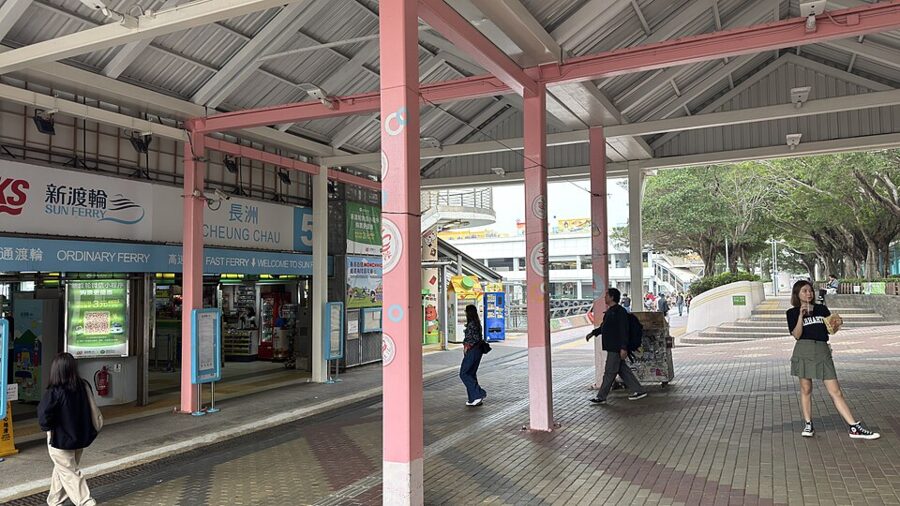
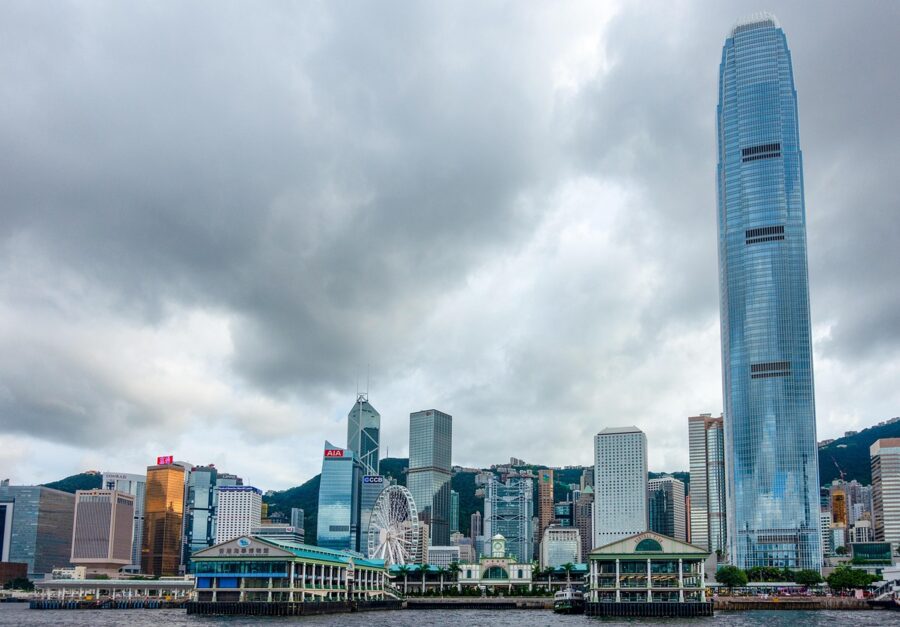
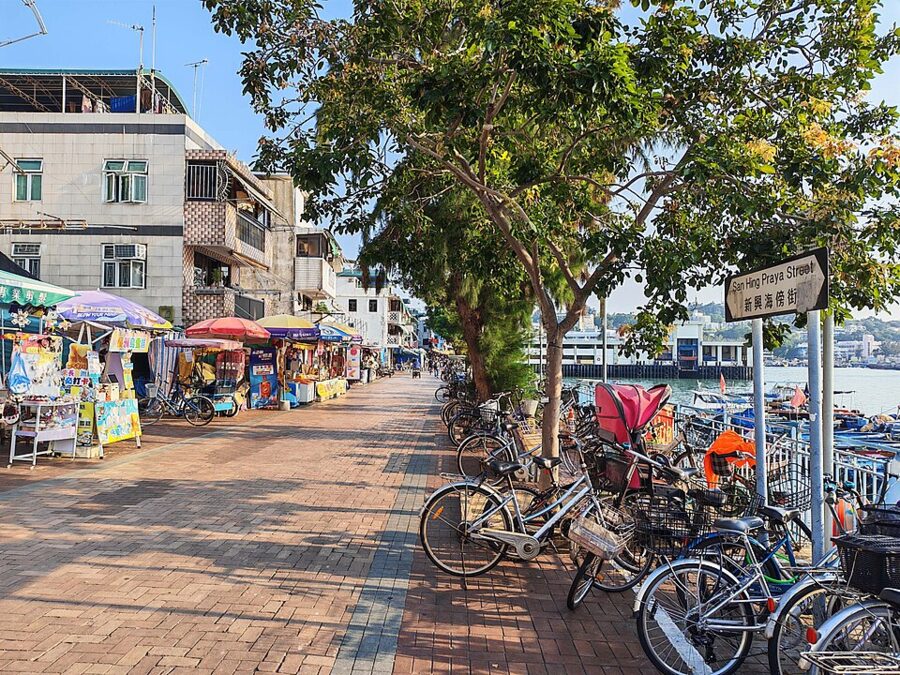
The 10:15 ordinary ferry from Central Pier 5 costs HK$16.70 on a weekday and puts you on the Cheung Chau (長洲) waterfront just after 11:10, where bicycles do the job of cars and the fishing boats tie up three deep beside the snack stalls. Sun Ferry runs the route day and night, and you tap an Octopus card at the gate with no booking.
Fares went up on 1 April 2026. These are the adult single fares on Sun Ferry’s Central to Cheung Chau timetable as of November 2026:
| Ferry | Crossing | Monday–Saturday | Sunday and public holidays |
|---|---|---|---|
| Ordinary ferry, ordinary class | 55–60 minutes | HK$16.70 | HK$24.80 |
| Ordinary ferry, deluxe class (air-conditioned) | 55–60 minutes | HK$26.10 | HK$38.00 |
| Fast ferry | 35–40 minutes | HK$32.90 | HK$47.60 |
Children aged 3 to 11 and seniors aged 65 and over pay half. Fast and ordinary sailings alternate about every half hour through the day, and a ticket is good only for the sailing you board; you cannot pay the difference to switch boats.

A weekday plan that works: the 09:00 or 10:15 ordinary ferry out, Pak Tai Temple and the harbour before the crowds, across to Tung Wan beach, the Mini Great Wall above Kwun Yam Beach, a seafood lunch or a string of snacks, then Cheung Po Tsai Cave in the afternoon and the 16:45 fast ferry or 17:15 ordinary back. The ferries are the only fixed cost: HK$33.40 return by ordinary ferry on a weekday, HK$65.80 by fast ferry, and HK$49.60 or HK$95.20 on a Sunday. I’d carry another HK$150 a head for snacks and drinks, and several hundred more if you sit down to seafood.
In this article
Getting there: ordinary or fast
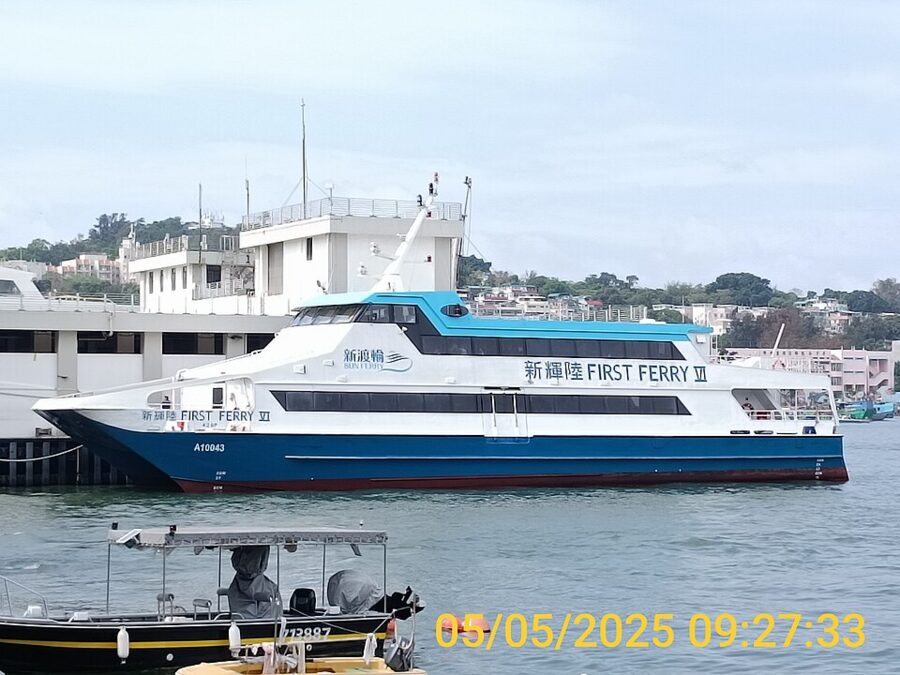
Take the ordinary ferry unless you are short of time. It is half the price, and the slow run west out of the harbour is half the point of the day. Ordinary class has no air-conditioning, deluxe class on the same boat does, and the fast ferry is a sealed, air-conditioned cabin that saves about 20 minutes.
On weekdays the daytime sailings from Central start at 06:10; on Sundays and public holidays, at 06:30. The timetable runs late: on Monday to Saturday the 22:30 and 23:30 ordinary sailings from Cheung Chau are run with fast-ferry boats at the ordinary fare, and a fast ferry leaves at 23:45. After that the overnight boats leave Cheung Chau at 02:20 and 05:10, so nobody is stranded, only tired.
On a sunny weekend the return queue on Cheung Chau is longest in the late afternoon, so go early and come back after dinner. Typhoons are the exception to the timetable: Sun Ferry’s coxswains decide when to stop on the sea conditions, not on the signal number alone, and under the typhoon arrangements suspensions are posted on the Sun Ferry website and app.
The harbour and Pak Tai Temple
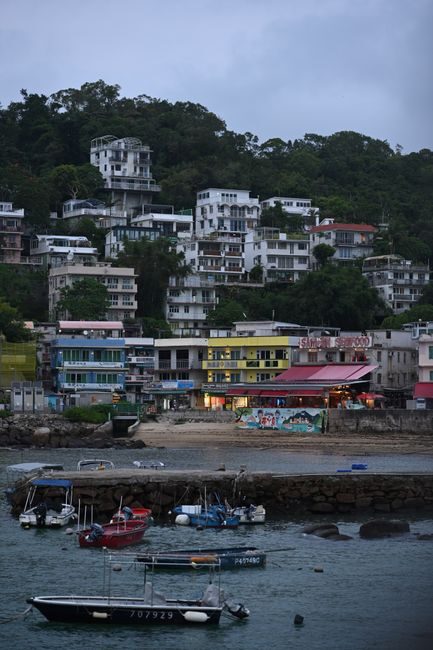
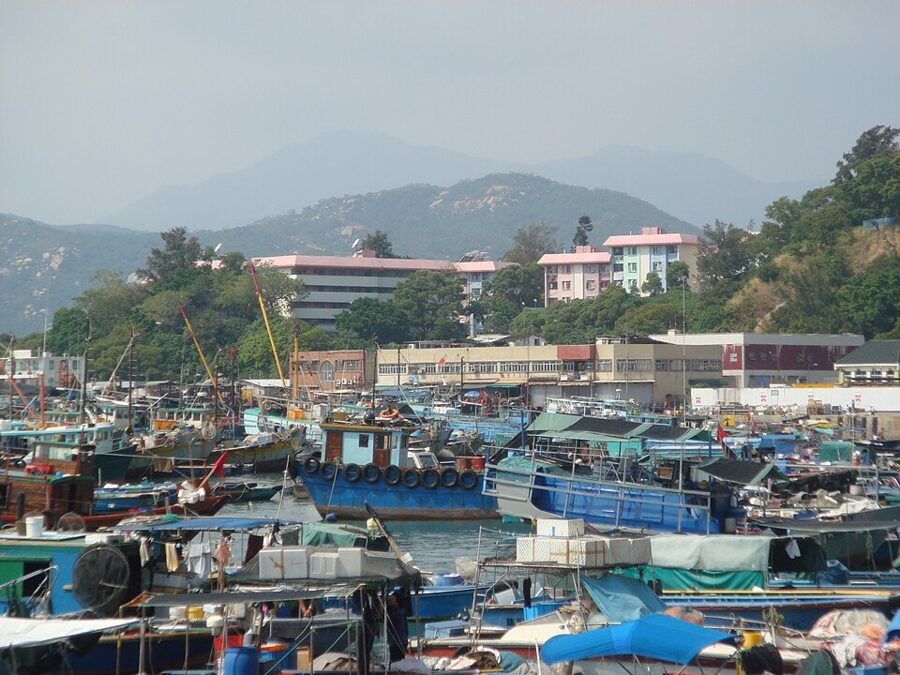
Turn left out of the pier and walk north along the waterfront, Praya Street and then Pak She Praya Road. The typhoon shelter in front of you is packed with working fishing boats and sampans, and the shops facing it sell dried seafood and snacks in roughly equal measure.


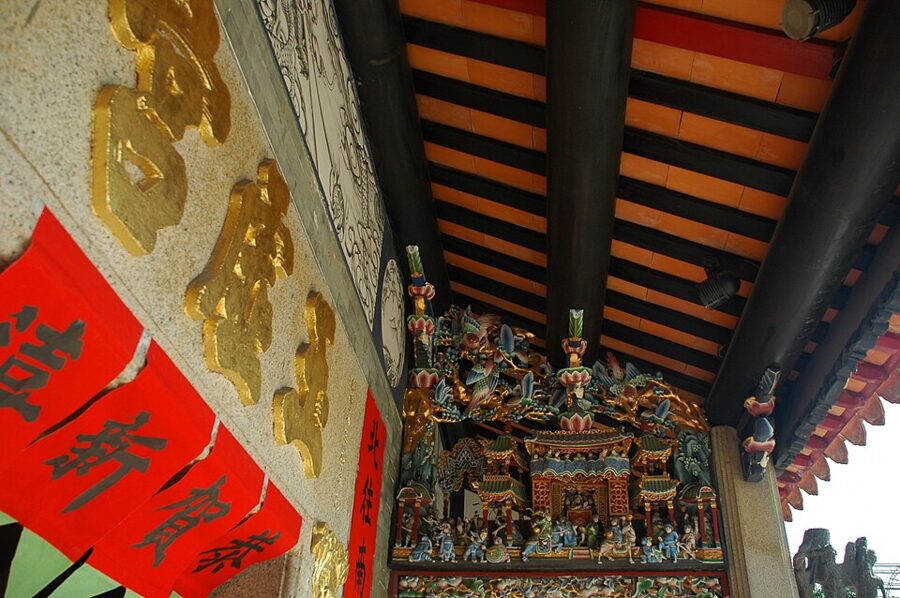
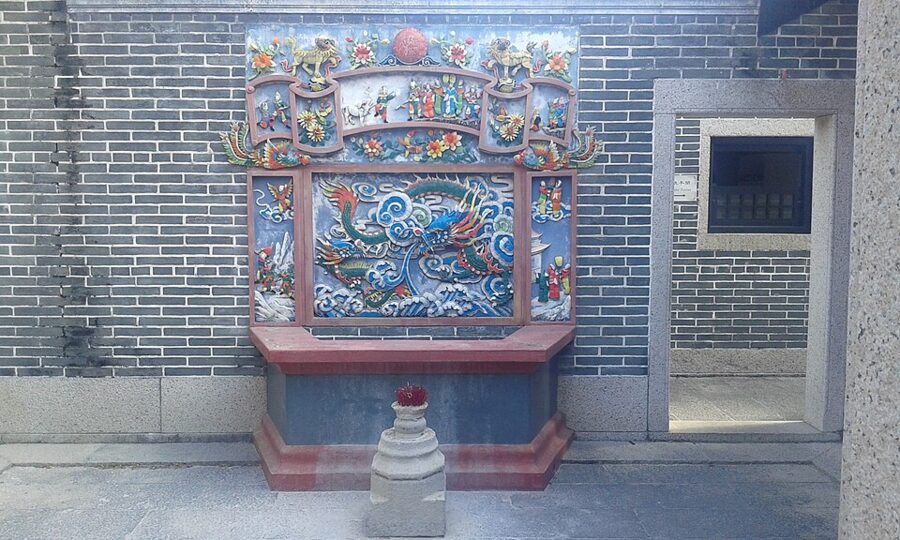
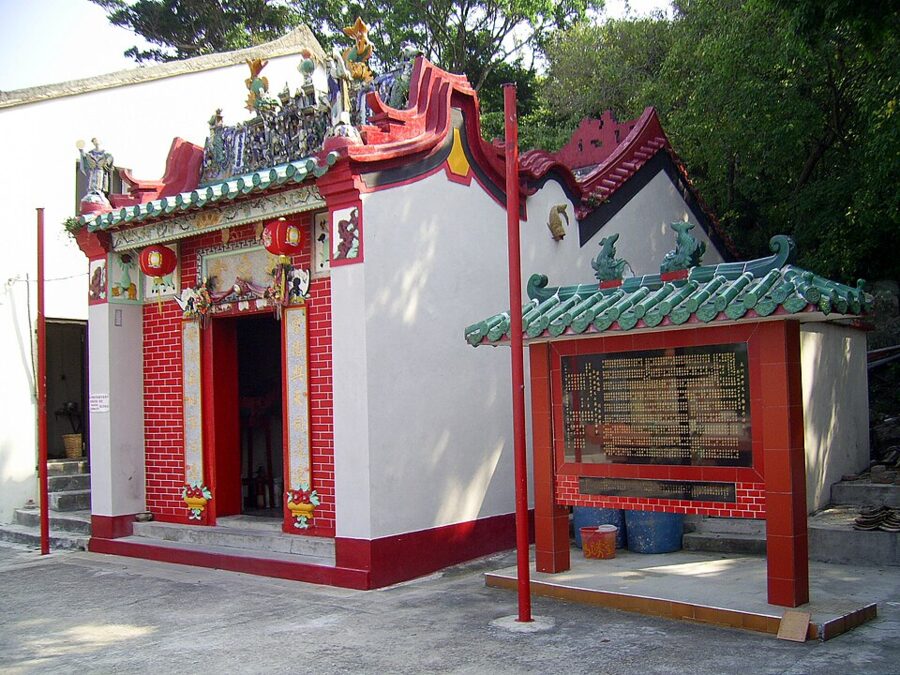
At the north end of the harbour, behind its playground, is the Pak Tai Temple (北帝廟, also called 玉虛宮 Yuk Hui Temple), built in 1783 for the Taoist god of the sea and now a Grade I historic building. Fishermen from Huizhou, Chaozhou and Guangzhou settled the island, and this was their insurance. Inside are a sword said to date from the Song dynasty, two carved granite dragon pillars from 1903, and a gold crown given to mark Princess Margaret’s visit in 1966.


Tung Wan and Kwun Yam beaches
From the pier or the temple, cut east through the lanes for about ten minutes and you come out on Tung Wan (東灣), the long beach on the island’s other shore. South along the promenade is the smaller Kwun Yam Beach (觀音灣), quieter and better for a proper swim. Both are run by the Leisure and Cultural Services Department and both have shark nets, changing rooms, showers and a swimming raft.
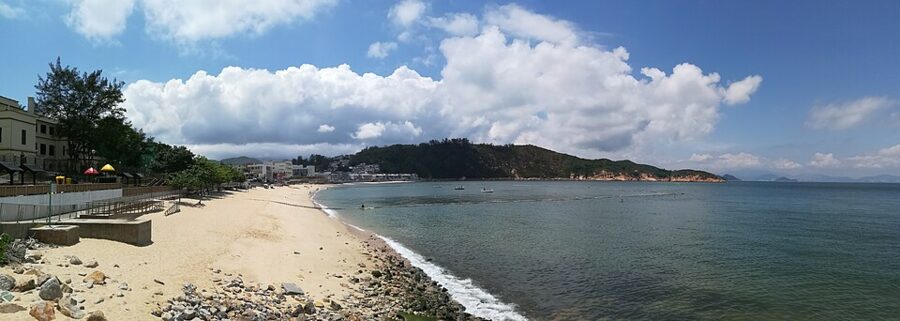

Lifeguards are on duty from April to October only. The Islands District beach list gives the hours:
| Months | Lifeguard hours |
|---|---|
| April–May, September–October | 09:00–18:00 daily |
| June–August | 09:00–18:00 Monday–Friday; 08:00–19:00 weekends and public holidays |
| November–March | No lifeguards; rafts removed for maintenance |
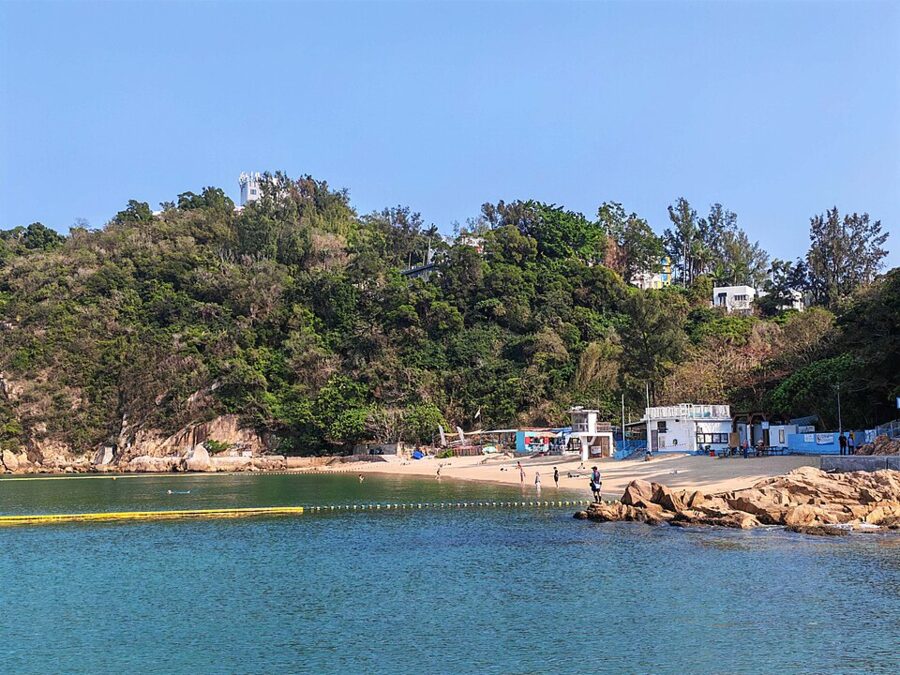

Swim inside the nets and only when the flag is up. Snorkelling here is a mask in green water over sand and the odd rock; for anything to look at, the clearer water and coral are in Sai Kung’s marine parks, which is also where learning to dive here takes you.
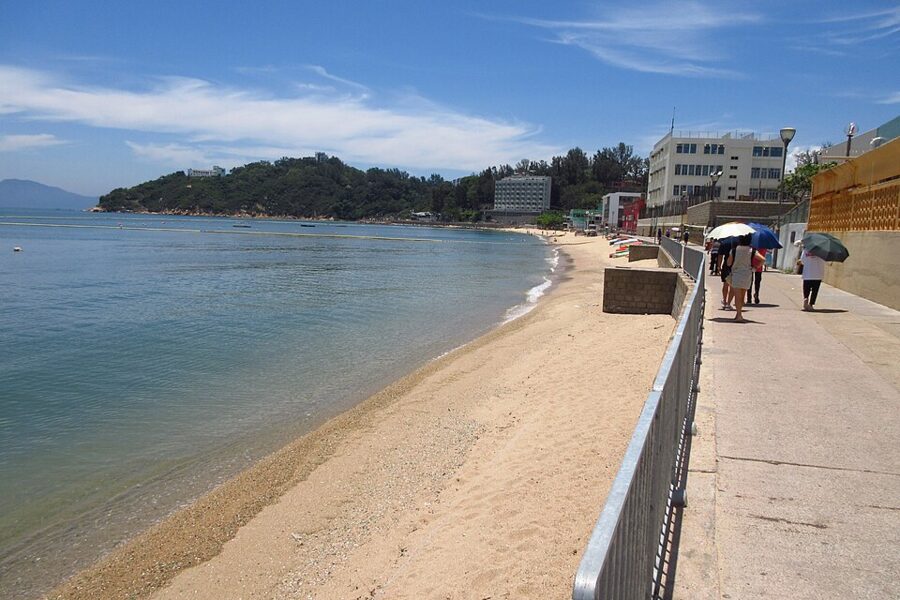

The Mini Great Wall and Cheung Po Tsai Cave
The Mini Great Wall (小長城) is an 850-metre stretch of the Cheung Chau Family Trail along the coast of the island’s southern hill, a paved path with a stone balustrade that looks, if you squint, like battlements. The draw is the granite, boulders weathered into shapes with names such as Human Head Rock and Reclining Rock. Allow an hour there and back from Kwun Yam Beach.
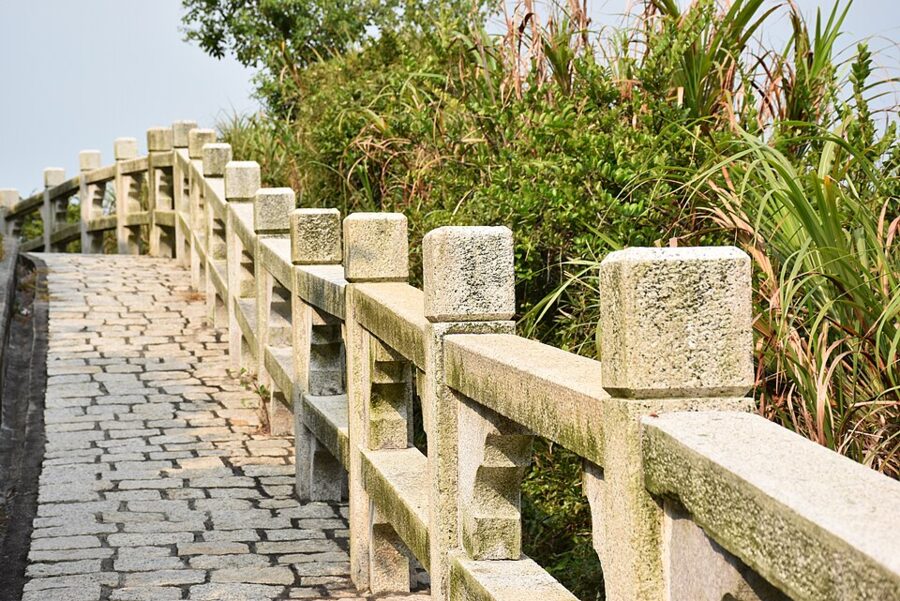

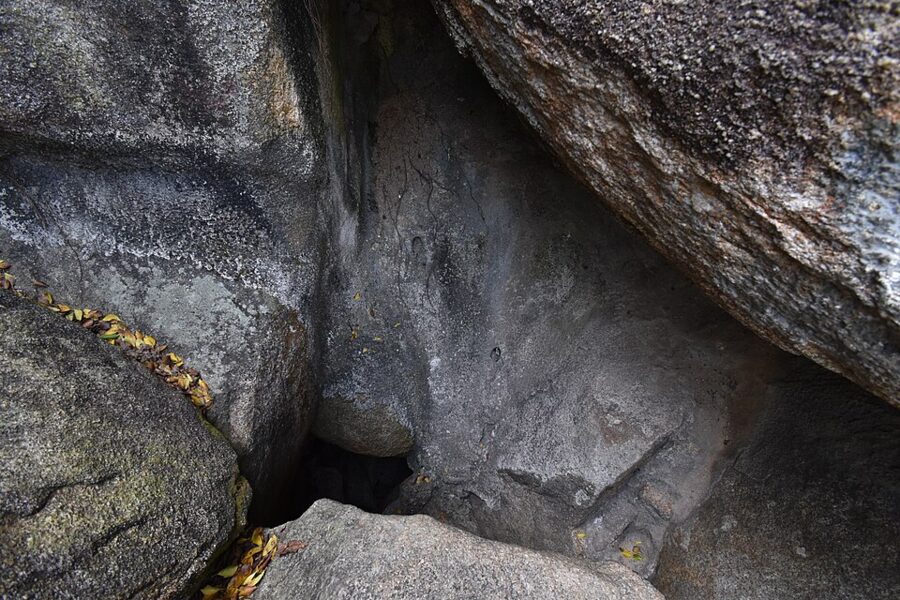
Cheung Po Tsai Cave (張保仔洞) is at the other end of the island, the south-west tip, named for the early 19th-century pirate who is said to have hidden his loot here. To get there, turn right out of the ferry pier and follow Cheung Chau Sai Tai Road, the car-free waterfront path towards Sai Wan (西灣), about ten minutes by bike or 25 on foot, then the signed path uphill.


Bikes
Bike hire shops on the waterfront around the pier rent by the hour or the day; agree the rate and return time before you ride off. The island has no private cars, but the lanes are full of handcarts, small service vehicles and people on foot.
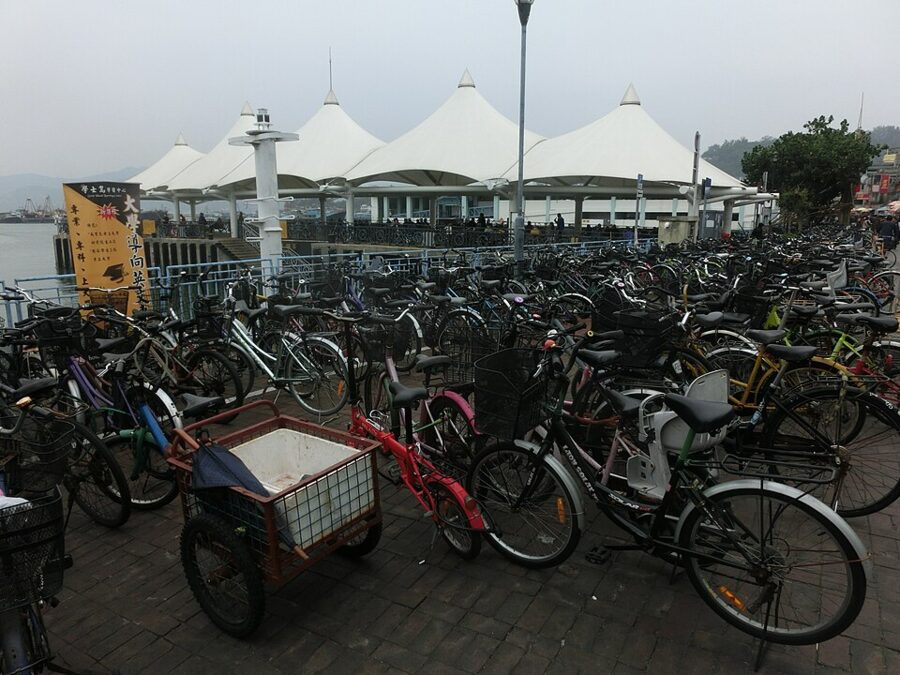

I’d only hire one for the flat run to Sai Wan and back. Elsewhere the steps and crowded lanes mean pushing it.
What to eat
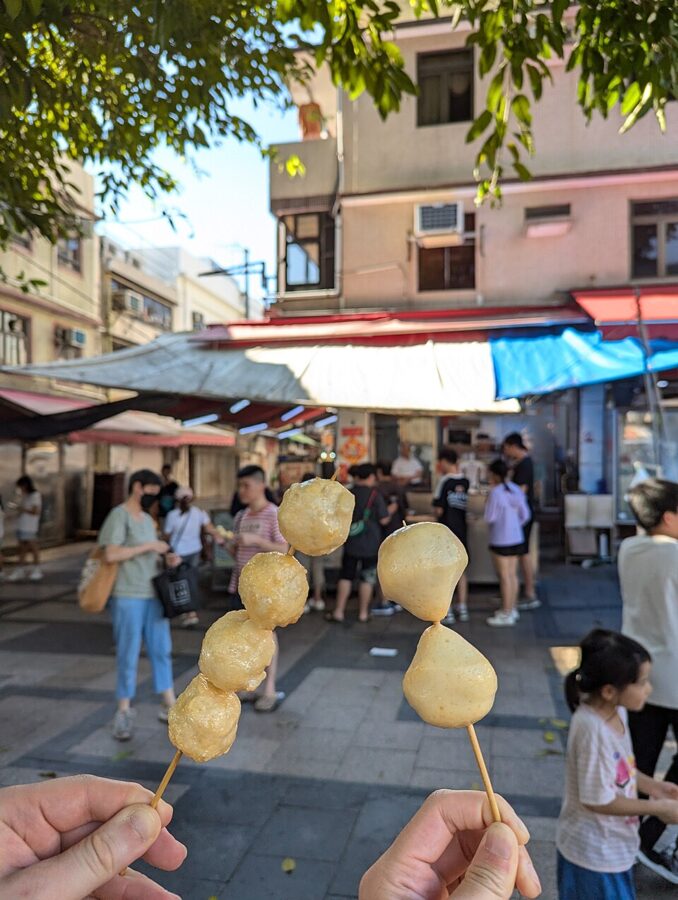
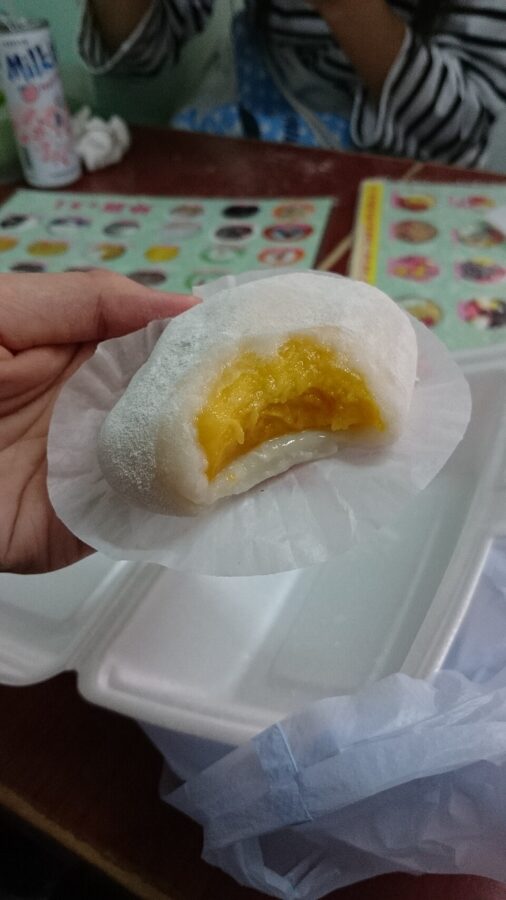
Street food is half the reason the weekend crowd comes. Queue for giant curry fish balls (魚蛋) on a skewer, mango mochi (芒果糯米糍), a ball of soft glutinous rice wrapped round a lump of fresh mango and cream, and ping on buns (平安包), the festival buns stamped with the characters for peace and filled with lotus seed, red bean or sesame paste, now sold all year.


For a sit-down meal, the seafood restaurants are the open-fronted places with tanks along Pak She Praya Road, north of the pier. Ordering works the way it does across Hong Kong: you choose the fish, prawns or clams from the tank, they are weighed and priced by the catty (斤, about 600 grams), and you say how you want them cooked.
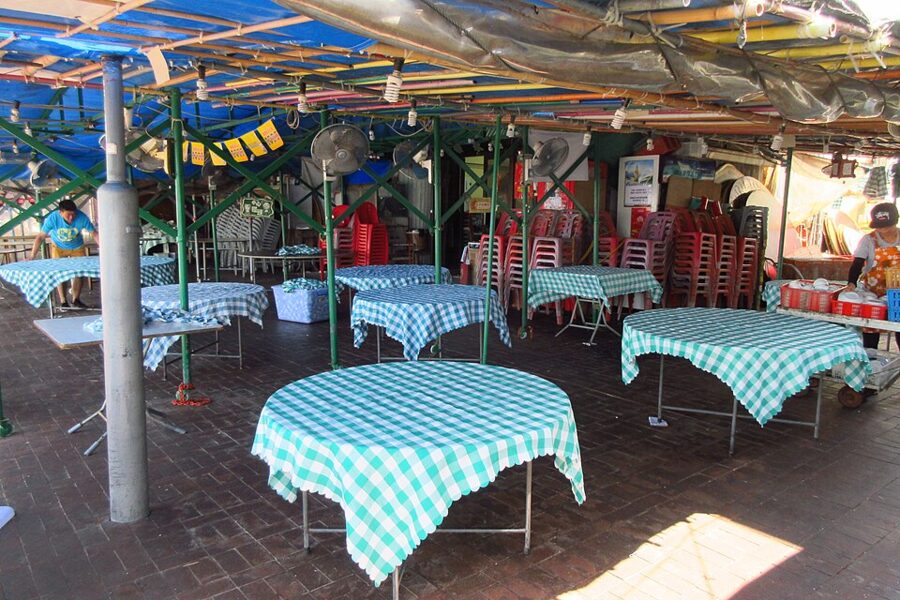

A price per catty is not the price of the fish, and “market price” on the menu means ask. Before anything goes to the kitchen, get the weight, the price and the cooking charge said out loud, and ask what tea and rice add. Carry cash; not every snack stall takes cards.
The Bun Festival: 10–14 May 2027
The Cheung Chau Bun Festival, officially the Cheung Chau Jiao Festival (太平清醮), is a five-day Taoist rite held from the fifth to the ninth day of the fourth lunar month. The big day is the eighth, which is also the Buddha’s Birthday public holiday: in 2027 that is Thursday 13 May, on the 2027 general holidays list. The festival itself runs 10 to 14 May 2027.

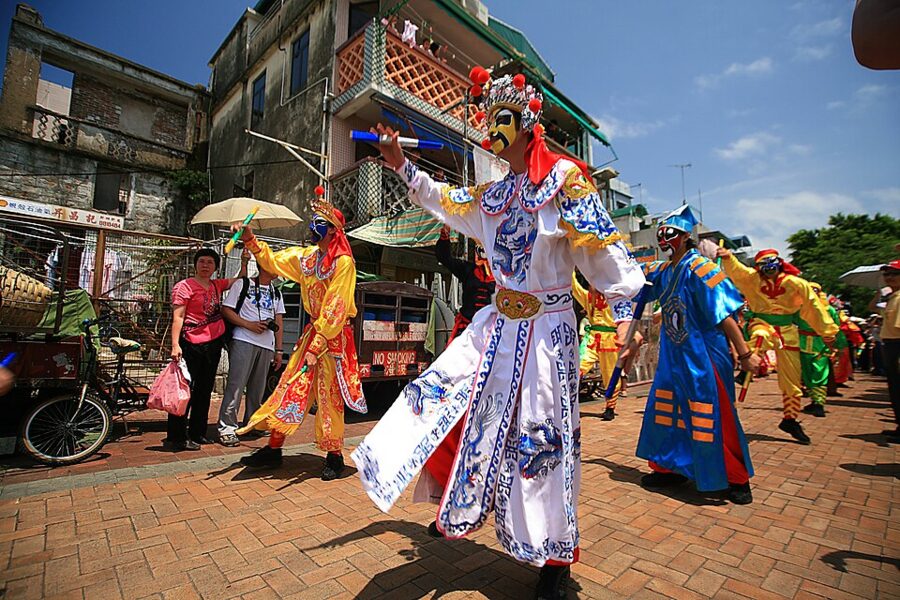
On the afternoon of the eighth day comes the Piu Sik (飄色) parade, in which children in costume are held up on hidden frames so they seem to float above the crowd; in 2026 it started at 14:00.

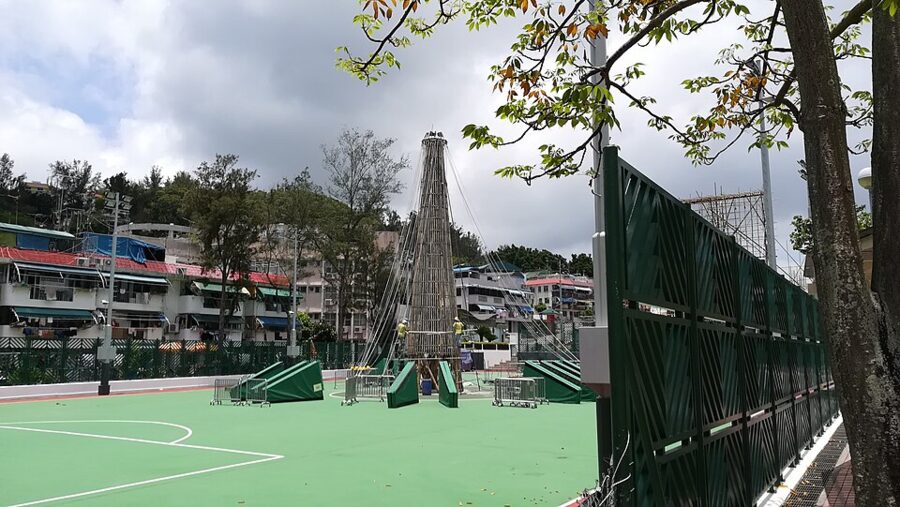
At midnight the same night, twelve finalists race up the tower to grab as many buns as they can in three minutes. In 2026 the men’s title went to Kwok Ka-ming with 999 points and the women’s to Kung Tsz-shan, according to the government’s results notice.
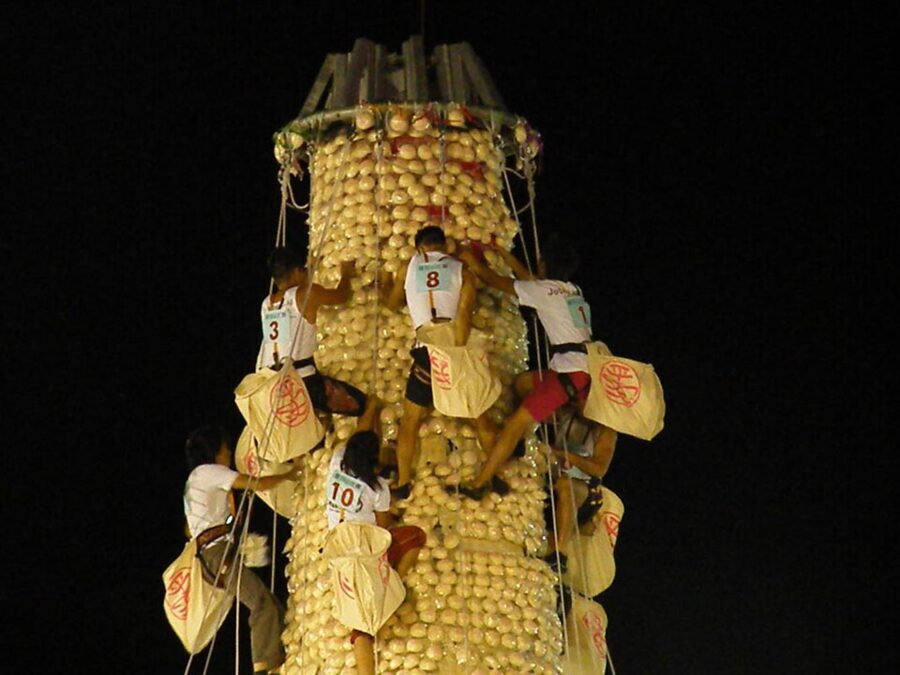

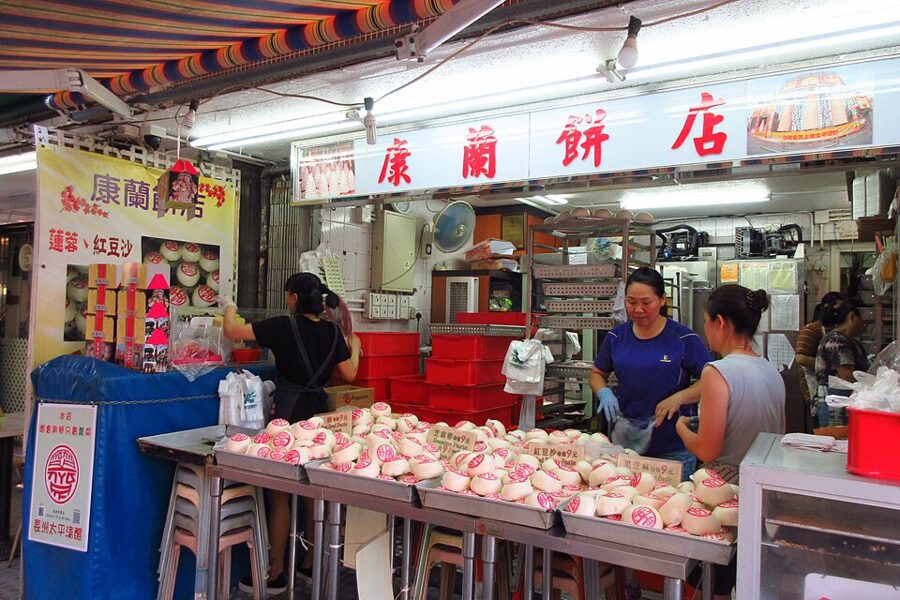

Watching the race needs a free ticket. Under the 2026 arrangements, about 1,650 tickets were handed out from 22:00, one per person, to a queue along Pak She First Lane beside the fire station and Ping Chong Road, with entry from 22:30 and the opening ceremony at 23:30. A special ferry left Cheung Chau for Central at 01:15, and the regular overnight boat follows at 02:20. The government publishes the 2027 details about a week before.
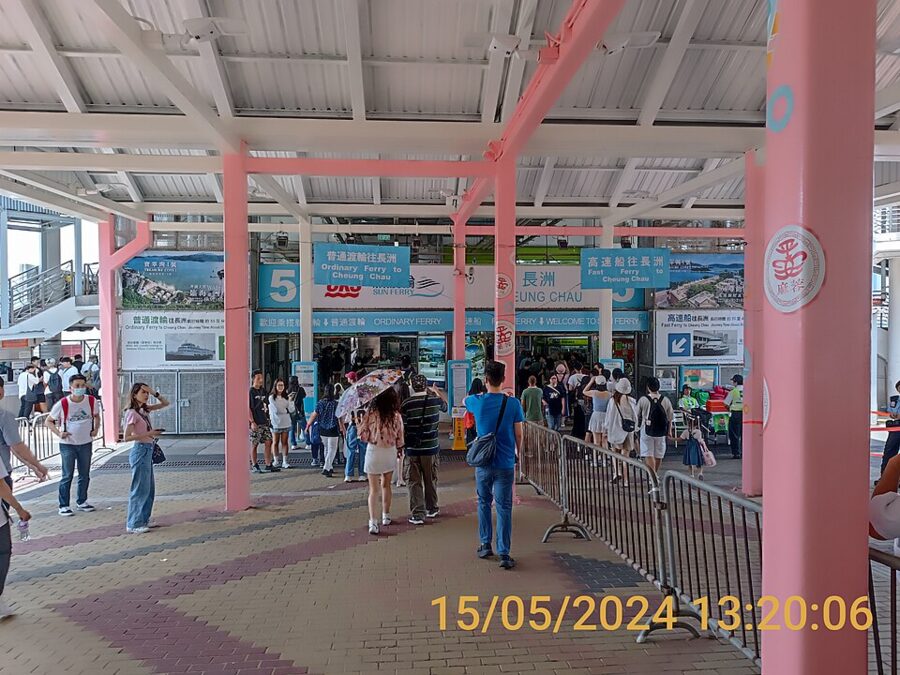
How to do the day: a ferry before 10:00, the parade, an early dinner, and a decision by 17:00 on whether you are staying for midnight, because the queue to leave after the parade is the slowest part of the festival. For a calmer look at the tower, the Bun Carnival that runs for a few weeks before includes a Sunday climbing day; in 2026 the public could climb the tower in a harness on 10 May.
Outside festival week, the best time to visit is a clear weekday between October and April, when the walks are cool and the ferries half empty.
Staying overnight
After the day-trippers leave, the island goes quiet. Sleep only somewhere licensed. The Home Affairs Department’s register of licensed hotels and guesthouses, last updated 13 November 2026, lists around 60 licensed premises with a Cheung Chau address, mostly small holiday flats plus the Cheung Chau Warwick Hotel on Tung Wan.
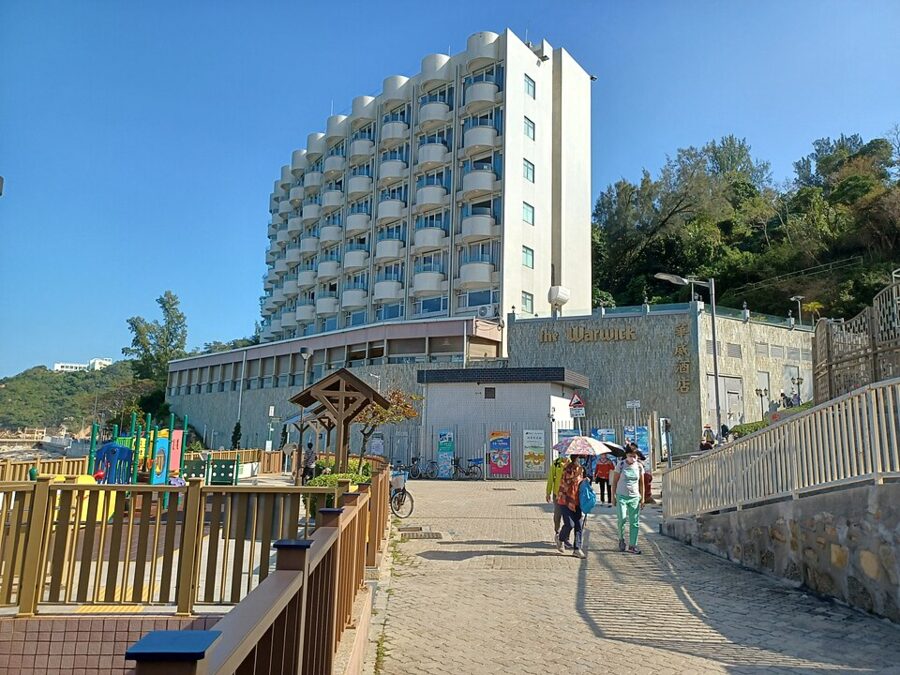

The booths along the waterfront by the pier rent rooms by the night. Ask for the licence number, which starts with H/, and check it in the register or the department’s Hong Kong Licensed Hotels and Guesthouses app before you pay. A licensed flat has passed fire and building safety checks; the price is no guide to which is which.
On to Mui Wo and Lantau
You do not have to go back the way you came. Sun Ferry’s inter-islands boat links Cheung Chau with Chi Ma Wan, Mui Wo and Peng Chau for a flat HK$16.30, and Cheung Chau to Mui Wo takes about 31 to 35 minutes. From Mui Wo, buses run on to Tung Chung, Ngong Ping and Tai O on Lantau, or the Mui Wo ferry takes you back to Central Pier 6.
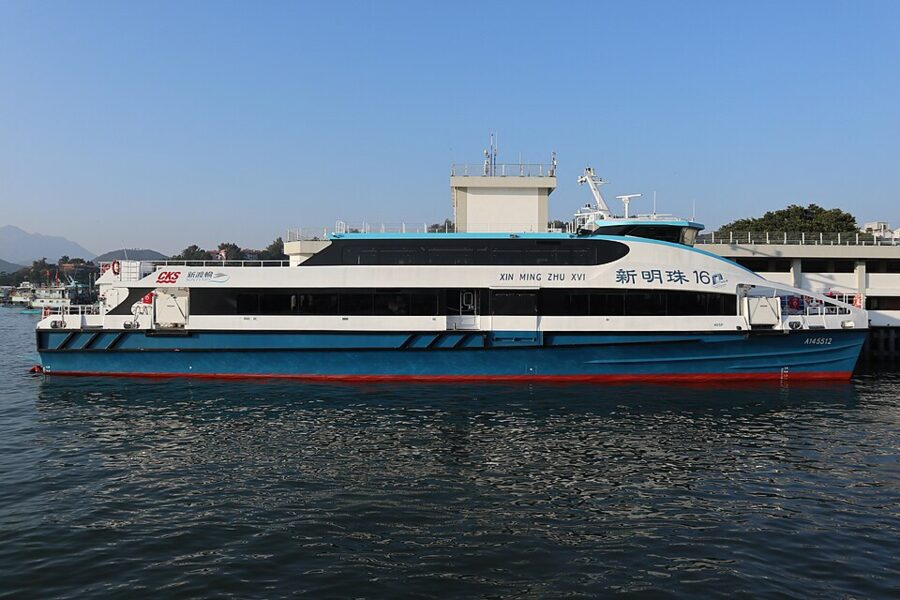

Mind the timetable. While a lift and ramp at Mui Wo pier is replaced, a temporary inter-islands schedule has applied since 26 October 2026, for about two and a half months: boats leave Cheung Chau roughly every two hours between 06:00 and 22:50, and some skip Chi Ma Wan. Miss one and you wait.
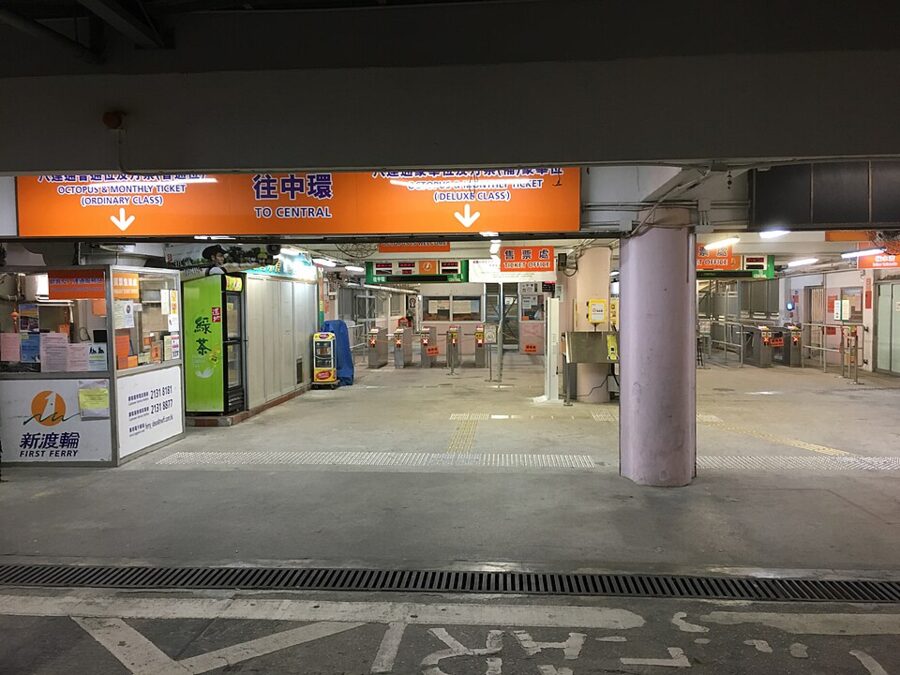

On a five-day Hong Kong itinerary, Cheung Chau fits the last day, after the city and Lantau. Load the Sun Ferry timetable before you leave, have the Octopus topped up, and be at Pier 5 for the 10:15.