

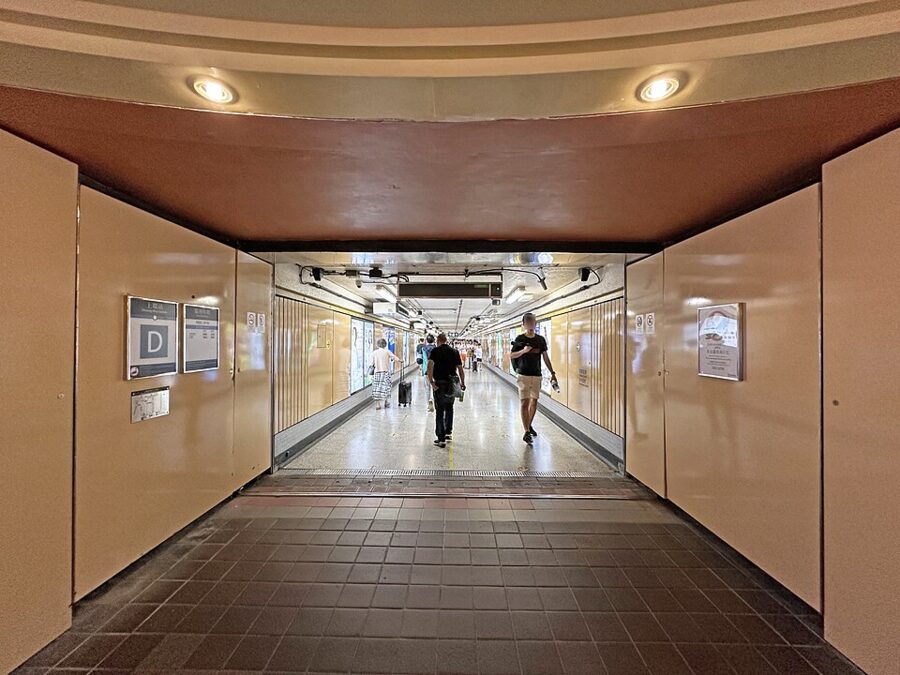
Walk out of Exit D at Sheung Wan, ride the escalators up into Shun Tak Centre, and an hour after the ropes come off you are in Macau. That ferry, HK$194 one way on a weekday, is still the quickest way across from Hong Kong Island and most of Kowloon. The gold shuttle bus over the Hong Kong-Zhuhai-Macao Bridge costs HK$65 and runs all night, but it leaves from a port beside the airport, so it only wins if you are already out on Lantau or travelling after the last boat.
Here is the short version, with fares and timetables as they stand in November 2026:
| Starting from | Take | Allow, door to Macau | One way, adult |
|---|---|---|---|
| Central, Sheung Wan, Admiralty | Ferry from Sheung Wan | About 1 hour 45 minutes | HK$192–194 weekday |
| Tsim Sha Tsui, Kowloon | MTR to Sheung Wan, then the ferry | About 2 hours | HK$10.60 + HK$192–194 |
| Airport, before Hong Kong immigration | HK Airport Direct coach from Transfer Area E2 | 45 minutes on the coach | about HK$280 |
| Airport after landing, Tung Chung, Disneyland | Local bus to the bridge port, then the shuttle bus | About 1 hour 30 minutes | HK$6.10–9.80 + HK$65 |
| Anywhere, after 22:30 | Bridge shuttle bus, every 30 minutes overnight | 2 hours or more | HK$70 after midnight |
Two things catch people out before they reach a pier: there is no Macau ferry from Tsim Sha Tsui any more, and the airport ferry is for transfer passengers only and barely running.


In this article
The ferries from Sheung Wan
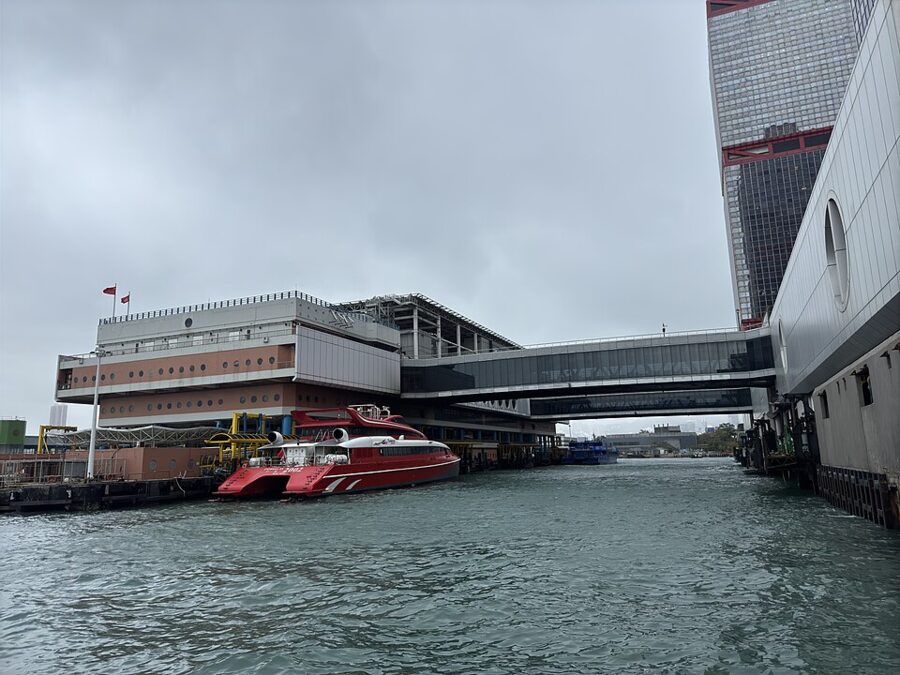
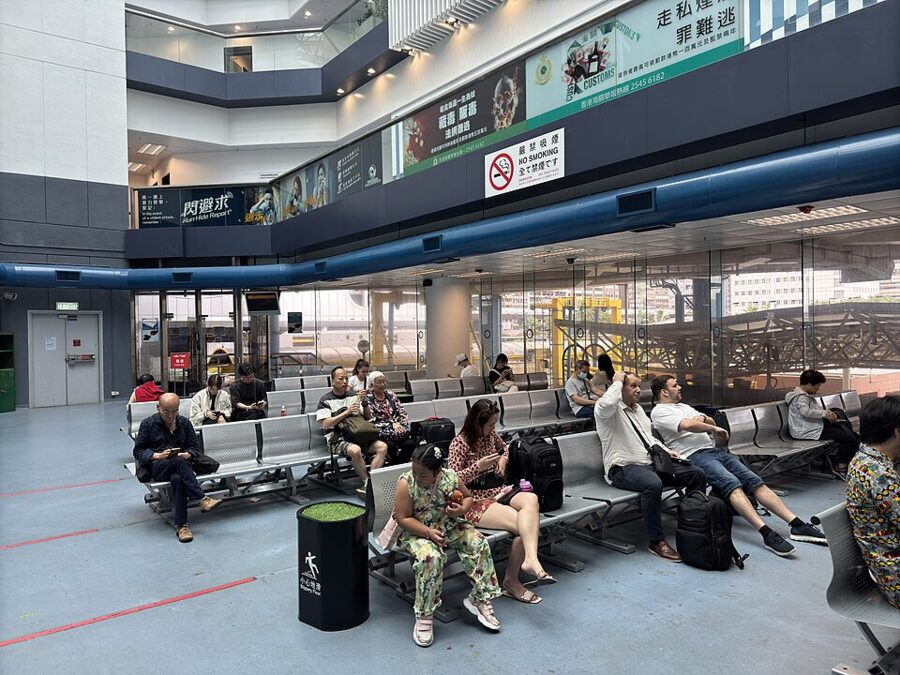
The Hong Kong-Macau Ferry Terminal (港澳碼頭) is on the third floor of Shun Tak Centre, 200 Connaught Road Central. From the Island Line, follow the signs for Exit D at Sheung Wan Station; the subway brings you straight into the building. Central to Sheung Wan costs HK$4.90 on an Octopus card, and from Tsim Sha Tsui it is HK$10.60 with one change at Admiralty or Central.

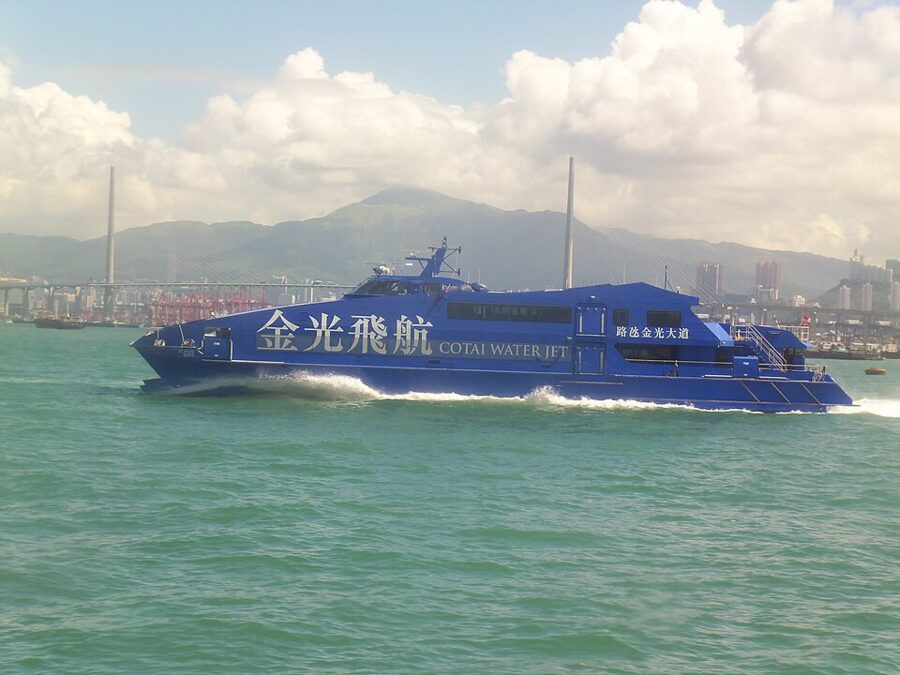
Two companies sail, and the choice is really a choice of Macau terminal. TurboJET (噴射飛航), the red boats, goes mainly to the Outer Harbour Ferry Terminal on the Macau peninsula. Cotai Water Jet (金光飛航), the blue ones, goes only to Taipa Ferry Terminal, next to the airport and close to the Cotai resorts. Both sailings take about an hour.
TurboJET to the Outer Harbour
TurboJET’s timetable from 16 October 2026 runs from Sheung Wan at 07:30, then roughly every 30 to 60 minutes until 18:00, with night sailings at 19:30, 20:30, 21:30 and a last boat at 22:30. Coming back, the last sailing from the Outer Harbour is at 23:00. Four TurboJET sailings a day also run from Sheung Wan to Taipa (10:30, 11:30, 15:00 and 19:00).
Economy is HK$194 on weekdays, HK$212 at weekends and on Hong Kong or Macau public holidays, and HK$242 on any sailing from 18:30. Super Class is HK$406, HK$436 and HK$460. TurboJET asks you to board at least 30 minutes before departure for document checks, and it means it.

Cotai Water Jet to Taipa
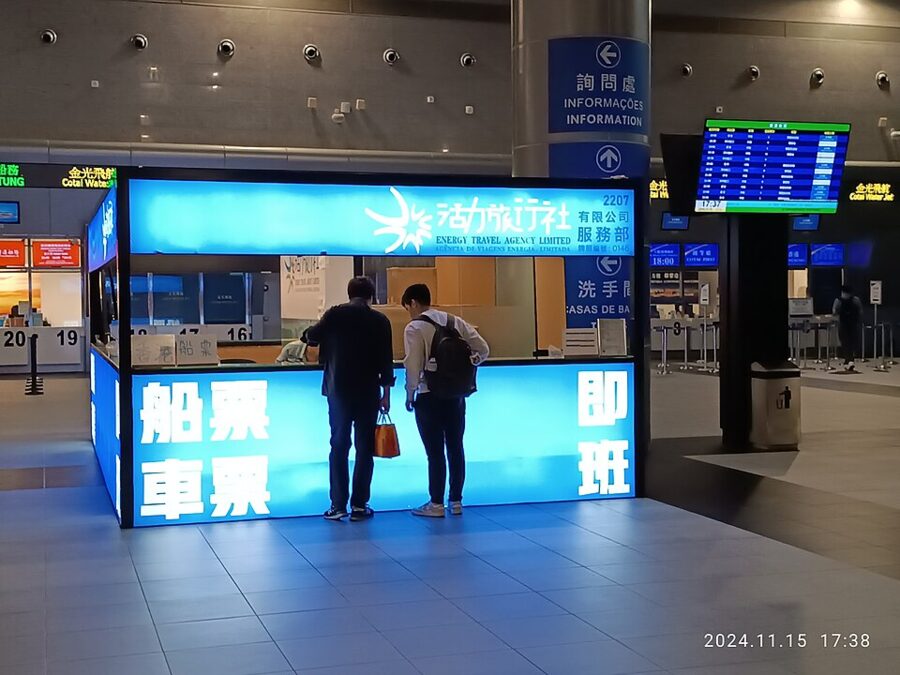
Cotai Water Jet sails from Sheung Wan between 07:30 and 22:30, mostly half-hourly to hourly, and back from Taipa until a 23:59 departure, the latest boat to Hong Kong from either company. Its Cotai Class fare is HK$192 on weekdays, HK$209 at weekends and holidays, and HK$242 for night sailings. Cotai First is HK$330, HK$348 and HK$380.
Cotai’s night fare starts earlier than TurboJET’s and moves with the season: from 17:10 between 1 October and 31 January, 17:40 in February, March and September, and 18:00 from April to August. Its ticket counter in Hong Kong is Shop 303B in Shun Tak Centre, open 06:30–22:30.

| Economy, one way | Weekday | Weekend and holiday | Night | Night starts |
|---|---|---|---|---|
| TurboJET (Outer Harbour or Taipa) | HK$194 | HK$212 | HK$242 | 18:30, all year |
| Cotai Water Jet (Taipa) | HK$192 | HK$209 | HK$242 | 17:10–18:00, by season |
Seniors and children under 12 get HK$18 off on TurboJET (seniors 65 and over) and HK$20 off on Cotai Water Jet (60 and over). Children from age one need their own ticket. Buy in Macau and the same numbers are charged in patacas.
Luggage on the boats
Each passenger may carry one bag on board free. TurboJET’s limit is 60 × 20 × 35 cm and 20 kg; anything bigger has to be checked in, between 45 and 20 minutes before departure, for a fee. Cotai allows 56 × 36 × 23 cm and 20 kg in the cabin, but checking a case with Cotai needs a reservation by 16:00 the day before. With two large suitcases, I’d take TurboJET or the bridge.
If you are only going for the day, leave the case behind. TurboJET runs a left-luggage desk at its Service Centre, Shop 103 on the first floor of Shun Tak Centre, open 07:00–22:30, and another on Level 2 of the Outer Harbour terminal.
Outer Harbour or Taipa?
Pick the terminal for where you will sleep or spend the day. The Outer Harbour Ferry Terminal (外港客運碼頭) is on the peninsula, a short taxi ride from Senado Square, the Ruins of St Paul’s and the old casino hotels. Taipa Ferry Terminal (氹仔客運碼頭) sits beside Macau International Airport, a few minutes from the Venetian, Galaxy and City of Dreams, and it has its own station on the Taipa line of the light rail.
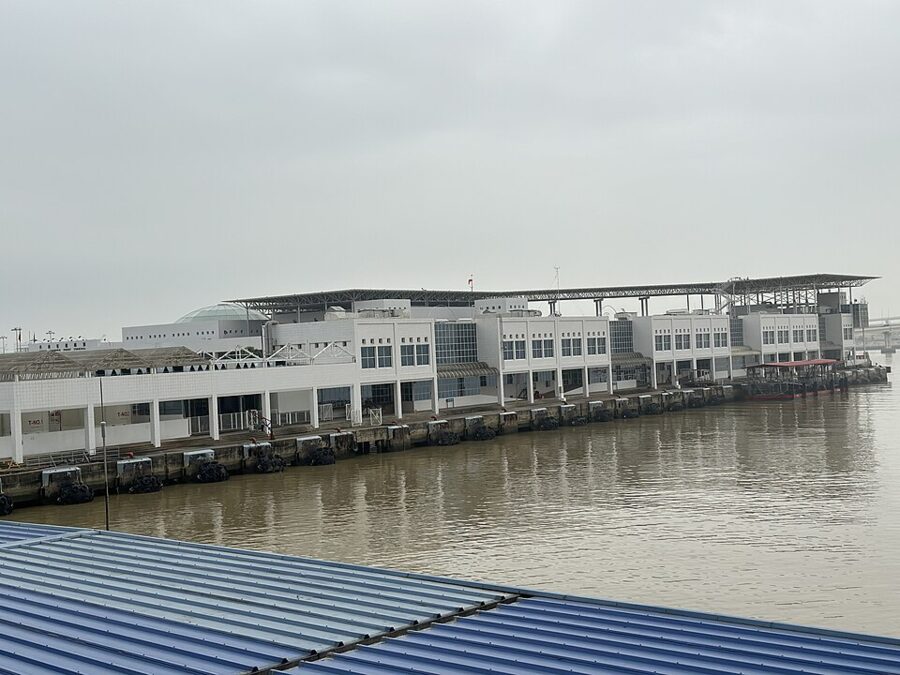

Return tickets are tied to a terminal. A Cotai Water Jet return brings you back from Taipa, not the Outer Harbour, and most TurboJET sailings go home from the Outer Harbour. Check the return leg before you pay for a round trip.
Tsim Sha Tsui and the airport: no ferry to count on
In November 2026 neither TurboJET nor Cotai Water Jet lists a Macau sailing from the China Ferry Terminal in Tsim Sha Tsui (中港碼頭); TurboJET’s Kowloon boats go to Zhuhai. From Kowloon, take the MTR to Sheung Wan, or use the bridge.
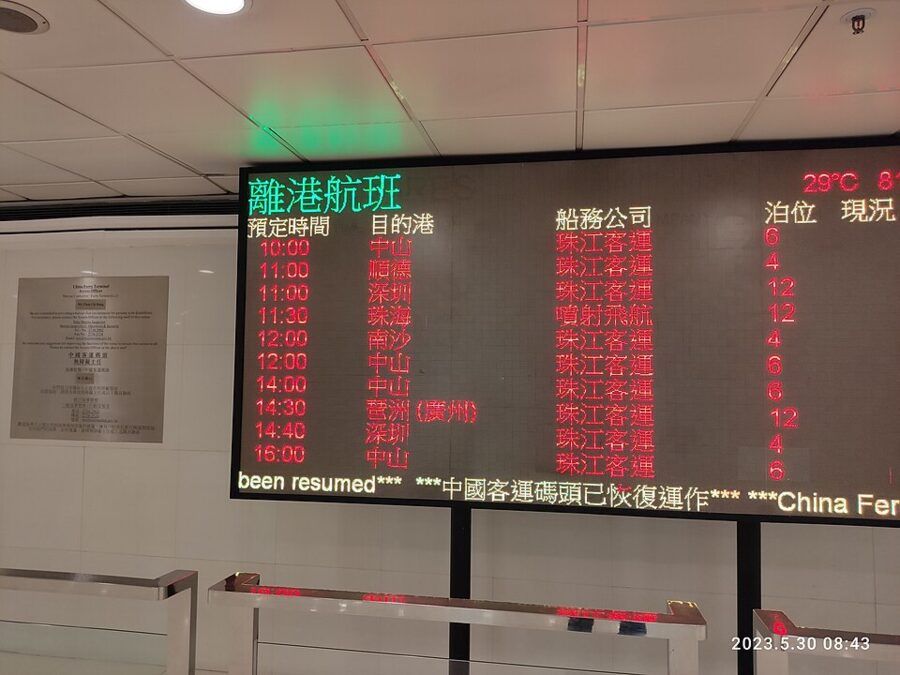

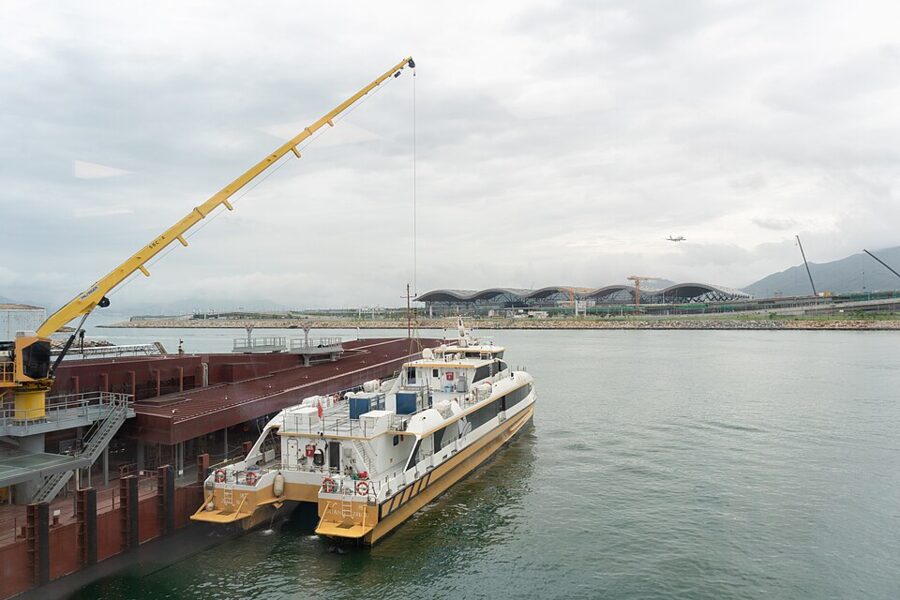
SkyPier, the ferry pier inside the airport, is only for passengers changing planes who never enter Hong Kong. Cotai Water Jet’s airport route is charter-only at the moment, and the airport lists the Taipa service as unavailable. TurboJET still shows a 12:30 sailing from the airport to the Outer Harbour at HK$297, but flags the route as subject to adjustment and charter. Don’t build a trip around it.

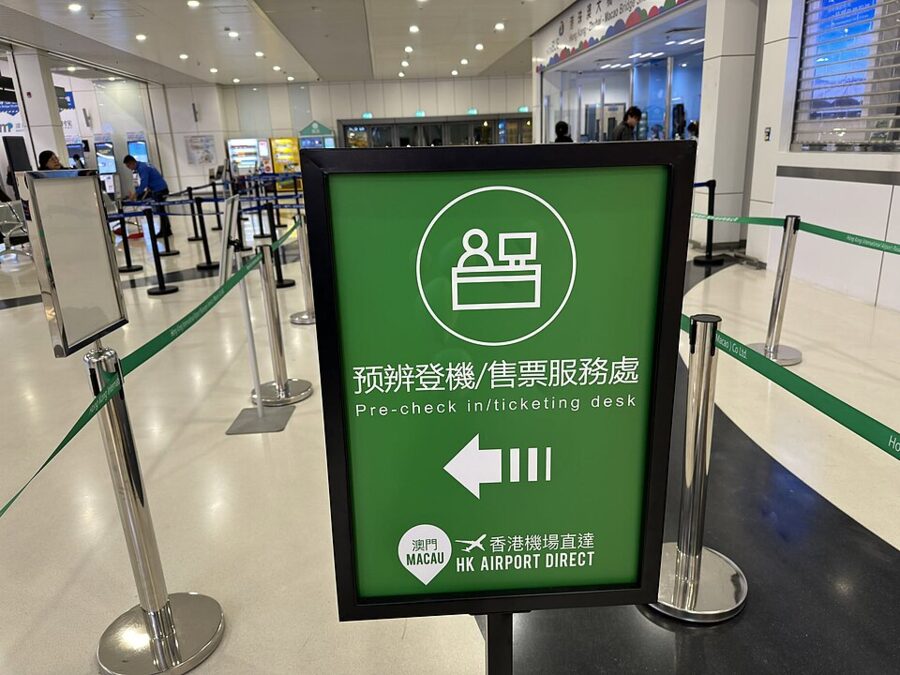
Flying in and going straight to Macau, use the coach instead. Skip immigration and baggage reclaim, go to the HK Airport Direct counters (38–40) in Transfer Area E2 of Terminal 1, and the coach takes you over the bridge to the Macau Port, about 45 minutes. Departures run from 08:30 to 21:30, about every half hour; an adult ticket is about HK$280, with one case included. Arrive at the counter at least an hour before the coach if you have checked bags.

The bridge: the gold shuttle bus
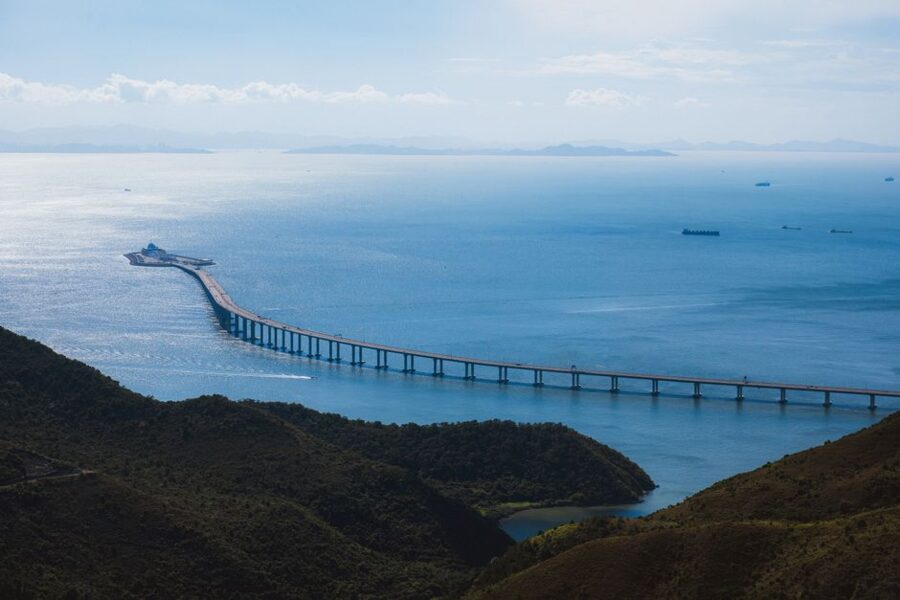
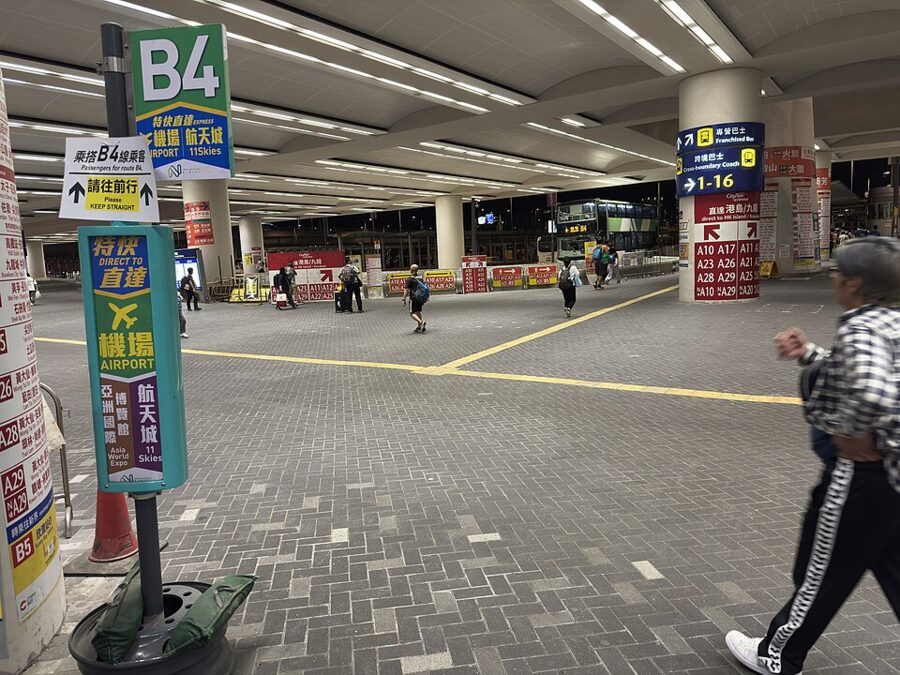
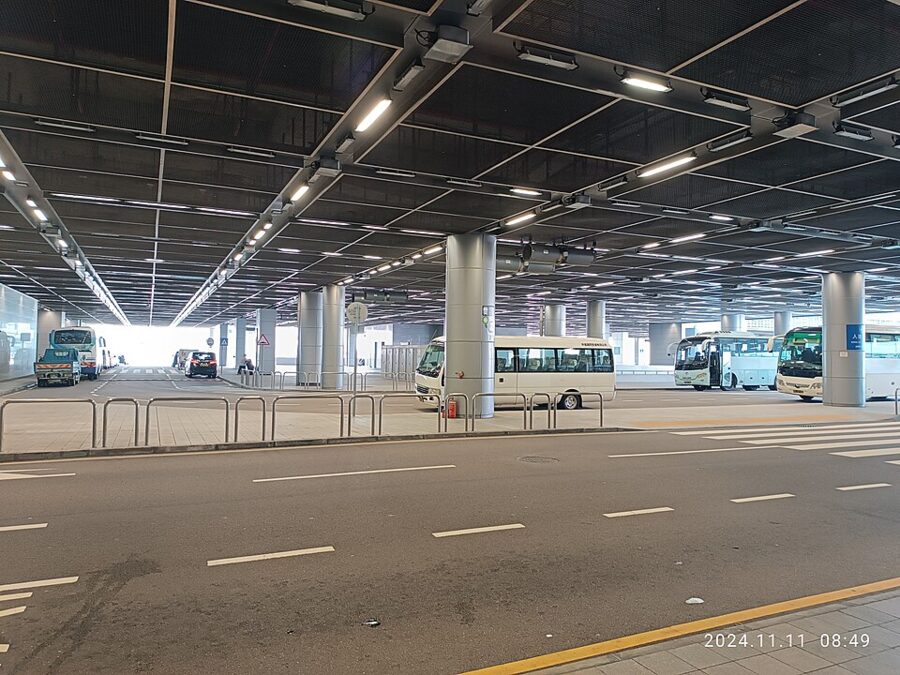
The Hong Kong Port of the bridge sits on an artificial island off the airport, and the shuttle bus is only one leg of the trip. Getting there:
- From the airport (after immigration): NLB B4, a circular route from the passenger terminal, HK$9.80.
- From Tung Chung: NLB B6, HK$9.80. The Tung Chung line costs HK$24.30 from Central or Hong Kong Station and HK$18.70 from Kowloon; skip the Airport Express, which costs more and does not stop at Tung Chung.
- From Sunny Bay (and Disneyland): Citybus B5, HK$6.10.
- From town, by bus: several Citybus airport buses call at the port, including the A11 from Central and North Point and the A21 down Nathan Road, and the overnight NA routes stop there too.

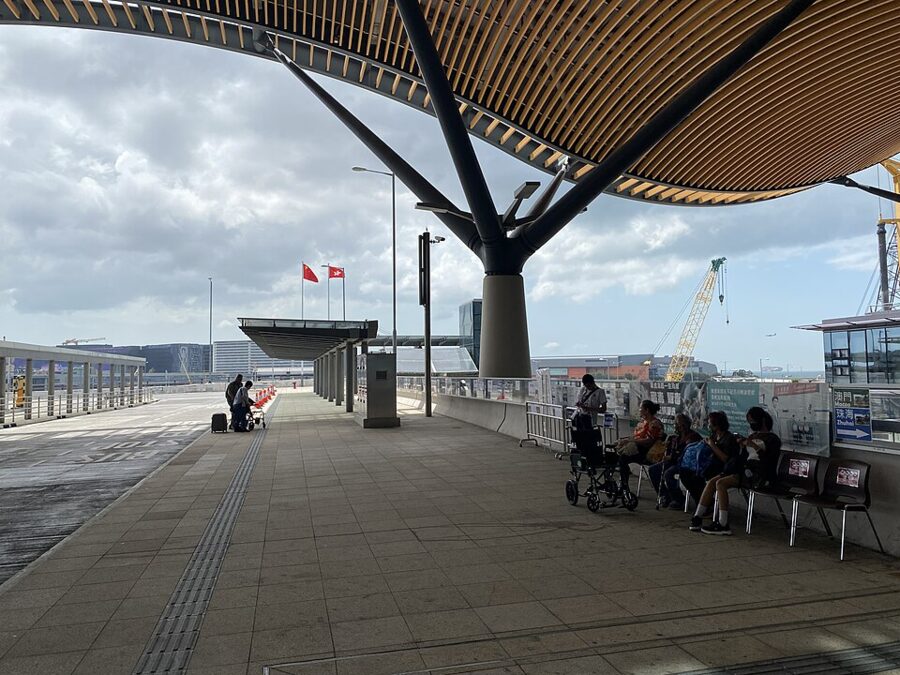

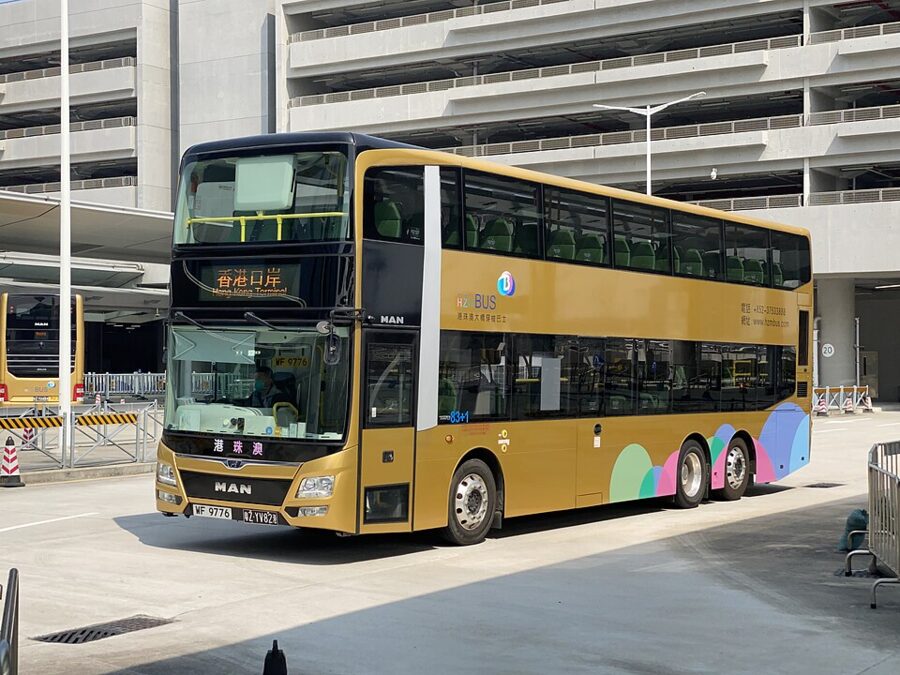
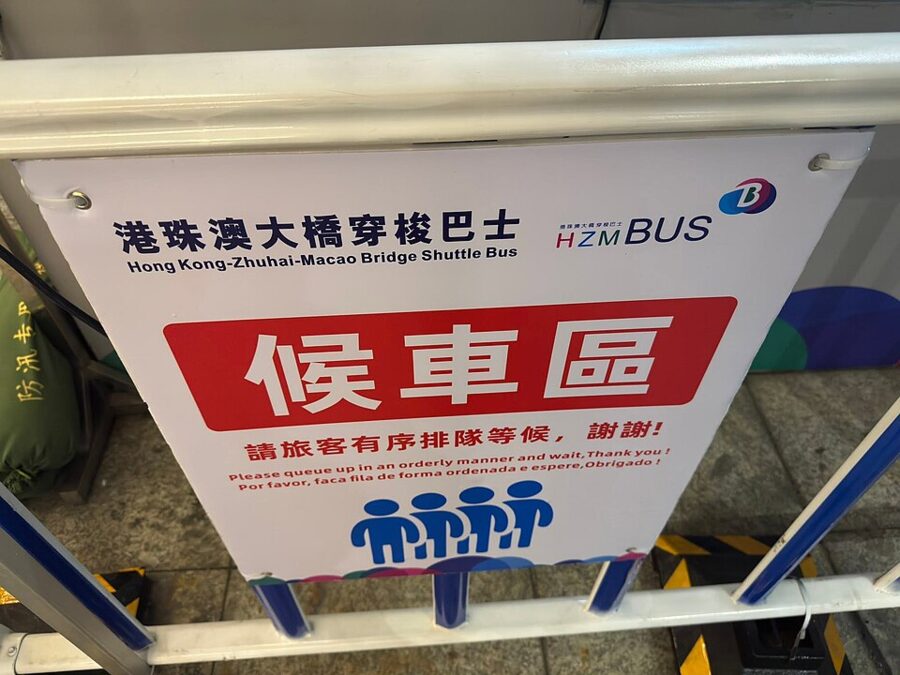
The shuttle is the Hong Kong-Zhuhai-Macao Bridge Shuttle Bus (港珠澳大橋穿梭巴士); the same gold buses run to Zhuhai, so join the Macau queue, the 港澳線. Tickets are sold at counters and machines in the port buildings and online at hzmbus.com. The fare is HK$65 from 06:00 to 23:59 and HK$70 from midnight to 05:59, half that for children under 12 and below 1.2 m, disabled passengers and anyone 65 or over. Children under three who take no seat ride free.

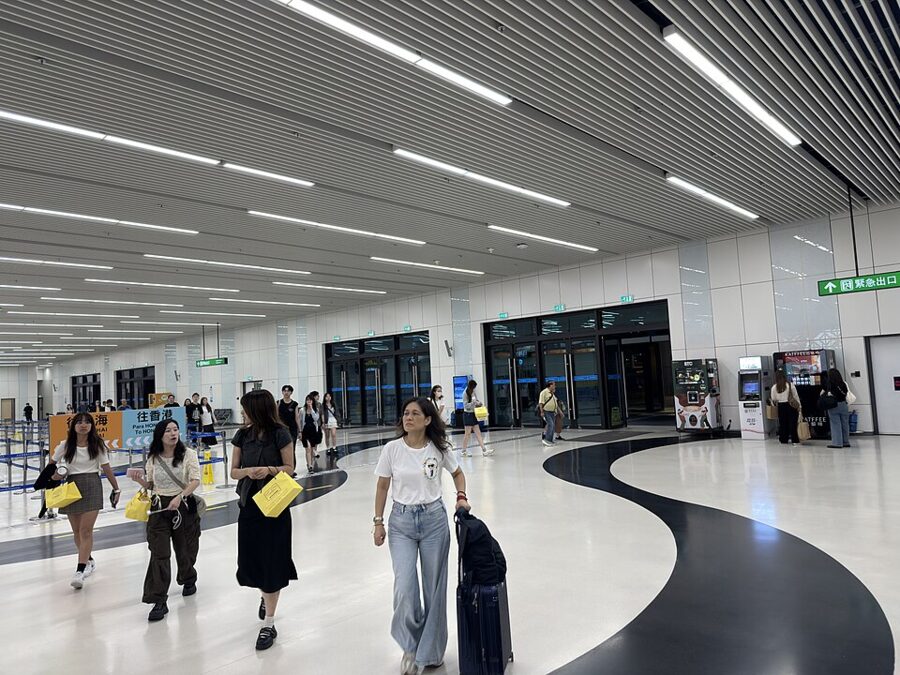
The bus drops you at the Macau Port (港珠澳大橋澳門口岸), where you clear Macau immigration. Three public bus routes leave from the port, according to Macau’s transport bureau: the 101 towards the peninsula, round the clock, and routes to Taipa and Cotai until about midnight. The fare is MOP6 in cash. A taxi from the port costs the normal meter plus an MOP8 surcharge.

Through coaches and private cars
Cross-boundary coaches go over the same bridge from town to hotel doors, so you only get off at the two border posts. Macau’s transport bureau lists three brands: HK-Macau Express (港澳快線), whose stops include China Hong Kong City in Tsim Sha Tsui and Prince Edward; ONE BUS (港澳一號); and Eternal East (永東巴士). You pay more than for the do-it-yourself bridge route, in return for not changing buses; check fares and times on each operator’s booking site. Cross-boundary limousines with dual Hong Kong and Macau plates go door to door and are priced per car.
Entry: what each passport needs
You leave Hong Kong through immigration and enter Macau through immigration, every time, whichever route you take. The Macau rules below are from the Public Security Police Force’s entry page, last updated on 20 November 2026.
- Visitors on a foreign passport: 88 nationalities enter Macau visa-free. Most get 30 days, including Americans, Australians, Canadians, Indians and Singaporeans. Holders of passports from the EU and Schengen states, Japan and South Korea get 90 days, New Zealanders three months, and British citizens six months. Your passport must be valid for at least 90 days beyond your stay.
- Passports not on the list: most can get a visa on arrival at the checkpoint’s visa room, MOP200 for a single entry, good for 30 days. Nationals of Bangladesh, Nepal, Nigeria, Pakistan, Sri Lanka and Vietnam must get a Macau visa from a Chinese embassy or consulate before travelling.
- Hong Kong permanent residents: the permanent identity card is enough to enter Macau, for up to a year; no passport needed. Register once for Macau’s automated channels at the self-service kiosks in the ferry terminal or the bridge control point and you skip the queues.
- Other Hong Kong residents: travel on your passport or Document of Identity and follow the rule for that document.
- Mainland residents: you need the Exit-Entry Permit for Travelling to and from Hong Kong and Macau with a valid Macau endorsement. With a Hong Kong endorsement only, Macau will refuse you entry from Hong Kong.
Coming back, visitors are landed in Hong Kong again as on any arrival, on their passport’s usual terms. If you plan to go on from Macau into Zhuhai, that is a mainland entry with its own rules; for those, read up on getting a China visa before you leave Hong Kong.
Money and phones in Macau
Macau’s pataca is pegged to the Hong Kong dollar at about MOP103 to HK$100, and Hong Kong notes are taken almost everywhere at par. Change usually comes back in patacas, which Hong Kong shops will not accept, so spend them before the boat.
Your Hong Kong number will roam in Macau, and roaming bills add up quickly. Several Hong Kong tourist SIMs and eSIMs include Macau data, which is the cheaper fix; see the Hong Kong prepaid SIM cards compared.
Getting around on arrival
The casino resorts run free shuttle buses from both ferry terminals and the bridge port, and you need not be a guest or a gambler to ride. Each of the six operators lists its routes on its own site.
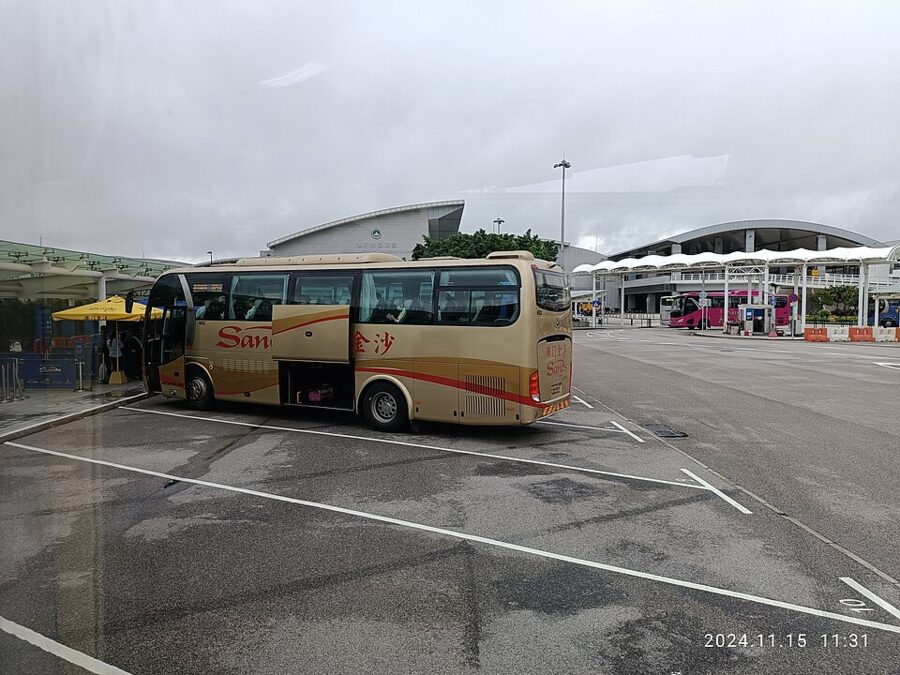
Public buses cost MOP6 in cash, so carry coins or small notes. Taxis start at MOP21 for the first 1,600 metres, then MOP2 for each 220 metres, plus MOP3 for each bag in the boot. Ranks at the airport, Taipa Ferry Terminal and the bridge port add MOP8. The light rail’s Taipa line stops at Taipa Ferry Terminal, Exit A.
A day trip or a night
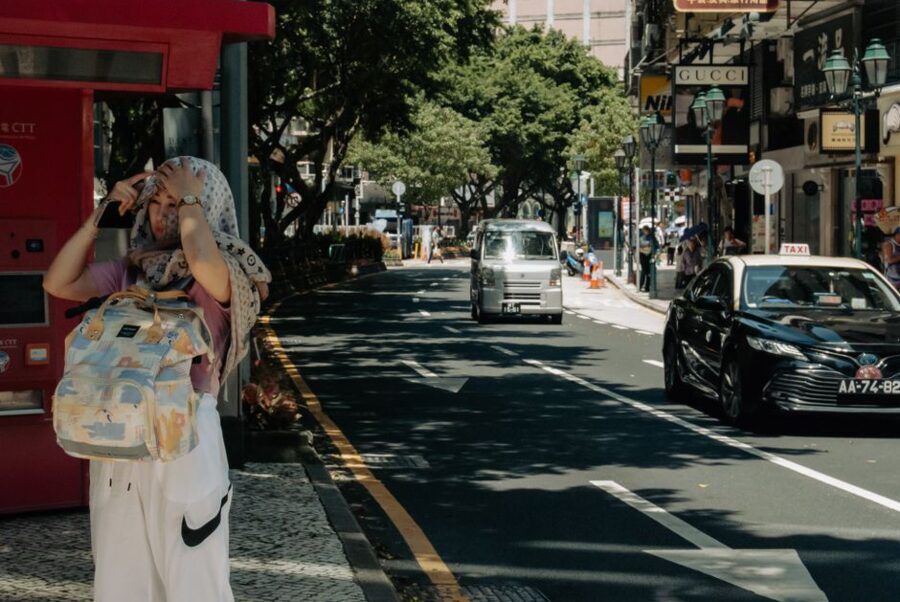
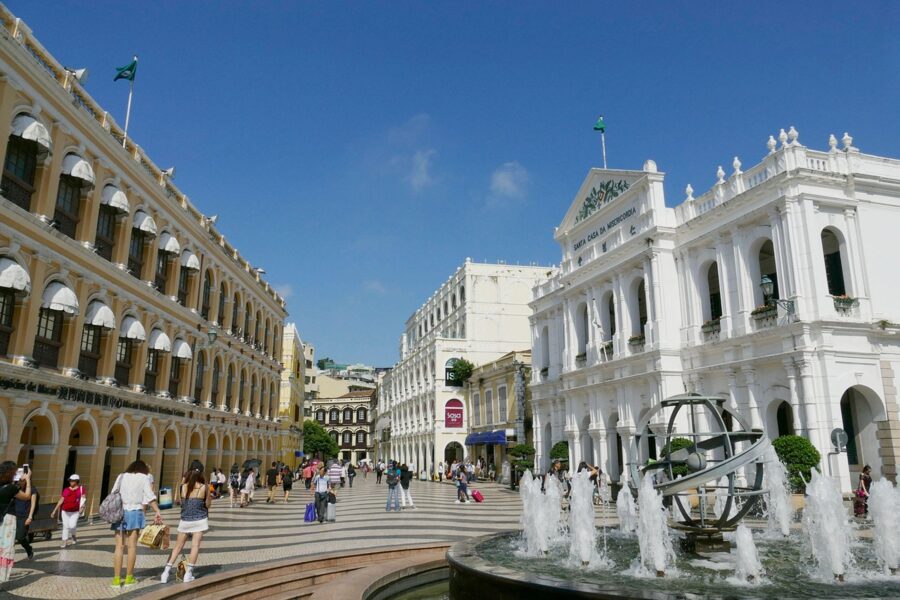
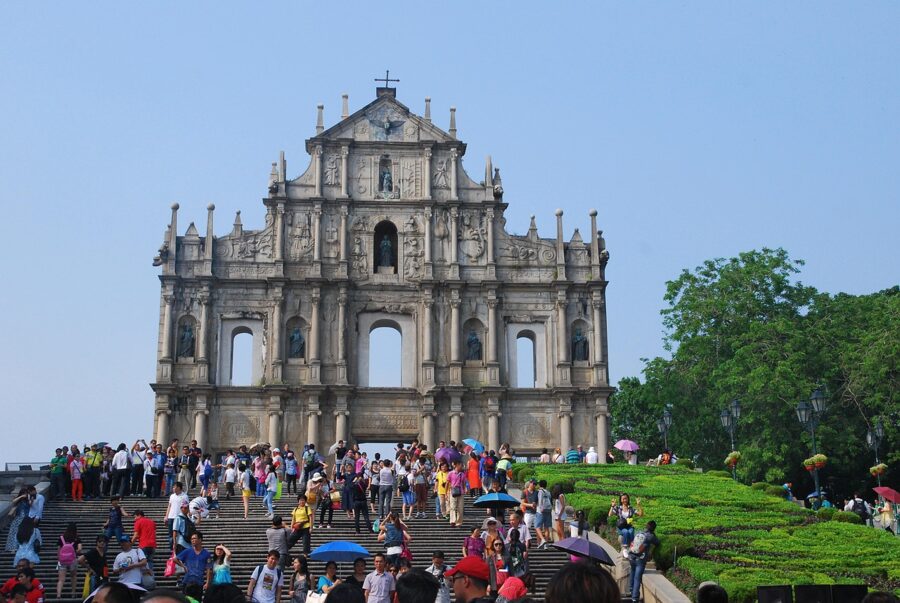
Macau works as a day trip. Take a morning ferry to the Outer Harbour, walk Senado Square and the Ruins of St Paul’s, have lunch in Taipa Village, and come back on an evening boat from Taipa. With the first boat at 07:30 and the last back at 23:59, there is no rush. If you are building a Hong Kong itinerary of five days or more, Macau earns one of them.
Stay over for a show in Cotai or the resorts at night. A night also lets you come back the other way: the gold bus in the morning, straight to the airport for a flight.
Mistakes that cost an evening
- The wrong terminal. A ticket to Taipa when your hotel is on the peninsula, or a return from the terminal you did not arrive at. The two are about 20 minutes apart by taxi.
- Missing the last boat. The last ferry home leaves the Outer Harbour at 23:00 and Taipa at 23:59. After that, take a taxi or the 101 to the bridge port and the overnight shuttle, then a night bus from the Hong Kong Port into town.
- Paying the night fare by accident. Cotai’s night fare starts at 17:10 in winter. A 17:30 boat in December costs HK$242, not HK$192.
- Ignoring the weather. Ferries stop when typhoon signals go up, and the bridge shuttle stopped for typhoons as recently as July 2026. Check the weather warnings the night before, and choose a flexible ticket if a storm is forecast.
Before you go, check which Macau terminal your return leaves from and put your passport, or your permanent ID card, in the bag you carry. Then follow the Exit D signs at Sheung Wan, and buy the 30-minute margin along with the ticket.