

In an average November the Hong Kong Observatory records an afternoon high of 24.5°C, 72 per cent humidity and rain on fewer than six days. Aim for that. The best time to visit Hong Kong is late October to mid-December: dry, sunny, warm at noon and cool enough to walk the hills. Skip June to September if heat, cloudbursts and typhoons would spoil your trip, and avoid the mainland holiday weeks (5–13 February, 1–5 May and 1–7 October in 2027) if crowds and hotel prices would.
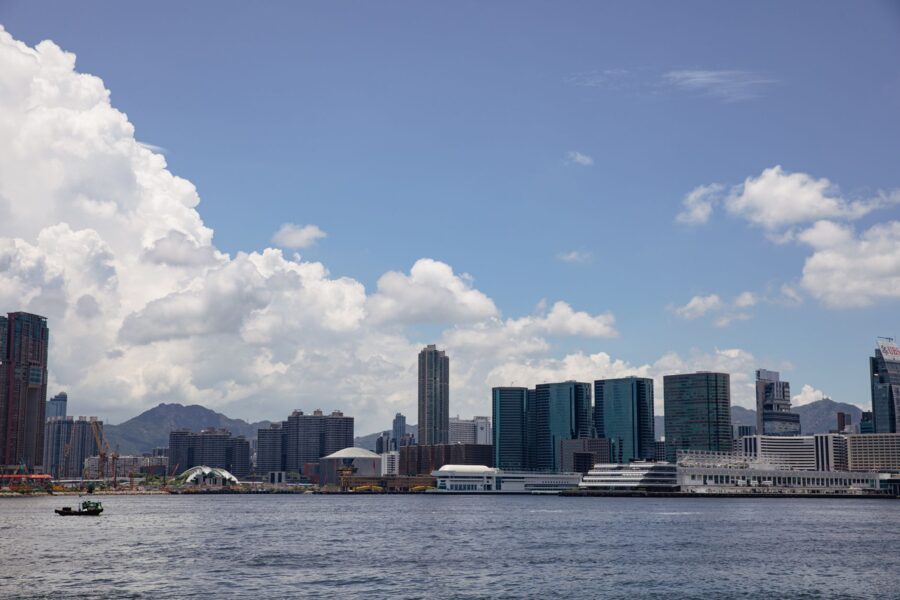
The runners-up have catches. January and February are cool and often grey, with Lunar New Year closing small businesses for days. March and April are mild but damp, with fog that can hide the skyline for a morning or a week.
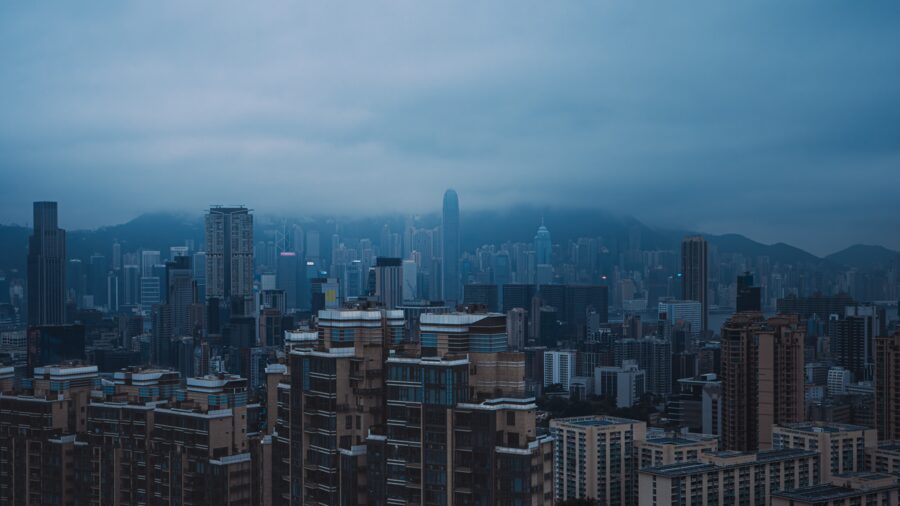
Two things changed in November 2026. A Symphony of Lights, the nightly laser show on the harbourfront towers, ended on 18 November after 22 years, so an evening on the waterfront needs another plan. And WinterFest, the Tourism Board’s Christmas season, runs from 18 November 2026 to 5 January 2027.
In this article
Hong Kong weather month by month
The figures are the Observatory’s 1991–2020 normals, measured at its headquarters in Tsim Sha Tsui. Signal days count the days a year when any tropical cyclone signal (No. 1 or higher) is up. Events are for 2027 unless marked.
| Month | High / low (°C) | Rain (mm) | Rain days | Humidity | Signal days | What’s on | Crowds and hotel prices |
|---|---|---|---|---|---|---|---|
| January | 18.7 / 14.6 | 33 | 5.7 | 74% | 0 | WinterFest to 5 Jan; Marathon 17 Jan; SailGP 23–24 Jan | Busy at New Year, then quiet |
| February | 19.4 / 15.3 | 39 | 8.0 | 79% | 0 | Lunar New Year 6 Feb; Lantern Festival 20 Feb | Peak in New Year week |
| March | 21.9 / 17.6 | 75 | 10.5 | 82% | 0 | Derby 21 Mar; Art Basel 25–27 Mar; Easter 26–29 Mar | High in the last week |
| April | 25.6 / 21.1 | 153 | 11.4 | 83% | 0.2 | Ching Ming 5 Apr; Sevens 9–11 Apr | High on Sevens weekend |
| May | 28.8 / 24.5 | 291 | 15.4 | 83% | 0.3 | Mainland Golden Week 1–5 May; Bun Festival 13 May | Busy first week, then moderate |
| June | 30.7 / 26.5 | 492 | 19.3 | 82% | 2.0 | Tuen Ng 9 Jun; harbour dragon boat races (date to come) | Moderate; rates soften |
| July | 31.6 / 26.9 | 386 | 18.4 | 81% | 3.1 | 1 July holiday; mainland school holidays | Families at the theme parks; lower rates |
| August | 31.3 / 26.7 | 453 | 17.5 | 81% | 4.2 | Mainland school holidays | As July |
| September | 30.5 / 26.1 | 321 | 14.9 | 78% | 3.8 | Mid-Autumn 15 Sep | Moderate |
| October | 28.1 / 23.9 | 120 | 7.8 | 73% | 1.7 | Mainland Golden Week 1–7 Oct; Chung Yeung 8 Oct; Wine & Dine (late Oct) | Very busy first week, high after |
| November | 24.5 / 20.3 | 39 | 5.7 | 72% | 0.6 | WinterFest from mid-November | High |
| December | 20.4 / 16.2 | 29 | 5.3 | 70% | 0 | Clockenflap (4–6 Dec in 2026); Christmas; countdown 31 Dec | High; peak Christmas to New Year |
Read the numbers with the city in mind. The New Territories run colder than Tsim Sha Tsui on a winter night, urban temperatures can drop below 10°C in a cold snap, and high ground sees frost some winters.
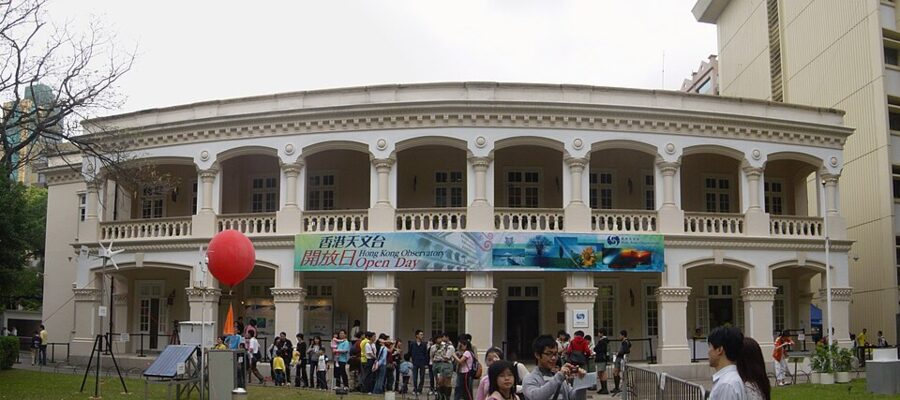

Humidity is what the averages undersell. At 83 per cent in April and May, a 25°C day feels close and sticky, and laundry does not dry. Indoors it is the opposite: malls, cinemas and the MTR are air-conditioned hard, so carry a layer even in August.
October to December: the best stretch
The air dries out in October. The month still sees the occasional late typhoon (1.7 signal days on average), but it also has the most sunshine of the year, nearly 198 hours. By November the rain is down to 39 mm and December averages 29 mm. Book early: this is when everyone else wants to come too.
January to April: cool, then damp
January is the coolest month and, with December, the driest. A cold front often leaves a few days of crisp, clear air behind it, and outside the New Year holidays January is the cheapest of the good months.
February turns cloudier and drizzly. March and April bring the fog the Observatory warns can disrupt flights and ferries, and humidity that steams up your glasses as you leave the hotel. Spring is still fine for the city; just expect grey skies in your photographs.
May to September: hot, wet and cheaper
About 80 per cent of Hong Kong’s rain falls between May and September, and afternoons pass 31°C. Summer is not a write-off: hotel rates ease, the sea is warm and the Observatory notes a fine, dry spell most Julys that can last a week or two. Walk early, plan indoor afternoons and build your Hong Kong itinerary so that days can swap: the West Kowloon museums for the wet one, the hike for the dry one.
Typhoon season and rainstorm warnings
Tropical cyclones can affect Hong Kong from May to November, most often July to September. Over 1991–2020 a signal of some kind was up on about 16 days a year, but Signal No. 8, the one that shuts the city, averaged only 2.4 days a year, with August the worst at 0.8 days. Most summer weeks pass without one.
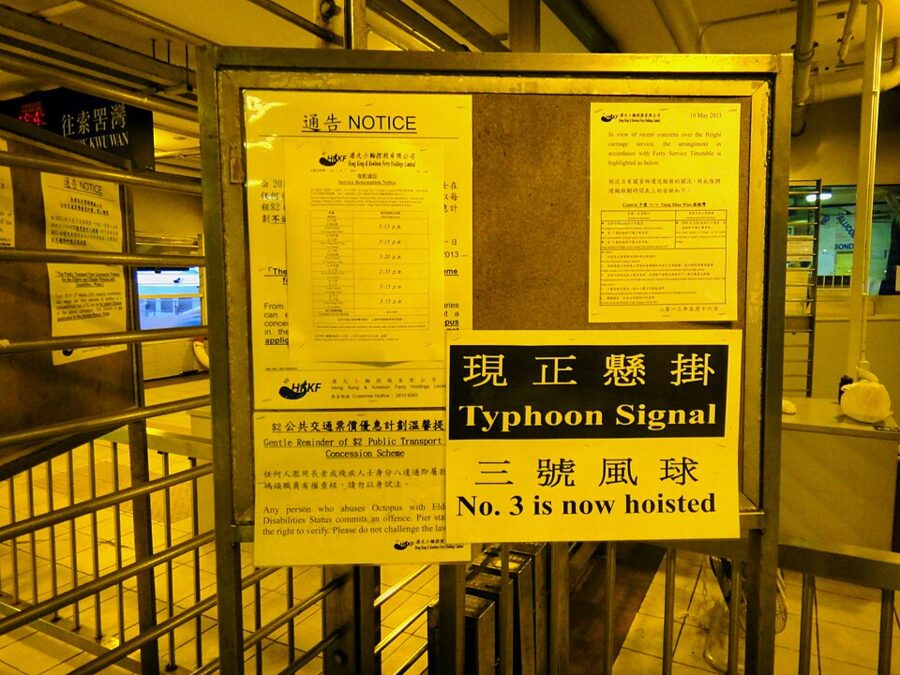

When it does come, it usually costs a day. Typhoon Noul brought 2026’s first No. 8 on 26 July: Signal No. 9 went up at 01:00, dropped to No. 8 at 07:10 and was replaced by No. 3 at 12:40. Hong Kong Disneyland reopened at 15:00, Ocean Park stayed shut for the day, and M+ and the Palace Museum extended unused timed tickets by 60 days.
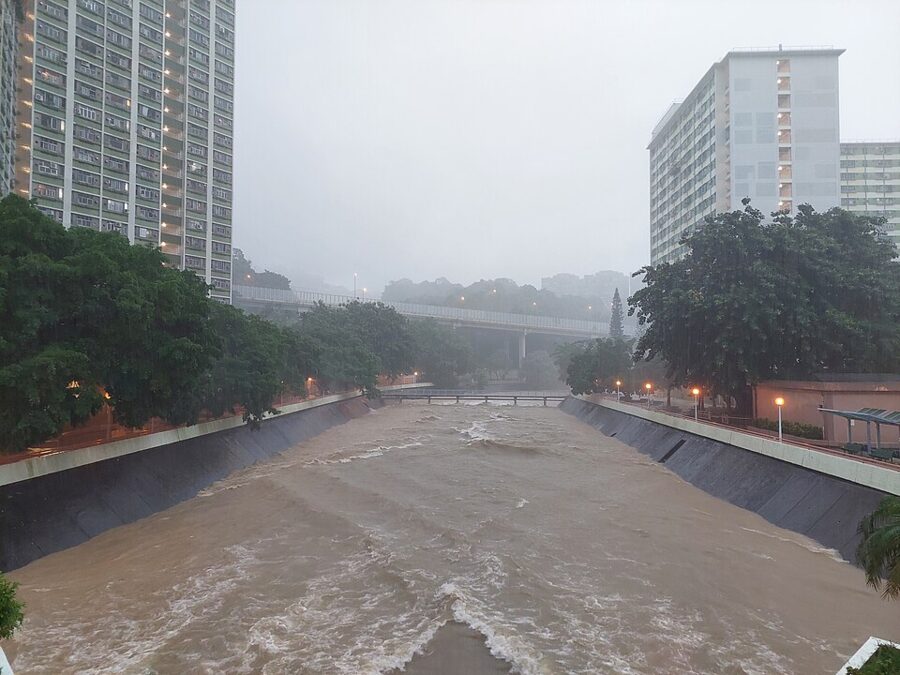
Rainstorm warnings are separate and can come with no typhoon at all: Amber, Red and Black mark rain of more than 30, 50 and 70 mm an hour. Under a Black, stay where you are. What each of the typhoon and rainstorm warnings means for a visitor comes down to what shuts and when, and the Observatory’s rainstorm warning page sets out each level. Buy travel insurance that covers weather delays before you book flights for June to October.

Festivals and events by month
Lunar New Year: 6 February 2027
Lunar New Year in Hong Kong falls on Saturday 6 February 2027, with public holidays on 6, 8 and 9 February. The Tourism Board lists its night parade in Tsim Sha Tsui for 6 February, and fireworks go up over the harbour on Sunday 7 February. It is a good week for flower fairs and temples and a poor one for eating out, because many family restaurants close.
Art Basel, Easter and the Sevens: late March to mid-April
Art Basel Hong Kong runs from 25 to 27 March 2027 at the Convention and Exhibition Centre in Wan Chai, and in 2027 it lands on top of Easter: Good Friday is 26 March and Easter Monday 29 March. Ching Ming follows on 5 April, when families sweep graves and roads to the cemeteries jam. Then the Cathay/HSBC Hong Kong Sevens fills Kai Tak Stadium from 9 to 11 April, with presale from 1 December. Hotels price all three as peak.

Cheung Chau Bun Festival: 13 May 2027
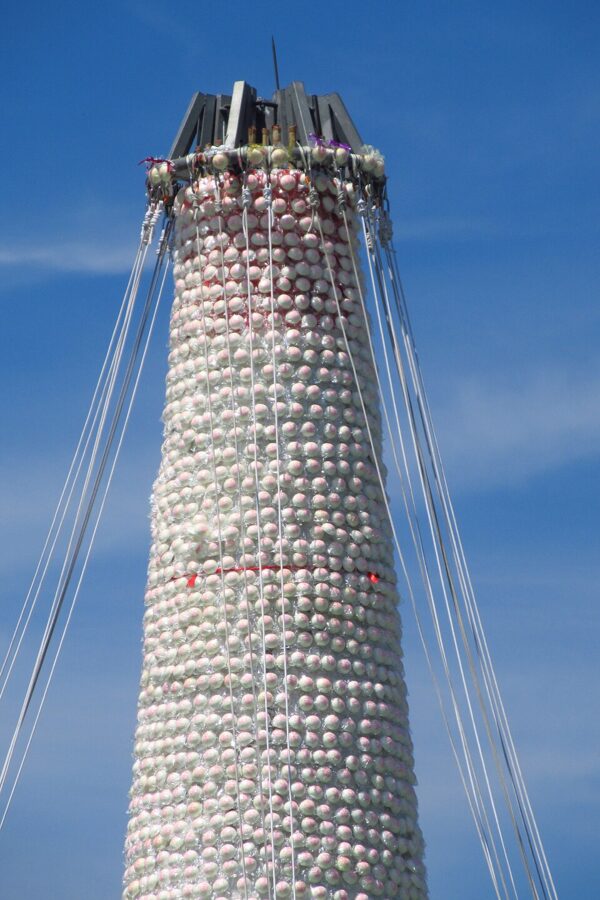
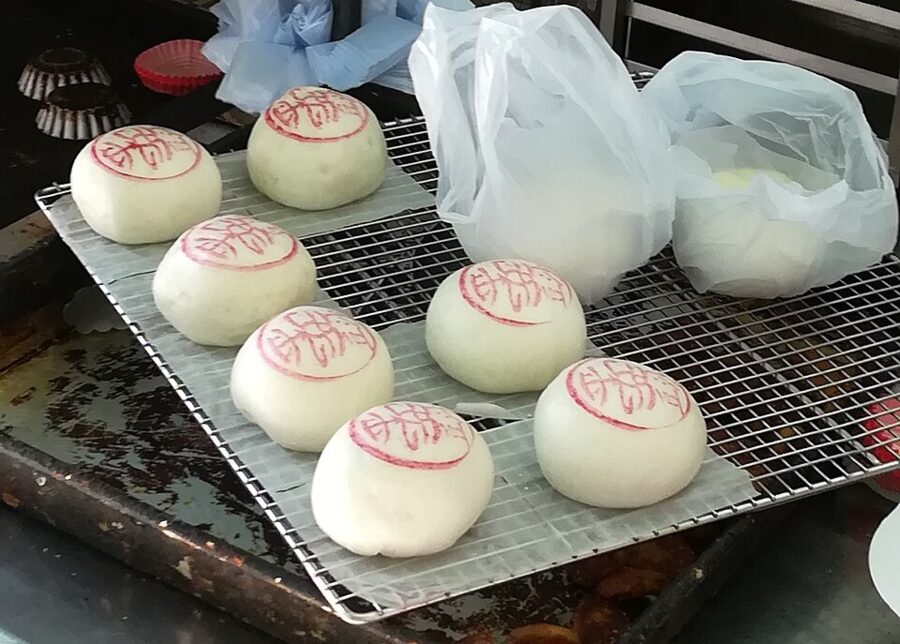
The festival’s big day is the eighth day of the fourth lunar month, which also makes it the Buddha’s Birthday holiday: Thursday 13 May 2027. The procession winds through the island in the afternoon, and at midnight climbers race up a 14-metre tower of buns. Take a ferry from Central Pier 5 before lunch; by mid-afternoon the queues are long, and the last boats back are packed.


Dragon boats: 9 June 2027
Tuen Ng, the Dragon Boat Festival, is Wednesday 9 June 2027. On the day itself local races run in Stanley, Aberdeen, Sha Tin and elsewhere, and in Tai O, on Lantau, fishermen’s associations tow temple deities through the stilt-house channels behind their boats. The Tourism Board’s international races in Victoria Harbour are listed for June 2027 with no date yet; in 2026 they ran on 27 and 28 June off the Tsim Sha Tsui waterfront.



Mid-Autumn: 15 September 2027
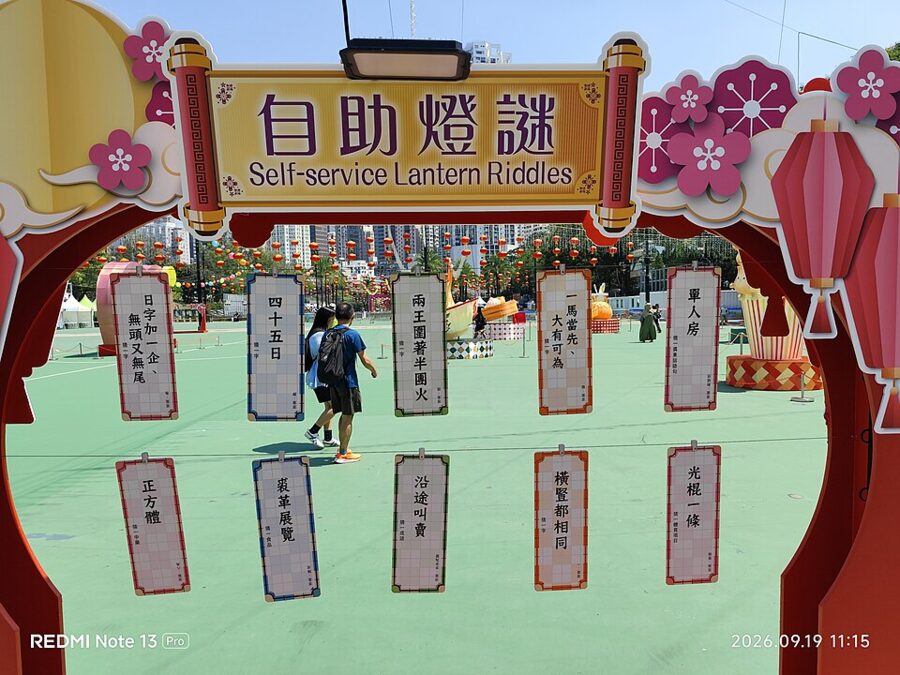
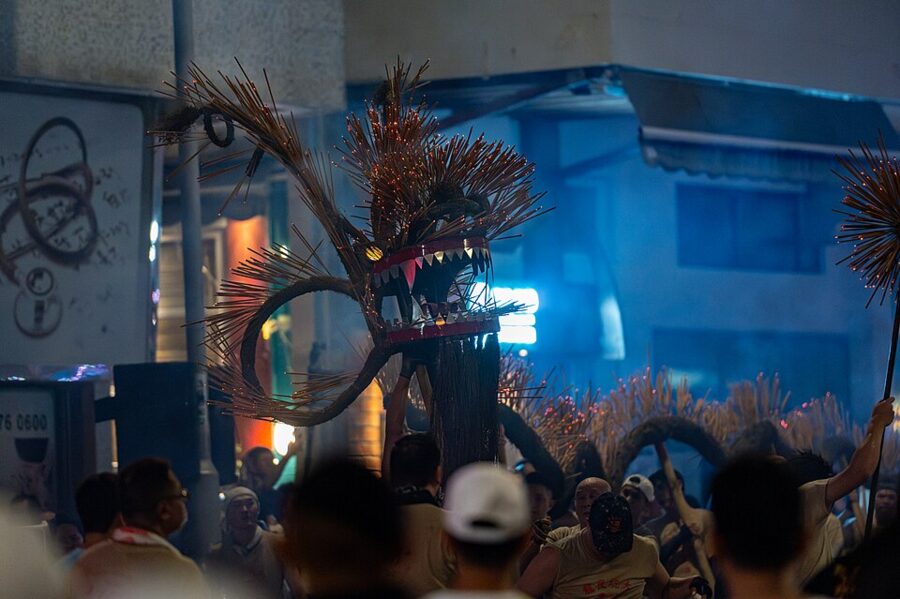
The Mid-Autumn Festival is Wednesday 15 September 2027, and the following day is the public holiday. Victoria Park in Causeway Bay hosts the biggest lantern carnival; in 2026 it was lit 18:30–23:00 and free. Nearby, the Tai Hang Fire Dragon Dance winds through the streets on three nights around the festival, which in 2026 meant 24 to 26 September. The 2027 times usually appear in early September.

WinterFest, Clockenflap and the countdown
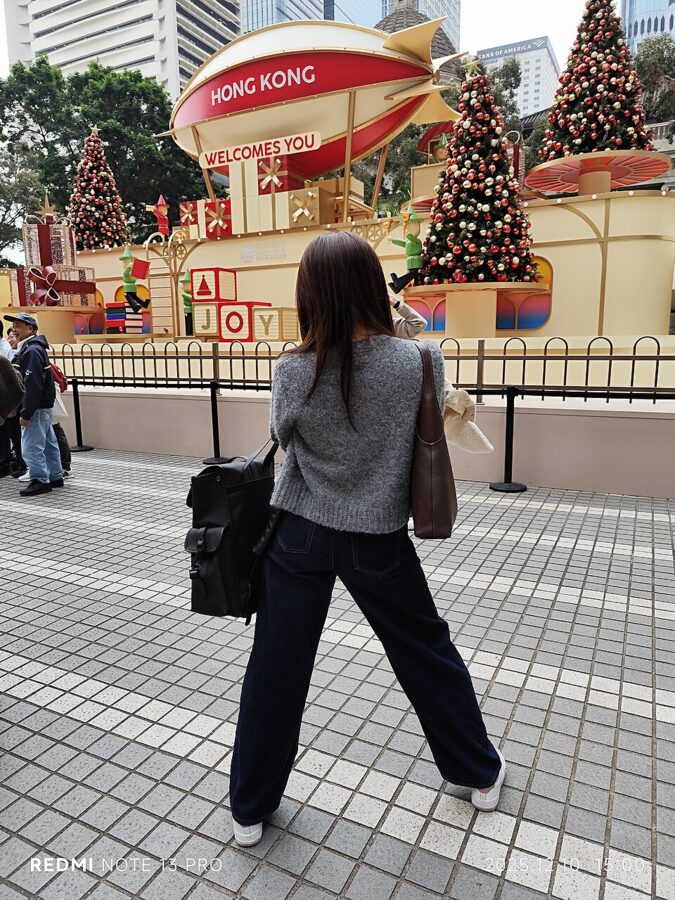
WinterFest runs to 5 January 2027, with the tree in Statue Square Gardens and a projection show on the Cultural Centre in Tsim Sha Tsui. Clockenflap, the city’s big music festival, takes over the Central Harbourfront from 4 to 6 December 2026; it has settled into late November or early December, and the 2027 dates are not out yet. The countdown fireworks go up over the harbour at midnight on 31 December, and the Standard Chartered Hong Kong Marathon closes roads on Sunday 17 January 2027.
Golden Weeks, crowds and hotel prices
The mainland’s holidays, not Hong Kong’s, decide how crowded the city feels. Beijing’s 2027 calendar, published in November 2026, gives the Spring Festival from 5 to 13 February, Labour Day from 1 to 5 May and National Day from 1 to 7 October. During the October 2026 Golden Week about 1.6 million visitors arrived in seven days, more than 1.4 million of them from the mainland, with a peak of about 277,000 mainland arrivals on 1 October.
On those days Tsim Sha Tsui, Mong Kok and the Ngong Ping cable car queue are at their worst, and the border is busy in both directions. The government reported the Lok Ma Chau Spur Line as the busiest entry point for mainland visitors, then West Kowloon station. If you are crossing to Shenzhen or taking the train to Guangzhou, go before the first day or after the last.
Hotel prices follow the same calendar, plus Art Basel and Easter, the Sevens and Christmas to New Year. The cheapest weeks are usually the wet ones from June to early September, outside the 1 July holiday. The first fortnight of December and the middle of January pair good weather with ordinary rates; choose where to stay in Hong Kong by what you plan to do, not by the cheapest room.
The best months for hiking, beaches, views and sales
Hiking: October to March
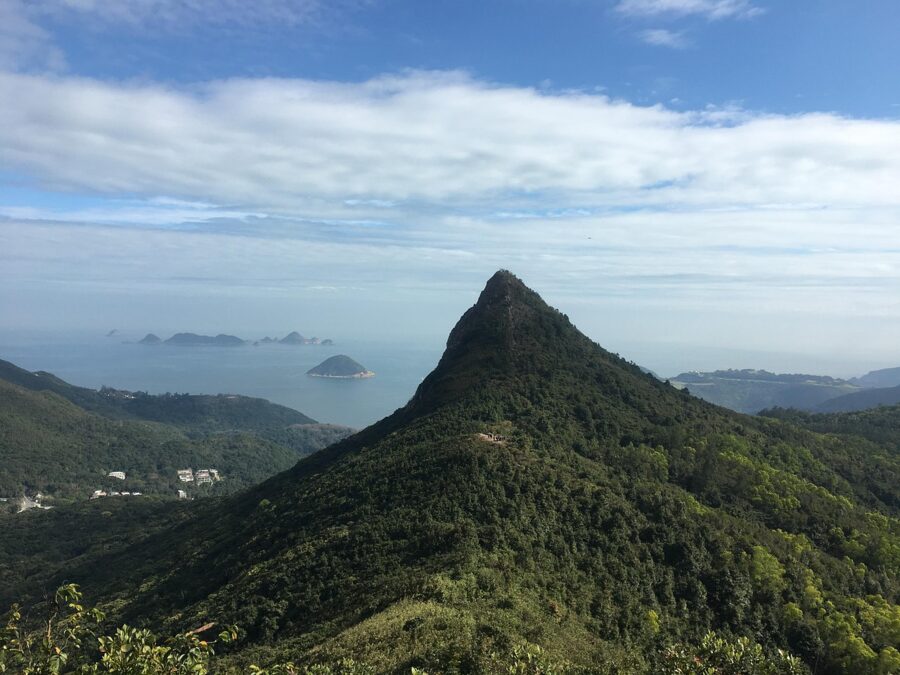
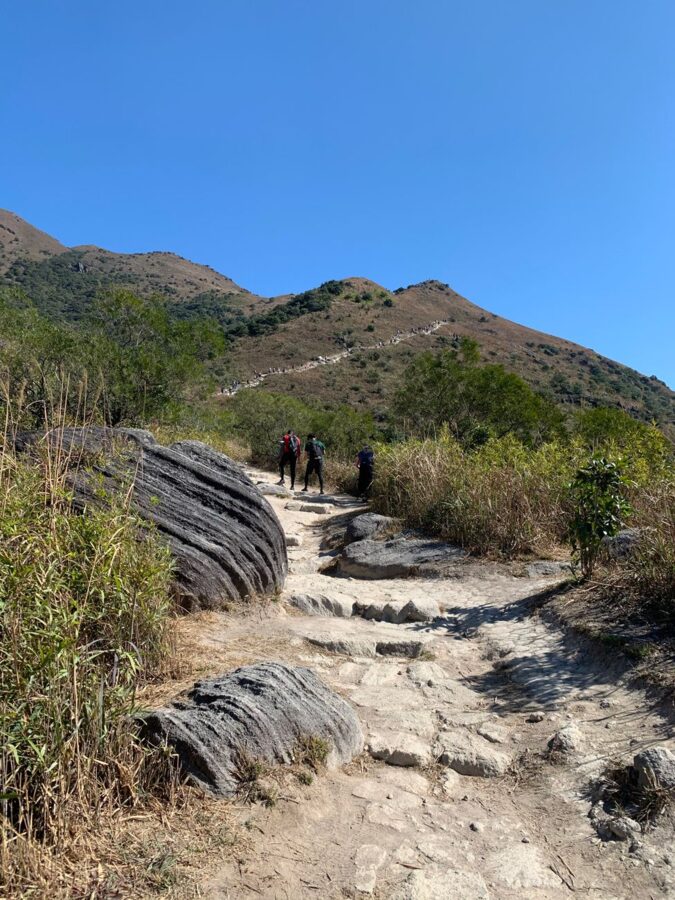
Hong Kong’s trails are steep, exposed and short of shade, which makes the cool, dry months the only comfortable ones. October to December is the classic season; January to March works too if you carry a windproof layer for the ridges. On Chung Yeung, 8 October 2027, half the city climbs a hill by tradition, so pick a quieter trail that day. In summer the Observatory’s Very Hot Weather Warning is the signal to stay off exposed ridges.
Beaches and the sea: May to October
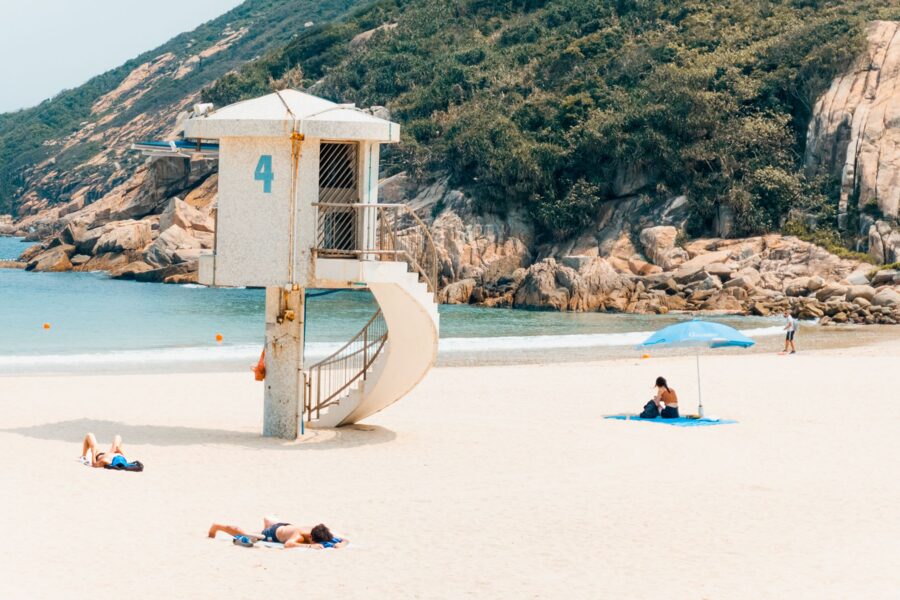
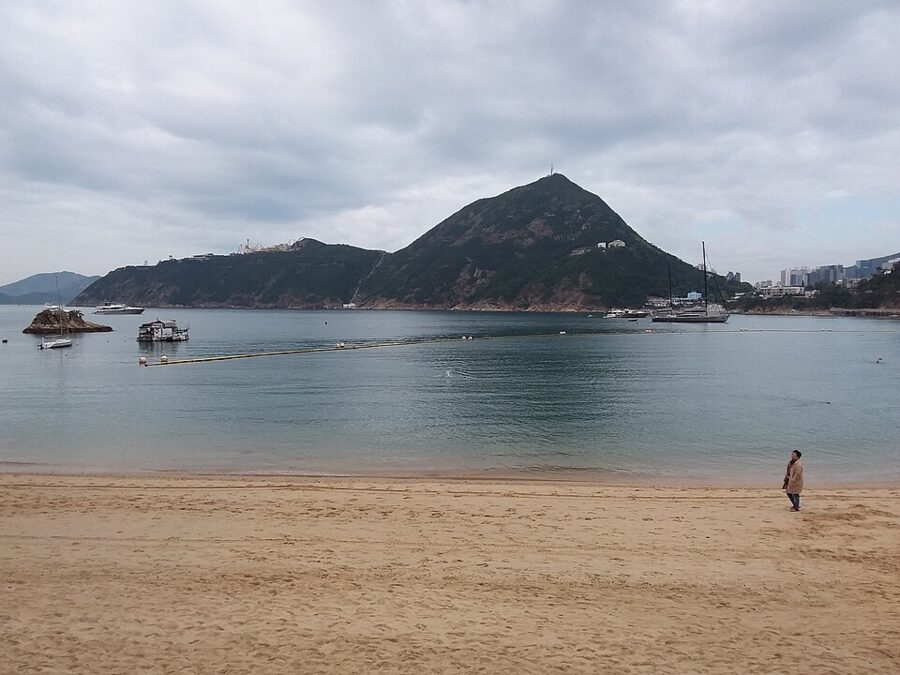
The sea at North Point averages about 25°C in May, 27°C by September and still 26.5°C in October, then drops to 17°C in February. The Leisure and Cultural Services Department runs lifeguards at its 39 gazetted beaches through the warm months; from 1 November 2026 to 31 March 2027 only some keep them, falling to six (including Deep Water Bay, Silverstrand and Golden Beach) from December to February. Swim only under a lifeguard, and leave the water when the red flag goes up for a thunderstorm. For diving and sea temperatures month by month, May, June and October are the sweet spot.

Harbour views and clear air: October to January
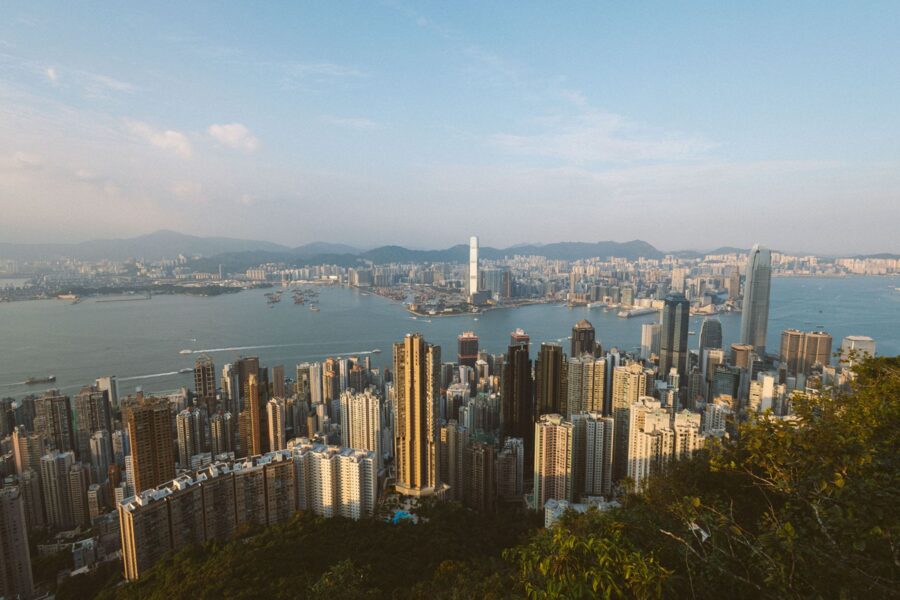
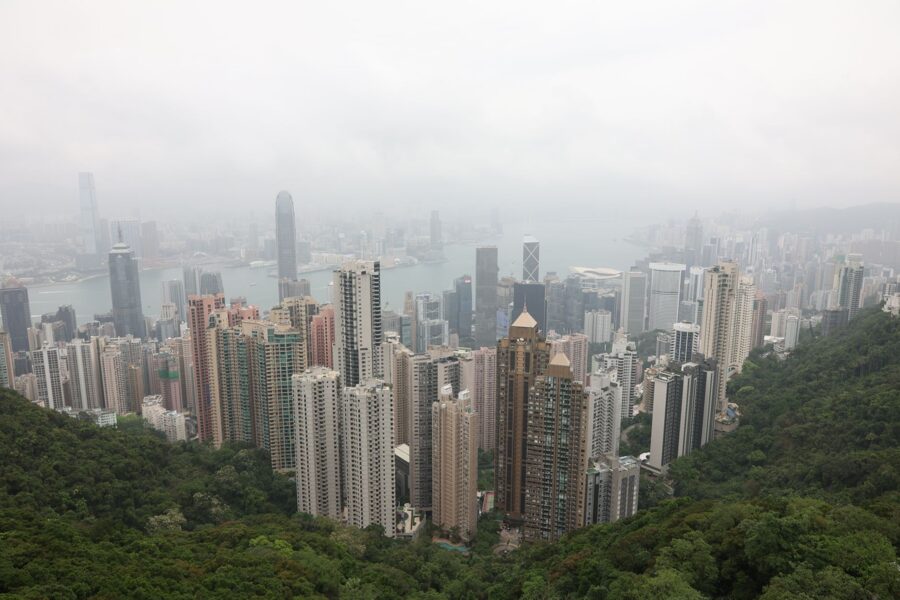
For long views from Victoria Peak, the light cloud cover of October to December is your best chance; the Observatory’s cloud figures bottom out at 57–58 per cent from October to December. Summer days can be clear too, especially the morning after heavy rain. The air itself is far cleaner than it was: the Environmental Protection Department counted 266 hours of reduced visibility in 2025, down from 1,570 in 2004.
Shopping sales: July and late December
Hong Kong charges no sales tax at any time of year, so the sales are the real discount. Malls and department stores mark down in the summer, through July and August, and again after Christmas into January. The shopping districts stay open through Lunar New Year even when the side streets shut.
If you can choose, book the second week of November or the first week of December, and check that no Golden Week, Lunar New Year or Sevens weekend sits inside your dates. Then download MyObservatory before you fly, and let the forecast decide which day is the hike.