

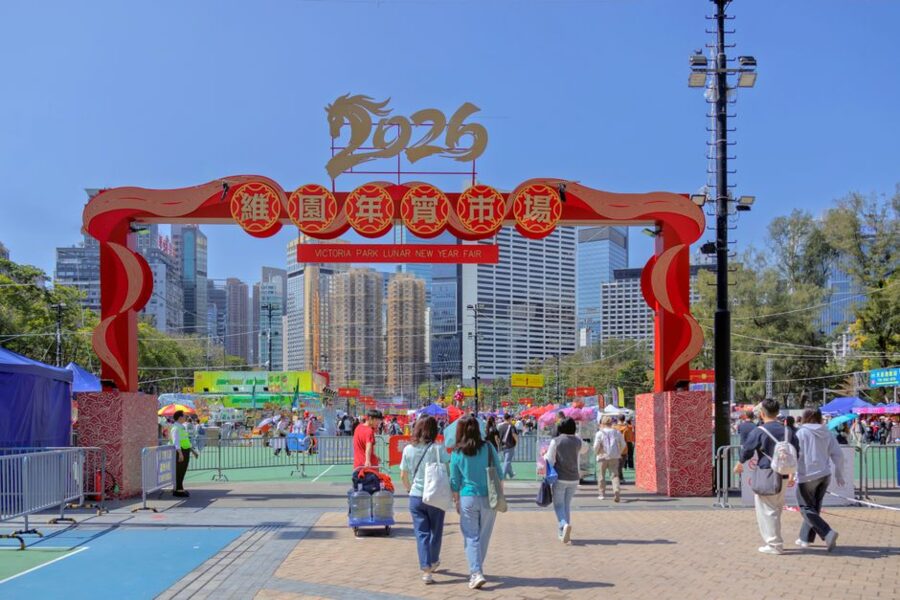
Four hundred stalls go up in Victoria Park for the last week of the Year of the Horse, and on the final night the fair does not close at all. It runs straight through the turn of the year and shuts at dawn on New Year’s Day, by which time the peach blossom has been marked down and the queue at Wong Tai Sin Temple has been and gone.
Lunar New Year’s Day falls on Saturday 6 February 2027, the first day of the Year of the Goat. The general holidays are 6, 8 and 9 February: the second day lands on a Sunday, so the government has made the fourth day a holiday in its place. New Year’s Eve is Friday 5 February, and the season ends with the Lantern Festival on Saturday 20 February.
| Date (2027) | Lunar day | What happens | Status as of November 2026 |
|---|---|---|---|
| Sun 31 Jan–Sat 6 Feb | Last week of the old year | Lunar New Year fairs at 14 sites, Victoria Park the biggest | Confirmed by the Food and Environmental Hygiene Department |
| Fri 5 Feb | New Year’s Eve | Fairs open all night; first incense at Wong Tai Sin Temple at midnight | Fair dates confirmed; temple arrangements usually announced in late January |
| Sat 6 Feb | Day 1 | Night parade through Tsim Sha Tsui, traditionally from 20:00 | Listed for 6 February by the Tourism Board; route, times and tickets not yet out (the 2026 details came on 27 January) |
| Sun 7 Feb | Day 2 | Fireworks over Victoria Harbour; Che Kung’s birthday at Che Kung Temple, Sha Tin | Fireworks date confirmed; time usually announced a week ahead (20:00 in 2026) |
| Mon 8 Feb | Day 3 | New Year race day at Sha Tin Racecourse; temple crowds on chek hau, the “red mouth” day | Day meeting at Sha Tin on the Jockey Club’s fixture list |
| Sat 20 Feb | Day 15 | Lantern Festival, the last night of the season | Fixed by the calendar |

With three days, the order writes itself: fairs and temples on the eve, the parade on the first night, fireworks on the second, the races on the third.
In this article
- The night parade in Tsim Sha Tsui
- Fireworks over Victoria Harbour on the second night
- Lunar New Year fairs and flower markets
- Temples: Wong Tai Sin on the eve, Che Kung on the second and third days
- Race day at Sha Tin on the third day
- Lam Tsuen, lanterns and the rest of the fortnight
- Customs worth knowing
- What closes, and for how long
- My plan for a three-day visit
The night parade in Tsim Sha Tsui
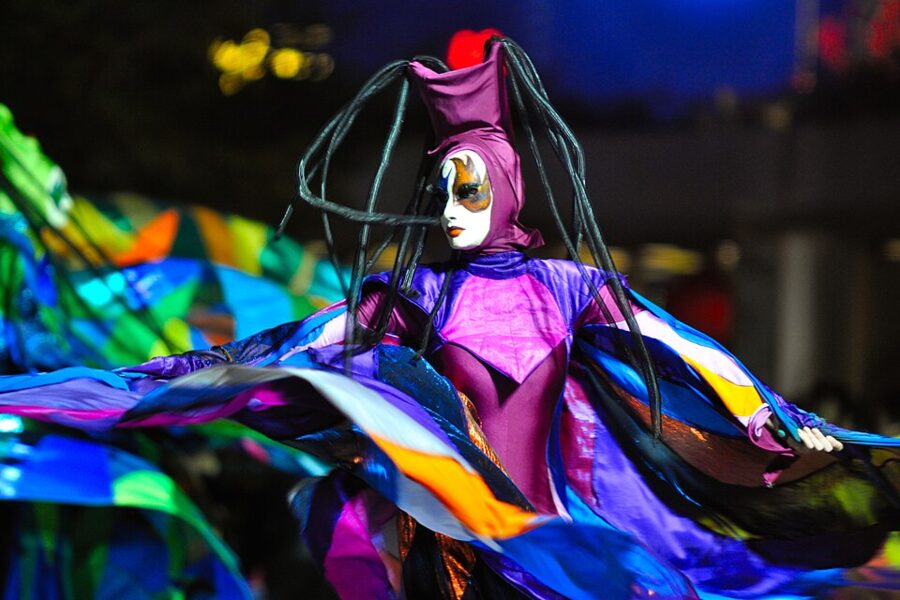
The parade is the Tourism Board’s show, sponsored by Cathay Pacific. In 2026 the Cathay International Chinese New Year Night Parade 新春國際匯演之夜 had nearly 60 floats and performing groups, among them a Cathay float with two classic aircraft for the airline’s 80th year and three horses from the Jockey Club. Expect the same format in 2027, with a goat on most floats.
The Tourism Board lists the 2027 parade for 6 February but had not published the route, times or tickets by November 2026. It published the 2026 route, times and ticket sales on 27 January, three weeks before the night, so watch its Chinese New Year page in the second half of January.
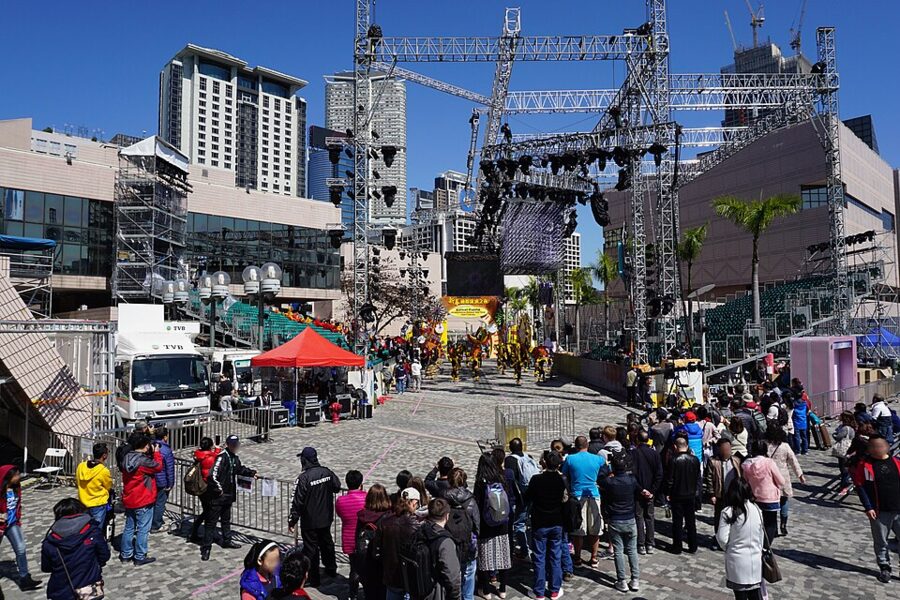

Route and timing
In 2026 the parade left the Hong Kong Cultural Centre Piazza at 20:00, went up Canton Road, along Haiphong Road and down Nathan Road, and finished on Salisbury Road at the Sheraton Hong Kong Hotel. The first float reached Canton Road at about 20:30 and Nathan Road at about 21:00, and the last reached the finish around 22:30. From about 18:00, 15 local groups (lion dance, dragon dance, rope skipping, street dance, magic) warmed up the crowd.
Police closed the route and the streets around it in phases from 15:30 until about 23:45. Buses divert and taxi stands on those roads shut, so the MTR is the only sensible way in.
Where to stand
Standing along the route is free; the Tourism Board names Canton Road, Haiphong Road and Nathan Road as the public viewing stretches. I’d stand on Haiphong Road on the Kowloon Park side: it is narrower than Nathan Road, so the floats pass close, and there are no shop doorways for the crowd to bulge into.
Be on the kerb by 18:30 for the front row, earlier on Nathan Road near Peking Road. Use Tsim Sha Tsui or East Tsim Sha Tsui station and walk; exits onto the route can be closed for crowd control, so follow the station staff rather than the exit letter you planned.

Seats and tickets
The only seats are in the grandstand at the Cultural Centre, where the acts stop and perform. In 2026 they cost HK$600, HK$550 and HK$450, on sale from 08:00 on 7 February, ten days before the parade, at the Tourism Board’s Kowloon Visitor Centre in the Star Ferry Concourse, Tsim Sha Tsui (open 08:00–20:00). The limit was four per person, first come, first served.
Half-price tickets for over-65s and children aged 3 to 11 were for Hong Kong residents only, checked at the gate. Under-3s went free on a lap, and Cathay members got HK$50 off up to two tickets. Is a seat worth HK$600? For the full show, yes; for the floats alone, no, because a kerb on Haiphong Road sees all of them for nothing.
The floats do not vanish on the night. In 2026 eight went on show at Kai Tak Sports Park over the following days and others went to Ocean Park, Lam Tsuen, Sha Tin Racecourse and Victoria Park, the easiest way to see them close up.
Fireworks over Victoria Harbour on the second night
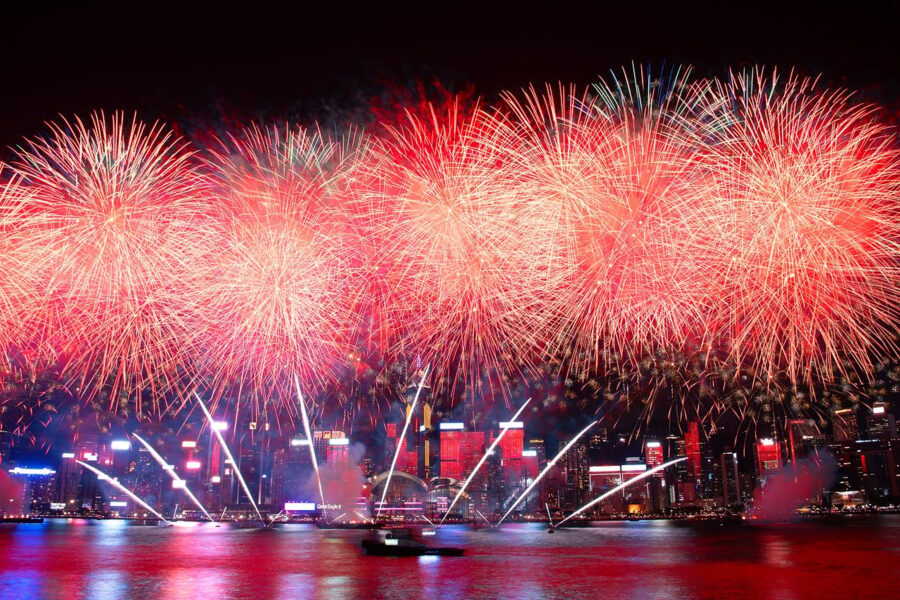
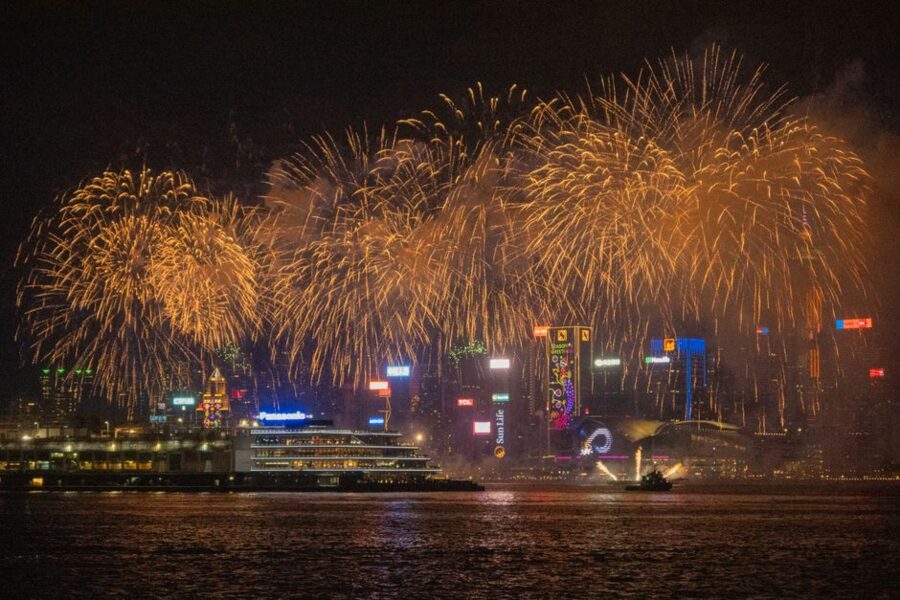
The 2027 display is on Sunday 7 February. The Leisure and Cultural Services Department fixed the date when it invited sponsors in September 2026; the time and theme come about a week before. In 2026 it began at 20:00 and lasted about 23 minutes.
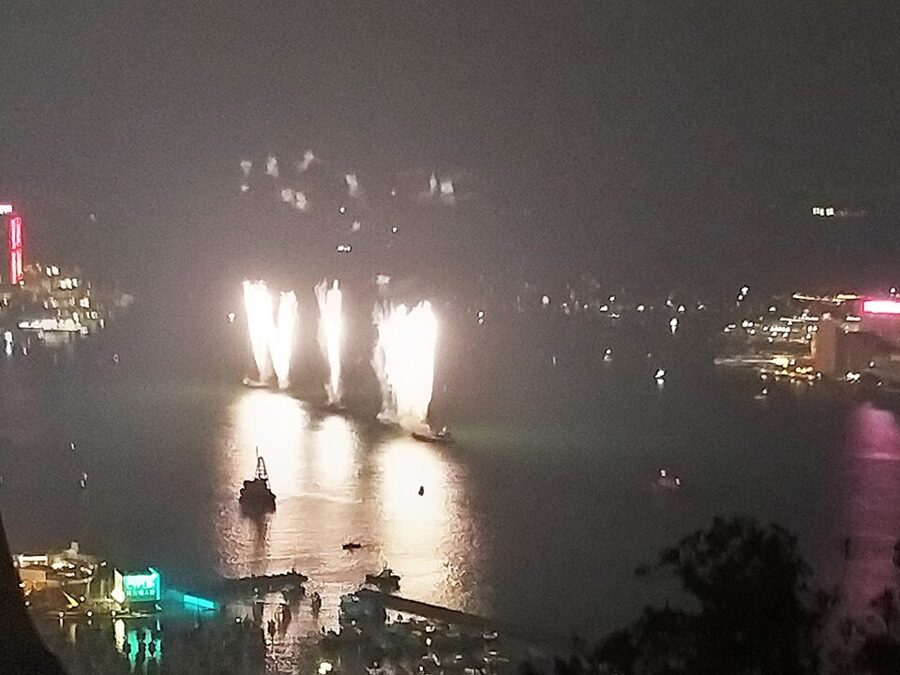

The 2026 show, “Prosperity Gallops Across Hong Kong” 馬到功成耀香江, fired 31,888 shells in eight scenes, from galloping horses to gold ingots and the character 吉 for good fortune. The Culture, Sports and Tourism Bureau co-ordinated it, the Jockey Club paid for it, and police counted more than 360,000 people on the two shores. RTHK Radio 4 (FM 97.6–98.9) plays the music in sync, so bring earphones and a radio app.
Where to watch
The government lists Tsim Sha Tsui, Mid-Levels, Central, Wan Chai, Causeway Bay and Hung Hom as viewing areas. In practice there are three choices.
- Tsim Sha Tsui waterfront, from the Star Ferry past the Cultural Centre to the Avenue of Stars: the classic view across to the Island skyline. People were on mats here from 16:00 in 2026. Arrive by 17:00, bring water and something to sit on, and expect a slow walk to the MTR afterwards.
- Central and Wan Chai harbourfront, including Golden Bauhinia Square: you look back at Kowloon instead. Expo Drive East closed from 15:00 in 2026 and most harbourfront roads from 18:00, so walk in from Wan Chai or Admiralty.
- West Kowloon Cultural District: further from the barges, with more grass and less crush. Nearby roads closed from about 17:00.
A harbour-view restaurant or hotel room is the comfortable option, booked weeks ahead and priced to match.
What has changed
The display has a settled format: eight o’clock, about 23 minutes, a sponsor’s name in the sky. What has gone is the nightly light show. A Symphony of Lights 幻彩詠香江, the laser and searchlight show on the harbourfront towers at 20:00 since 2004, gave its last performance on 18 November 2026; the government plans a replacement tied to festivals and big events rather than a nightly slot. On the other nights of the holiday, a harbour walk at eight no longer comes with a show.
Lunar New Year fairs and flower markets
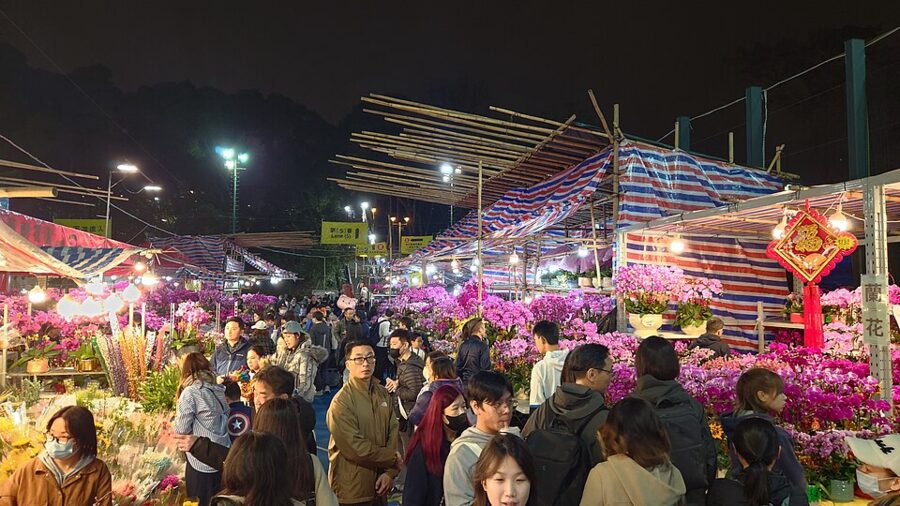
The fairs are where Hong Kong does its New Year shopping: flowers, plants, decorations, spring couplets (fai chun 揮春) for the front door, snacks and a great deal of plastic. They run for seven days and end at 07:00 on New Year’s Day. In 2026 the 14 fairs drew about 2.65 million people.

The 2027 fairs
The Food and Environmental Hygiene Department holds the 2027 fairs from 31 January to 6 February 2027 at 14 sites with 1,564 stalls. Victoria Park has 400; the rest are local fairs with far smaller crowds.
- Hong Kong Island: Victoria Park, Causeway Bay
- Kowloon: Fa Hui Park and Cheung Sha Wan Playground (Sham Shui Po), Kwun Tong Recreation Ground, To Kwa Wan Recreation Ground
- Lantau: Tat Tung Road Garden, Tung Chung
- New Territories: Sha Tsui Road Playground (Tsuen Wan), Plover Cove Road Mini-soccer Pitch (Tai Po), Tung Tau Industrial Area Playground (Yuen Long), Tin Hau Temple Plaza (Tuen Mun), Po Hong Park (Tseung Kwan O), Shek Wu Hui Playground (Sheung Shui), Kwai Chung Sports Ground, Yuen Wo Playground (Sha Tin)
Pitches are auctioned. In October 2026 a regular dry-goods stall in Victoria Park went for between HK$8,540 and HK$64,000, an average of HK$21,017, and the park’s 400 stalls raised HK$8.65 million. That is why prices inside stay high until the last night.
What is on sale
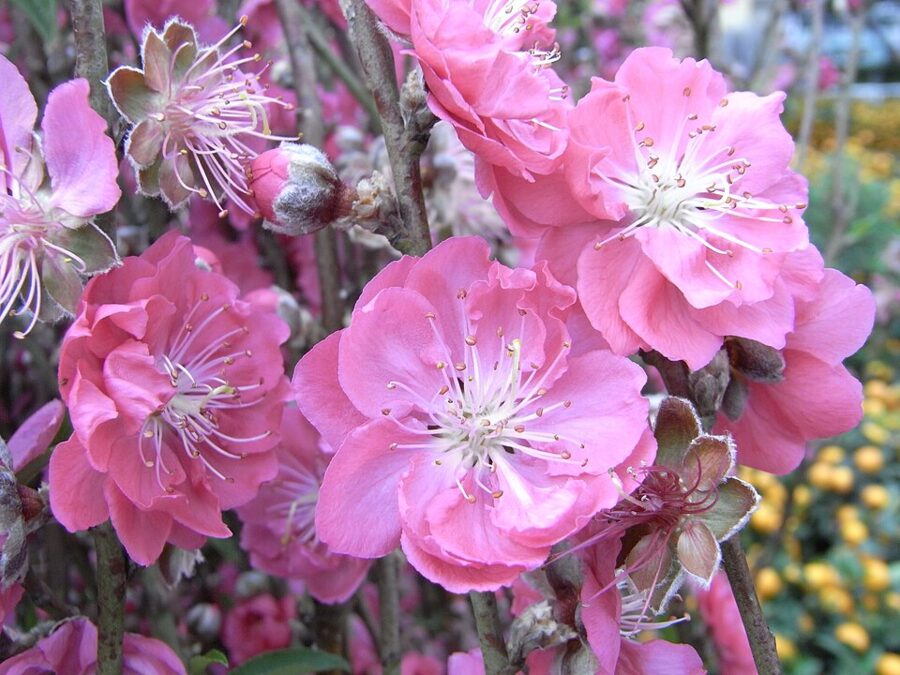
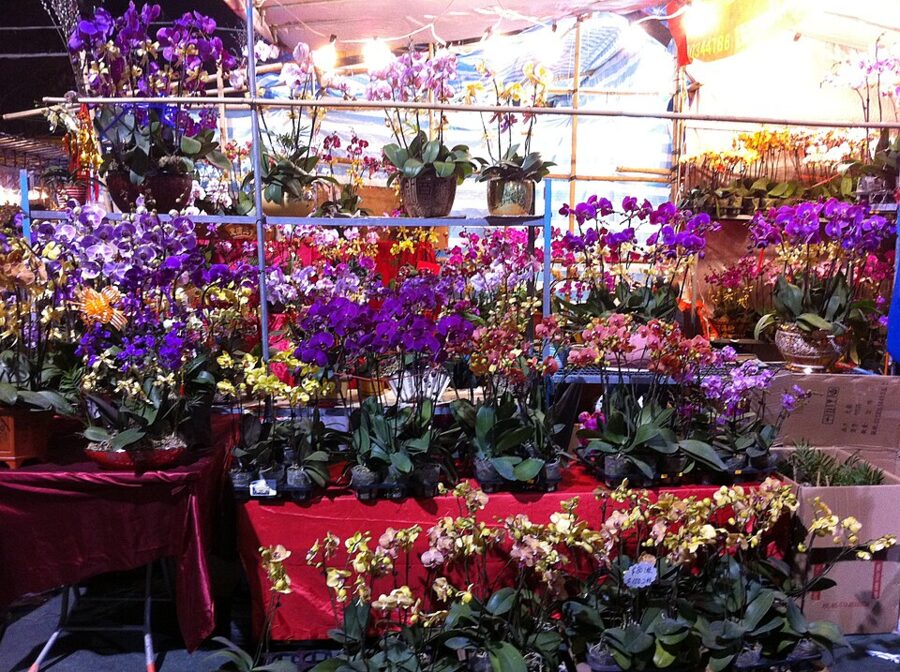
Wet goods are the flowers and plants, and they are why most families go: peach blossom 桃花 for romance, mandarin and kumquat trees 年桔 because the name sounds like luck, orchids, narcissus and gladioli. Dry goods are everything else: fai chun, lanterns, lai see packets, windmills, plush versions of the new zodiac animal. A handful of fast-food stalls at each fair sell snacks to eat on your feet.


When to go
For flowers at their best and room to move, go on a weekday afternoon early in the week: Monday 1 to Wednesday 3 February 2027. For the atmosphere, go on New Year’s Eve after dinner and stay past midnight, when the countdown happens inside the park and sellers cut prices to clear stock. Just do not try to buy a kumquat tree on the eve.
The department shows each fair’s crowd level on its website as a green, amber or red light. On the eve the police turn the streets around Victoria Park into pedestrian areas from midday and close more roads from 16:00; Tin Hau station brings you in on the quieter eastern side.
Flower Market Road
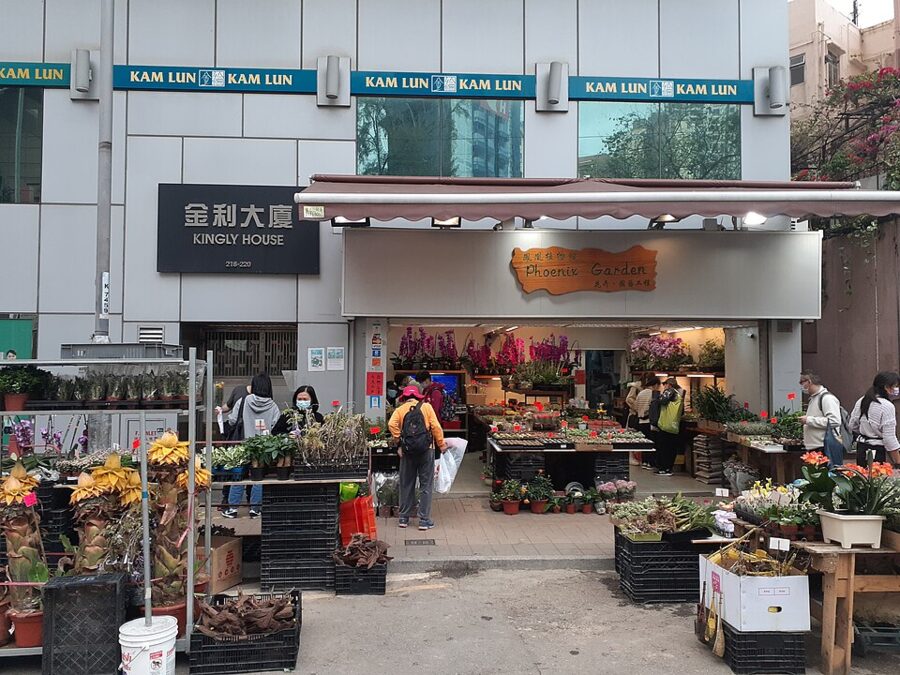
The fairs are temporary; Flower Market Road 花墟道 in Prince Edward is not. Its shops sell all year, and in the fortnight before New Year the pavement disappears under peach blossom and kumquat trees. It is the better place to buy a plant you mean to keep: you can see what you are paying for in daylight.

Temples: Wong Tai Sin on the eve, Che Kung on the second and third days
The first incense at Wong Tai Sin
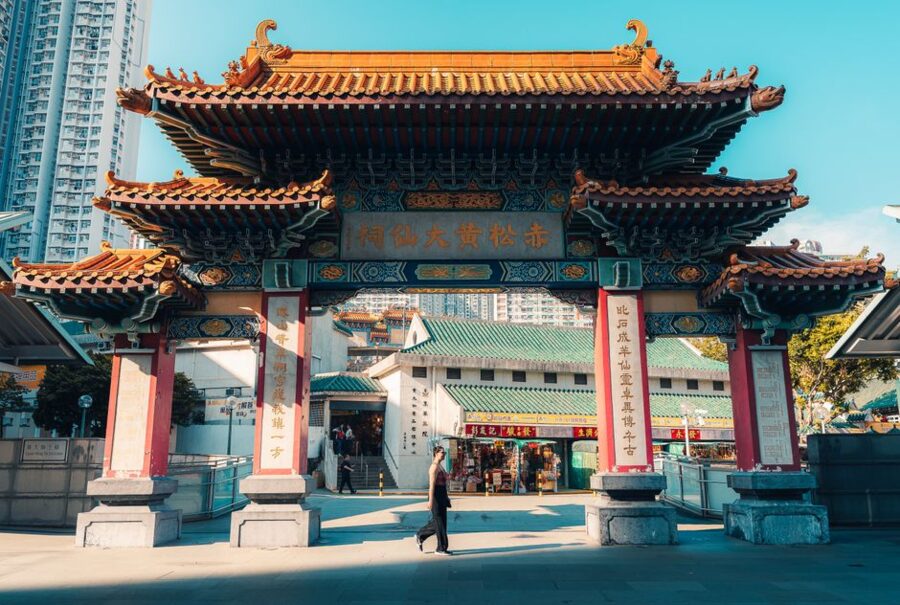
Sik Sik Yuen Wong Tai Sin Temple 嗇色園黃大仙祠 expected close to a million visits over the 2026 festival. The big moment is 頭炷香, the first incense of the year: whoever plants a stick at the main altar first after midnight is meant to have the luckiest year, and the temple expected 20,000 to 40,000 people to try on the eve.
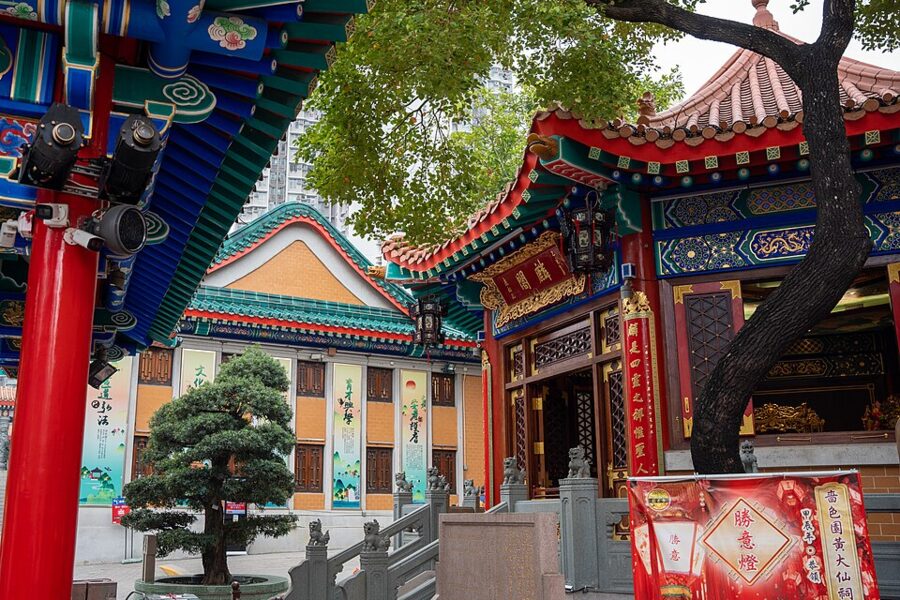

In 2026 the gates opened at 21:00 on the eve. Worshippers queued in the temple plaza and Wong Tai Sin Square, then moved into two waiting areas on the first terrace: one for 23:00, the last incense of the old year, one for midnight. A one-way route led to three incense points (the main hall, the Three Saints Hall and the incense pavilion), three sticks at each; the temple suggested each family bring its own nine.
Leave candles and paper offerings at home: they were banned on the night in 2026, and there was no fortune-stick, kneeling or offerings area. The temple stayed open until 21:00 on the first day, then 07:30–18:00 from the second to the 14th, and until 21:00 on the Lantern Festival. Sik Sik Yuen announced its 2026 arrangements on 29 January; expect the 2027 ones in late January on its website.
Take the MTR to Wong Tai Sin station, Exit B2 or B3. For the fortune sticks (kau cim 求籤), shaking a cylinder until one stick falls out, come back from the second day, when the area reopens and the fortune-tellers’ arcade beside the temple is busy.
Che Kung Temple, Sha Tin
Che Kung 車公 was a Song dynasty general, and the second day of the year is his birthday. That morning the chairman of the Heung Yee Kuk, the New Territories’ rural body, shakes a fortune stick at Che Kung Temple 車公廟 in Tai Wai on behalf of all Hong Kong. In 2026 he drew stick 22, a middling one, for the ninth middling year in a row.
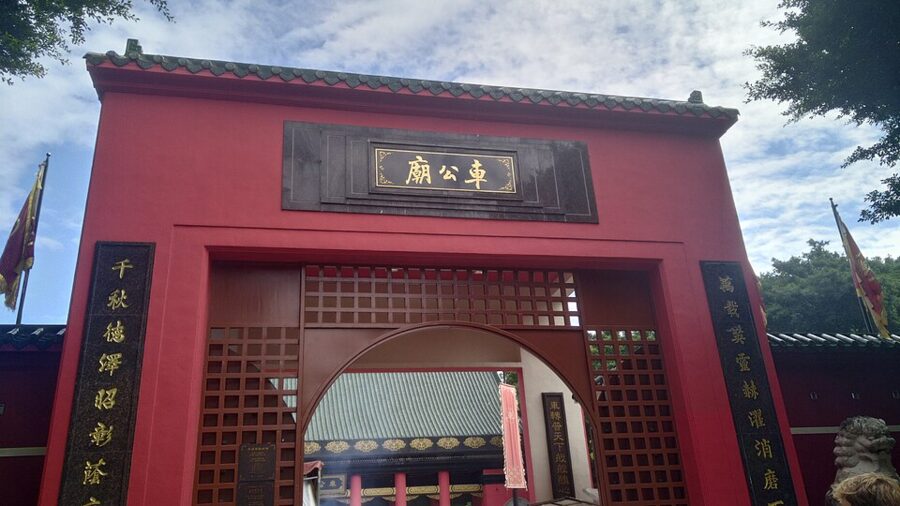

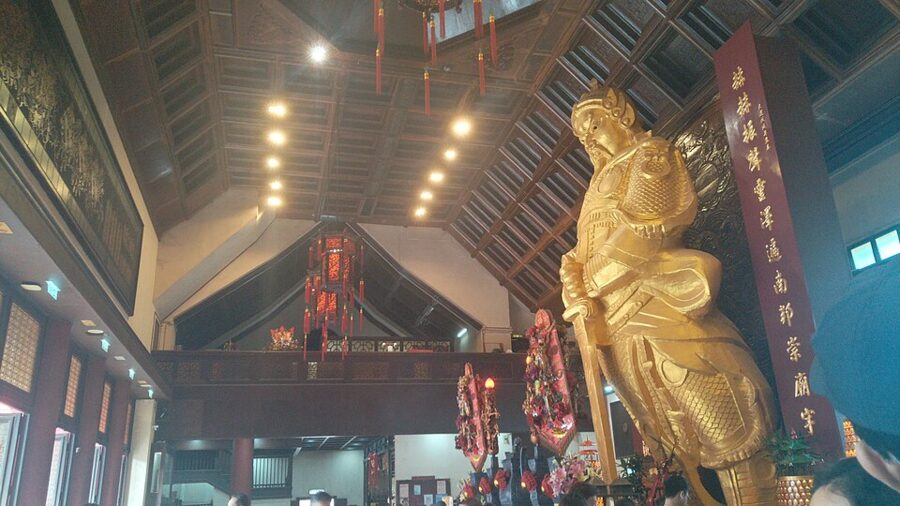
The third day is chek hau 赤口, “red mouth”, when visiting relatives is said to start arguments, so Hong Kong goes to Che Kung to turn its luck instead. Inside the hall, in front of the giant statue of the general, stands a metal fan-bladed wheel of fortune; the Tourism Board’s advice is to spin it three times clockwise. The pinwheels sold outside are part of the ritual: buy one on the way in and carry it home spinning.
In 2026 the temple opened 09:00–18:00 on the second day, reopened at 23:00 and stayed open through the night until 18:00 on the third; it logged more than 30,000 visits on the second day. The Chinese Temples Committee limits each worshipper to three small incense sticks in the hall at New Year and allows no candles or paper burning inside.

Take the Tuen Ma Line to Che Kung Temple station, Exit B, or walk from Tai Wai station, Exit A. In 2027 Che Kung’s birthday falls on Sunday 7 February, fireworks day, and chek hau on Monday 8 February, race day. That suits a plan: Racecourse station is three stops up the East Rail Line from Tai Wai.

Race day at Sha Tin on the third day
The Jockey Club’s 2026/27 fixture list has a day meeting at Sha Tin on Monday 8 February 2027, the third day of the new year. It is the biggest crowd of the season: in 2026 more than 98,000 people went, a post-pandemic high, and more than 20,000 of them came from outside Hong Kong, a record for any race day.
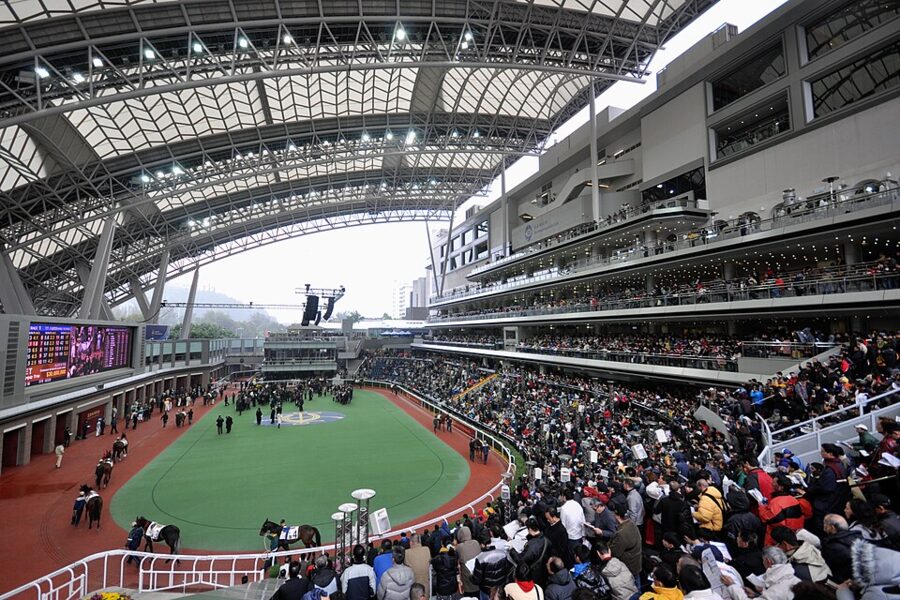

The racing comes with a lion dance, live music and stage shows. Admission to the public enclosure is HK$10 by Octopus card at the turnstile, and in 2026 visitors on a valid travel document got in free, so take your passport. Nobody under 18 is admitted: the Club does not allow minors into premises where bets are taken.
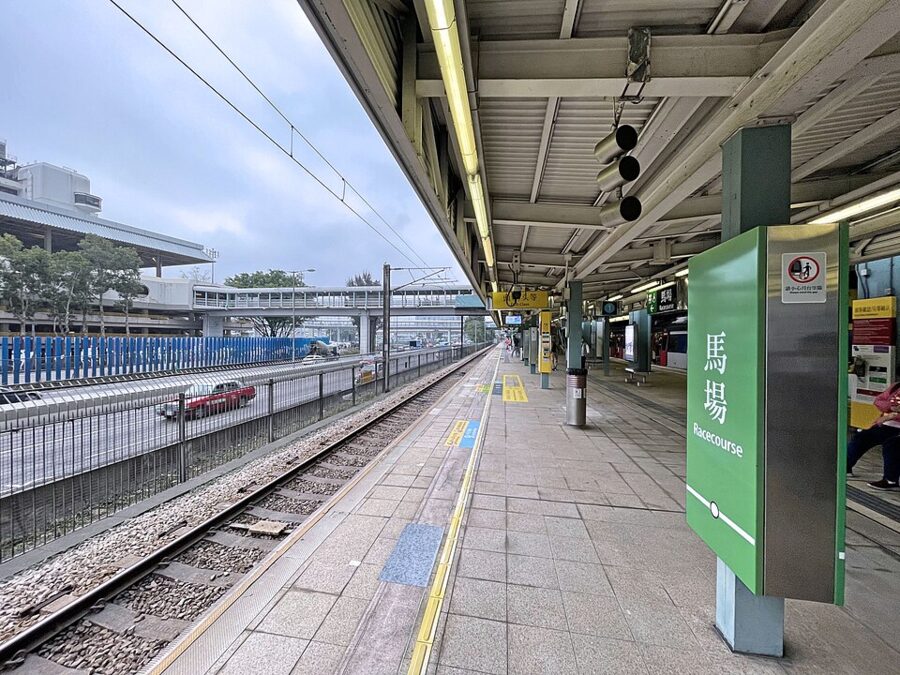
Take the East Rail Line to Racecourse station, which opens only on race days and sits beside the public stands. Trains back are packed after the last race, so leave one race early or stay and eat.

Lam Tsuen, lanterns and the rest of the fortnight
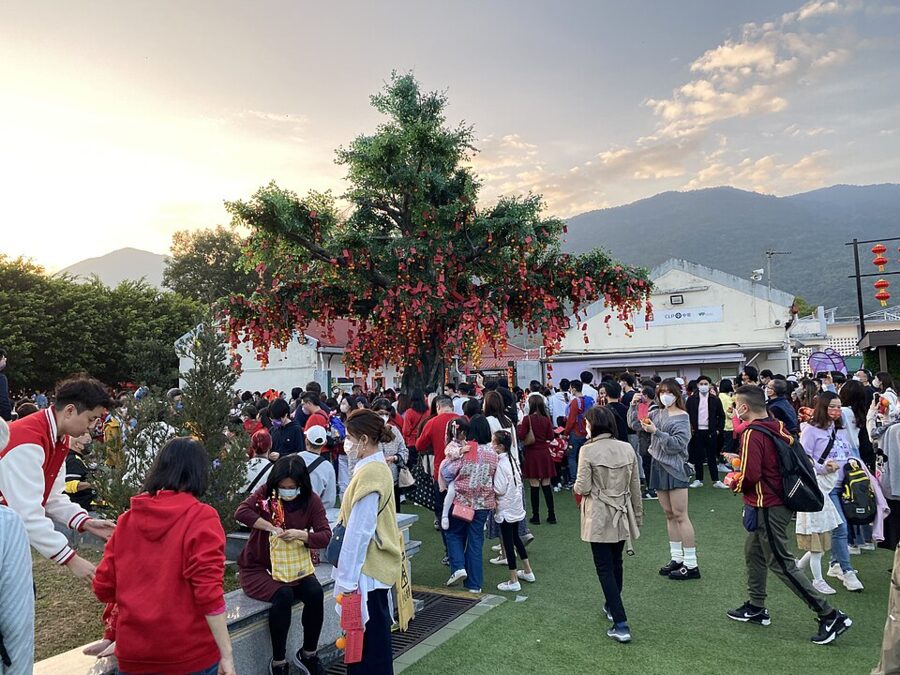

The Lam Tsuen Well-wishing Festival 林村許願節 in Tai Po opens on New Year’s Day. In 2026 it ran from 17 February to 3 March at the Lam Tsuen Wishing Square, free, from 09:00 on the first day. You write a wish on a joss-paper scroll tied to a plastic orange and throw it at the rack; the higher it catches, the better the wish.
In Tsim Sha Tsui, the Leisure and Cultural Services Department puts a lantern display on the Cultural Centre piazza. In 2026 it ran from 12 February to 15 March, lit 18:00–23:00 and free, with paper-craft lanterns by two veteran masters. It is beside the parade start, worth ten minutes on parade night.
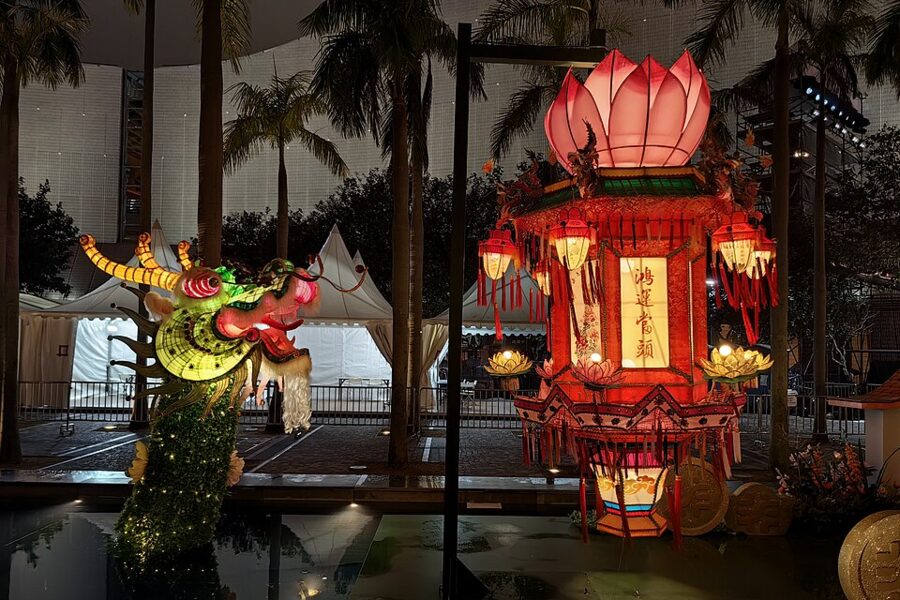

The Chinese New Year Cup football match was played at Hong Kong Stadium on the fifth day in 2026. The Lantern Festival 元宵節 on the 15th day, Saturday 20 February 2027, closes the season, and Wong Tai Sin stays open late.
Customs worth knowing
Nobody expects you to know the rules, but a few go a long way, and most of them concern lai see 利是, the red packets of money that circulate for a fortnight.
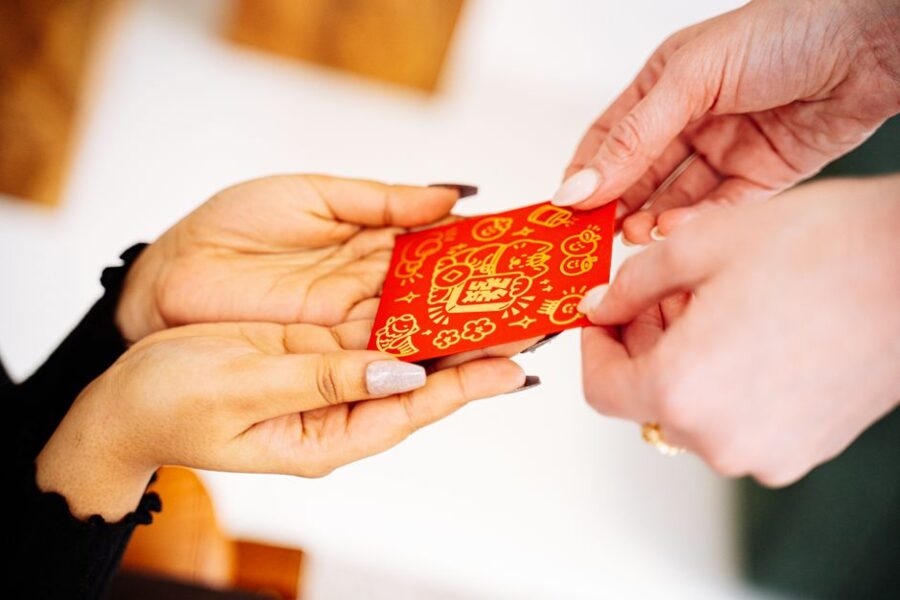
- Who gives: married people give to the unmarried, children and younger relatives first. Many residents also give to their building’s doormen, security guards and cleaners. If you are staying with a family, take a few packets; in a hotel, nobody expects one from you.
- How: with both hands and a greeting. The Monetary Authority encourages electronic lai see through the Faster Payment System and e-wallets, and many people have switched.
- What to say: Kung hei fat choy 恭喜發財, “wishing you prosperity”, is the one everyone knows. San nin fai lok 新年快樂 is plain “happy new year”.
- What to wear: red, or something bright.
- What to avoid: washing or cutting your hair on the first day, and sweeping the floor in the first three days, or your luck goes out with the dust; families clean before the eve. Avoid talk of death, illness or losing money, and do not go visiting on chek hau.
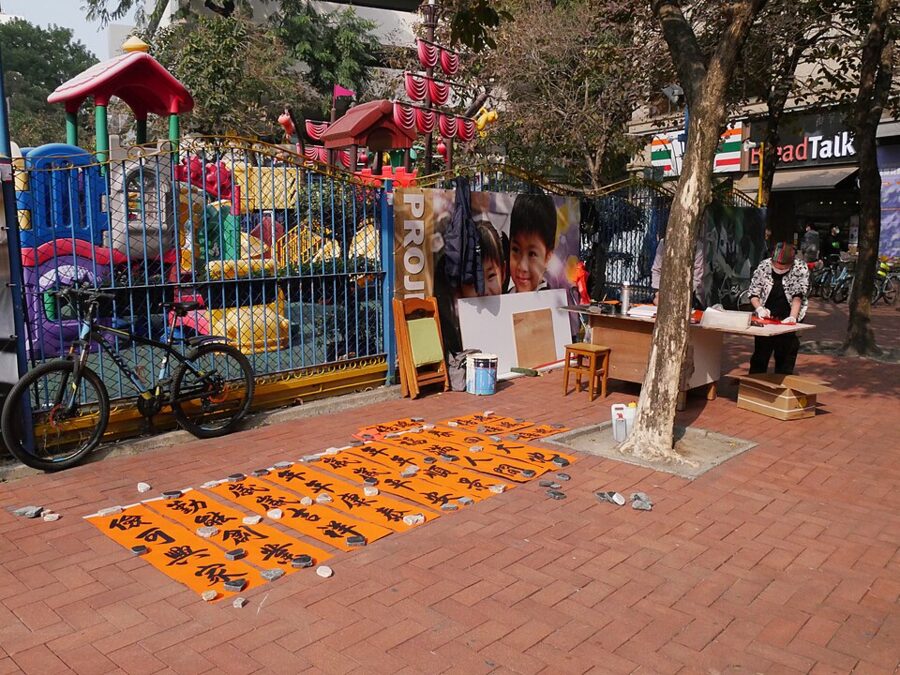

The plants carry meanings too. A kumquat tree in a shop doorway is a wish for luck and gold; peach blossom at home is about relationships; narcissus that flowers on New Year’s Day promises a good year. Give oranges in pairs when you visit, never four: four sounds like death in Cantonese.
What closes, and for how long
The 2027 general holidays are Saturday 6, Monday 8 and Tuesday 9 February. Government offices and banks are shut on those days and on Sunday 7 February, so anything needing a counter waits until Wednesday 10 February. The eve is not a holiday, but many offices let staff go early, which is why the MTR adds trains from mid-afternoon.
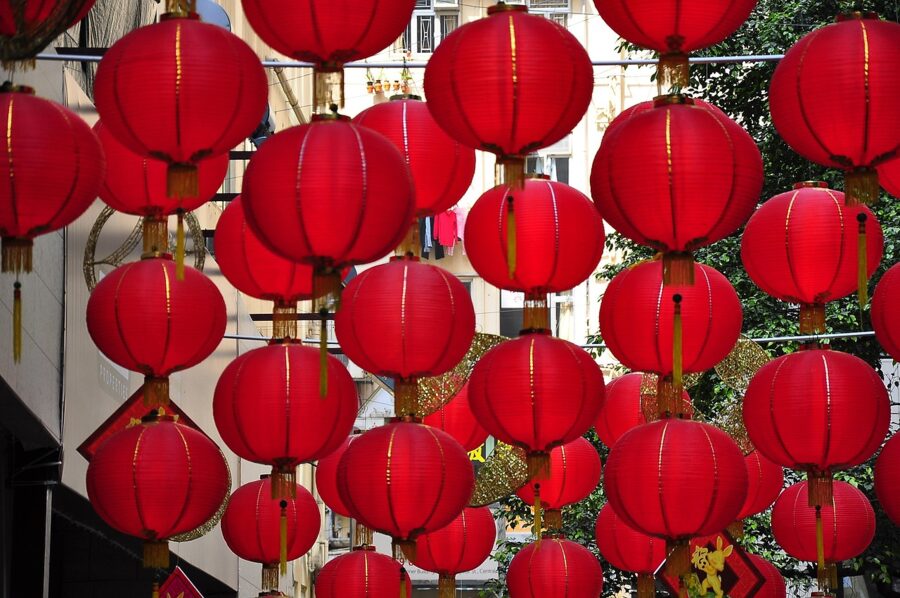
Many small family businesses, wet-market stalls and local restaurants close from the first day for several days. Chains, hotel restaurants and malls stay open, often with holiday sales, so the big shopping districts look normal while the side streets go quiet. I would book dim sum on the first two days rather than queue.
Museums follow the government calendar. In 2026 the public museums, including the Museum of Art, the Museum of History, the Science Museum, the Space Museum and the Heritage Museum, closed at 17:00 on the eve, stayed shut on the first and second days and reopened on the third. Public libraries and swimming pools closed for all three days.
Crowds and the border
The mainland’s Spring Festival Golden Week runs alongside Hong Kong’s holiday. Over its nine days in 2026 about 1.77 million people arrived in Hong Kong, up 14 per cent, with the peak on the second day, when about 210,000 mainland residents crossed. The busiest crossings were the Express Rail Link at West Kowloon and the Lok Ma Chau Spur Line.
Book hotels early, because rates rise for the whole week. Avoid crossing into Shenzhen on the second day if you have a choice. Control points kept their normal opening hours over the 2026 holiday.
Getting around
On the eve in 2026 the MTR ran through the night on most local lines: Island, Tsuen Wan, Kwun Tong, Tung Chung, South Island and Tuen Ma, most of the Tseung Kwan O Line, the East Rail Line between Admiralty and Sheung Shui, and seven Light Rail routes. Services stepped up from 15:00 on the eve and again for the parade and fireworks. The MTR has not announced its 2027 arrangements, but the pattern has held for several years.
Roads around the fairs, temples and harbourfront close for hours, so buses divert and taxis cannot get close; the taxi fare is the same as any other day, but finding a cab at 23:00 in Causeway Bay is not. If the weather turns, the Observatory’s rainstorm warnings apply to outdoor events like any other night.
My plan for a three-day visit
This assumes you arrive by Thursday 4 February 2027 and leave after the races. Adjust once the parade and fireworks times are out in January.
- Friday 5 February, New Year’s Eve. Flower Market Road in the morning, while it is still walkable. A reunion dinner booked well in advance. Victoria Park from about 21:00: walk the fair, eat on your feet, stay for the countdown. For the first incense instead, take the MTR to Wong Tai Sin by 22:00.
- Saturday 6 February, first day. Sleep in; much of the city does. Bus 64K to Lam Tsuen for the wishing racks in the late morning. Be on Haiphong Road by 18:30 for the parade, then walk past the lanterns on the Cultural Centre piazza as the crowds thin.
- Sunday 7 February, second day. Che Kung Temple in the morning for the birthday and the Heung Yee Kuk’s fortune stick. Back to the harbour by 16:00 for the Tsim Sha Tsui promenade, or by 17:00 on the Wan Chai side, for the fireworks.
- Monday 8 February, third day. Che Kung again if you missed it, then three stops up the East Rail Line to Racecourse station. Take your passport for free entry, and leave before the last race for a seat on the train back.
If you only have one night, make it the eve: the fair at Victoria Park, the countdown, and the queue at Wong Tai Sin, all on one Octopus card and an overnight MTR. Book the reunion dinner now, and check the Tourism Board’s page for the parade in the third week of January.