

Four har gow cost HK$120 at Spring Moon in The Peninsula. At a neighbourhood teahouse, HK$120 buys most of a breakfast for one: the tea, three or four baskets and the 10% service charge.
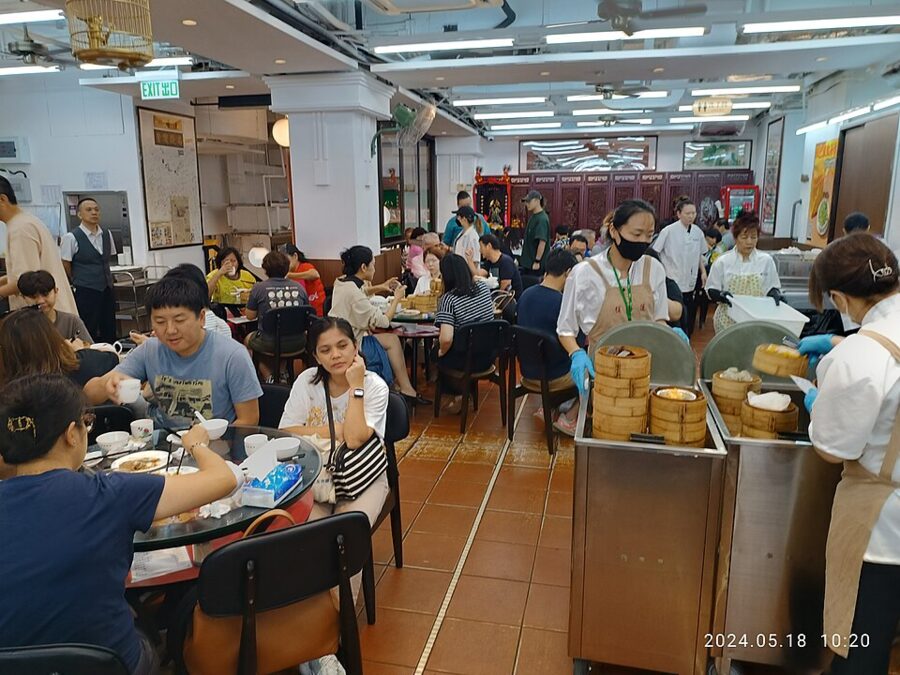
Here is how to do it. Go on a weekday between opening and 11:30, ahead of the office lunch crowd that fills the old rooms from about 12:30 and the family tables that fill everything at weekends. Sit down, choose a tea, tick what you want on the paper order sheet or point at a passing trolley, and ask for the bill when you are done. Tea is charged per person, and a 10% service charge goes on top of everything.

What it costs depends almost entirely on the kind of room. Prices below are per person for a normal meal of three or four baskets each, with tea and service, as of November 2026.
| Kind of place | Example | Per person | Booking |
|---|---|---|---|
| Neighbourhood teahouse or chain | Lin Heung Tea House, Sheung Wan | about HK$100–200 | Walk in |
| Budget shop with Michelin recognition | Tim Ho Wan, Sham Shui Po | about HK$100–200 | No bookings; queue |
| Trolley hall | Maxim’s Palace, City Hall, Central | about HK$150–250 | Book for weekends |
| Hotel Cantonese restaurant | Spring Moon, The Peninsula | HK$500–900 | Book |
In this article
How yum cha works
Yum cha (飲茶) means “drink tea”, and the tea comes first. The meal runs in three steps wherever you go.
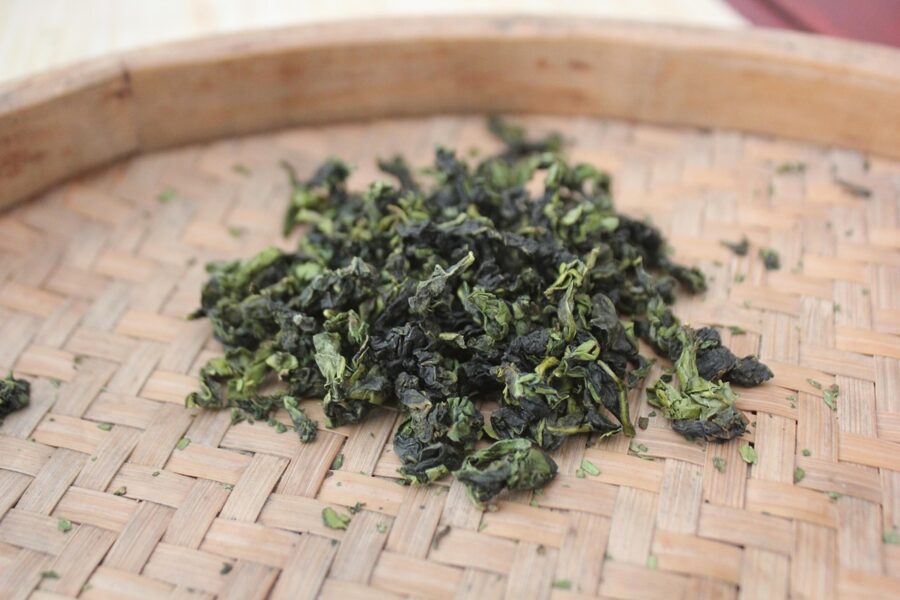
- Tea. A server asks which tea you want before anything else. Say it by name: bo lei (普洱, pu-erh), the dark default that cuts through fried food; heung pin (香片, jasmine); sau mei (壽眉, a white tea); tit kwun yam (鐵觀音, oolong); or guk bo (菊普), pu-erh with chrysanthemum. The charge is per head, not per pot, and it usually covers the sauces too.
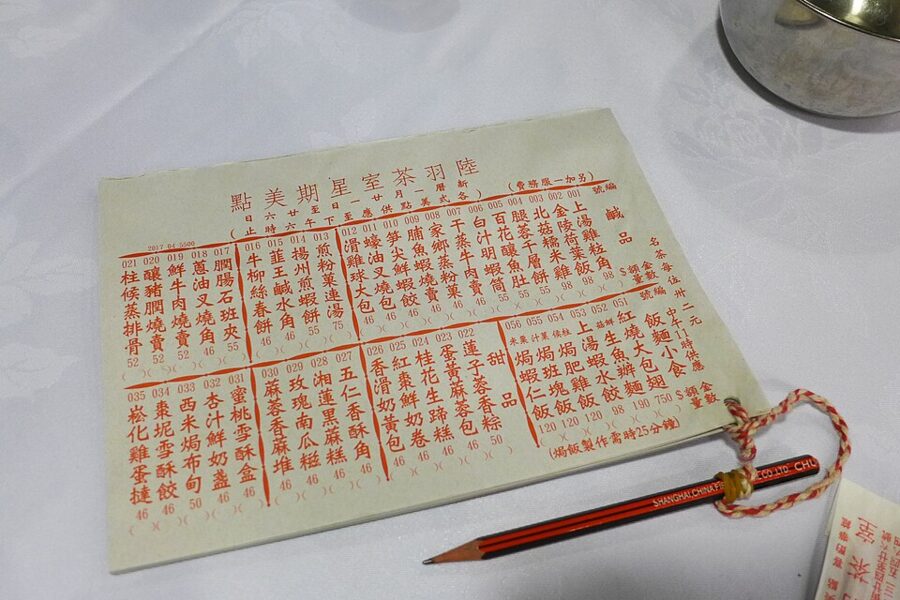
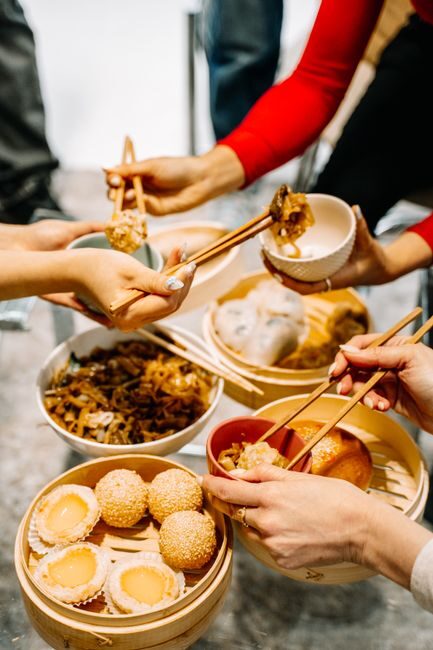
- The order sheet. Most rooms give you a paper sheet (點心紙) and a pencil. Mark the quantity next to each dish and hand it over. In trolley rooms you point at the steamer instead, and the server stamps your table card (點心咭).
- The bill. Catch a server’s eye, say “maai daan” (埋單) or draw a tick in the air, and pay at the table or the cashier. The sheet or card is the bill; check it against the baskets on your table.
Traditional sheets often price by tier, not by dish: small (小點), medium (中點), large (大點), special (特點) and top (頂點), each with its own price on the sheet. A basket holds three or four pieces, so three or four baskets each is a proper meal and five is greedy. Order in rounds; steamed things arrive fast and are best hot.
Timing matters more than the restaurant. Older teahouses start early, the hotel rooms open for lunch only, and Sunday at 11:00 is the worst hour in the city to want a table without a booking. If you are fitting dim sum into a Hong Kong itinerary, make it the first meal of the day.
What to order
Start with the four that every kitchen is judged on, then add one thing fried, one thing with a sauce and one sweet. The names below are what you will hear in the room, with the Jyutping romanisation for anyone who wants to try the tones.
| Dish | Chinese | Jyutping | What it is |
|---|---|---|---|
| Har gow | 蝦餃 | haa1 gaau2 | Shrimp in a translucent pleated wrapper |
| Siu mai | 燒賣 | siu1 maai2 | Open-topped pork and shrimp dumpling |
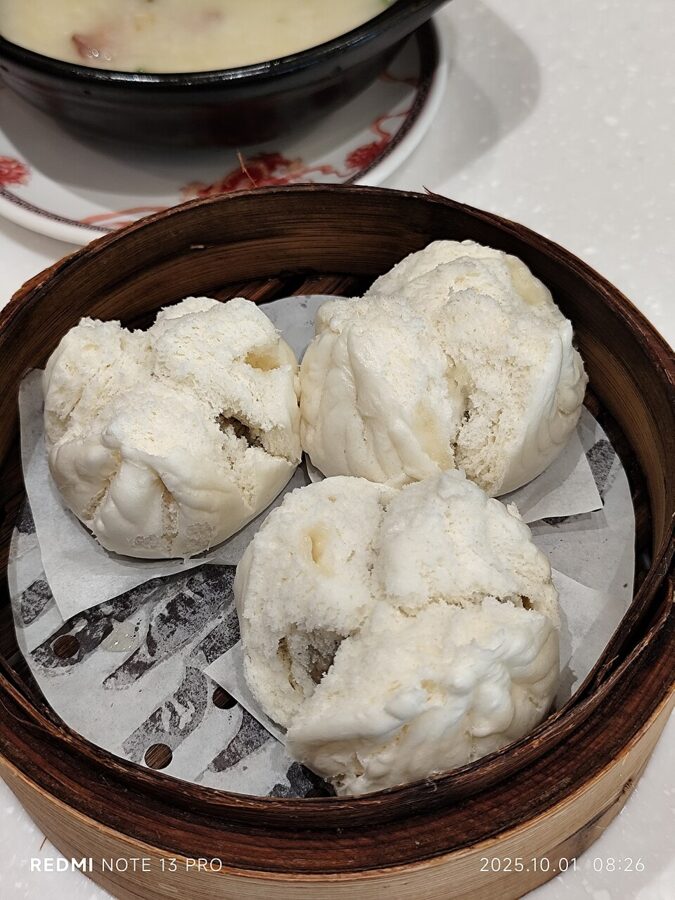
| Char siu bao | 叉燒包 | caa1 siu1 baau1 | Fluffy bun of barbecued pork |
| Cheung fun | 腸粉 | coeng4 fan2 | Steamed rice-noodle roll with shrimp, beef or pork, in sweet soy |
| Lo bak go | 蘿蔔糕 | lo4 baak6 gou1 | Pan-fried radish cake with dried shrimp and sausage |
| Lo mai gai | 糯米雞 | no6 mai5 gai1 | Sticky rice with chicken, steamed in a lotus leaf |
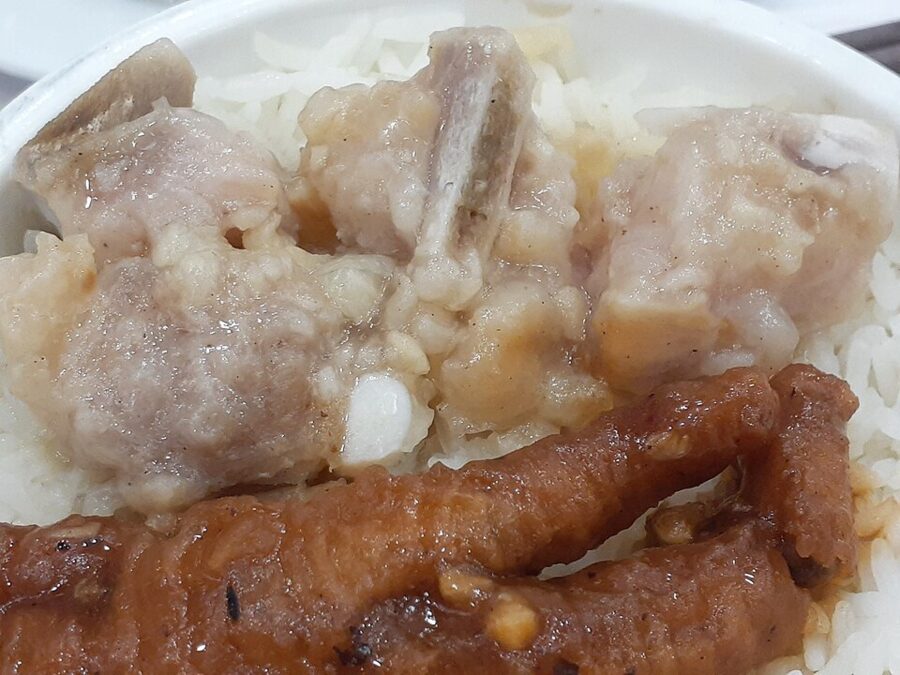
| Pai gwat | 排骨 | paai4 gwat1 | Spare ribs steamed with black bean and garlic |
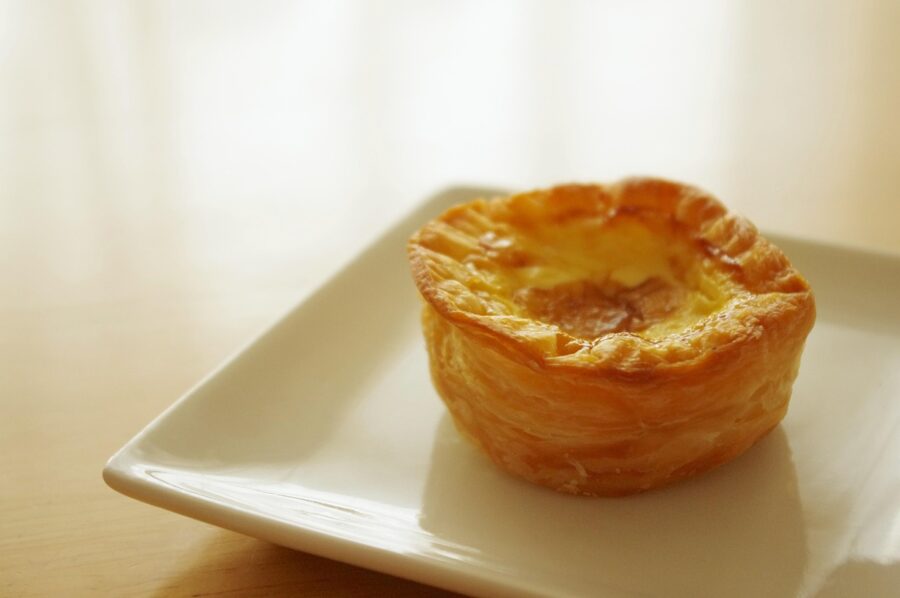
| Daan taat | 蛋撻 | daan6 taat1 | Egg tart, flaky or shortcrust |
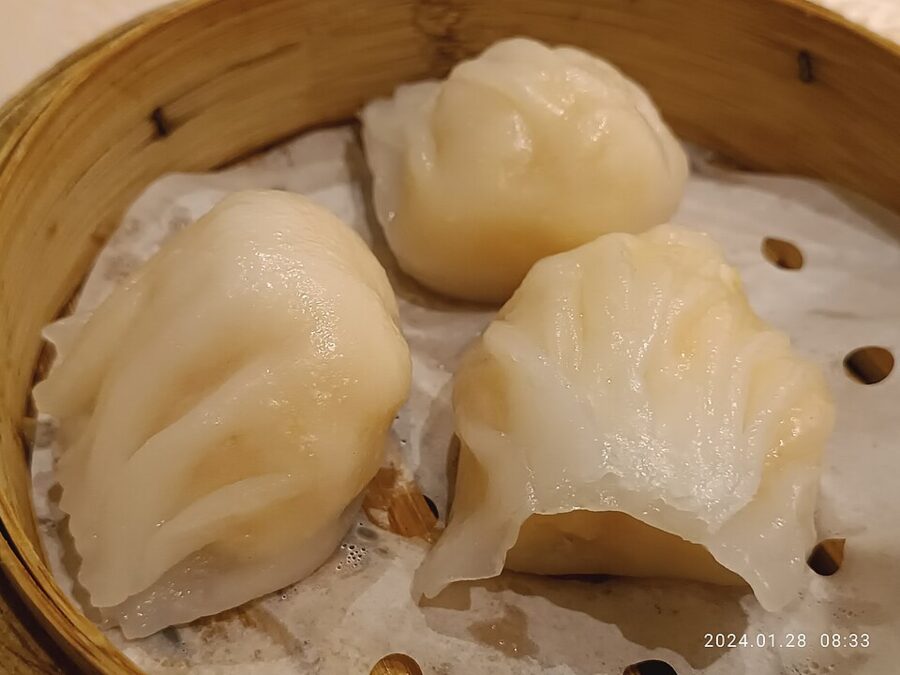
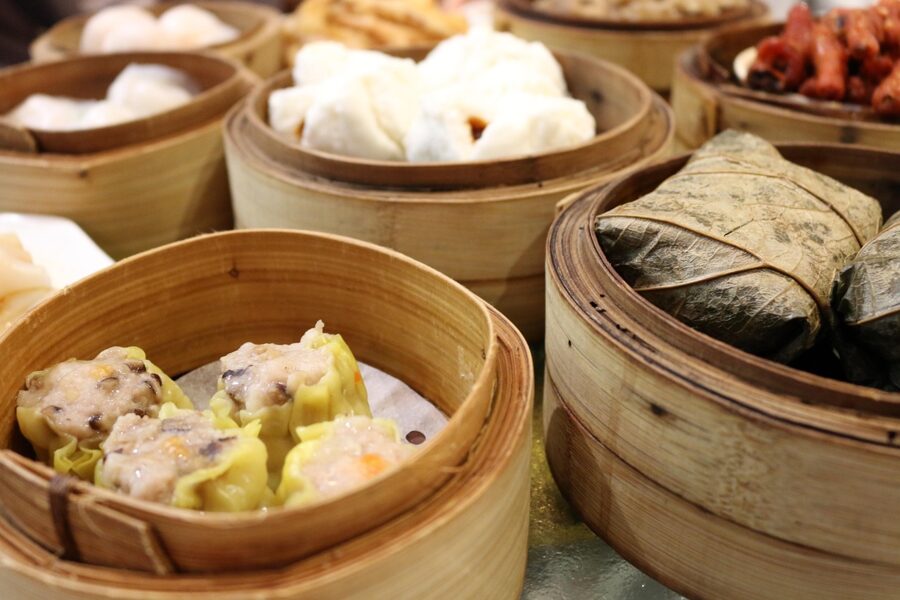
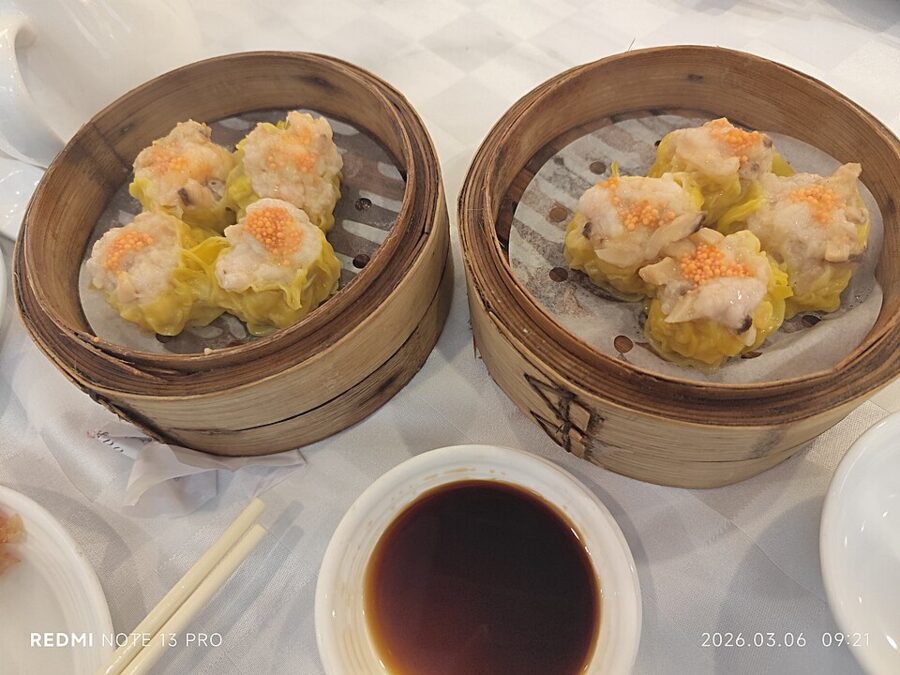
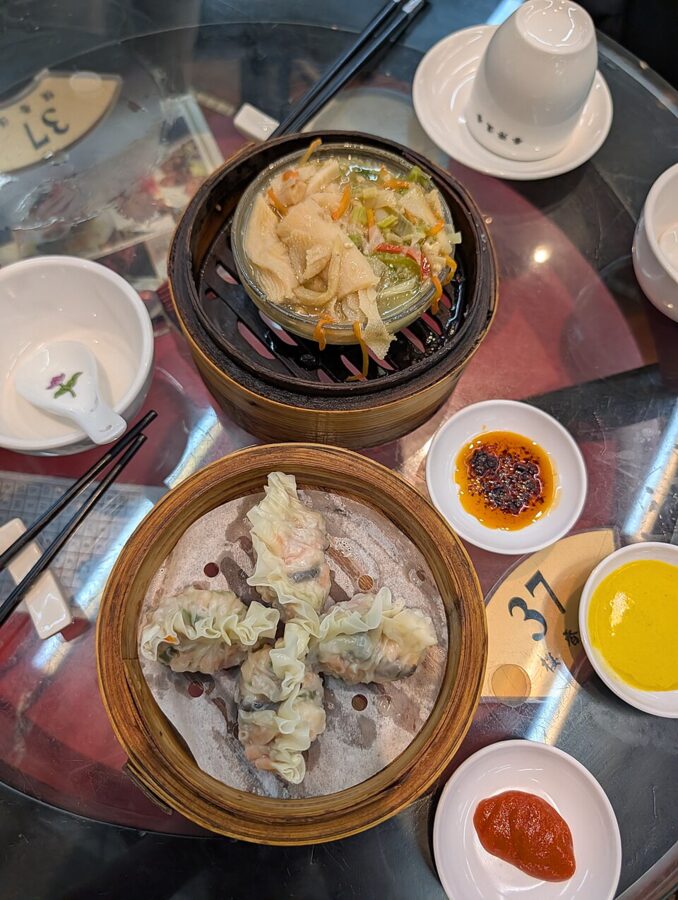
Har gow is the dish to judge a kitchen by. The wrapper is made from wheat starch, so it should be thin, slightly chewy and still in one piece when your chopsticks lift it. Siu mai comes next: pork and shrimp, a yellow wrapper, often a dot of roe or carrot on top.
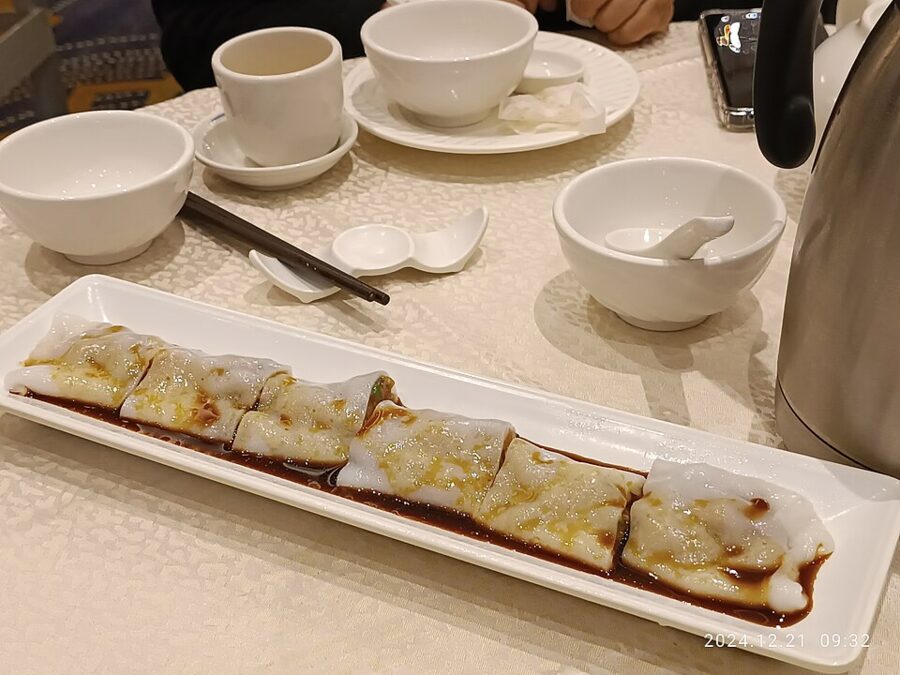
Cheung fun arrives last in most kitchens because it is made to order; ask for shrimp (蝦腸, haa1 coeng2) or beef (牛肉腸, ngau4 juk6 coeng2). Lo mai gai is big enough to share and the best value on the sheet.
Worth trying once
Fung zaau (鳳爪, fung6 zaau2), chicken feet steamed in black bean sauce, is the dish visitors photograph and locals actually finish. Ngau yuk kau (牛肉球), steamed beef balls on a bed of bean curd skin, is the one children like. Sin zuk gyun (鮮竹卷), bean curd skin rolls in oyster sauce, and lau sa bao (流沙包), buns of runny salted-egg custard, round out a table. At Lin Heung, the old-school orders are pork liver siu mai (豬潤燒賣) and gai zaat (雞扎), a bundle of chicken, fish maw and ham tied in bean curd skin.

The kinds of places, and where they are now
Old teahouses have been closing, moving and renaming for years, and maps lag behind. Every place named below was confirmed open in 2026, through its own site, the 2026 Michelin Guide Hong Kong Macau, or Hong Kong news reports.
Old-style teahouses
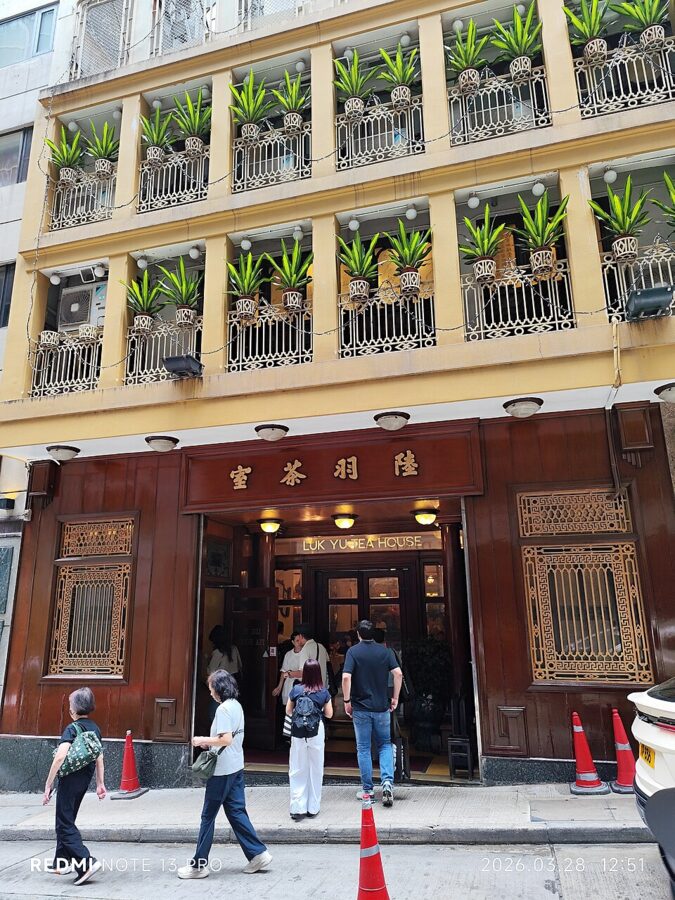
Luk Yu Tea House (陸羽茶室) at 24 Stanley Street, Central, opened in 1933 and has been on this street since 1976. It brought its furniture, its signboard and its spittoons from the old premises, and a turbaned doorman has long stood outside. There are no trolleys: you order from the sheet. It is listed in the 2026 Michelin Guide, and you should expect to pay more than at an ordinary teahouse.
Lin Heung Tea House (蓮香樓), the other name every list carries, left 160–164 Wellington Street on 10 May 2026 because the building is being redeveloped. It reopened the next day at shops 9–10 on the ground floor of Tung Ning Building, 249–253 Des Voeux Road Central, Sheung Wan, at the corner of Hillier Street. The trolleys came too, and so did the lidded tea bowls that cost a little extra.
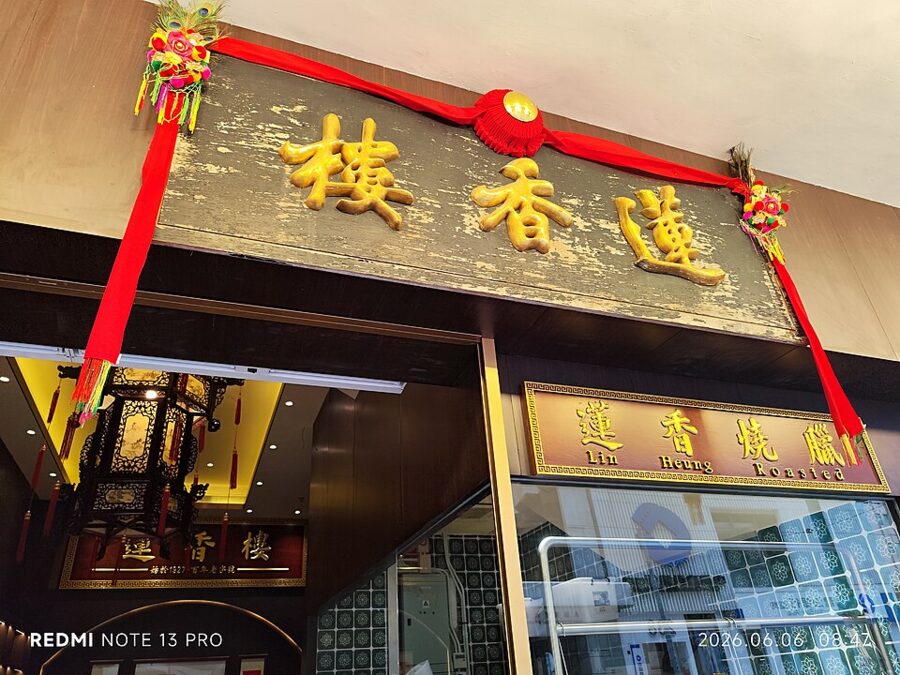
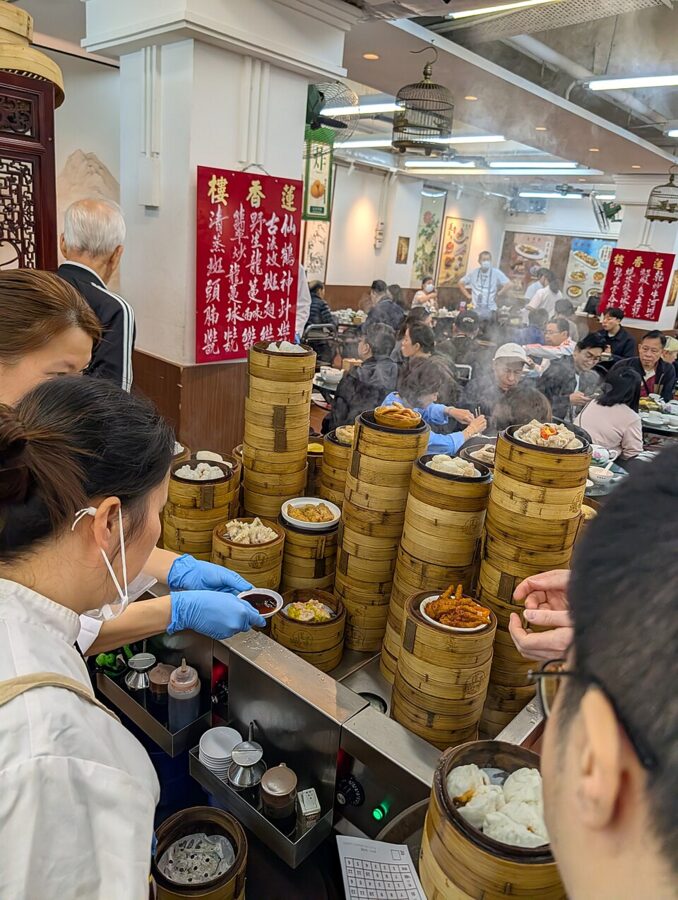

Lin Heung has also opened branches in Tsim Sha Tsui and Mong Kok in the last year or so. The Sheung Wan room is the one with the history.
Trolley halls
Trolleys are now rare enough that the big chains advertise them. Metropol (名都酒樓) in Admiralty’s United Centre, a trolley hall that seated more than 1,000, closed on 27 September 2025 after 35 years. The obvious replacement is Maxim’s Palace (美心皇宮) on the second floor of the City Hall Low Block, Central: a big banqueting room with trolleys working the floor.
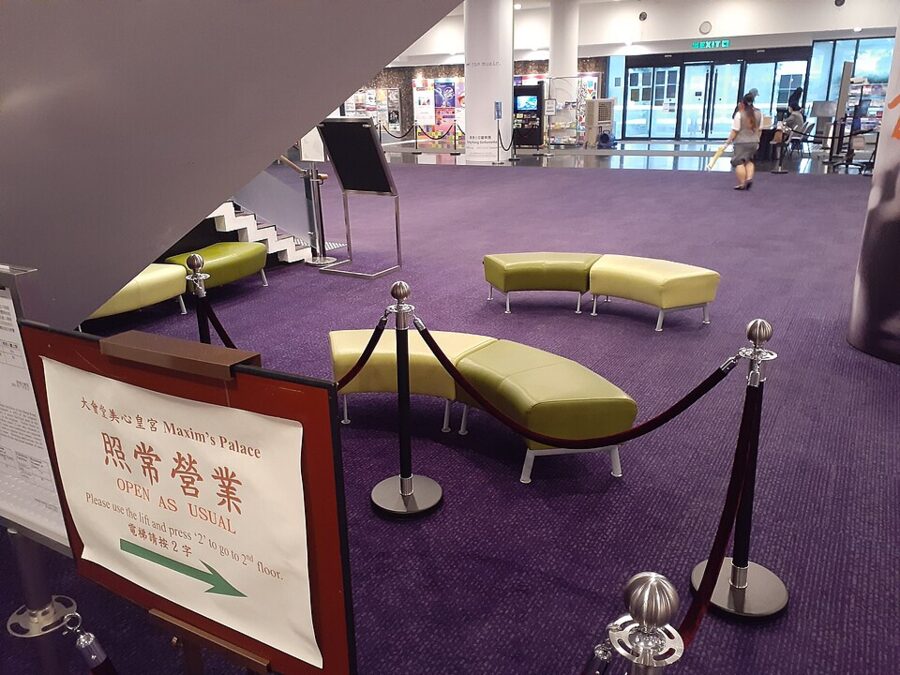

Lunch at City Hall runs 11:00–15:00 Monday to Saturday and 09:00–15:00 on Sundays and public holidays, according to Maxim’s own branch list, which also takes bookings. On weekdays, arriving at opening gets a table without one. In Kowloon, Maxim’s opened a seventh Palace on the sixth floor of MOKO in Mong Kok East in March 2026, with trolleys, a glass-walled roast suckling pig oven and a dim sum class from HK$450 a person, taught in Cantonese and English. It opens at 08:00 daily.
Budget shops with Michelin recognition
Tim Ho Wan (添好運) started in 2009 when a chef who had left the Four Seasons opened a 20-seat shop in Sham Shui Po and won a Michelin star. The original star has gone, but the Sham Shui Po shop at 9–11 Fuk Wing Street is a Bib Gourmand in the 2026 guide. It takes no bookings, seats you at shared tables and is open 08:00–22:00. Order the baked char siu bao (酥皮焗叉燒包), the har gow and the beef balls with dried tangerine peel.
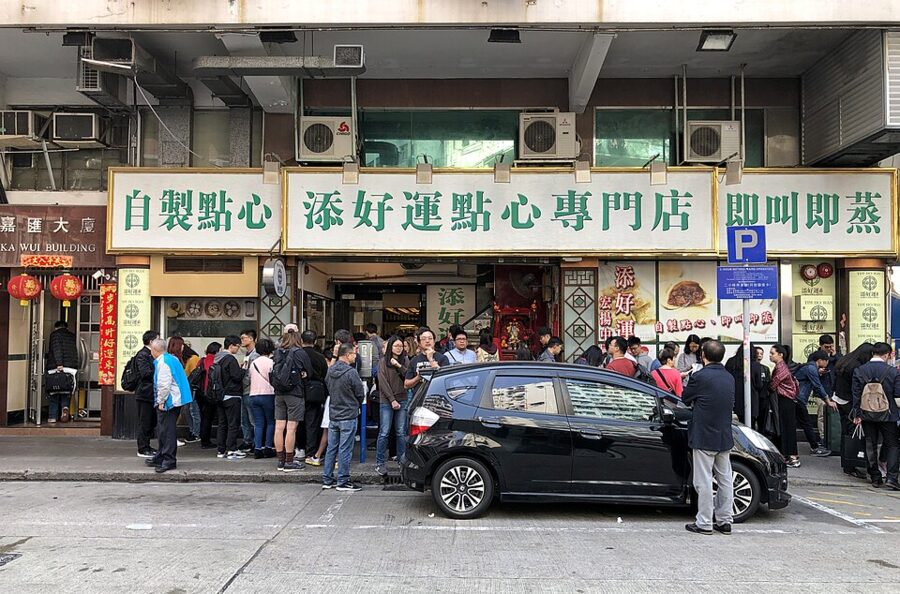

The chain’s branch list has 14 Hong Kong shops. The useful ones for visitors are in Hong Kong Station (Shop 12A–12B, Level 1, 09:00–21:00), handy before the Airport Express, and at Citygate in Tung Chung if you are heading out to Lantau Island.
Hotel Cantonese restaurants
Hotel dim sum is a booked lunch, priced by the piece or the basket. Spring Moon (嘉麟樓) in The Peninsula, one Michelin star, serves dim sum 11:30–14:30 Monday to Saturday and from 11:00 on Sundays and public holidays. Its October 2026 menu runs from HK$102 to HK$238 a basket, with a dim sum lunch set at HK$720 a person for two or more, all plus 10%. Knee-length shorts and trainers are fine at lunch; flip-flops are not.
The 2026 guide gives two stars to Lung King Heen (龍景軒) at the Four Seasons in Central, Tin Lung Heen (天龍軒) on the 102nd floor of the Ritz-Carlton in West Kowloon, and Lai Ching Heen (麗晶軒) at the Regent in Tsim Sha Tsui. Man Wah (文華廳) at the Mandarin Oriental has one. Book ahead for weekends, and ask for the dim sum menu when you do. Spring Moon’s page has the current menu as a download.
Etiquette at the table
Pour for others before yourself, starting with the eldest. When someone fills your cup, tap two or three fingers on the table beside it: it means thank you, and nobody expects you to stop talking to say it.
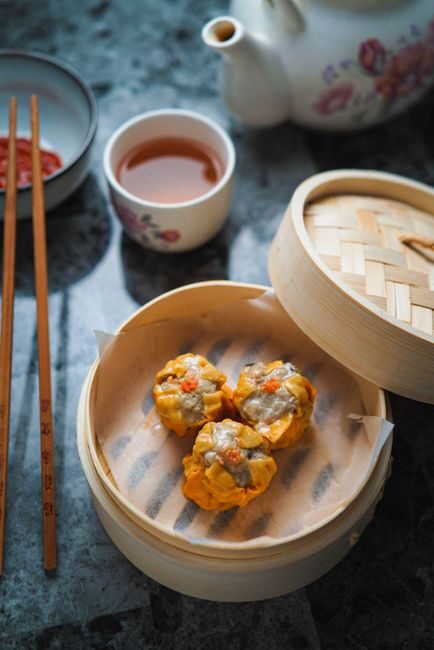
The lid trick: when the pot runs dry, prop its lid open or set it upside down on the pot. A server will come by with hot water without being asked. Leave the tea leaves in; they take several refills.
The tea charge (茶芥) is per head and non-negotiable, and the 10% service charge covers the tip. At busy places you may be seated with strangers (搭枱, daap toi); nod, eat, and do not spread your baskets onto their half. Do not linger over an empty table at 12:30 while a queue waits at the door.
Dietary needs
Vegetarians have the hardest time. Pork and shrimp are in most fillings, oyster sauce is in many sauces, and lard turns up in pastry and even in some har gow; Spring Moon lists it in its own. Ask for 齋 (zaai, vegetarian) dishes, or go to a Chinese vegetarian restaurant (素食館) that does yum cha with mock meat.
Halal Cantonese dim sum is rare because so much of it is pork. Look for a certificate from the Incorporated Trustees of the Islamic Community Fund of Hong Kong on the wall rather than relying on a “no pork” label. For allergies, shrimp is in almost every steamed dumpling, wheat starch makes the har gow wrapper, and egg is in the tarts and custard buns. Carry the allergy written in Chinese: 我對蝦過敏 means “I am allergic to shrimp”.
Where to go by district
Central and Sheung Wan have the densest spread, and they sit together on the Island line. Start at Luk Yu on Stanley Street, or at Maxim’s Palace in City Hall if you want trolleys, then walk west to Lin Heung on Des Voeux Road Central for a second, cheaper round. The hotel rooms of Central, Lung King Heen and Man Wah, are for a booked lunch.

Tsim Sha Tsui is the hotel side of the harbour: Spring Moon at The Peninsula and Lai Ching Heen at the Regent are both walkable from the Star Ferry. Further north, pair Tim Ho Wan in Sham Shui Po with the fabric and electronics streets around it, which are on the Hong Kong shopping trail anyway, or take trolley dim sum at Maxim’s Palace in MOKO, connected to Mong Kok East station. The MTR joins all of them, and if you have not yet chosen where to stay, a Sheung Wan or Central hotel puts the old teahouses within walking distance of breakfast.
Around Lunar New Year, book: some places close for the first days and others add a holiday surcharge. For the rest of the year, the plan is simple. Be at the door by 09:30 on a weekday, order har gow first, and lift the teapot lid when it runs dry.