

The 20:00 harbour light show is gone: A Symphony of Lights played for the last time on 18 November 2026, after 22 years, and an evening on the Tsim Sha Tsui waterfront now needs a different plan. The rest of a first visit still works, and three days covers it if each day stays on one side of the water. Hong Kong Island on day one, Kowloon on day two, Lantau on day three. A hike and an island make five.
The plan assumes you sleep near an MTR station in Tsim Sha Tsui, Jordan, Central or Wan Chai, pay with an Octopus or a contactless bank card, and leave the hotel around 09:00. Prices are adult fares as of November 2026.
| Day | Morning | Afternoon | Evening |
|---|---|---|---|
| 1. Hong Kong Island | Dim sum in Central, the Mid-Levels escalator, Man Mo Temple in Sheung Wan | Lunch at a dai pai dong, the Peak Tram up an hour before sunset, Lugard Road | Tram east to Wan Chai and Causeway Bay for dinner |
| 2. Kowloon | Wong Tai Sin Temple (opens 07:30), cha chaan teng breakfast in Sham Shui Po | Sham Shui Po and Mong Kok markets, the Star Ferry across and back | Tsim Sha Tsui waterfront, Temple Street night market |
| 3. Lantau | MTR to Tung Chung, Ngong Ping 360 up, the Big Buddha | Vegetarian lunch at Po Lin, bus 21 to Tai O | Bus 11 back to Tung Chung, a late dinner in town |
Day four is the Dragon’s Back ridge walk to Big Wave Bay, about four hours, then Causeway Bay at night. Day five is a ferry to Lamma or Cheung Chau, or a minibus out to Sai Kung if you would rather have boats and seafood than a long crossing. With only two days, do the first two and keep Lantau for next time: it eats a whole day and loses most of its point in cloud.
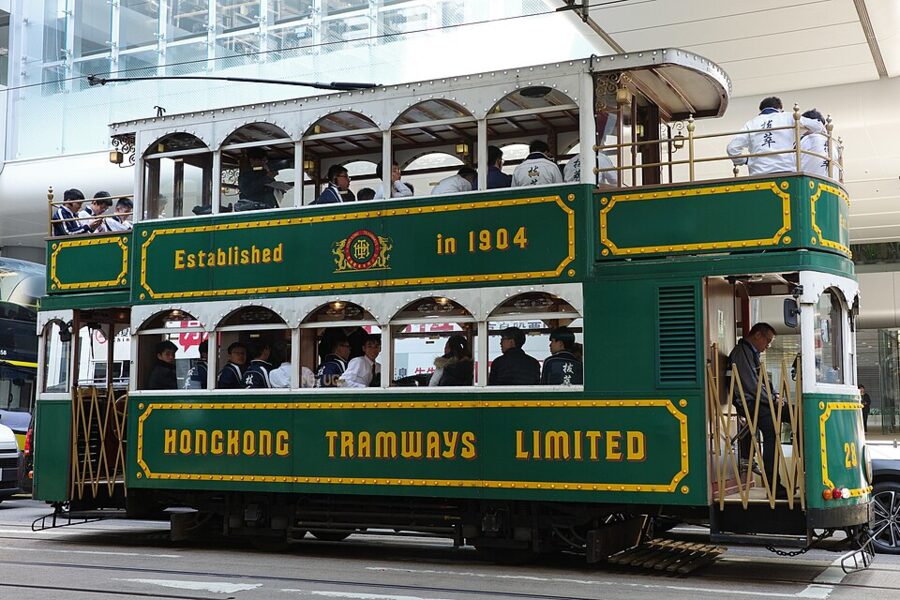

Only two things are worth booking before you fly: the Peak Tram if your day one falls on a weekend, and Ngong Ping 360 if day three does. Temples, markets, trams and ferries are all walk-up.
In this article
- Day 1: Hong Kong Island, from Central to the Peak
- Day 2: Kowloon, from the temples to the night market
- Day 3: Lantau, the Big Buddha and Tai O
- Day 4: the Dragon's Back and Big Wave Bay
- Day 5: an outlying island, or Sai Kung
- What to eat on the way
- Getting around: Octopus, cards and fares
- Weather, rain and when to go
- Where to stay for this plan
- What three days cost
Day 1: Hong Kong Island, from Central to the Peak
Central and the Mid-Levels escalator
Start with dim sum. It is a morning-to-lunch meal, and the old-style rooms in Central and Sheung Wan fill with office workers from about 12:30, so 09:30 is the civilised hour. Tick your order on the paper sheet and keep the pot of tea topped up by leaving the lid ajar.
Then walk up to Queen’s Road Central and find the Central-Mid-Levels Escalator (中環至半山自動扶梯). It is 800 metres of covered escalators and travelators that climb from Queen’s Road Central to Conduit Road, and it reverses during the day: downhill from 06:00 to 10:00 for commuters, uphill from 10:20 until midnight. Before 10:20 you climb the stairs beside it. The Transport Department’s escalator page has the map of entrances.
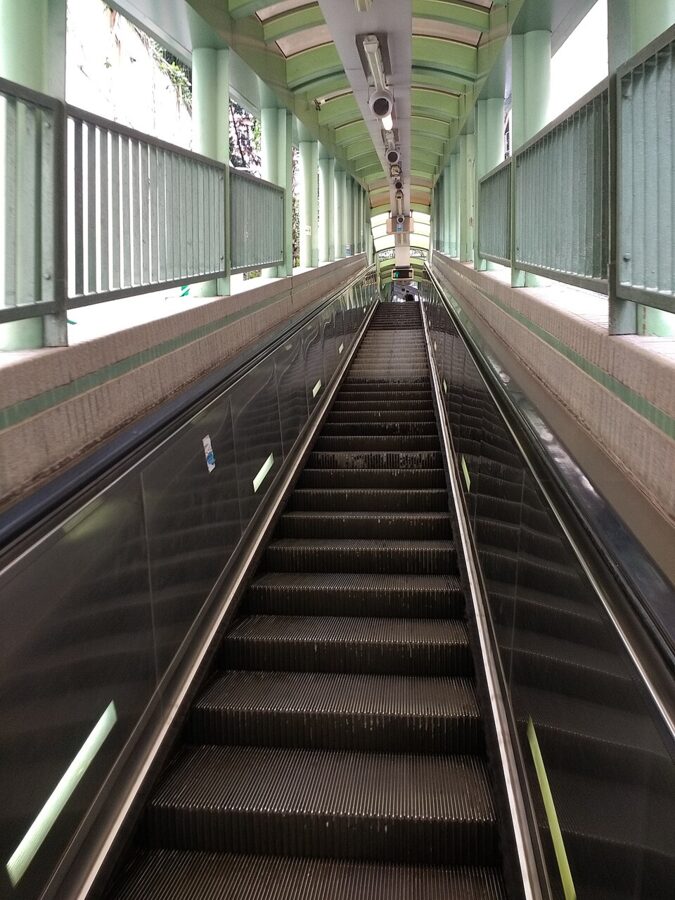
Get off at Hollywood Road. Tai Kwun, the old Central Police Station compound, stands beside the escalator here, and its courtyards are free to walk into. Turn right along Hollywood Road for the antique and curio shops, which shade into Sheung Wan without any sign telling you so.
Sheung Wan: Man Mo Temple and the dried seafood streets
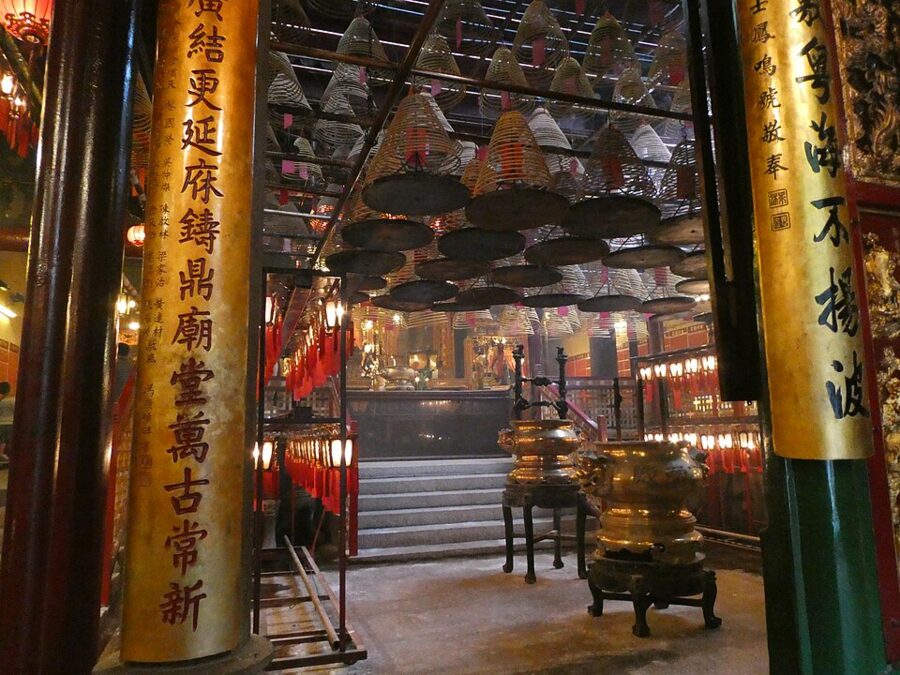
Man Mo Temple (文武廟) on Hollywood Road is dedicated to the gods of literature and war, and it is the one temple on Hong Kong Island I would send a first-time visitor to. The smoke comes from the incense coils hung from the roof, each one paid for by someone with a wish. Go in quietly, keep the camera low and leave a coin in the box.

Walk downhill to Des Voeux Road West, where the shops sell dried scallops, abalone, fish maw and sea cucumber out of open sacks and glass jars. Nobody expects you to buy a kilo of anything. It is the smell of old Hong Kong, and it is ten minutes from the bank towers.
Lunch: a dai pai dong, or roast meat over rice
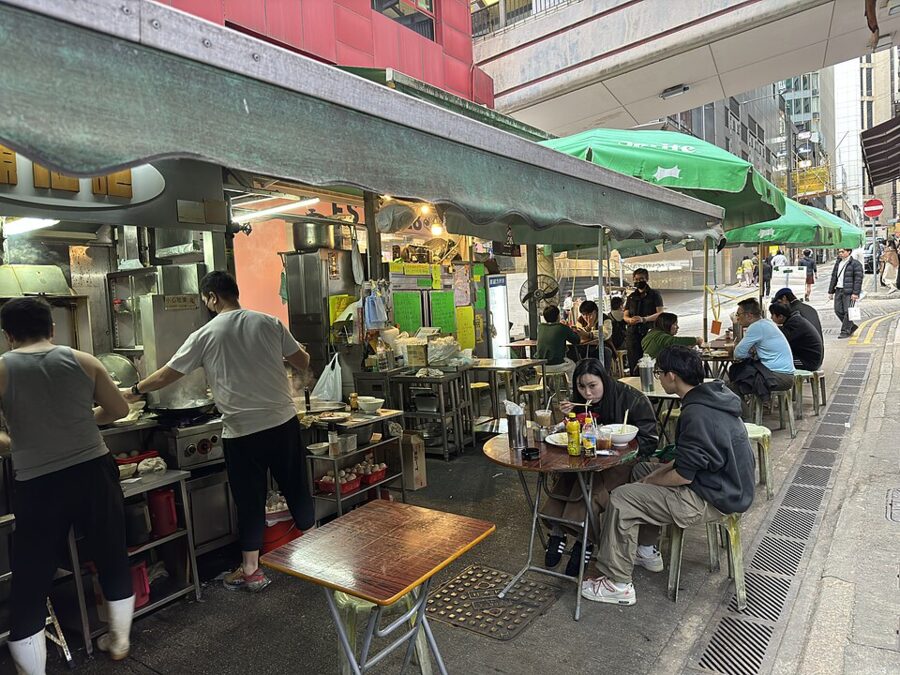
A dai pai dong (大牌檔) is a licensed open-air food stall with a green-painted steel shell and folding tables in the street. There are very few left, and the cluster on Stanley Street in Central, a few minutes from the escalator, is the easiest to reach. Order noodles, a pork chop bun and milk tea, and share a table if the owner points you to one.

If the stalls are full, any roast meat shop with geese hanging in the window will do. Point at roast goose (燒鵝), char siu (叉燒) or crackling pork (燒肉) and ask for it over rice.
The Peak at sunset
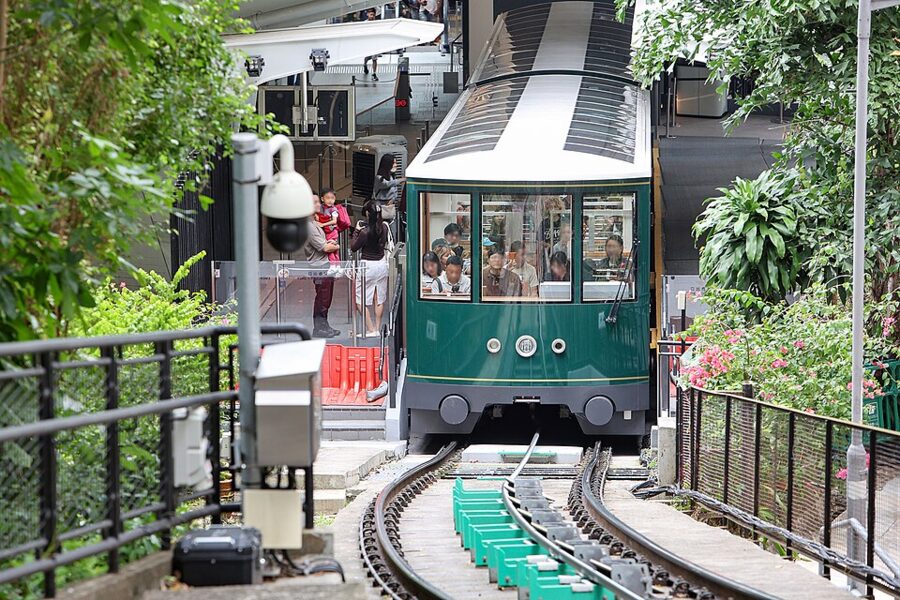
On a three-day trip the Peak is mostly a question of timing. The Peak Tram (山頂纜車) leaves from the lower terminus at 33 Garden Road, Central, from 07:30 to 23:00 every day. Since a fare rise on 29 December 2025, an adult return costs HK$116 and a single HK$82.

Sky Terrace 428, the paid deck on the Peak Tower, costs HK$80 on its own or HK$182 with a return tram ticket, and opens 08:30 to 22:00. I would skip it. Walk the Lugard Road (盧吉道) loop instead: it is flat, free and has the same view of Central and the harbour from a railing in the trees.
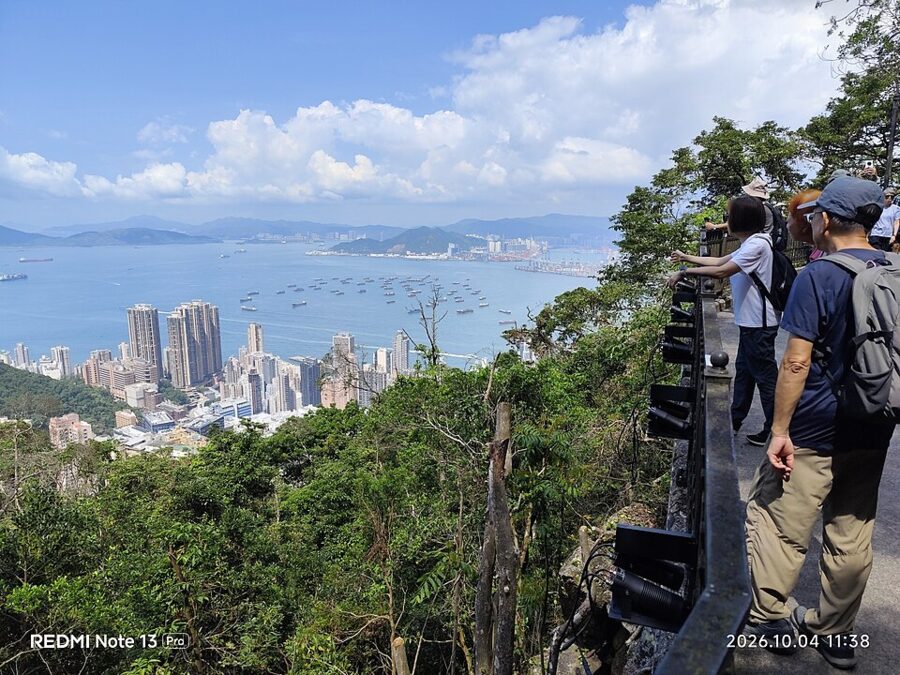
Sunset falls around 17:40 in late November and after 19:00 in midsummer, so ride up an hour before. Buy tickets only on the official Peak Tram webstore; the operator warns that fake sites are selling tickets in its name. Come down after dark, then take the tram east from Central to Wan Chai and Causeway Bay (銅鑼灣) for dinner and the evening crowd.
Day 2: Kowloon, from the temples to the night market
Wong Tai Sin first thing
Sik Sik Yuen Wong Tai Sin Temple (嗇色園黃大仙祠) opens at 07:30 and shuts at 16:30, every day, free. It is a short walk from Wong Tai Sin MTR station, HK$9.20 by Octopus or card from Tsim Sha Tsui. Early morning is when local worshippers come, shaking bamboo fortune sticks until one falls out of the cup.
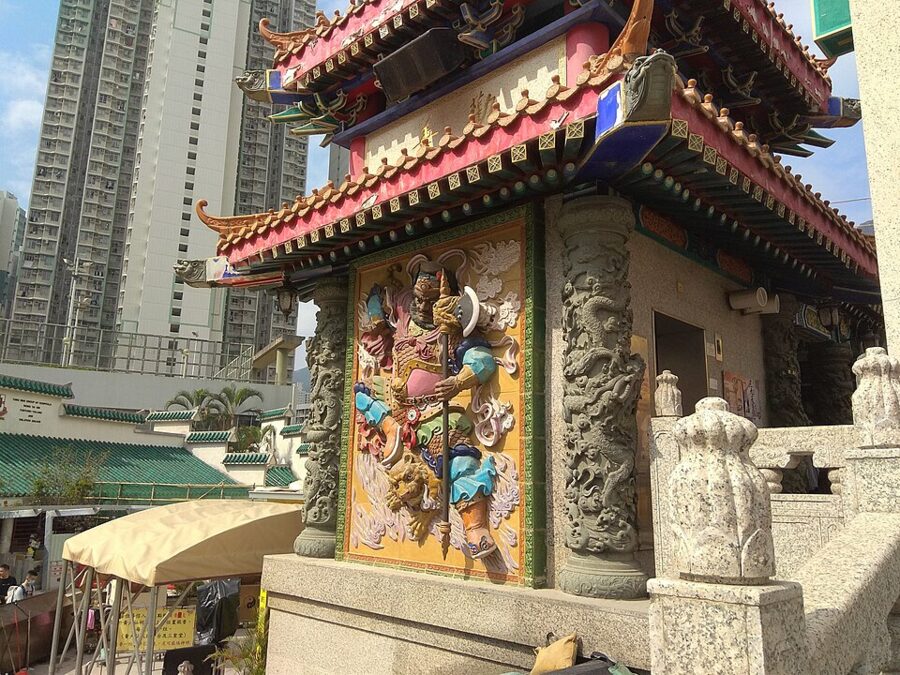

The main temple is free. The Taisui Yuenchen Hall charges HK$100, and unless you know your Tai Sui you can leave it. Sik Sik Yuen’s visitor page lists the hours.
Breakfast in Sham Shui Po, then Mong Kok
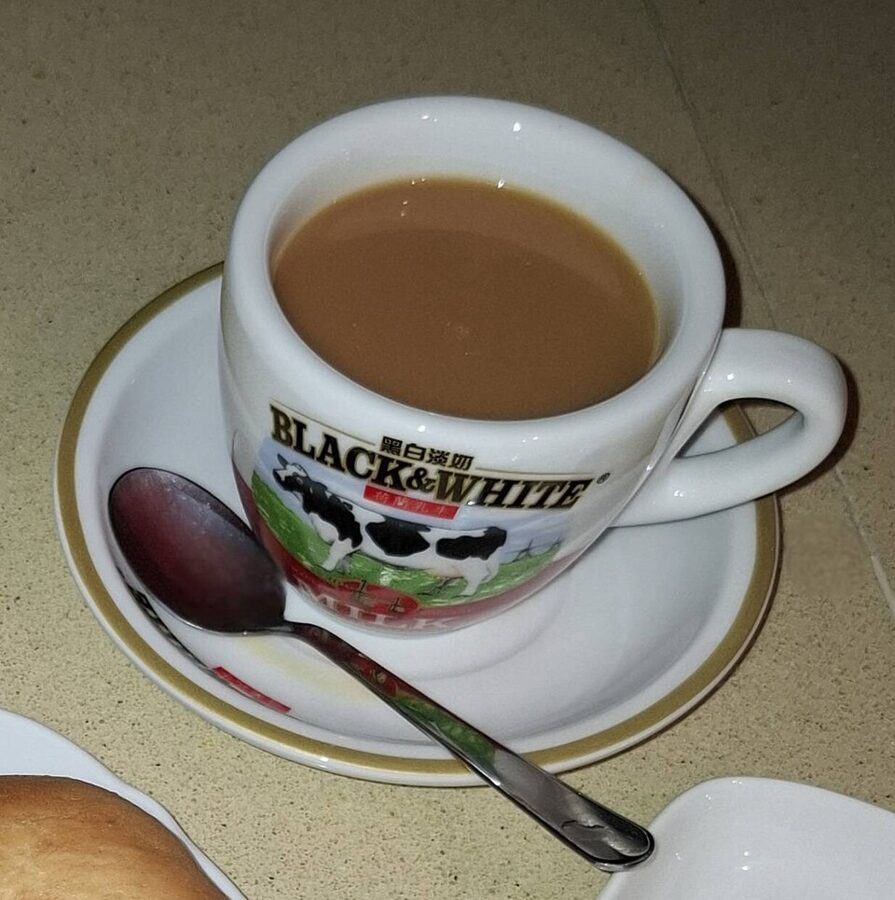
Take the MTR to Sham Shui Po (深水埗), HK$5.90, and eat breakfast in a cha chaan teng (茶餐廳), the Hong Kong café that runs on milk tea, scrambled egg sandwiches, macaroni in soup and pineapple buns. The set breakfast comes with a drink, and the drink is the reason to come. Say “nai cha” for milk tea, or “yuen yeung” for the coffee and tea mix.
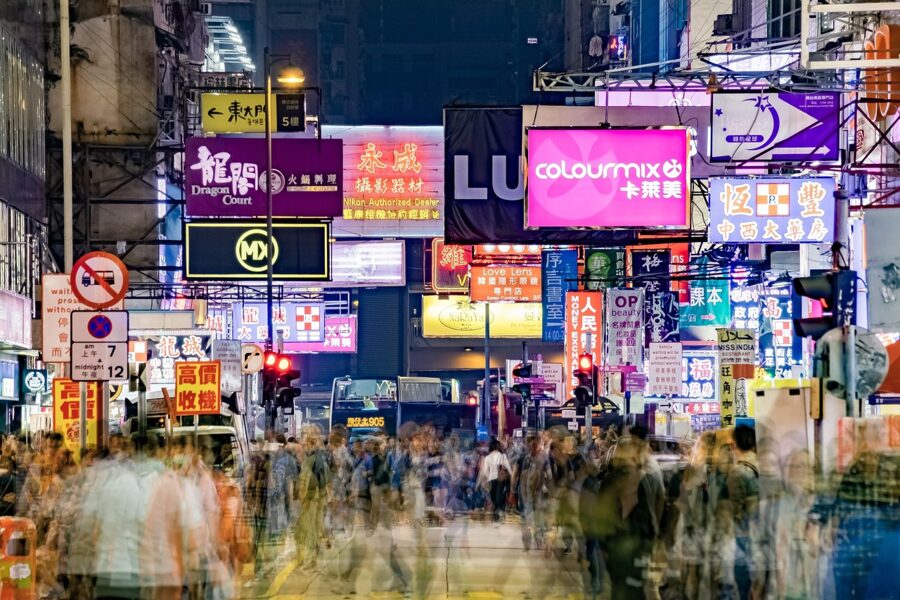
Sham Shui Po is the working district for fabric, buttons, electronics parts and second-hand gadgets, and Apliu Street (鴨寮街) is its spine. From there it is two stops, HK$4.90, to Mong Kok (旺角), and the street markets that run south along Tung Choi Street (通菜街), where the Ladies’ Market sells clothes, phone cases and the cheaper end of Hong Kong souvenirs. The Mong Kok and Sham Shui Po markets are worth an afternoon on their own if shopping is your thing.
The Star Ferry and the Tsim Sha Tsui waterfront
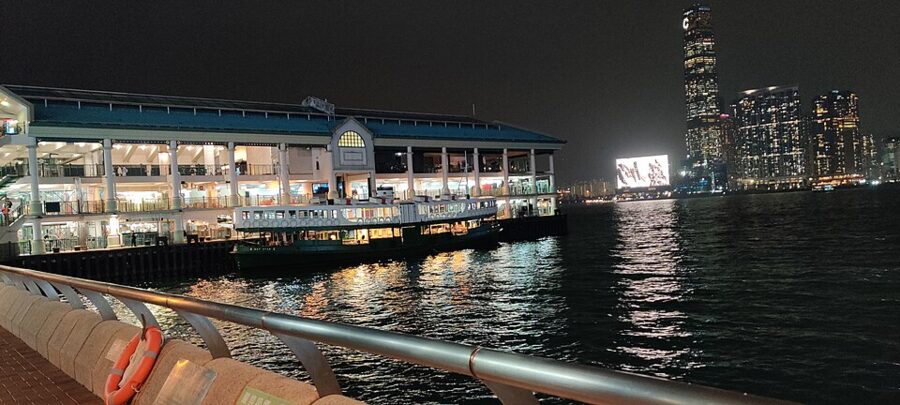
Ride the MTR down to Tsim Sha Tsui (HK$5.90 from Mong Kok) and walk to the Star Ferry pier by the Clock Tower. The crossing to Central costs an adult HK$5 on the upper deck from Monday to Friday and HK$6.50 at weekends and on public holidays; the lower deck is HK$4 and HK$5.60. Pay the extra dollar for the upper deck. Ferries run from 06:30 to 23:30, every six to eight minutes for most of the day.
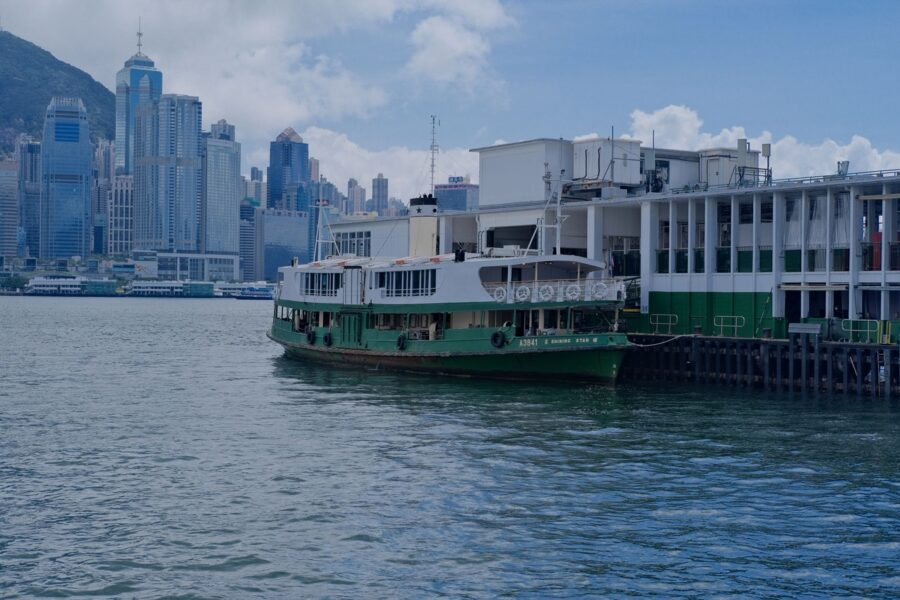
Cross to Central around 16:30, walk along the waterfront to the next ferry, and come back as the lights come on. The Star Ferry fare table also covers the Wan Chai route, which costs the same and lands you by the convention centre.
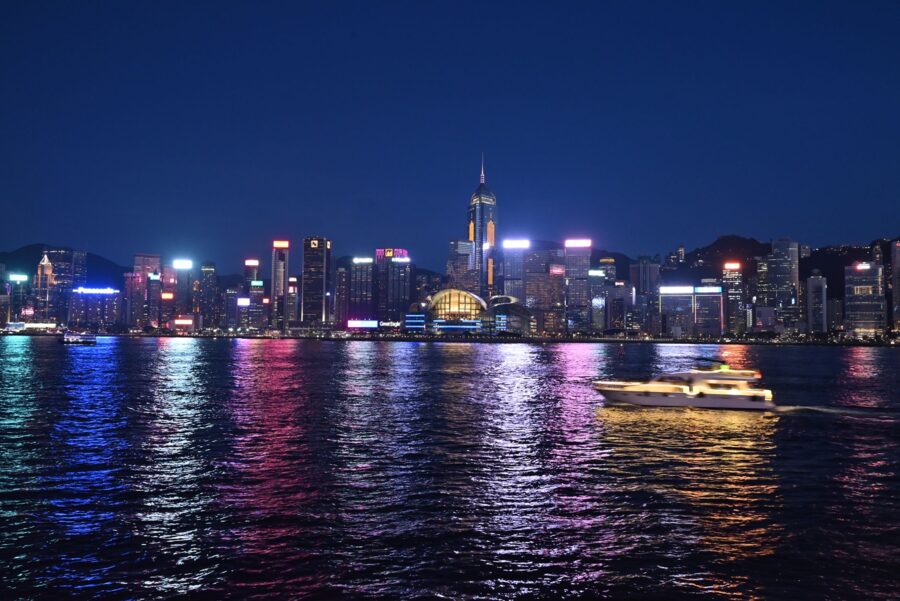
Then walk east along the Tsim Sha Tsui promenade towards the Avenue of Stars. Until 5 January 2027, the Hong Kong Cultural Centre, the Museum of Art and the Space Museum carry a projection and music show for WinterFest from 19:00 to 23:00 every night, viewed from the Cultural Centre deck. It runs until 01:00 on 24 to 27 December and 1 to 2 January, partly stops on 28 to 30 December and is off on 31 December for the countdown fireworks; the Tourism Board’s page has the schedule. After that, the government has said a new harbour show will replace the old one, but no date had been announced as of November 2026.
Temple Street at night
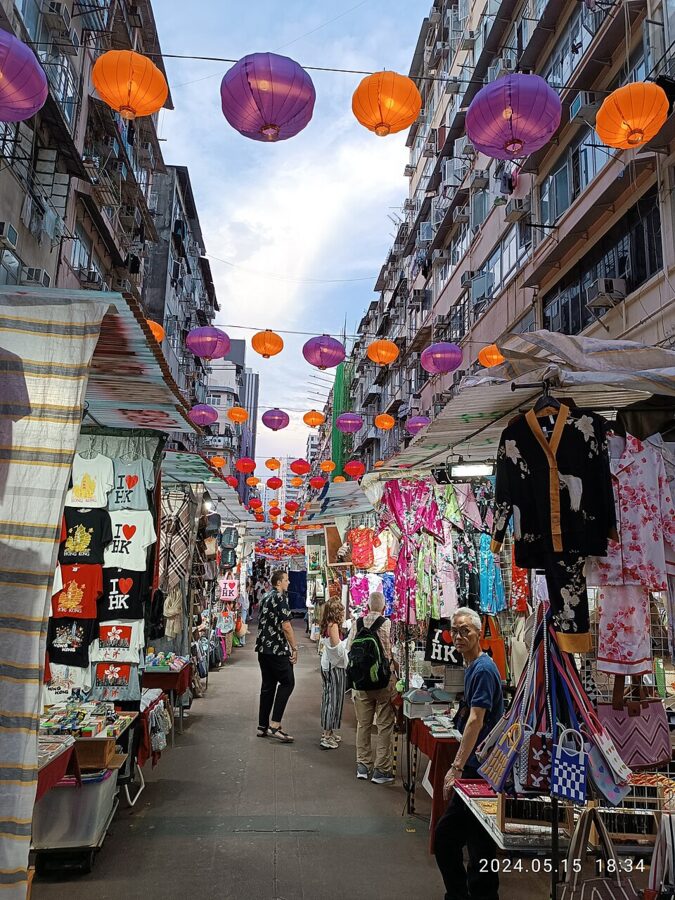
Temple Street (廟街) runs north from Jordan station towards the Tin Hau temple at Yau Ma Tei that gives the street its name. The stalls are up by dusk and the market is busiest after 19:00: clothes, gadgets, souvenirs, fortune tellers and, some nights, Cantonese opera singers on the pavement. Prices are for haggling and the goods are what they look like.
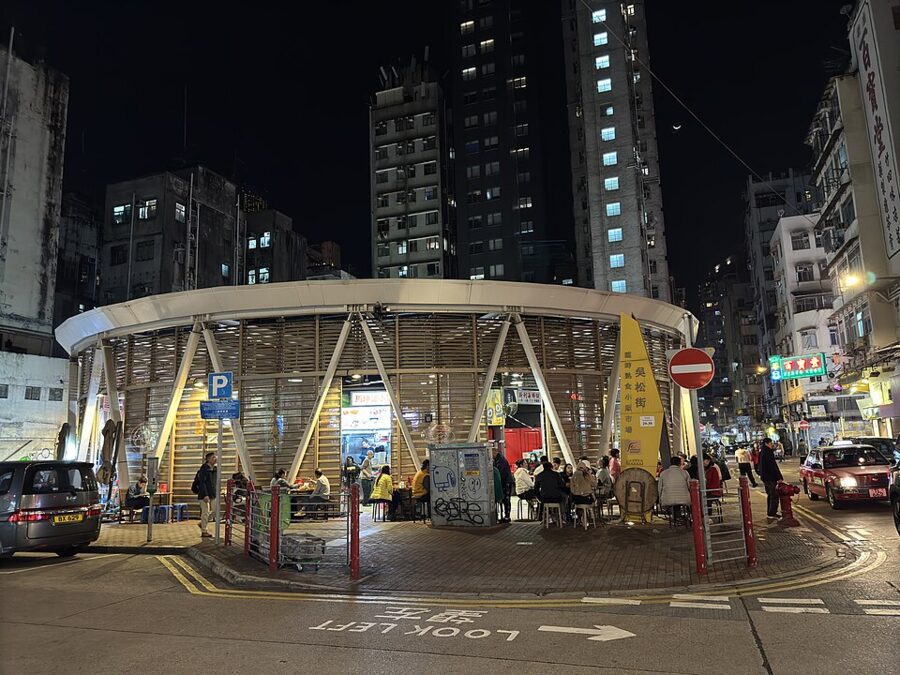
For dinner, the Woosung Street cooked food hawker bazaar at the end of Temple Street has wok-fried dishes, seafood and claypot rice under one roof. Order salt and pepper squid and a plate of greens, and stay until the woks slow down.

Day 3: Lantau, the Big Buddha and Tai O
Ngong Ping 360
Take the MTR to Tung Chung, HK$24.30 from Central or HK$18.70 from Tsim Sha Tsui, and walk five minutes from Exit B to the cable car terminal. Ngong Ping 360 (昂坪360) opens at 10:00 on weekdays and 09:00 on Saturdays, Sundays and public holidays, and closes at 18:00 (18:30 at weekends). The ride is 5.7 kilometres and about 25 minutes over the hills, with the airport and the bridge to Macau below you.
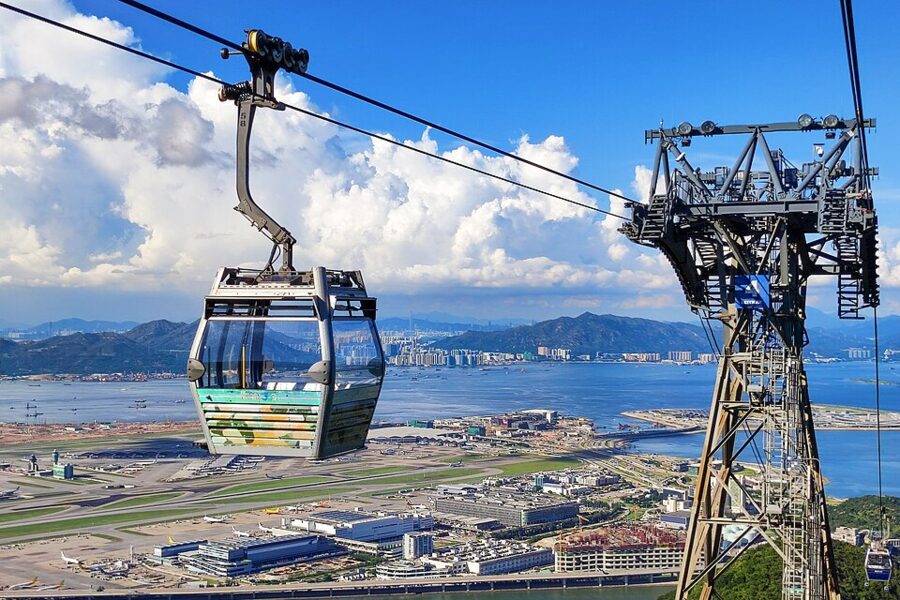

An adult single in a standard cabin costs HK$205, a return HK$295. The glass-floored Crystal Cabin is HK$240 single and HK$365 return, worth it on a clear day only. Buy a single up and come back by bus through Tai O: it costs less than the return and adds the best part of Lantau. Prices and the online ticket shop are on Ngong Ping 360’s ticket page.
Two catches. Bags bigger than 48 by 34 by 23 centimetres, or heavier than 4 kilograms, are not allowed in the cabins, and the left luggage counter charges HK$100 a piece, so do not come straight from the airport with a suitcase. The cable car also closes for maintenance for a day or more at a time (8 to 17 September and 10 November in 2026), announced in the notices at the top of its site; check them the night before.
The Big Buddha and Po Lin Monastery
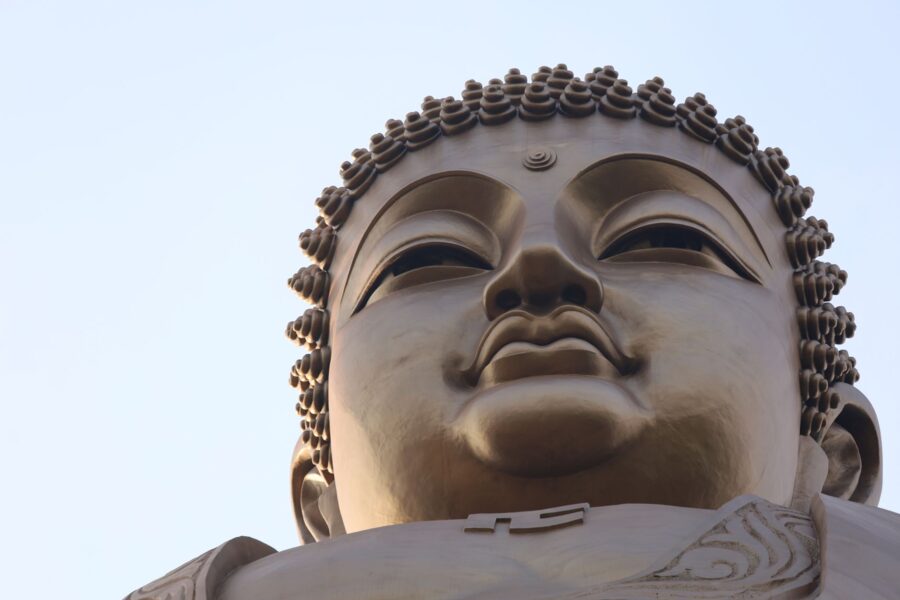
From Ngong Ping Village it is a short walk to the 268 steps up to the Tian Tan Buddha (天壇大佛). Po Lin Monastery’s visitor page gives the statue’s hours as 10:00 to 17:30 every day, while another of its pages still says 17:00, so be at the top before 17:00. The monastery halls open from 09:00 to 18:00.
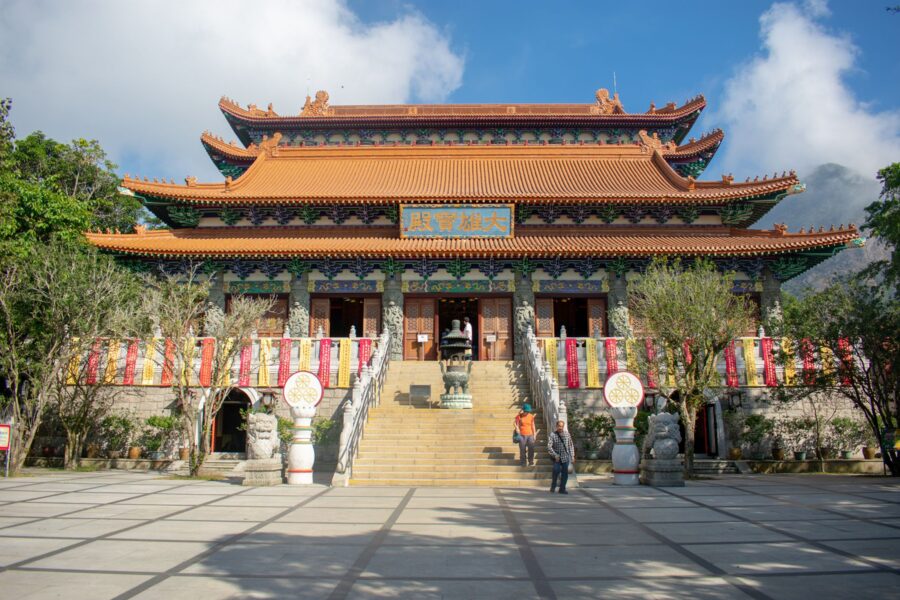
Lunch is at the monastery’s vegetarian kitchen, open 11:30 to 16:30. It is simple food from the monastery’s own kitchen, and it is hot, which matters after the steps.
Tai O
New Lantao Bus route 21 runs from the Ngong Ping bus terminus down to Tai O (大澳), HK$7.90 on weekdays and HK$19.20 on Sundays and public holidays. Tai O is a fishing village of stilt houses over a tidal creek, home to the Tanka boat people for centuries and still lived in. Walk the lanes, buy shrimp paste or dried fish if you cook, and eat a grilled egg puff on the way back to the bus.
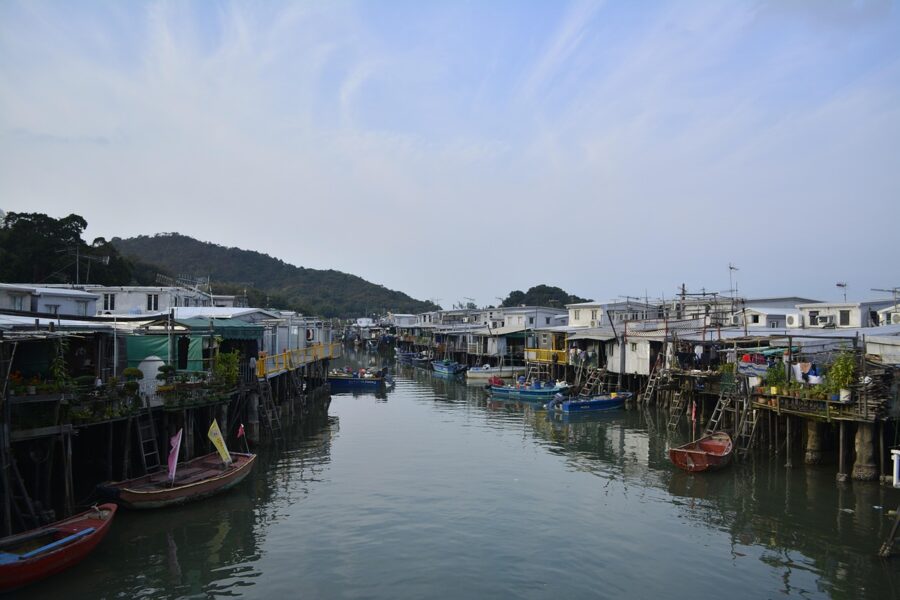
Route 11 takes you from Tai O back to the Tung Chung station bus terminus, HK$14.00 (HK$23.30 on Sundays and holidays), and the MTR home from there. Done this way, the day’s transport from Central comes to about HK$276 on a weekday, against HK$344 for a return cable car with no Tai O at all.
Day 4: the Dragon’s Back and Big Wave Bay
The Dragon’s Back (龍脊) is the last stage of the 50-kilometre Hong Kong Trail, a ridge walk over Shek O Peak in Shek O Country Park, and the best short hike for anyone who has never walked in Hong Kong. The Tourism Board puts it at about 8 kilometres and four hours to Big Wave Bay, rated moderate. The climb is mostly at the start; the ridge itself is open, with almost no shade.
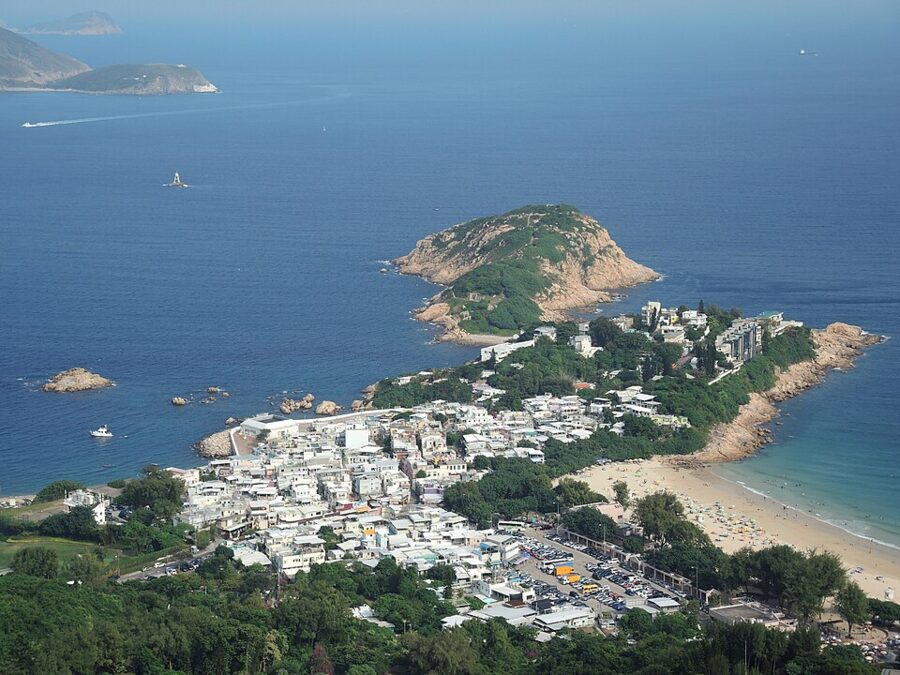

Take the MTR to Shau Kei Wan (筲箕灣), HK$9.20 from Central, and leave by Exit A2 for the bus terminus. Bus 9 towards Shek O drops you at the To Tei Wan (土地灣) stop on Shek O Road, where the trail starts beside the road. Carry two litres of water, and in summer start before 09:00.
The path ends at Big Wave Bay (大浪灣), a surf beach below a small village. Bus 9 back to Shau Kei Wan leaves from Big Wave Bay Road. Shau Kei Wan Main Street East, by the MTR station, is where to eat afterwards: noodles, egg waffles and satay in old shopfronts.
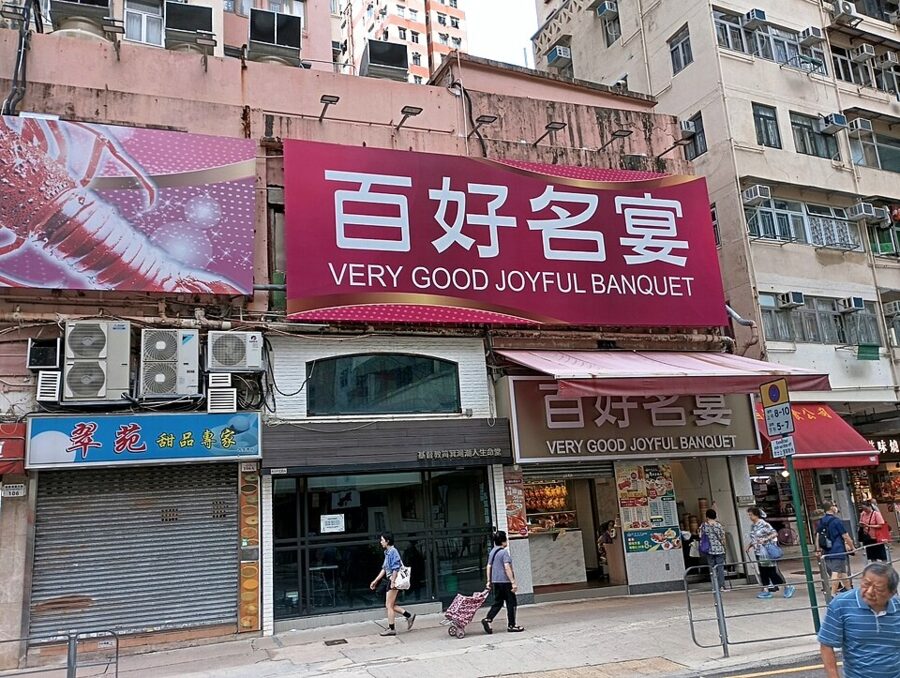
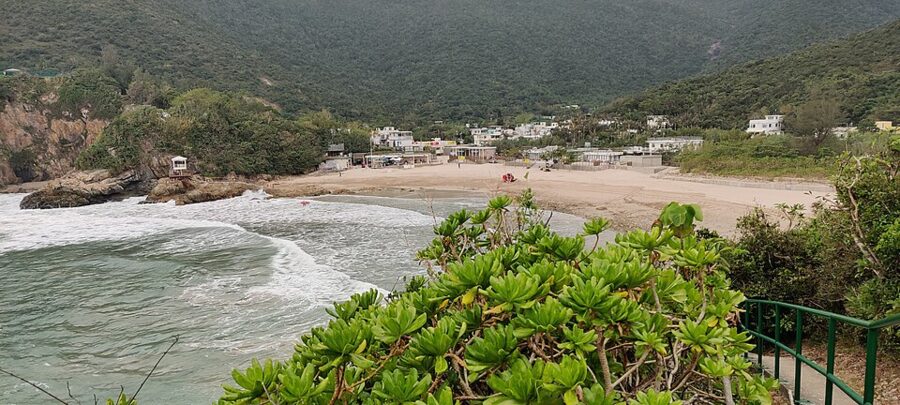
For the evening, go back to Causeway Bay. The Causeway Bay malls stay open late, and the side streets behind them are full of noodle shops and dessert places.
Day 5: an outlying island, or Sai Kung
The outlying island ferries leave from the Central Ferry Piers, next to the Star Ferry. Pick one island, not two; the point is to slow down.
Lamma
Hong Kong and Kowloon Ferry runs from Central Pier 4 to Yung Shue Wan (榕樹灣) and Sok Kwu Wan (索罟灣), the two villages on Lamma (南丫島). Since 1 April 2026 the adult fare to Yung Shue Wan is HK$24.90 from Monday to Saturday and HK$34.70 on Sundays and public holidays; to Sok Kwu Wan it is HK$30.90 and HK$43.50. Check the HKKF timetable for the last boat.
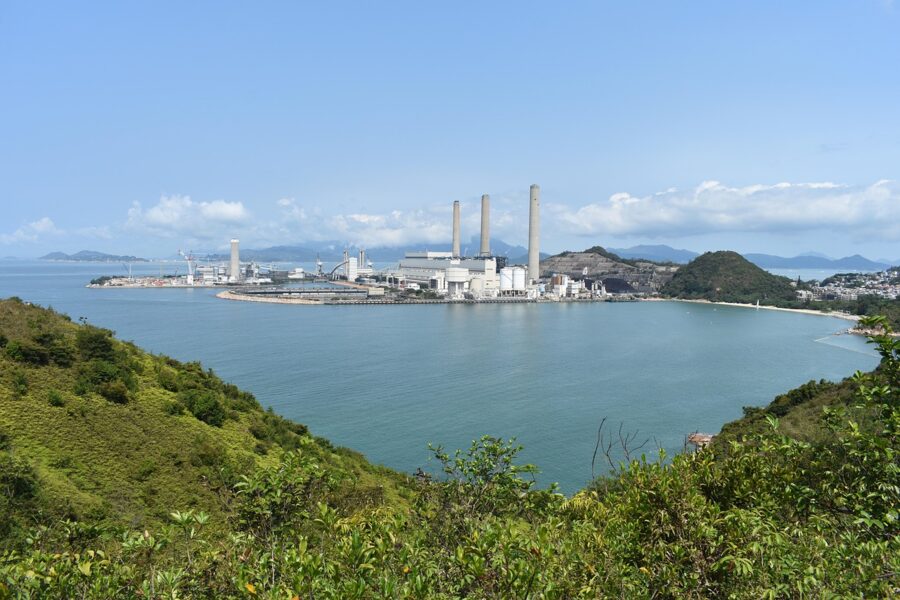
Land at Yung Shue Wan, walk the concrete path over the hill past Hung Shing Yeh beach to Sok Kwu Wan, and allow two hours with stops. Eat seafood on the Sok Kwu Wan waterfront, then take the ferry back to Central from there.
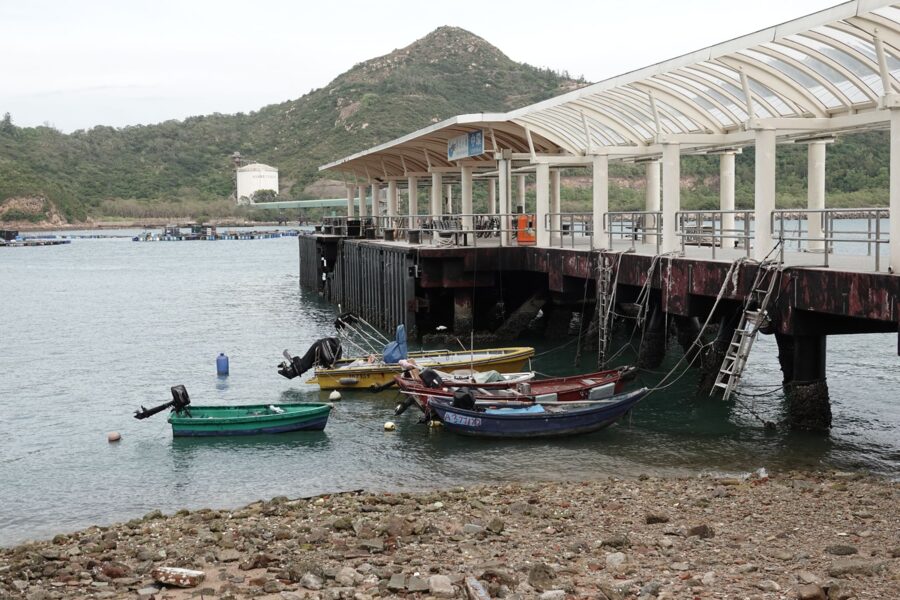
Cheung Chau
Sun Ferry sails from Central Pier 5 to Cheung Chau (長洲). The ordinary ferry takes 55 to 60 minutes and costs HK$16.70 from Monday to Saturday, HK$24.80 on Sundays and holidays; the fast ferry takes 35 to 40 minutes for HK$32.90 or HK$47.60. The Sun Ferry timetable shows which sailings are fast.

Cheung Chau is busier than Lamma: a harbour packed with fishing boats, the Pak Tai Temple, beaches on the east side and bicycles instead of cars. Go on a weekday. The island is at its most crowded for the bun festival on the eighth day of the fourth lunar month, and on any summer Sunday.
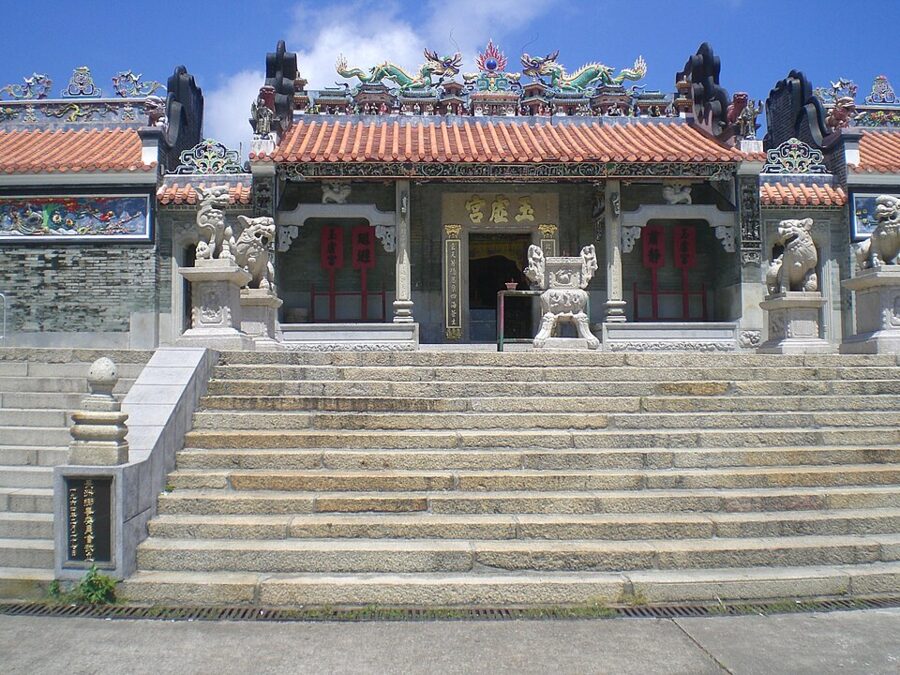

Sai Kung
Sai Kung (西貢) is the town on the east coast where Hong Kong goes for boats and seafood. Take the MTR to Choi Hung, HK$15.80 from Central, and catch green minibus 1A, which runs between Sai Kung Pier and the Diamond Hill transport interchange by way of Choi Hung station. The ride is through the hills and the last stop is the waterfront.
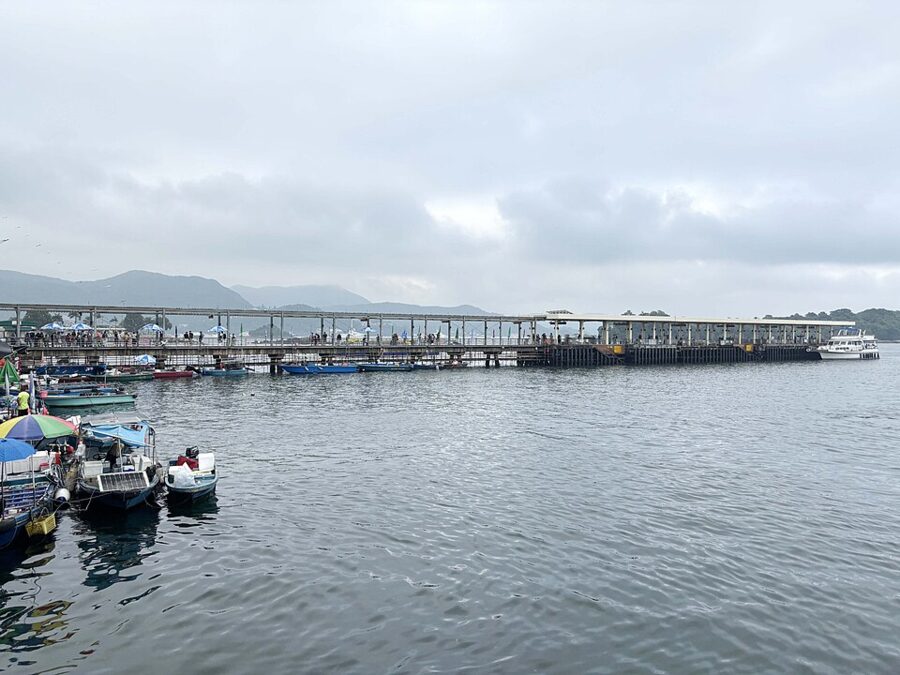

Boats run from Sai Kung Public Pier to Sharp Island every 30 minutes, and Yim Tin Tsai, an old Hakka salt-making island, is a 15-minute speedboat ride. Back in town, the seafood restaurants along the waterfront keep their catch in tanks outside; agree the price per catty before anything is cooked. Minibus 7 from Sai Kung Pier goes out to Hoi Ha Wan, a marine park popular for snorkelling and diving.
What to eat on the way
Every day of the plan has its meal. Dim sum belongs to day one in Central and Sheung Wan, where the old rooms open early. A cha chaan teng breakfast is for day two in Sham Shui Po or Mong Kok, and roast meat over rice works anywhere you see a window full of geese. Dai pai dongs are in Central for lunch and around Temple Street for dinner.
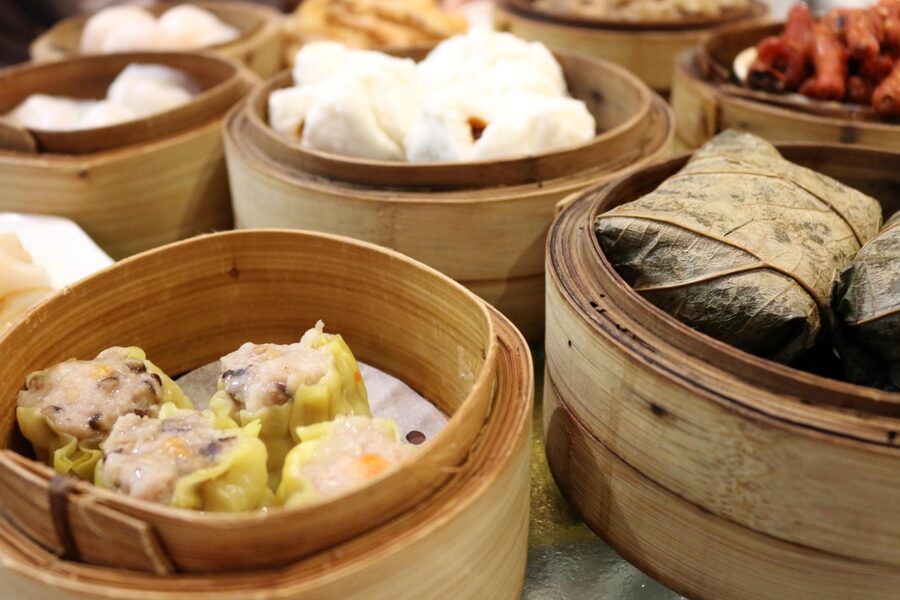
The classics are har gow, siu mai, char siu bao (barbecue pork buns), cheung fun (rice noodle rolls) and chicken feet if you are brave. A charge per person for tea is normal.
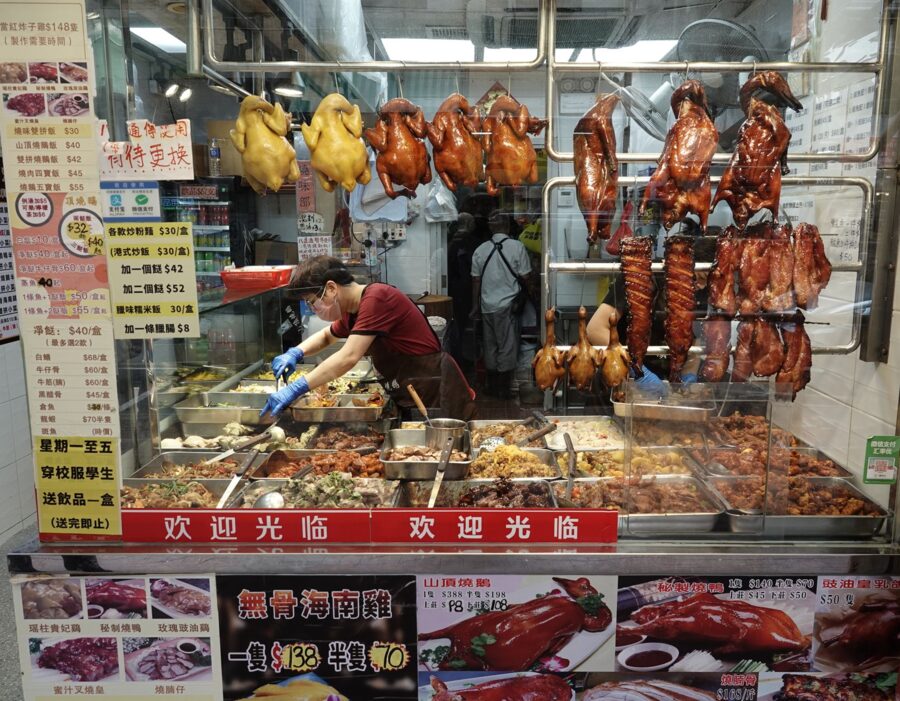
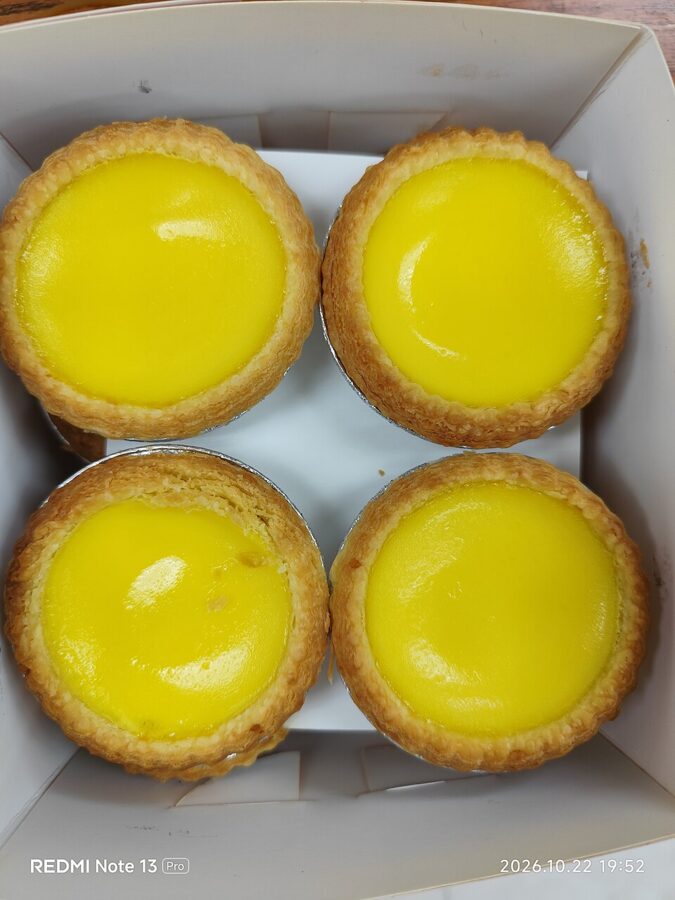
Two more for the list: an egg tart from a bakery, and a bowl of wonton noodles, the small portion with the soup and the noodles cooked hard. At Haiphong Road in Tsim Sha Tsui there is a second cooked food hawker bazaar, with nine stalls under one roof, if Temple Street is full.
Getting around: Octopus, cards and fares
An adult with a contactless Visa, Mastercard or UnionPay credit card can tap through the MTR gates, Airport Express included, and pays the same fare as an Octopus; the details are on MTR’s contactless page. The trams and franchised buses take cards too. Get an Octopus anyway for green minibuses like the 1A to Sai Kung, for children’s and seniors’ fares, and to avoid your bank’s foreign transaction fee on every ride.
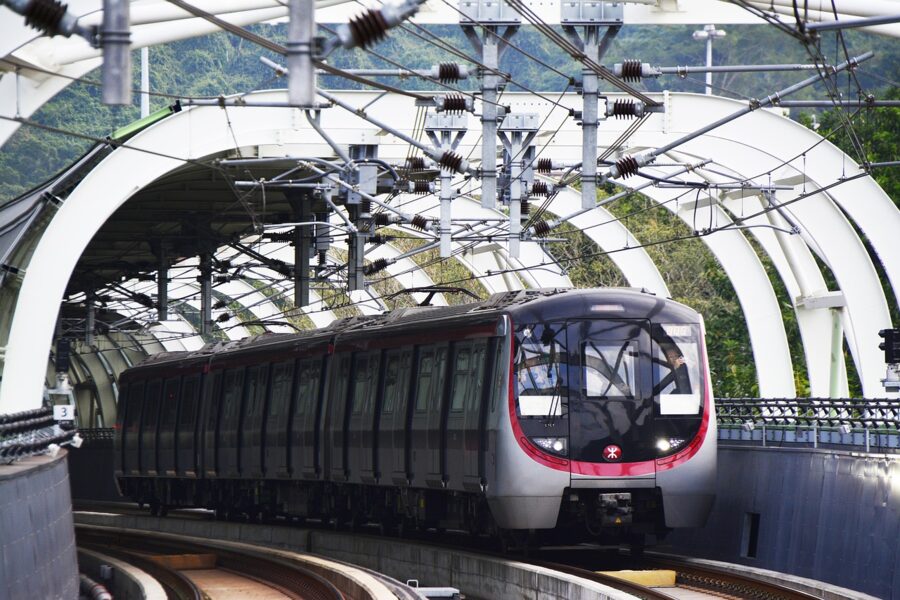
| Journey | Octopus or card (adult) | Single ticket |
|---|---|---|
| MTR Central to Tsim Sha Tsui | HK$10.60 | HK$12.50 |
| MTR Tsim Sha Tsui to Mong Kok | HK$5.90 | HK$6.00 |
| MTR Tsim Sha Tsui to Wong Tai Sin | HK$9.20 | HK$10.50 |
| MTR Central to Tung Chung | HK$24.30 | HK$28.00 |
| MTR Central to Shau Kei Wan | HK$9.20 | HK$10.50 |
| Tram, any distance | HK$3.30 | HK$3.30 in coins |
| Star Ferry, Central to Tsim Sha Tsui, upper deck | HK$5 weekdays, HK$6.50 weekends | Same, from the machines |
The MTR Tourist Day Pass costs HK$75 for 24 hours of unlimited MTR, Light Rail and MTR Bus travel from your first entry, sold with your passport at customer service centres to visitors who have been in Hong Kong under 14 days. It excludes the Airport Express and the border stations. On this plan no single day comes close to HK$75 of MTR fares, so I would not buy it; the Tourist Day Pass page has the conditions if your own days are longer.
From the airport, the Airport Express reaches Kowloon and Hong Kong stations in under half an hour, and the A and E airport buses cost less and stop closer to most hotels. On your last day, in-town check-in at Hong Kong station, offered by some airlines, takes your bags off your hands for a final morning in Central.
Weather, rain and when to go
The Hong Kong Observatory calls November and December the best months of the year, dry and sunny with comfortable temperatures. January and February are cloudier and can drop below 10°C; March and April turn humid and sometimes foggy. From May to August afternoons regularly pass 31°C, most of the year’s rain falls between May and September, and tropical cyclones can strike from May to November, most often July to September.
Typhoon signals can close museums and stop the ferries and the cable car, and the weather warnings are worth understanding before you plan a hike or a ferry. The Observatory’s climate page has the averages. If the forecast for day three is cloud or rain, swap it with day four or five; the Big Buddha in fog is a grey shape, and the Dragon’s Back is slippery.
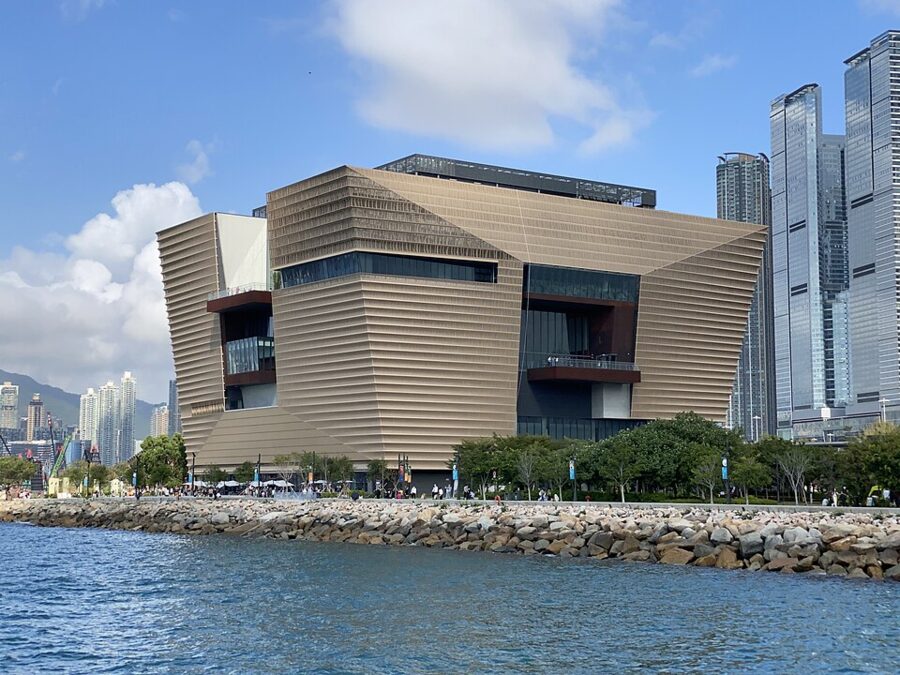
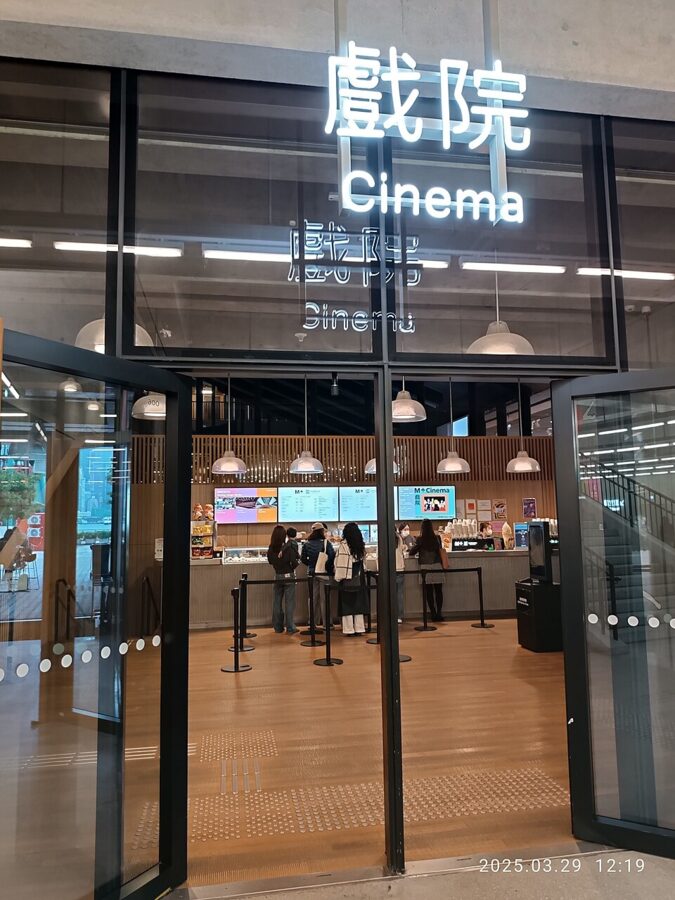
The rainy-day swap is the West Kowloon Cultural District. M+ opens 10:00 to 18:00 from Tuesday to Sunday, until 22:00 on Fridays, closed Mondays, and a standard ticket is HK$190; its Grand Stair, Mediatheque and Roof Garden are free. Next door, the Hong Kong Palace Museum is closed on Tuesdays, opens 10:00 to 18:00 on other days and until 20:00 on Fridays, Saturdays and public holidays, and charges HK$70 for the permanent galleries. For M+, leave Kowloon station by Exit C1 or D1; check the M+ visit page and the Palace Museum’s opening hours for holiday changes.

Crowds follow the holidays. Lunar New Year brings the night parade, but many small family restaurants close for the first days, and the Palace Museum closes on the first two. Mainland holiday weeks in early May and early October fill Tsim Sha Tsui and the cable car queue.
Where to stay for this plan
Stay on the MTR, close to a station on the Tsuen Wan or Island line, and the plan works from either side. Tsim Sha Tsui and Jordan put you on the Kowloon waterfront and a walk from Temple Street. Central, Sheung Wan and Wan Chai put you on the tram line and closer to the island ferries for day five. On a short trip I would sleep in Kowloon: hotels there usually cost less, and the harbour view is of the Island.
What three days cost
For one adult on weekdays, staying in Tsim Sha Tsui, the fixed costs of the three-day plan come to about HK$460. That is roughly HK$145 for day one (MTR, two tram rides and a Peak Tram return), HK$40 for day two (four MTR rides and two Star Ferry crossings) and HK$276 for day three from Central (MTR, single cable car and the two Lantau buses). Temples, markets, the Lugard Road loop and the waterfront are free.
Days four and five add little: HK$18.40 of MTR fares plus the bus to the Dragon’s Back, and HK$49.80 for a weekday return to Yung Shue Wan. Food is where budgets go wrong. Dim sum, a cha chaan teng breakfast and a plate of roast meat over rice are all cheap meals; a harbour-view bar is not.
If you have a sixth day, a day trip to Macau by ferry or over the bridge, or across the border to Shenzhen, is easy from Hong Kong; both need your passport and a check of the entry rules for it. Otherwise, spend the last evening where day two ended. The light show has gone, but the Star Ferry still leaves every few minutes, and HK$5 still buys the best seat on the harbour.