

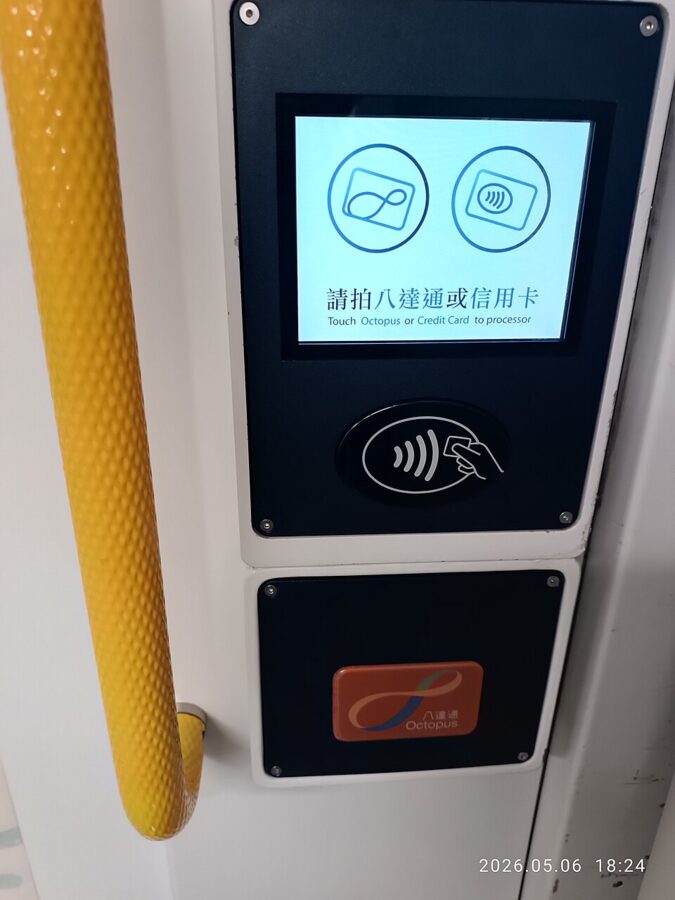
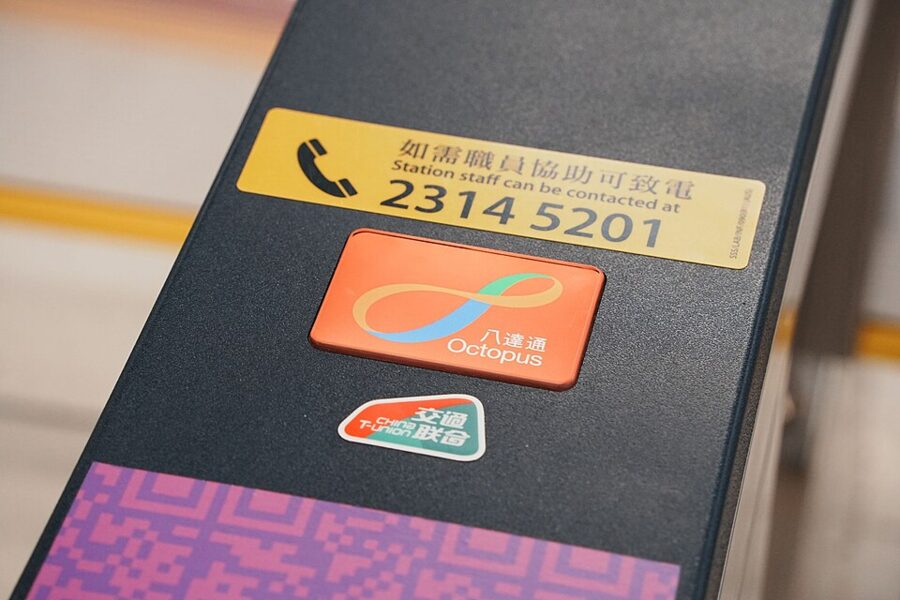
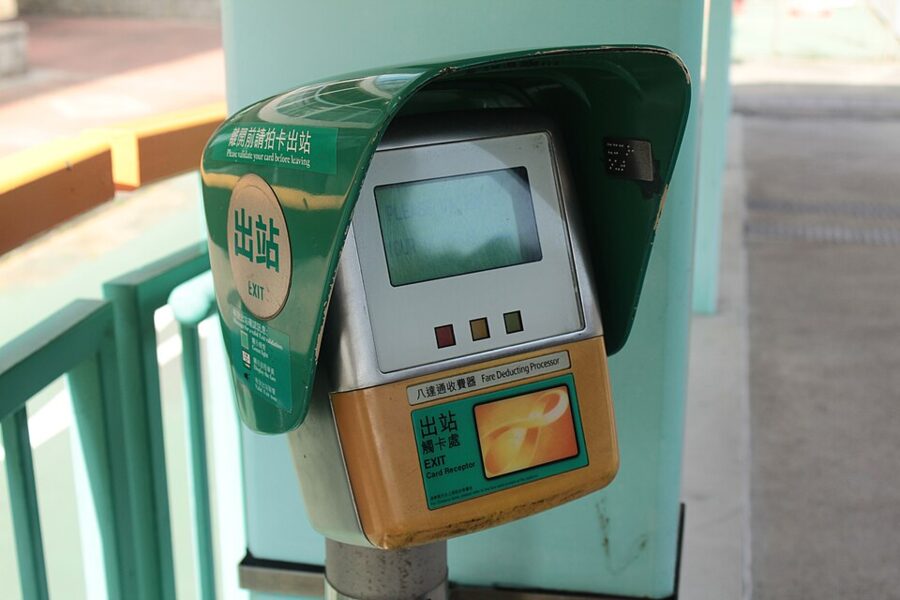
Look at the gates in any MTR station and you will find two kinds of reader. The Octopus pad (八達通) sits where it always has, and on the marked gates there is a newer one with the contactless symbol that takes a Visa, Mastercard or UnionPay card, or the phone it lives in. Both charge the same adult fare, and that decides whether you need an Octopus at all.
The short answer, as of November 2026: an adult with a contactless bank card can ride the MTR, the Airport Express, the franchised buses and the trams without an Octopus, and pay HK$10.60 from Central to Tsim Sha Tsui, exactly what an Octopus pays. A single ticket on the same trip costs HK$12.50. Get an Octopus anyway if you are travelling with children aged 3–11 or anyone 65 or over, if you will use minibuses or the Light Rail, if your bank charges a fee on every foreign transaction, or if you want the transfer discounts that only an Octopus earns.
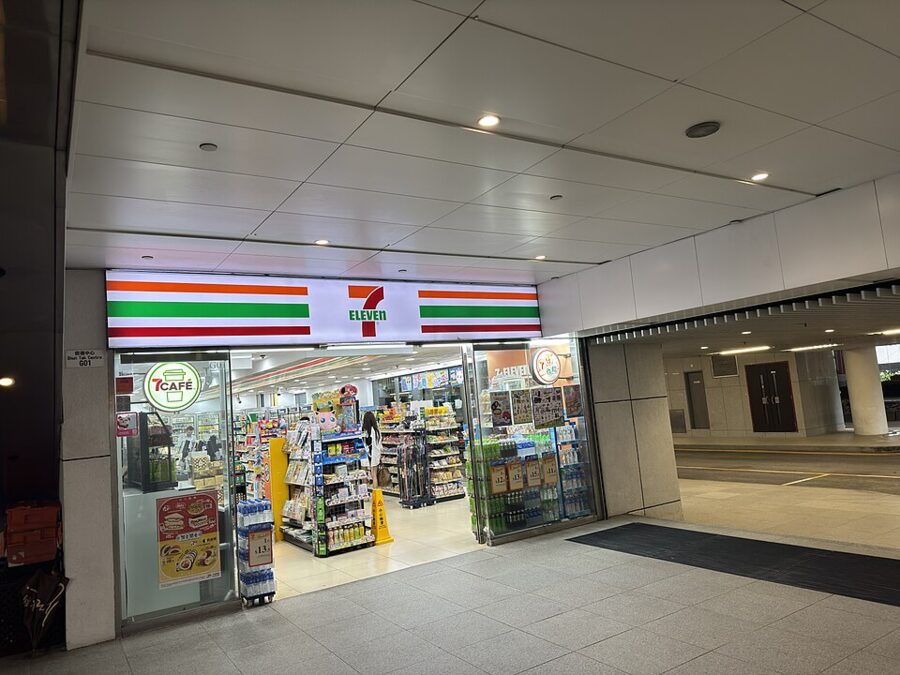
Which one: on an iPhone, add an Octopus through the Octopus for Tourists app (HK$50 refundable deposit, topped up with your own foreign card). Without an iPhone, buy the adult On-Loan Octopus at an MTR customer service centre for HK$200, which is HK$150 to spend plus a HK$50 deposit you get back. Landing late at the airport, the 7-Eleven in the arrivals hall sells the HK$42 Tourist Octopus (China T-Union) card, which comes empty.

In this article
Which Octopus to get
Four versions are sold to visitors, at these prices as of November 2026; Octopus’s choice of Octopus page has the current list.
| Version | What you pay | Money back when you leave | Where |
|---|---|---|---|
| Octopus on iPhone or Apple Watch | HK$50 deposit plus whatever you load | Deposit and balance, through the app; HK$11 fee if cancelled within 90 days | Octopus for Tourists app |
| On-Loan Octopus, adult | HK$200 (HK$150 value, HK$50 deposit) | Deposit and balance at any MTR customer service centre; HK$11 fee in the first 90 days | Most MTR customer service centres |
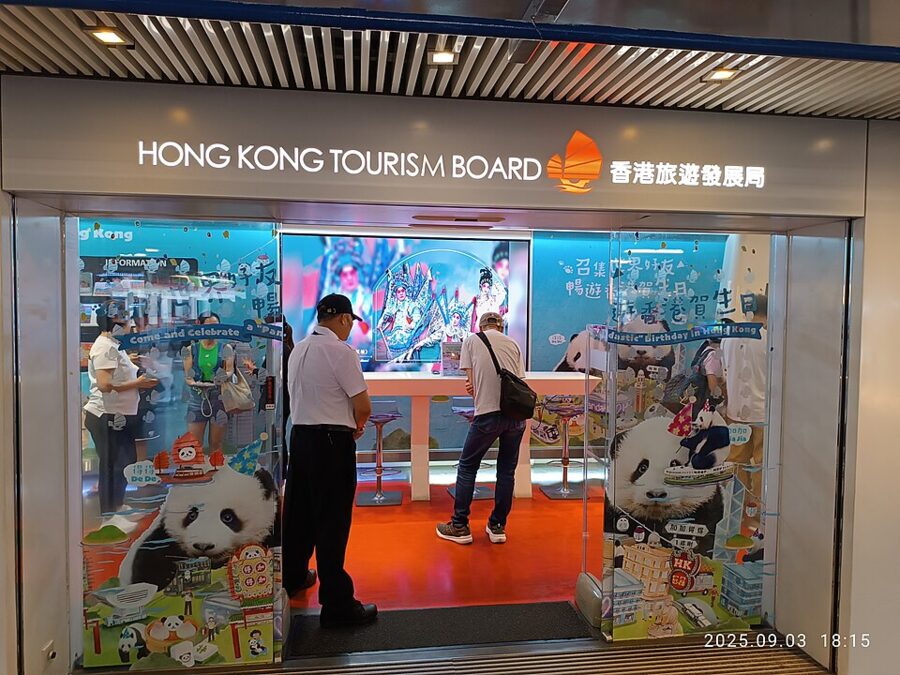
| Tourist Octopus (China T-Union) | HK$42 empty, or HK$170 with HK$128 loaded at some counters | Balance only; the HK$42 is the card’s price | 7-Eleven, Circle K, three MTR stations, Kowloon Visitor Centre |
| Tourist Octopus | HK$39 empty | Balance only | Hung Fook Tong shops |
Octopus on iPhone
This is the one I would pick. Download Octopus for Tourists from the App Store, choose “Add a New Octopus (Adult)”, and pay with a credit or debit card issued outside Hong Kong: Visa, Mastercard or UnionPay through Apple Pay, or e-CNY and Weixin Pay for mainland users. It needs an iPhone X or later, or an Apple Watch Series 3 or later. The currency you choose at setup is fixed for good, so pick the one your card is billed in.
The balance can go up to HK$3,000, and you can still add cash at any shop counter like a plastic card. Topping up in the app needs a connection, which is one more reason to sort out your mobile data before you land. Details are on the Octopus on iPhone page.
Android, Samsung and Huawei phones
Octopus on Android and Samsung’s Smart Octopus exist, but both are built for residents: they top up from a Hong Kong bank account or a Hong Kong-issued card. The exception is Huawei. A Huawei account registered in mainland China, Macau or Singapore can add a Huawei Wallet Octopus through the tourist app and top it up with UnionPay. Everyone else with Android should buy a physical card.
The physical cards
The On-Loan Octopus is the ordinary card residents carry. It is not a tourist product, which is its strength: the HK$50 deposit comes back, and it will let one fare take the balance below zero (by up to HK$50) so a gate never strands you. Child (3–11) and Elder (65 and over) versions cost HK$50 deposit plus HK$50 value and pay concession fares on the MTR, KMB and Citybus buses and Sun Ferry.
The two sold Tourist Octopus cards are souvenirs with a chip. The HK$42 China T-Union version earns its place if you are going on to Shenzhen or Macau, because it also pays for public transport in 336 mainland cities and in Macau. The HK$39 plain version is only sold at Hung Fook Tong herbal tea shops, and I would not go out of my way for it.

Where to buy one when you arrive
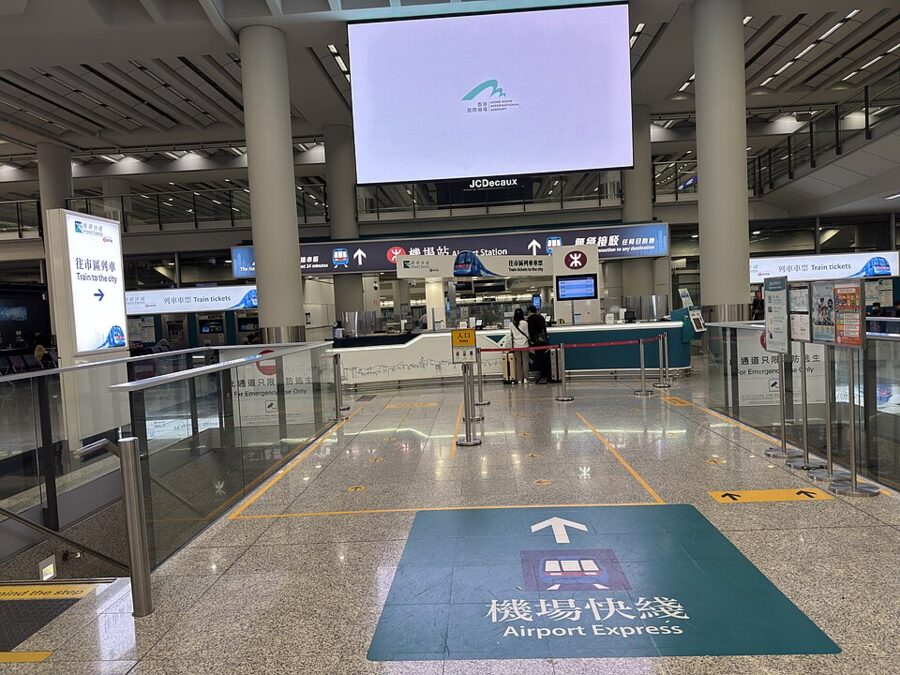
At the airport, the counter most people head for does not sell the refundable card: Airport Station is one of eleven MTR stations that do not issue the On-Loan Octopus, along with Lo Wu and Lok Ma Chau at the border.
Arriving by air, you have three choices. The 7-Eleven at Unit 5T058 in the Arrivals Meeters and Greeters Hall sells the empty HK$42 T-Union card. The MTR customer service centre at Airport Station sells the same card with HK$128 loaded, HK$170 in all, except the small centre on Platform 1. Hung Fook Tong at Shop 7T087, Departures Check-in Hall, Level 7 of Terminal 1, sells the HK$39 card, though that is upstairs from where you come out.
My advice: tap a bank card through the Airport Express gates, or let the T-Union card cover the first ride, and buy the On-Loan card at the customer service centre in Hong Kong or Kowloon station when you arrive in town.
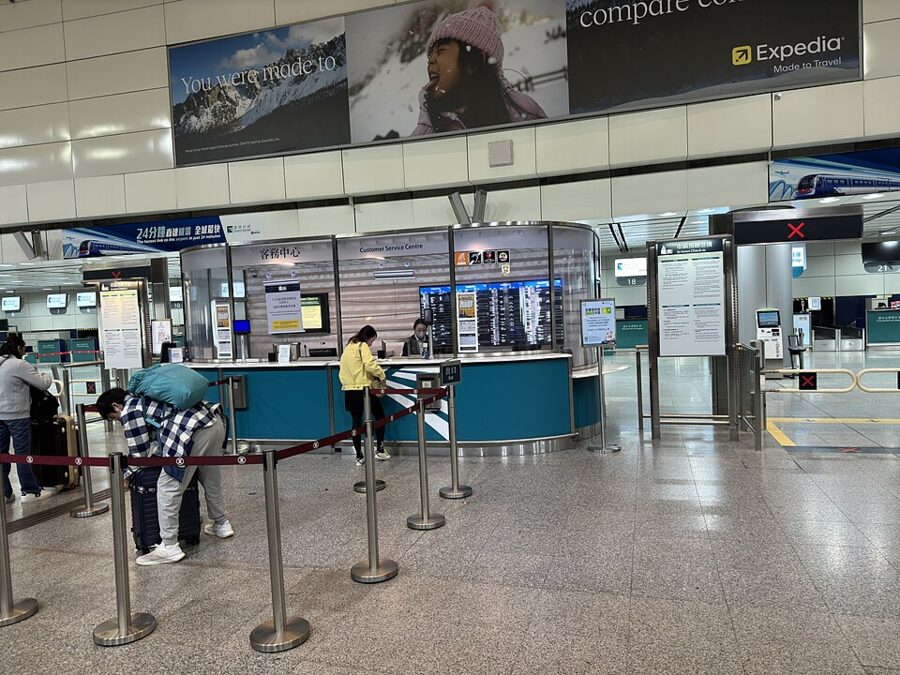

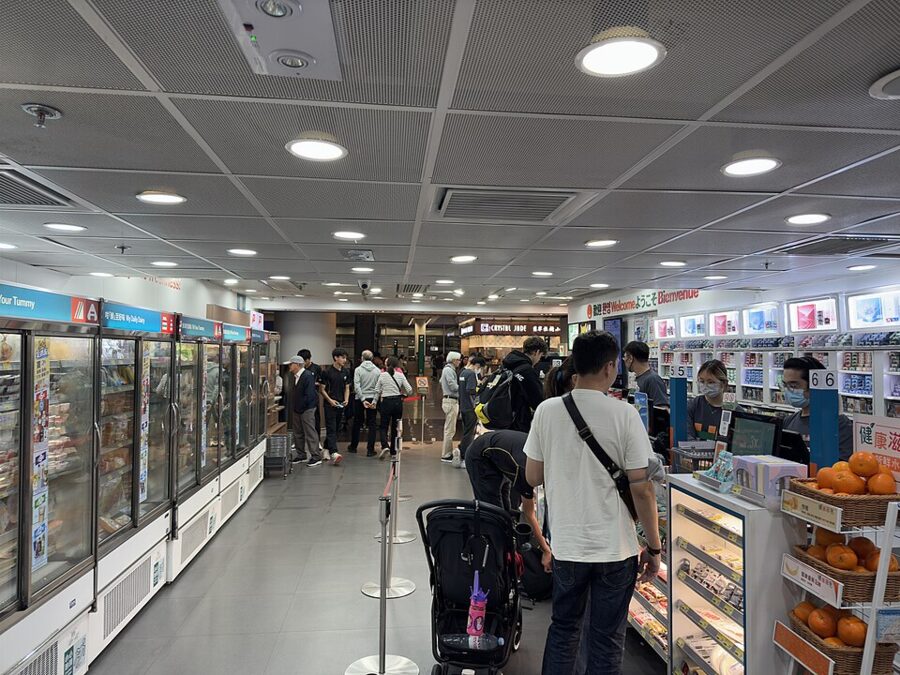

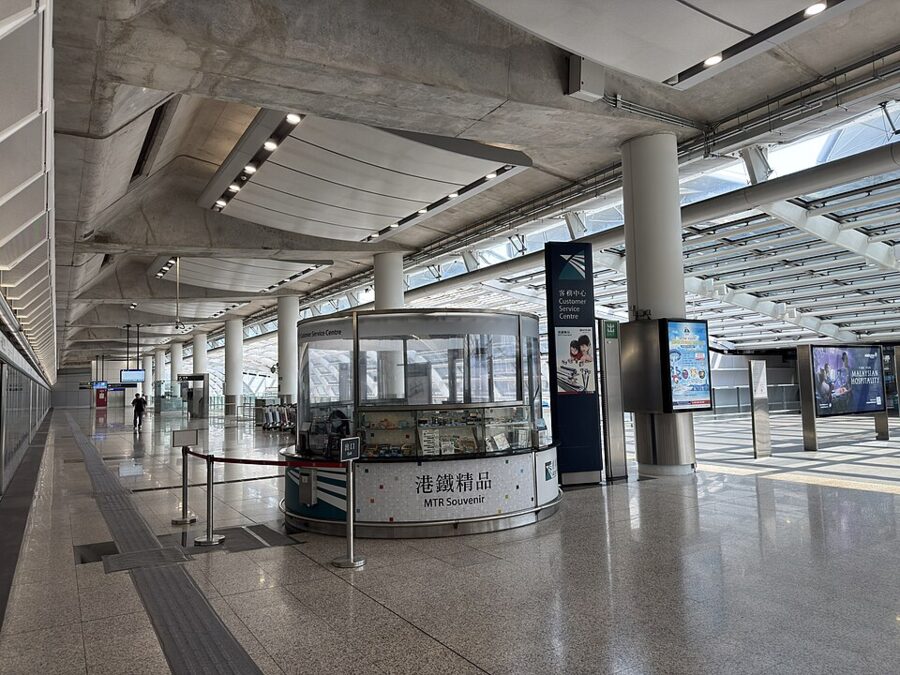

Arriving by land, the T-Union card is sold at the customer service centres in Lo Wu (羅湖) and Lok Ma Chau (落馬洲) stations, at 7-Eleven and Hung Fook Tong inside Lo Wu station, and at 7-Eleven (WEK B1-1) and Circle K (WEK B2-8) in West Kowloon Station. At the Hong Kong-Zhuhai-Macao Bridge port, 7-Eleven (Unit 308) and Circle K (Unit 502) in the Passenger Clearance Building sell it, and the Citybus ticketing office at the bus terminus sells the On-Loan card.
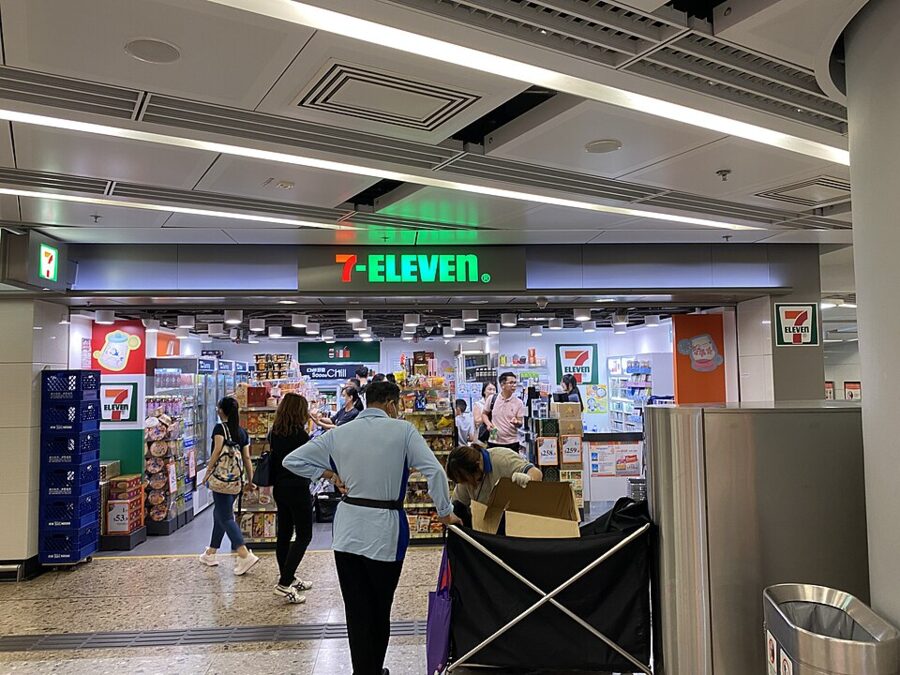

Arriving by sea, the 7-Eleven at Shop 289, 2/F, Shun Tak Centre (the Macau Ferry Terminal) and the one at Shop 48–49, Upper Ground Floor, China Hong Kong City sell the T-Union card. Sheung Wan and Tsim Sha Tsui MTR stations, a few minutes’ walk from each, sell the On-Loan card.

Topping up
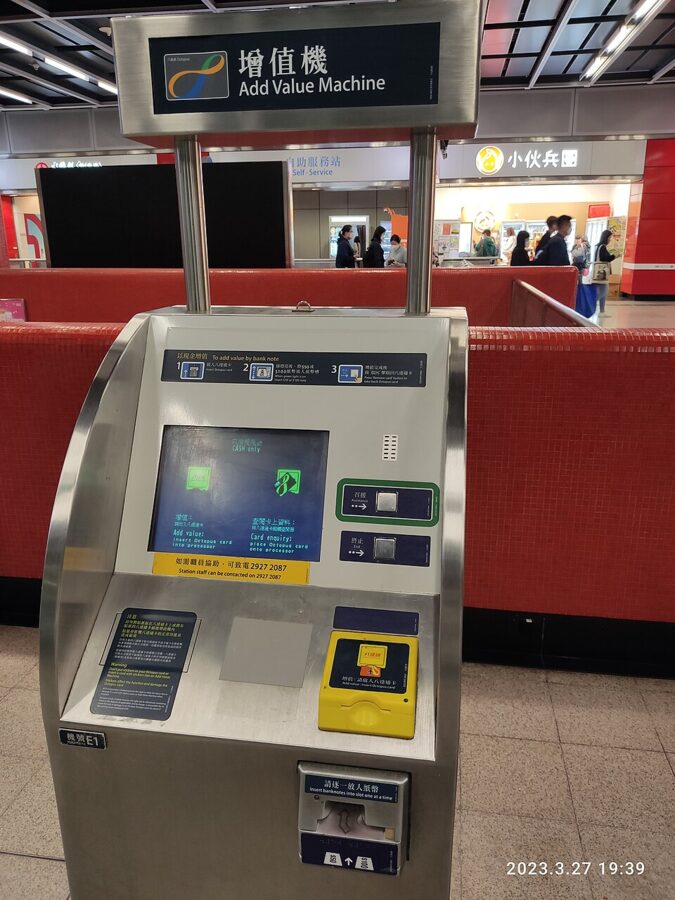
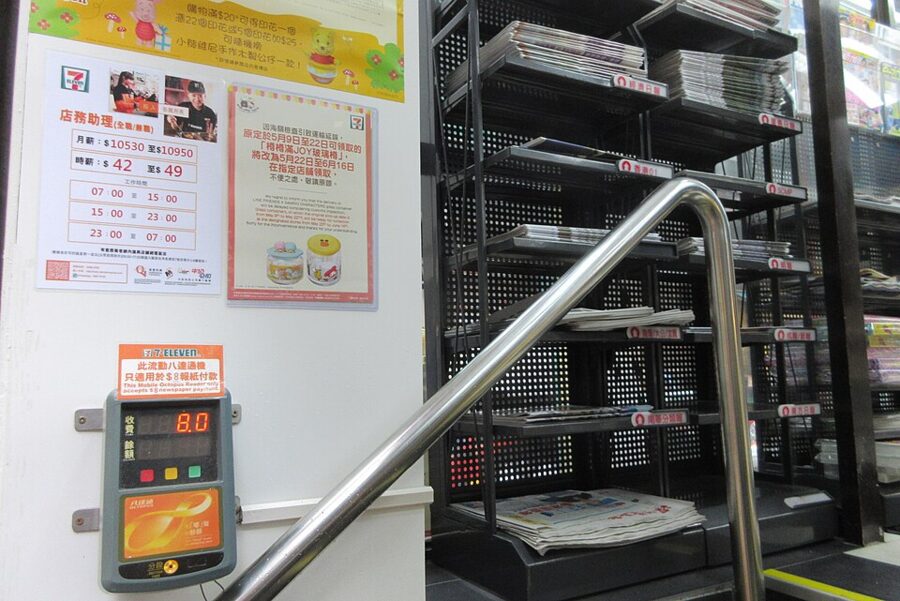
A physical card is topped up with cash. Any 7-Eleven, Circle K, Wellcome, ParknShop, McDonald’s or Starbucks counter will do it, as will the add value machines inside every MTR station. You can also pay for something in cash and ask for the change to go onto the card. The maximum balance is HK$3,000.
What you cannot do is tap a foreign credit card to reload a plastic Octopus. The Octopus app tops up cards from an Octopus Wallet funded by a Hong Kong bank, and the Weixin mini program needs an Android phone and a mainland Weixin Pay wallet paying in RMB.


What it pays for, and what it saves
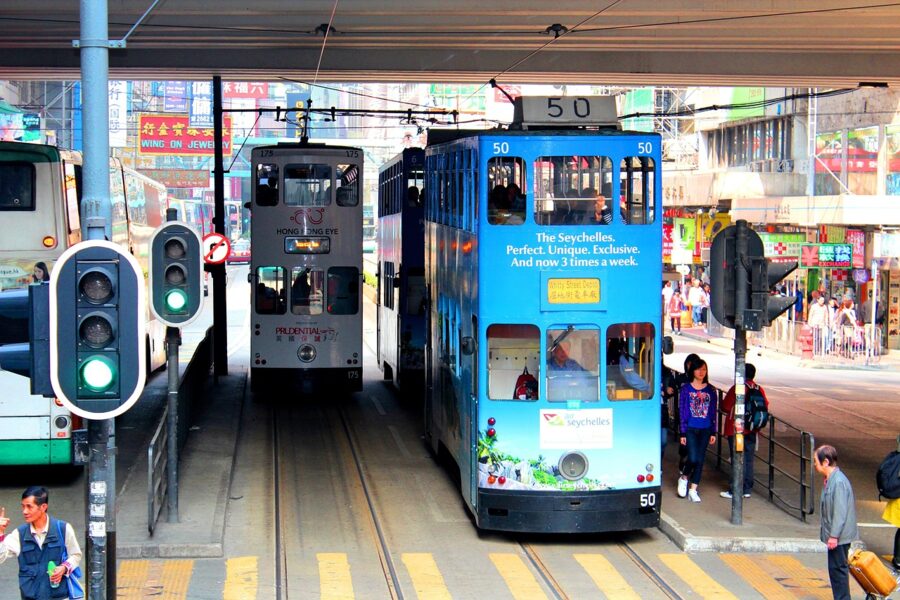
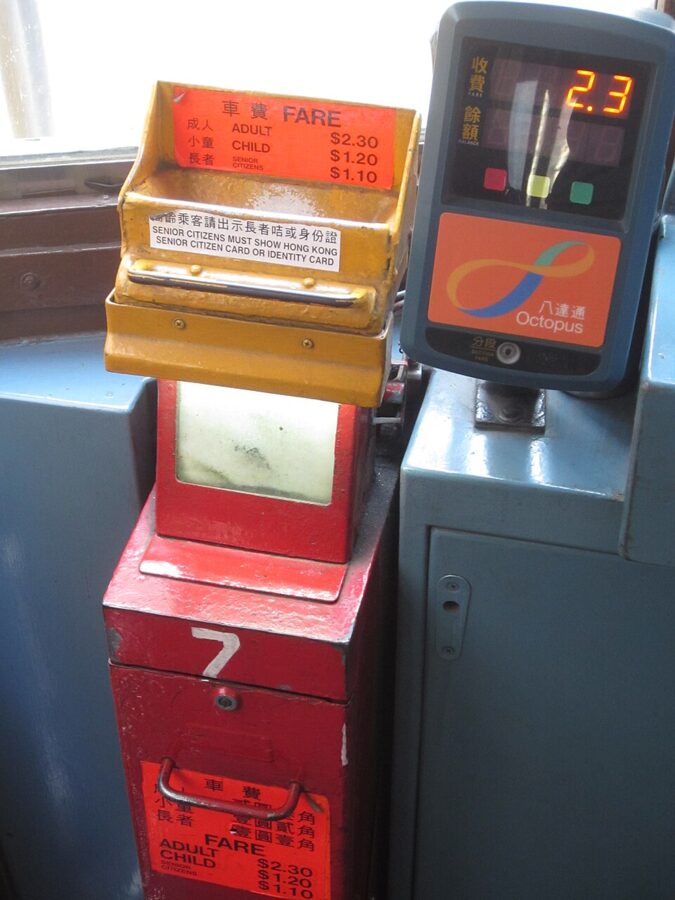
An Octopus pays on every MTR line, including the Light Rail and MTR Bus in the northwest New Territories, on every franchised bus, the trams (HK$3.30 a ride for an adult), the Star Ferry and other ferries, green minibuses and some red ones, and a great many taxis. Off the transport network it works in convenience stores, supermarkets, fast food chains, bakeries, cafés and vending machines, more than 180,000 places in all.
The fare saving is against single tickets, not against a bank card. Central to Tsim Sha Tsui is HK$10.60 on an adult Octopus and HK$12.50 on a single ticket; Admiralty to Mong Kok is HK$13.20 against HK$15.50. A contactless bank card or a QR code pays the Octopus fare, so on a plain MTR trip they come out level.
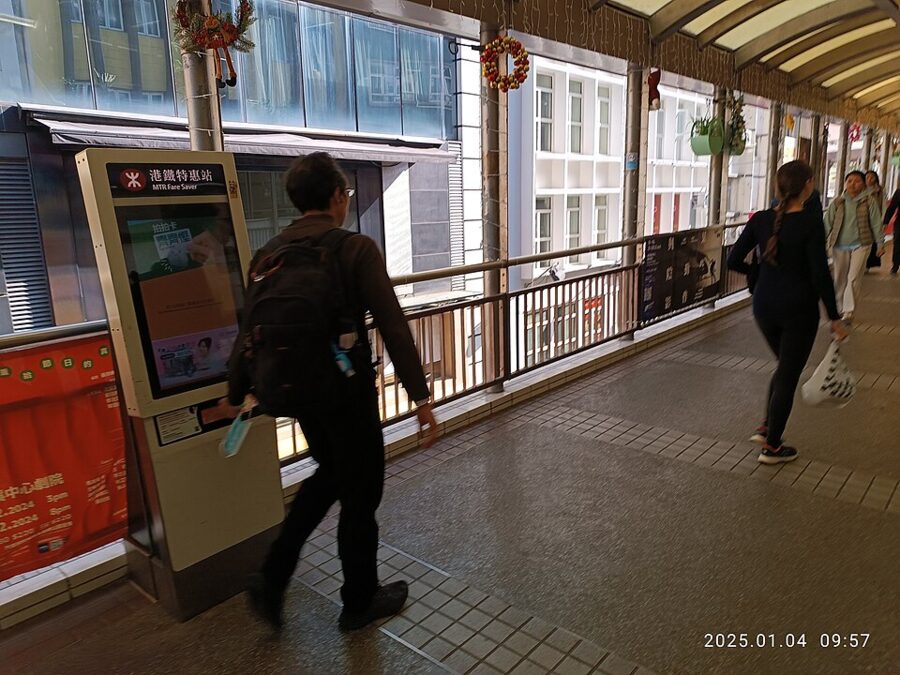
Where the Octopus pulls ahead is the small print. MTR Fare Savers take HK$2 off your next MTR ride from a named station when you tap an adult Octopus on the machine; there is one by the Central-Mid-Levels Escalators for Central, Hong Kong and Sheung Wan stations, and one at The Gateway in Harbour City for Austin and Tsim Sha Tsui. Changing between the MTR and most green minibus routes saves at least HK$0.50, the tram and KMB cross-harbour interchange discount is Octopus only, and an adult Octopus leaving a core urban station between 07:15 and 08:15 on a weekday pays 25% less. The MTR Fare Saver page lists every machine.
If your Hong Kong itinerary packs a lot of riding into one day, the MTR Tourist Day Pass (HK$75 adult, HK$35 child) gives 24 hours of unlimited MTR, Light Rail and MTR Bus travel, not the Airport Express or Lo Wu and Lok Ma Chau. Buy it with your passport at a customer service centre within 14 days of arriving. At HK$10.60 a ride, you need eight Central to Tsim Sha Tsui trips in 24 hours before it pays.

Bank cards, phones and QR codes: where they work
MTR. Visa, Mastercard and UnionPay credit, debit and prepaid cards work at the gates marked with the contactless symbol across the heavy rail network, Airport Express included; UnionPay debit cards do not. Phones and watches work too, but leave on the same card or device you entered with. The MTR adds up the day’s rides and takes one charge; the MTR contactless page has the rules.
The limits: adult fare only, no concessions or fare savers, Tsim Sha Tsui to East Tsim Sha Tsui charged as two trips, and nothing on the Light Rail or MTR Bus. Your own bank may add a foreign transaction fee to each daily charge.
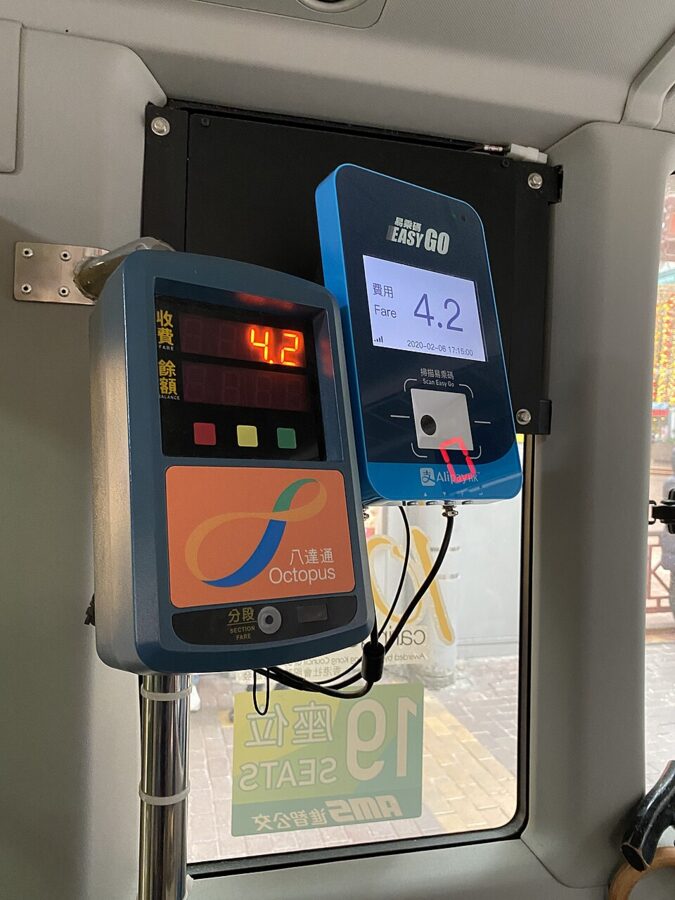
QR codes on the MTR. AlipayHK EasyGo, Alipay Transit QR Code, the UnionPay app’s MTR Transit QR Code and WeChat’s Transit QR Code all open the gates, Airport Express included. Unlike a bank card they offer child and elder fares, but you must choose the passenger type before you enter, and it cannot be changed mid-journey.
Buses. KMB and Long Win buses take contactless bank cards, phone wallets and QR codes across the whole fleet, and KMB’s bus-to-bus interchange discounts work as long as you use the same card for both legs. Citybus takes them too, and so do the A-route airport buses run by Citybus and Long Win.
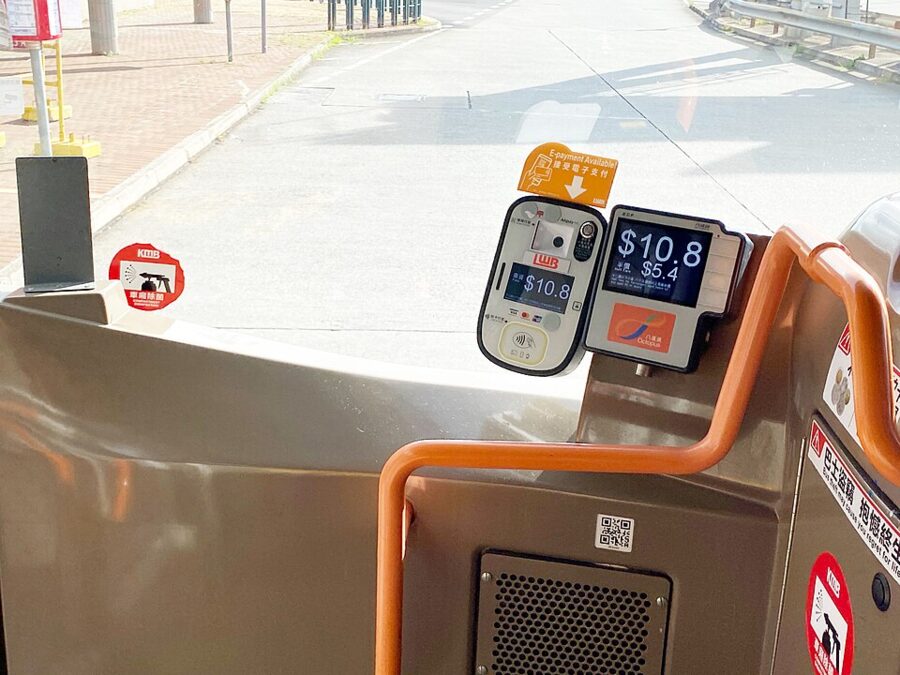

Trams. Hong Kong Tramways takes Visa, Mastercard, UnionPay, JCB and American Express cards, the phone wallets and the main transit QR codes at the front exit.
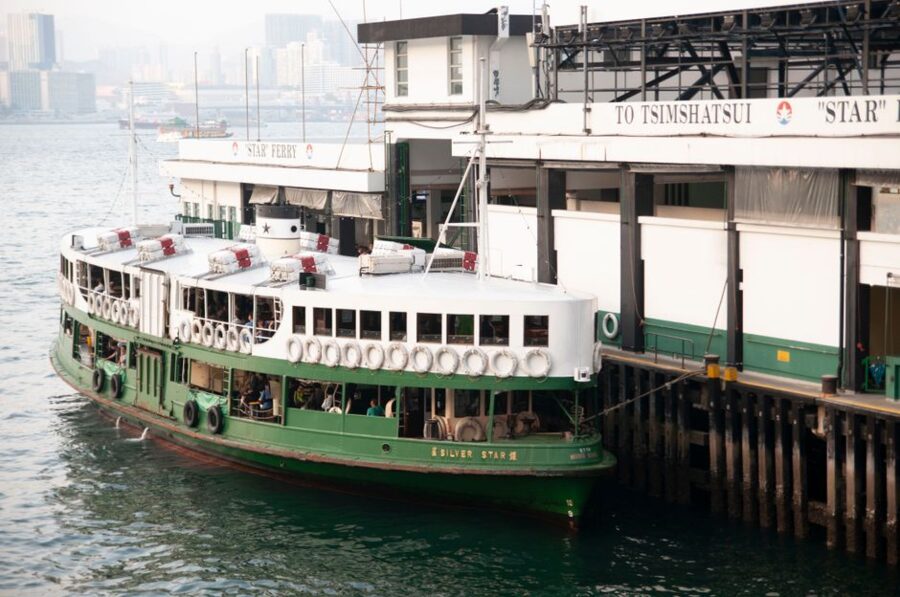
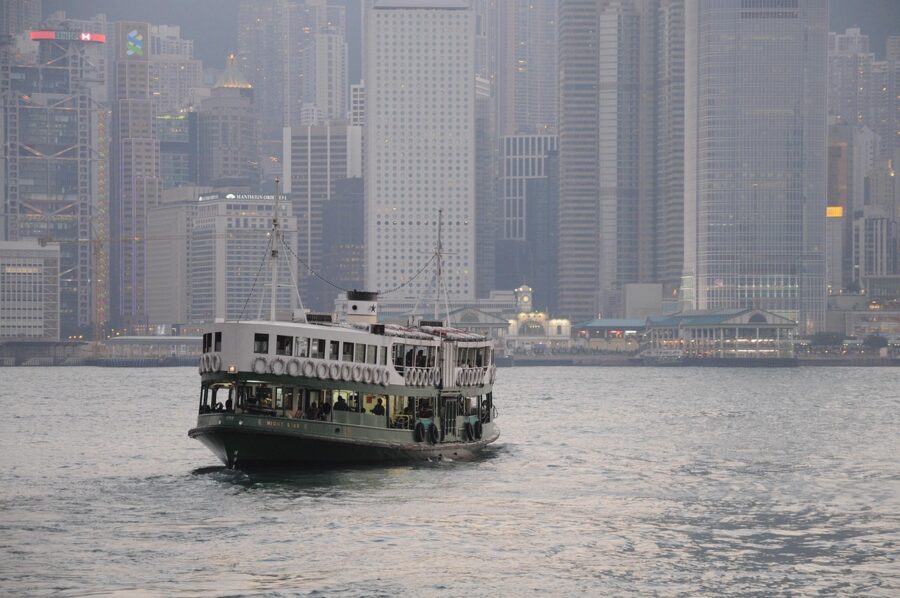
Star Ferry. An Octopus goes straight through the gate. Bank cards and QR codes (WeChat Pay, Alipay, AlipayHK, UnionPay QuickPass) only work at the self-service ticket machines, which print a ticket per passenger.
Minibuses. This is where an Octopus earns its keep. Green minibuses take an Octopus or exact cash; some routes have added QR readers, including more that took on WeChat Pay in 2026, but a bank card rarely gets you on. Red minibuses are a mix, so look for the Octopus reader and keep coins.
Taxis. Since 1 April 2026 every Hong Kong taxi has had to offer at least one electronic payment method, and an Octopus reader by the meter is a common sight.


Getting your money back when you leave
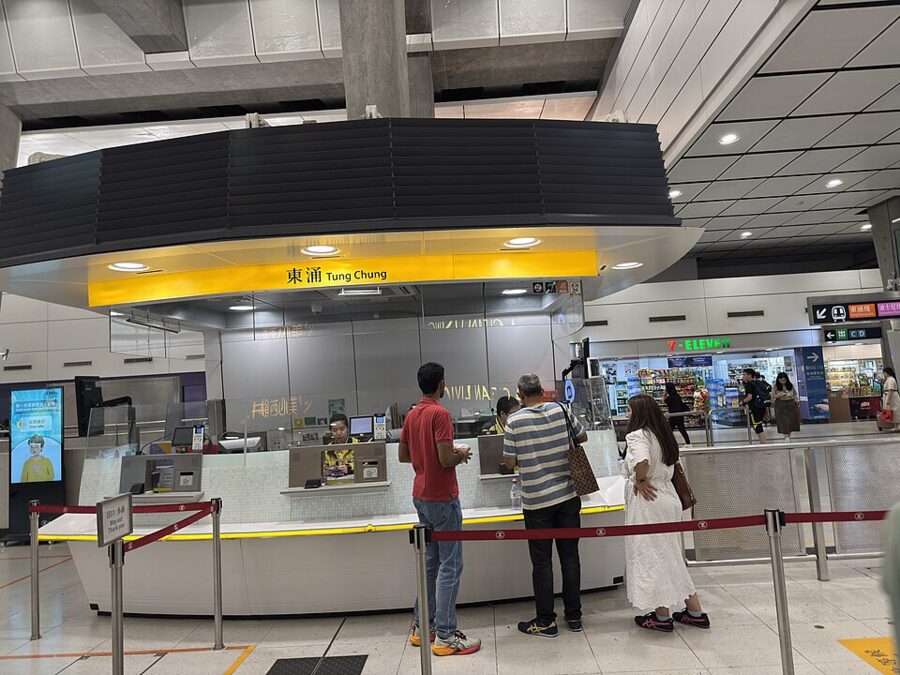
Return a physical card at any MTR customer service centre. Under HK$1,000 is refunded on the spot, in cash or onto another Octopus. HK$1,000 or more goes back to Octopus Cards Limited and is paid to another Octopus or a Hong Kong bank account within nine working days, no use on the way to the gate, so keep the balance lower.
An On-Loan card returns the deposit and the balance, less a handling fee of HK$11 or 1% of the balance, whichever is higher, if any of three things apply: you return it within 90 days of issue, it has made five payments or fewer, or it holds more than HK$1,000. Most visitors hit the 90-day rule, so count on losing HK$11. A bent, cut or stickered card costs HK$30.
The sold Tourist Octopus cards refund their balance but not their price, and stop working once refunded. Octopus on iPhone is refunded in the app under Card Setting, then Refund Card, to the card you topped up with, and takes six to eight weeks; it too loses HK$11 inside 90 days. The Octopus refund page covers every case.

Macau and the mainland
Macau: of the visitor cards, only the T-Union Tourist Octopus pays for public transport in Macau, on readers with the China T-Union logo. Getting there: Hong Kong to Macau.
Mainland China: the same card works on public transport in 336 mainland cities at an exchange rate set at your last top-up and valid for 365 days, so add value in Hong Kong before crossing to Shenzhen or beyond.
On your last day, ride out to the airport on the card, find the MTR customer service centre on Level 5 of Terminal 1 and hand it over. The HK$50 deposit comes back as HK$39 after the 90-day fee, plus whatever was left on the card, in time for one last coffee before security.