

HK$4,500 is the going rate for an Open Water diver course in Hong Kong, and for that you get about 30 hours of work: theory at home, five pool sessions and four dives in the sea off Sai Kung. Most schools fit it into two weekends. The card that comes out of it lets you rent gear and dive to 18 metres anywhere in the world.
Published fees at the schools teaching now run from HK$3,999 a head (two people booking together at Diving Adventure) to HK$5,600 (Splash Hong Kong, with eLearning, gear and the card all included). SSI’s version costs HK$4,380 at Blue Point Diving. The best months to book are May and June, or October, when the water sits around 25–27°C and the typhoon peak has either not started or has passed. You need to be 10 or older, able to swim 200 metres and tread water for 10 minutes, and able to answer “no” to every question on a diving medical form, or get a doctor to sign it.

In this article
What the Open Water course involves
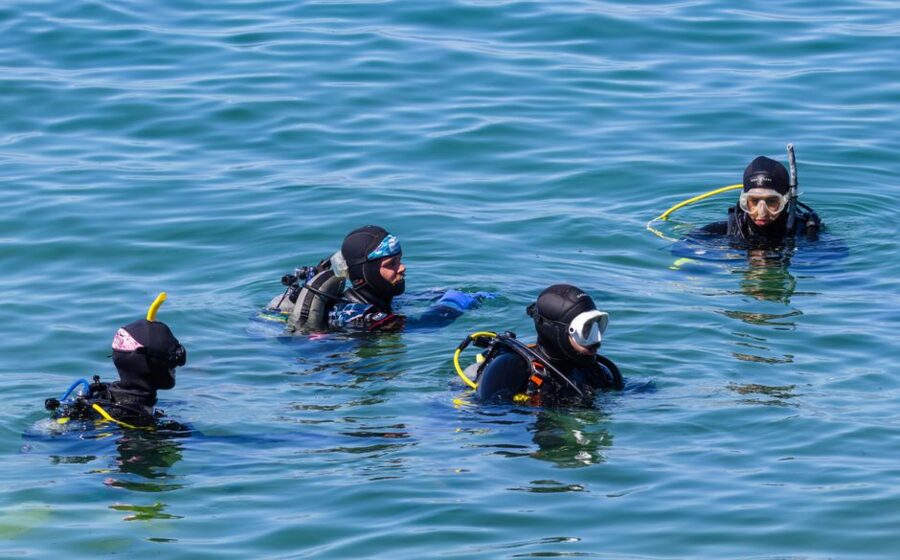
The course has three parts, and the schools here run them in the same order. Theory comes first, either as PADI or SSI eLearning on your phone or as a classroom session. Then the pool: Diving Adventure schedules five pool sessions adding up to six to eight hours, at the pool of King George V School in Ho Man Tin or the Chinese YMCA’s Wu Kwai Sha Youth Village in Ma On Shan. Last come four open water dives, two a day over two days, almost always in the Sai Kung area.
Splash Hong Kong’s usual pattern is pool on Saturdays and sea on Sundays across two weekends, and weekday courses can be arranged. Diving Adventure needs at least two students to open a class and wants the whole course finished within 12 months of your first session. If you fall behind, extra pool or sea sessions are free at Splash and charged at the published rate at Diving Adventure, so read that line before you choose.
The swim test is not a race. Diving Adventure asks for 200 metres of unassisted swimming, or 300 metres with mask, snorkel and fins, plus 10 minutes floating or treading water without aids. Splash keeps swim coaches on its team for people who cannot yet manage it, and Diving Adventure sells a three-hour pool “preschool” for HK$800 for nervous swimmers.
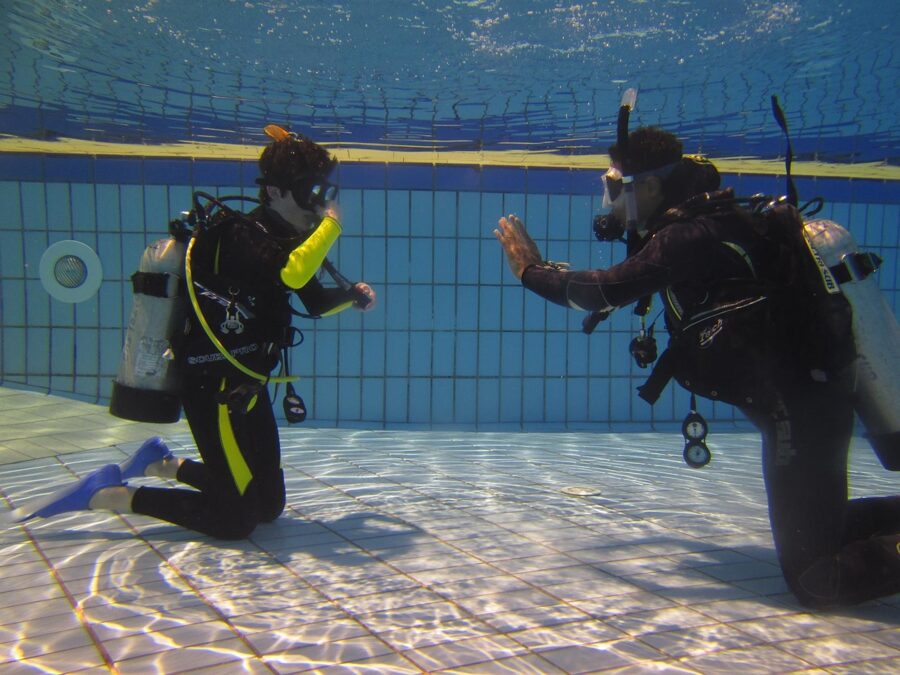
For many beginners the hardest skill is taking the mask off under water, breathing for a minute without it, then putting it back and clearing it. In a Hong Kong winter, with the sea at 17°C, that minute feels longer. If it stalls you, ask for an extra pool session before the sea weekend rather than after it.
Short on time? The PADI Scuba Diver course fits into one weekend, and it certifies you to 12 metres, and only with a dive professional alongside. Splash charges HK$4,300 for it, which is HK$1,300 less than its full course. I would only take it if a holiday is weeks away, because upgrading later means another round of fees.
PADI, SSI and the rest
PADI dominates: Splash and Diving Adventure teach only PADI, and Diving Adventure is a PADI Five Star Instructor Development Centre that trains instructors as well as beginners. SSI is the second system, led here by Blue Point Diving, an SSI Diamond Instructor Training Center since 2021. Unity Scuba Diving in Tsuen Wan teaches both PADI and SDI. NAUI and CMAS courses also run in Hong Kong; the Hong Kong China Underwater Association (中國香港潛水總會), the local CMAS body, keeps registers of instructors from all of these systems.
For a beginner, the agency hardly matters. All of them teach the same skills to the same 18-metre limit, and dive operators accept any of them: Diving Adventure’s own terms list PADI, BSAC, NAUI, SSI, SDI and CMAS cards as valid for a fun dive. What matters is class size, how much pool time you get and whether your instructor speaks your language well.
The dive centres teaching now
| Centre | System | Open Water fee | Worth knowing |
|---|---|---|---|
| Diving Adventure 潛水歷險會, Causeway Bay | PADI | HK$4,500; HK$4,199 early bird; HK$3,999 each for two | +HK$300 for a class not taught in Cantonese; prescription mask and computer extra |
| Splash Hong Kong, Sai Kung | PADI | HK$5,600 | eLearning, gear and card included; usually four students or fewer in the sea |
| Blue Point Diving | SSI | HK$4,380 | Runs its own training centre in Bohol, Philippines |
| Unity Scuba Diving, Tsuen Wan | PADI, SDI | On enquiry | Sea training over two days; small groups |
Diving Adventure is the big one: founded in 1998, it now fills a 5,000 sq ft floor at 5/F, iHome Centre, 369 Lockhart Road, with a shop, classrooms and a fleet of its own boats. The shop opens 11:00–21:00 Monday to Saturday and 12:00–19:00 on Sundays and public holidays. Classes are taught in Cantonese by default, which is why a class in English or Mandarin costs HK$300 more.
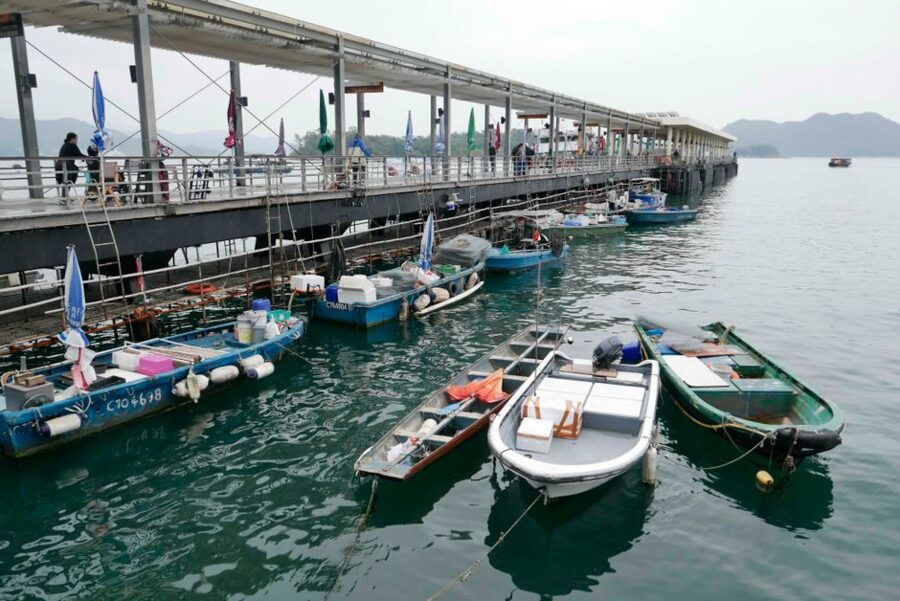
Splash Hong Kong works out of 1/F, 10C Po Tung Road in Sai Kung town itself, close to where the boats leave. Its fee is the highest of the four, but the price really is the price: eLearning, gear and the PADI card are all in it, and its classes are taught by English-speaking instructors. If English is your working language and you live on the Sai Kung side, I would start there.

Blue Point Diving is the SSI choice, and it takes course enquiries by WhatsApp through its website. Unity Scuba Diving in Tsuen Wan does not publish a fee, so ask for it in writing along with the list of what is included. Whoever you pick, get the dates and the cancellation terms in writing: Diving Adventure, for one, gives no refund once a course has started, and before that offers a credit or a new date rather than cash as of right.
Where you dive: Sai Kung and the marine parks
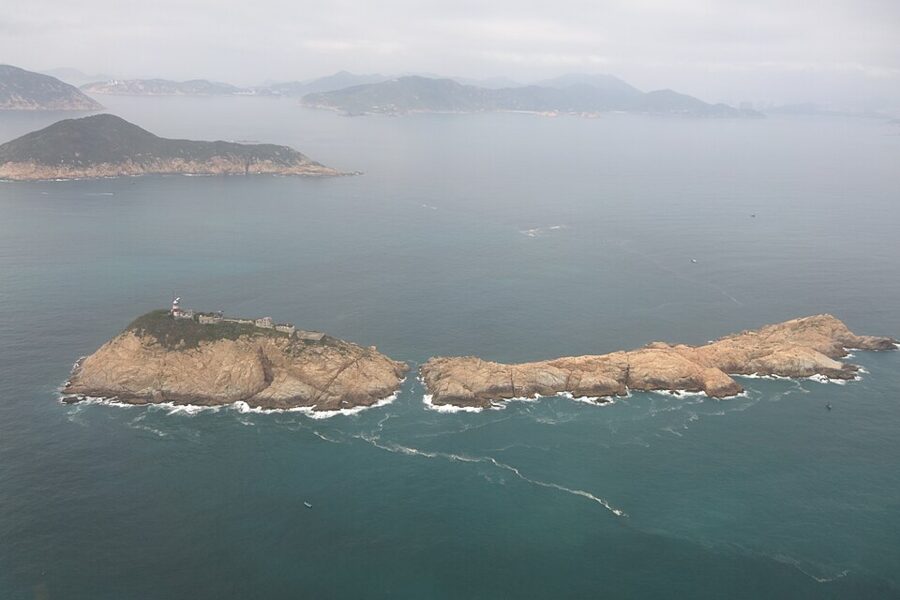
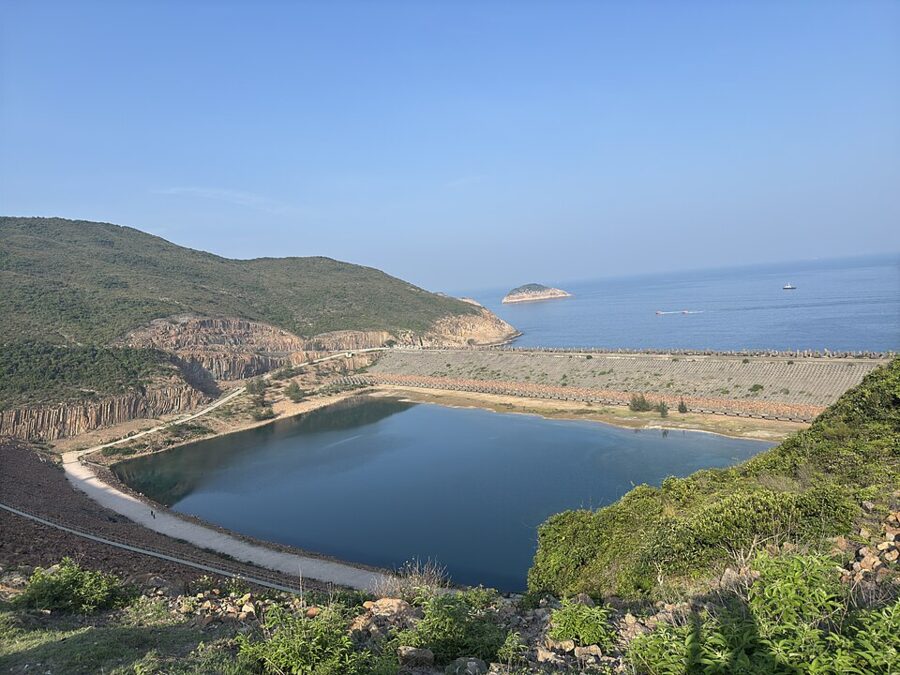
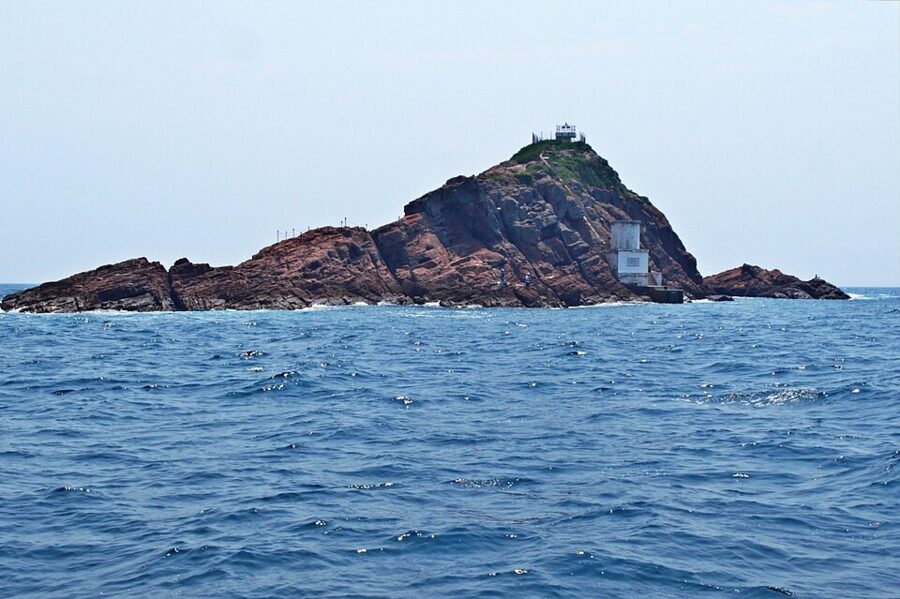
Almost all diving in Hong Kong happens on the east side, in Sai Kung’s bays and islands and out into Mirs Bay. The west is silted up by the Pearl River and busy with shipping, so schools avoid it. Diving Adventure’s regular sites show the range: Hoi Ha Wan, Crescent Island, Shek Ngau Chau (石牛洲, also called Breaker Reef), Pak Lap, the Ung Kong islands, the East Dam of High Island Reservoir, Sharp Island and Tung Ping Chau.
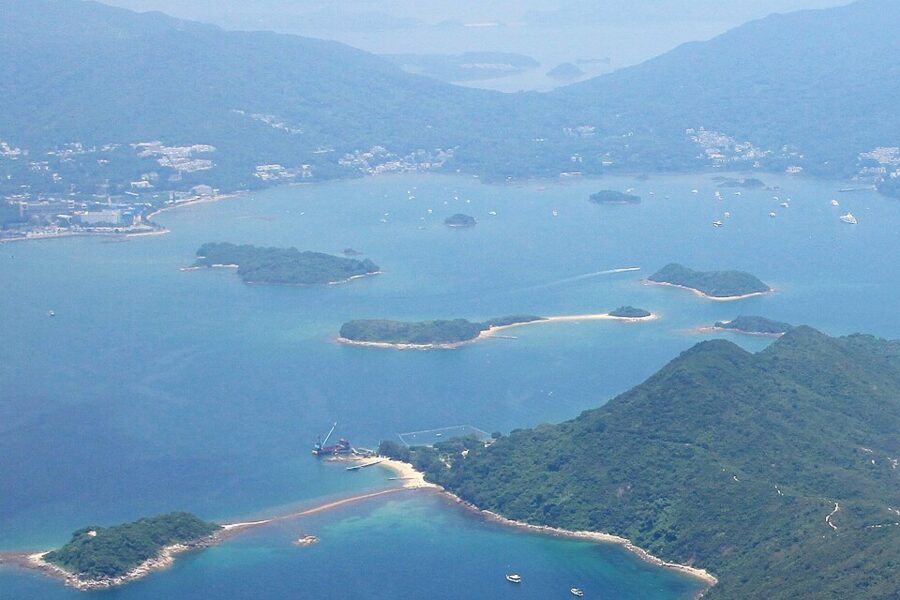

Training dives go to sheltered, sandy spots rather than the best coral. That is deliberate: the Agriculture, Fisheries and Conservation Department’s code for divers asks schools to avoid training on coral sites, and tells anyone who cannot yet control their buoyancy to keep off coral shallower than two metres.
Hoi Ha Wan and Tung Ping Chau
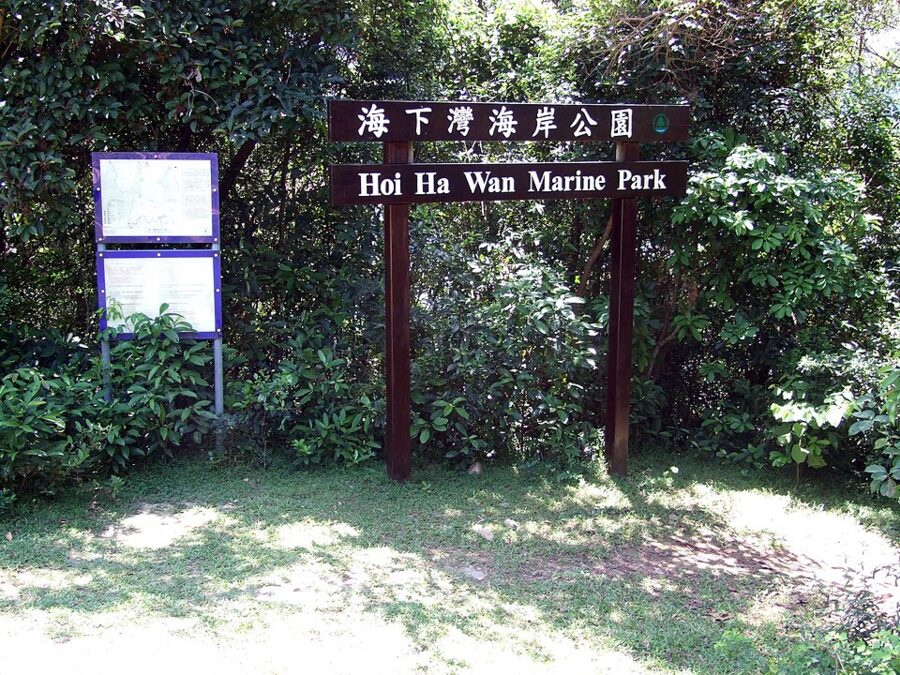
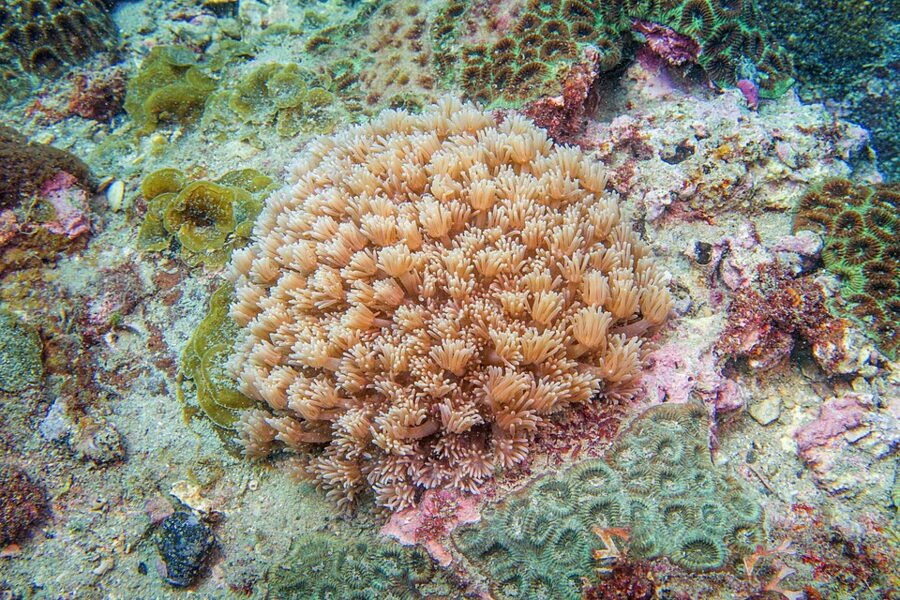
Hoi Ha Wan Marine Park (海下灣海岸公園) is the one to aim for once you have the card. The bay, designated in July 1996, covers about 260 hectares on the north side of Sai Kung West Country Park, and the department has recorded 64 of Hong Kong’s more than 80 hard coral species there, along with more than 120 kinds of coral-associated fish. Its wrecks, including the remains of a reclamation barge, are a regular stop on dive centres’ camp weekends.
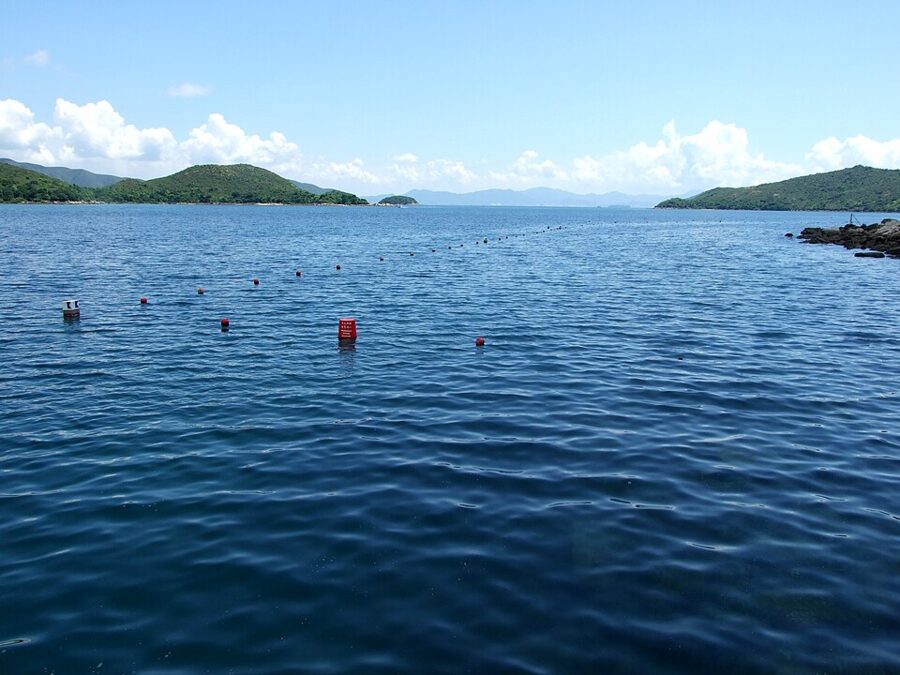

Non-divers can see the corals from the public pier at low tide. The department’s Hoi Ha Visitor Centre runs free guided walks on Saturdays, Sundays and public holidays at 10:30 and 14:00, with 15 of the 25 places bookable online and the rest given out at the counter on the day.

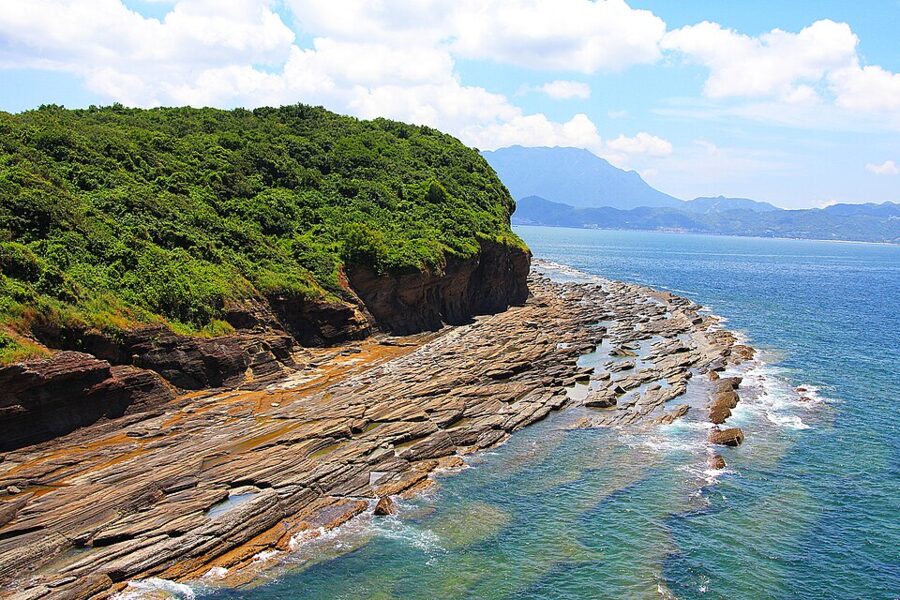
Tung Ping Chau Marine Park (東平洲), out in Mirs Bay near the boundary with Shenzhen, is the other coral site the department rates highest: 65 hard coral species and over 130 reef fish. It is a long boat ride, so it turns up on organised weekend trips rather than ordinary Sunday dives. Splash, for one, runs camp-and-dive weekends in May, June and September that take in Hoi Ha Wan’s wrecks, Tung Ping Chau and Breaker Reef.

What you will see
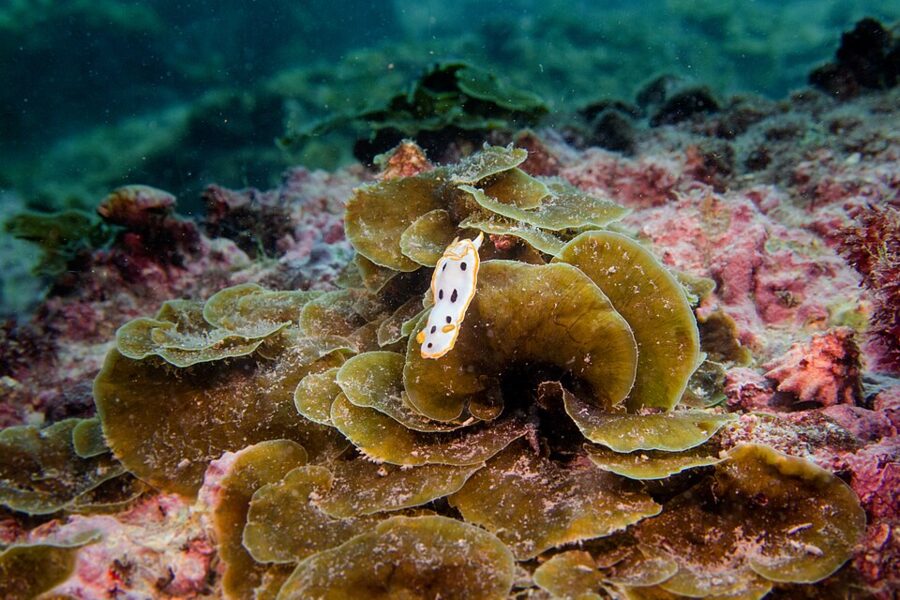
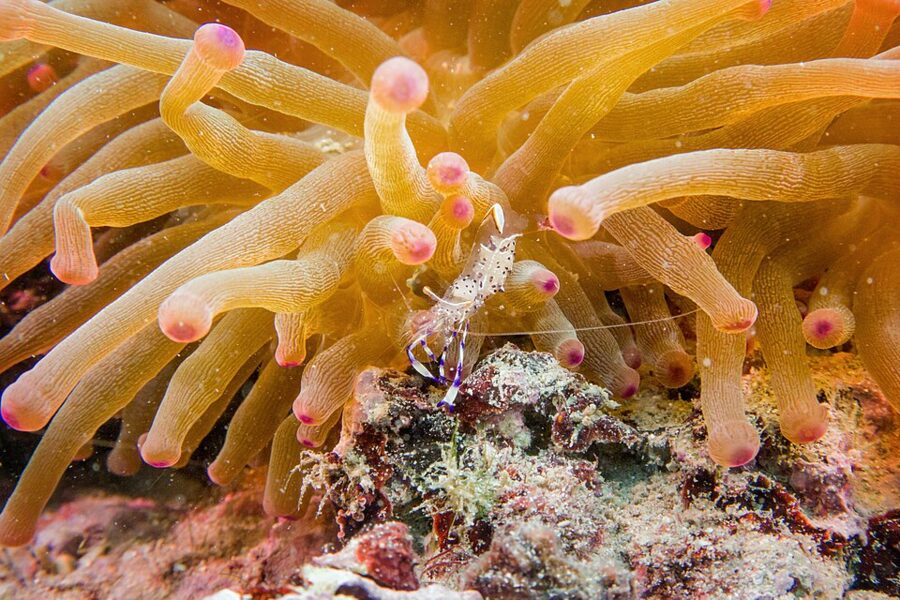
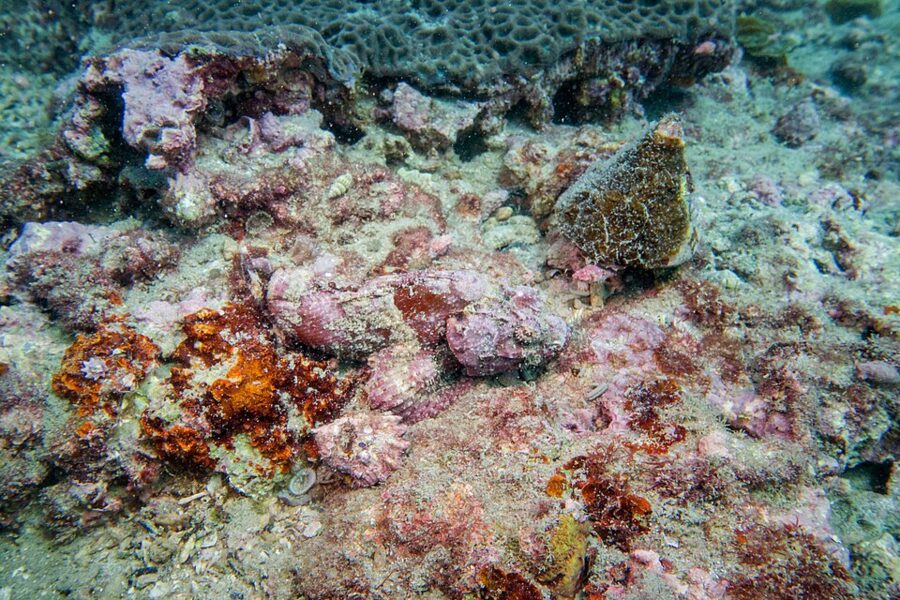
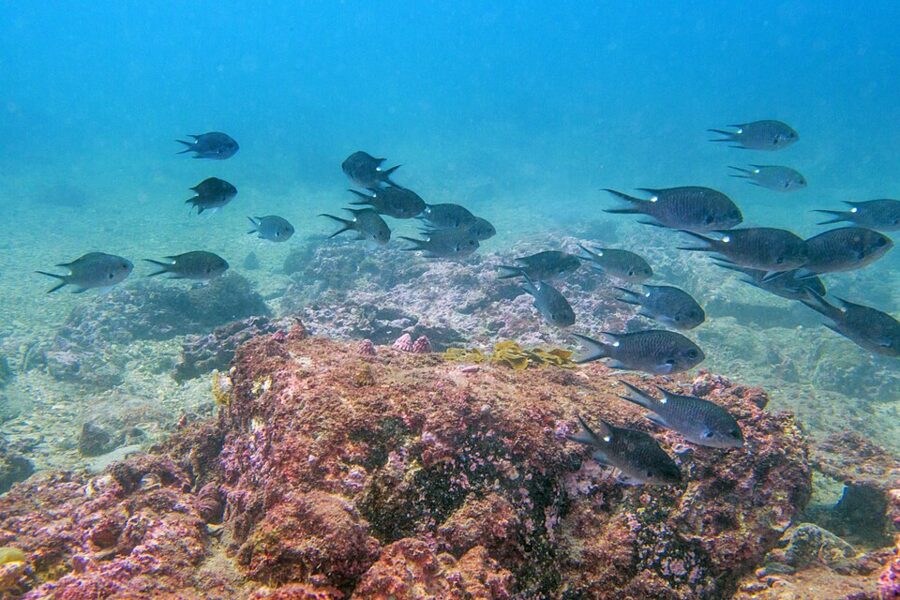
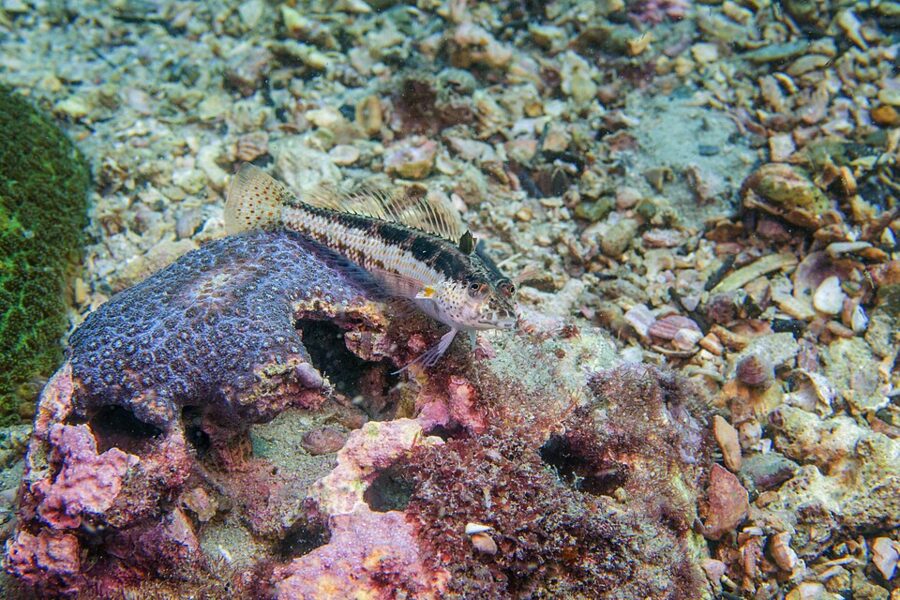
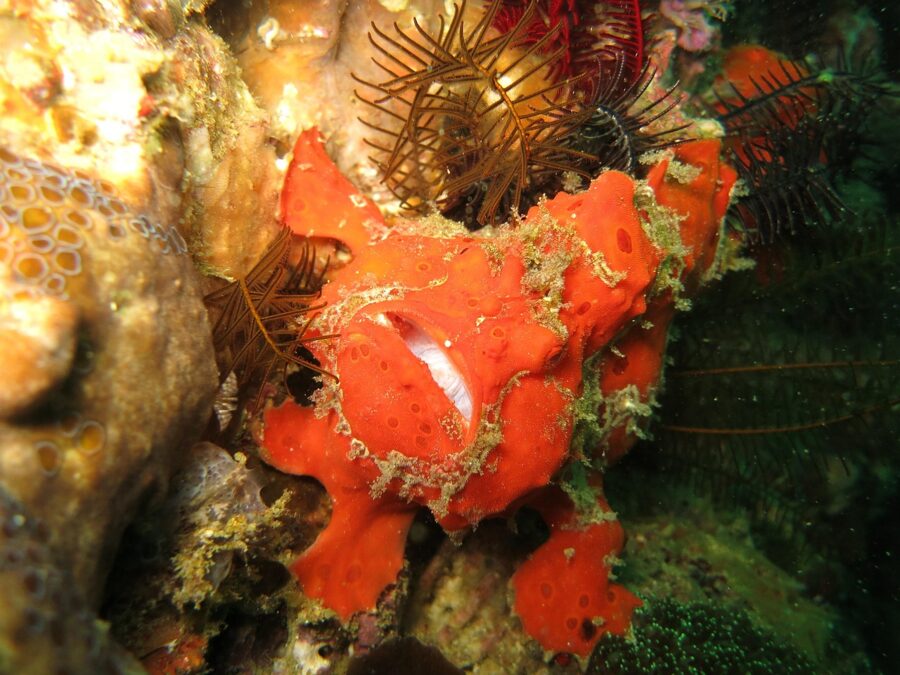
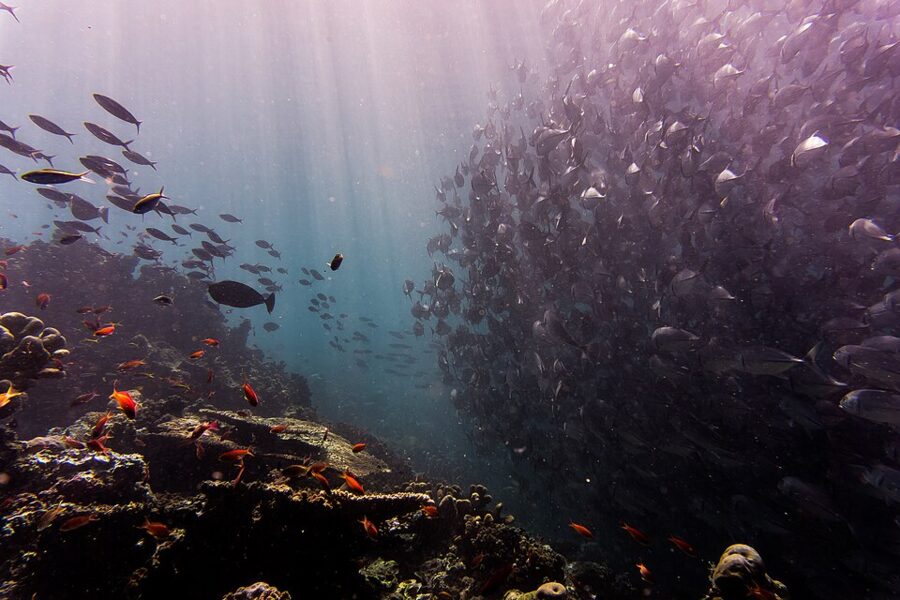
Hong Kong is a macro destination: nudibranchs, clownfish in their anemones, shrimps, gobies, scorpionfish and the odd seahorse. Big fish are scarce after decades of overfishing. Divers who enjoy it here are the ones who slow down and look into every crack.


Water temperature and visibility by season
The Hong Kong Observatory measures sea surface temperature at Waglan Island, the open-sea station off the south-east corner of Hong Kong Island. Its 1991–2020 monthly means are the best guide to what you will feel:
| Month | Mean sea surface temperature | Month | Mean sea surface temperature |
|---|---|---|---|
| January | 17.8°C | July | 26.8°C |
| February | 17.1°C | August | 27.0°C |
| March | 18.5°C | September | 27.4°C |
| April | 21.5°C | October | 26.8°C |
| May | 25.0°C | November | 23.7°C |
| June | 26.8°C | December | 20.2°C |

From January to March you need a semi-dry suit or a drysuit, or at least a well-fitting 5 mm wetsuit with a hood and vest. In summer a 3 mm suit is plenty.
Visibility is the trade-off. Unity Scuba Diving puts the average at three to five metres, with ten metres or more on a good day. The seabed is fine silt that any careless fin stirs up, summer algae can turn the water green, and winter brings the clearest water and the coldest. Most dive boats run from early April to early December; in winter only a few go out, with small groups.

The rules: marine parks, medical forms and the weather
Diving in Hong Kong’s marine parks needs no permit; the department describes them as freely accessed. The Marine Parks and Marine Reserves Regulation bans collecting or hurting any animal or plant, carrying a speargun or any other fishing device, boats doing more than 10 knots, and mooring or anchoring without permission. The penalty is a fine of up to HK$25,000 and a year in prison, so leave the shells where they are.
The one place you cannot dive at all is Cape D’Aguilar Marine Reserve at the south-east tip of Hong Kong Island. Swimming, diving and boating are all banned there except for scientific work.
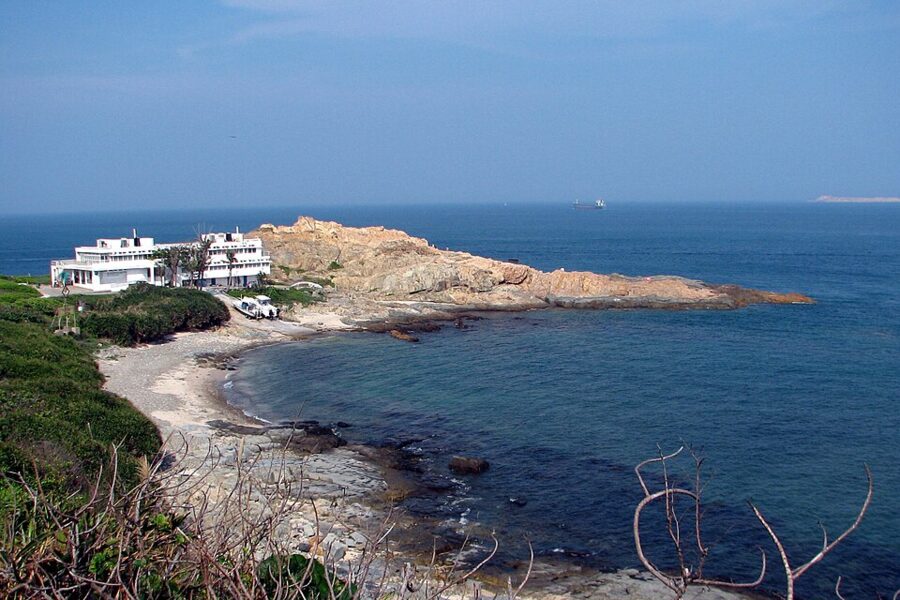
Medical fitness is a form, not an exam. Before any in-water session you fill in the diver medical questionnaire, and a “yes” to any question means a doctor has to clear you first. Asthma and diabetes do not necessarily rule you out, but both need that signature. No diving if you are pregnant, and no alcohol before a dive.
On weather, Diving Adventure calls off boat dives at Typhoon Signal No. 3 or above and at a Red or Black Rainstorm Warning, decides by 06:00 on the day, and gives you a dive coupon rather than a refund. Check the Observatory’s warnings in force the night before, or keep the weather warnings on your phone.
Boats are the other danger. On 4 July 2026 a 27-year-old diver was hit in the face by a propeller about 15 metres off a beach near Hang Hau, in three metres of water, even with a marker buoy on the surface. Surface slowly, look up as you come, and listen for engines. Course fees do not include insurance, and Diving Adventure recommends cover such as DAN.
After the card: local diving and the weekend escapes
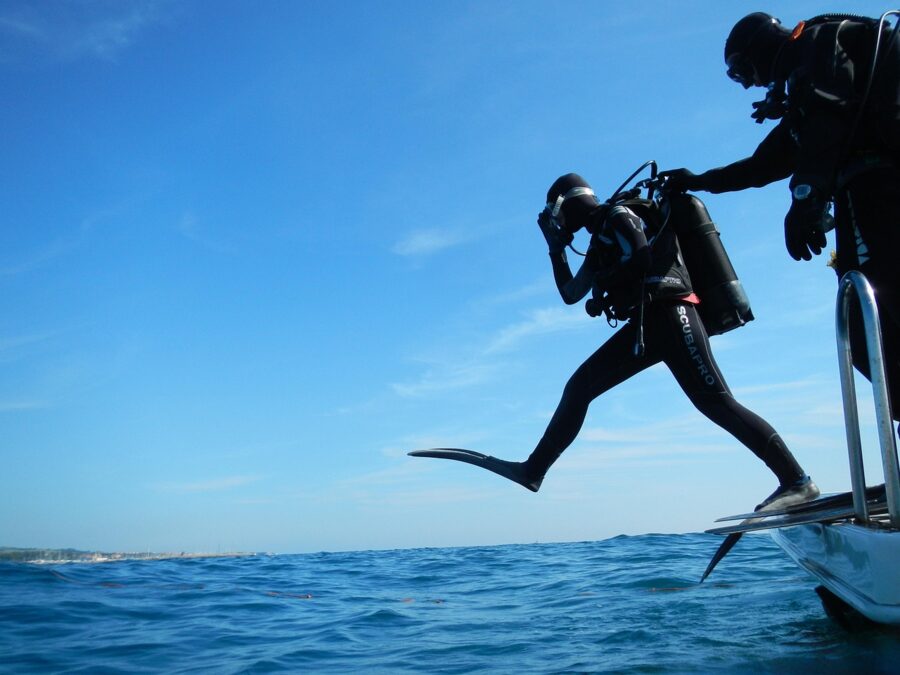
Once certified, a Hong Kong boat day is cheap. Blue Point Diving charges HK$560 for two dives on weekends and public holidays, or HK$650 for as many as you want, with the boat, cylinders, weights, drinks and lunch included, and HK$200 for a full set of rental gear. Splash charges HK$750 for two boat dives around Sai Kung, HK$250 a day for gear and HK$200 for a guide, and once a month hires a private junk for its “Splash Days”.

The next course is Advanced Open Water, which takes you past the 18-metre limit to 30 metres and lets you try night diving. In Hong Kong that matters for the outer sites: Breaker Reef, out in Mirs Bay, has variable currents and is usually kept for more experienced divers.


Most new divers, though, learn here and then dive somewhere warmer and clearer. The Hong Kong schools run their own group trips: Splash goes to Malapascua and Cabilao in the Philippines, Bali and Komodo in Indonesia, Sipadan in Malaysia, Palau and the Maldives, and Blue Point Diving has run its own training centre in Bohol since 2018. A first tropical dive after training in Sai Kung silt feels easy, which is the best argument for learning here.
If a holiday is coming and the sea weekends are not, do the theory and pool sessions here as a PADI referral and finish the four sea dives with a school abroad. The paperwork is valid for 12 months. Before you pay a trip deposit, check that your passport has at least six months left beyond your return date: Diving Adventure writes that into its trip terms, and entry rules depend on which passport you travel on.

Tonight, download the diver medical questionnaire and fill it in; if anything comes up “yes”, book the doctor this week. Then message a school for its May dates. Two weekends later you will be back on the Sai Kung waterfront in a damp wetsuit, a card in your phone and four dives in your log.