

A standard cabin up to the Big Buddha costs HK$205 one way, and the bus that drops you down to Tai O afterwards costs HK$7.90. Add the MTR there and back and the bus home from Tai O, and Lantau’s classic day comes to HK$275.50 from Central on a weekday, less than a return ride on the cable car with nothing else attached. That is the day I would do on a first visit: up by cable car, the Buddha and the monastery, lunch, Tai O, and the bus back along the south coast.
Here is the plan, for one adult paying by Octopus on a weekday. On Sundays and public holidays the two buses cost more and the day comes to HK$296.10; from Tsim Sha Tsui it is HK$264.30 on a weekday, because the MTR fare is HK$18.70 each way instead of HK$24.30.
| Time | Step | Weekday fare |
|---|---|---|
| 09:15 | MTR from Central to Tung Chung, walk five minutes from Exit B to the cable car terminal | HK$24.30 |
| 10:00 | Ngong Ping 360, standard cabin, single up (25 minutes) | HK$205 |
| 10:45 | Big Buddha steps, Po Lin Monastery | Free |
| 11:30 | Lunch at the monastery’s vegetarian kitchen | Pay at the kitchen |
| 13:20 | New Lantao Bus 21, Ngong Ping to Tai O (18 minutes) | HK$7.90 |
| 13:40–16:30 | Tai O: the stilt houses, a boat ride, the old police station | Boat extra |
| 16:30 | New Lantao Bus 11, Tai O to Tung Chung (about 52 minutes) | HK$14.00 |
| 17:30 | MTR from Tung Chung back to Central | HK$24.30 |
Go on a weekday if you can, and on a clear one. The cable car opens at 10:00 from Monday to Friday and at 09:00 on Saturdays, Sundays and public holidays, and at weekends and in the mainland holiday weeks of early May and early October the ticket queue can eat the whole morning. In cloud the Buddha is a grey shape and the ride is 25 minutes inside fog, so if the forecast is poor, swap the day with another on your Hong Kong itinerary.

Two rules catch people out before they have left Tung Chung. Bags bigger than 48 by 34 by 23 centimetres, or heavier than 4 kilograms, are not allowed in the cabins, and the left luggage counter at the terminal charges HK$100 a piece. And the cable car shuts for maintenance: for a single day on 10 November 2026, and for one to two weeks every September. Check the notices at the top of Ngong Ping 360’s site the night before.

In this article
Ngong Ping 360: fares, queues and the rules
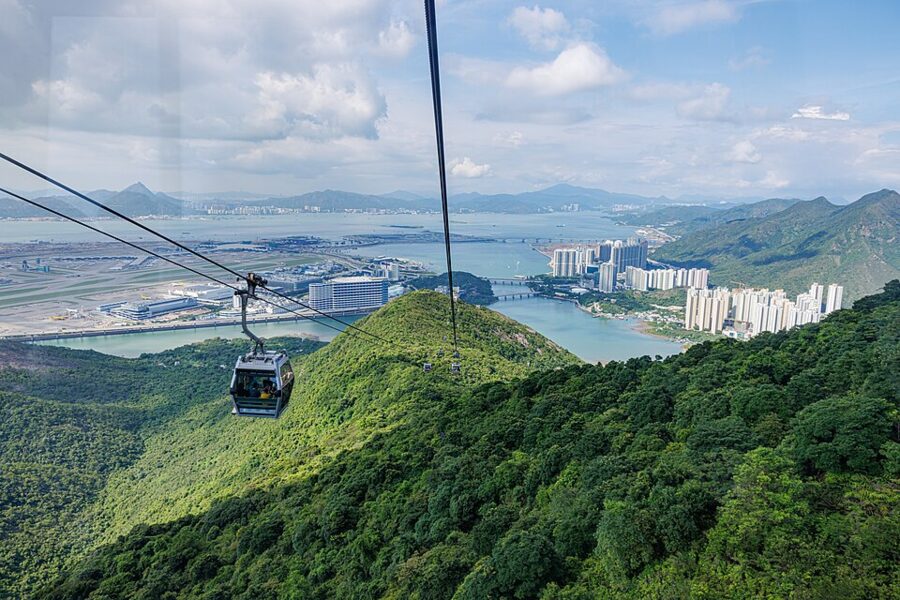
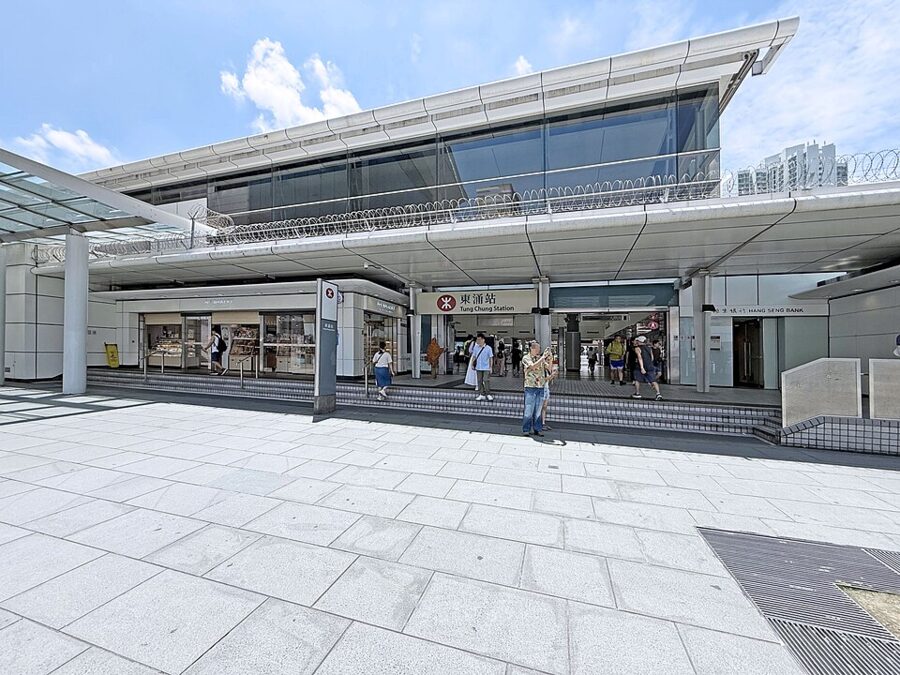
Ngong Ping 360 (昂坪360) is a 5.7-kilometre bi-cable ropeway from Tung Chung to Ngong Ping, a 25-minute ride with no stops you can get off at. The terminal is a five-minute walk from Exit B of MTR Tung Chung station; follow the signs past the bus terminus on Mei Tung Street. It runs 10:00–18:00 on weekdays and 09:00–18:30 on Saturdays, Sundays and public holidays, with longer or shorter days at festivals.

Which cabin, and what it costs
There are three kinds of cabin. The standard cabin has a solid floor. The Crystal Cabin has a glass floor, and the newer Crystal+ has glass walls as well, with more than 80 per cent of it see-through. Fares for an adult, as listed by the operator in November 2026:
| Ticket | Adult | Child (3–11) |
|---|---|---|
| Standard cabin, single | HK$205 | HK$100 |
| Standard cabin, return | HK$295 | HK$150 |
| Crystal Cabin, single | HK$240 | HK$135 |
| Crystal Cabin, return | HK$365 | HK$220 |
| Crystal Cabin one way, standard the other | HK$330 | HK$185 |
| Crystal+ up, standard down | HK$420 | HK$275 |
| Crystal+, return | HK$545 | HK$400 |
Children under three ride free, and a child under 12 must travel with someone aged 15 or over. The senior fares (HK$105 single, HK$155 return) are for Hong Kong residents only, on a JoyYou Card or Senior Citizen Card; a visitor over 65 on a foreign passport pays the adult fare. The same goes for the 20th-anniversary “Back to the Opening Price” deal, a HK$88 standard return whose last date is 20 December 2026, which needs a Hong Kong identity document at the Tung Chung counter.
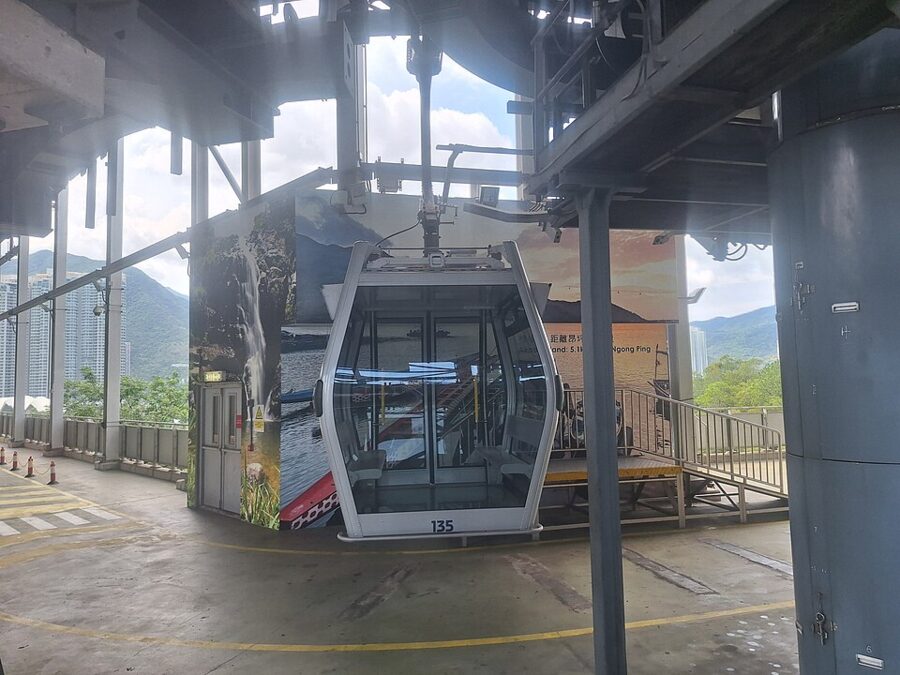

My choice: a standard single up and the bus down through Tai O. The glass floor is worth the extra HK$35 on a clear day if heights do not bother you; in haze it is HK$35 to look at grey water. If you want both, the Crystal Cabin one way and standard the other at HK$330 is the sensible split, and on a Crystal Cabin return you can still come down in a standard cabin, without a refund.
Queues, tickets and the touts outside
Buy online from the operator’s own ticket page. A cable-car-only e-ticket is scanned straight at the turnstile, so you skip the ticket hall, which is where the long wait is. On busy days the terminal hands out EQ-Pass numbers at the entrance, a virtual queue for the ticket counters; you are called back when your number comes up, and if five or more groups beyond yours have been called, you need a new pass.
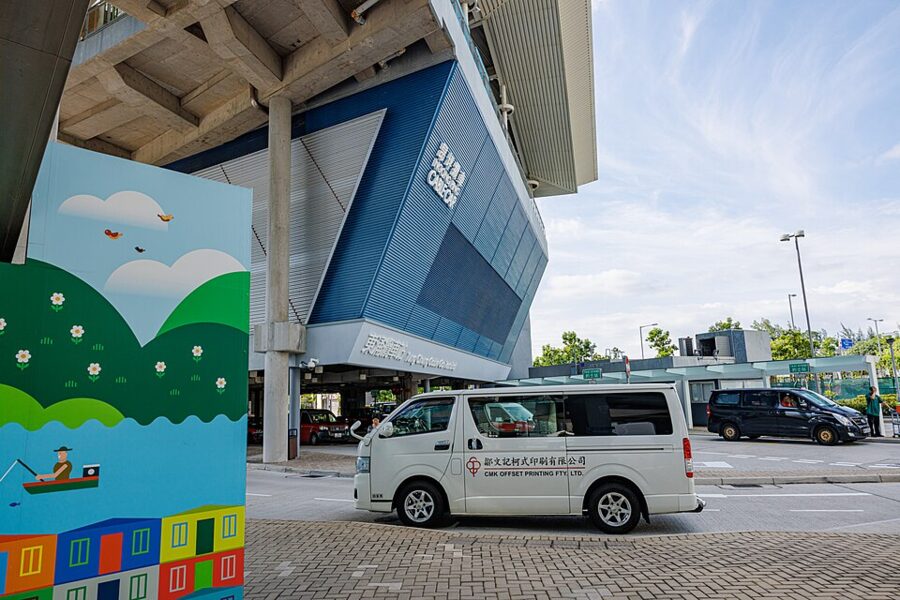

Do not buy from anyone on the walk between the station and the terminal. Ngong Ping 360 said in May 2026 that people dressed like its staff had been selling tickets there, some of them already used, and from 29 May it stopped letting anyone board on a ticket bought outside its official channels. A return ticket is valid for one day only, and you cannot stay in the cabin for the ride back down.
Weather and maintenance closures
Rainstorms and thunderstorms suspend the service, and so do typhoon signals. If you already hold a ticket when that happens, the operator will exchange it for another date or refund it at either terminal’s ticket office. The long annual maintenance closure has fallen in September three years running: 2 to 12 September 2024, 2 to 16 September 2025 and 8 to 17 September 2026, when the line reopened a day early on the 18th. The one-day closure on 10 November 2026 was announced a month ahead, which is about the notice to expect.
The bus and the hike instead
New Lantao Bus route 23 (新大嶼山巴士23號) climbs from the Tat Tung Road terminus in Tung Chung to Ngong Ping in about 50 minutes, over the mountain and along the south coast past Cheung Sha. It costs HK$20.40 on weekdays and HK$37.00 on Sundays and public holidays, and from mid-morning it leaves about every 20 minutes, from 07:15 on weekdays and 08:10 on Sundays. Taking the 23 up, the 21 to Tai O and the 11 back cuts the day’s transport from Central to HK$90.90.
The bus is not a lesser version of the cable car. It is a different view, the south side of the island instead of the airport, and on a weekend morning with a long ticket hall it can get you to the Buddha first. If you want the cable car too, ride it down at the end of the day, after the morning rush has gone up; a single costs the same in either direction.
On foot, the Ngong Ping Trail follows the cable car line from Tung Chung up past the towers to the Nei Lak Shan turning station and down to Ngong Ping. It is steep, mostly exposed and a full morning’s climb, so start early, carry more water than you think, and treat the cable car as your ride home.

Ngong Ping: the Big Buddha, Po Lin and the Wisdom Path
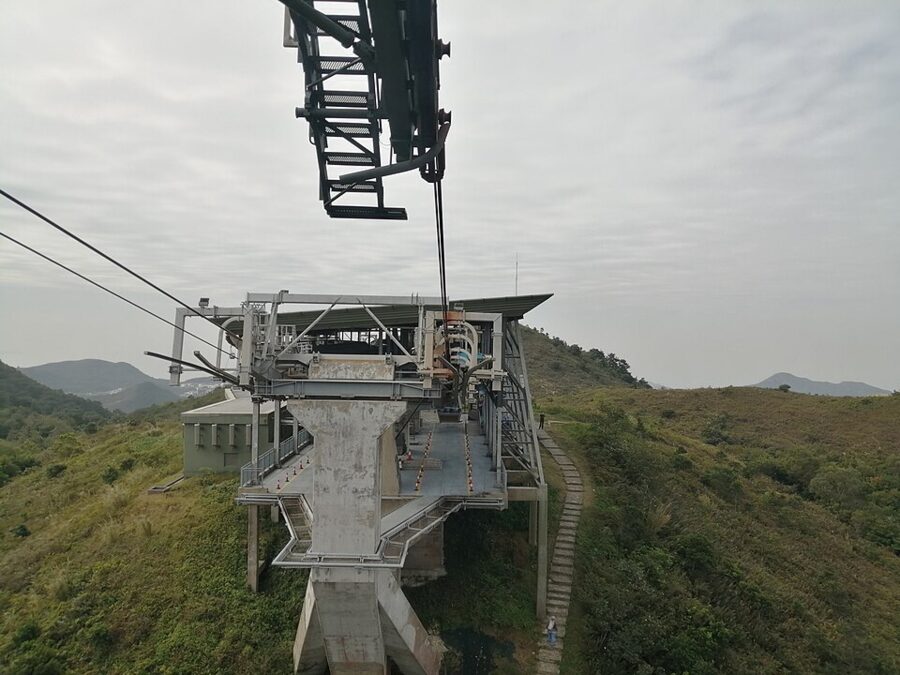
The cable car drops you in Ngong Ping Village (昂坪市集), a short street of souvenir shops, cafes and small paid attractions built with the cable car. The Big Buddha is a ten-minute walk beyond it, past the stone archway, and Po Lin Monastery is next to the statue. The village has the only coffee for a while; the monastery has the better lunch.
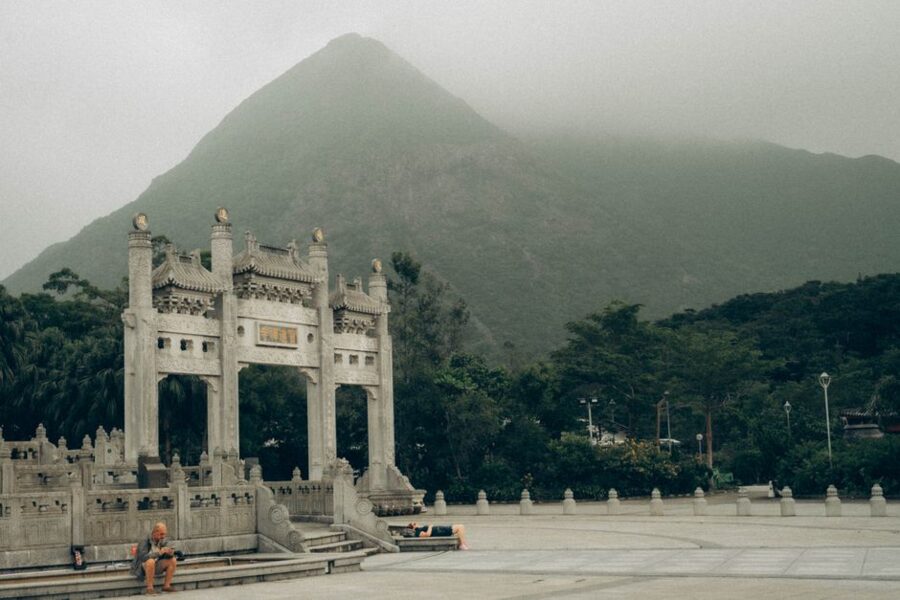
The Tian Tan Buddha
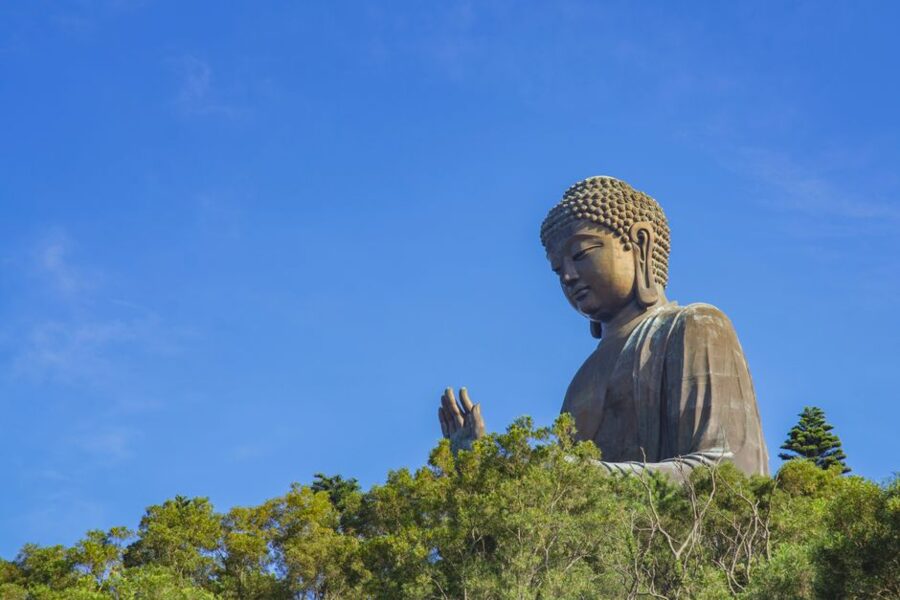
The Tian Tan Buddha (天壇大佛) sits on Mount Muk Yue, a hill beside Po Lin, at the top of 268 steps. Po Lin Monastery’s visitor page gives the statue’s platform hours as 10:00 to 17:30 every day, while another page of the monastery’s site still says 17:00, so be on the platform before 17:00. Climbing is free, and the steps are wide and even; take them slowly in summer, as there is no shade.
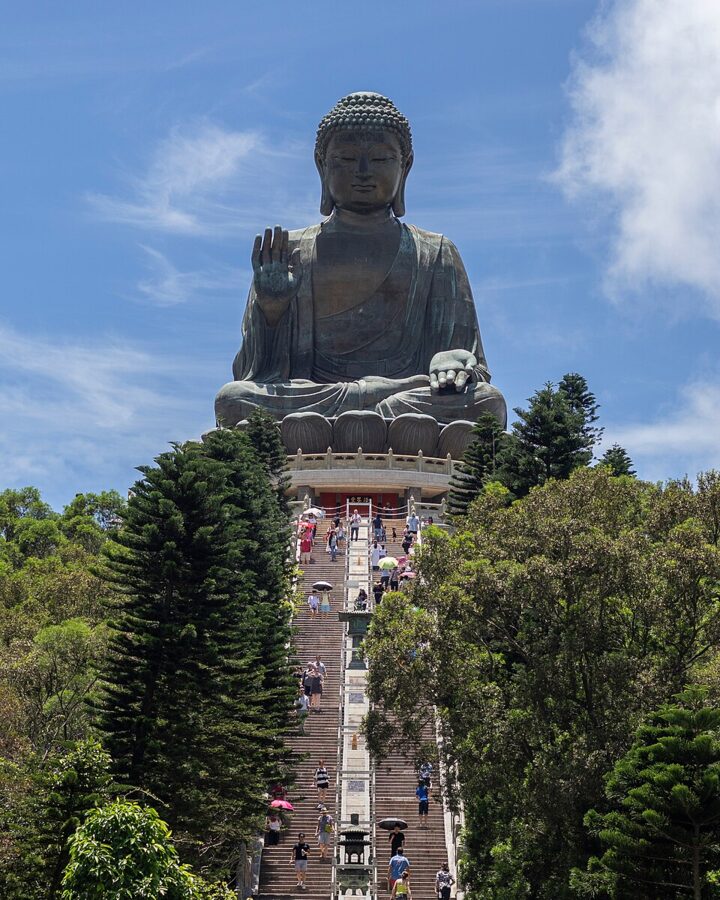

The statue took the monastery 12 years to plan and build. It was cast in Nanjing in 202 bronze pieces, the face as a single five-tonne casting, shipped to Hong Kong in 1989 and assembled on the hill; the last piece went on that October, and the inauguration was on 29 December 1993. The right hand is raised in the gesture of giving fearlessness, the left rests on the lap in the gesture of granting wishes.
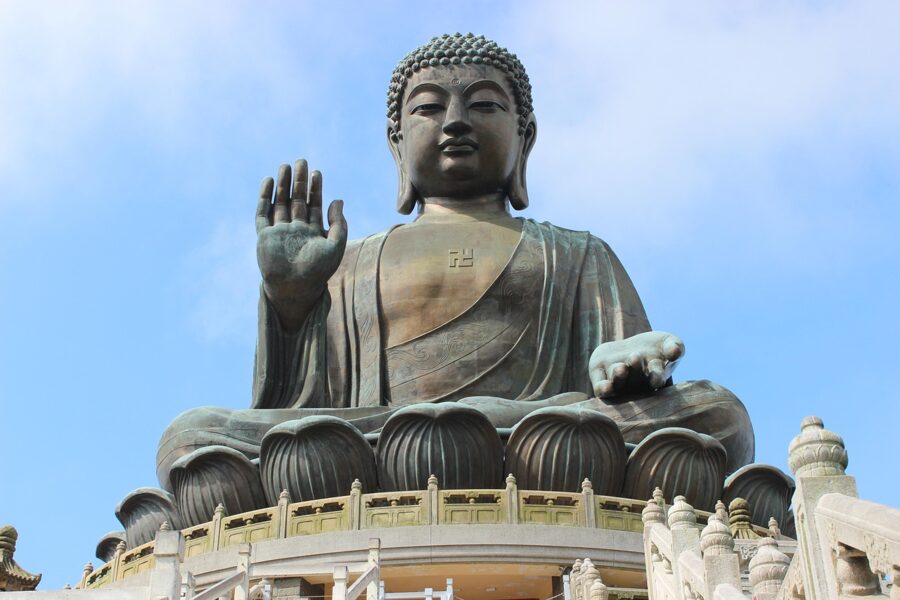
Every December the monastery holds a week-long Water and Land ritual for the statue’s anniversary, this year from 20 to 27 December 2026. Expect crowds of worshippers and incense on top of the usual visitors; it is a good week to see the monastery in use and a poor week to want the steps to yourself.
Po Lin Monastery and the vegetarian kitchen
Po Lin Monastery (寶蓮禪寺) is open 09:00–18:00 every day, an hour after the statue platform closes, so the halls make a good last stop before the bus. Three monks from Jiangsu founded it in 1906 as the Big Thatched Hut, and it took the name Po Lin in 1924; the Grand Hall of Ten Thousand Buddhas at the back opened in 2014. This is a working monastery: dress for a temple, keep your voice down in the halls and do not photograph monks at prayer.
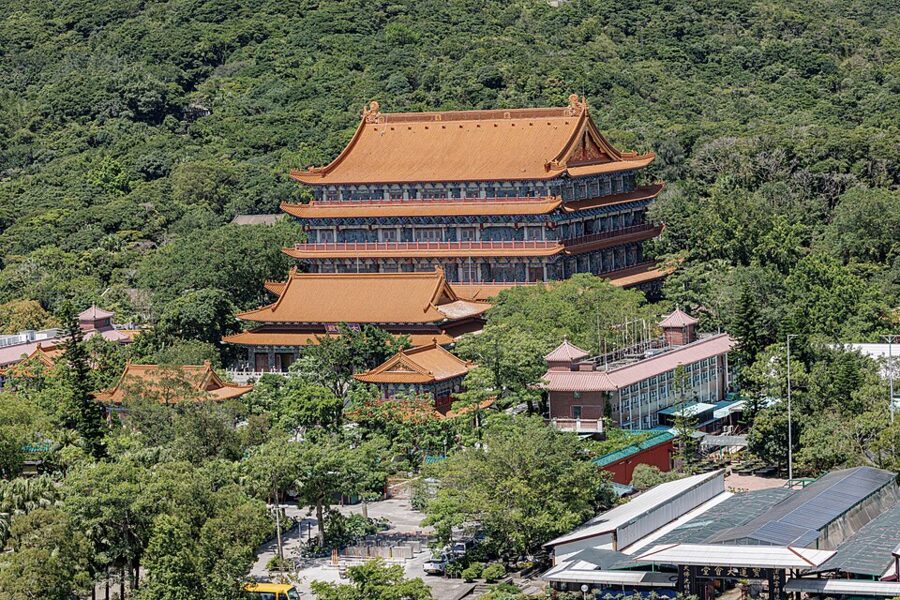

The vegetarian kitchen is open 11:30–16:30, to the left of the main shrine hall as you face it. The monastery serves by the table, so the number of dishes follows the number of people: usually a soup, a deep-fried dish and a vegetable dish with rice, changing with the season. Ask at the kitchen’s reception for the meal ticket and the current price before you sit down.
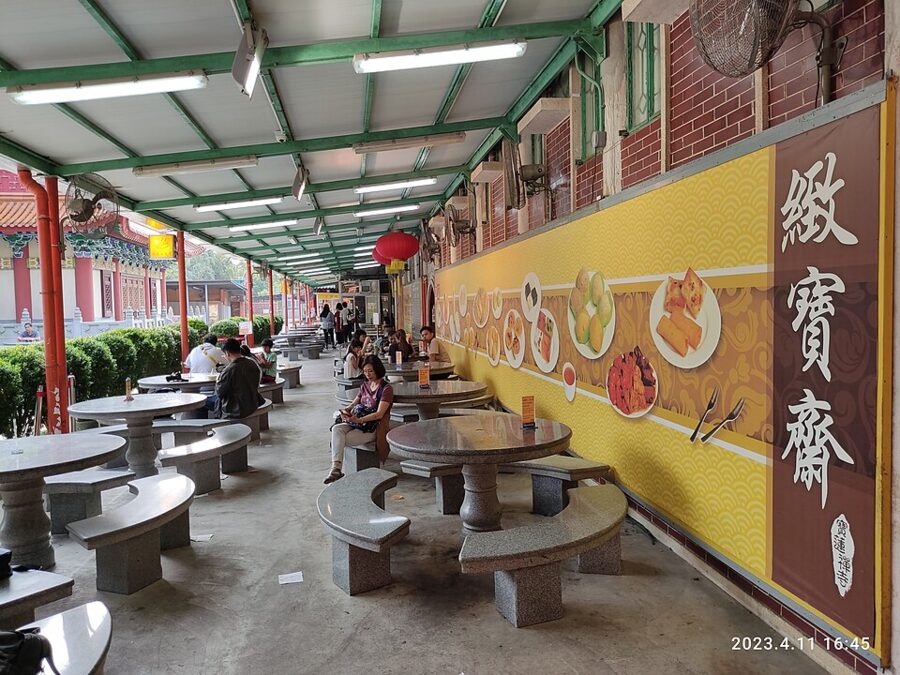

Next to the kitchen a snack counter sells steamed cakes, noodles and the monastery’s own bean curd pudding, made fresh each day; the mango glutinous rice dumplings run out early. The souvenir shop is in the Hall of Merits on the first floor of the Buddha’s base platform.
The Wisdom Path
The Wisdom Path (心經簡林) is 38 wooden columns, eight to ten metres tall, set in a figure-of-eight on the slope below Lantau Peak and carved with the Heart Sutra in the calligraphy of the scholar Jao Tsung-I. Column 23, the tallest, is left blank. It is about 20 minutes’ walk from the village past the piazza.
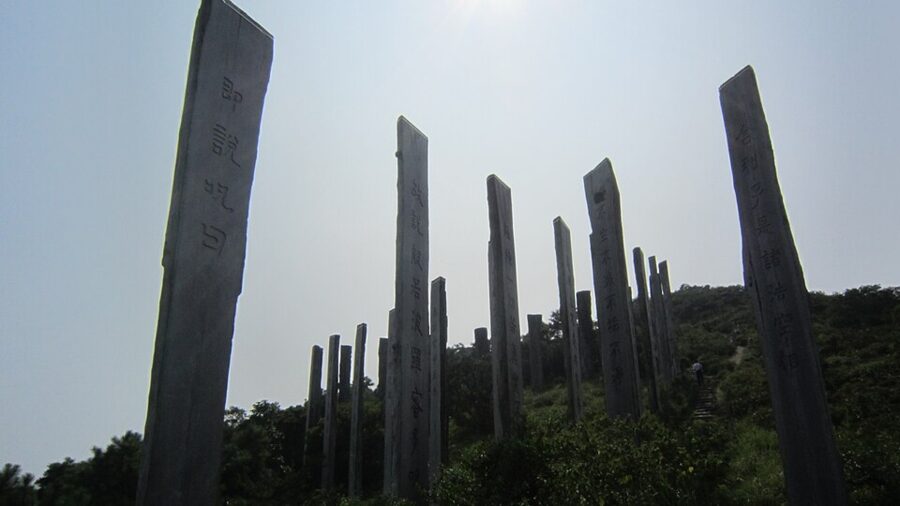

It has been closed for refurbishment since 5 June 2025, and Ngong Ping 360 expects it to reopen in the last quarter of 2026. Check the operator’s Wisdom Path page before you walk out. While it is shut, the Ngong Ping Viewing Platform, about 15 minutes from the village, gives the view of the Buddha, and the flat Nei Lak Shan Country Trail loops round under the cable car.
Tai O: stilt houses, boats and the bus back
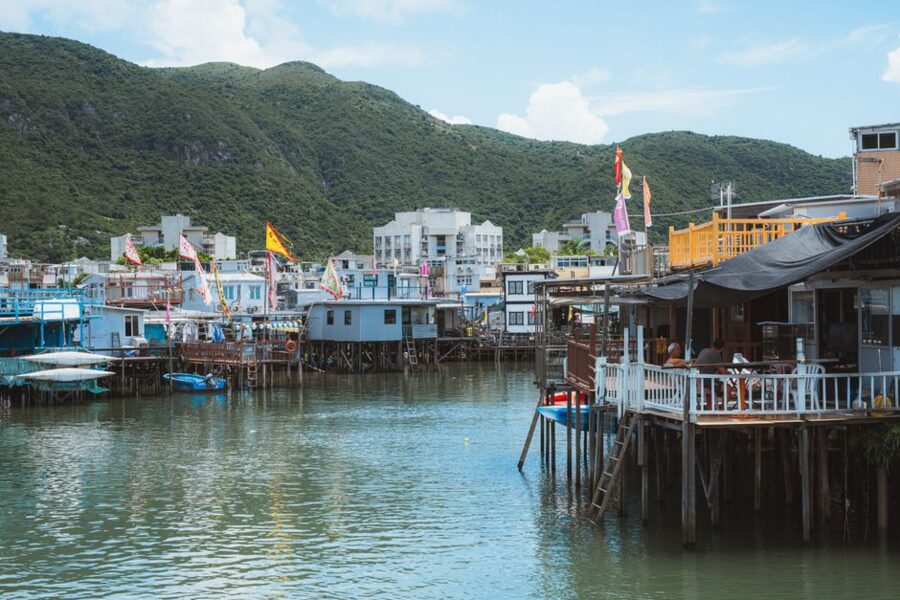
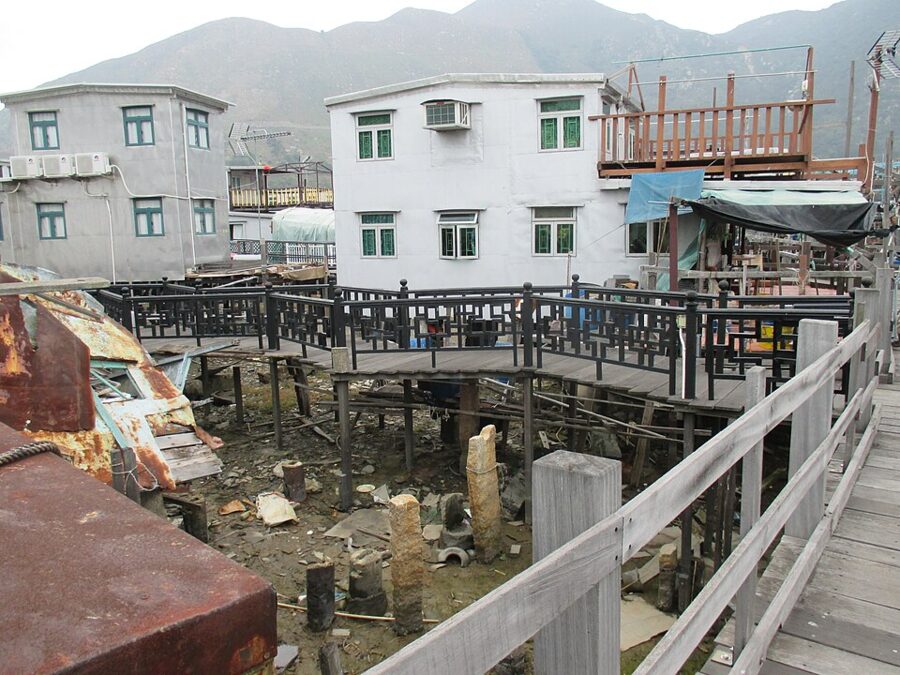
Tai O (大澳) is a fishing village on the west coast of Lantau, settled since the Ming dynasty. It once lived on salt and salted fish and had around 30,000 people; today it has around 2,000, and the stilt houses (棚屋) along the creek are still lived in. Shrimp paste and salted fish are still made here, and you will smell both before you see them.

Getting there and walking it
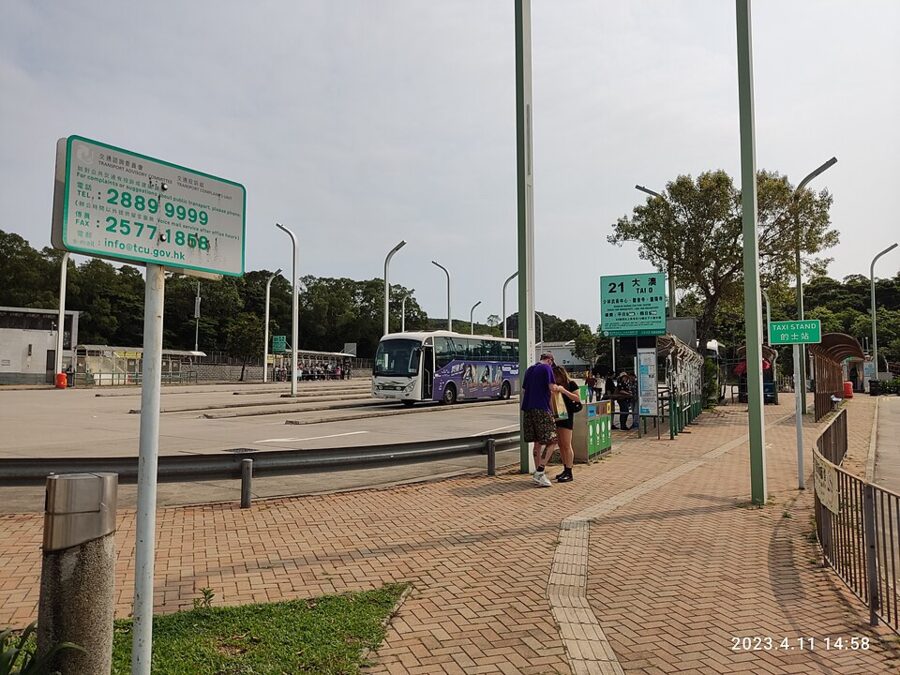
Route 21 runs from Ngong Ping to the Tai O bus terminus in 18 minutes for HK$7.90 on weekdays and HK$19.20 on Sundays and public holidays. On weekdays it leaves Ngong Ping at 10:35, 11:20 and then 20 minutes past each hour until 16:20, plus 17:15 and 18:15. On Sundays and holidays it runs about every half hour in the afternoon, which is fortunate, because that is when everyone wants it.
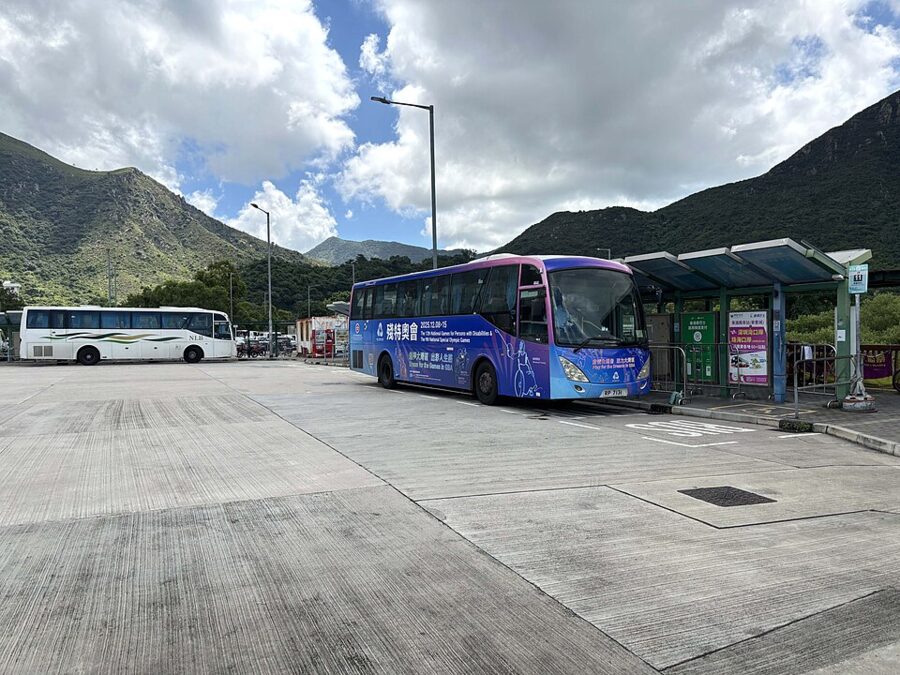

From the terminus, walk into the village along the main street to the iron footbridge over the creek, built from the raft of the old cable ferry (橫水渡) that carried people across before there was a bridge. The lanes on either side of it hold most of the dried-seafood shops and snack stalls. Two hours is enough to walk it, eat, and take a boat out.
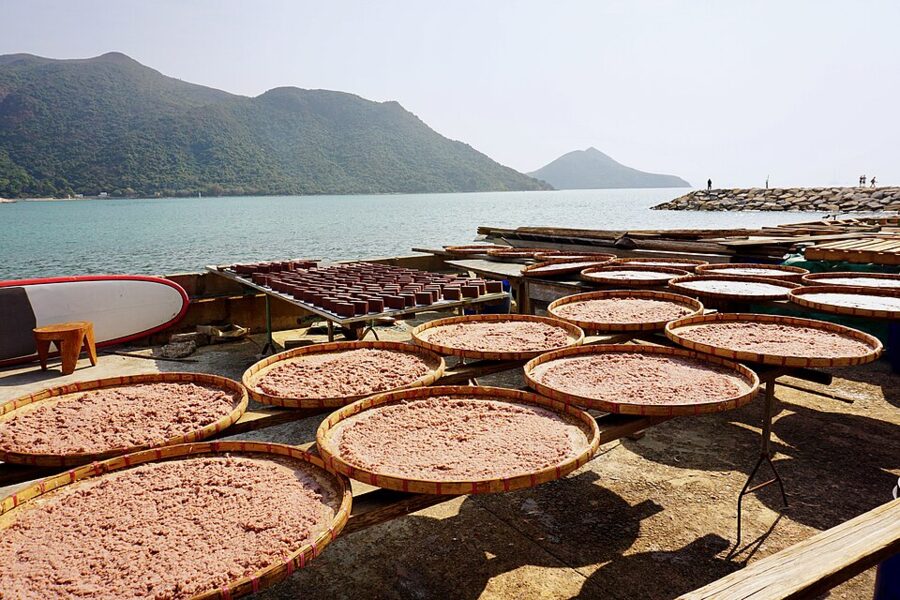
The boats and the dolphins
Boats wait under the iron footbridge for a 20-minute run around the waterways, past the stilt houses, the rock the village calls General’s Rock and the old police station, and out to the mouth of the creek. Many boatmen also offer a look for the Chinese white dolphins that live in the waters off Tai O. Agree the price and the route before you step aboard, and treat a dolphin as luck rather than a promise.
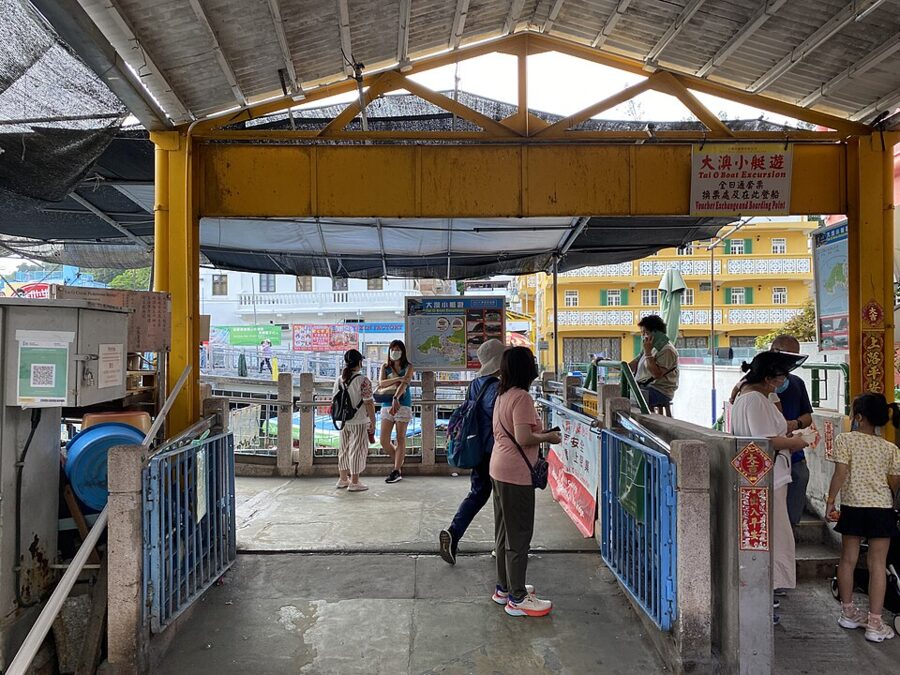

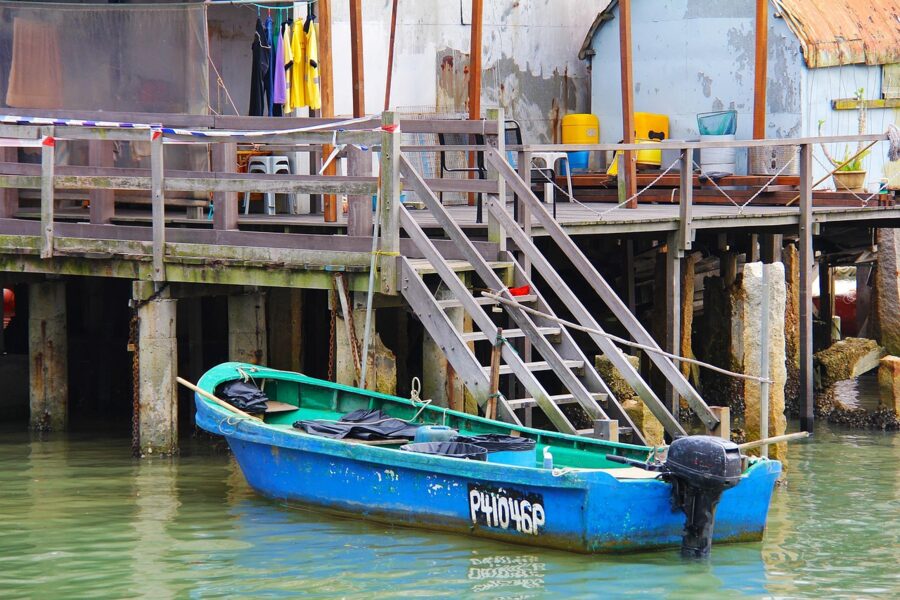
The old police station
On Shek Tsai Po Street, the Tai O Heritage Hotel (大澳文物酒店) is the old Tai O marine police station of 1902, now a nine-room hotel run as a non-profit by the Hong Kong Heritage Conservation Foundation. You do not need to stay to see it: the building is open to the public from 11:00 to 18:00, and staff give a free 20-minute tour at 15:00, 15:30 and 16:00 every day.
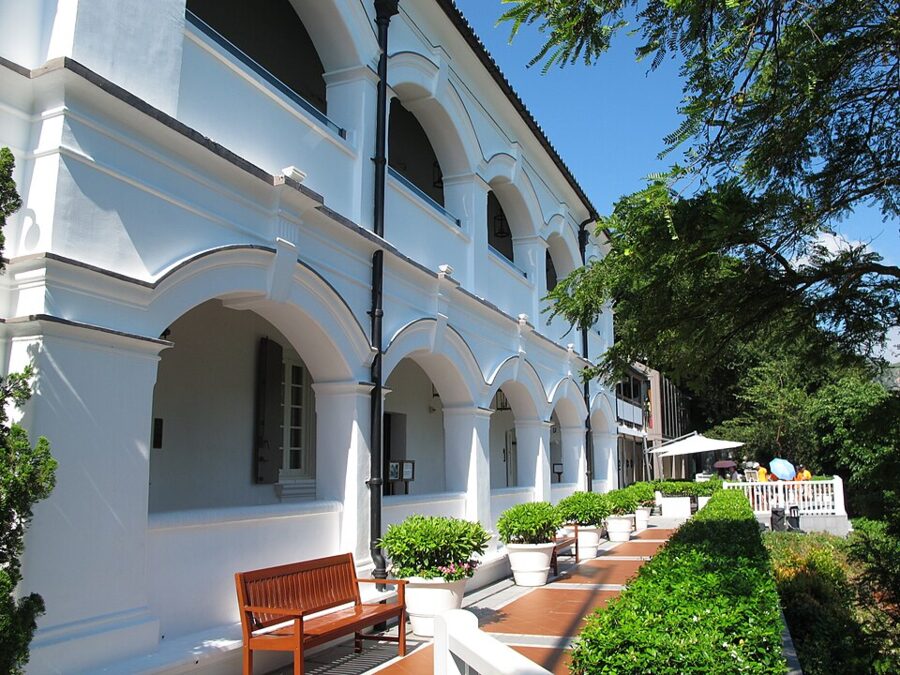

Time your visit to the 15:30 tour and you can still make a bus back before the evening queue. If you come at Tuen Ng, the Dragon Boat Festival, the village carries its temple deities through the waterways on small boats; the water parade was added to China’s national intangible heritage list in 2011.
Getting back
Route 11 runs from Tai O to the Tung Chung station bus terminus in about 52 minutes, HK$14.00 on weekdays and HK$23.30 on Sundays and public holidays, at least every half hour through the day and with a last bus at 00:15. It follows the south coast past Cheung Sha before climbing over to Tung Chung, so sit on the right. Route 1 runs to Mui Wo instead, HK$12.70 on weekdays and HK$21.40 on Sundays and holidays, for the ferry to Central.
If you are heading back up to Ngong Ping, the 21 leaves Tai O at 15:00, 16:00 and 16:45 on weekday afternoons, with two more on Saturdays. Miss those and you are on the 11 or in a taxi.
The rest of Lantau
Lantau is bigger than Hong Kong Island, and the classic day sees its north-west corner. The east and south coasts are a different island: Mui Wo and its ferry, a string of long beaches, the high hills and the trail along them, and the commuter town of Discovery Bay.
Mui Wo and the ferry from Central
Mui Wo (梅窩) is a village at the head of Silver Mine Bay, with a beach, a few streets of shops and cafes, and the ferry pier. Sun Ferry runs fast ferries from Central Pier 6 in 35 to 40 minutes, about every 40 minutes from 06:10 until after midnight from Monday to Saturday. An adult fare is HK$33.50 from Monday to Saturday and HK$48.50 on Sundays and public holidays; check the board, as some sailings leave from Pier 5.
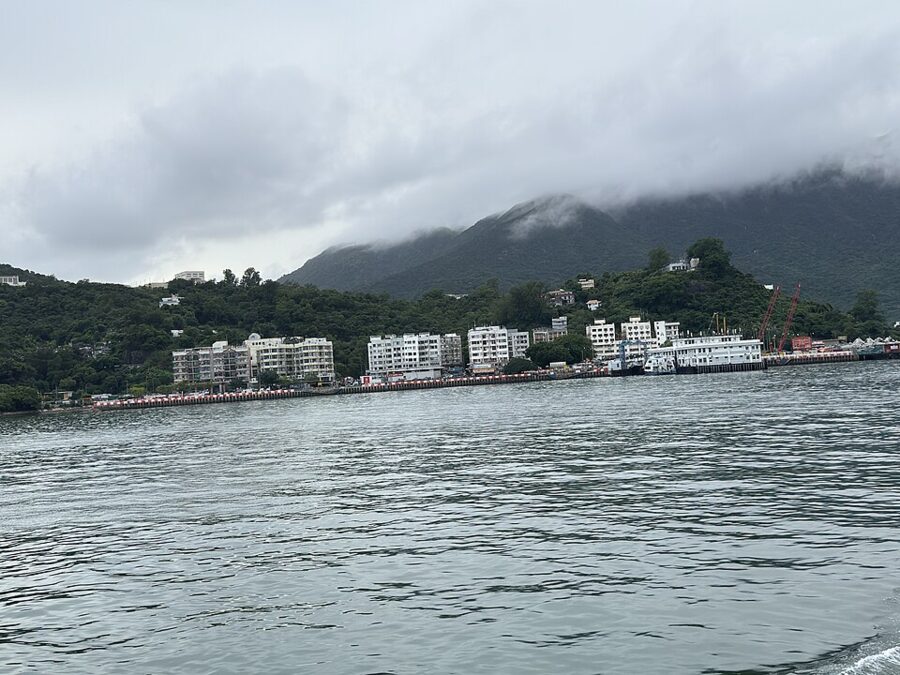

The ferry turns the classic day into a loop with no backtracking: the cable car up, the 21 to Tai O, then route 1 from Tai O to Mui Wo and the boat back to Central. You can run it the other way, ferry first, but route 2 from Mui Wo up to Ngong Ping (HK$20.40 on weekdays, HK$37.00 on Sundays and holidays) leaves only five times on a weekday, the first at 11:00. Route 3M links Mui Wo with Tung Chung for HK$12.50, and route A35 runs from Mui Wo to the bridge port for the buses to Macau.
The south Lantau beaches
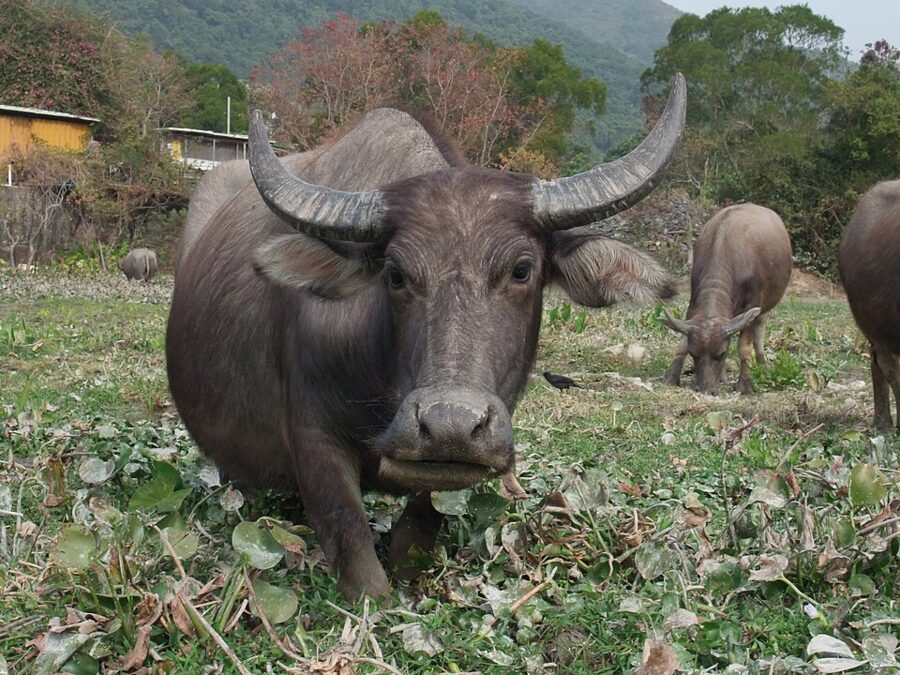
Cheung Sha (長沙) is a long stretch of sand on the south coast, divided into Upper and Lower Cheung Sha, with Tong Fuk beyond it to the west. Pui O (貝澳), nearer Mui Wo, is a shallow bay behind a wetland where water buffaloes graze, with a campsite and barbecue pits. Routes 1, 4 and 11 all pass along South Lantau Road, and Upper Cheung Sha Beach and Tong Fuk Beach each have their own stop.
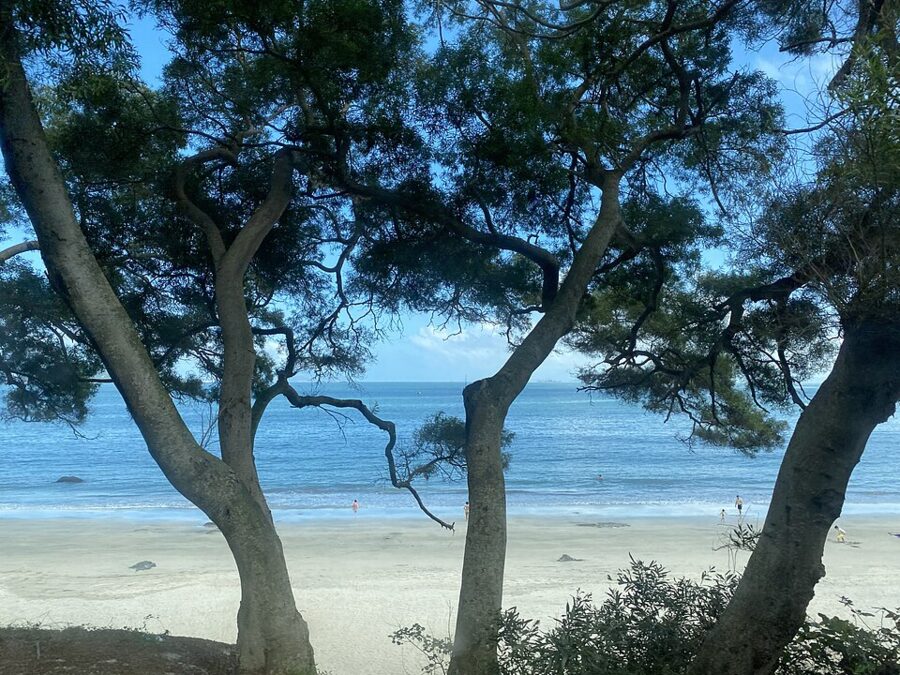

Swim where the lifeguards are. The Leisure and Cultural Services Department staffs its beaches from April to October, 09:00–18:00, and until 19:00 at weekends in June to August; in November and March, Silver Mine Bay in Mui Wo is the only one on Lantau still staffed, 08:00–17:00. Check the department’s lifeguard hours page before a swim outside high summer.

Lantau Peak and the Lantau Trail
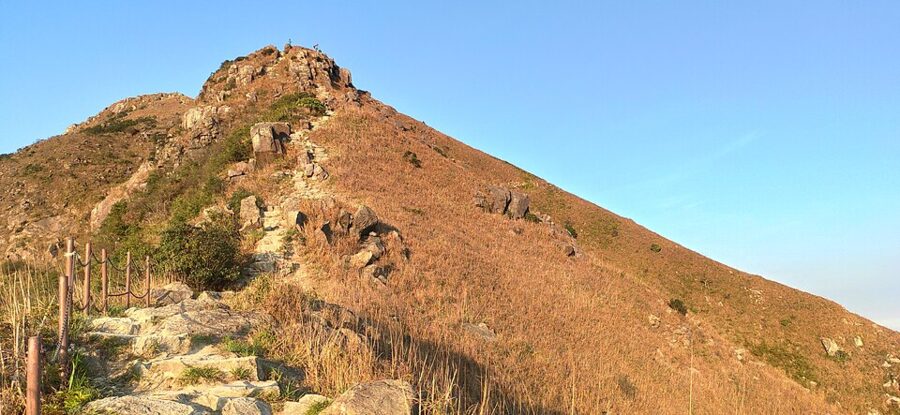
Lantau Peak (鳳凰山) is 934 metres, the second highest mountain in Hong Kong, and the climb from Ngong Ping starts about 15 minutes’ walk from the village, through the “Sunrise on Phoenix Mountain” archway, and goes up a long stone staircase the hikers call the Stairway to Heaven. Look back as you climb and the Wisdom Path’s figure-of-eight shows on the slope below. The peak is on the 70-kilometre Lantau Trail, which loops round the island from Mui Wo; sunrise walkers start from Pak Kung Au on Tung Chung Road, where buses 3M, 11 and 23 stop.

Discovery Bay
Discovery Bay (愉景灣) is a private residential town on the east coast, mostly flats and villas, with a plaza of restaurants by the ferry pier and a beach, Tai Pak, beside it. Ferries run from Central Pier 3 in about 25 minutes, HK$55.80 for an adult visitor. Bus DB01R connects it with Tung Chung in about 25 minutes for HK$17.60, so you can combine it with the cable car.
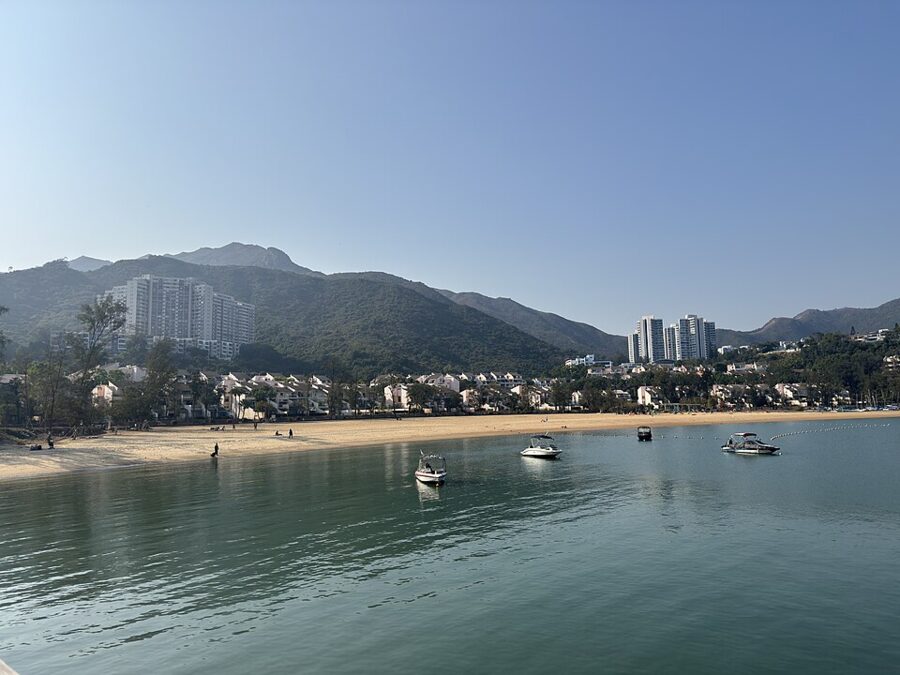

Hong Kong Disneyland is on Lantau too, at the end of the Disneyland Resort Line from Sunny Bay; it is a day of its own and does not combine with this one.
Getting around Lantau
New Lantao Bus routes and fares
Almost every bus on Lantau is a New Lantao Bus, and almost every route has two fares: a weekday fare, and a higher holiday fare on Sundays and public holidays. Pay with Octopus or coins, exact fare, no change given. These are the routes a visitor uses, with the full-journey adult fare in November 2026:
| Route | Between | Weekday | Sun and holidays |
|---|---|---|---|
| 1 | Mui Wo and Tai O | HK$12.70 | HK$21.40 |
| 2 | Mui Wo and Ngong Ping | HK$20.40 | HK$37.00 |
| 3M | Mui Wo and Tung Chung station | HK$12.50 | HK$19.60 |
| 4 | Mui Wo and Tong Fuk | HK$6.70 | HK$13.00 |
| 11 | Tung Chung station and Tai O | HK$14.00 | HK$23.30 |
| 21 | Ngong Ping and Tai O | HK$7.90 | HK$19.20 |
| 23 | Tung Chung (Tat Tung Road) and Ngong Ping | HK$20.40 | HK$37.00 |
Timetables and live arrivals are on New Lantao Bus’s site. The last 23 down from Ngong Ping is at 19:10, the last 21 from Ngong Ping to Tai O is at 18:15 on weekdays and 18:30 on Sundays, and the 11 and the 1 run late enough that you will not be stranded in Tai O for want of a bus. A Sunday on the buses costs nearly twice a weekday; it is the one fare on the island that rewards a weekday visit as much as the cable car queue does.
Blue Lantau taxis
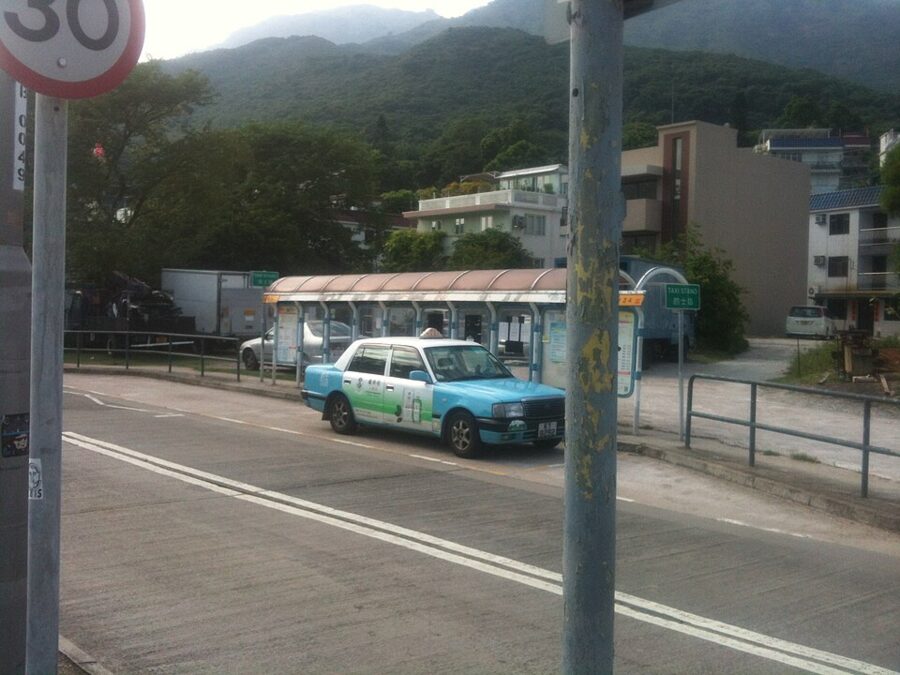
Only the blue Lantau taxis (大嶼山的士) may drive Tung Chung Road and the south Lantau roads, so for Ngong Ping, Tai O, Cheung Sha or Pui O a red city taxi is no use. A blue taxi charges HK$24 for the first two kilometres, then HK$1.90 for every 200 metres or minute of waiting, plus HK$6 for each bag in the boot. There are only 75 of them for the whole island and the airport, so at a stand like Tai O’s the bus is usually the faster bet.

Getting there from the city and the airport
From the city, the MTR Tung Chung line runs from Hong Kong station, joined underground to Central, out to Tung Chung at the end of the line; from Tsim Sha Tsui or Mong Kok, change from the Tsuen Wan line at Lai King. Adult fares by Octopus are HK$24.30 from Central or Causeway Bay and HK$18.70 from Tsim Sha Tsui, Kowloon or Mong Kok. The Airport Express shares the tracks but does not stop at Tung Chung.
From the airport, Tung Chung is the next stop over: bus S1 runs from the airport to Tung Chung station for HK$3.70. The bag rule is the catch. Anything over 48 by 34 by 23 centimetres stays at the bottom, so leave your case at the airport’s left luggage or check it in before a layover visit, and take the cable car with a day bag.
The 11 ends its run at the bus terminus beside Tung Chung station, a few steps from the MTR. By then you will have seen the Buddha, eaten at the monastery and stood on the footbridge at Tai O for HK$275.50 and the price of lunch. Pick a weekday with a clear forecast, and book the single up on Ngong Ping 360’s ticket page the night before.