

Tap in at Central, tap out at Tsim Sha Tsui six minutes later, and HK$10.60 comes off whatever you tapped. That can be an Octopus, a contactless Visa, Mastercard or UnionPay card (not UnionPay debit) or the phone it lives in, or a transit QR code from AlipayHK, Alipay, the UnionPay app or WeChat. All of them pay the same adult fare. A paper single from the machine costs more, HK$12.50 on the same trip, and is the only option I would skip.
Fares run by distance. As of November 2026 an adult pays HK$5.90 from Central to Causeway Bay, HK$13.20 from Admiralty to Mong Kok, HK$24.30 from Central to Tung Chung and HK$52.20 from Admiralty to the Lo Wu border. MTR froze fares in 2025 and again in March 2026, so these have held since the last rise in 2024.
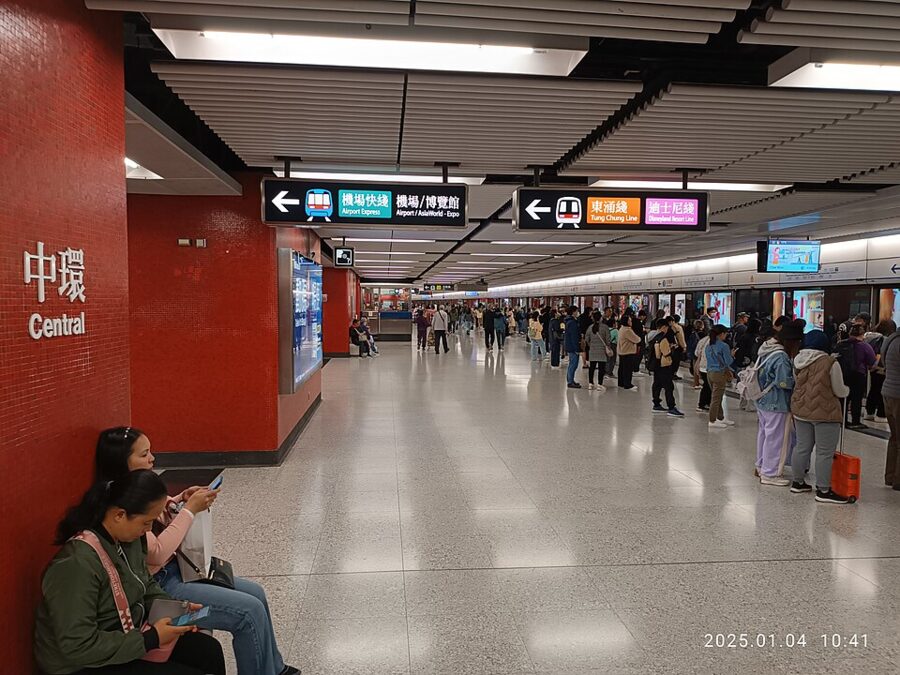
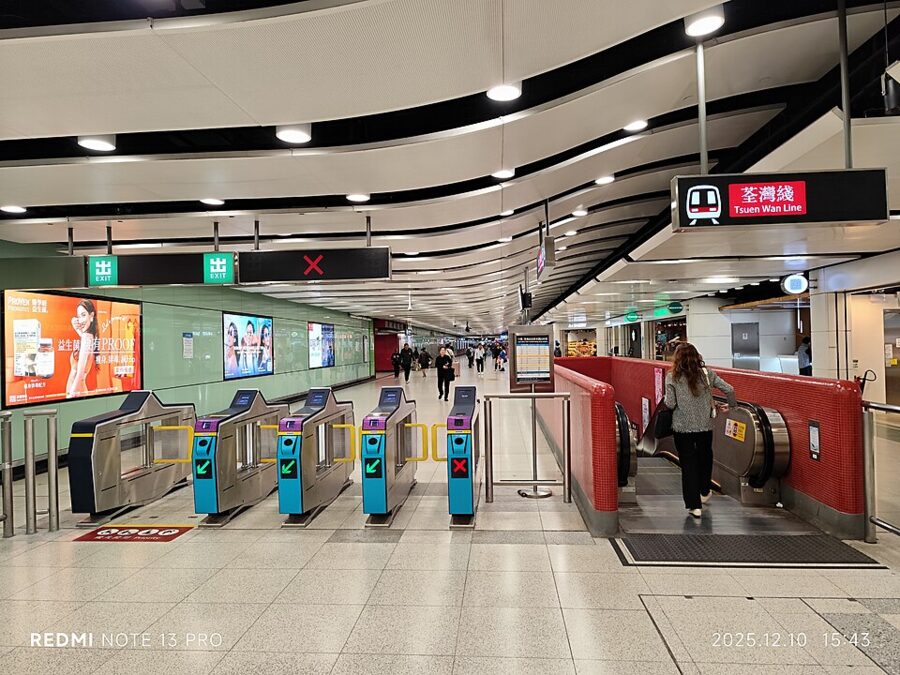
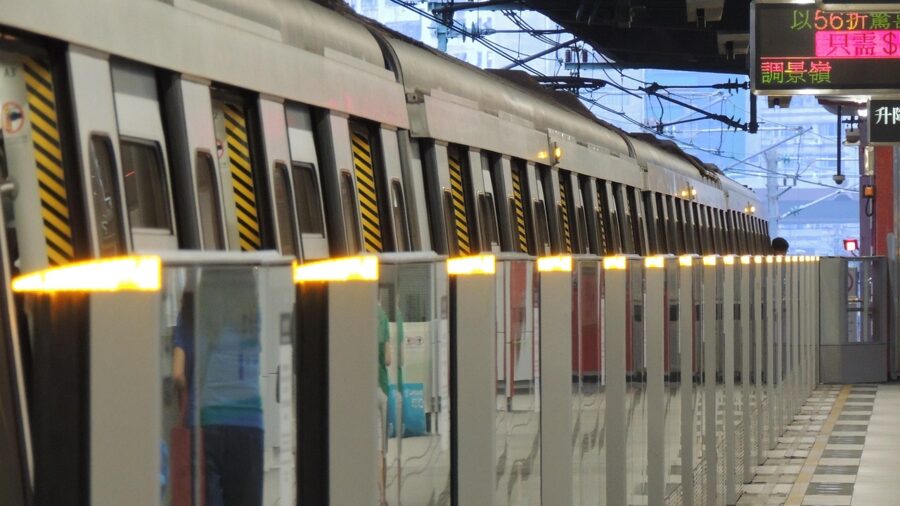
Six lines do nearly all the work for a visitor. The Island Line runs along the north shore of Hong Kong Island, the Tsuen Wan Line takes you under the harbour to Tsim Sha Tsui and up Nathan Road to Mong Kok, and the Tung Chung Line goes out to Lantau and the Disneyland branch. Add the East Rail Line for the Shenzhen border, the Tuen Ma Line for the Kai Tak side of Kowloon, and the South Island Line for Ocean Park. Trains run from about 06:00 until about 01:00, every two to five minutes in town.
In this article
The lines and where they go
Besides the eight lines below, MTR runs the Airport Express, the short Disneyland Resort Line and a Light Rail network in the northwest New Territories. On the platform, follow the line name and the end station on the sign.
| Line | Runs between | Stations you are likely to use |
|---|---|---|
| Island Line (港島綫) | Kennedy Town and Chai Wan | Sheung Wan, Central, Admiralty, Wan Chai, Causeway Bay, North Point |
| Tsuen Wan Line (荃灣綫) | Central and Tsuen Wan | Admiralty, Tsim Sha Tsui, Jordan, Yau Ma Tei, Mong Kok, Sham Shui Po |
| Kwun Tong Line (觀塘綫) | Whampoa and Tiu Keng Leng | Mong Kok, Prince Edward, Kowloon Tong, Wong Tai Sin, Diamond Hill |
| Tung Chung Line (東涌綫) | Hong Kong and Tung Chung | Kowloon, Tsing Yi, Sunny Bay (for Disneyland), Tung Chung |
| East Rail Line (東鐵綫) | Admiralty and Lo Wu or Lok Ma Chau | Exhibition Centre, Hung Hom, Mong Kok East, Kowloon Tong, Sha Tin, Lo Wu |
| Tuen Ma Line (屯馬綫) | Wu Kai Sha and Tuen Mun | Tai Wai, Kai Tak, Hung Hom, East Tsim Sha Tsui, Austin, Nam Cheong |
| South Island Line (南港島綫) | Admiralty and South Horizons | Ocean Park, Wong Chuk Hang |
| Tseung Kwan O Line (將軍澳綫) | North Point and Po Lam or LOHAS Park | Quarry Bay, Yau Tong, Tseung Kwan O |
Admiralty is the hub to learn. Four lines meet there: Island, Tsuen Wan, East Rail and South Island, so Ocean Park is six minutes and HK$5.90 from its platforms. Central and Hong Kong stations are a separate pair joined by a long underground walkway, and that is how you reach the Tung Chung Line and the Airport Express from the Island Line.
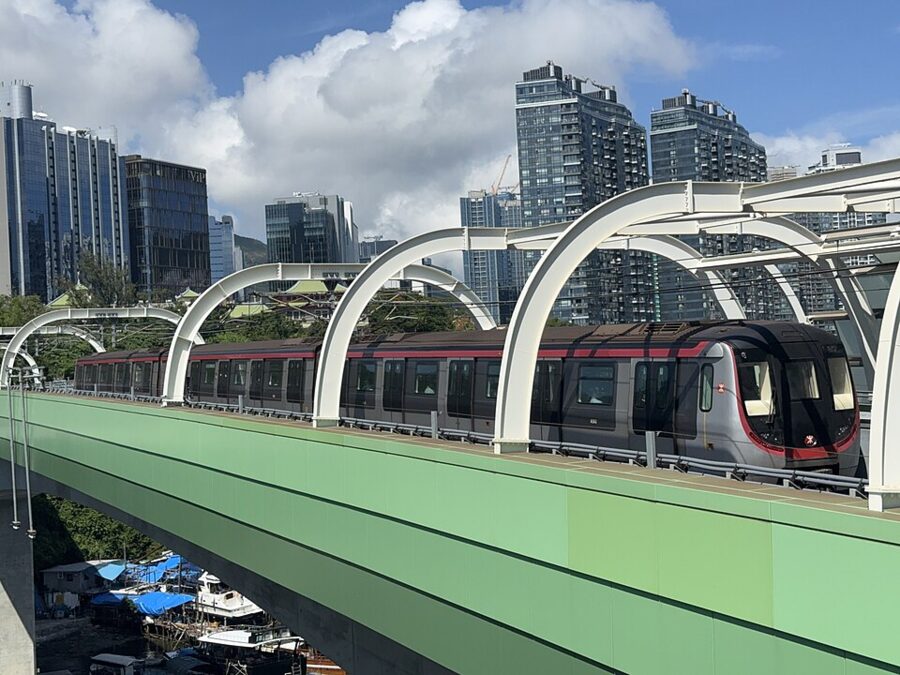

The Tung Chung Line is the cheap way to Lantau Island: HK$24.30 and about 40 minutes from Central to Tung Chung. Change at Sunny Bay for the Disneyland Resort Line (迪士尼綫), whose trains run every 5–10 minutes while the park is open and every 10–20 when it is closed.
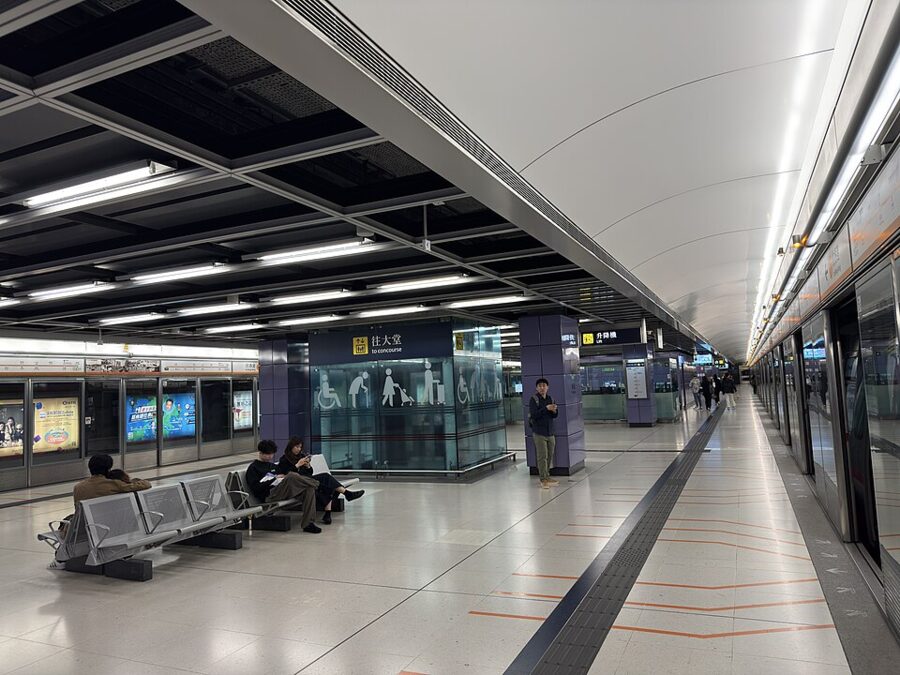

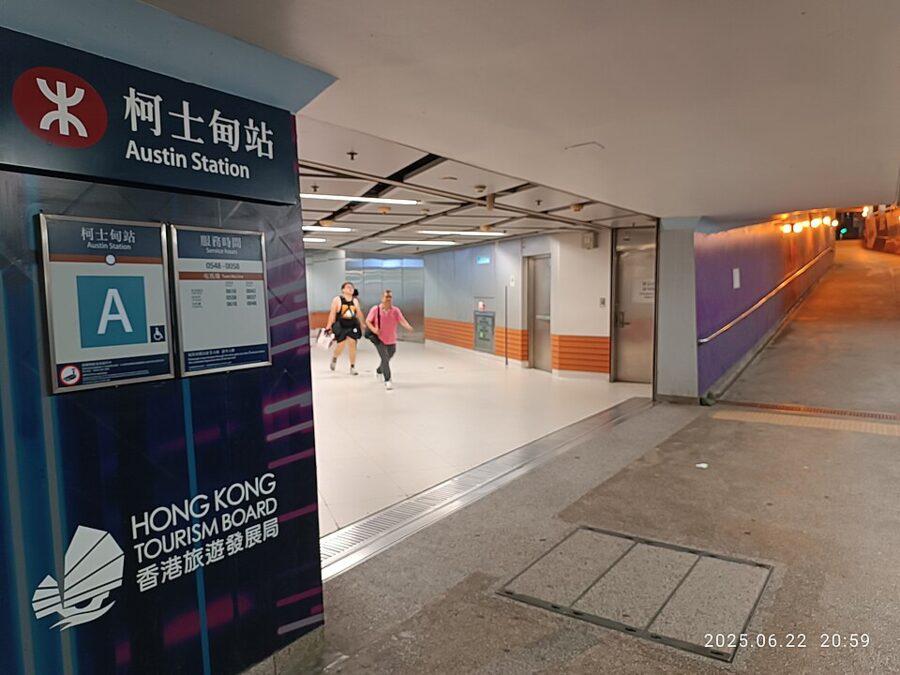
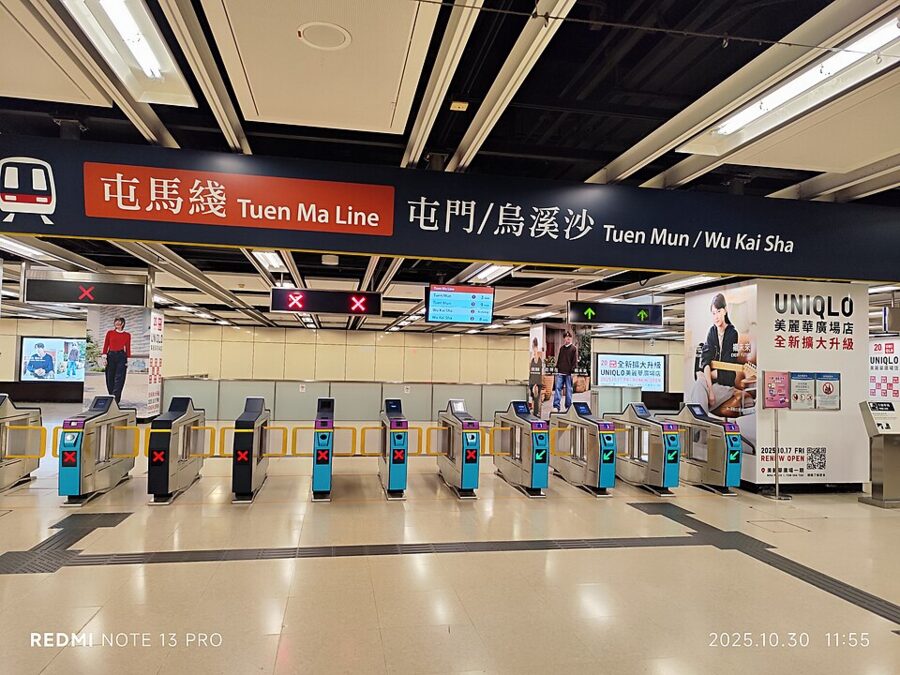
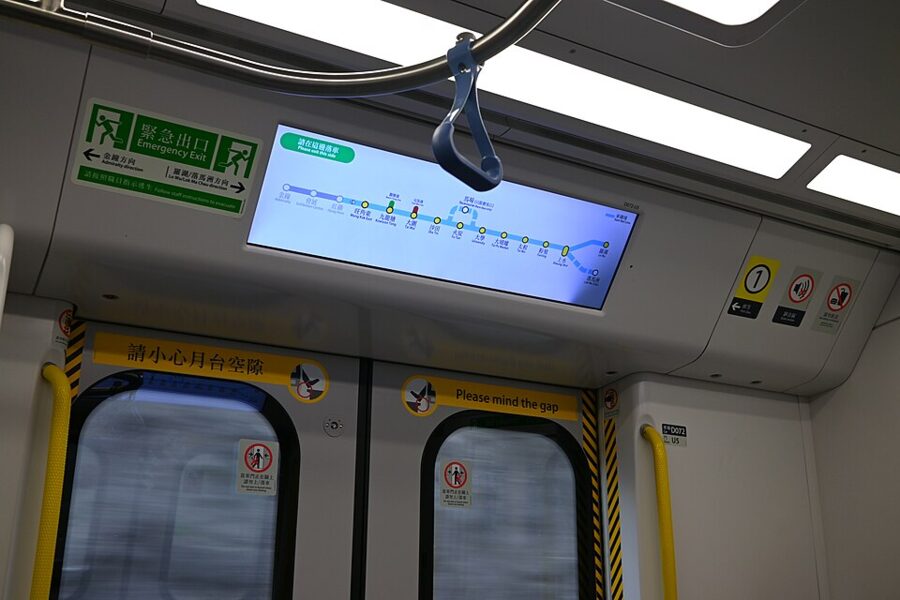
The East Rail Line now crosses the harbour, so Admiralty to Lo Wu is one train, about 45 minutes, if you are going to Shenzhen. On the Tuen Ma Line, Austin is the walk to West Kowloon station for the high-speed train to Guangzhou.
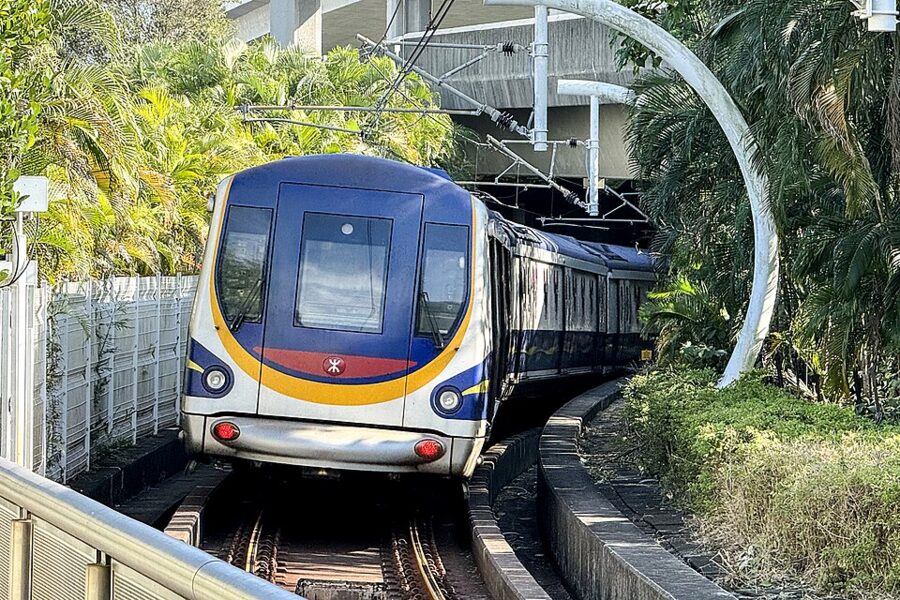

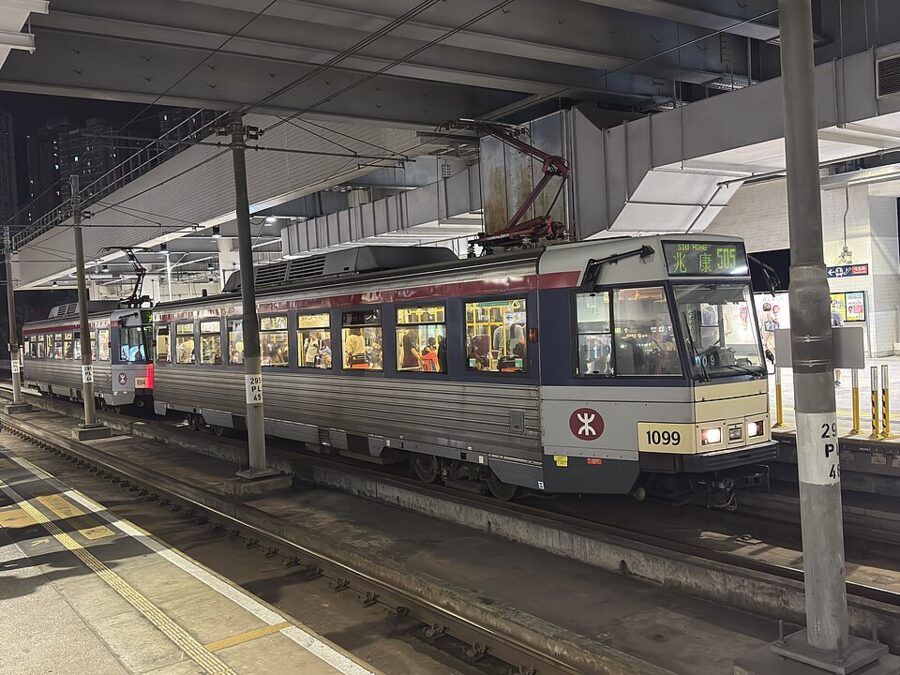
The Light Rail (輕鐵) serves Tuen Mun, Yuen Long and Tin Shui Wai, a long way from most hotels. It takes an Octopus but not bank cards. MTR’s system map page has the current map as a PDF, plus a street map for each station.

Fares, tickets and passes
An adult Octopus, a contactless bank card and an adult QR code pay the same fare; the single ticket costs a few dollars more and is valid only on the day you buy it. The differences are in the detail: an Octopus also works on the Light Rail and minibuses, and earns the discounts below. Bank cards are charged as one daily total, adult fare only, with no concessions, and your bank may add a foreign transaction fee. Children aged 3–11 pay roughly half on a Child Octopus or a QR code set to Child; a bank card always charges them the adult fare.
One trap: Tsim Sha Tsui and East Tsim Sha Tsui are two stations with separate gates. An Octopus treats the change as one journey if you make it within 30 minutes; a bank card or QR code charges it as two.
The Octopus earns two small savings a bank card does not. Weekday trips that exit a core urban station between 07:15 and 08:15 on an adult Octopus get 25% off, and the Fare Saver machines take HK$2 off a ride from named stations.
Tourist Day Pass
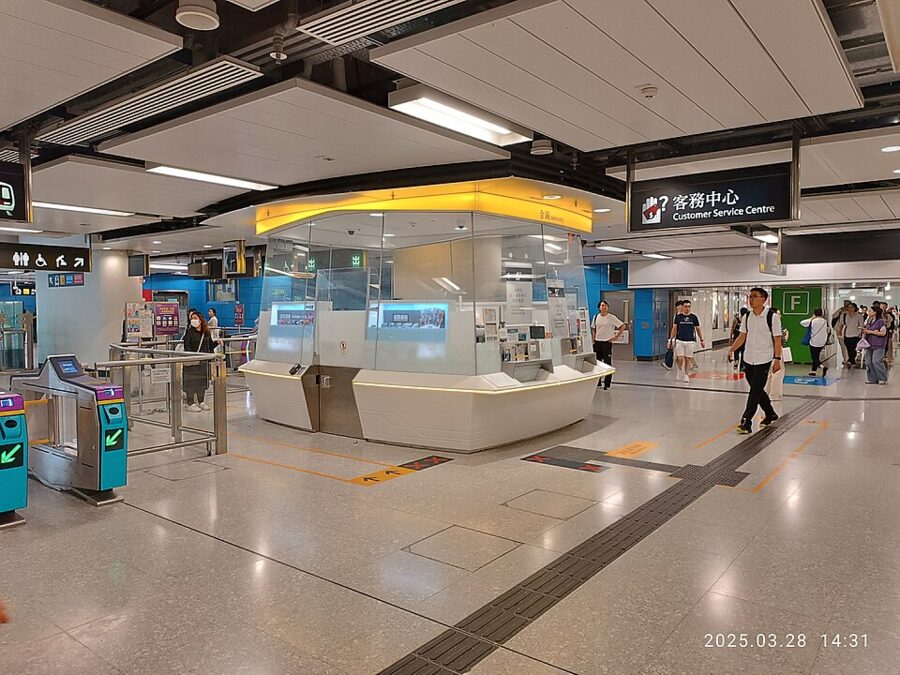
The Tourist Day Pass costs HK$75 for an adult and HK$35 for a child aged 3–11. It gives 24 hours of unlimited MTR, Light Rail and MTR Bus travel from your first entry, and you can use it any day within a month of buying it. It is sold only to visitors who have been in Hong Kong less than 14 days, at Customer Service Centres on showing your passport. It does not cover the Airport Express, East Rail first class or trips to Lo Wu and Lok Ma Chau, and several stations do not sell it, including Kai Tak, Wong Chuk Hang and the two border stations.
For most days it loses money. A full sightseeing day from Central to Tsim Sha Tsui, Mong Kok, Wong Tai Sin and back comes to under HK$40 on a card. The pass pays on the day you ride out to Tung Chung or Disneyland and back and still make three or four more trips.
Flying in, the Airport Express Travel Pass bundles one or two airport trips with three days of MTR travel, from HK$220.
Using the stations
Exits
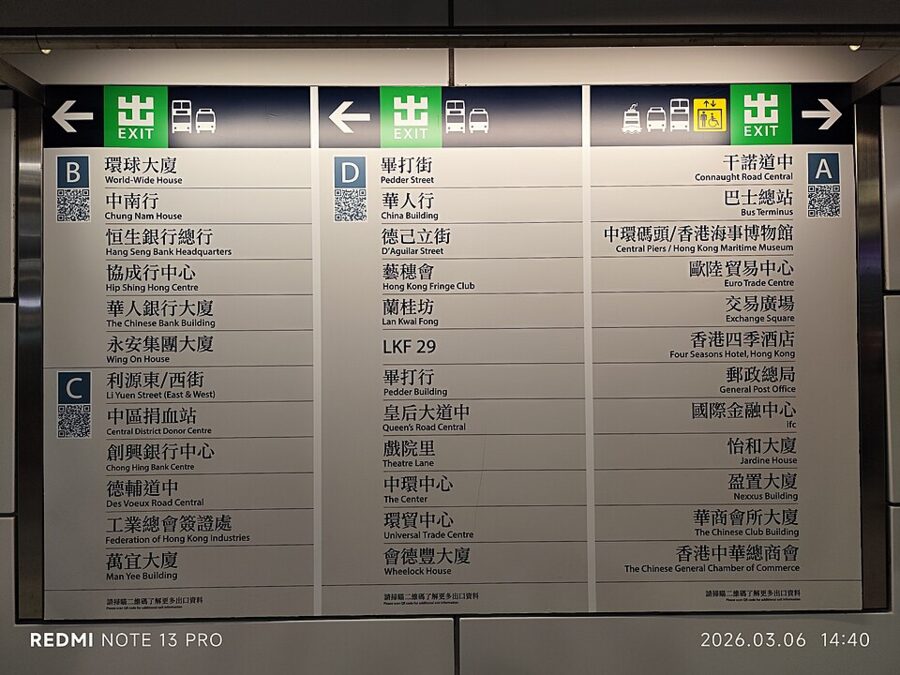
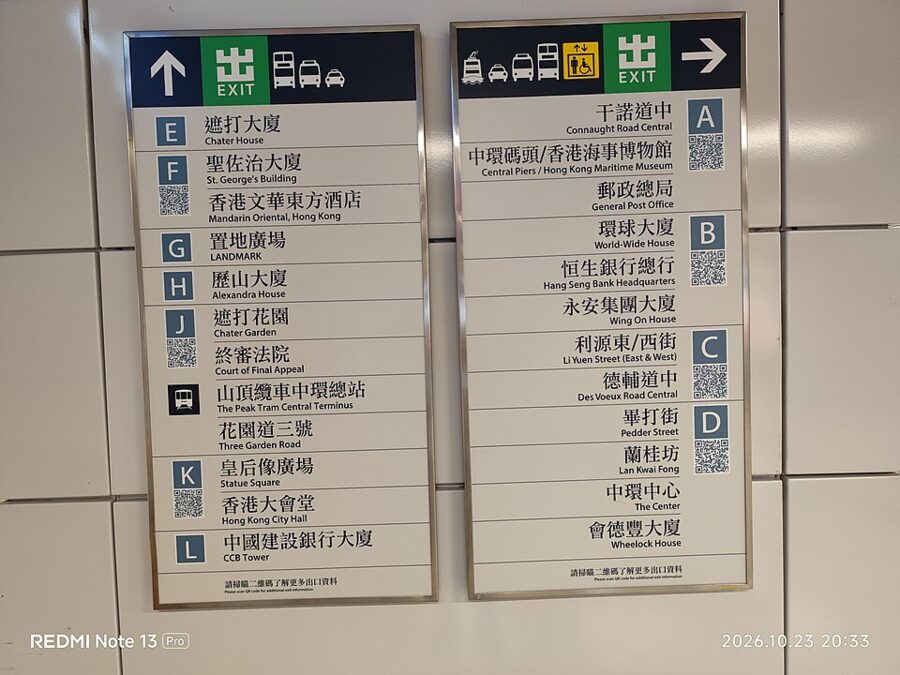
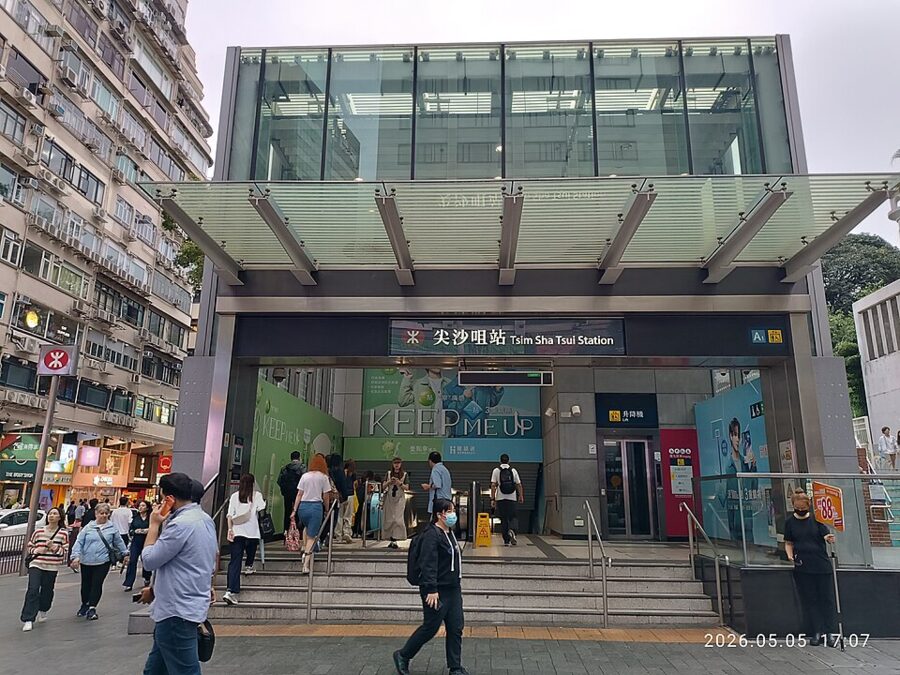
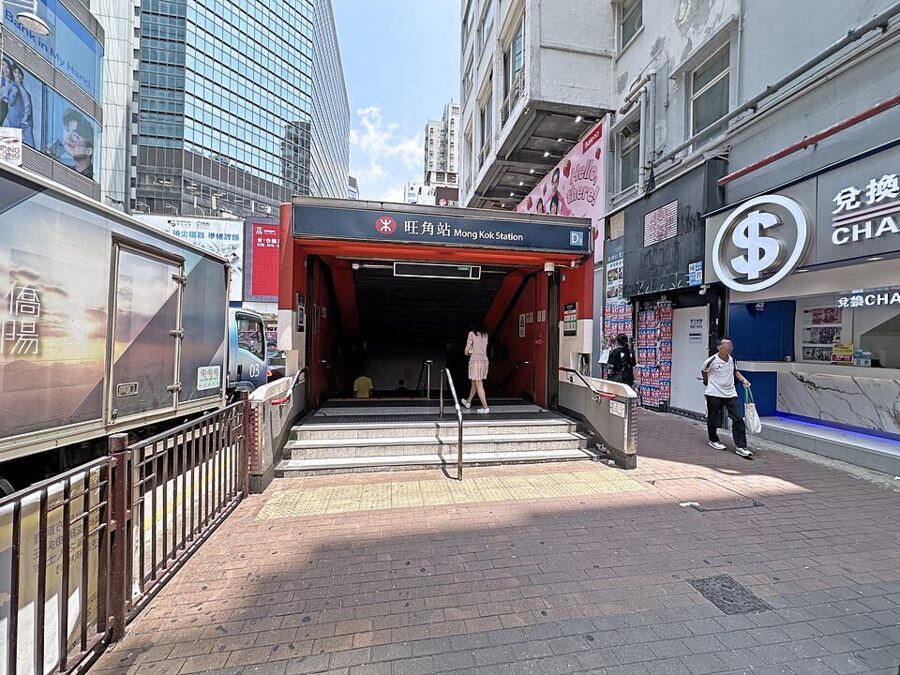
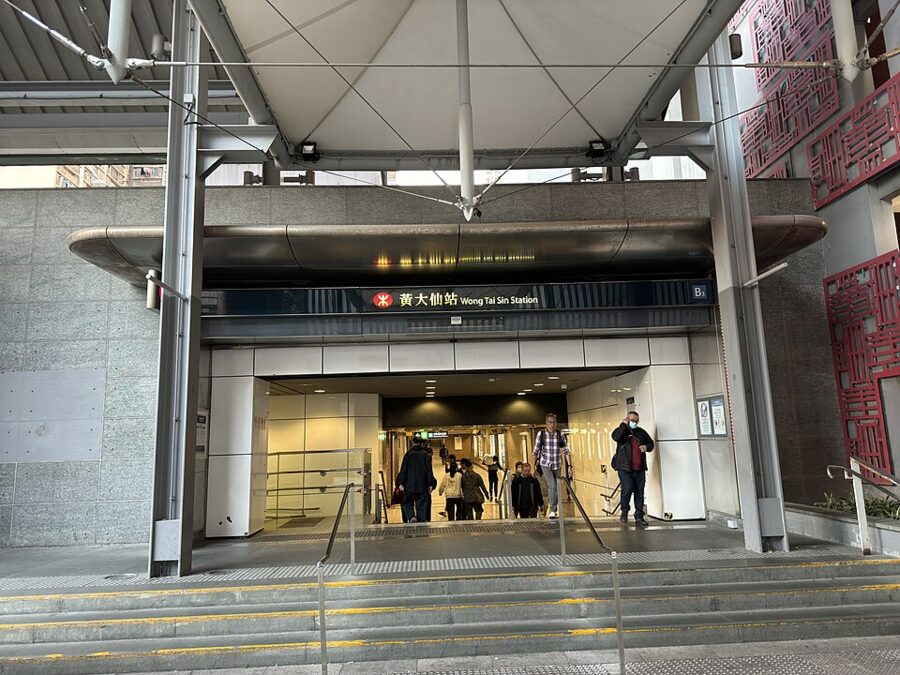
Every exit has a letter, and the bigger ones split into numbered staircases (A1, A2). Picking the right one saves a long walk above ground, and the green signs on the concourse list the buildings at each. MTR’s 2026 station street maps give these for the places most visitors head to:
- Central: D for Lan Kwai Fong, A for Central Piers and ifc mall, J2 for the Peak Tram and Victoria Peak.
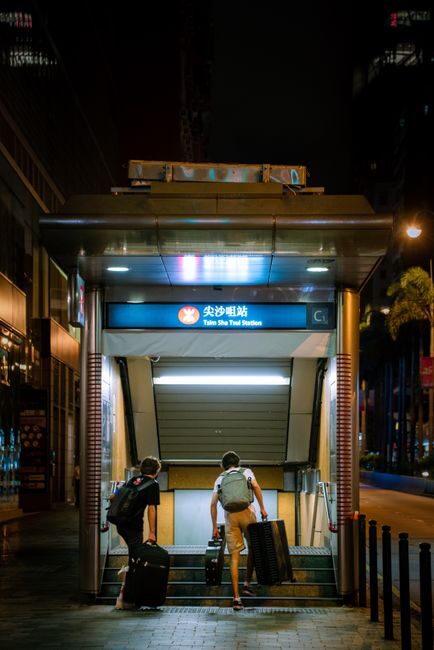
- Tsim Sha Tsui: A1 for Harbour City; E for the Clock Tower, the Cultural Centre, the Museum of Art and the Avenue of Stars; D1 for Chungking Mansions.
- East Tsim Sha Tsui: J for K11 MUSEA, L6 for 1881 Heritage.
- Mong Kok: D3 for the Ladies’ Market, E2 for Sneakers Street, B3 for the Goldfish Market.
- Wong Tai Sin: B3 for Sik Sik Yuen Wong Tai Sin Temple.


Changing lines
Changes are free inside the gates and well signed in English. At Admiralty the lines sit on different levels, and the escalators between them take a few minutes, so allow for it on a tight connection. MTR’s Trip Planner gives the route, the fare and the change for any pair of stations.
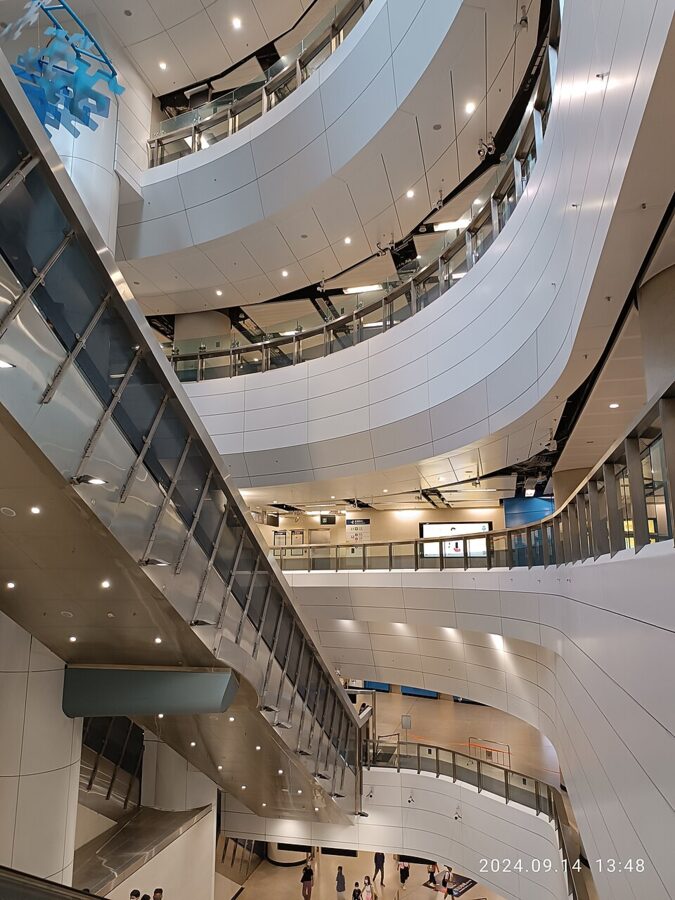
The MTR Mobile app
MTR Mobile is the official app and the one worth installing. It plans routes on the network map, shows fares and the next train, and sells electronic single tickets, including East Rail first class. The separate MTR · Care app lists lifts and step-free routes, with real-time lift maintenance.
Toilets, Wi-Fi and luggage
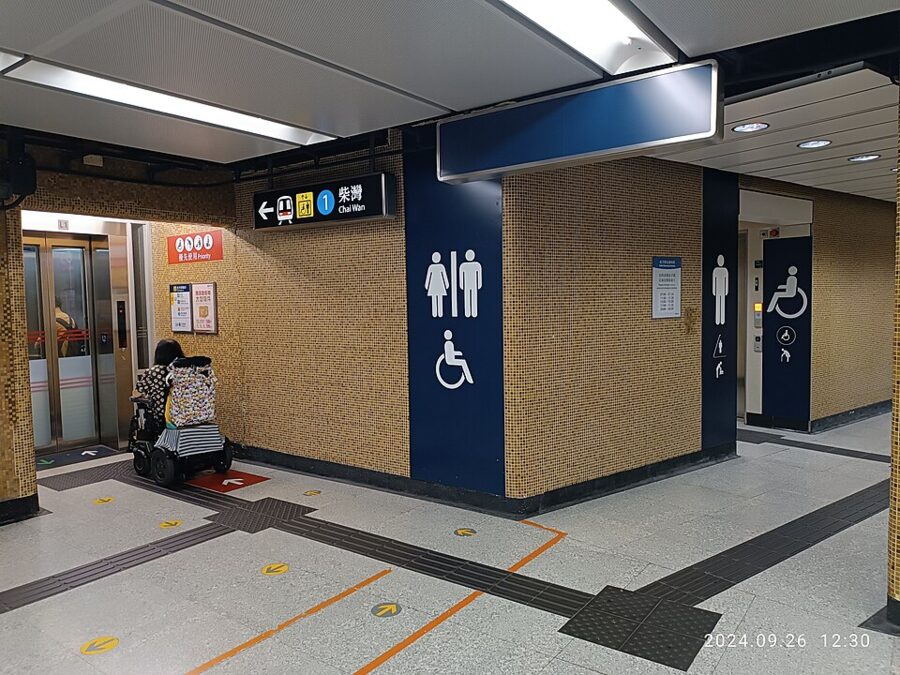
Not every station has a public toilet. Inside the gates there are toilets at Central (near Exit A), Admiralty, Mong Kok, Sheung Wan and North Point; Tsim Sha Tsui’s is outside the gates by Exit E, and Hong Kong station’s are outside the gates too. MTR’s toilet list covers every line.
Free Wi-Fi (“MTR Free Wi-Fi”) covers every concourse and platform, in 15-minute sessions, ten a day per device.
Luggage is limited to one piece per passenger, with length, width and height adding up to no more than 170 cm and no side over 130 cm. That covers most checked suitcases, but measure anything oversized before you set off. The rule does not apply on the Airport Express, and for a family with big cases a taxi from the station is often easier than two changes on foot.
First class on the East Rail Line
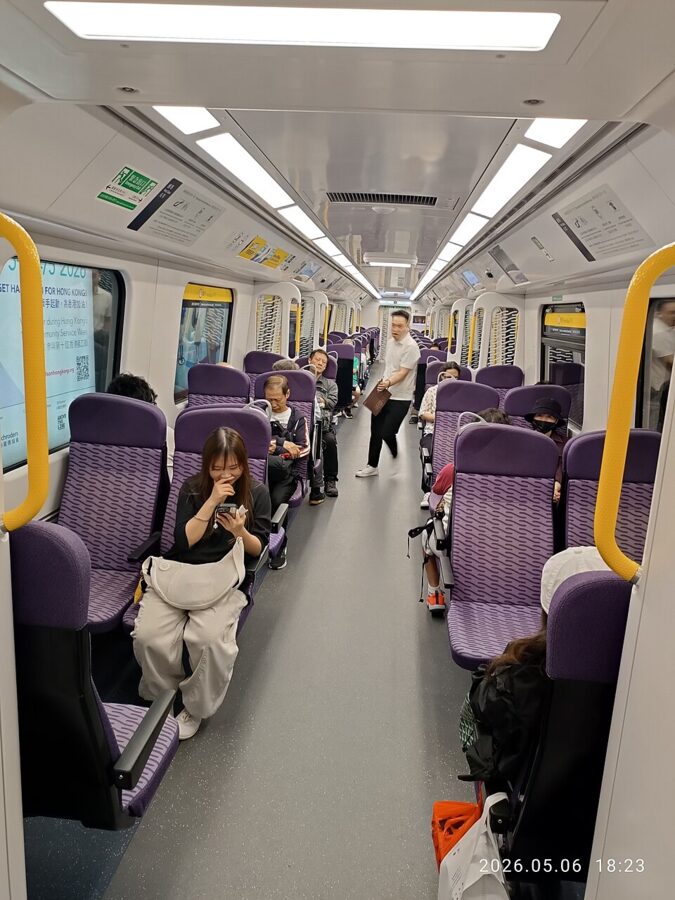
The East Rail Line is the only line with a first class car, and it costs double: HK$104.40 from Admiralty to Lo Wu against HK$52.20. On an Octopus, tap the first class processor on the platform before you board. With a bank card, MTR’s advice is to use the platform processor too, because the one beside the gangway door may not take it.
A QR code needs First Class selected before you enter the gate. Ride in first class without paying and the surcharge is HK$1,000; a Tourist Day Pass does not count.
Hours, frequency and festival nights
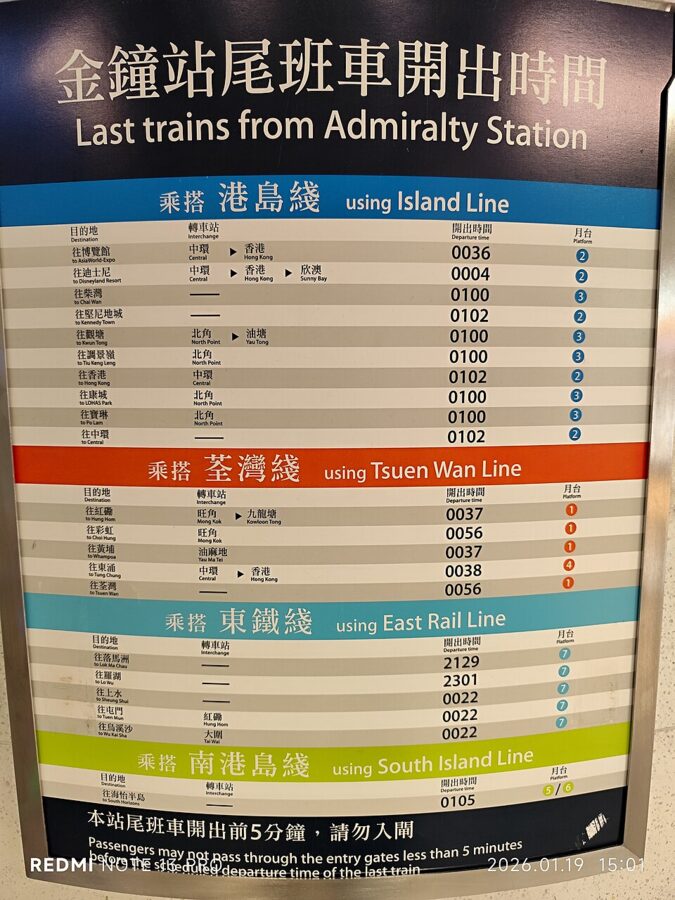
Stations open between about 05:20 and 06:00, and the first trains leave around 06:00. Last trains on the main lines leave between about 00:30 and 01:10, but check yours: the last Tsuen Wan Line train from Central to Tsuen Wan is 00:54, and the last Island Line train from Admiralty to Kennedy Town is 01:02. Gates stop letting you in five minutes before the last train.
The border runs earlier. As of November 2026 the last East Rail train from Admiralty to Lo Wu leaves at 23:01 and the last to Lok Ma Chau at 21:29. MTR’s service hours search has every station’s first and last trains.
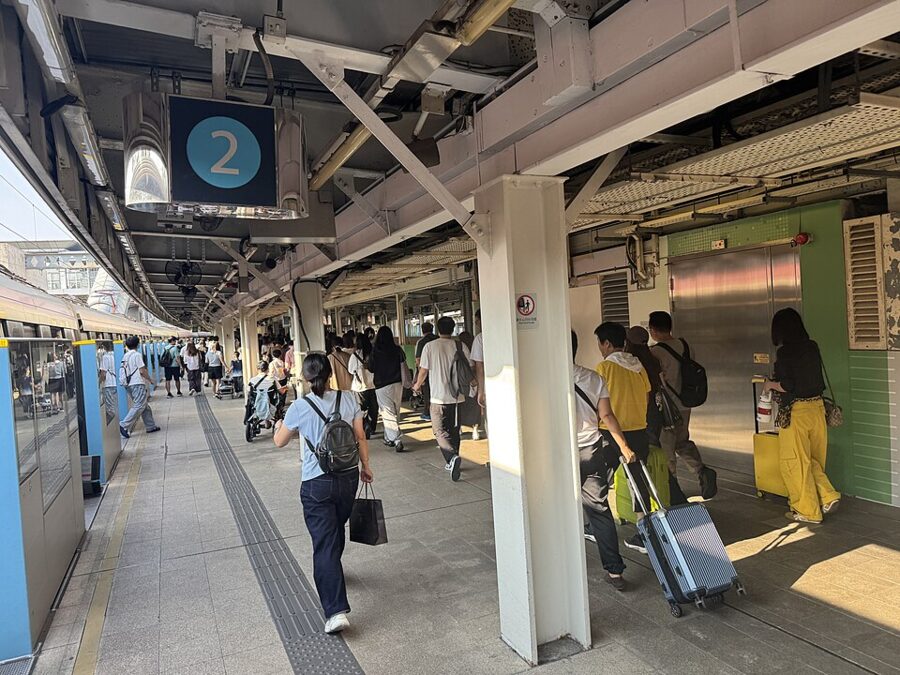

In town, trains come every two minutes or so at the weekday peaks and every three to five minutes the rest of the day, stretching to 12 minutes early and late. The East Rail branch to Lok Ma Chau is the slow one, at 8–14 minutes.
On Lunar New Year‘s Eve, Mid-Autumn, Christmas Eve and New Year’s Eve, MTR runs extra trains. For Christmas Eve and New Year’s Eve 2025 most lines ran all night, except the Airport Express, the Disneyland Resort Line and the border stations. MTR announced the 2025 plan on 18 December, so look for this year’s in the week before Christmas. When the trains stop, the night airport buses and taxis take over.
Rules, etiquette and accessibility
No eating or drinking anywhere past the gates, trains and platforms included; the by-laws set a fine of up to HK$2,000. Smoking carries up to HK$5,000 and feet on the seats up to HK$2,000. A bottle of water in your bag is fine; drinking it on the platform is not.
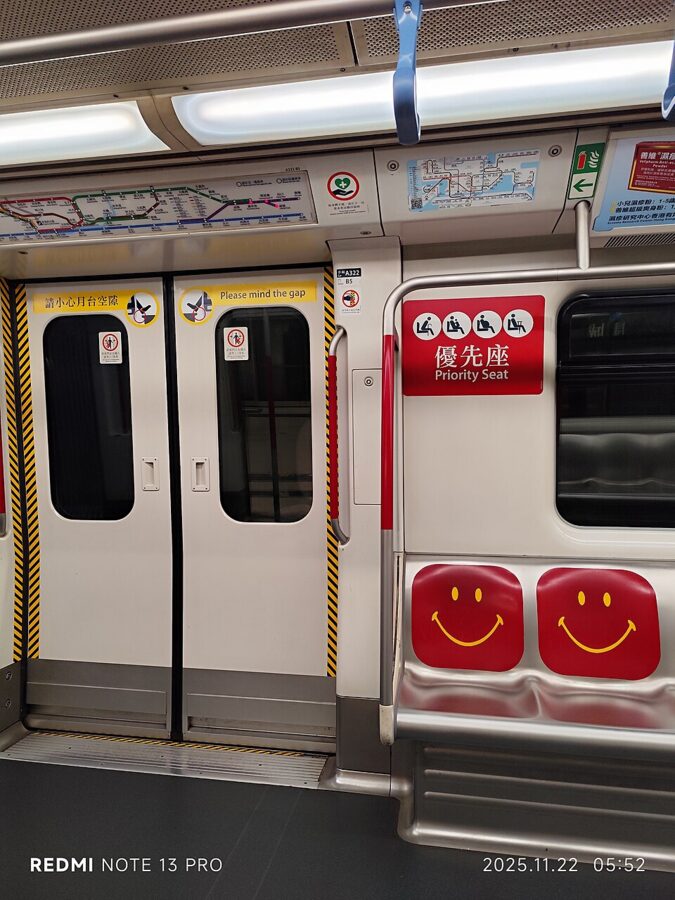
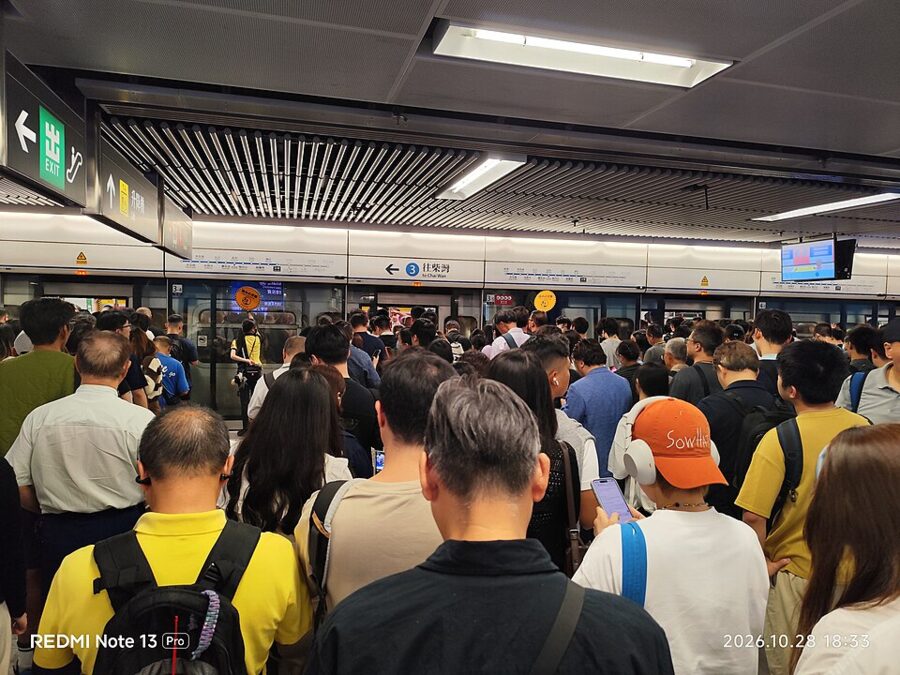
Stand aside at the doors until people are off, take your backpack off in a crowd, and leave the red priority seats for older passengers, pregnant women and anyone who needs them. Weekday mornings and early evenings are crowded at Admiralty, Central and Mong Kok; if your day is flexible, travel after 10:00.
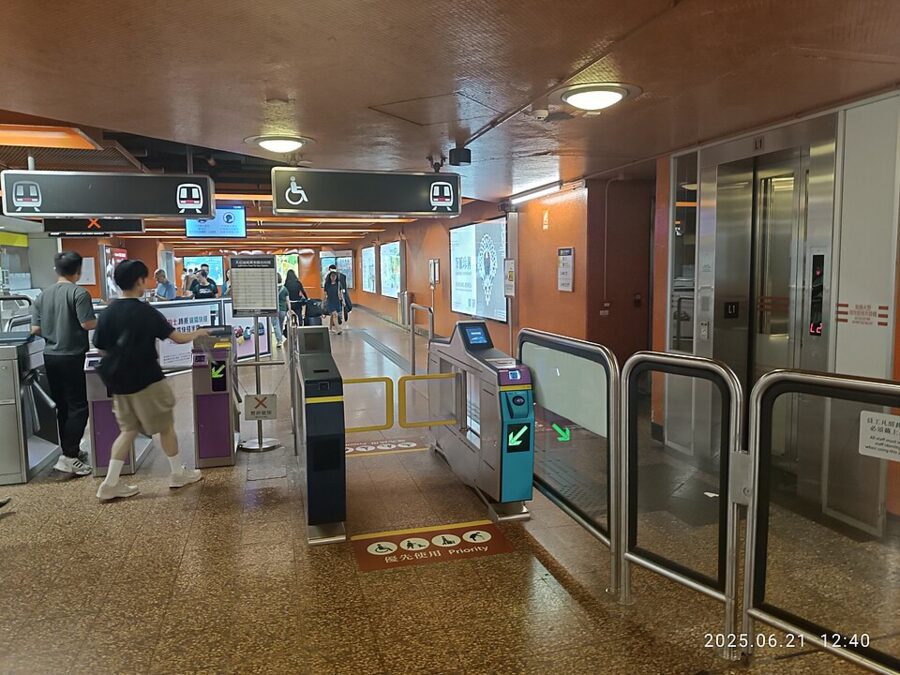
Stations have lifts, but not at every exit. MTR’s barrier-free search lists them: street lifts at Central Exit A, Admiralty Exit E, Tsim Sha Tsui A1, Mong Kok A1, Causeway Bay D1 and Sheung Wan E3. Use the wide gate with a wheelchair, a pram or a big case. In the MTR · Care app, wheelchair users can book a portable ramp in advance.
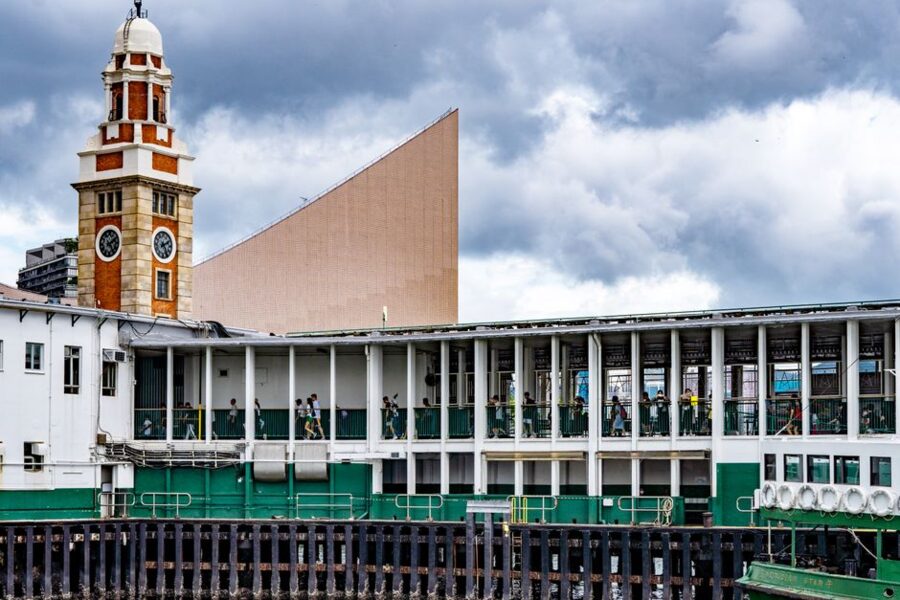
Back at Central, then: card or phone in hand, Tsuen Wan Line towards Tsuen Wan, and Exit E at Tsim Sha Tsui for the harbourfront. If that is day one of your Hong Kong itinerary, the next things to do in Hong Kong are all within a few stops.