

The officer at the arrivals counter in Hong Kong International Airport needs one thing from you: the passport. There is no arrival card to fill in and no fee to pay, and about 170 nationalities need no visa. The passport decides how long the paper landing slip handed back with it lets you stay, anywhere from 180 days down to seven.
As of November 2026, these are the visa-free stays on the Immigration Department’s visa requirements list (last revised 22 September 2026). Find your passport, then read the section that fits your case.
| Visa-free stay | Main passports |
|---|---|
| 180 days | British citizens only, on a full British citizen passport |
| 90 days | United States, Canada, Australia, New Zealand, every EU country, Switzerland, Norway, Japan, South Korea, Singapore, Malaysia, Brazil, Mexico, Argentina, Chile, Israel, Saudi Arabia, Türkiye, Egypt, Kenya; other British nationals (Overseas Territories citizens, British Overseas citizens) |
| 30 days | Thailand, Indonesia, United Arab Emirates, Qatar, Kuwait, Oman, Bahrain, Jordan, South Africa, Morocco, Tunisia, Peru, Costa Rica, Georgia, Armenia, Belarus; Nicaragua and Solomon Islands since 26 August 2026 |
| 14 days | Philippines, Russia, Ukraine, Kazakhstan, Mongolia, North Macedonia, Montenegro, Bosnia and Herzegovina, biometric Serbian and Albanian passports; India, but only after free online pre-arrival registration |
| 7 days | Any foreign nationality the list does not name |
| Visa first | Vietnam, Cambodia, Laos, Myanmar, Nepal, Bangladesh, Sri Lanka, Pakistan, Nigeria, Ghana, Ethiopia, Uzbekistan, Kyrgyzstan, Tajikistan, Turkmenistan, Azerbaijan, Cuba, Lebanon, Iran, Iraq, Syria, Afghanistan, stateless travel documents, and others marked on the list |
The full list, country by country, is on the Immigration Department’s visa requirements page. Holders of a Hong Kong permanent identity card or an HKSAR passport need nothing at all, and residents of the mainland, Macau and Taiwan have their own arrangements, covered further down.



In this article
What the officer checks on arrival
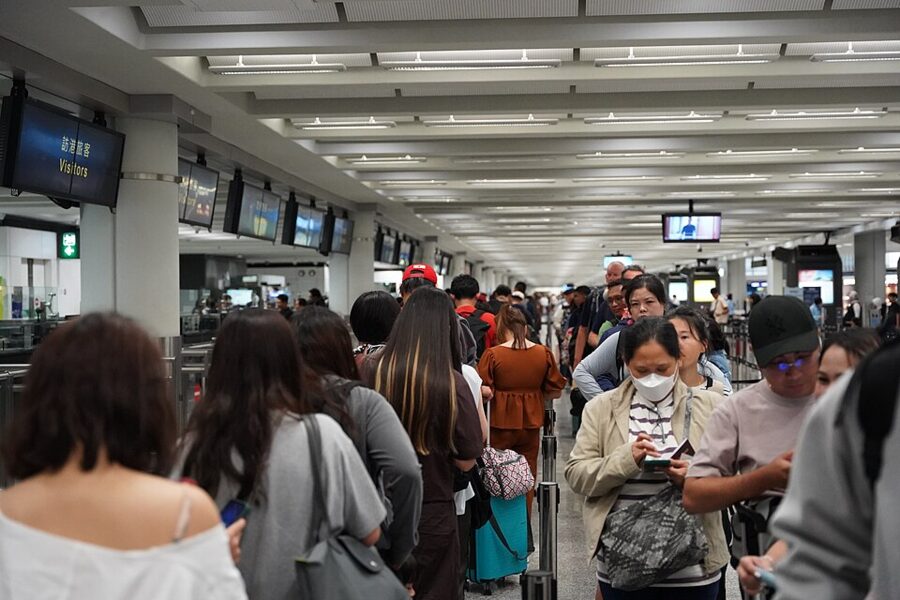
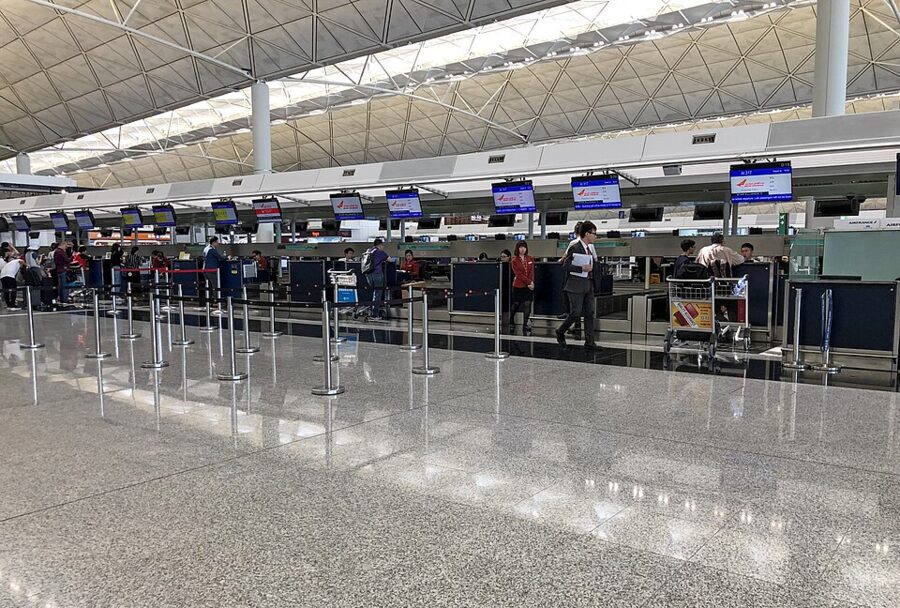
A visa-free passport is a right to ask, not a guarantee. The Immigration Department reserves the right to refuse anyone without a right of abode or right to land, and the conditions it sets for every visitor are short: enough money to cover your stay without working, and an onward or return ticket. The ticket rule is waived if you are going on to the mainland or Macau.
Passport validity trips people at check-in, not at the counter. Hong Kong’s list sets no minimum except in the two online registration schemes, which want six months. The British, American and Canadian governments tell their citizens to have at least a month left after leaving Hong Kong, and an airline may want more, so renew a passport close to expiry before you book.
There is no arrival or departure card to fill in. You get a landing slip instead, a small printed paper with your name, limit of stay and conditions of stay; keep it with your passport until you leave.
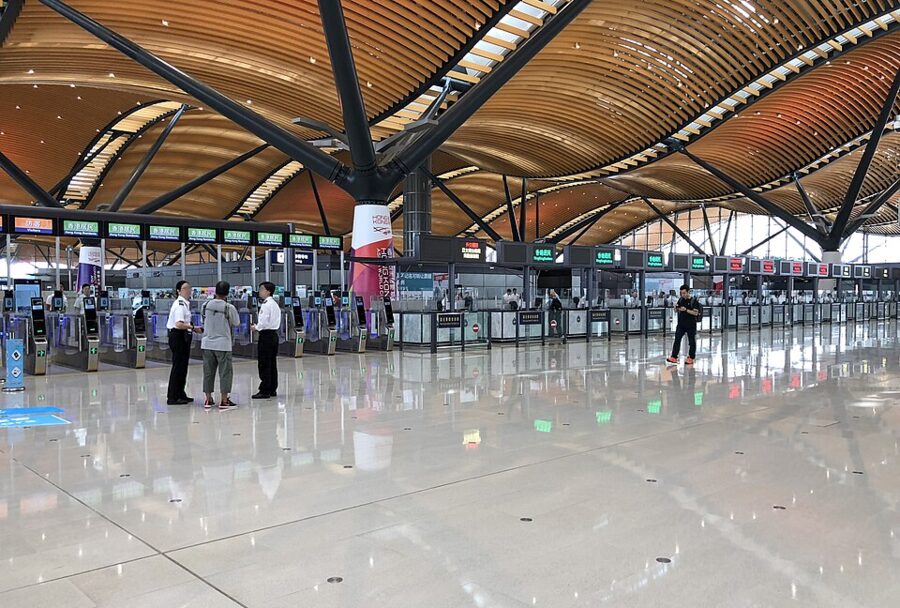

e-Channel for visitors, and the new Go Hong Kong app
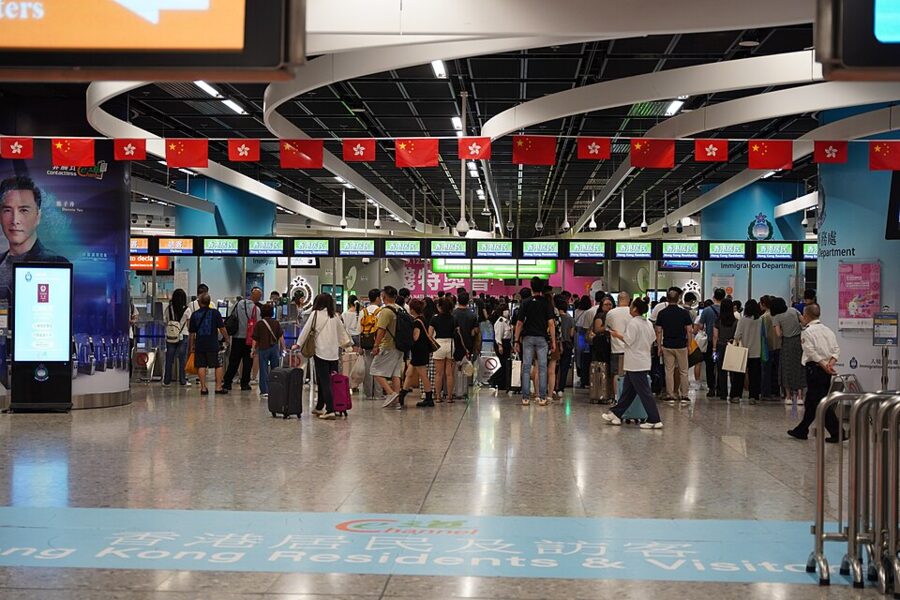
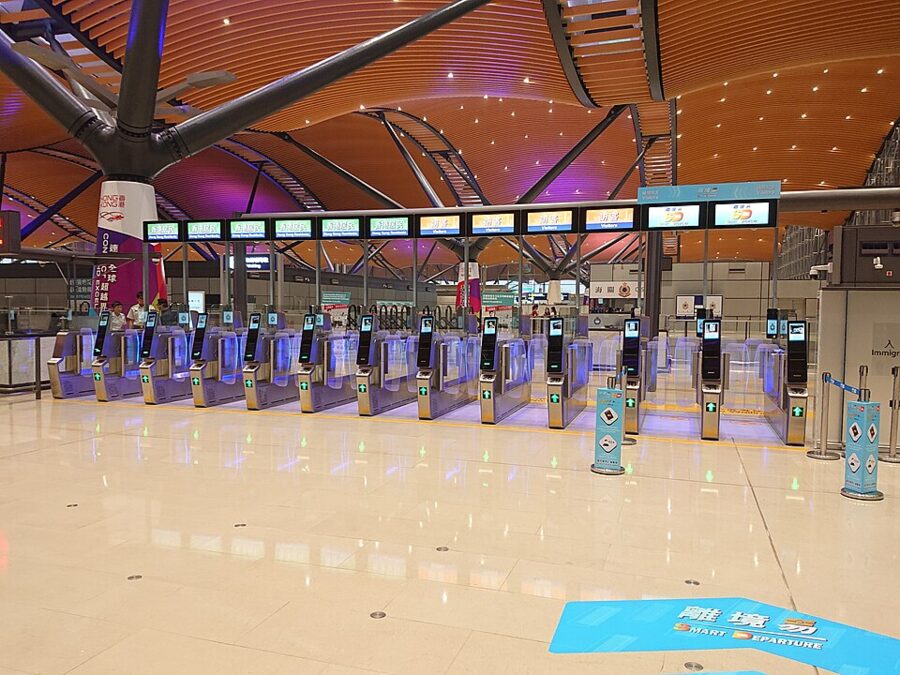
Leaving is the easy half. “Smart Departure” lets a visitor aged 7 or over (at least 1.1 m tall) on an electronic passport from a designated country use the departure e-Channel without enrolling: scan the photo page, look at the camera, walk out. Your landing slip carries the Smart Departure logo if you qualify.
Arriving through the gates needs a free enrolment. Australian (16 and over), German (18 and over), Singaporean (11 and over), South Korean (17 and over) and Thai (11 and over) passports have reciprocal schemes. Anyone else aged 18 or over qualifies as a frequent visitor after two or more arrivals through Hong Kong International Airport in the past 24 months, or with an HKSAR Travel Pass, an APEC Business Travel Card marked HKG or a participating airline’s frequent flyer card.
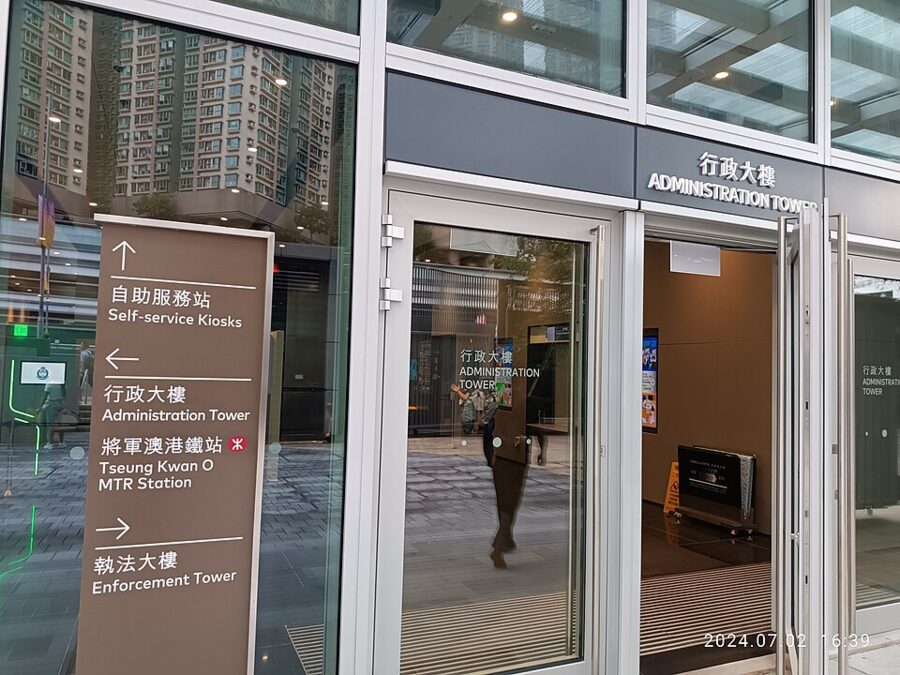
Since 16 September 2026 the Go Hong Kong app does the enrolment on your phone before you fly: you need NFC to read the passport chip, an expected arrival date within three months, and a face scan. The answer normally comes within 24 hours, and you must arrive by the date you gave or the enrolment lapses. In person, the enrolment offices are in the Terminal 1 Arrival North and South Halls, after the arrival counters and before baggage reclaim (07:30–23:00), and on the 7th floor of the Administration Tower at Immigration Headquarters in Tseung Kwan O (Monday to Friday, 08:45–17:00).
Enrolment lasts two years and renews for another two each time you enter, until the passport expires. Since 27 February 2026 electronic passport holders give no fingerprints; the gate checks your face. If you land here twice a year, enrol on the second trip.

Pre-arrival registration for Indian and Taiwan passports
Indian nationals
An Indian passport gets 14 days visa-free, but only after a free online registration done before you travel. The pre-arrival registration form is on GovHK; your passport must have at least six months left, and the details you enter must match it exactly. The result appears on screen straight away.
Print the notification slip on blank white A4 paper and sign it (a parent or guardian signs for anyone under 16). The airline checks the slip and the same passport before you board, and the officer checks them again on arrival. One registration is valid for six months and covers any number of visits of up to 14 days each, and you can only register again once it expires. Renew your passport and you must register again on the new one.
You do not need to register if you stay airside on a direct transit, hold a diplomatic or official passport, have already enrolled for e-Channel as a frequent visitor, hold an HKSAR Travel Pass or already have a Hong Kong visa. For more than 14 days, or if the registration fails, apply for a visa directly to the Immigration Department: Chinese embassies and consulates do not accept visit visa applications from Indian nationals, and it normally takes four weeks.

Taiwan residents
Taiwan residents in Taiwan use a separate free registration at gov.hk/par. You qualify if you were born in Taiwan (or were born elsewhere and have entered Hong Kong as a Taiwan resident before) and hold no travel document from any other authority apart from the Mainland Travel Permit for Taiwan Residents (台胞證). Your Taiwan travel document must have six months left for re-entry to Taiwan, and the slip is printed on A4 and signed, as for India.
The registration is valid for two months and two entries, each of up to 30 days. Holders of a valid Mainland Travel Permit for Taiwan Residents can skip it and enter for up to 30 days on the permit. For other trips, authorised airlines in Taiwan lodge entry permit applications, and a multiple entry permit through them takes two working days. The permit fees are HK$330 for a single entry, HK$670 for a one-year multiple and HK$1,350 for a three-year multiple, plus whatever handling fee the airline charges.

Applying for a Hong Kong visa
You need a visa before you travel if your passport is marked “visa required”, if you want to stay longer than your visa-free period, or if you are coming for anything other than a visit. Get it before you fly; there is no visa on arrival. The application, form ID 1003A for you and ID 1003B for a sponsor if you have one, can go in four ways:
- Online through GovHK, uploading the documents.
- By post to the Receipt and Despatch Sub-Unit, Ground Floor, Administration Tower, Immigration Headquarters, 61 Po Yap Road, Tseung Kwan O, yourself or through a sponsor in Hong Kong.
- In person at the Chinese embassy or consulate where you live; some pass Hong Kong visas to the Chinese Visa Application Service Center.
- Living in the mainland on a foreign passport, at the Hong Kong government’s Beijing Office or its Shanghai Economic and Trade Office, which take about three working days.
A sponsor helps but is not required. It can be a company or a person aged 18 or over who lives in Hong Kong and knows you. Send a photo, a copy of your passport, proof of money (bank statements) and of your job, your flight itinerary and something that shows the purpose of the trip, such as a tour booking or an invitation letter.
Processing normally takes four weeks from the day every document has arrived. The fees, as of November 2026, are HK$330 for a visit visa and HK$170 for a transit visa. If you applied to the Immigration Department, the approval email carries a payment link: pay by card (Visa, Mastercard, UnionPay or JCB), FPS, PPS, Alipay or WeChat Pay, then download the e-Visa and show it at the counter on your phone or printed on A4. Applied through a Chinese embassy, you pay there and get a label in your passport.
Frequent travellers from visa-required countries can ask for a multiple-journey visa after three trouble-free visits in 12 months. Vietnam (since October 2023), Cambodia, Laos and Myanmar (October 2024) and four Central Asian states (September 2025) have an easier test: a genuine need plus three trouble-free trips in 36 months to Hong Kong or to two or more other countries. Tour groups from those first four that apply through a licensed Hong Kong travel agent get an answer in about two weeks.
None of this gets you into the mainland. Hong Kong runs its own border, and a China visa is a separate application to a separate government.
Transit without entering Hong Kong
If you change planes and never leave the transit area, most passports need nothing, including most of the visa-required ones and Indian passports without a registration. The exception is a list of nationalities that need a Hong Kong visa even to stay airside: Afghanistan, Angola, Bangladesh, Burundi, Cameroon, Central African Republic, both Congos, Côte d’Ivoire, Eritrea, Eswatini, Ethiopia, Gambia, Ghana, Guinea-Bissau, Iran, Iraq, Liberia, Libya, Nigeria, North Korea, Pakistan, Rwanda, Sierra Leone, Somalia, South Sudan, Sri Lanka, Sudan, Syria, Togo and Yemen.
Step outside and you are a visitor on your passport’s normal terms; a transit visa, for those who need one, costs HK$170. PRC passport holders passing through to or from another country get seven days without an entry permit if they hold entry papers for the destination and a confirmed onward booking, and Macau SAR passport and travel permit holders get the same seven days. If your passport lets you out, a long airport layover is enough for a few hours in the city.
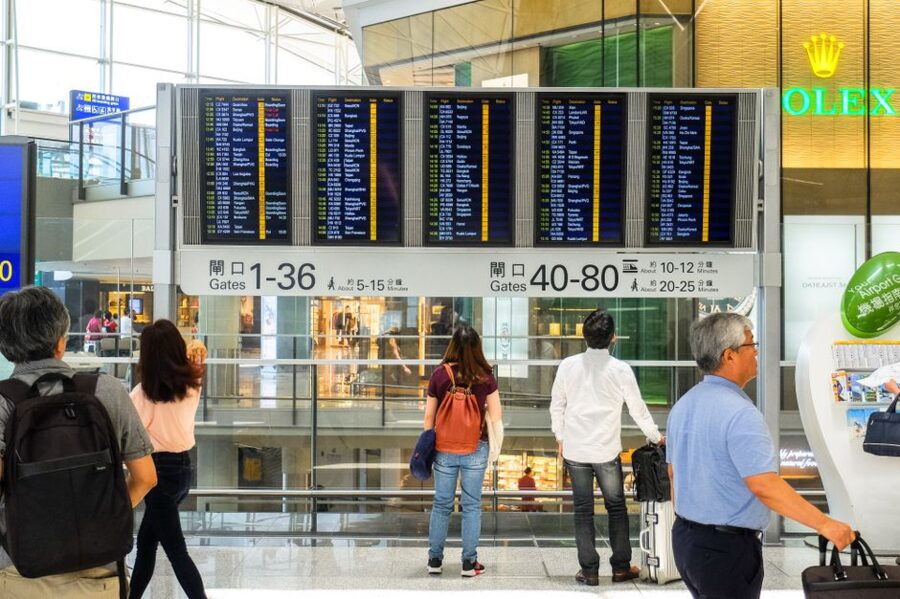
Mainland, Macau and Hong Kong passports
Mainland residents
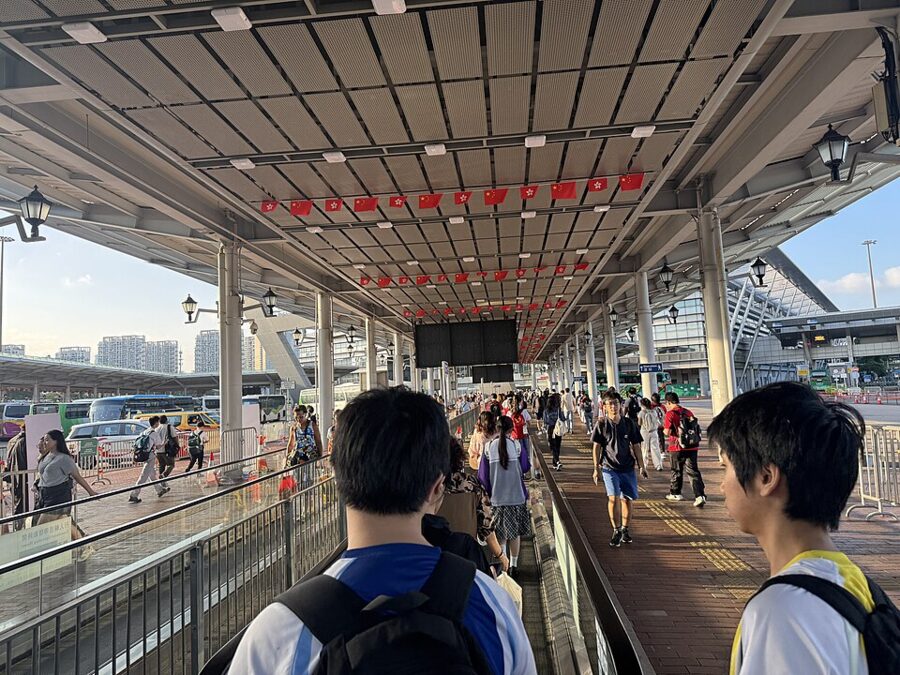
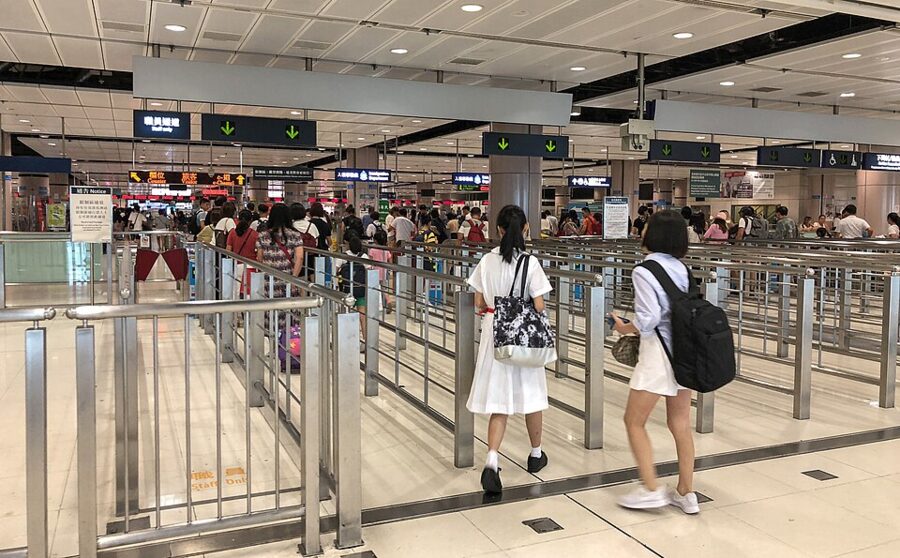
Mainland residents cannot visit on a passport. They need the Exit-entry Permit for Travelling to and from Hong Kong and Macao (往來港澳通行證) with an endorsement from their Public Security Bureau office for family, a group tour, business or an individual visit. Individual visits are open to residents of Guangdong and 38 other cities, Beijing, Shanghai and Chengdu among them. The limit of stay follows the endorsement, and since September 2008 Macau has refused entry from Hong Kong to EEP holders without a Macau endorsement.
A PRC passport works only for transit, the seven days above. Holders of the electronic EEP aged 7 or over with a valid Hong Kong endorsement can use the e-Channels without enrolling.


Macau residents
Macau permanent residents with a Macau smart permanent identity card, or with the Visit Permit for Residents of Macao SAR to HKSAR and proof of permanent status, can stay 180 days. Non-permanent residents on the visit permit get 30 days each time. Both can enrol for the e-Channels.

HKSAR passports, permanent residents and BN(O)
An HKSAR passport, a Hong Kong permanent identity card, or a travel document endorsed with the right to land needs no visa for any purpose. Permanent residents who travel on a foreign passport show the permanent identity card at the counter and are cleared as residents, not visitors.
The British National (Overseas) passport has not been accepted for immigration clearance or as proof of identity in Hong Kong since 31 January 2021, and the British government’s own travel advice still says so. Airlines must ask Hong Kong residents boarding for Hong Kong for an HKSAR passport or permanent identity card instead. A BN(O) holder with no other passport and no Chinese nationality can apply for an HKSAR Document of Identity for visa purposes.
Staying longer, overstaying and working
An extension is for a special or urgent need, not for a longer holiday, and it is decided case by case. You must be in Hong Kong to apply: online once your remaining stay is 14 days or less, or in person in the last 7 days. Bring form ID 91, your passport and proof of the reason, an onward ticket and evidence of funds. Approval costs HK$330, paid online or at the office, and you then download an e-Visa with the new date.
Online applications are normally decided the next working day. In person, the Extension Section is on the 5th floor of the Administration Tower at Immigration Headquarters, 61 Po Yap Road, Tseung Kwan O (Monday to Friday, 08:45–17:00), and usually decides the same day. The branch offices take extensions too, except from mainland visitors: the handiest is the West Kowloon Office at 28 Kimberley Street, Tsim Sha Tsui (MTR Tsim Sha Tsui, Exit B2), open Monday to Friday 09:00–12:45 and 14:00–16:30, and Saturday 09:00–12:30.
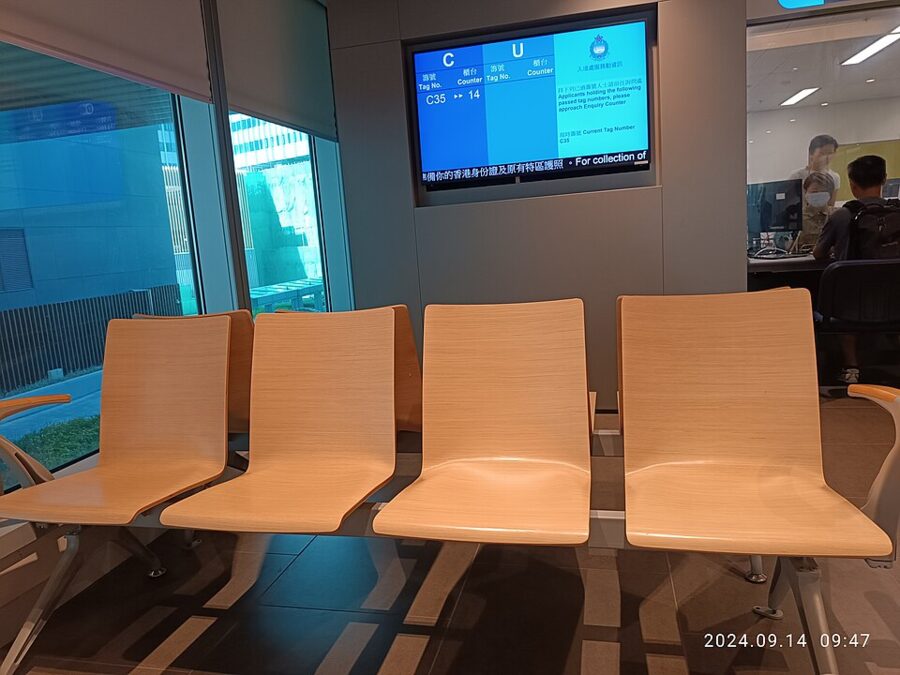
A pending application does not stretch your stay. Unless it is approved, you must leave by the date on your landing slip, and staying past it is overstaying. If you applied online on your last day, keep the Immigration Department’s receipt email or check the status on its app to show that the application is in.
As a visitor you may not work, paid or unpaid, set up or join a business, or study. Breaking a condition of stay carries a maximum fine of HK$50,000 and two years in prison. Meetings, short seminars, signing contracts and exhibiting at trade fairs are allowed; selling to the public or building the stand is not. Unpaid speeches are fine for up to 14 consecutive days.
Back at that airport counter, all of this comes down to the passport you hand over and the slip you get back. Tonight, check your row in the table and register or apply if it says so. Then put the landing slip inside the passport when the officer returns it; the date printed on it is the one that counts.