

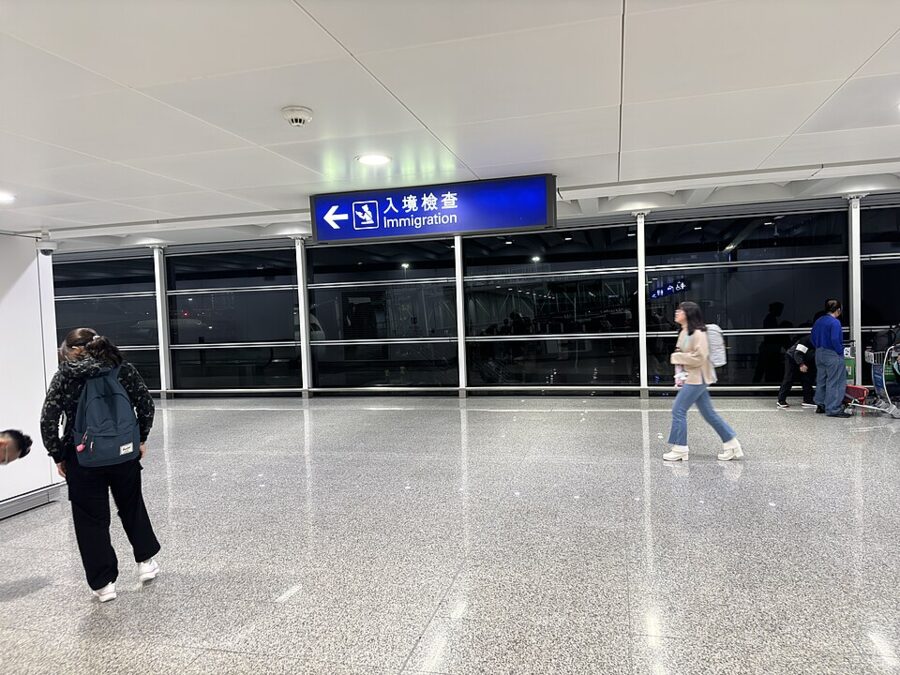
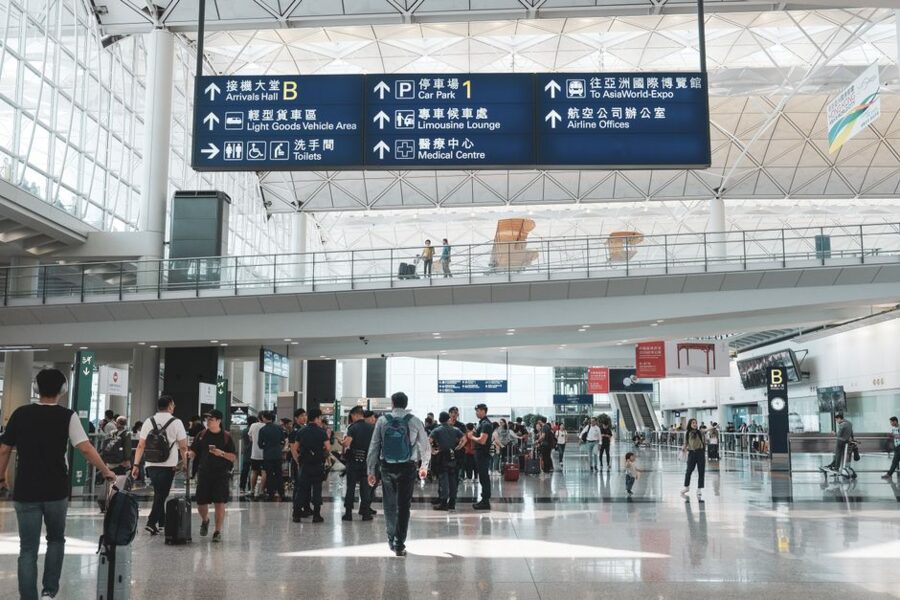
At the end of the arrivals corridor in Terminal 1 the signs split. Immigration (入境檢查) points one way, the transfer signs the other, and the choice you make there decides your layover: once you follow the transfer signs through security, the only way out is a gate. So decide before you walk, and decide by the clock.
As of November 2026, this is how I would spend a layover at Hong Kong International Airport, assuming your passport lets you enter Hong Kong (more on that below):
| Time on the ground | What to do |
|---|---|
| Under 4 hours | Stay airside. Transfer, shower for free, eat, find your gate. Leaving would give you minutes in town, not hours. |
| 4–6 hours | Stay airside and buy a few hours in a pay-in lounge, or sleep in a free resting lounge. At the six-hour end, Tung Chung and the cable car become possible. |
| 6–10 hours | Go into town for one plan: Ngong Ping, Central and the Peak, or the Tsim Sha Tsui waterfront. Be back at the airport two hours before departure. |
| Overnight | If your flight leaves after 06:00, sleep at an airport hotel or in town. Between the last train at 00:48 and the first at 05:54, a 24-hour lounge airside is the easier bed. |
The arithmetic: allow about 75 minutes from landing to sitting on a city-bound train, and be back at the airport two hours before departure. A six-hour layover leaves roughly two hours outside.


In this article
Changing planes: transfer desks, security and Terminal 2
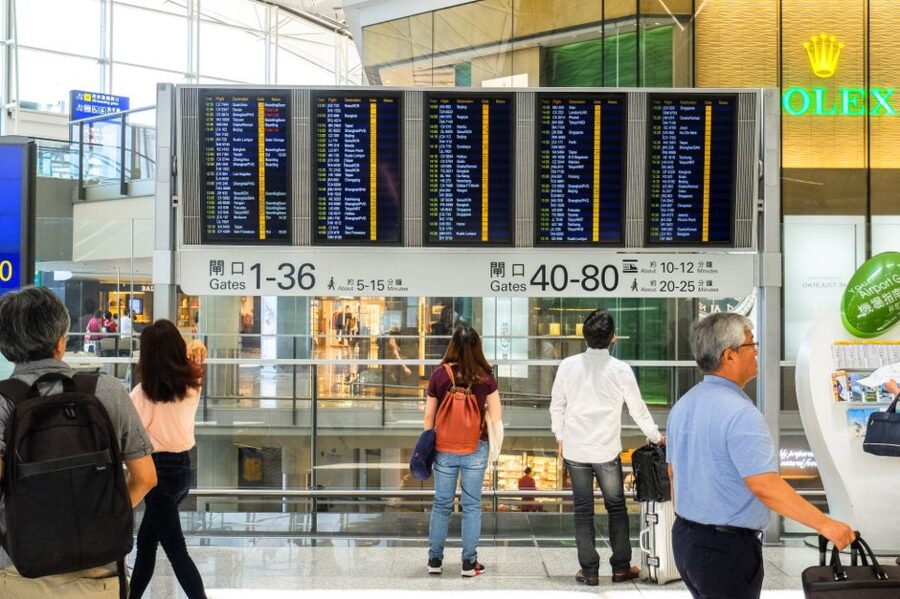
If you are staying airside, the routine is short. With your onward boarding pass already in hand, follow the transfer signs up to the departures level and go through transfer security; you never see immigration or the baggage hall. Without the boarding pass, go first to your airline’s transfer desk: Cathay Pacific uses W1 and HK Express E1, and the Airport Authority’s airline list gives the desk for every other carrier. How bags and boarding passes work on Cathay connections and separate tickets has its own page.
One security detail catches people every day. Duty-free liquids in a sealed bag from your first airport go through a separate liquids scanner at transfer security, and the bag may be opened and resealed in a new one. Allow a few extra minutes if you are carrying a bottle.
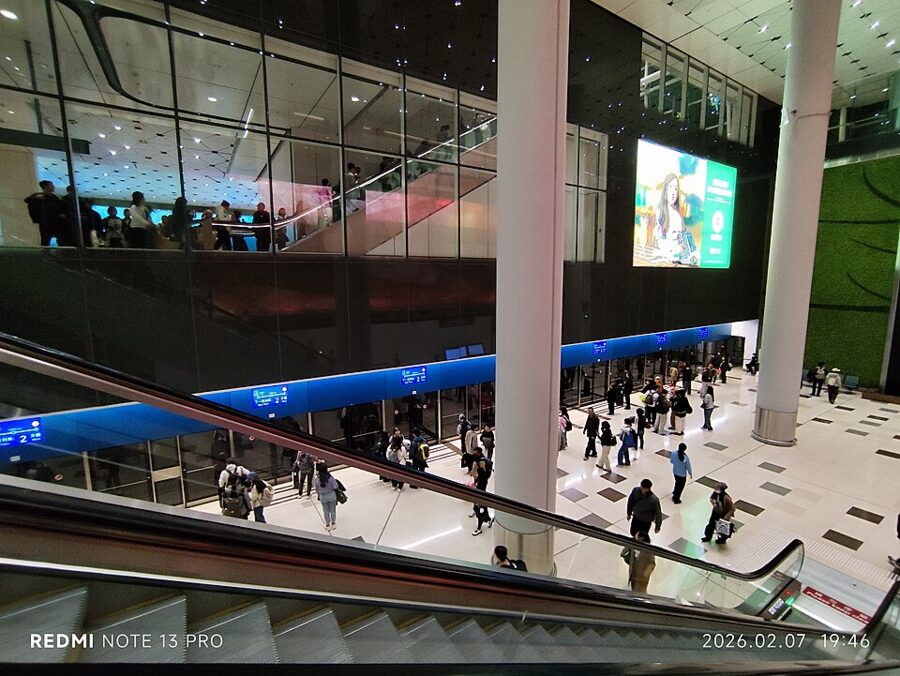
Gates 201–230 are on the T1 Midfield Concourse, reached by the Automated People Mover, which runs between Terminal 2, Terminal 1 and the Midfield Concourse from 05:30 to 00:30 and leaves every few minutes. With a Midfield gate, leave the lounge earlier than you would for a gate in the main building.
Terminal 2 reopened for departures on 27 May 2026, and it matters to a connecting passenger only in one case. It has check-in, security and immigration but no gates of its own yet, so everyone departing from it rides the people mover to the Terminal 1 gates. Every arrival still comes into Terminal 1. If your onward flight is through-checked, Terminal 2 never enters your day.
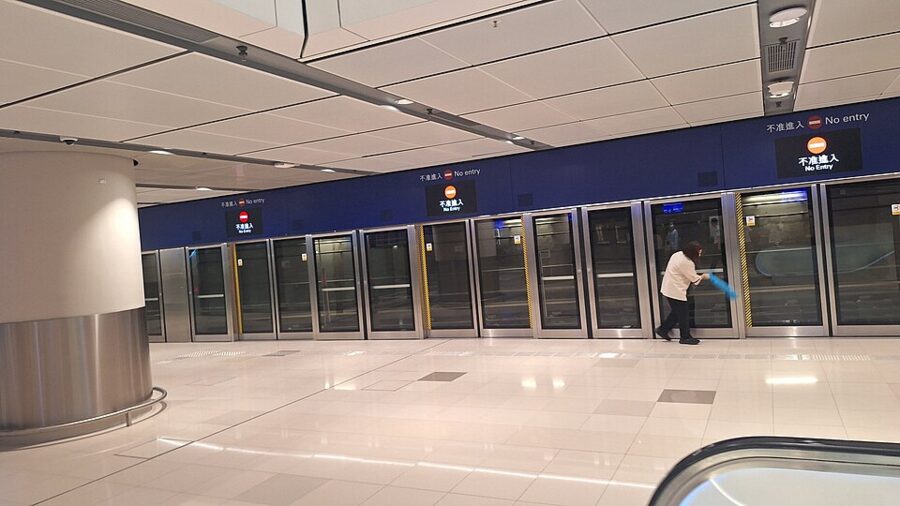

On one ticket, the shortest connection the airline sold you is its problem: miss it and it rebooks you. Cathay closes its boarding gates in Hong Kong 15 minutes before departure and asks you to be at the gate 35 minutes before, which is the number to work back from. On two separate tickets you collect your bag, enter Hong Kong and check in again, and if your second airline is HK Express, Hong Kong Airlines or Greater Bay Airlines, that check-in is now in Terminal 2. I would not book less than three hours for that, and only on a passport that can enter Hong Kong.
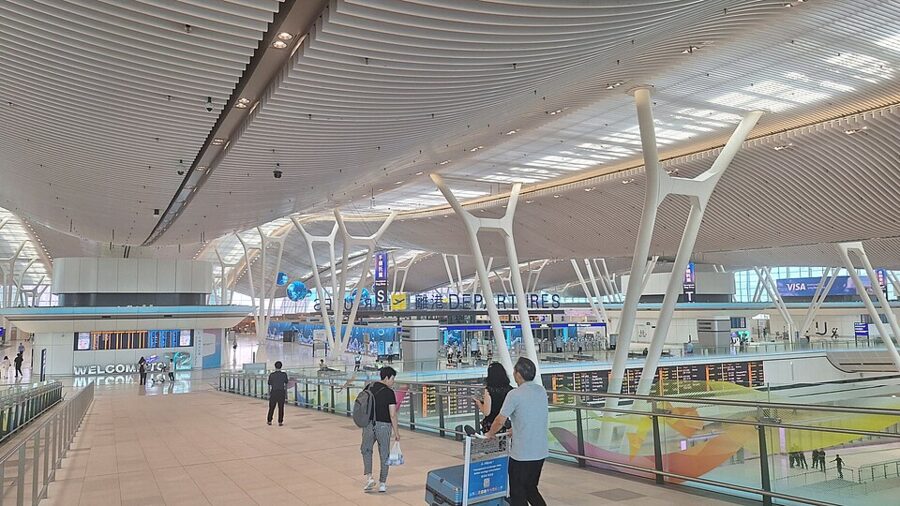

Staying airside
Lounges you can pay for
Plaza Premium runs the pay-in lounges that matter on a long layover, because two of them never close: the East Hall lounge near Gate 1 (Level 6) and the West Hall lounge near Gate 60 (Level 7) are open 24 hours. A third Plaza Premium Lounge near Gate 35 opens 06:00–01:00, with a Plaza Premium First beside it. Kyra Lounge near Gate 23 is open 05:30–23:30, and Kyra | Taste by Priceless near Gate 40 06:00–23:59. American Express card members have the Centurion Lounge near Gate 60, 06:00–00:00.
All of them sell entry by the length of stay and quote the price on their own booking pages, so check it for your hours before you go; the airport keeps the current list on its pay-in lounge page. On an overnight connection I would pick the East Hall or West Hall lounge purely for the hours, and choose between them by your gate number.
Airline lounges
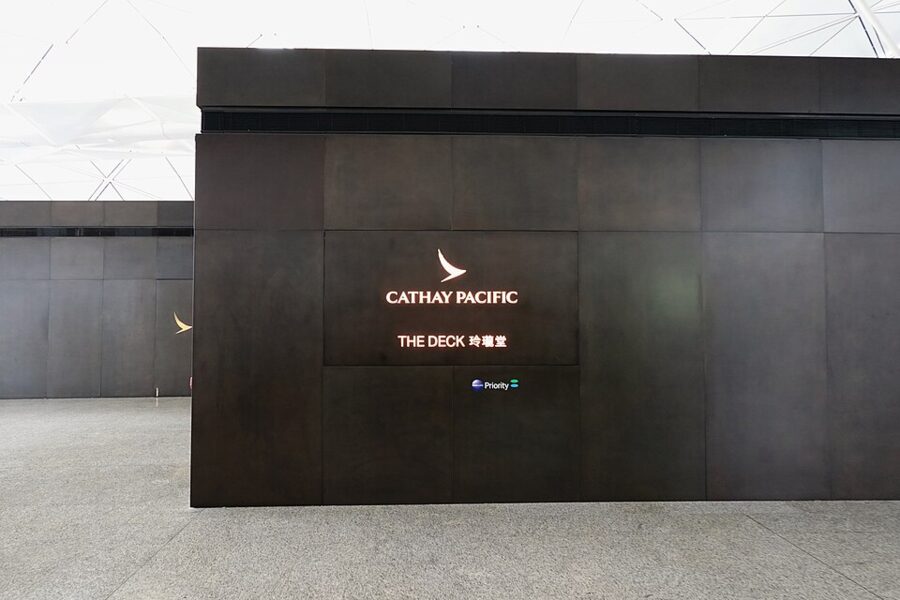
Cathay Pacific has four open in Terminal 1: The Deck near Gate 6, The Pier near Gates 63 and 65 (First and Business), The Wing First Class after Departures South, and The Bridge near Gate 35. The Wing Business Class lounge near Gate 2 is closed until further notice. Most open from 05:30, and The Bridge and The Wing First stay open until the last flight.

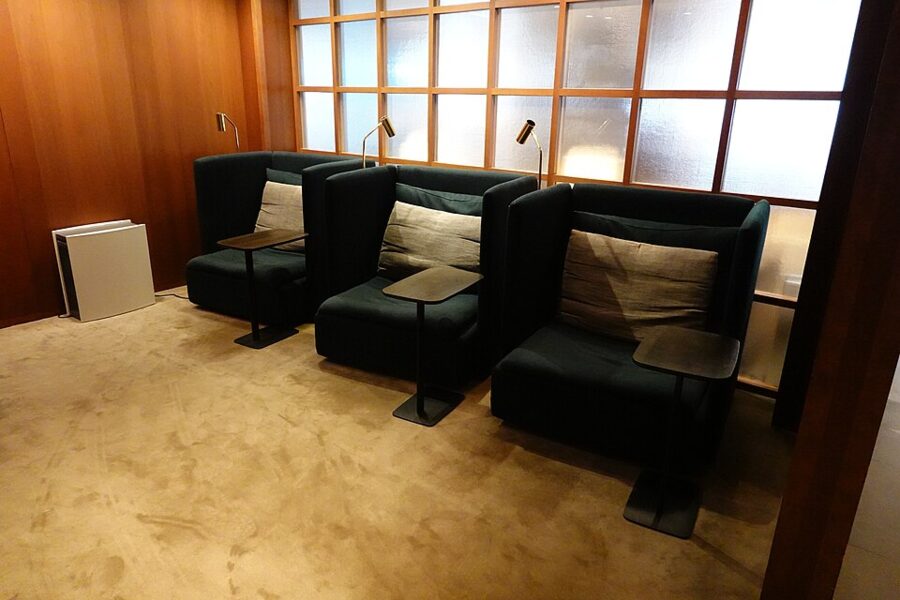

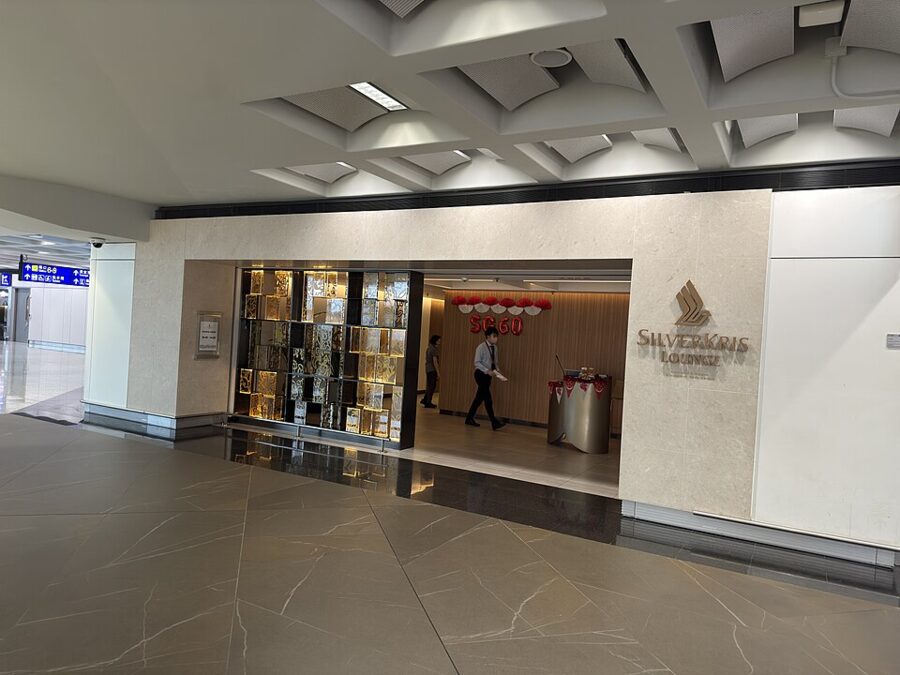
Star Alliance passengers mostly end up at the SilverKris Lounge near Gate 5 (06:00–00:00), which the airport lists for Singapore Airlines, Air Canada, Air China, ANA, EVA Air, Lufthansa, SWISS, Thai, Turkish, United and others; the United Club near Gate 60 serves the same list from 05:15 to 23:30. Qantas and STARLUX share the Qantas lounge near Gate 5 on Level 7, Emirates has its own near Gate 40 (14:35–00:05), and Hong Kong Airlines’ Club Autus is on the Midfield Concourse, 06:30–02:30. The airport’s airline lounge page has the full list.

Showers, sleep and somewhere quiet
The best free thing at this airport is a shower. The airport runs complimentary shower rooms on the arrivals level (Level 5) near Gate 12 and near Gate 43, open 24 hours, with shampoo, body wash and a hair dryer provided; towels come from a vending machine beside them. If you want a massage with it, Refreshhh by Aerotel near Gate 60 on Level 7 is a paid shower-and-massage suite, also open around the clock.
For sleep without paying, the airport’s resting lounges are quiet seating areas near Gates 1, 5, 6, 7, 24, 26, 33, 44, 45, 47, 48, 64, 65, 66 and 69, and near Gates 205, 207, 213 and 215 on the Midfield Concourse. There is no hotel inside the transit area. All three airport hotels, the Regal Airport Hotel, Hong Kong SkyCity Marriott and Regala Skycity, are landside, which means passing immigration.
Food, water and Wi-Fi
Bring an empty bottle. The airport counts over 70 drinking fountains across the terminals, with hot water points inside the restricted area. Wi-Fi is free with no registration: connect to “#HKAirport Free WiFi” and accept the terms, and if you need more speed, the high-speed zones near Gates 4, 23, 36, 60 and a dozen others carry a separate network. If you plan to leave the airport, set up mobile data here first; a Hong Kong SIM or eSIM starts at HK$28 for a day.
Skip 11 SKIES, the retail and entertainment complex beside Terminal 2. In September 2026 its developer, New World Development, agreed to hand it back to the Airport Authority in April 2027, and the Authority will re-plan it before it opens properly. It is landside in any case.

Leaving the airport
Who can walk out
It depends entirely on the passport you are travelling on, and the Immigration Department’s visa requirements list (last revised August 2026) is the one to check. In short:
- HKSAR passport and Hong Kong permanent identity card holders walk out with no questions.
- Visitors on most Western passports enter visa-free: 90 days for Americans, Canadians, Australians, New Zealanders and most EU nationals, 180 days for British citizens.
- Shorter visa-free stays still cover a layover: 30 days for Indonesia, Thailand, South Africa and the UAE, 14 days for the Philippines and Russia.
- Indian nationals need the free online pre-arrival registration before entering, even for a few hours, but not if they stay airside. Register here; it is valid for six months.
- Chinese residents of Taiwan can register online free before travelling, good for two entries of up to 30 days.
- PRC passport holders passing through to another country (or back to the mainland) can stay seven days with an onward ticket and entry papers for the destination, according to China’s embassies.
- Everyone else: some nationalities need a visa to enter Hong Kong, and a few need one even to change planes airside. The Immigration Department’s list shows which; check it before you book the connection.
A Hong Kong visa takes about four weeks to process, so for a layover it is not a realistic plan; if you need one, stay in the airport.
Bags, and the way into town
If your bag is checked through to your final airport, it stays in the system and you walk out with only your hand luggage.
To drop that too, the airport’s baggage storage counter is in Arrival Hall A on Level 5 of Terminal 1, open 05:30–01:30. It charges HK$14 an hour or HK$165 a day per piece, whichever is lower, paid on collection by card or cash (airport baggage storage page). For a few hours in Central, the left-baggage counter at Hong Kong Station, Level G near Exit B, is cheaper at HK$60 a piece for up to three hours, cash only, 07:30–21:30.
The Airport Express is the way in when time is short: 24 minutes to Hong Kong Station in Central, HK$120 on an Octopus or contactless bank card, trains roughly every ten minutes from 05:54 to 00:48. The airport buses are cheaper and slower; the one worth knowing on a layover is the S1 to Tung Chung MTR station, HK$3.70, every 5–10 minutes from Cheong Tat Road outside Terminal 1.
Coming back, go straight to departures: Level 7 of Terminal 1 for Cathay and the other Terminal 1 airlines, Terminal 2 for HK Express, Hong Kong Airlines and Greater Bay Airlines. With a boarding pass already printed, you skip check-in and go through departure immigration and security; without one, Cathay’s and HK Express’s counters close an hour before departure. I aim to be back at the airport two hours before take-off, three if I am collecting a bag from storage.
Three plans that fit
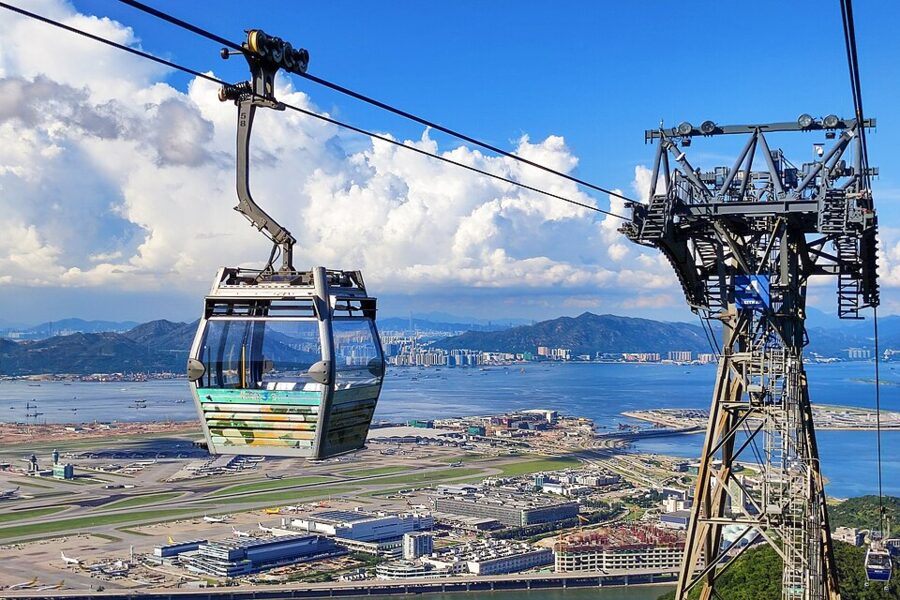
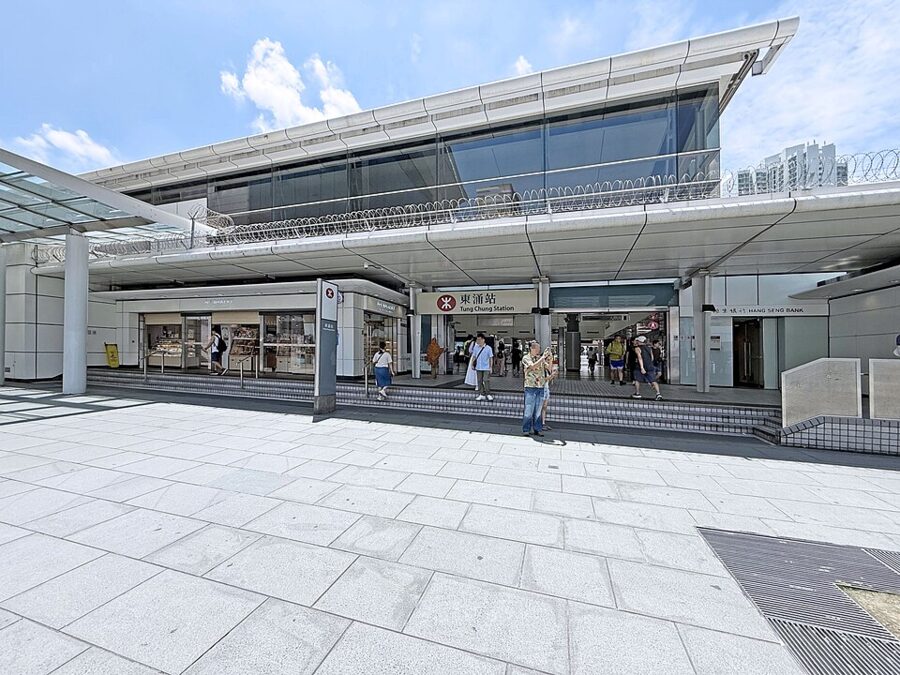
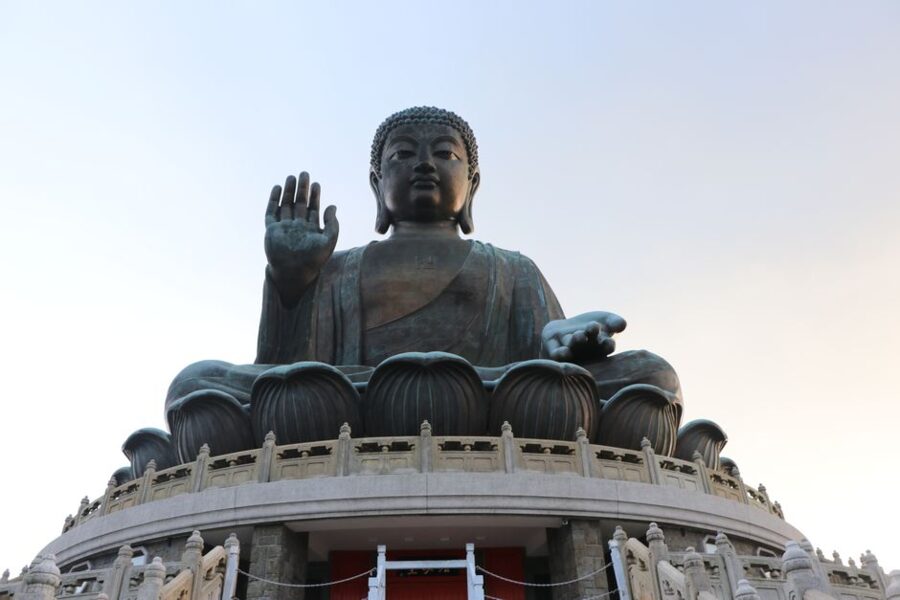
Tung Chung and Ngong Ping (six hours or more). Take the S1 to Tung Chung station and walk five minutes from Exit B to the Ngong Ping 360 (昂坪360) cable car, which opens at 10:00 and closes at 18:00. The ride takes about 25 minutes to the Tian Tan Buddha and Po Lin Monastery. Bags larger than 48 × 34 × 23 cm or heavier than 4 kg are not allowed in the cabins, so leave the cabin bag at the airport, and check the operator’s notices for maintenance closures the night before.

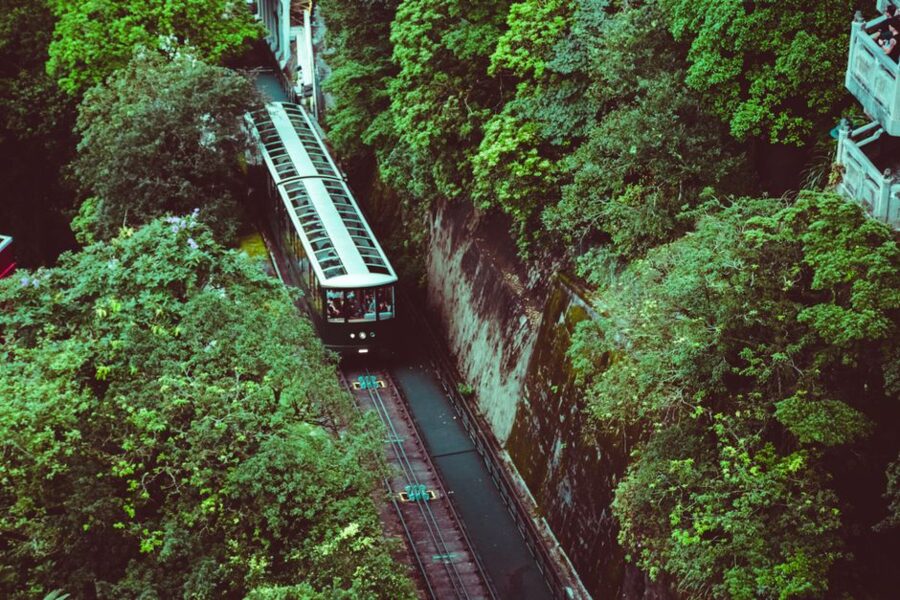
Central and the Peak (seven hours or more). Airport Express to Hong Kong Station, then a 10–15 minute walk from Central MTR Exit J2 up Garden Road to the Peak Tram, which runs 07:30–23:00 and costs HK$116 return. Book a time slot on the operator’s webstore to skip the ticket queue, and come down on bus 15 if the evening queue at the top is long.
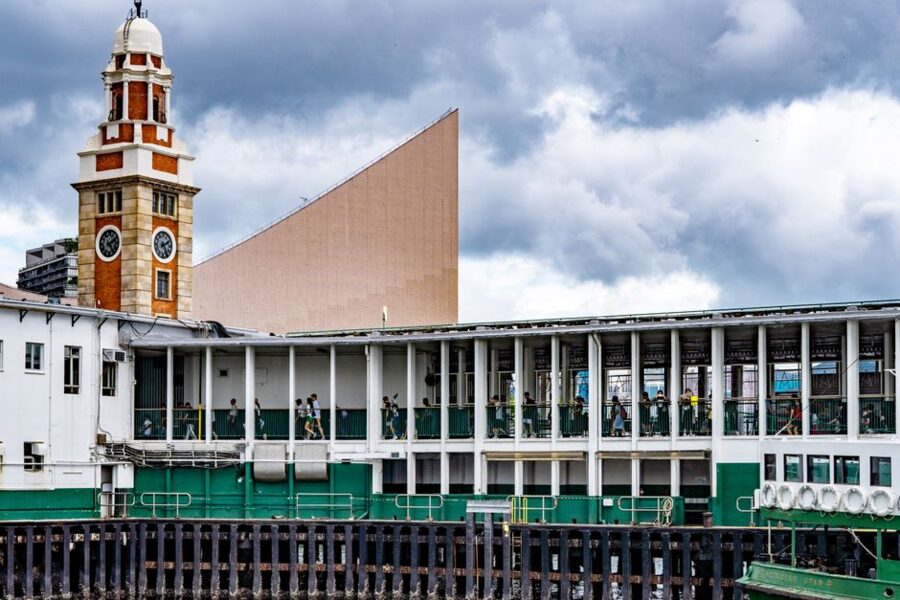
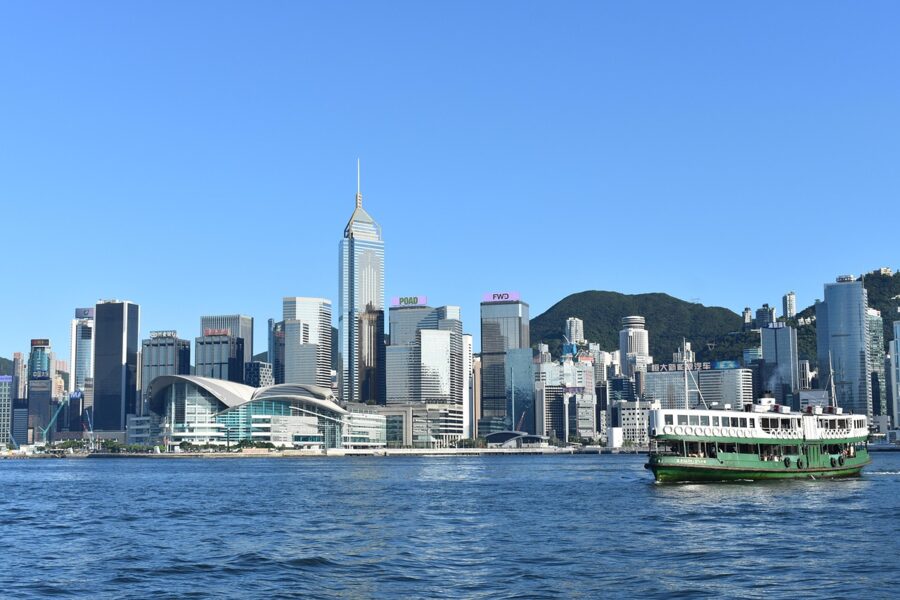
The Tsim Sha Tsui waterfront (six hours or more). Airport Express to Hong Kong Station, walk through IFC Mall to Central Pier 7, and take the Star Ferry across to Tsim Sha Tsui. Walk the promenade east from the Clock Tower towards the Avenue of Stars, eat on the Kowloon side, and ferry back for the train. If you would rather sit on a bus, the A21 runs from Nathan Road to the airport for HK$34.60; allow about an hour on a clear road.
For a return trip with days to spare, the Hong Kong itinerary and where to stay in Hong Kong pick up from here.
Overnight at the airport
The airport never closes, but the train does: the last Airport Express leaves at 00:48 and the first at 05:54, and the people mover to the Midfield Concourse stops between 00:30 and 05:30. Night buses fill the gap, slowly.
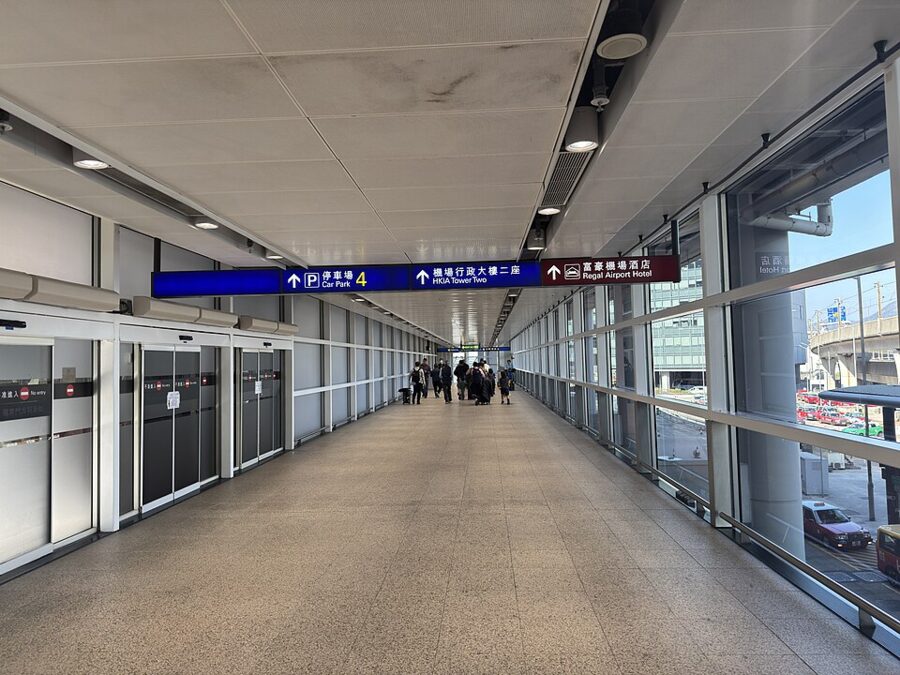
If you can enter Hong Kong, the Regal Airport Hotel is a covered walk from Terminal 1, and Hong Kong SkyCity Marriott and Regala Skycity are a short ride away. If you cannot, or would rather not, spend the night in the 24-hour Plaza Premium lounges (East Hall near Gate 1, West Hall near Gate 60) or in a free resting lounge near your gate, with a free shower at Gate 12 or Gate 43 in the morning.

Going on to Macau or Shenzhen without entering Hong Kong
Arriving by air and heading straight for Macau or Shenzhen, you can skip Hong Kong immigration entirely.
For Macau, the HK Airport Direct coach leaves from counters 38–40 in Transfer Area E2 of Terminal 1, about every half hour from 08:30 to 21:30, and crosses the bridge in about 45 minutes for roughly HK$280. For Shenzhen, ferries leave SkyPier for Shekou roughly hourly from 07:15 to 21:30; the people mover runs to SkyPier from 06:15 to 23:45.
The airport ferries to Macau are charter-only for now, so take the coach. Going on to Guangzhou means entering Hong Kong and taking the train from West Kowloon.
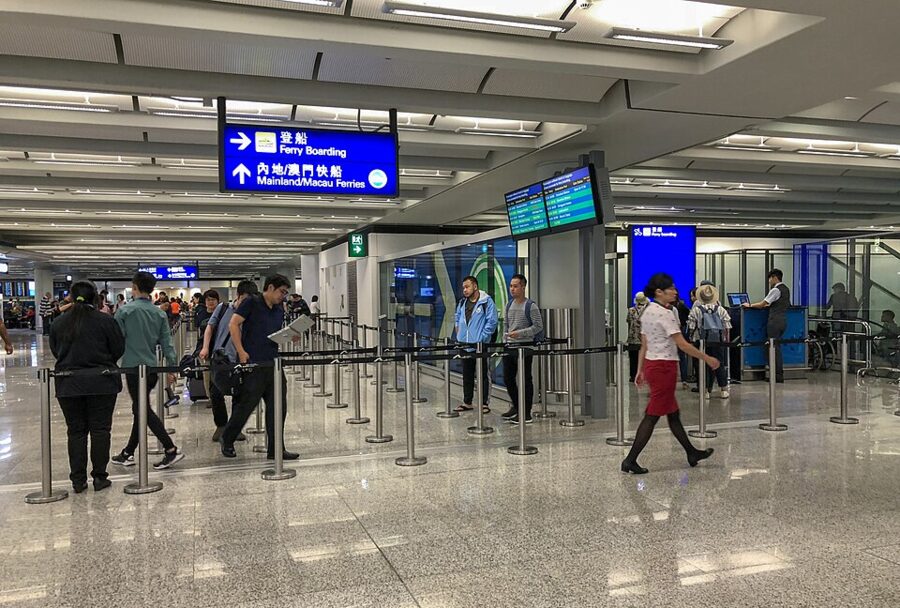

So, back at the end of that arrivals corridor: check the gap on your boarding pass, check your passport against the Immigration Department’s list, and turn left for the city or follow the transfer signs for a free shower at Gate 12.