

An adult Octopus pays HK$52.20 for the 45-minute ride from Admiralty to Lo Wu, and that train is still how most people should go to Shenzhen. Get off at Lo Wu for Luohu, Dongmen and Huaqiangbei, or ride the branch to Lok Ma Chau, for the same fare, if you are going to Futian. If your meeting is in the Futian business district, the high-speed train from West Kowloon is HK$79 and 14 minutes.
For Nanshan and Shekou you want Shenzhen Bay, and after midnight only Huanggang is open.

Hours below are the Hong Kong control points’ as the Immigration Department lists them in November 2026, and fares are the MTR’s for the same month.
| Crossing (Hong Kong / Shenzhen) | Open | Getting there | Shenzhen side | Use it for |
|---|---|---|---|---|
| Lo Wu 羅湖 / Luohu 罗湖 | 06:30–24:00 | East Rail Line to Lo Wu, HK$52.20 from Admiralty | Metro Line 1; Shenzhen Railway Station | Luohu, Dongmen, Huaqiangbei; the five-day Shenzhen visa |
| Lok Ma Chau Spur Line 落馬洲支線 / Futian 福田口岸 | 06:30–22:30 | East Rail Line to Lok Ma Chau, same fare | Metro Lines 4 and 10 | Futian; Line 4 north to Longhua; a calmer queue |
| Huanggang 皇岗 (new joint building) | 24 hours | Short-haul coach from Jordan, Mong Kok, Wan Chai, Lam Tin or Tsuen Wan; buses B10–B15 | Metro Line 7 | Futian at any hour; anything after midnight |
| Shenzhen Bay 深圳灣 / 深圳湾 | 06:30–24:00 | Citybus B3 routes from Tuen Mun; coaches | Metro Line 13 | Nanshan, Shekou, Qianhai, Bao’an |
| Heung Yuen Wai 香園圍 / Liantang 莲塘 | 07:00–22:00 | Citybus B7 and B8, KMB B9 | Metro Lines 2 and 8 | Eastern Luohu, Yantian |
| High-speed rail, West Kowloon to Futian or Shenzhen North | Clearance 06:30–23:30; trains about 07:00–23:00 | HK$79 to Futian, HK$88 to Shenzhen North | Futian: Lines 2, 3, 11. Shenzhen North: Lines 4, 5, 6 | Futian CBD, Longhua, onward mainland trains |
| Ferry, Sheung Wan to Shekou 蛇口 | Five sailings a day, 09:00–20:45 | Hong Kong-Macau Ferry Terminal, Shun Tak Centre | Shekou Cruise Center, Nanshan | Shekou without the bus ride |

Two things changed this autumn. The rebuilt Huanggang Port opened at 06:30 on 12 October 2026 as a single building with a 24-hour joint inspection, and the old Lok Ma Chau road crossing and its yellow shuttle bus closed the same morning. Sha Tau Kok is still shut to passengers until further notice.

In this article
The East Rail Line: Lo Wu or Lok Ma Chau
The East Rail Line splits after Sheung Shui. One branch ends at Lo Wu, the other at Lok Ma Chau, and both stations sit inside the closed border area, so nobody gets off there unless they are crossing. The fare is the same to either: HK$52.20 on an adult Octopus from Admiralty or Exhibition Centre (HK$55.50 as a single ticket), HK$41.60 from Hung Hom or Mong Kok East, HK$41.50 from Kowloon Tong and HK$33.00 from Sha Tin. Children and over-65s pay HK$26.20 from Admiralty.
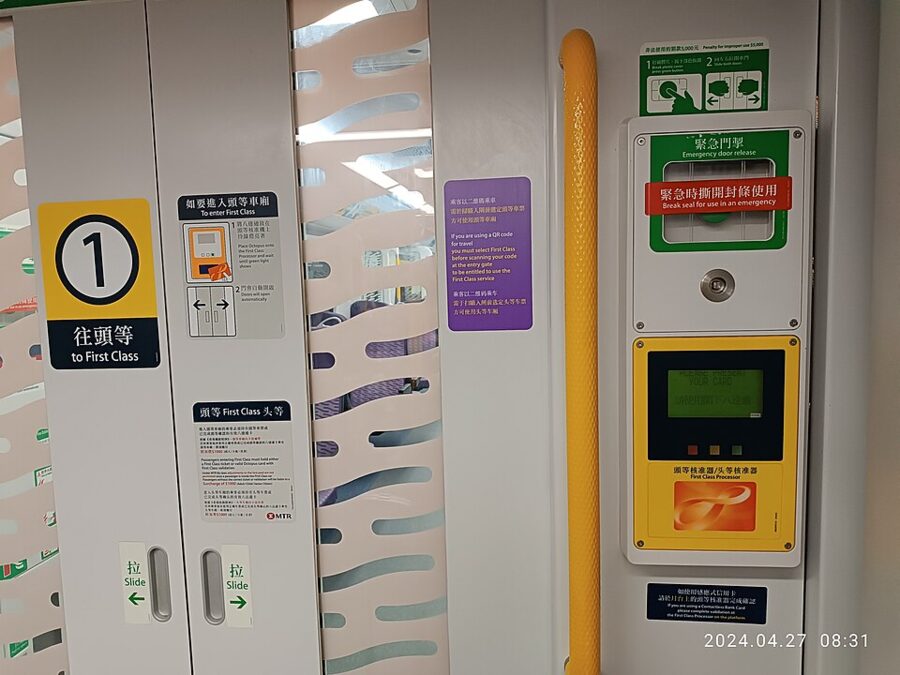
First Class costs double, HK$104.40 from Admiralty, and on a Saturday morning, when the standard cars are full of day-trippers with trolleys, I pay it. Tap your Octopus on the First Class reader before you sit down; the ordinary gate tap does not cover it.
Lo Wu is the default
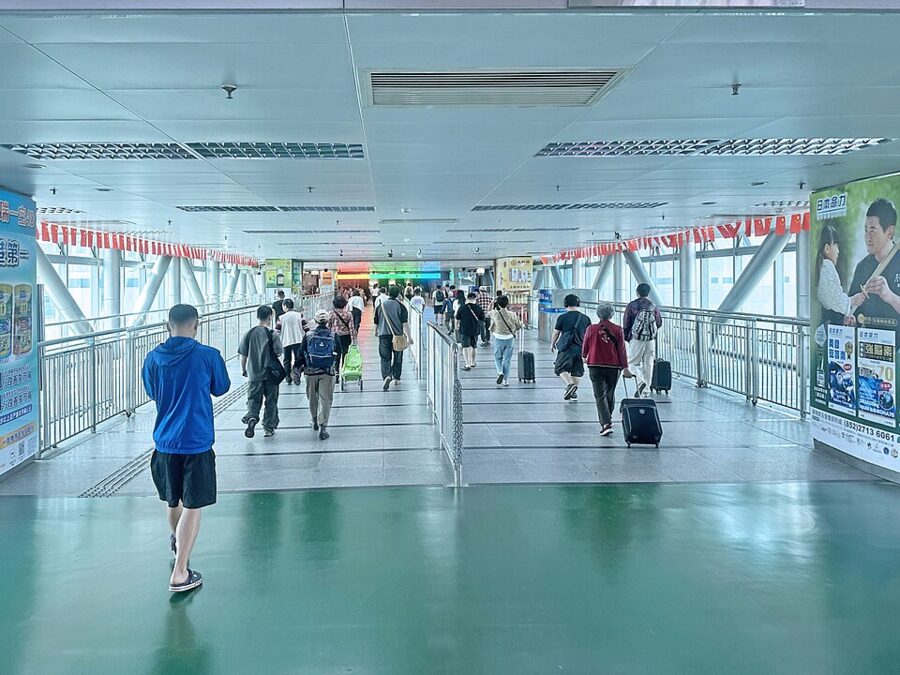
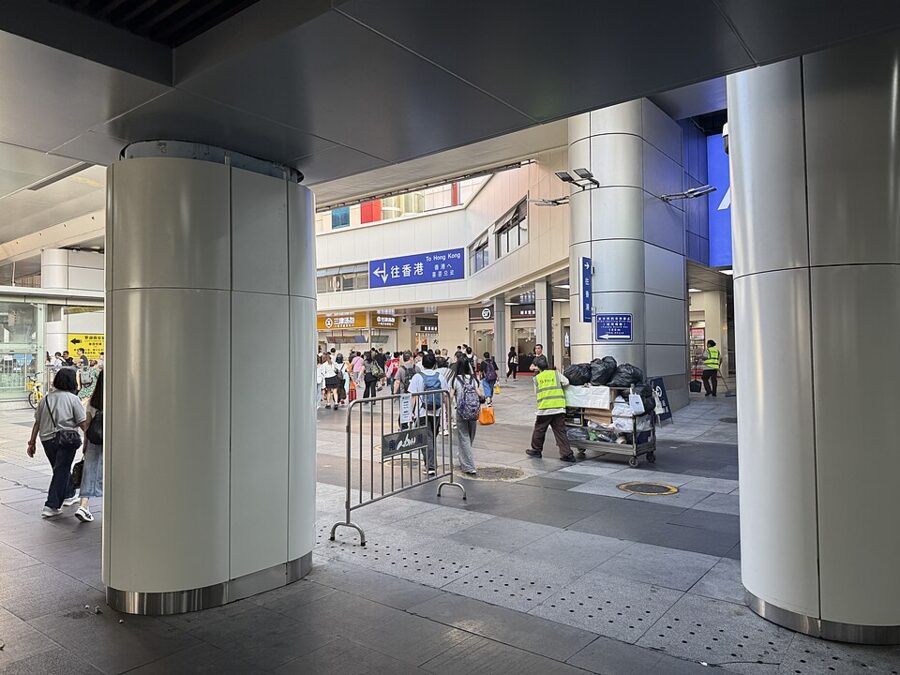
Lo Wu is the busiest crossing on the border and the only land crossing with a confirmed port visa office on the Shenzhen side, which makes it the one to use if you need the five-day Shenzhen visa. The first train from Admiralty leaves at 06:04, the control point opens at 06:30, and the last train back to Admiralty leaves Lo Wu at 00:00, timed to the midnight close. Expect stairs and escalators on both sides, which matters with a big case.
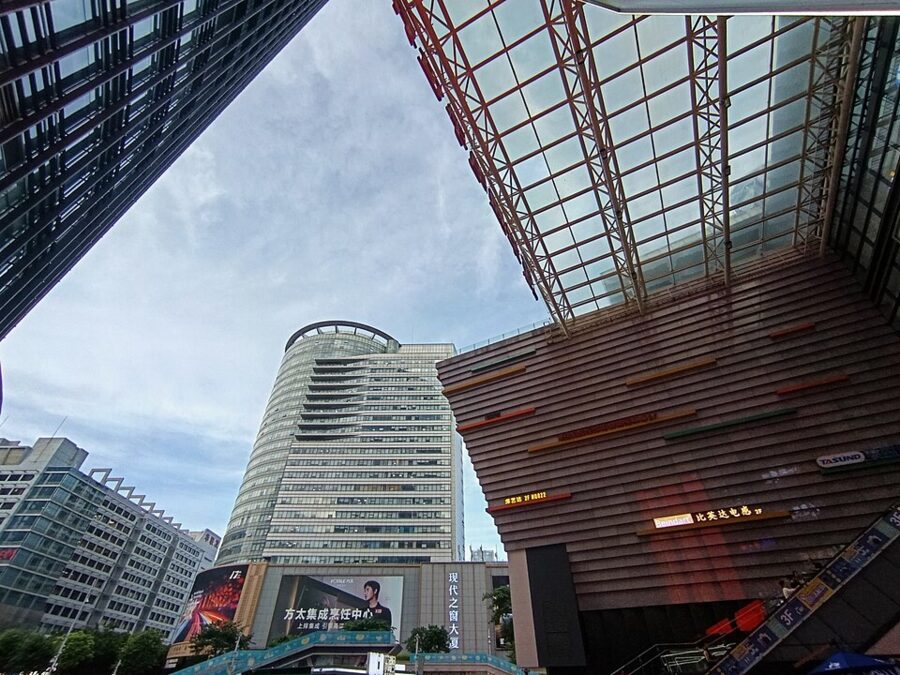
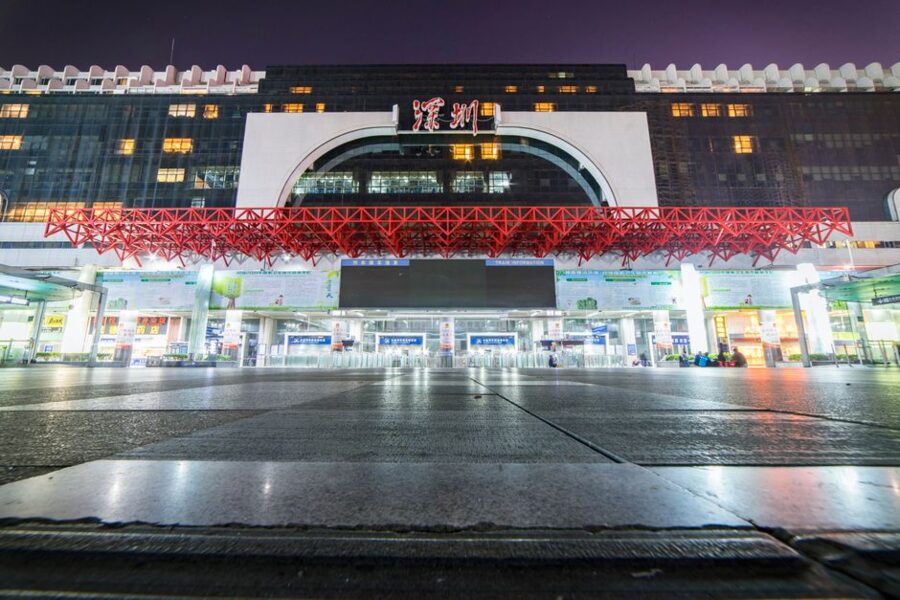
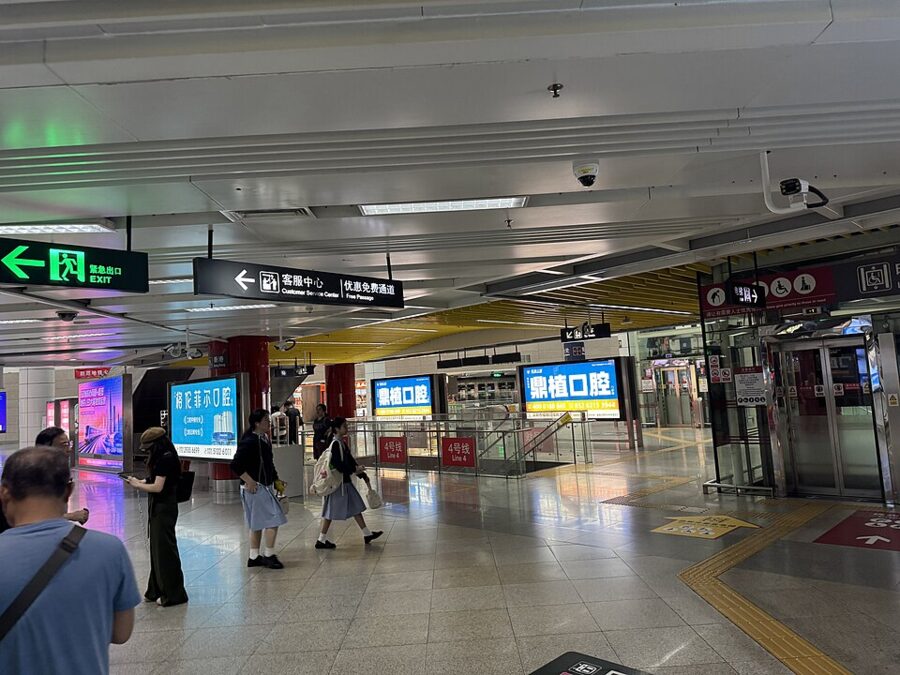
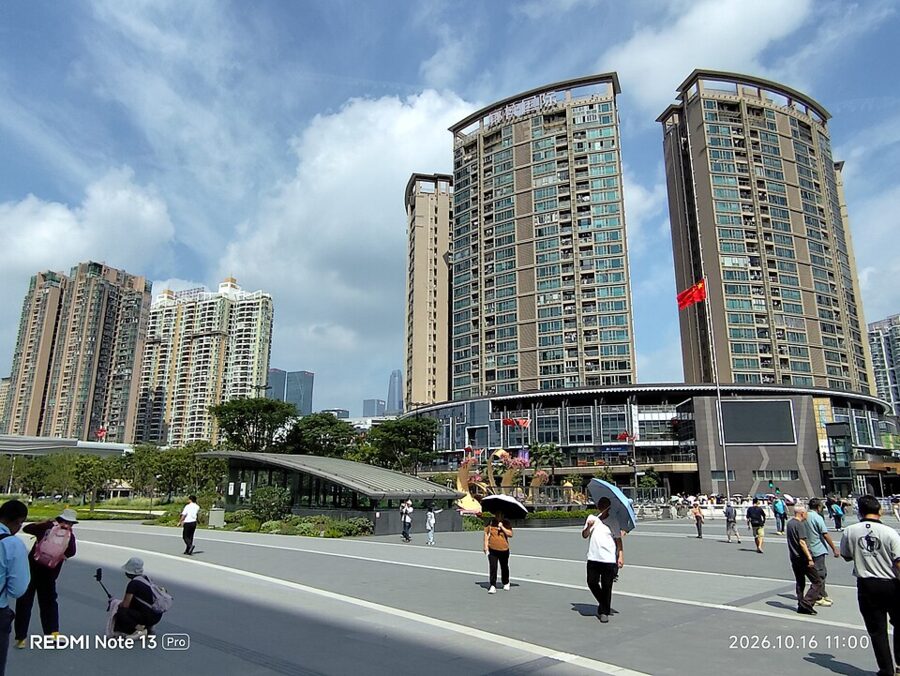
You come out at Luohu Port (罗湖口岸) with Shenzhen Railway Station on one side and Metro Line 1 under your feet. Line 1 runs west through Laojie for Dongmen’s shopping streets, Huaqiang Road for the Huaqiangbei electronics markets, and on through Futian towards the airport side of the city.


The Spur Line to Futian
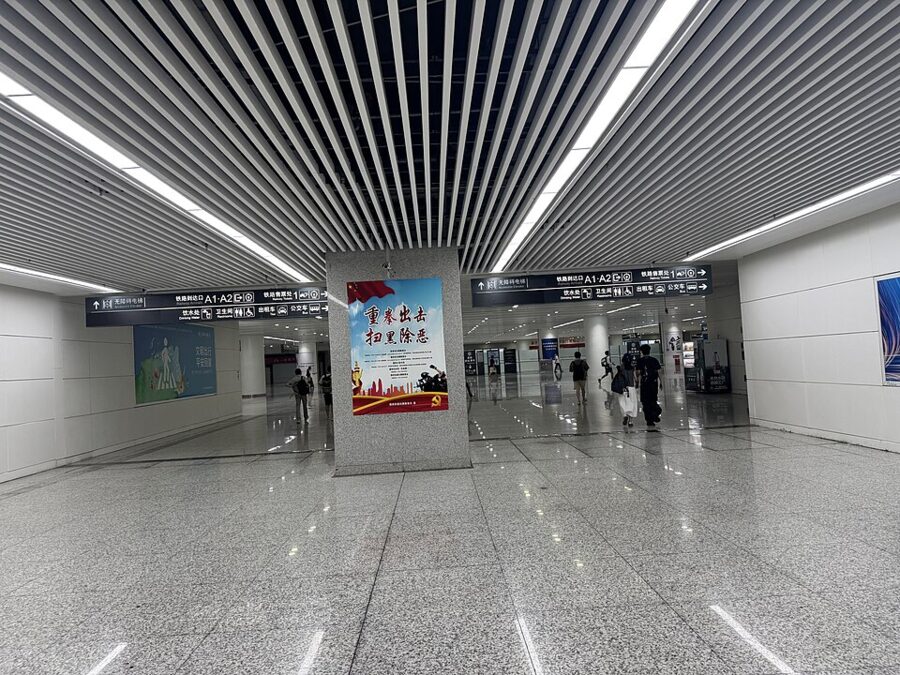
From Lok Ma Chau you walk the covered bridge into Futian Port (福田口岸), and the Futian Checkpoint metro station is directly below. Lines 4 and 10 start there, and Line 4 runs north through Futian’s civic centre to Shenzhen North. The queues are usually shorter than at Lo Wu. The catch is the hours: the control point shuts at 22:30, the last train from Admiralty to Lok Ma Chau leaves at 21:29, and the last one back leaves Lok Ma Chau at 22:55.
There is no port visa office at Futian, so this route is for visa-free passports and anyone already holding a Chinese visa.

The high-speed train from West Kowloon
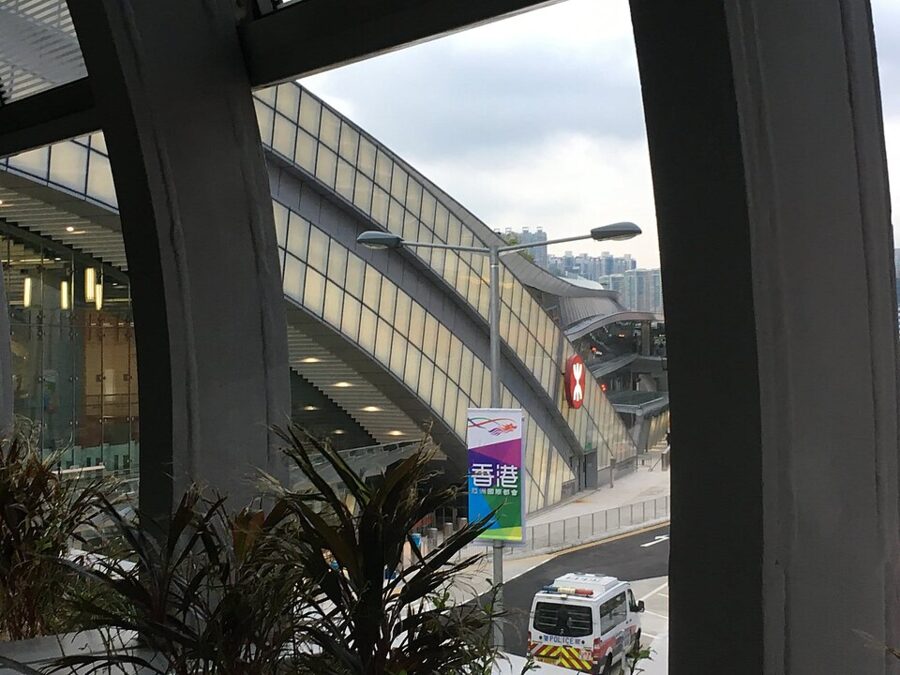
The high-speed train wins when you are starting in western Kowloon and your day is in the Futian business district or north of it. West Kowloon Station holds both Hong Kong and mainland immigration, so there is no second queue and no bridge to walk, and the train is in Futian 14 minutes later. In the timetable in force since 11 October 2026 the first train for Shenzhen North leaves at 07:01 and the first for Futian at 07:07; the last, at 23:00, calls at both.
It loses for Luohu, for a family counting dollars, and for a late return. Second class is HK$79 to Futian and HK$88 to Shenzhen North, first class HK$127 and HK$140, and a child pays HK$40 to Futian. The last train back leaves Futian at 22:19 and Shenzhen North at 22:09, earlier than the last East Rail train from Lo Wu.

Tickets and the ID rule
Buy on China Railway’s 12306 site or app, from the MTR’s designated agents, or at the counters and machines in the station. Fares are set in renminbi, and the Hong Kong dollar fares are reset on the first of each month. The ticket is tied to the document you bought it with: a foreign passport for visitors, the Home Return Permit for Hong Kong residents who are Chinese citizens. That same document is your ticket at the gates.
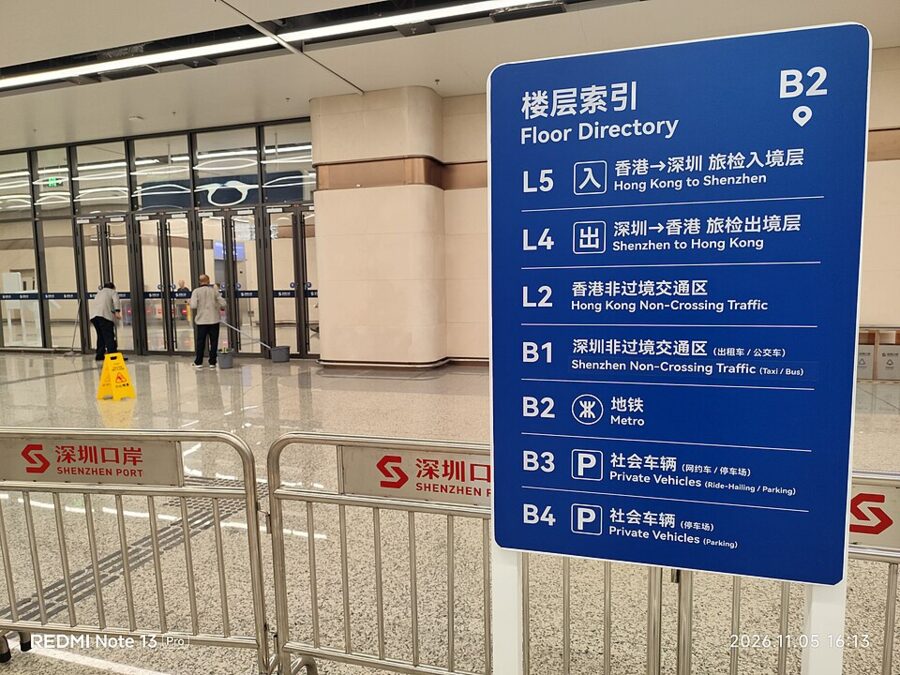
Real-name and ticket checks in the Level B1 concourse stop 30 minutes before departure. MTR says the whole process normally takes 30–45 minutes and tells passport holders to allow longer, so I arrive an hour ahead on a weekend. Baggage is limited to 20 kg for an adult, with no single piece over 130 cm in length, width and height combined.
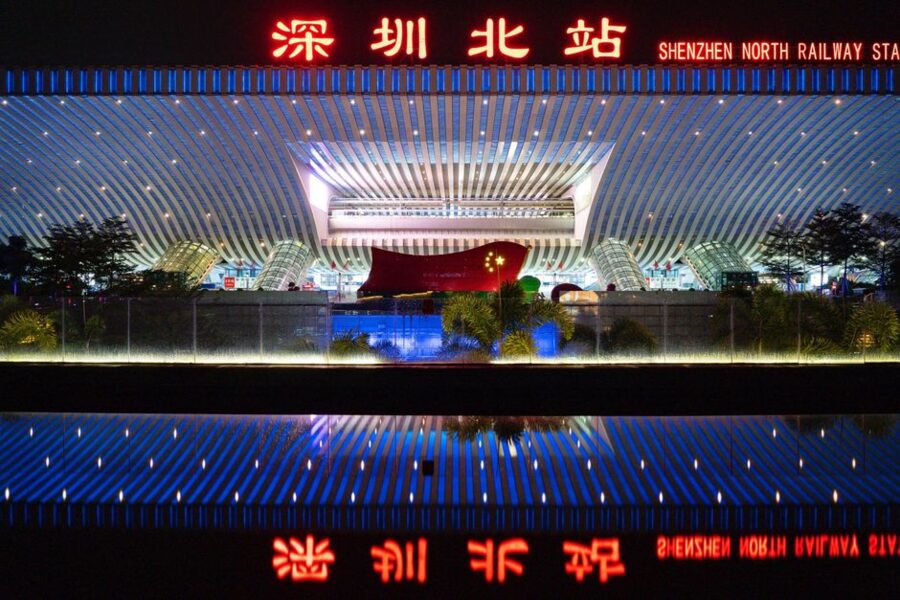
Shenzhen North (深圳北站) is in Longhua, well north of the centre, and only worth the extra HK$9 if your business is up there or you are changing for a mainland train. Metro Lines 4, 5 and 6 meet under the station.
Huanggang, Shenzhen Bay and Heung Yuen Wai
Huanggang, the all-night crossing
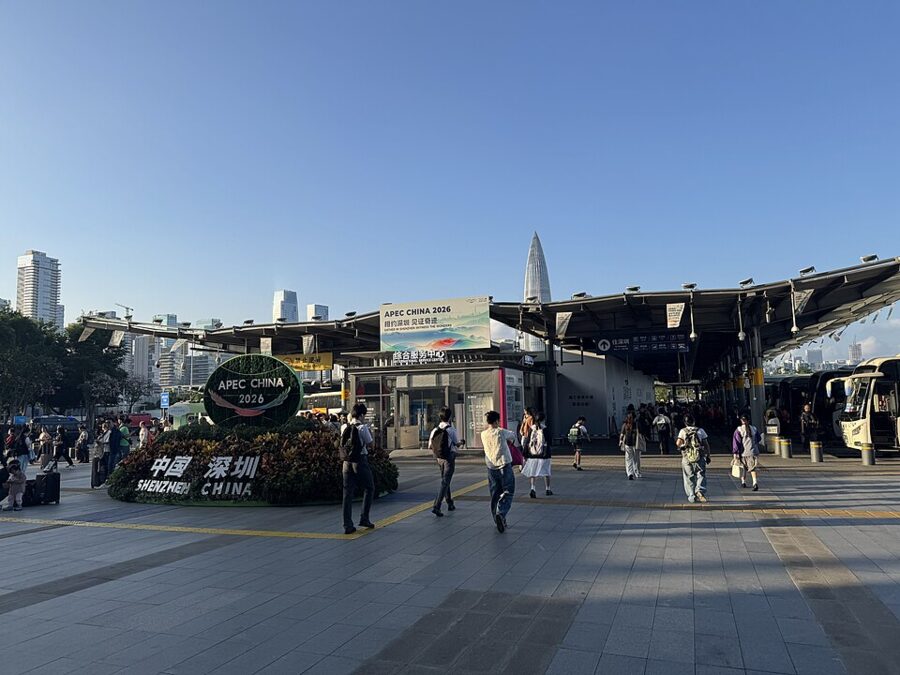
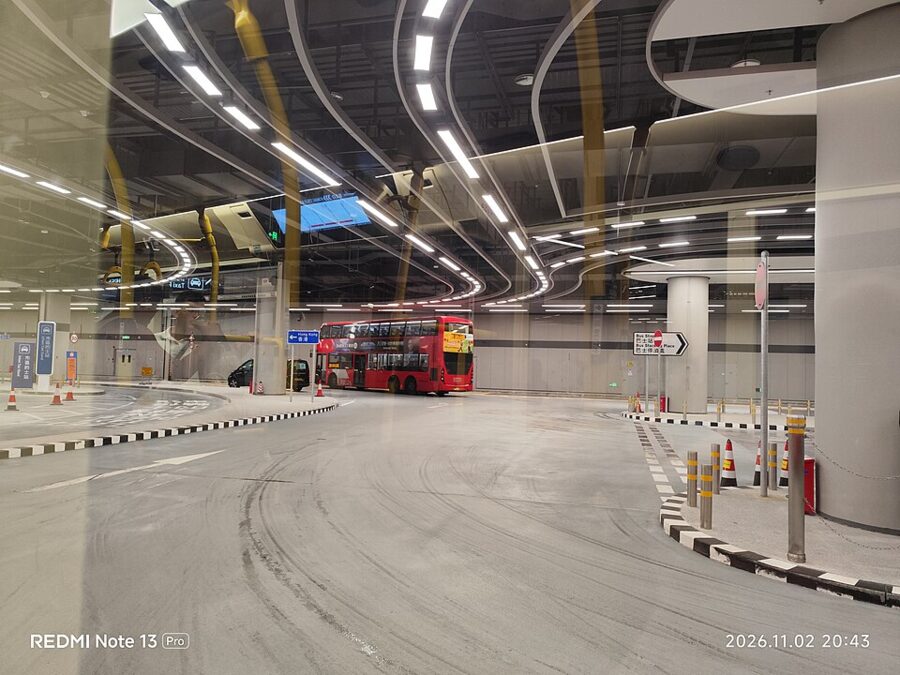
The new Huanggang Port puts Hong Kong and Shenzhen officers in one building, so you queue once rather than twice, and residents with the right documents clear both sides at one automated gate. There is no railway to it from Hong Kong. Five short-haul coach routes run round the clock from Arran Street in Mong Kok, the Austin Road coach terminus in Jordan, Lam Tin Station, Exhibition Centre Station in Wan Chai and Tsuen Wan, at full fares of HK$45–63 that operators discount.
Franchised buses B10 to B15 come in from Kwai Fong, Tin Shui Wai, Ma On Shan, Siu Sai Wan, Kai Tak and Tuen Mun, with Citybus B13 running by day through Central and Sheung Wan, and overnight NB73 serves Sha Tin. On the Shenzhen side you come out at Huanggang Checkpoint station on Line 7. On its second Saturday coaches were stuck on the approach roads, so add an hour on a busy weekend night.
Shenzhen Bay for Nanshan and Shekou
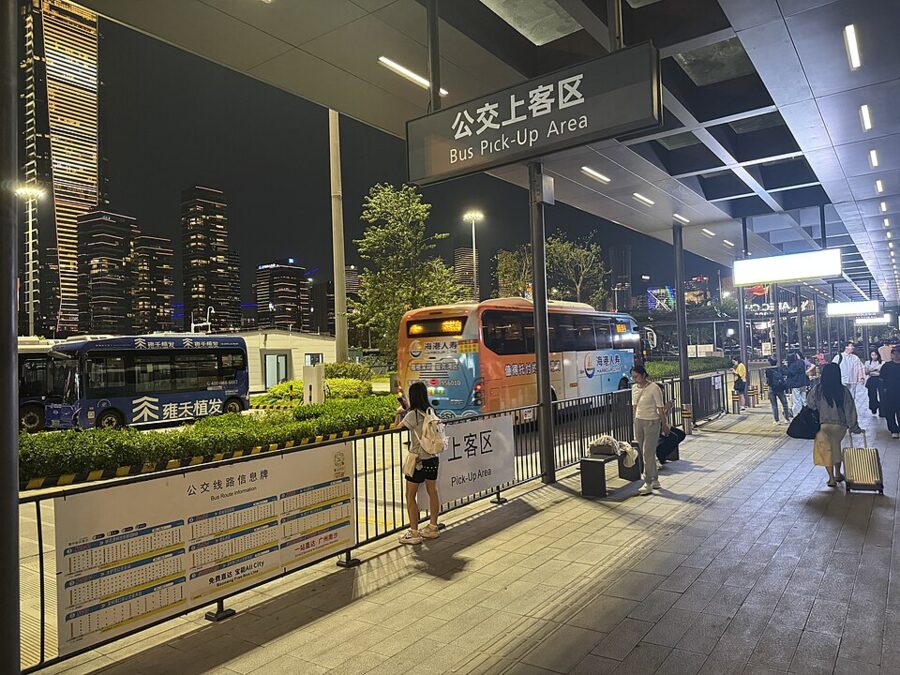
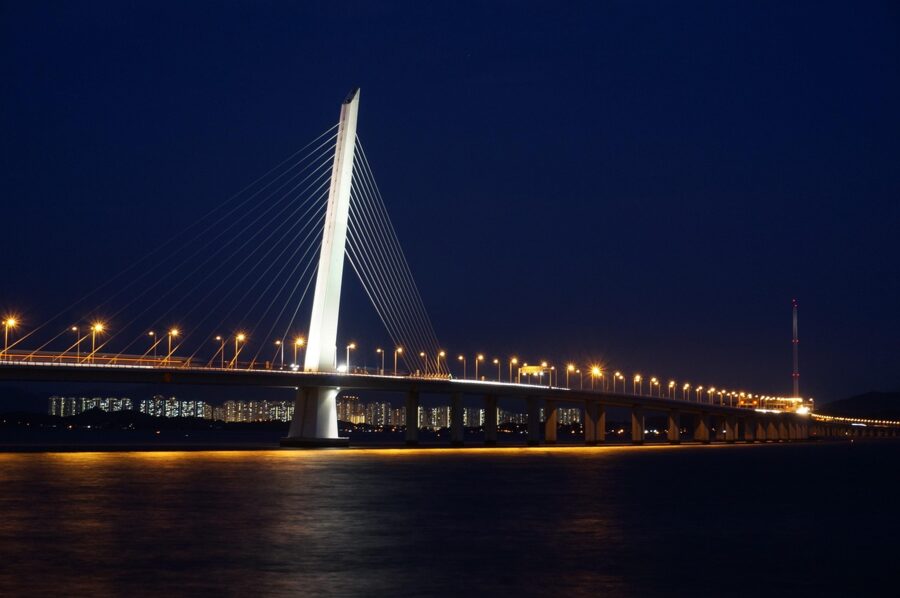
Shenzhen Bay Port (深圳湾口岸) sits at the Shenzhen end of the bridge from Hong Kong, with both controls in one building, open 06:30–24:00. From the Hong Kong side, Citybus B3 runs from Tuen Mun Ferry Pier, B3A from Shan King, B3X from Tuen Mun Town Centre and NB3 overnight, and green minibus 618 comes from Tin Shui Wai. Since December 2024 Metro Line 13 has started at Shenzhen Bay Port station, under the port.

Heung Yuen Wai and Man Kam To
Heung Yuen Wai, opened to passengers in February 2023, links the eastern New Territories with Liantang (莲塘口岸) in Luohu. It is open 07:00–22:00 and served by Citybus B7 and B7X from Sheung Shui and Fanling, B8 from Tai Wai via Tai Po, and KMB B9 and B9A from Tuen Mun and Yuen Long. The Shenzhen side has Liantang Checkpoint station on Metro Lines 2 and 8, which is handy for eastern Luohu and Yantian, and there is no port visa office.
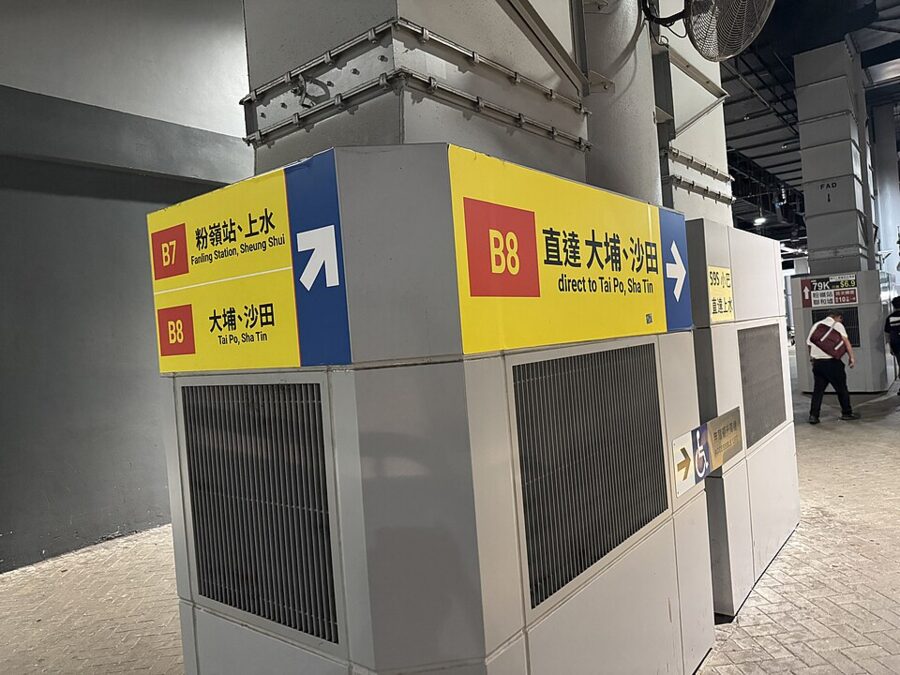

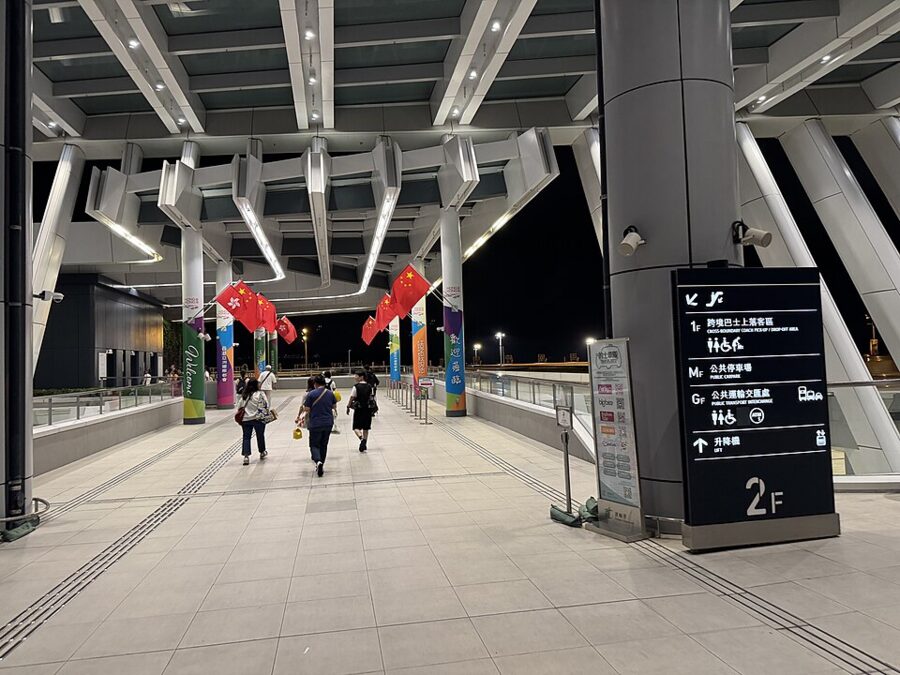

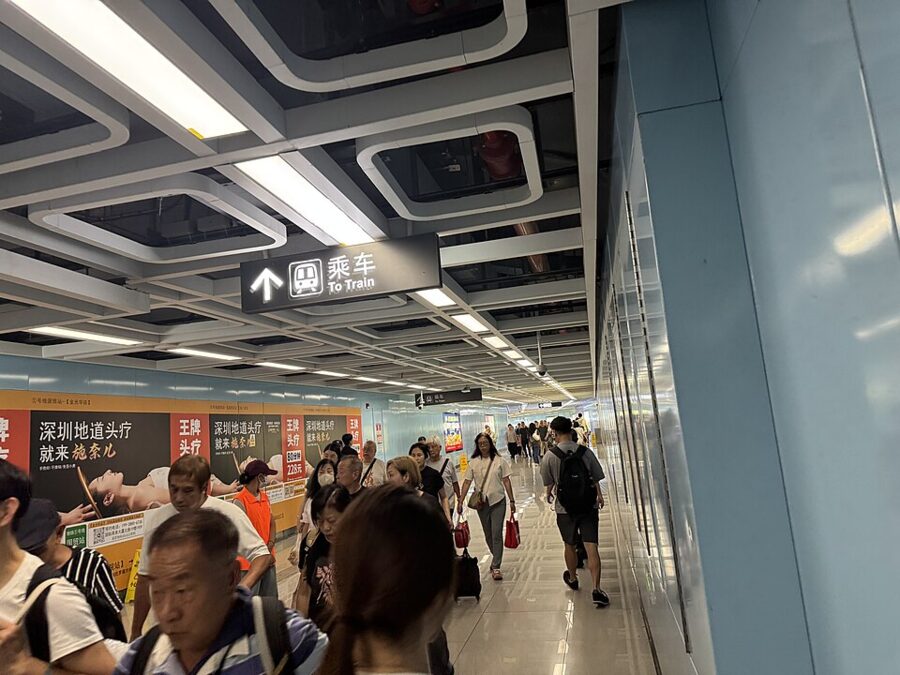

The small Man Kam To crossing to Wenjindu (文锦渡) also runs 07:00–22:00, mainly for coaches and nearby residents.
Ferries to Shekou
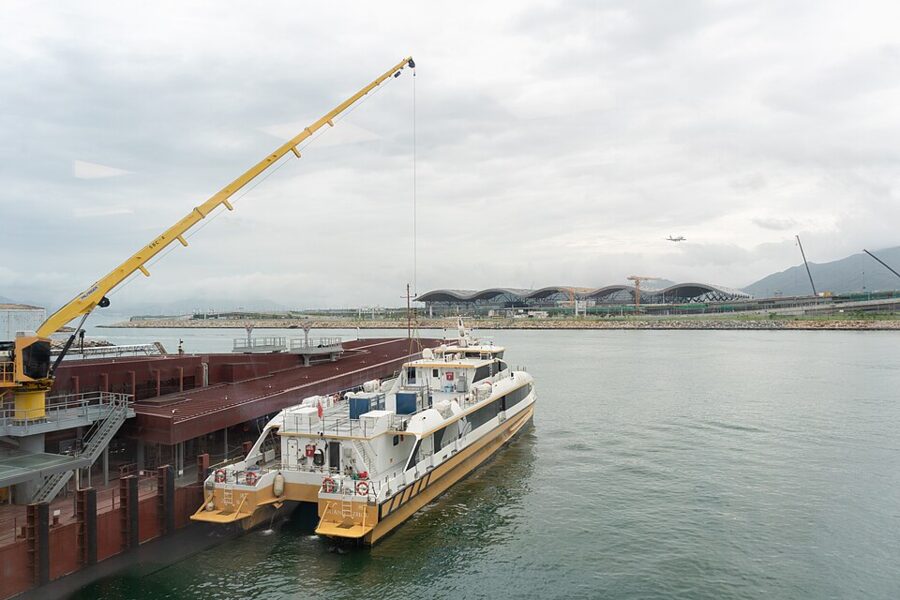
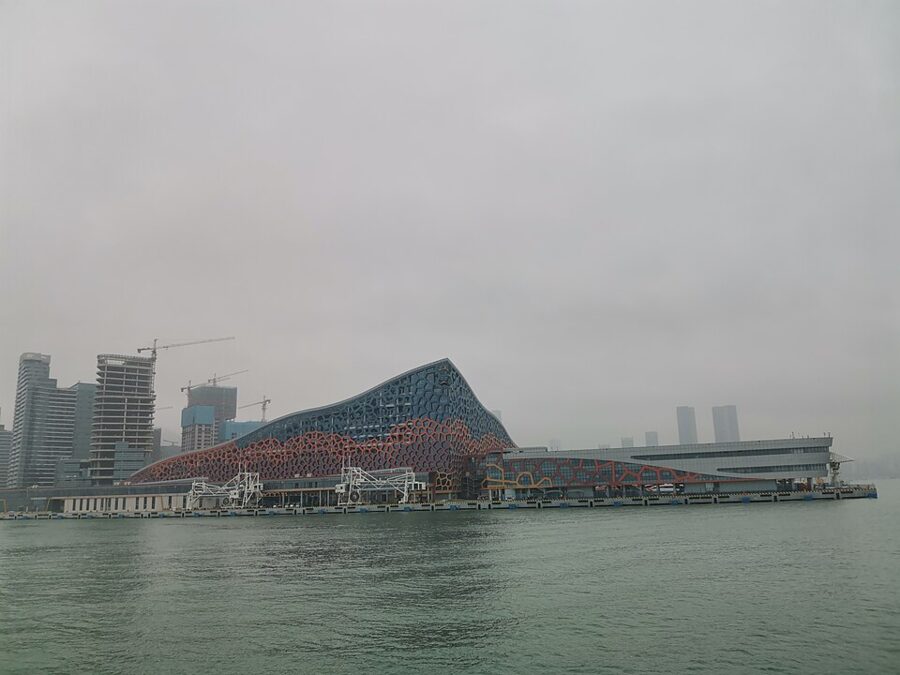
From the Hong Kong-Macau Ferry Terminal at Shun Tak Centre in Sheung Wan, the same building as most Macau sailings, ferries run to Shekou Cruise Center (蛇口邮轮中心) in Nanshan. The November 2026 timetable has five a day from Sheung Wan, at 09:00, 11:30, 15:30, 18:00 and 20:45, and five back from Shekou, at 07:30, 10:15, 14:15, 16:45 and 19:15. Check the day’s sailings and fare when you book. Shekou has its own port visa office.
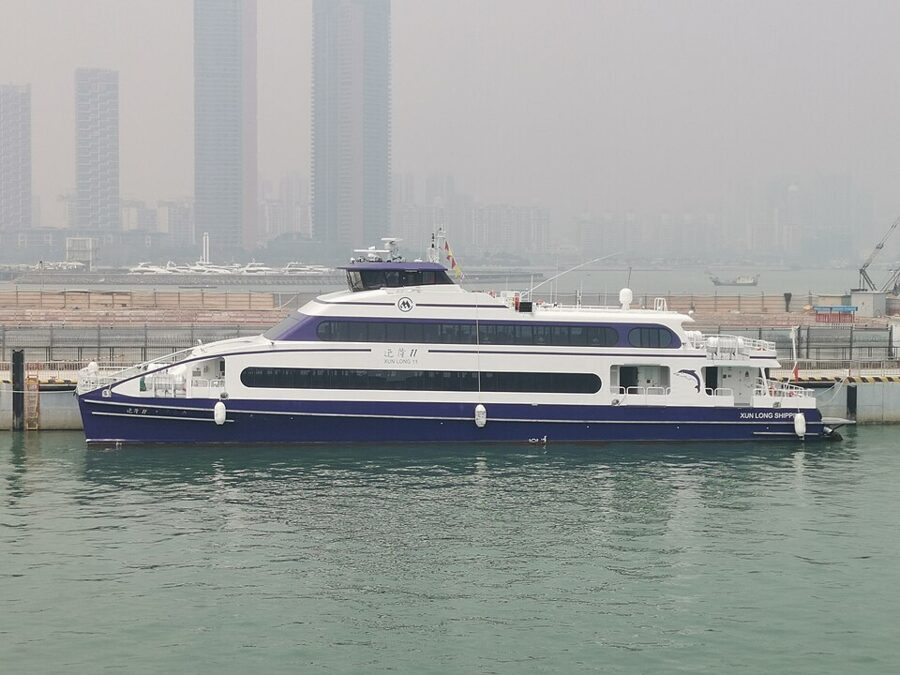

The airport is different. Ferries from SkyPier at Hong Kong International Airport to Shekou run roughly hourly from 07:15 to 21:30, but the Airport Authority says SkyPier is for transfer passengers only and not for anyone starting their journey in Hong Kong. It works if you land at Chek Lap Kok and go straight to Shenzhen without entering Hong Kong; if you have already passed Hong Kong immigration, take the Airport Express to Kowloon and the train from there, or a coach.


Coaches
Cross-boundary coaches pick up at hotels, malls and the airport and cross at Shenzhen Bay, Huanggang or Heung Yuen Wai, slower than the train for central Shenzhen. They earn their fare for Shenzhen Bao’an airport, from about HK$170 at Hong Kong airport, and for Dongguan towns off the rail line; the details are in the guide to cross-border coaches into Guangdong.
Which passport, which rule
As of November 2026, ordinary passports from 50 countries, including the United Kingdom, Canada, Australia, New Zealand, Japan, South Korea and most of the European Union, can enter visa-free for 30 days under a scheme due to run until 31 December 2026, at any crossing. US passport holders on a round trip from Hong Kong need a visa; the five-day Shenzhen visa is issued at Lo Wu and Shekou, not at Futian, Shenzhen Bay, Heung Yuen Wai or West Kowloon, and covers Shenzhen only. The Shenzhen visa and visa-free rules have their own page, and a China visa from Hong Kong covers the rest. Fill in the arrival card free on the National Immigration Administration’s site the night before.
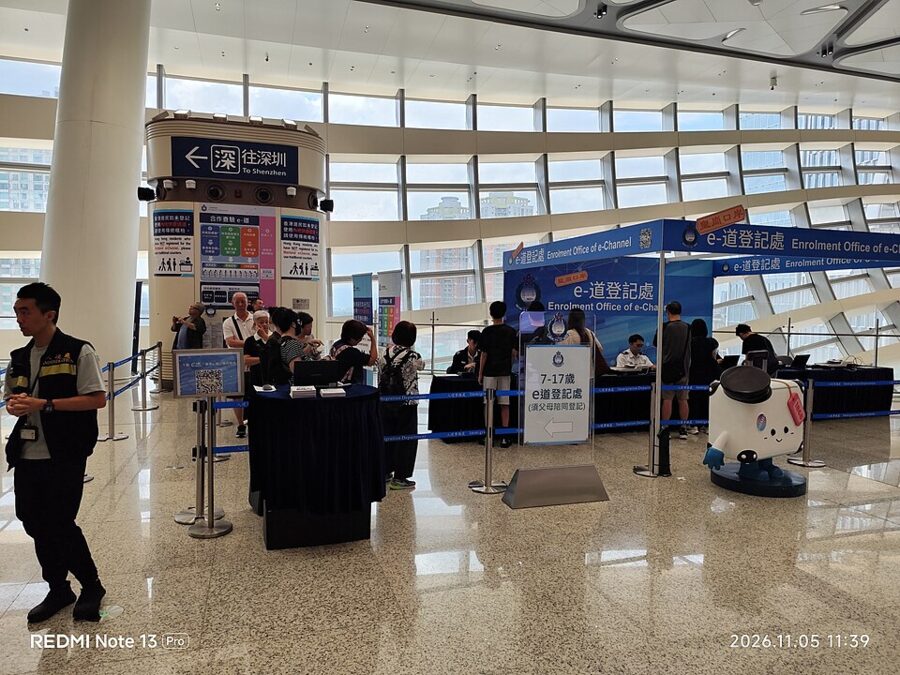
HKSAR passport holders cross on the Home Return Permit, never the passport. Since 5 November 2025 permit holders aged 14 and over can use face recognition at the Shenzhen side of Huanggang, Luohu, Liantang, Futian and Wenjindu. A foreign national with a Hong Kong permanent identity card but no permit is a visitor on that passport, whatever their years in Hong Kong.
Money, apps and data on the other side
Shenzhen pays by phone. Set up Alipay or WeChat Pay with a foreign card the night before, on Hong Kong data, not in the queue at Luohu with one bar of signal. Carry a few hundred renminbi in notes as well for the stall or taxi that will not take a foreign-linked wallet.
For the metro and buses, the China T-Union version of the Octopus card (HK$42) also pays on public transport in Shenzhen. For data, a Hong Kong SIM or eSIM with a mainland add-on is cheaper than roaming on a home plan. Roaming data is routed through Hong Kong, so WhatsApp and Google Maps keep working; on hotel wifi in Shenzhen they will not.
Crowds, the trip back and the usual mistakes
On Good Friday 2026, 3 April, about 817,000 people left Hong Kong in a day, 709,000 of them residents. Shenzhen’s border police describe two daily peaks at Lo Wu, morning and evening, with another rush from 21:30 to 23:00 as people head home. If your day is flexible, cross north on a weekday and come back before 21:00.
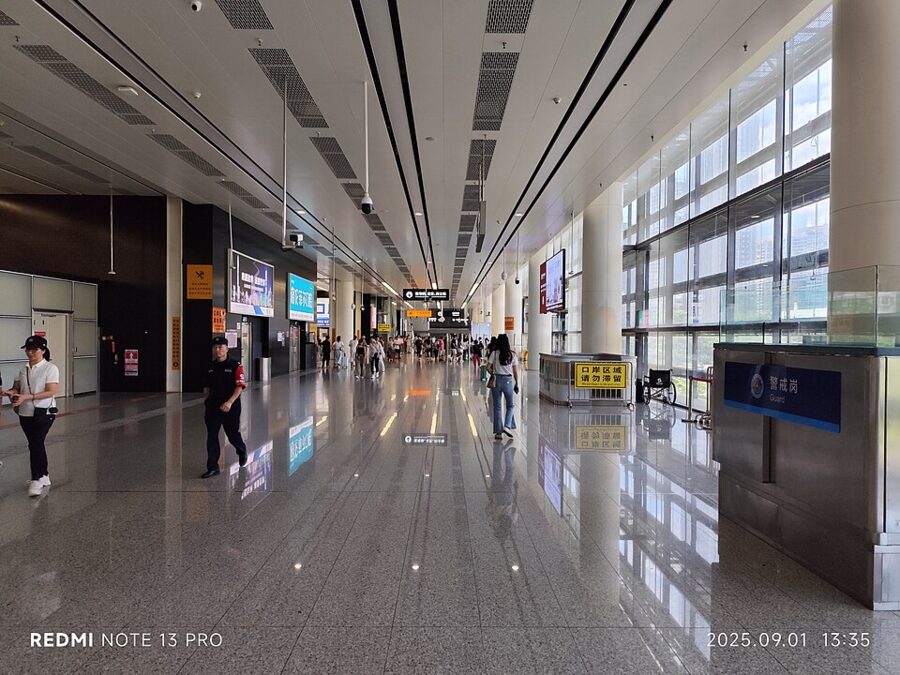
For a same-day return, these are the latest crossings back, earliest first:
- Shekou ferry to Sheung Wan: 19:15.
- Heung Yuen Wai and Man Kam To: close at 22:00.
- High-speed train: 22:09 from Shenzhen North, 22:19 from Futian.
- Lok Ma Chau Spur Line: closes at 22:30; last train to Admiralty 22:55.
- Lo Wu and Shenzhen Bay: close at midnight; last train from Lo Wu 00:00.
- Huanggang: all night, with short-haul coaches to the city.
The usual mistakes:
- Mixing up the two Lok Ma Chaus. The Lok Ma Chau Spur Line goes to Futian Port; the road crossing that went to Huanggang has closed, and Huanggang is now reached by coach or bus.
- Going for the five-day visa at the wrong crossing. Futian, Shenzhen Bay, Heung Yuen Wai and West Kowloon have no visa office; Lo Wu does.
- Turning up for the train 20 minutes before departure. Real-name checks at West Kowloon close at 30 minutes.
Top up the Octopus tonight, link Alipay, and take the East Rail Line north in the morning; at Sheung Shui, check the train’s destination says Lo Wu or Lok Ma Chau, whichever the table sent you to.