

A red Hong Kong taxi starts at HK$29 for the first 2 km, then adds HK$2.1 for every 200 m or every minute of waiting, dropping to HK$1.4 once the meter passes HK$102.5. On top of that come HK$6 for each bag in the boot and the tunnel tolls: HK$25 for a harbour crossing, plus another HK$25 return toll unless you board at a cross-harbour stand. From the airport, the Airport Authority’s own estimates are about HK$290 to Tsim Sha Tsui and HK$375 to Central, tolls included.

Those fares took effect on 14 July 2024, and the Transport Department (運輸署) fare table reissued on 10 May 2026 carries the same numbers. Since 1 April 2026 every taxi (的士) must also offer at least two electronic ways to pay. The catch is that the colour of the car decides where it may take you, and the return toll decides whether a short hop across the harbour costs HK$113 or HK$138.

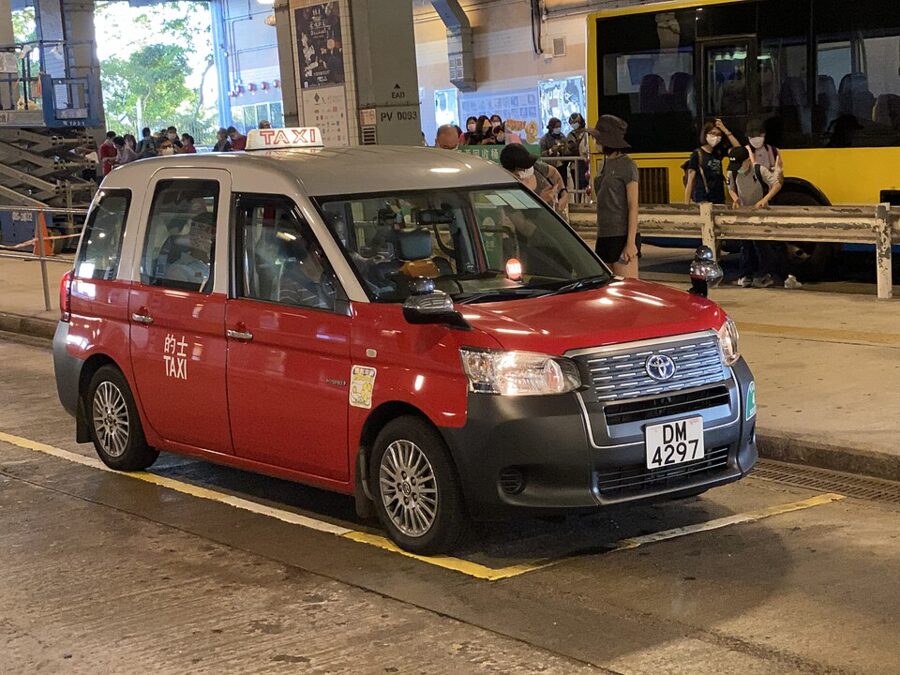
Look for the red For Hire sign on the dashboard, and ask for a receipt every time: it carries the taxi’s number, which is what you need if you leave something behind or want to complain.
In this article
Red, green and blue: where each taxi may take you
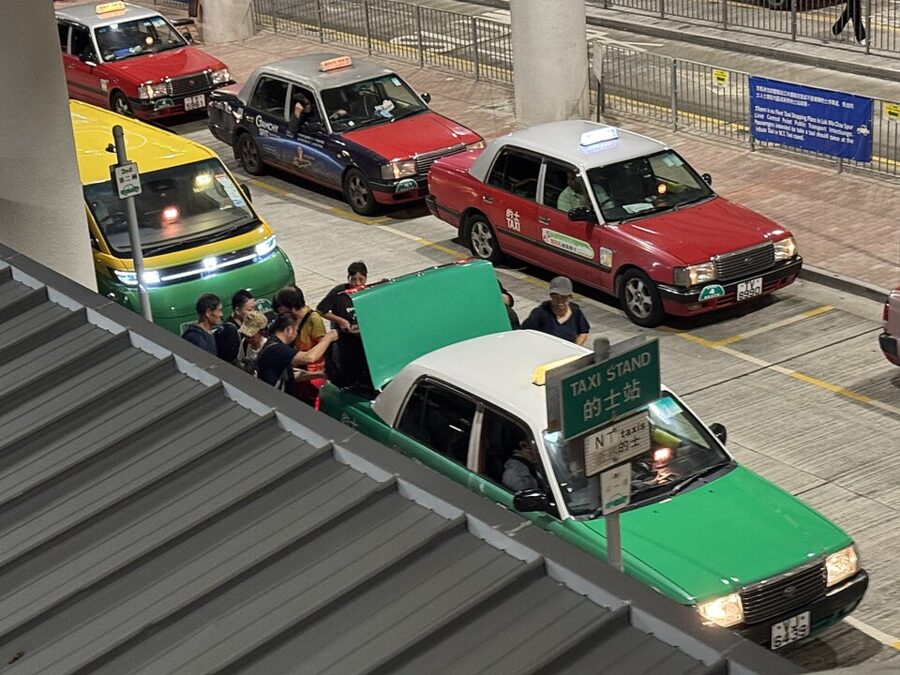
Hong Kong has 18,163 licensed taxis, according to the Transport Department in November 2026: 15,250 red, 2,838 green and 75 blue. Each colour is licensed for its own area with its own fares, and a driver will not take you outside his.
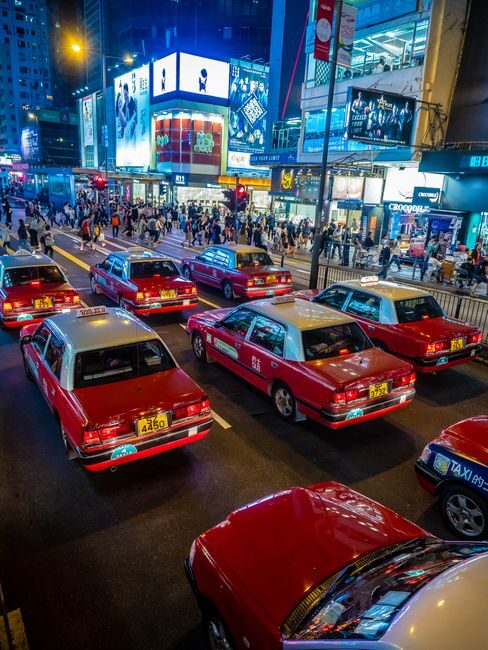
Red urban taxis (市區的士) go almost everywhere: Hong Kong Island, Kowloon, the New Territories and the airport. The only roads closed to them are Tung Chung Road and the roads of south Lantau, so a red taxi cannot take you to Ngong Ping or Mui Wo.

Green New Territories taxis (新界的士) work Tuen Mun, Yuen Long, Tai Po, North District, Ma On Shan and most of Sai Kung, but not Tseung Kwan O New Town. They also serve the Lok Ma Chau Spur Line interchange, the Hong Kong Port Areas at Shenzhen Bay and Huanggang, and Lok Ma Chau Control Point from 23:00 to 06:30. Beyond that they may only run set routes to places such as the airport, Tsing Yi Airport Express station, Tsuen Wan MTR station and Disneyland. Central, Tsim Sha Tsui, Mong Kok and most of Sha Tin are off limits.
In Sai Kung town and bound for Kowloon, wait for a red taxi, or ride green to the edge of its area and change.
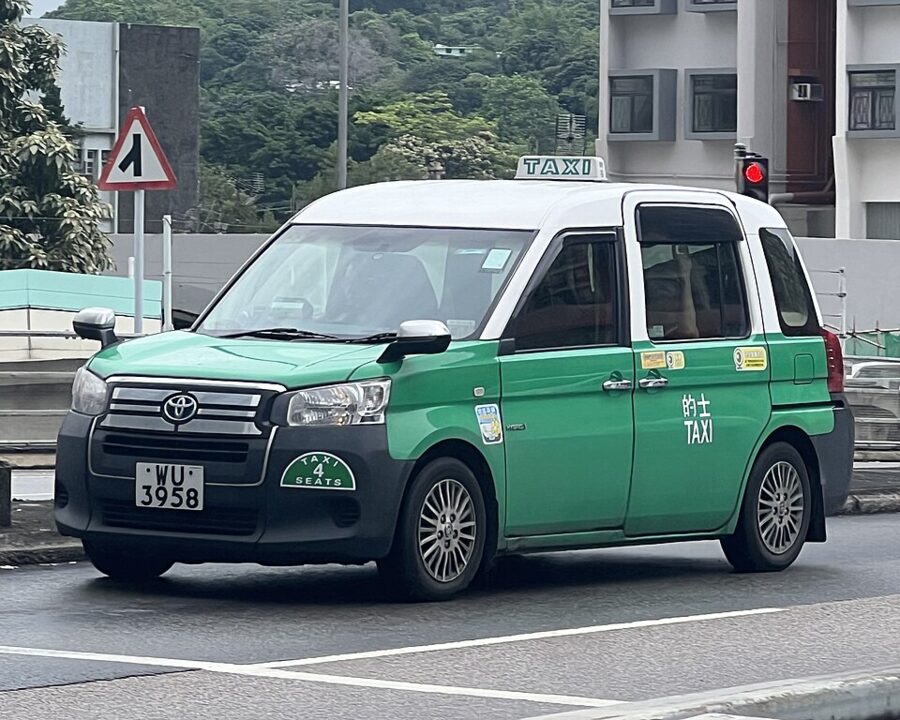

Blue Lantau taxis (大嶼山的士) are licensed for Lantau, Chek Lap Kok and the Hong Kong-Zhuhai-Macao Bridge port only. They are the only taxis allowed on Tung Chung Road and the south Lantau roads, so for Tai O, Ngong Ping, Cheung Sha or Pui O a blue one is your only cab. With 75 of them, expect to wait.
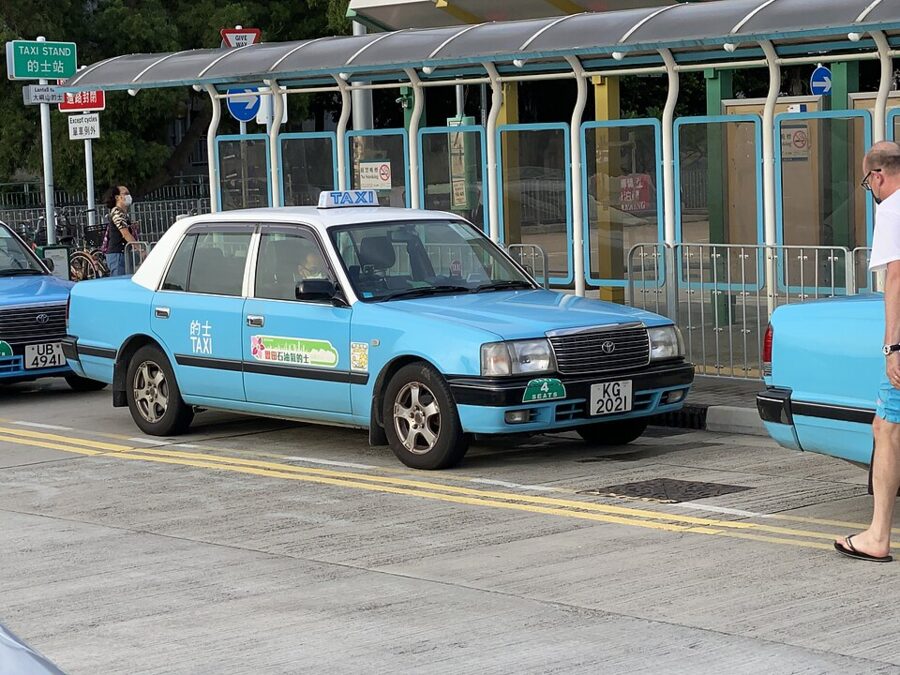

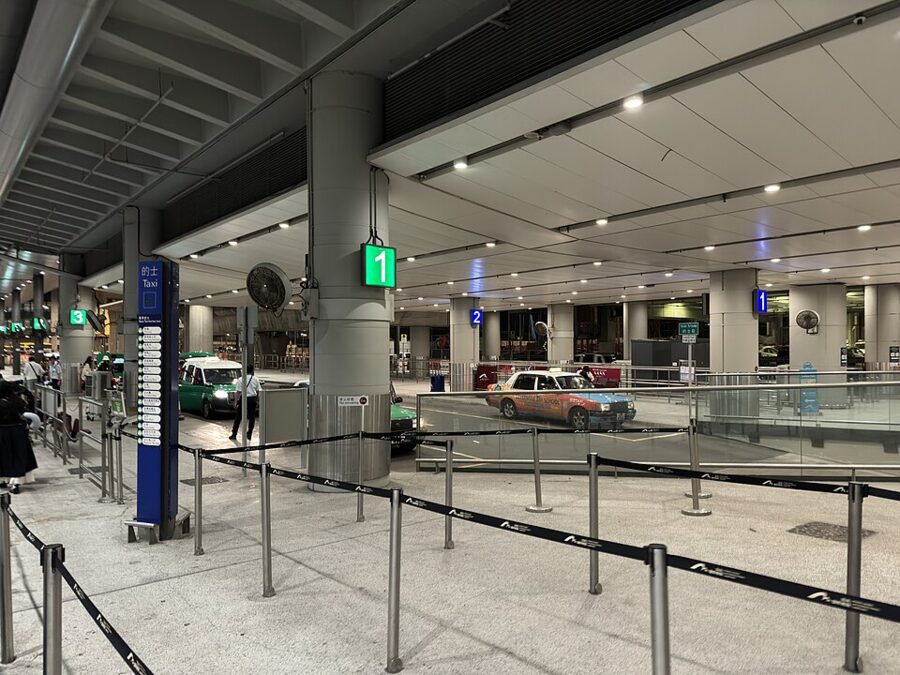
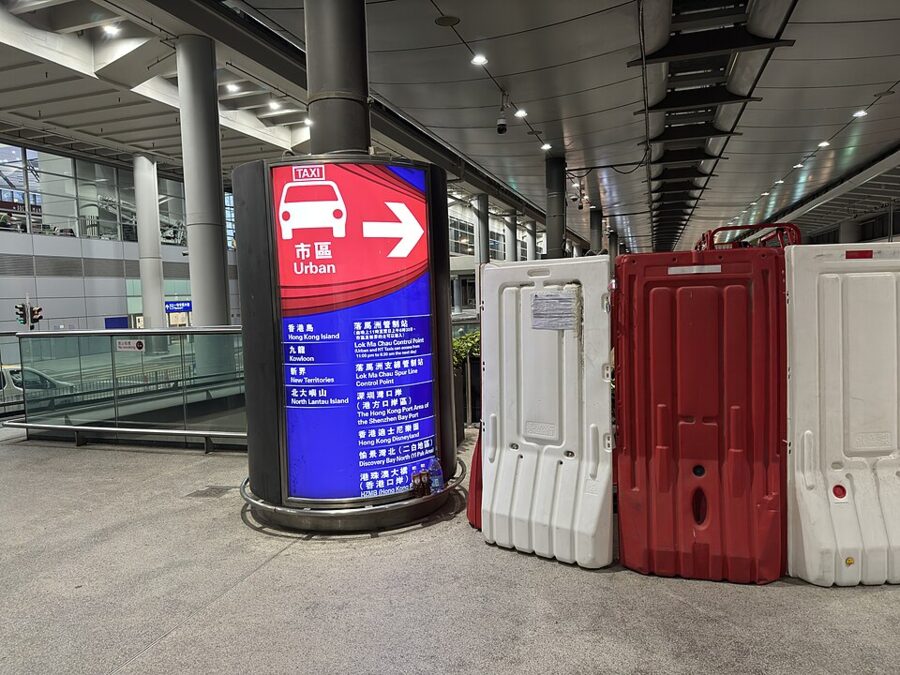
All three colours pick up at the airport, the bridge port and Hong Kong Disneyland. At the airport, take the red queue for the city, green for the north-west New Territories, and blue for Tung Chung, Disneyland or the rest of Lantau. Check the seat badge on the bumper, usually four or five; six-seat cars have to be booked through a taxi fleet.
The fare table, line by line
| Red (urban) | Green (New Territories) | Blue (Lantau) | |
|---|---|---|---|
| First 2 km or any part | HK$29 | HK$25.5 | HK$24 |
| Each further 200 m, or each minute of waiting | HK$2.1 | HK$1.9 | HK$1.9 |
| Rate drops once the meter reaches | HK$102.5 | HK$82.5 | HK$195 |
| Each further 200 m or minute after that | HK$1.4 | HK$1.4 | HK$1.6 |
| Each piece of baggage | HK$6 | HK$6 | HK$6 |
| Each animal or bird; telephone booking | HK$5 | HK$5 | HK$5 |
On a clear road a red taxi’s meter reaches HK$102.5 at about 9 km, after which each kilometre costs HK$7. Green taxis cross their line at about 8 km, blue at about 20 km. So a 3 km ride costs about HK$40, and a 35 km ride only seven times that.
The HK$6 baggage charge applies to every piece in the boot, and to anything in the cabin whose length, width and height add up to more than 140 cm; prams count too. A handbag or backpack on your lap is free, as are wheelchairs and crutches used by disabled passengers.
Tunnels and the return toll
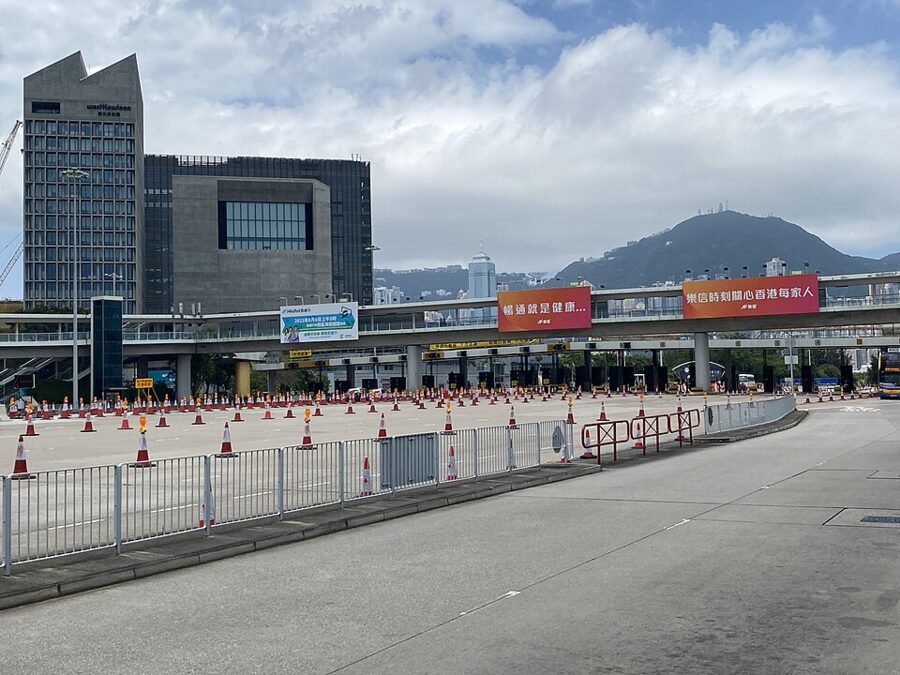
Toll surcharges are added to the meter. The three harbour crossings (Cross-Harbour Tunnel, Eastern Harbour Crossing, Western Harbour Crossing) cost HK$25, Tai Lam Tunnel HK$28, Tate’s Cairn HK$20, and Aberdeen, Lion Rock, Shing Mun and the Tsing Sha tunnels HK$8. The Central-Wan Chai Bypass, Kai Tak Tunnel, Tuen Mun-Chek Lap Kok Tunnel and the airport road’s bridges add nothing, which is why the airport to Tsim Sha Tsui has no toll at all.
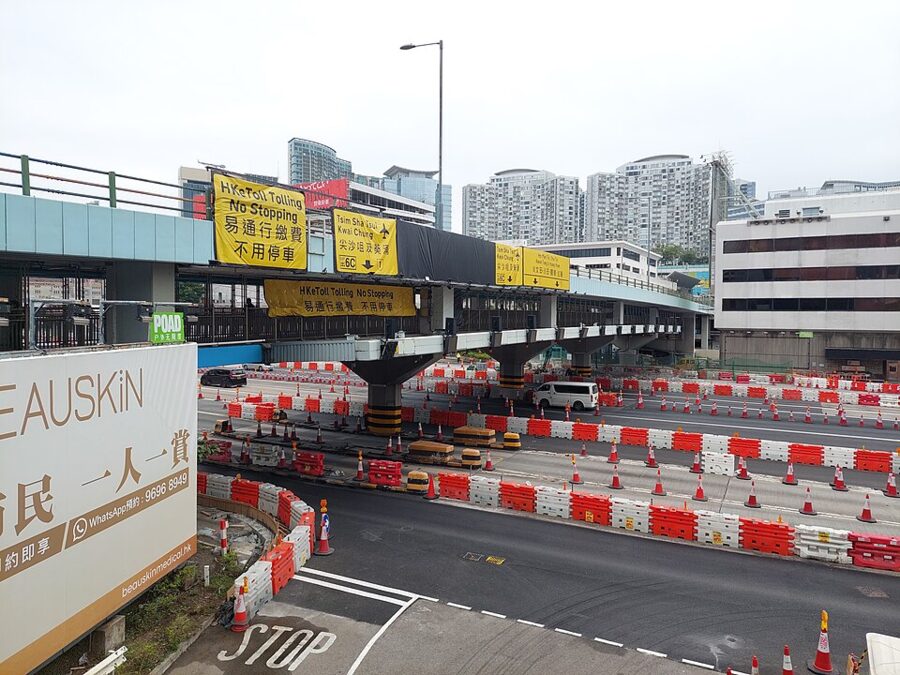
The return toll causes most arguments. On a harbour crossing you also pay HK$25 for the taxi’s trip back, unless you start from a cross-harbour taxi stand or your final destination is not on the far side of the harbour. A hail on Nathan Road to Central costs HK$50 in tolls; the same ride from the cross-harbour stand on Canton Road costs HK$25.

When the fares last went up
The last rise, approved by the Executive Council in May 2024, took effect on 14 July 2024: every flag-fall went up HK$2, red from HK$27 to HK$29, green from HK$23.5 to HK$25.5 and blue from HK$22 to HK$24. The trade had asked for a HK$32 red flag-fall plus higher surcharges. The rise before that was in July 2022, so if you read about a new one, check the date on the Transport Department’s taxi fare page.
What common trips cost
Worked from the current scale over the usual road distance, in clear traffic, with no luggage. The airport’s own estimates run higher, about HK$375 to Central and HK$290 to Tsim Sha Tsui, because they allow for traffic; treat those as the top of the range. Add HK$6 a bag and a few dollars for every minute stuck in traffic; if a driver’s total is far above these, ask why.
| Trip | Distance | Tolls | About |
|---|---|---|---|
| Airport to Central (red) | 35 km | HK$50 | HK$340 |
| Airport to Causeway Bay (red) | 36 km | HK$50 | HK$345 |
| Airport to Tsim Sha Tsui (red) | 32 km | None | HK$270 |
| Airport to Mong Kok (red) | 30 km | None | HK$255 |
| Airport to Tung Chung (blue) | 6 km | None | HK$62 |
| Airport to Disneyland (blue) | 15.5 km | None | HK$155 |
| Tsim Sha Tsui to Central, hailed / from a cross-harbour stand | 7.5 km | HK$50 / HK$25 | HK$138 / HK$113 |
| Mong Kok to Causeway Bay, hailed in the street | 6.6 km | HK$50 | HK$127 |
| Central to Causeway Bay | 3.4 km | None | HK$46 |
| Kai Tak Cruise Terminal to Tsim Sha Tsui | 9.7 km | None | HK$110 |

At the airport, the passenger record slip carries an estimated fare, a useful second check. A family of four with four suitcases to a Central hotel should expect up to about HK$400. For two or more people with bags going to Kowloon the taxi is worth it, door to door in about half an hour on clear roads. For one person with a carry-on to Central, the airport buses do the job for a fraction of the fare.
Paying: cash, Octopus and the two-payment rule
Since 1 April 2026 every driver must offer at least two electronic payment means: one by QR code, typically AlipayHK or WeChat Pay HK, and one without, usually Octopus (八達通) or a contactless card. A driver who fails to without a reasonable excuse faces a fine of up to HK$5,000 and six months in prison, and a broken terminal must be repaired or replaced before the taxi carries passengers again. Cash is still accepted in every taxi.
Two payment means does not mean your payment means. A terminal that takes Octopus and AlipayHK satisfies the rule without touching a foreign Visa card, so check the stickers on the side windows and ask “card?” before you get in.
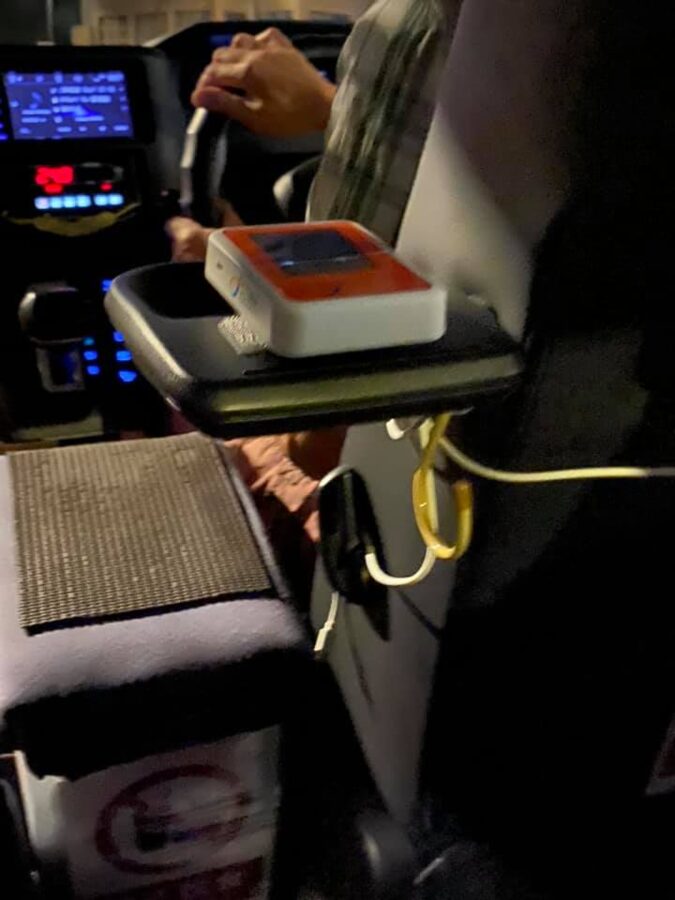

The safest combination is an Octopus card with credit plus some cash. Drivers need not change a HK$500 or HK$1,000 note, so carry twenties and fifties. Phone payments need data, and drivers near the border report payments failing for lack of signal; a local SIM or eSIM solves that.
Some payment platforms add a handling fee. The Transport Department says this is the platform’s charge, not part of the fare, so passing it on is not overcharging; several providers have said they will keep waiving it, so check before you scan.
Refusing a machine-printed receipt on request without a reasonable excuse is an offence, and a driver with a broken printer should write one by hand. For lost property, see getting help as a visitor in Hong Kong.
Hailing, stands and the cross-harbour rank
Some central streets are restricted zones at set hours, where a taxi may not stop to pick you up, so in Central, Wan Chai and Tsim Sha Tsui it is usually quicker to walk to a stand. The Transport Department’s list dated 29 June 2026 has around 520 taxi stands, about 35 of them cross-harbour stands (過海的士站), where you pay one HK$25 toll instead of two. At a normal stand you take the first car in the queue, and drivers are not supposed to choose passengers by destination.
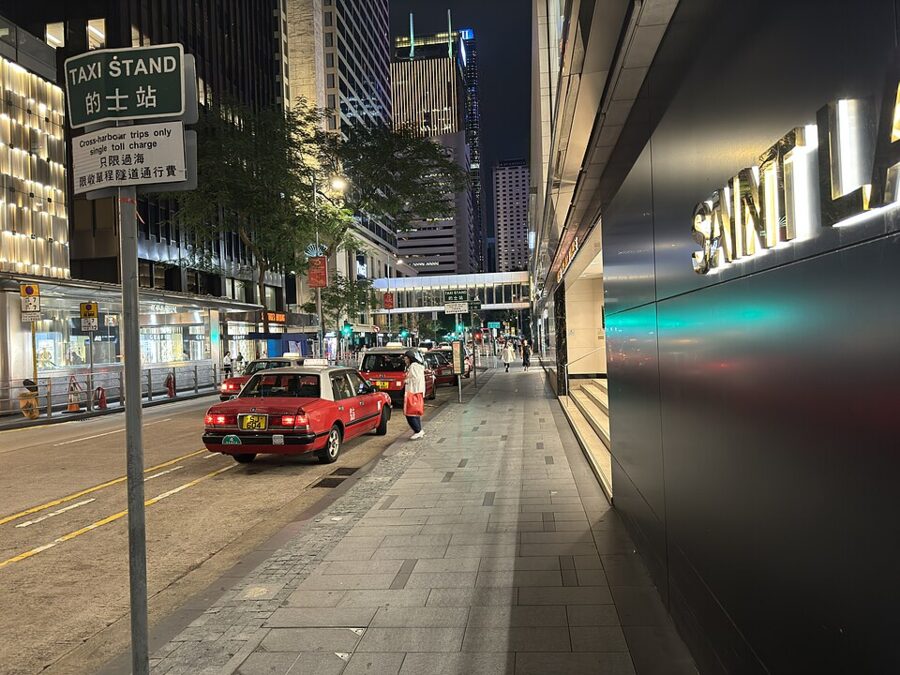

The cross-harbour stands a visitor is most likely to pass:
- Central and Sheung Wan: between Central Ferry Piers 5 and 6; Exchange Square; Chater Road outside Alexandra House; Queen’s Road Central outside Crawford House; the Hong Kong-Macau Ferry Terminal.
- Wan Chai and Causeway Bay: Harbour Road opposite Great Eagle Centre; Jaffe Road outside Elizabeth House; Lockhart Road between Luard Road and O’Brien Road; Paterson Street; Russell Street.
- Kowloon: Canton Road near Haiphong Road; Mody Square outside the Royal Garden Hotel; Science Museum Square; Hung Hom MTR station; level B2 of West Kowloon Station.
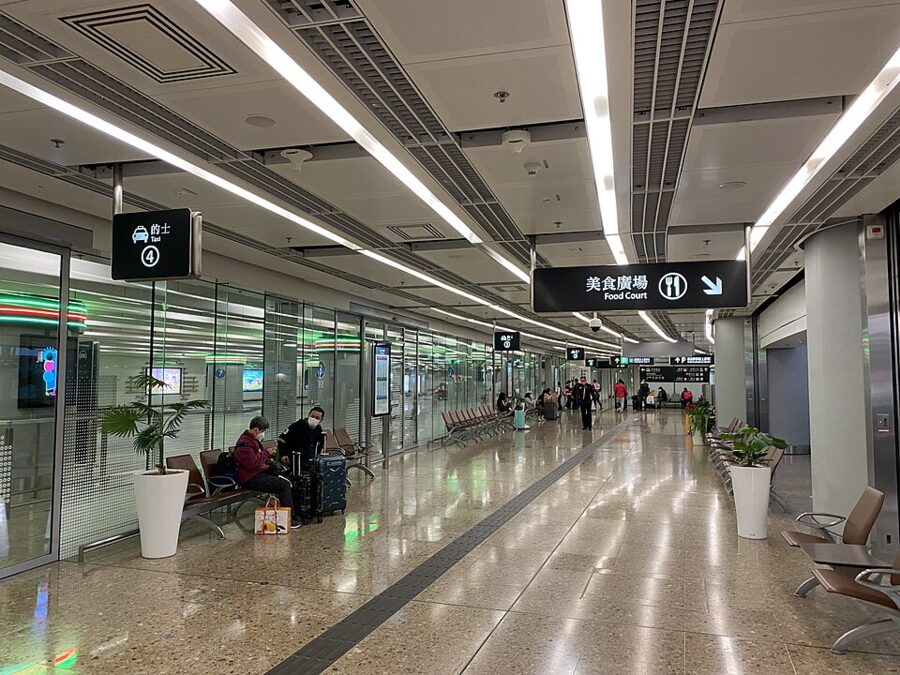

Away from these stands, a red taxi still has to take you across the harbour if you ask, at the full HK$50 in tolls. Show the driver 過海 (cross harbour) and your destination written down.
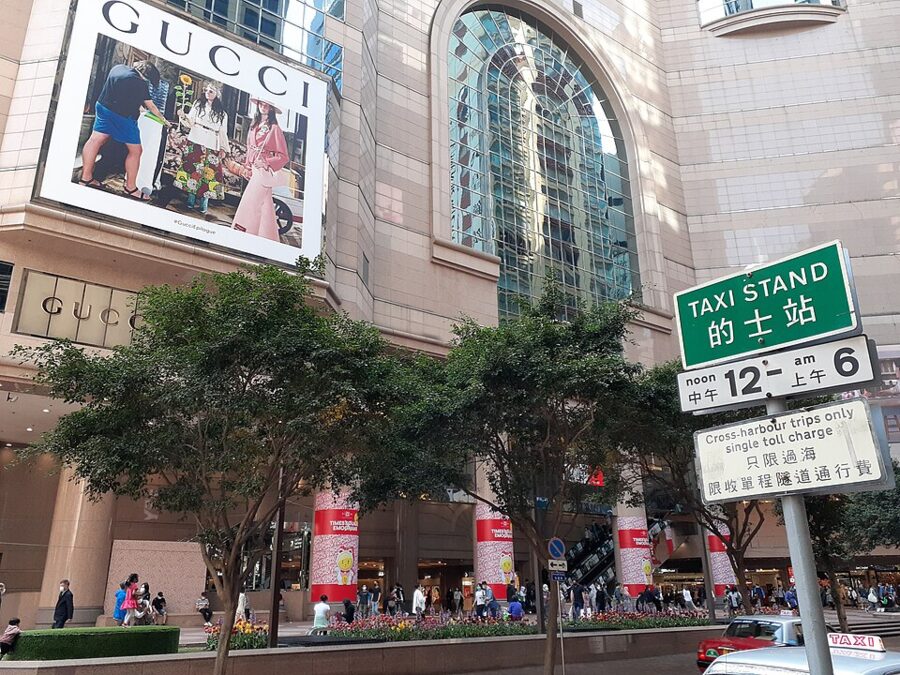

At the airport, ignore anyone in the terminal offering a car and keep the stand staff’s passenger record slip; the Transport Department tells passengers not to hand it back to the driver. At the Hong Kong-Zhuhai-Macao Bridge port all three colours wait, so the blue queue is the cheap way to a Tung Chung hotel. At the land crossings, taxis wait on the Hong Kong side at the Lok Ma Chau Spur Line interchange, the Shenzhen Bay and Huanggang port areas and Heung Yuen Wai. Heading on into Guangdong instead, the cross-border buses leave from the same interchanges.

Booking: fleets, apps and ride-hailing
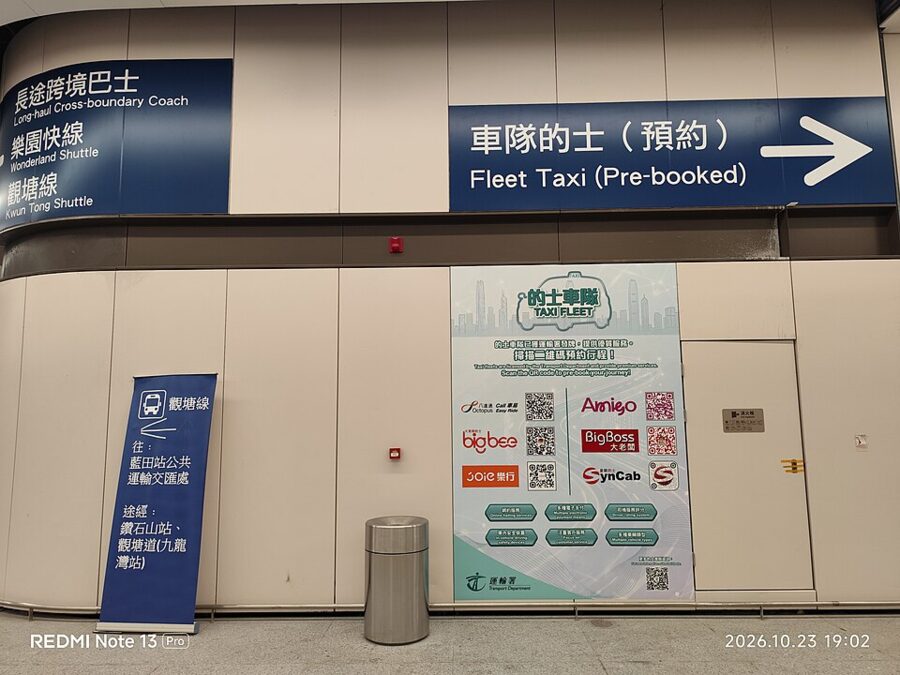
Phone bookings carry the HK$5 surcharge; the Transport Department lists the radio call centres on its taxi page. Five licensed taxi fleets now run: Amigo, Big Bee Taxi, Big Boss Taxi, Joie and SynCab. Hailed in the street, a fleet taxi charges the meter. Booked through the fleet, it may charge the meter plus an agreed booking fee, or a lump sum agreed before the trip, which is worth having for an early flight.
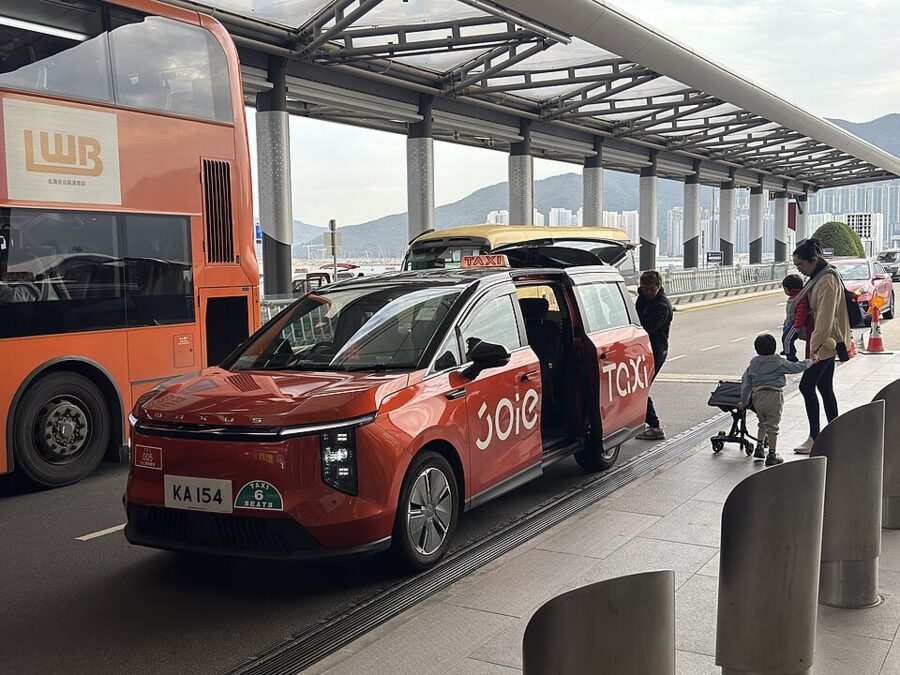

Booked fleet taxis meet you at about 101 designated stopping places across 17 locations, including the airport, some border crossings, West Kowloon Station, Kai Tak Cruise Terminal and Disneyland. The simplest app is the Octopus App’s Call車易, launched on 22 April 2026, which books from all five fleets and several platforms, about 8,000 taxis, and shows prices before you book, with six-seat cars, larger cars for luggage and wheelchair-accessible vehicles; refunds go back to the Octopus wallet. Uber’s app also has a taxi option that sends an ordinary licensed taxi. Whatever app you use, check the plate it shows against the car before you get in.
Private cars carrying paying passengers through an app have never been licensed in Hong Kong. The ride-hailing bill passed the Legislative Council on 15 October 2025 and most of it took effect on 3 August 2026.
Eight companies, among them Uber, DiDi, Amap and Tada, applied for platform licences by 30 October 2026; the first were expected at the end of November at the earliest, with vehicle permits capped at 10,000 to begin with. Until a platform and its cars and drivers are licensed, a private car picked up through an app is not a licensed hire, and a legislator backing the bill noted that such cars had no suitable insurance for passengers. I would stick to the taxi option in any app.
When something goes wrong
Refusing a hire, overcharging and not taking the most direct route are offences that, since 22 September 2024, also carry points under the Taxi-Driver-Offence Points system; 15 points in two years can cost a driver his licence. Keep the receipt, note the registration number and the name and number on the Taxi Driver Identity Plate on the dashboard, and file it with the Transport Complaints Unit (交通投訴組) on its taxi complaint form. If a dispute turns threatening, call 999.
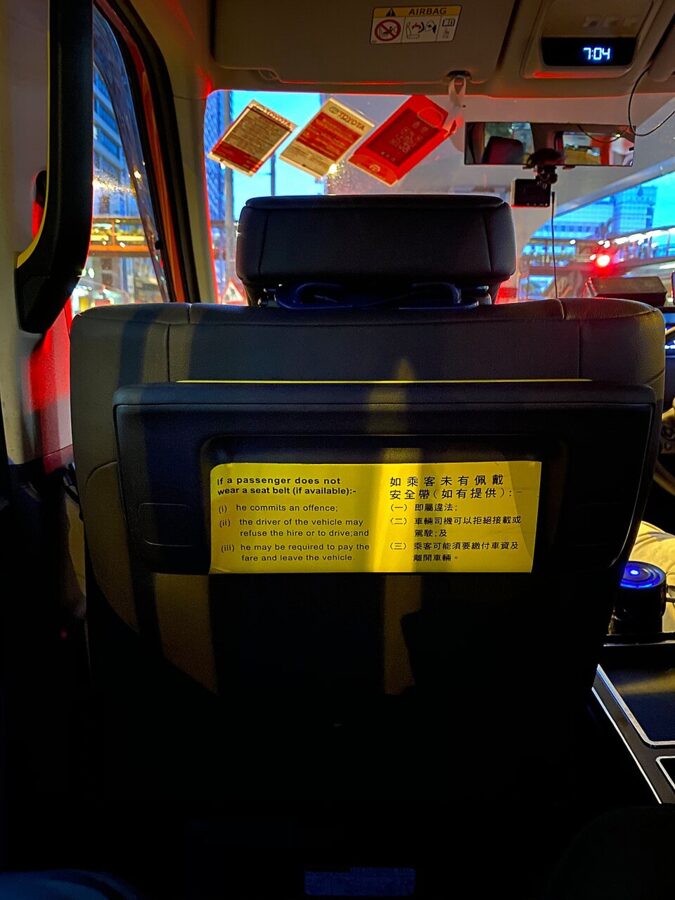

From 28 December 2026, each taxi renewing its licence must carry a Transport Department-endorsed journey recording system that films the cabin with sound, records the road ahead and behind and logs the car’s location. A complaint about a detour will soon have a recording behind it, and so will a driver’s complaint about you. The cameras arrive as each taxi comes up for its annual inspection.
Back at the airport, then: join the queue for your colour, keep the slip, check the window stickers for a payment method you actually have, and ask for the receipt when you arrive.