

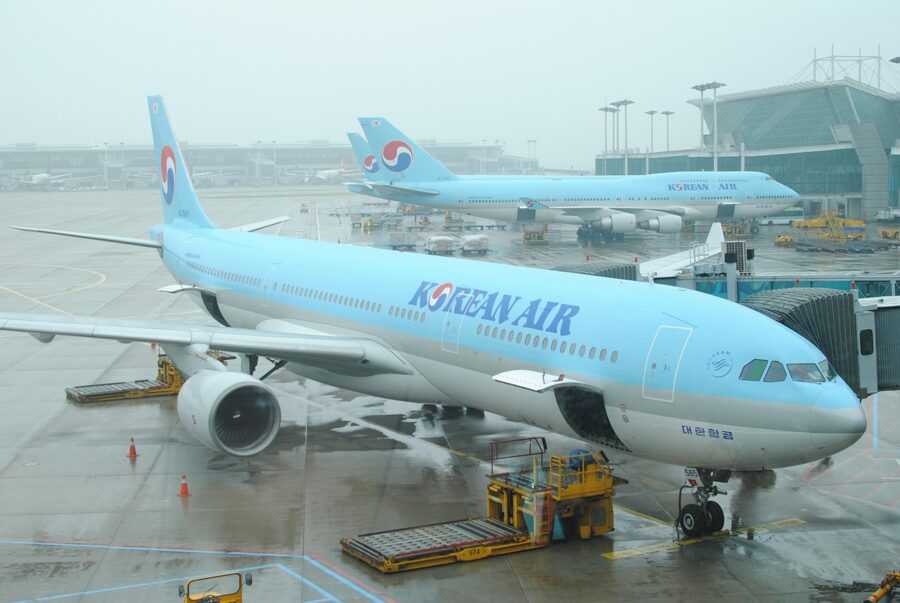
Fly into Incheon from Hong Kong on Cathay Pacific or HK Express and you clear immigration in Terminal 1. Fly Korean Air or Asiana and you come out in Terminal 2, a train ride away, and the two terminals do not share a left-luggage company. Before you work out whether a layover is long enough for Seoul, work out which building your suitcase will be sitting in, and which building you fly out of.
Incheon International Airport (인천국제공항, ICN) lists no self-service luggage lockers in either terminal. The airport company’s own facilities directory, last updated for these entries in September 2026, lists staffed counters instead: three run by Zimcarry (짐캐리) in and under Terminal 1, two run by Hanjin Express (한진택배) in Terminal 2. In Seoul there are more options, and some of them are better value than anything at the airport.

Fees, hours and counter positions below are as of November 2026. The trains are AREX, the Airport Railroad (공항철도). Prices are in Korean won, which is what the counters charge.

In this article
- Which terminal your Hong Kong flight uses
- Terminal 1: Zimcarry's three counters
- Terminal 2: Hanjin Express
- Getting between the terminals, and why it decides where the bag goes
- Transit passengers: what you can do without entering Korea
- Leaving the bag in Seoul instead
- A layover from a Hong Kong flight: is it worth leaving the airport?
Which terminal your Hong Kong flight uses
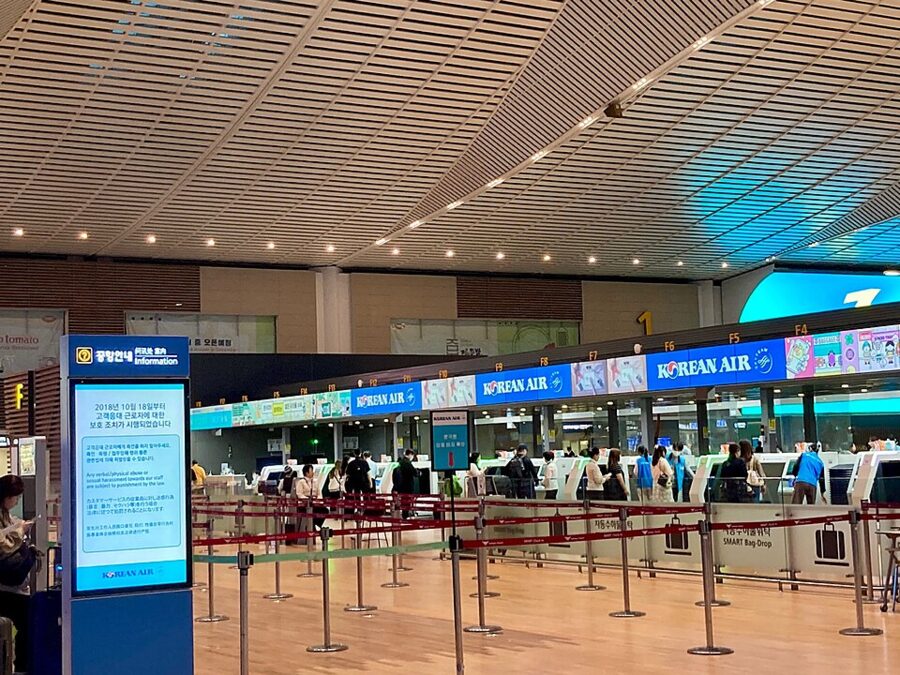
In late November 2026 the airport’s departures board showed about twenty flights a day to Hong Kong. Korean Air and Asiana are the only two in Terminal 2. Everyone else is in Terminal 1, and each checks in at its own row of counters on the third floor:
- Cathay Pacific: row J, Terminal 1.
- HK Express: row M, Terminal 1, then the shuttle train to the concourse gates in the 100s.
- Hong Kong Airlines: row F or K, Terminal 1.
- Jeju Air, Trinity Airways, Air Premia, Eastar Jet: rows L, A–B, C and F–G, Terminal 1.
- Korean Air: rows A–D, Terminal 2.
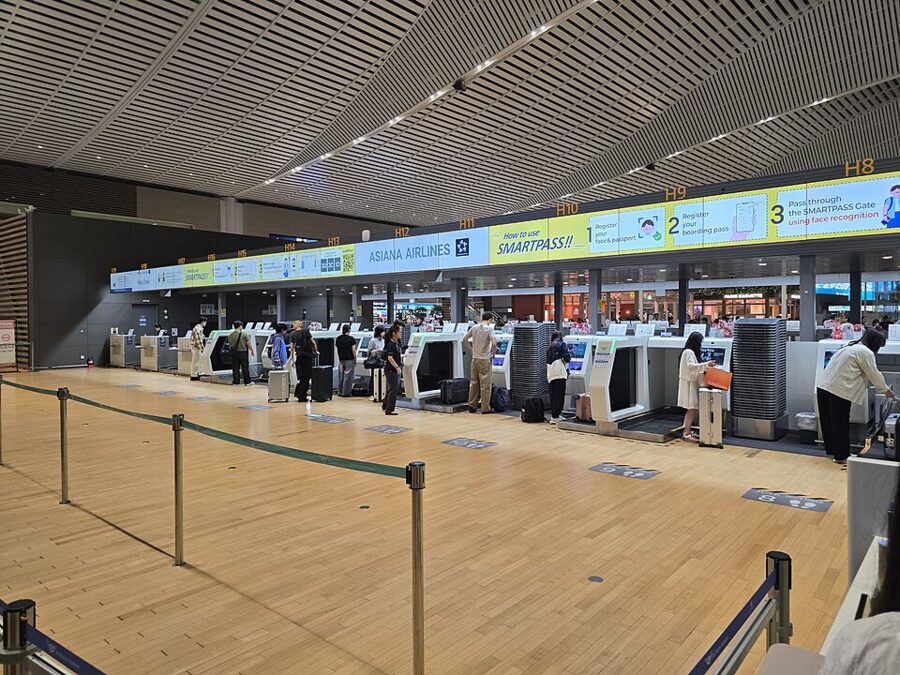
- Asiana Airlines: rows G–J, Terminal 2.
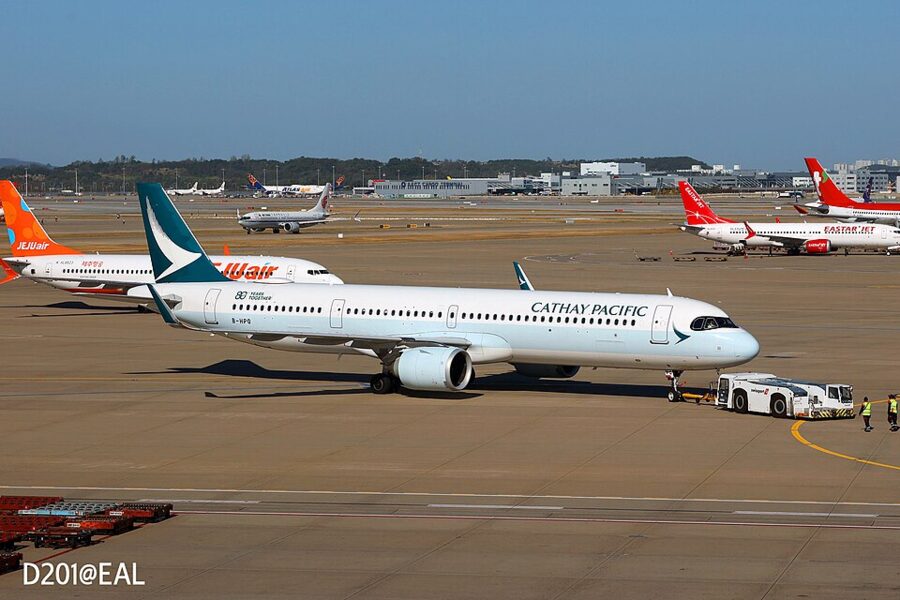

Asiana now checks in at Terminal 2, alongside Korean Air. Codeshares follow the operating airline: a Cathay flight number on a plane Cathay does not fly will not be at row J. The terminal is printed on the e-ticket, and that is the one to believe.
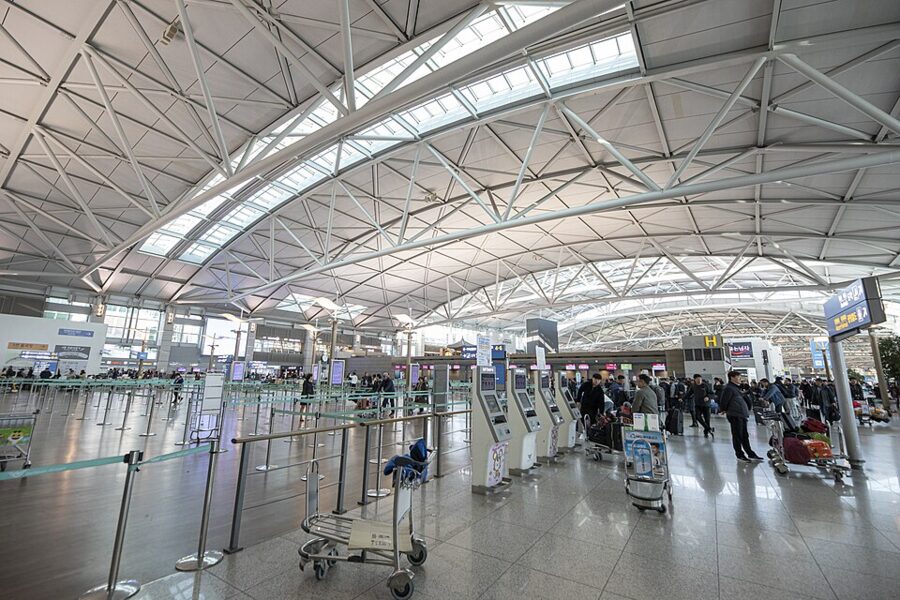

Terminal 1: Zimcarry’s three counters
Zimcarry is a Busan-based baggage company that runs counters at stations and airports across Korea. The airport’s facilities directory lists only Zimcarry for storage in Terminal 1, even though one older page on the airport’s own site still names Hanjin. You walk up, fill in a tag, pay in advance and take a receipt; there is no online booking for storage yet.
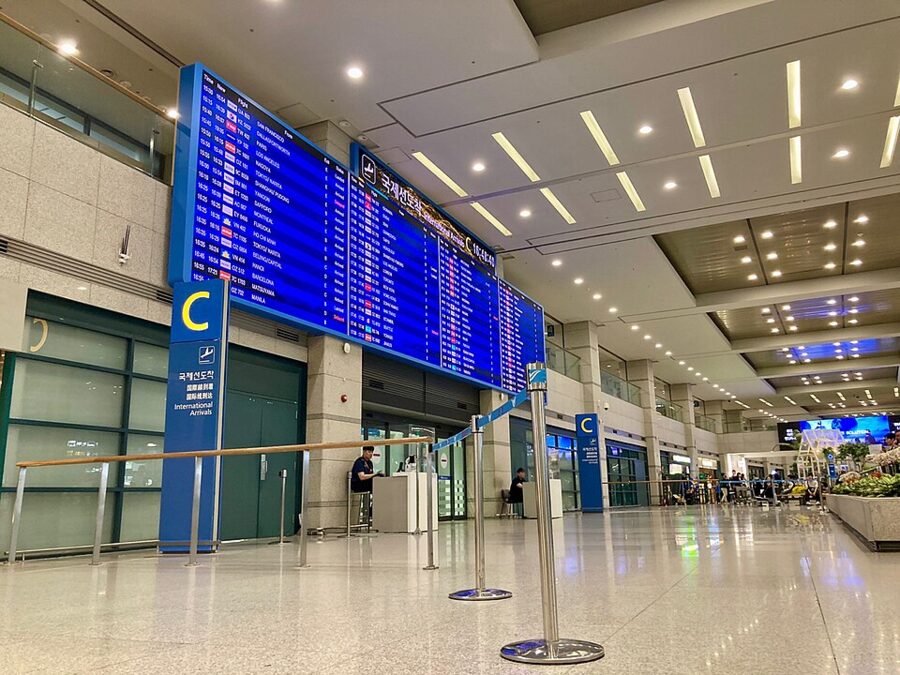
West counter, third floor, near row N
Inside entrance 13 on the departures level, by check-in row N. The airport lists it as open 24 hours; Zimcarry’s own page says 00:00–23:50, so expect it to shut for ten minutes before midnight. This is the counter for a red-eye home: Cathay’s 01:55 and HK Express’s 02:25 departures to Hong Kong both check in a short walk away.
East counter, third floor, near row B
Inside entrance 2, near check-in row B. The airport gives the hours as 07:00–21:00 and Zimcarry gives 07:00–22:00. I’d plan on the airport’s earlier closing time and be pleasantly surprised.
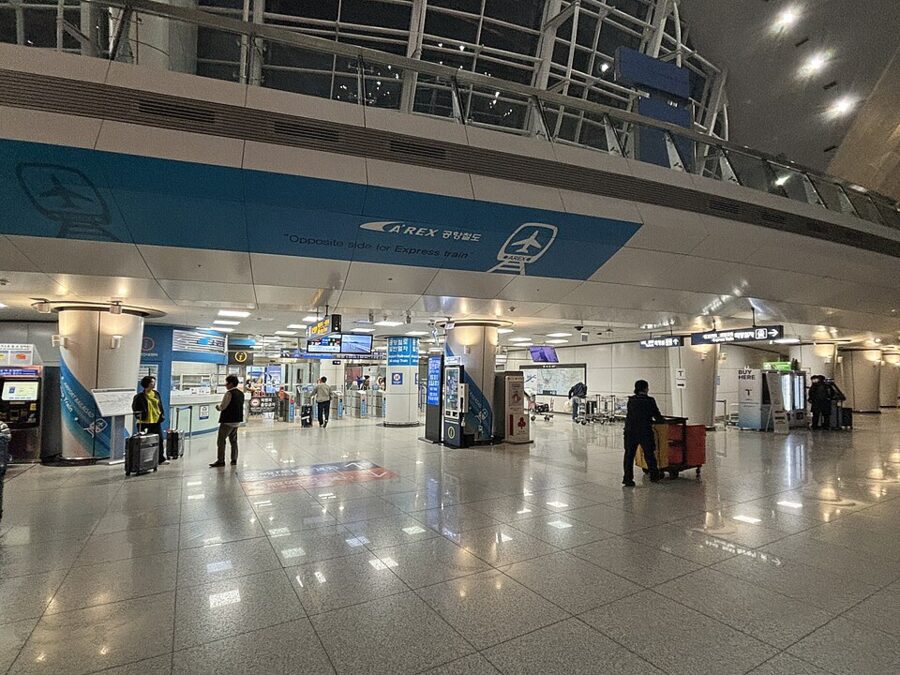
AREX counter, basement 1
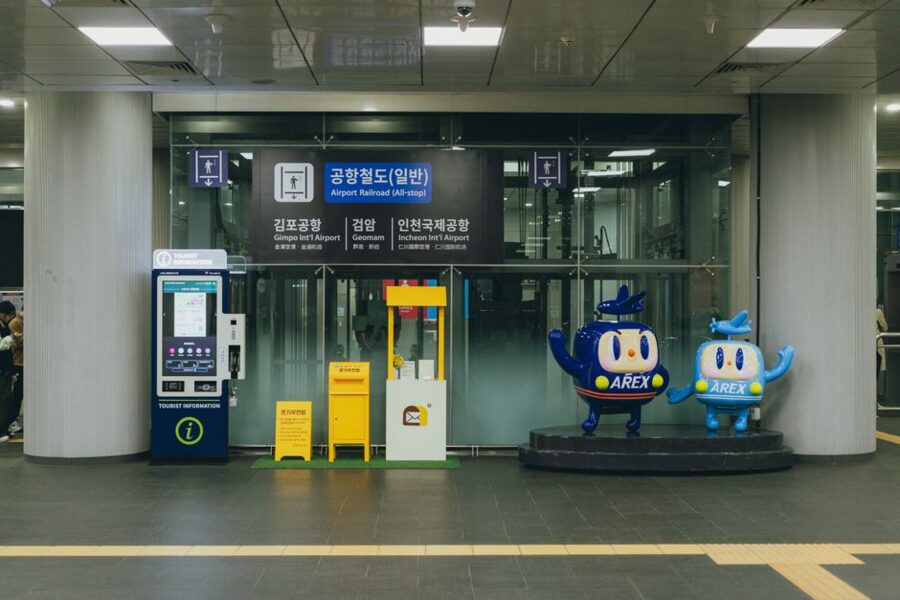
Just inside and to the right of the ticket gates for the all-stop AREX train in the Terminal 1 transportation centre, open 07:00–22:00. It handles storage and delivery but not the parcel and wrapping work the upstairs counters do. If you are heading for Seoul, this one sits on your route: drop the bag, walk ten metres, tap through the gates.

What Zimcarry charges
All three Terminal 1 counters use the same price list, and every price covers 24 hours. Size is measured on the longest side of the bag.
| Item | Longest side | Per 24 hours |
|---|---|---|
| Small suitcase (cabin size) | up to 55 cm | KRW 5,000 |
| Medium suitcase | 56–70 cm | KRW 8,000 |
| Large suitcase | 71 cm and over | KRW 10,000 |
| Small bag | up to 45 cm | KRW 3,000 |
| Medium bag | 46–60 cm | KRW 5,000 |
| Large bag | 61 cm and over | KRW 8,000 |
| Golf caddie bag | KRW 10,000 | |
| Coat or jacket | KRW 3,000 each, or KRW 10,000 for four |
A 24-inch suitcase is around 66 cm tall and lands in the medium band; most 28-inch cases are large. Bags can stay until the seventh day. If you come back after closing time, you collect the next day and pay for the extra day, which matters at the two counters that are not open around the clock.
Read the small print before you hand over anything with value in it. Zimcarry’s terms say it will refuse cash, securities and valuables worth more than KRW 100,000, anything over 30 kg, food, dangerous goods and animals, and that its compensation for staff error is capped at KRW 100,000. Payment is non-refundable once taken, and the company warns that storage can fill up early at weekends, on public holidays and in January–February and July–August.
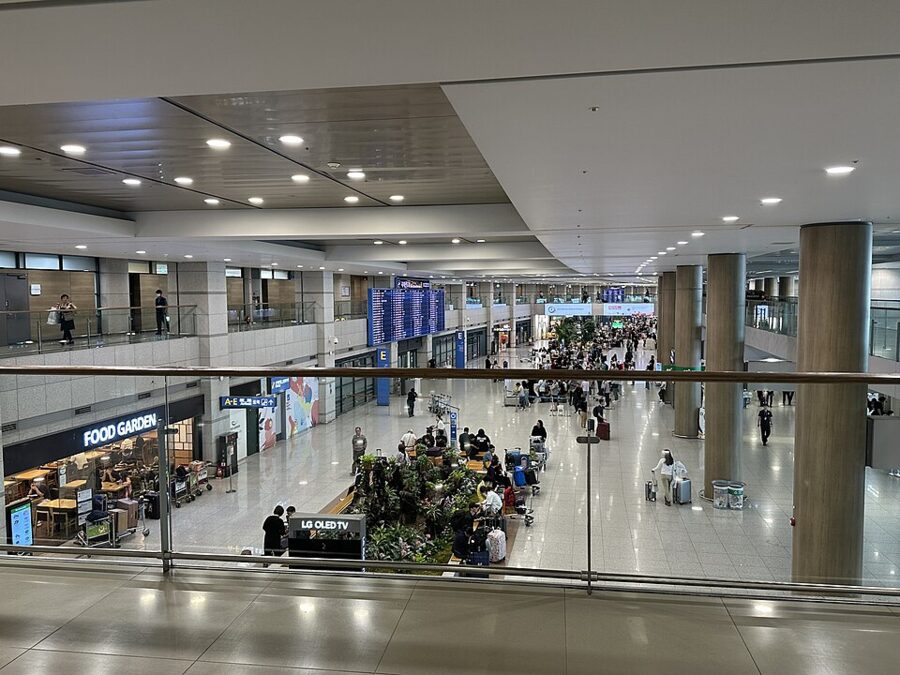

Two other places in Terminal 1
SPA at Home, a 24-hour sauna and sleeping hall on the east side of basement 1, lists suitcase and coat storage among its services. It does not publish a storage price, so ask at the desk; it suits someone sleeping there anyway.
WooriZim (우리짐) is aimed at the opposite traveller, someone leaving for a week or more: you drop at entrance 10 on the third floor and collect at entrance 10 on the first floor when you come back. Its own price list, updated in October 2026, charges KRW 29,900 for a checked-size suitcase for the first three days and KRW 5,000 a day after that, and it works 05:00–22:00. For a single day Zimcarry is far cheaper.
Terminal 2: Hanjin Express
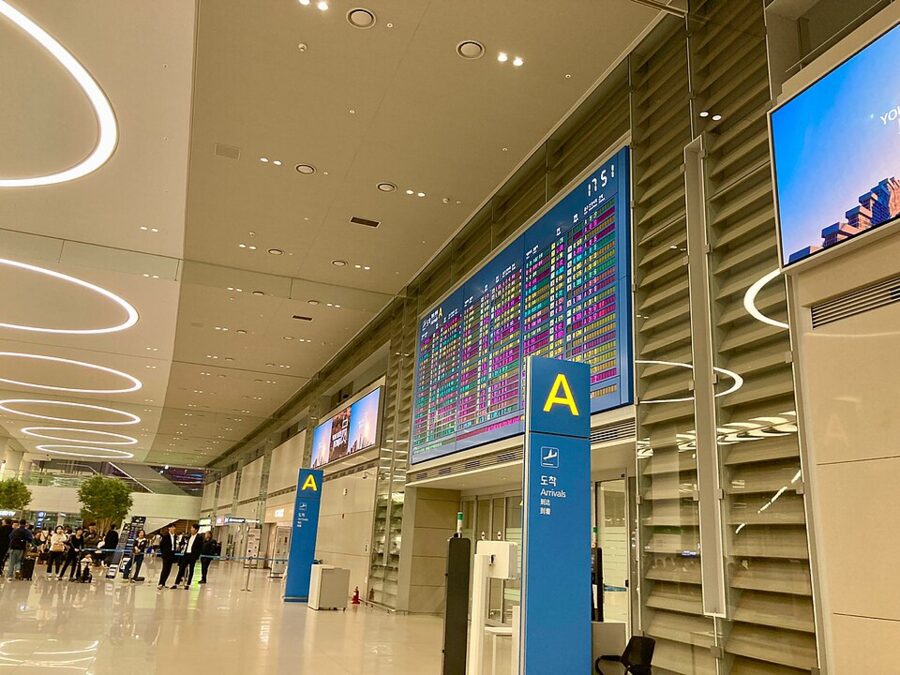
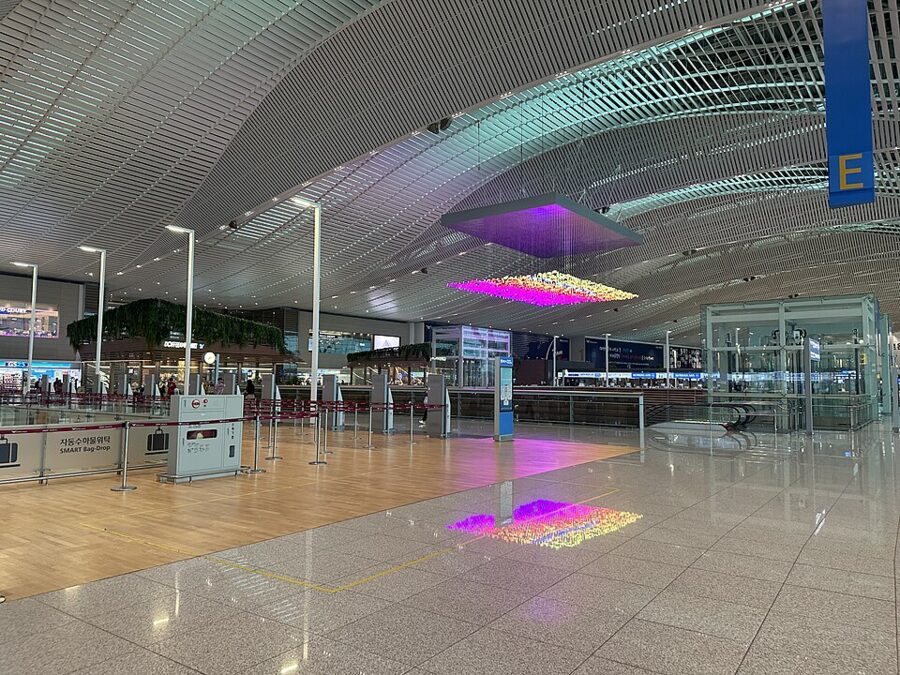
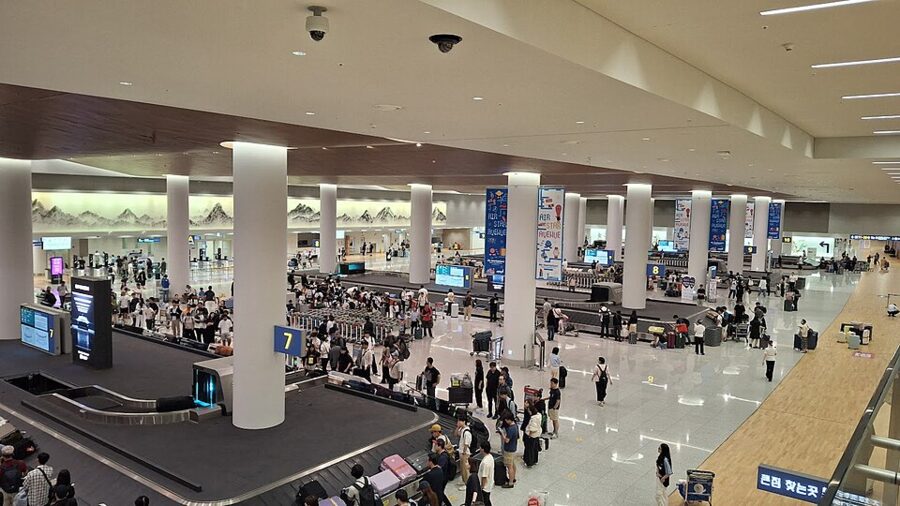
Terminal 2 has two Hanjin Express counters, and both are at the west end of the building near entrance 1. They are the only staffed storage the airport lists for this terminal.
- Third floor, west side, near entrance 1, open 24 hours. It sits in what the airport calls the parcel, storage and wrapping zone, on the departures level.
- First floor, west end, near entrance 1, open 07:00–21:00. This is the arrivals-level counter. Coats left in its coat room can be collected at any hour.

Hanjin does not publish its Incheon storage prices online, so ask the price before you hand the bag over. SPA at Home also has a branch in Terminal 2’s basement, open 24 hours, with the same suitcase and coat storage listed.

One trap to know about: the airport’s own Airport Railroad page still names a Hanjin counter opposite row B in Terminal 1 as a pickup point for T-Luggage deliveries, while its facilities directory puts Zimcarry in that spot. T-Luggage’s own price list only shows deliveries to and from Terminal 2. If your plan depends on a Terminal 1 handover, confirm it with the operator first.

Getting between the terminals, and why it decides where the bag goes
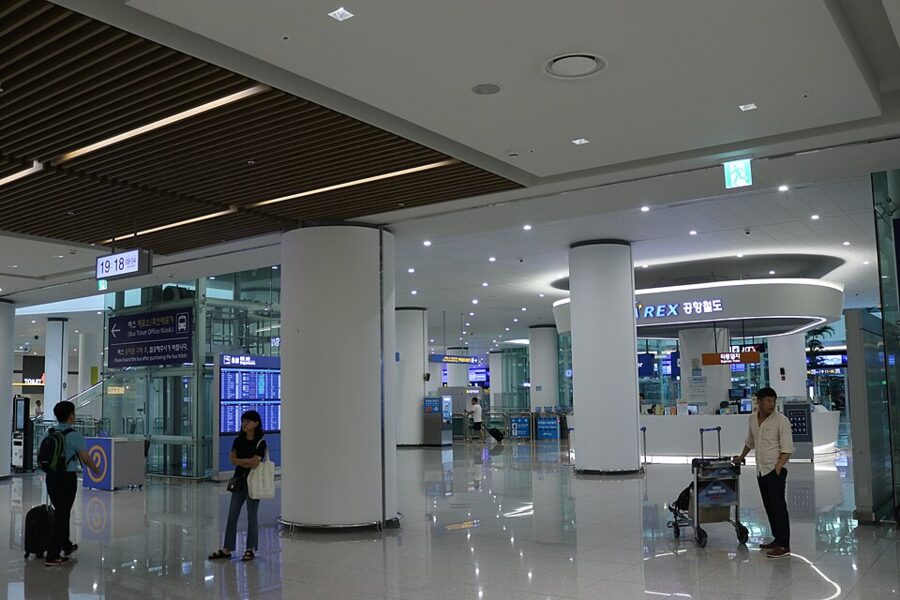
The terminals are separate buildings, too far apart to walk between. AREX runs between them in six minutes, from the basement transportation centres, and it is a paid ride: the airport quotes KRW 1,050 and AREX’s own fare table shows KRW 1,200 on a transport card, so have a T-money card ready or buy a single-journey ticket at the machine. The airport shuttle bus is the other way across:
- Terminal 2 to Terminal 1: route Airport 03, from the third floor in front of entrance 7, every 7–20 minutes, 04:30–23:35.
- Terminal 1 to Terminal 2: route Airport 04, from the third floor in front of entrance 8, every 10–20 minutes, 04:30–23:20.

My rule is simple: leave the bag in the terminal you fly out of, not the one you landed in. On the way out you will be tired and watching the clock, and a detour to the other terminal for a suitcase is twenty to thirty minutes you do not need. If you land at Terminal 2 on Korean Air and fly home on Cathay from Terminal 1, cross over first and drop the bag at Zimcarry.
The other case where terminals matter is cost. A Terminal 1 traveller pays a published KRW 10,000 a day for a large suitcase; a Terminal 2 traveller pays whatever Hanjin asks. Neither is worth a cross-airport trip on its own.
Transit passengers: what you can do without entering Korea
If you are connecting at Incheon on one ticket and never pass immigration, your checked bag goes through to your final destination and there is nothing to store. Check the tag at the Hong Kong check-in desk shows your final airport code, not ICN. What you carry on stays with you, and there is no left-luggage counter airside.
Both terminals have airside places to sleep and wash, on the fourth floor above the gates:
- Transit Hotel: Terminal 1 near gate 11; Terminal 2 across from gate 252. Both open 24 hours.
- Nap Zones: sleeping beds in the Terminal 1 east transfer lounge, and near gates 231 and 268 in Terminal 2, open around the clock.
- Shower rooms: paid, 30-minute slots with towels, 05:00–23:00, near gates 25 and 29 in Terminal 1 and gates 231 and 268 in Terminal 2.

Darakhyu (다락휴), the airport’s capsule hotel, is landside, in the transportation centres of both terminals. You have to enter Korea to use it, and once you are through immigration you may as well leave your bag with Zimcarry or Hanjin rather than squeeze it into a capsule.
The free transit tours
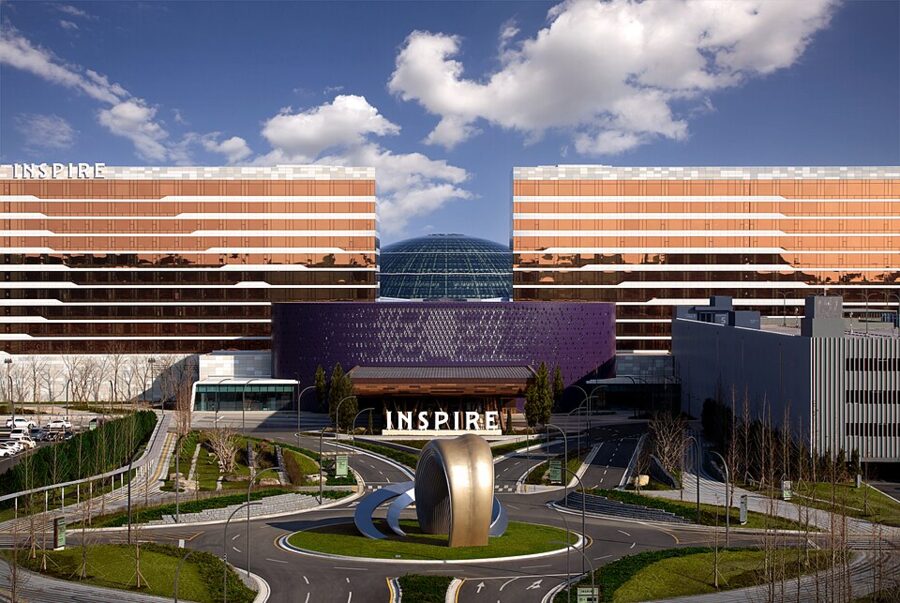
The airport runs short guided tours for transfer passengers with a layover of 24 hours or less: four- and five-hour trips to Gyeongbokgung Palace and Insadong, to Hongdae, and to Incheon’s markets, plus a three-hour run to the Inspire resort next to the airport. Most tours are free; palace and museum admission is extra. You register at the transit tour desk on the first floor after immigration: in Terminal 1 near exits 1 and 2 (desks 19 and 20), in Terminal 2 across from exit 4 (desks 5 and 6).

Turn up at least 30 minutes before the start with your passport and the boarding passes for both flights, or your seat goes to the waiting list. These tours do involve entering Korea. As of November 2026 an HKSAR passport holder needs neither a visa nor a K-ETA for a short visit, because Korea’s Ministry of Justice has extended the K-ETA exemption to 31 December 2026; on another passport, check the K-ETA site before you fly. The airport also notes that the Ministry of Justice does not allow two entries into Korea during a single visit, so if your plan involves leaving the airport twice on one transit, ask at the desk first.

For 24 to 72 hours, the airport’s K-Stopover packages bundle a hotel, transport and lounge access; you collect the voucher at the stopover desk on the first floor after immigration, 07:00–18:00. The packages are listed on the airport’s K-Stopover page.
Leaving the bag in Seoul instead
If you are spending the layover in the city, there are two reasons to take the bag with you rather than leave it at Incheon. You might be catching a different flight home from Gimpo, or you might be checking in for your flight home in Seoul. Otherwise the airport counter is the cheaper and safer place to leave it: Seoul’s storage is priced by the hour.
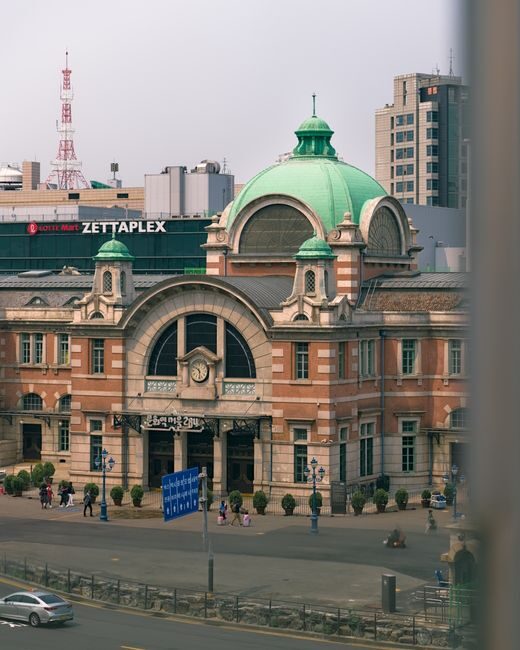
Seoul Station (서울역): storage counters and lockers
Zimcarry Seoul Station is on the second floor of the KTX station, inside exit 3, open 08:00–21:50. It charges per four hours: KRW 5,000 for a small suitcase, then KRW 1,000 an hour up to KRW 10,000 for the day; KRW 8,000 for a medium one (plus KRW 2,000 an hour, KRW 18,000 a day at most); KRW 10,000 for a large one (plus KRW 2,000 an hour, KRW 20,000 a day at most). That is double the airport rate for a full day.
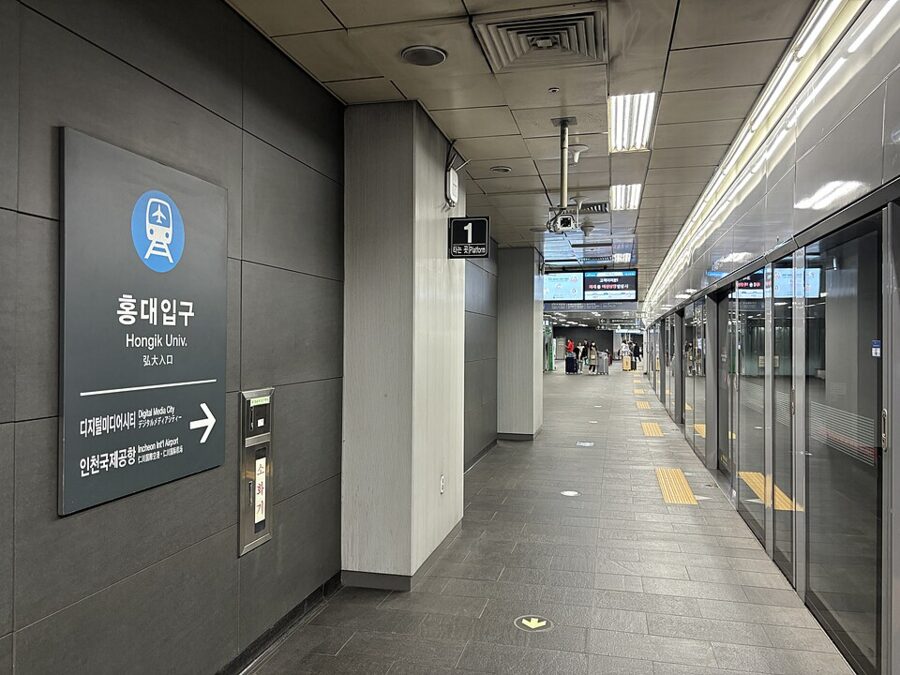
T-Luggage (또타러기지), Seoul Metro’s own staffed storage, is in the subway station’s first basement between exits 1 and 2, open 09:00–22:00. Its weekday prices start at KRW 3,000 for four hours for a bag up to 20 inches, KRW 4,000 up to 23 inches, KRW 6,000 up to 27 inches and KRW 9,000 above that, each plus KRW 1,000 an hour after four hours. Weekend prices are higher, from KRW 4,000. There are T-Luggage counters at Hongik University, Myeongdong and Gimpo Airport stations too, and you can book through the T-Luggage site.
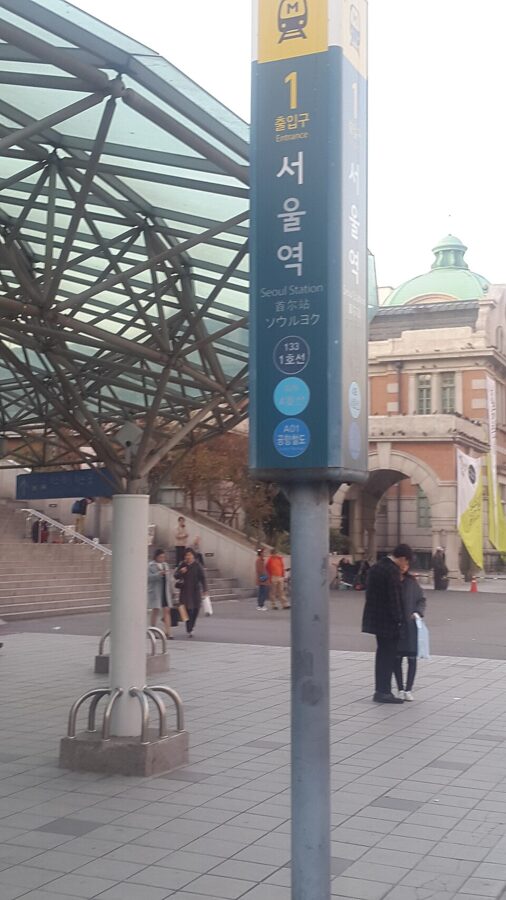

For lockers, Seoul Metro’s T-Locker network has 5,511 lockers at 332 subway stations, booked and paid in the T-Locker app or at the kiosk on the spot. Prices vary by station and size, and large lockers that will take a full-size suitcase are the first to go. For a backpack or a cabin bag they are the easiest answer in the city.
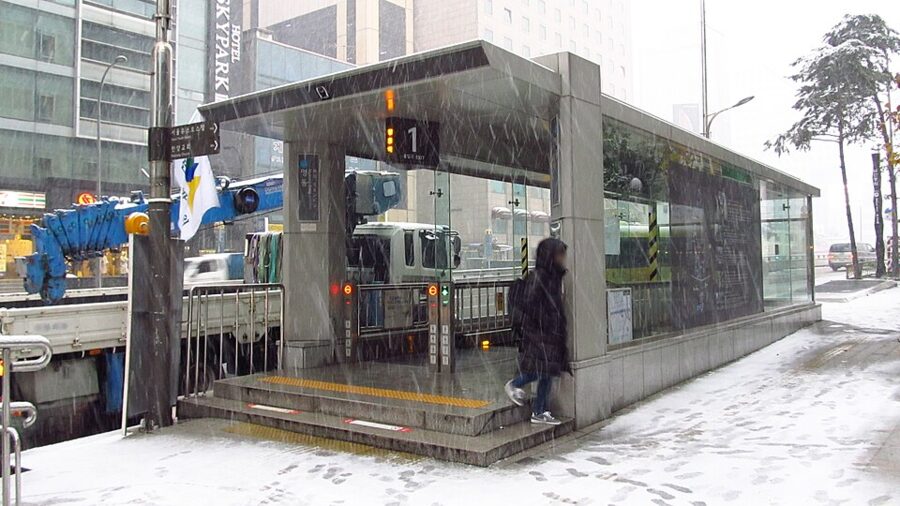

AREX city airport check-in at Seoul Station
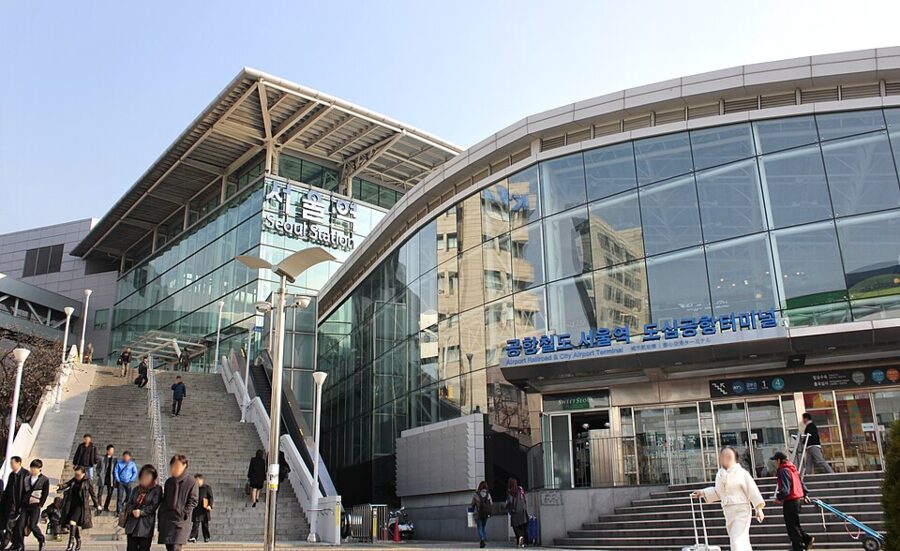
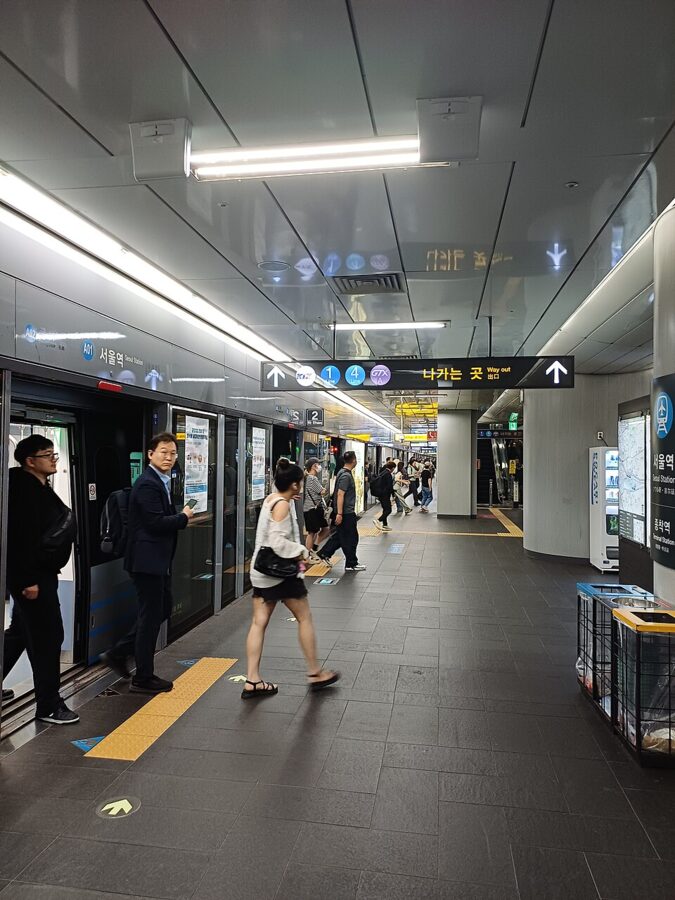
The best way to free your hands on the last day is to check the suitcase in at Seoul Station. The Airport Railroad’s City Airport Terminal (도심공항터미널) on the station’s second basement level does airline check-in, baggage drop and departure immigration for flights leaving Incheon the same day. Check-in runs 05:20–19:00 and immigration 05:30–19:00. Check-in closes three hours before departure for Terminal 1 flights and three hours twenty minutes before for Terminal 2.
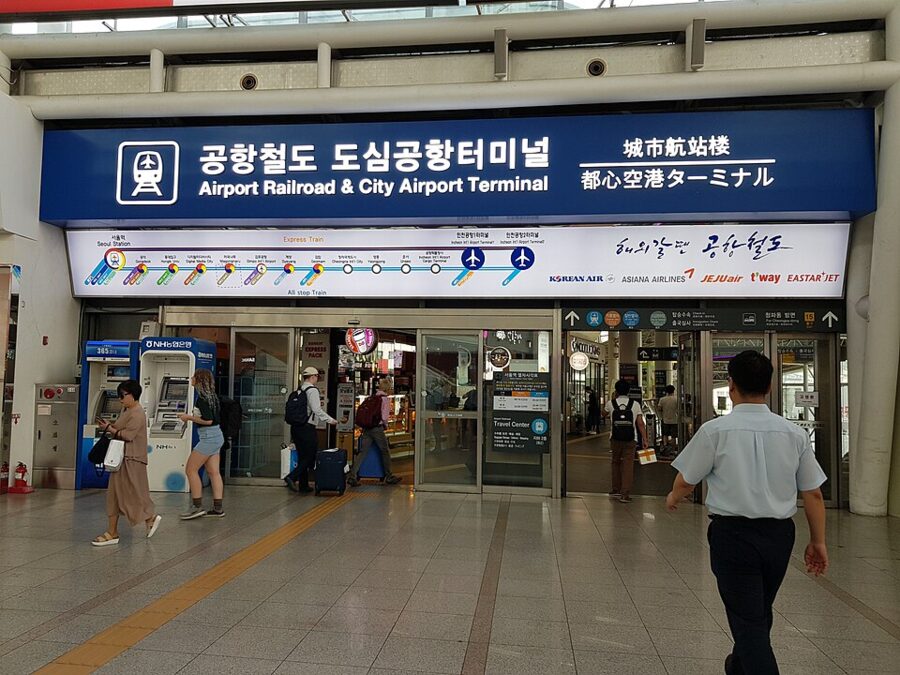

Two catches. It is only for passengers holding an AREX Express Train ticket, so the KRW 13,000 fare is the price of entry. And the airline list is short: Korean Air, Asiana, Jin Air, Air Busan and Air Seoul for Terminal 2, and Jeju Air, Trinity Airways and Eastar Jet for Terminal 1, all excluding flights to the Americas. Cathay Pacific, HK Express and Hong Kong Airlines are not on it.
Once you have checked in and cleared immigration here, the airport gives you a dedicated departure lane on its third floor. Sports equipment, musical instruments and bags over 150 cm long are not accepted. Full details are on AREX’s city airport terminal page.

Easy Drop: the city check-in that does take Cathay
The airport’s Easy Drop service, run by Lotte Global Logistics, checks your bag in for the flight at a counter in the city and drives it to Incheon in a sealed van. It costs KRW 35,000 a bag, and the airlines taking part include Cathay Pacific as well as Korean Air, Asiana, Jeju Air, Trinity Airways, Jin Air and Eastar Jet. Korean Air and Asiana passengers must have checked in online first. It does not take flights to the Americas, oversized bags or sports equipment.
The counters are the Luggage Less store in Myeongdong (09:00–16:00), the lobby of the Holiday Inn Express Seoul Hongdae (07:30–16:30), the City Airport Terminal at Samseong Station (07:00–16:00), and the Inspire and Paradise City resorts by the airport. All are closed on Wednesdays and public holidays.
Watch the van times: from Myeongdong they leave at 11:30 and 16:30, and once the 11:30 van has gone, Terminal 1 flights departing 15:00–19:30 can no longer be checked in. For a Cathay afternoon flight home, that means dropping in Myeongdong before 11:30. Book through the airport’s Easy Drop page.

Sending the bag between the airport and your hotel
Zimcarry will drive a suitcase from its Terminal 1 counters to a hotel in Seoul from KRW 25,000 for a small case, KRW 30,000 for a medium one and KRW 35,000 for a large one. Drop it at the airport by 14:00 and it reaches the hotel between 17:00 and 21:00. In the other direction, leave it at the hotel desk by 11:00 and collect it at the West counter from 15:00. Some areas cost extra.
T-Luggage does the same between its subway counters and Incheon’s Terminal 2: on a weekday, KRW 20,000 for a bag up to 20 inches, KRW 26,000 up to 23 inches and KRW 31,000 up to 27 inches, rising to KRW 29,000, KRW 38,000 and KRW 45,000 at weekends.
A layover from a Hong Kong flight: is it worth leaving the airport?
Incheon is not Fukuoka, where Hakata is a short shuttle and a five-minute subway ride away, or Haneda, which sits inside Tokyo. The fastest train to Seoul Station takes 43 minutes from Terminal 1 and 51 from Terminal 2, a little slower than the run from Taoyuan to Taipei. Add immigration twice, bag drop and collection, and the three hours I’d want back at the airport before an international flight, and a trip into the city eats about six hours before you have seen anything.
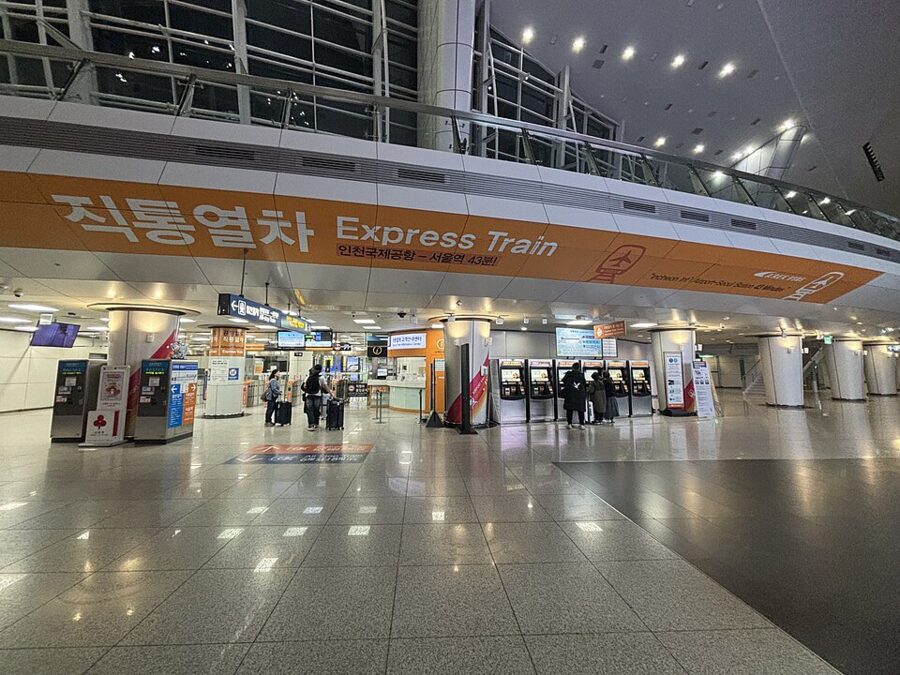

The express timetable sets the limits. On weekdays the first train to Seoul leaves Terminal 2 at 05:16 and Terminal 1 at 05:24; the last leaves Terminal 2 at 22:40 and Terminal 1 at 22:48. From Seoul Station the first train out is at 06:00 and the last at 23:00. Trains run roughly every 30 to 40 minutes, so miss one and you lose half an hour; the all-stop train takes about an hour.
Immigration queues vary by hour, and the airport publishes live waiting times on its congestion page; check it before you commit. With that in mind, here is how I would use the hours:
- Under 6 hours: stay airside. Nap Zone, shower, Transit Hotel if you can sleep, and no bag to worry about.
- 6 to 9 hours: a transit tour, or a short ride to the Inspire resort next to the airport. Leave the bag with Zimcarry or Hanjin in the terminal you fly from.
- 9 hours or more, arriving in daylight: Seoul. Drop the bag at the airport, take the express, and give yourself three to four hours in the city.
- Overnight: either a Transit Hotel airside, or a hotel in Seoul with the bag sent by Zimcarry delivery so you never carry it on the train.
The options compared
| Option | Where | Hours | Large suitcase, one day |
|---|---|---|---|
| Zimcarry, West counter | Terminal 1, 3F, row N | 00:00–23:50 | KRW 10,000 |
| Zimcarry, East or AREX counter | Terminal 1, 3F row B / B1 | 07:00–21:00 or 22:00 | KRW 10,000 |
| Hanjin Express | Terminal 2, 3F and 1F west | 24 hours / 07:00–21:00 | Not published |
| Zimcarry Seoul Station | KTX station 2F, exit 3 | 08:00–21:50 | up to KRW 20,000 |
| T-Luggage Seoul Station | Subway B1, exits 1–2 | 09:00–22:00 | from KRW 6,000 for 4 hours |
| Easy Drop (checked in) | Myeongdong, Hongdae, Samseong | Morning to afternoon, not Wednesdays | KRW 35,000 |
| City Airport Terminal (checked in) | Seoul Station B2 | 05:20–19:00 | Free with KRW 13,000 express ticket |
My pick: for a day layover from Hong Kong, a Zimcarry counter in Terminal 1 at KRW 10,000, because most Hong Kong flights go from there and the West counter never really closes. If you are flying home on Korean Air or Asiana, the City Airport Terminal beats any storage counter: KRW 13,000 buys the train and gets rid of the bag, and you walk through Incheon with nothing but a passport.
Whichever you choose, take a photo of the storage tag and the receipt, keep your passport and anything worth more than KRW 100,000 on you, and note the closing time on the receipt. Then go down to basement 1, buy the KRW 13,000 express ticket, and catch the next train to Seoul Station.