

Walk out of customs at Fukuoka Airport 福岡空港 after a flight from Hong Kong and there are 103 coin lockers in the ground-floor Access Hall, the cheapest at ¥400 for the day. They take cash, a Suica-type IC card, a credit card or a QR payment. What they charge for is a calendar day, and that day ends at midnight, not 24 hours after you shut the door.
Every flight from Hong Kong uses the international terminal, which has no subway station of its own. The subway, the biggest bank of lockers and the domestic flights are in a separate building ten minutes away by a free bus. Where you leave a bag depends on which of the two buildings you will be standing in when you want it back.

Every price and opening hour here is the one the airport or the operator lists as of November 2026.


In this article
- International terminal: where the Hong Kong flights land
- Domestic terminal: four locker banks on three floors
- The locker rules that catch people out
- Getting between the terminals
- From the airport into Hakata and Tenjin
- Hakata Station: lockers and staffed counters
- Tenjin: lockers above and below ground
- Sending the bag instead of storing it
- A layover or a day in Fukuoka off a Hong Kong flight
International terminal: where the Hong Kong flights land
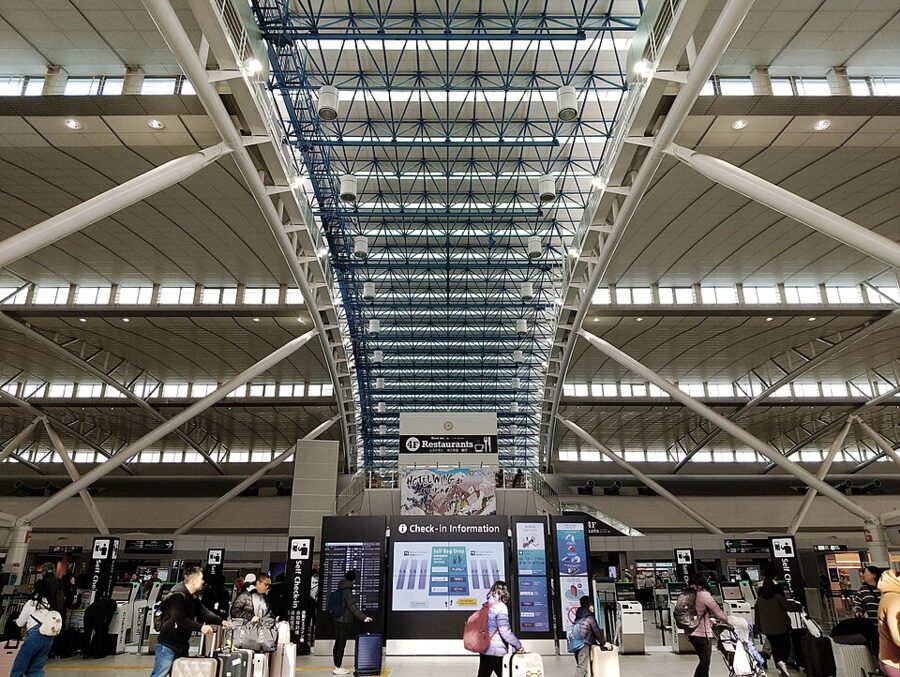
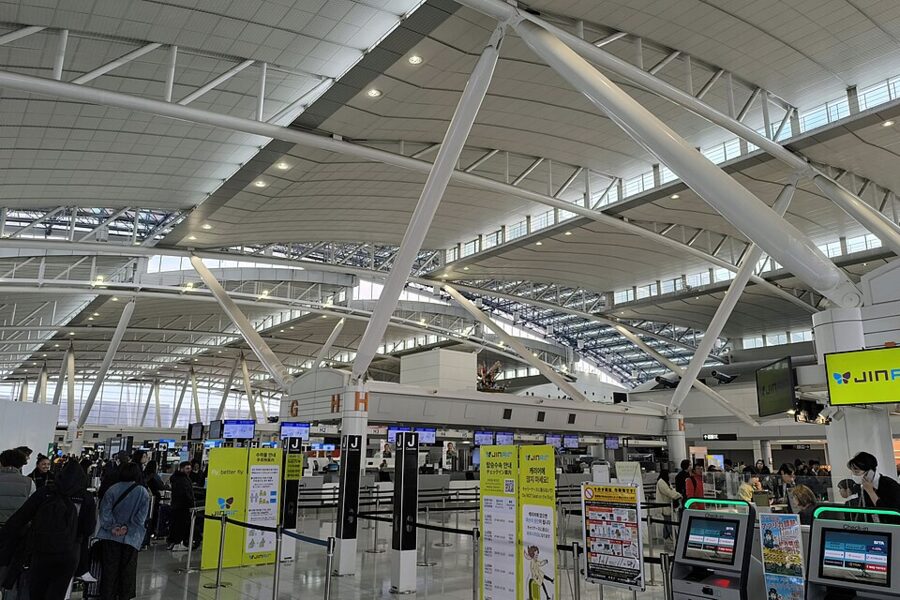
The international building is the 国際線旅客ターミナルビル on the signs. Its doors open at 05:00; the ground floor closes at 22:40 and the upper floors at 21:40. Nothing can be put into or taken out of a locker while the building is shut, so a bag left here is out of reach from 22:40 until 05:00.
Coin lockers on 1F: the Access Hall
Two banks of lockers stand in the Access Hall (アクセスホール) on the arrivals floor, before security. The north bank is the big one: 38 small lockers at ¥400, 20 medium at ¥600, 20 large at ¥800 and 6 large wide-door lockers at ¥1,200. The south bank has one small locker, nine large and nine large wide-door. Both banks take cash, transport IC cards, credit cards and QR payments.
Staff look after these lockers from 07:30 to 21:00. Outside those hours the machines still work, but there is nobody on hand if a door jams or a card is refused.

Coin lockers on 3F: the departures lobby
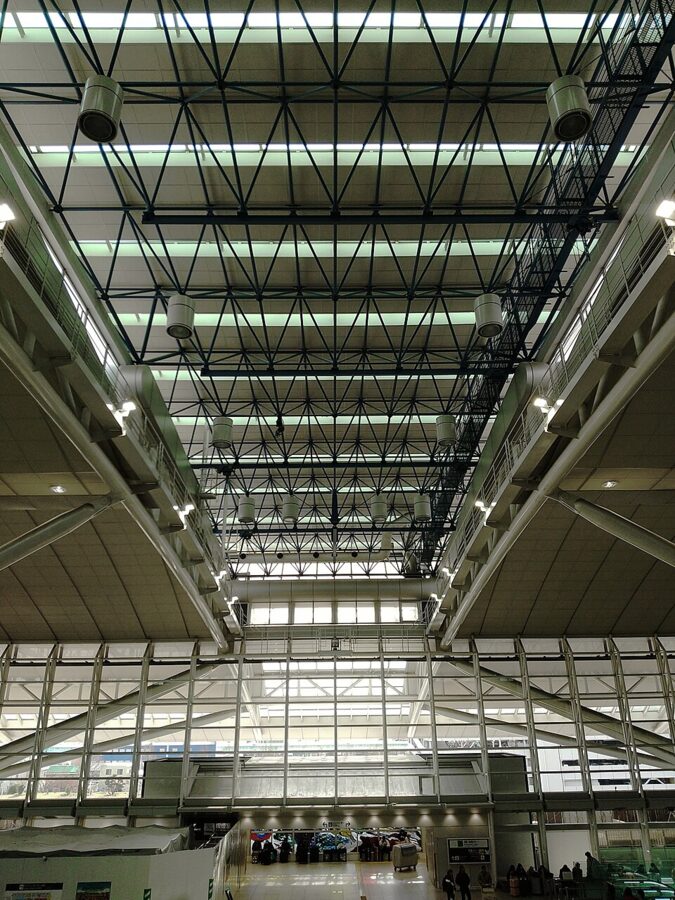
The third bank is upstairs on 3F, on the north side of the lobby by the north departure entrance. It has 36 small, 20 medium, 6 medium wide-door, 8 large and 6 large wide-door lockers, at the same prices and with the same four ways to pay. Staff hours here run from 07:00 to 21:00.
The sizes are the same in every airport locker. All are 663 mm deep and 342 mm wide, except the wide-door ones at 450 mm. A small locker is 325 mm high, a medium 502–561 mm, a large 856 mm and a large wide-door 1,152 mm. If your case went in the hold, measure it before you queue: the large wide-door lockers are the ones built for checked luggage, and there are only 21 of them in the whole building.
Staffed counters on 1F
Four counters on the arrivals floor take bags over the desk, all before security.
Sagawa Express (佐川急便) runs the service counter with the longest hours of any baggage desk at the airport, 07:30–21:40. It holds bags at ¥500 a day for anything up to 100 cm in length, width and height added together, and ¥1,000 a day from 101 cm to 200 cm. That second band covers a large checked case that will not go in a locker. You can book ahead on Sagawa’s counter page and show the QR code it emails.
The same counter sends a case to partner hotels in Fukuoka city on the day for ¥1,500 (60–160 cm), if you hand it over by 16:00; it arrives after 18:00. It also ships overseas, Hong Kong included, through a separate booking site that charges in the destination’s currency.

CARGO PASS (カゴパス) has an international counter open 08:00–19:30, built around one job: getting a suitcase from the airport to your hotel by the evening. Hand it over by 14:00 and, by the airport’s listing, it reaches the hotel at 18:00. A case under 120 cm costs ¥550; 120–160 cm and under 20 kg costs ¥1,100; anything bigger or heavier costs ¥1,650. Only the hotels in Chuo and Hakata wards on its hotel list take deliveries.
CARGO PASS also lists short-term holding at ¥550 a bag. It is a delivery service first, so ask at the desk before you plan on leaving a case overnight.
DELIBAG. Open 08:00–18:00, this counter delivers to places other services will not: guesthouses, rented flats and hotels with no front desk. After you drop the case at the airport, a driver meets you at the door between 15:30 and 18:00. The price is ¥1,700 for one bag or ¥1,200 a bag for two or more, paid at the airport counter; bookings go through DELIBAG’s own site.
Yamato Transport (ヤマト運輸). The Yamato counter, 07:30–20:00, ships bags anywhere in Japan. The airport files it under baggage holding as well as delivery, but no holding price is published, so ask at the desk.
Domestic terminal: four locker banks on three floors
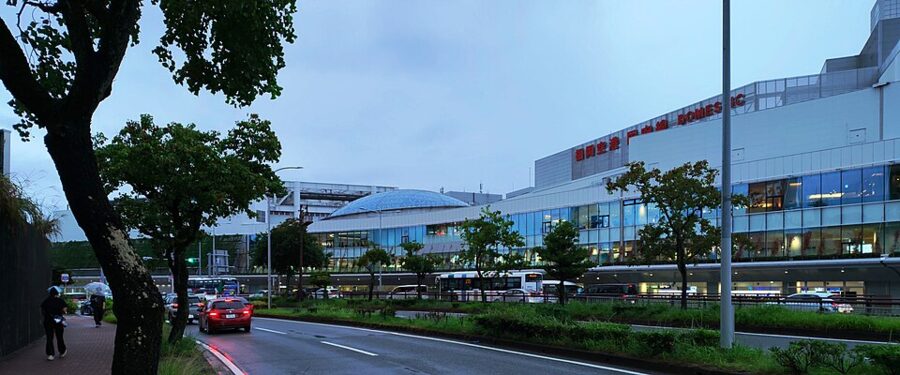
The domestic building, 国内線旅客ターミナルビル, opens at 05:30 and closes at 22:30. Staff cover its lockers from 07:00 until 22:30, an hour and a half later in the evening than at the international end. The subway station is underneath it, so a locker here is one you pass on the way into town and again on the way back.
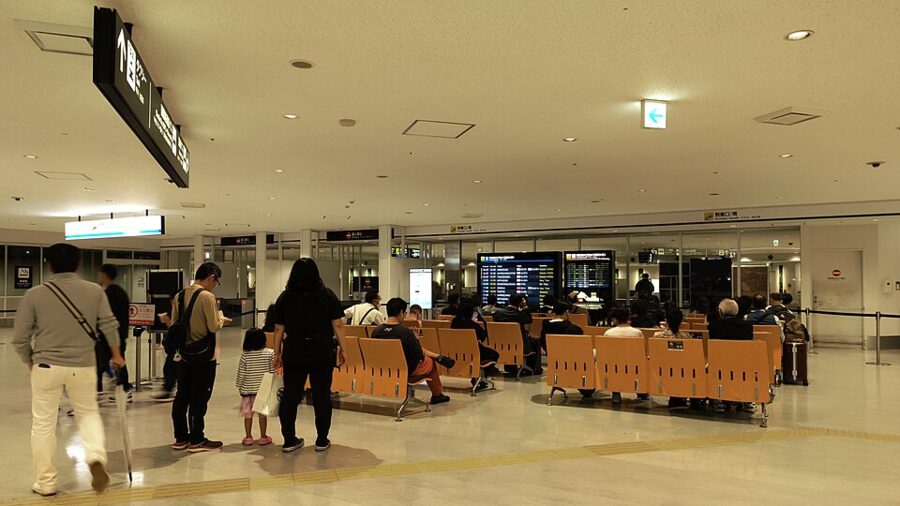

B2F, the subway access hall
The best bank in the airport is on B2F in the subway access hall (地下鉄アクセスホール), by the ticket gates. It has 48 small, 26 medium, 3 medium wide-door, 14 large and 3 large wide-door lockers, at ¥400, ¥600, ¥800, ¥800 and ¥1,200. All of them take cash, IC cards, credit cards and QR codes.
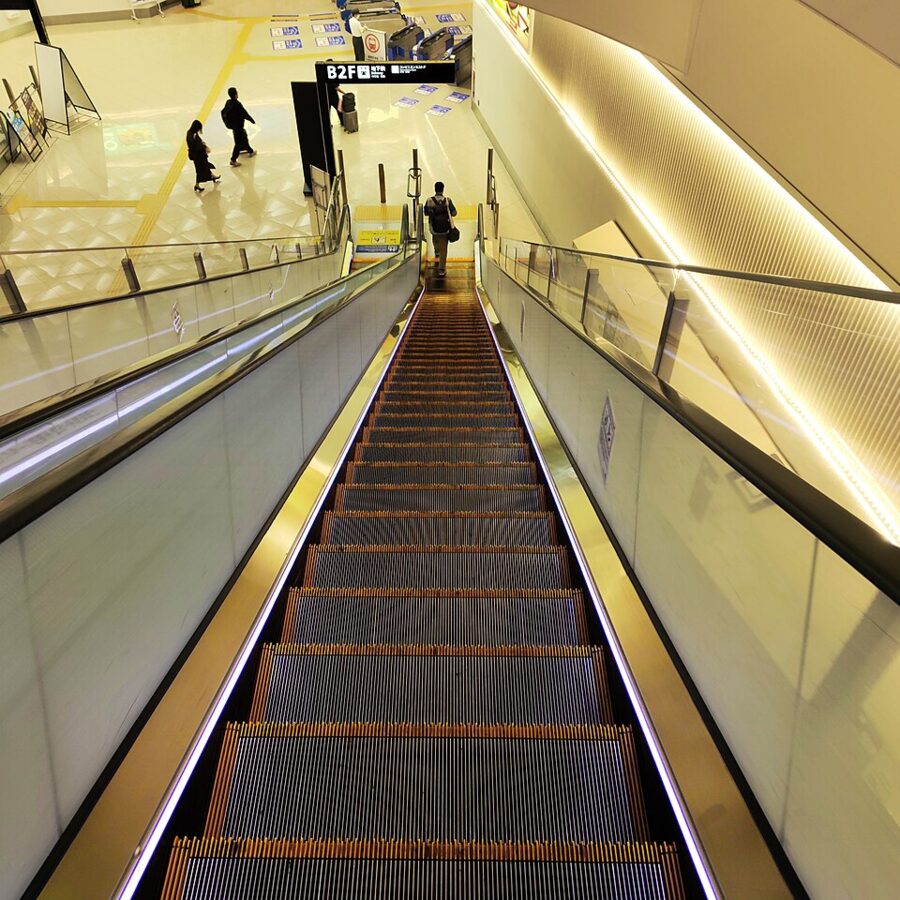

B1F, next to the security office
One floor up, beside the security office (保安室横), there are 30 small, 9 medium, 2 medium wide-door, 3 large and 2 large wide-door lockers. Payment works the same way as on B2F. With only five lockers big enough for a suitcase, it is the bank to try second, not first.
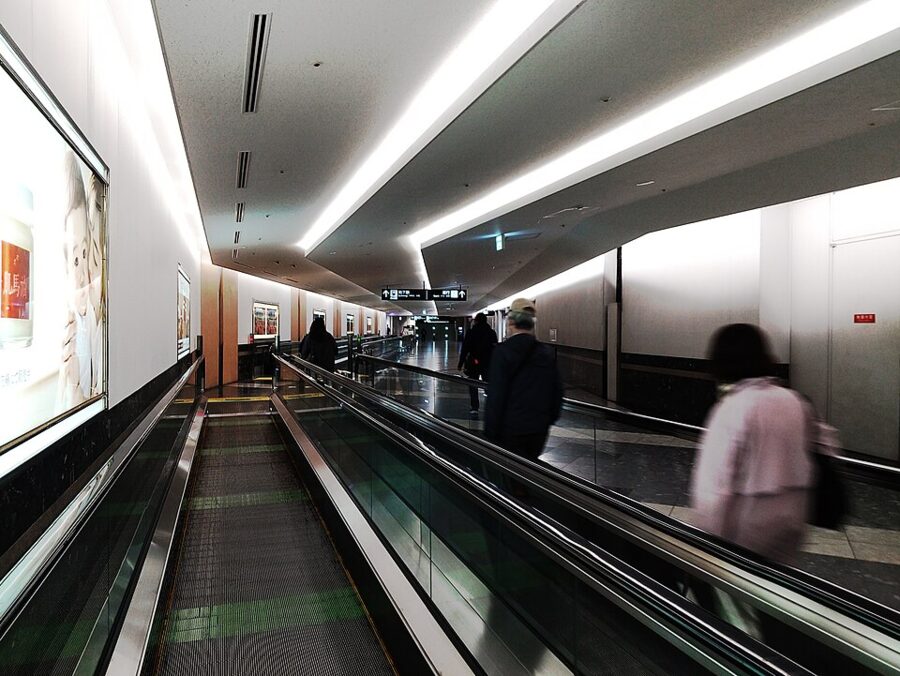

1F, the arrival lobby and the north arrivals exit
The arrival lobby bank on 1F has 39 small, 21 medium, 6 large and 5 extra-large lockers. The extra-large (特大) is a size found nowhere else at the airport: 1,034 mm high, 342 mm wide, ¥900 a day. Most of this bank takes cash and IC cards only, though a few units also take credit cards and QR codes.
The other 1F bank, by the north arrivals exit (到着口/北), has 20 small, 8 medium, 6 medium wide-door, 8 large and 6 large wide-door lockers. It takes cash and IC cards only. Keep some coins or a loaded card if you plan to use it.
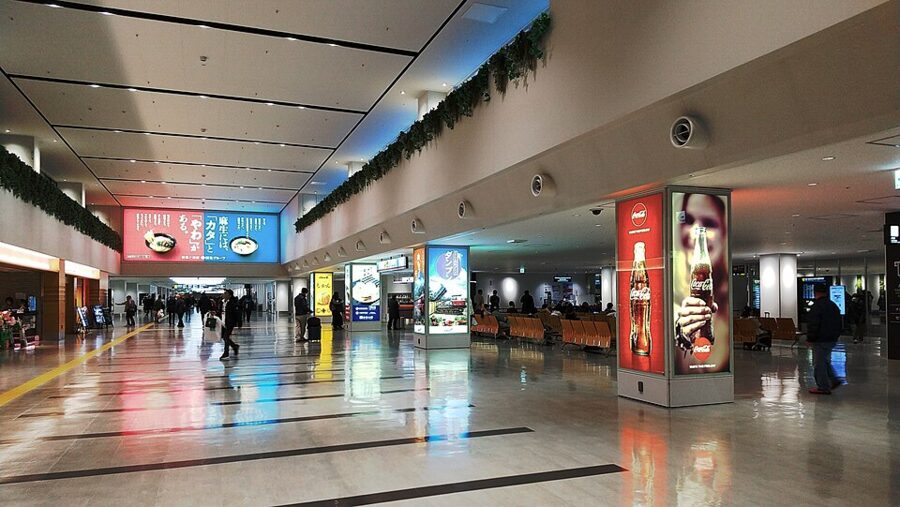

Counters in the domestic terminal
The CARGO PASS domestic counter on B1F ends its service on 25 November 2026. From 26 November, bags it is due to hand back at the airport are collected from the CARGO PASS counter in the international terminal instead. That matters if you have arranged for a hotel to send your case to the airport and you are flying domestic.
For shipping rather than storing, the domestic terminal has a Yamato counter on the north side of 1F and a Japan Post parcel counter on 1F, both open 07:00–21:00. The Japan Post counter takes cash only.
The locker rules that catch people out
Every airport locker charges by the calendar day. A day ends at midnight, and the first and last days each count as a full day however few hours they cover. Put a bag in at 23:00 and take it out at 01:00 and you pay for two days.
The limit is seven days, counting the first. For eight days or more, the airport asks you to contact the locker office first, and every extra day is charged. The posted fees are per day, so a large locker over three nights costs ¥3,200: four calendar days at ¥800.
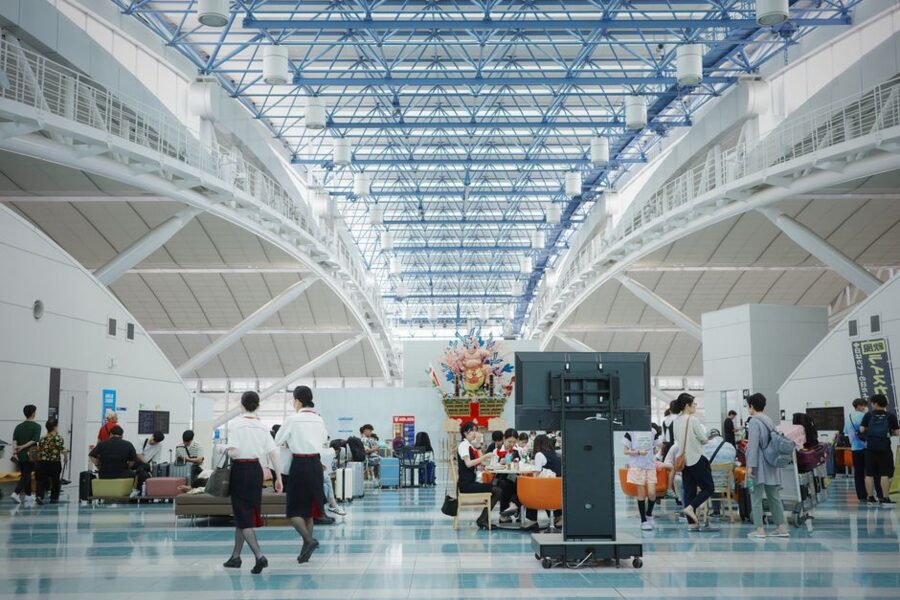
The terminal hours are the hard limit. The domestic building is shut from 22:30 to 05:30 and the international ground floor from 22:40 to 05:00. A late arrival who leaves a bag and heads to a hotel in town cannot fetch it before the doors open.
Payment is not the same everywhere either. Credit cards and QR codes work at all three international banks, at the domestic B1F and B2F banks and at some of the 1F arrival lobby units, but not at the domestic north arrivals bank. The airport’s locker pages list each bank, and the terminal map marks them with a locker icon.
Getting between the terminals
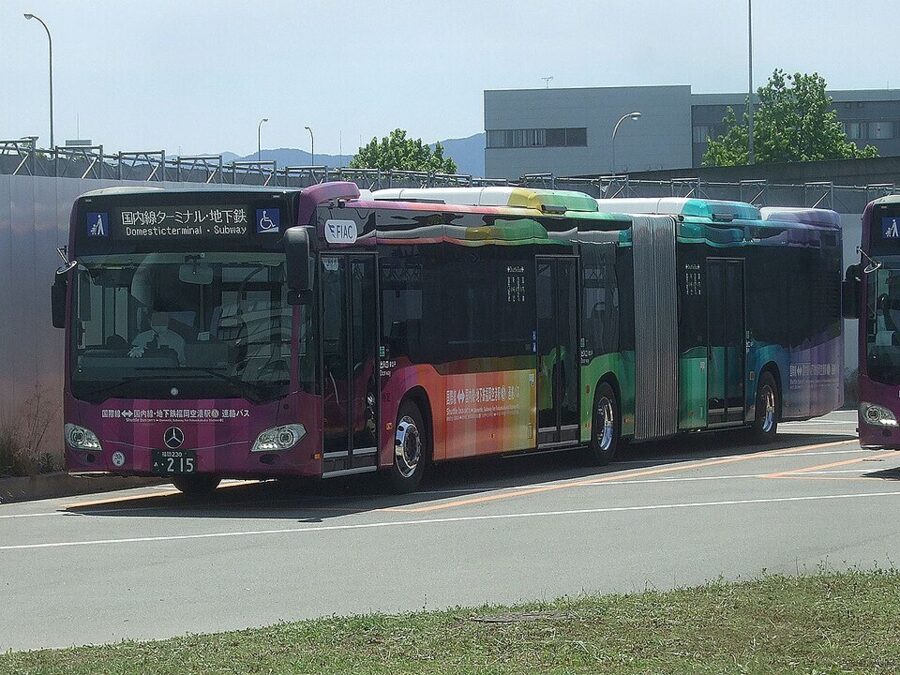
The free inter-terminal shuttle (国内線・国際線連絡バス) runs between the two buildings in about ten minutes. Through the middle of the day there is a bus every five to seven minutes. The first leaves the domestic terminal at around 06:00 and the international terminal at around 06:20; the last leaves both at around 23:20. The airport gives every time as approximate.
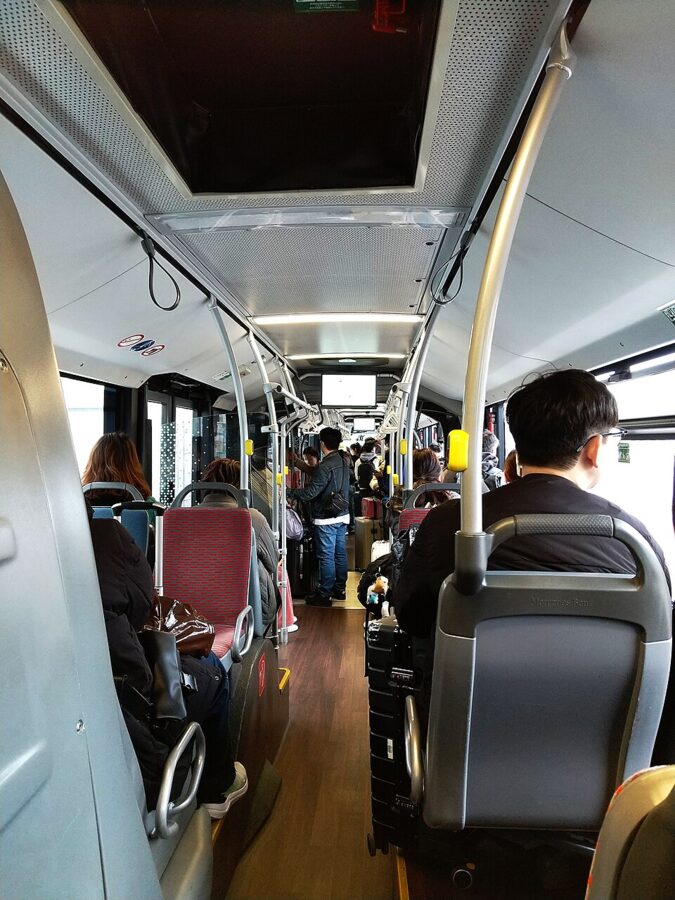

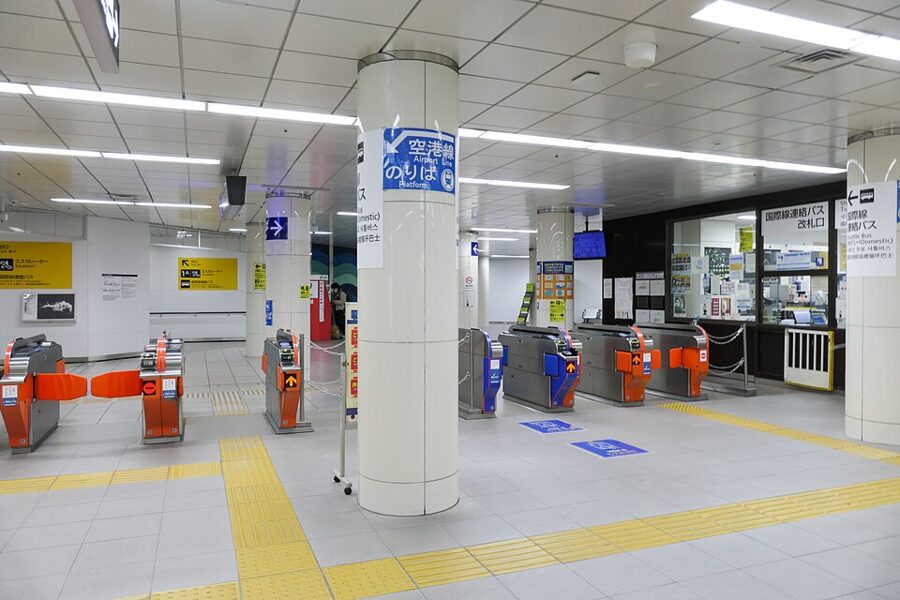
At the international terminal the shuttle leaves from bus stop 5, outside the arrivals exit. At the domestic end it stops by subway entrances 1A and 1B, so if you are heading for the train you get off there and go straight down. Coming the other way, the subway has a separate ticket gate marked for the shuttle (国際線連絡バス), which brings you up through exits 1A and 2A to stop 1.

What this means for a bag is simple: leave it in the terminal you will fly out of. If you land at the international terminal and leave from it again, use the 1F Access Hall or the Sagawa counter and go into town by shuttle and subway, or by direct bus. If you are connecting to a domestic flight the next day, carry the bag over on the shuttle and use the B2F lockers, a few steps from the trains.
From the airport into Hakata and Tenjin
The Fukuoka City Subway Airport Line starts at Fukuokakuko Station (福岡空港駅), under the domestic terminal. Hakata Station (博多駅) is two stops and five minutes away, and Tenjin (天神) is eleven minutes. A single fare to either is ¥260, and the subway’s one-day pass costs ¥640.
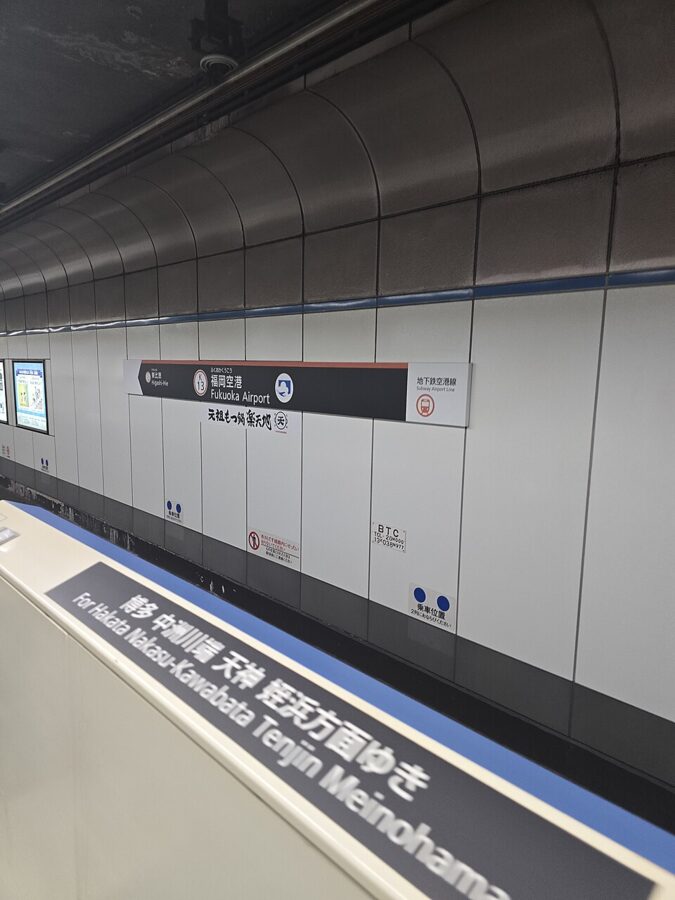

From the international terminal there is also a direct road route. Nishitetsu buses to Hakata Station leave from stops 6 and 7, and to Tenjin from stop 8; the HEARTS bus to both leaves from stop 11. The bus saves you changing between shuttle and subway with a case in tow, and with a heavy one I would take it.
Hakata Station: lockers and staffed counters
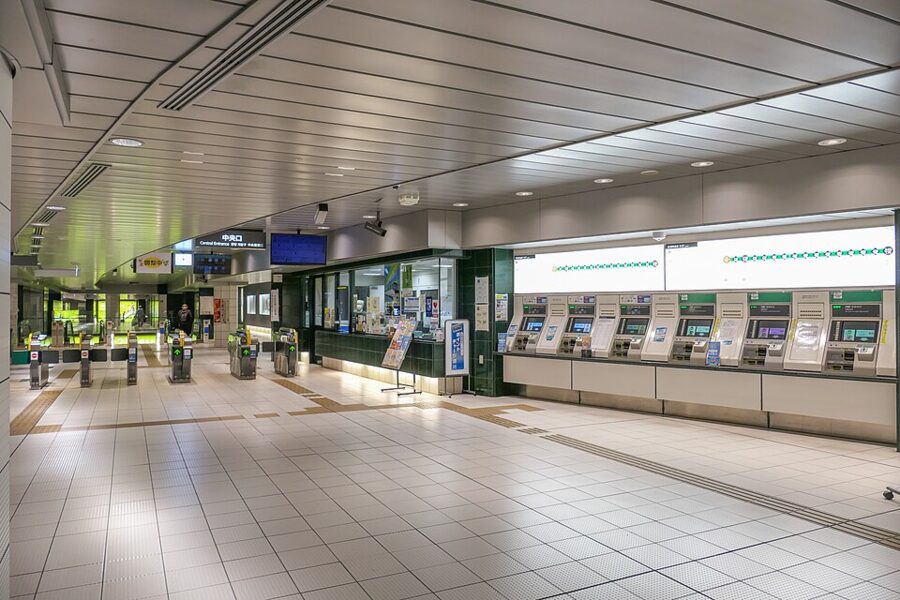
Hakata Station is where most people end up with a case and a few hours to fill. The subway’s part of the station alone has about 480 lockers, run by Nishitetsu Station Service. On the Hakata Exit (博多口) side there are 100 small, 85 medium, 99 large and 2 extra-large; on the Chikushi Exit (筑紫口) side, 48 small, 37 medium, 83 large and 11 extra-large; and fifteen more at the central exit.
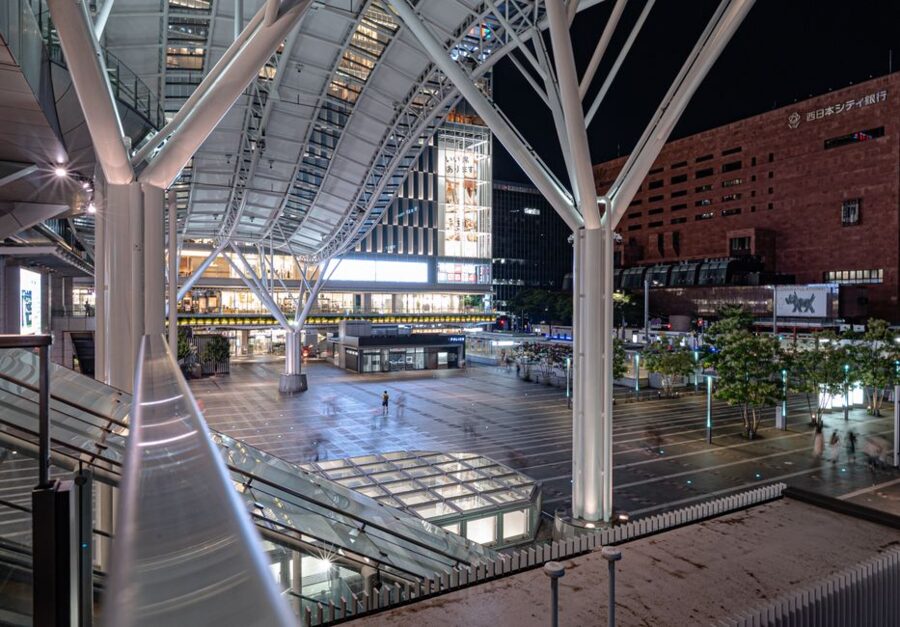
Subway lockers at Hakata, Tenjin and Tenjin-minami cost more than at the airport: ¥500 small, ¥700 medium, ¥900 large and ¥1,200 extra-large. Nothing can be taken out after the last train. The operator’s locker page has a map of each bank.
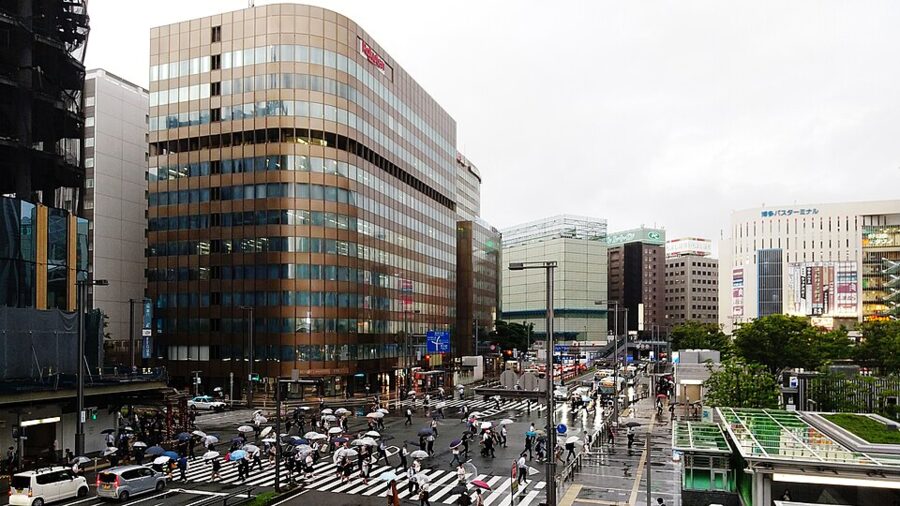

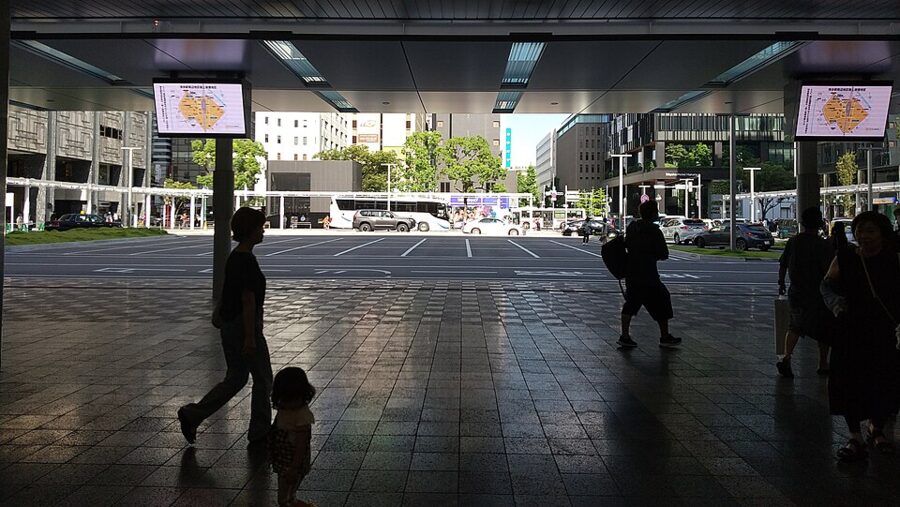

For a bag too big for any locker, the Sagawa baggage counter at Hakata Deitos is on 1F of Amu Est, in the station building. It holds bags at ¥1,000 an item a day, 10:00–20:00, and takes web bookings like the airport counter. That is double the airport’s rate for smaller bags, so if your case is under 100 cm all round, the Sagawa desk at the airport is the cheaper place to leave it.
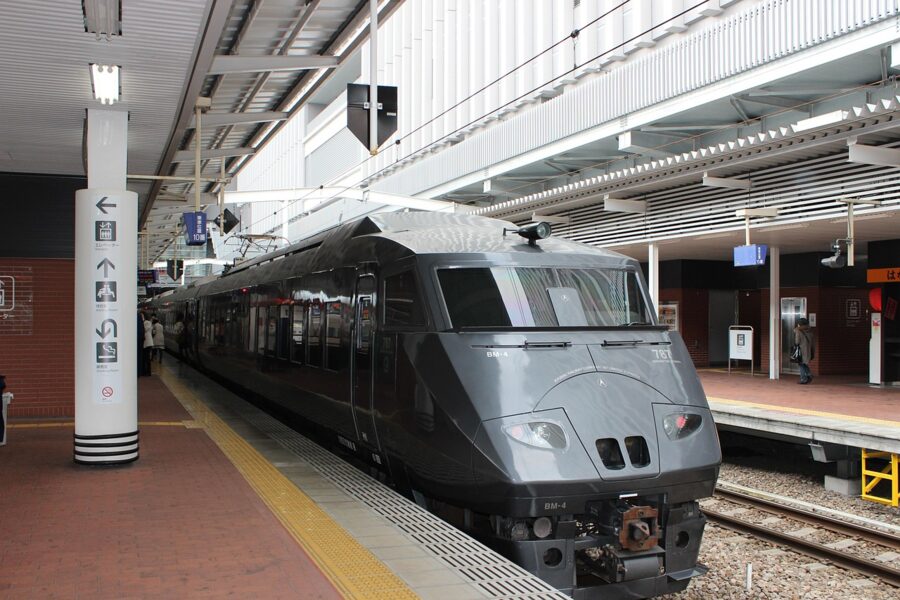
CARGO PASS also has a partner counter, Crosta Hakata, on 2F of JR Hakata Station by the Shinkansen Hikari Hiroba gate, open 09:00–20:00. It takes bags for delivery to hotels in the city, and from Crosta Hakata to the airport the charge is a flat ¥1,500 a bag.

Tenjin: lockers above and below ground
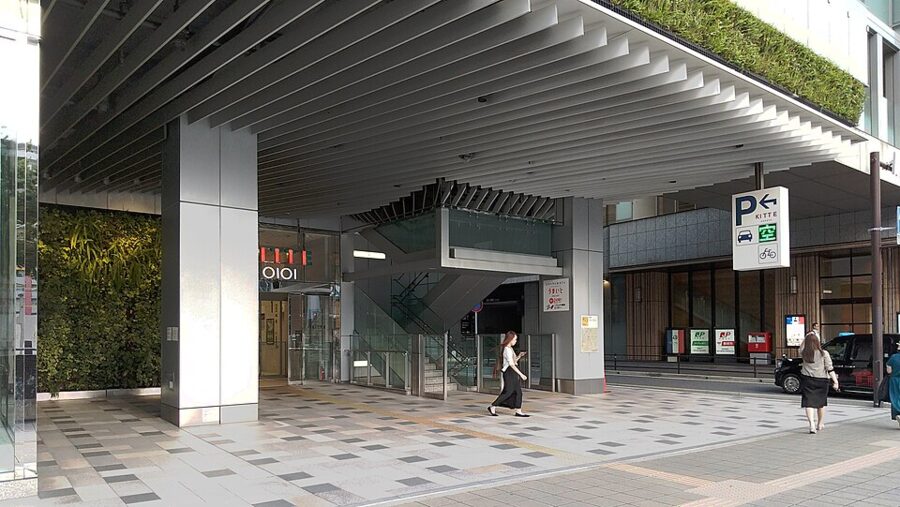
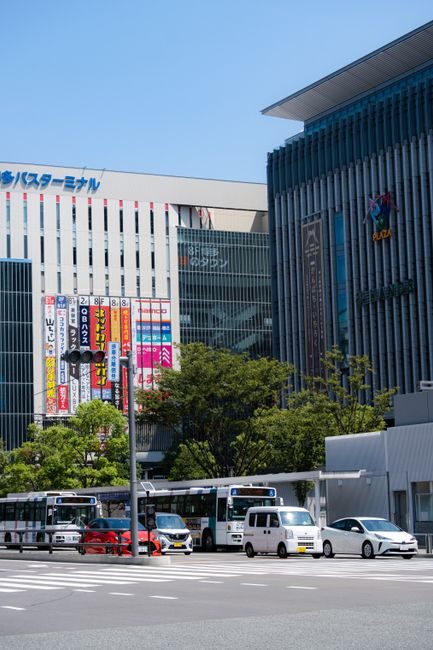
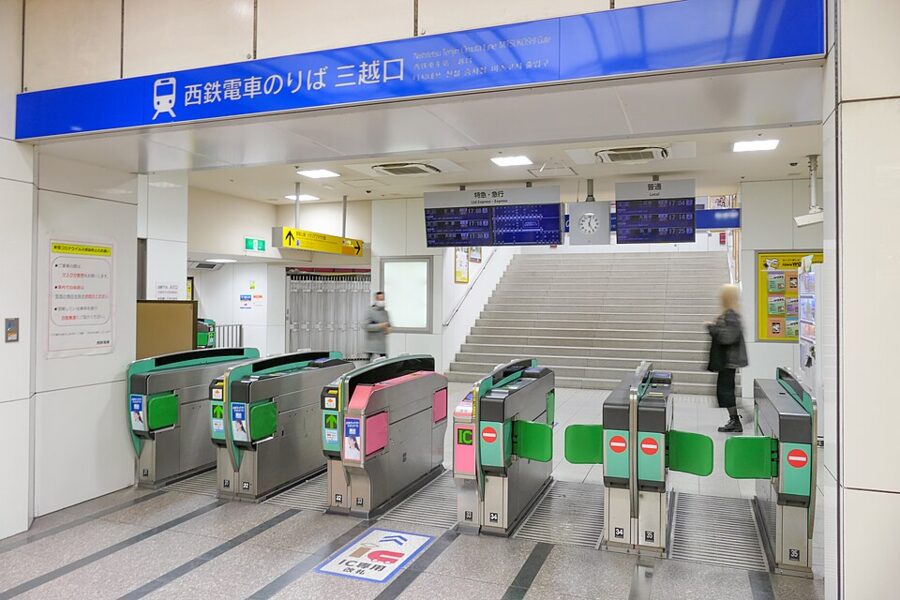
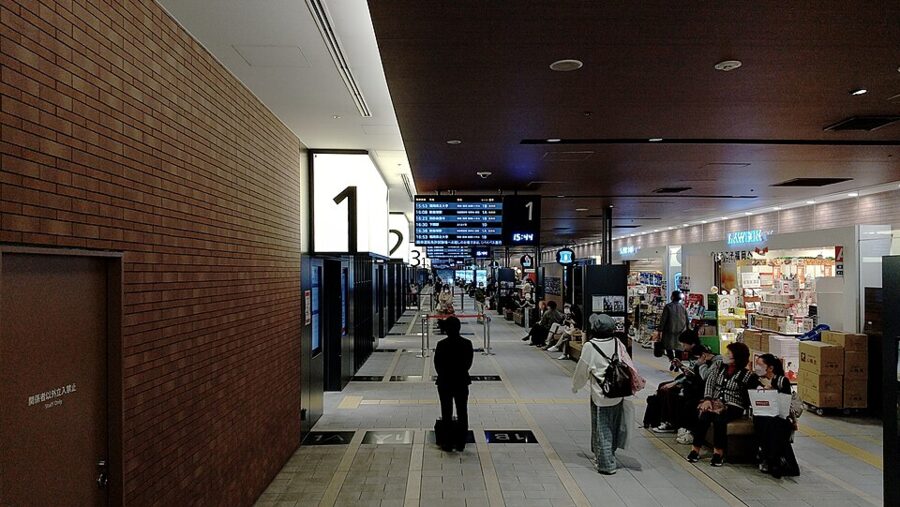
Tenjin is the shopping end of town, and it has lockers on every level. Nishitetsu Fukuoka (Tenjin) Station (西鉄福岡(天神)駅) has three banks on 2F, beside the Parco gate, beside the Solaria gate and by the main stairs, priced at ¥500, ¥700, ¥900, ¥1,000 and ¥1,200 from small to extra-large. At street level the biggest bank is at the Mitsukoshi entrance, with 153 small lockers and three of the largest size.

On 3F, the Tenjin Expressway Bus Terminal has lockers on both the boarding and the arrivals side, at ¥500, ¥600, ¥700 and ¥900. Underground, the subway’s Tenjin Station has 137 lockers at the east exit and 179 at the west exit, and Tenjin-minami has 122 more on its outer concourse. A staffed locker office for the Nishitetsu banks is open 08:00–20:00.


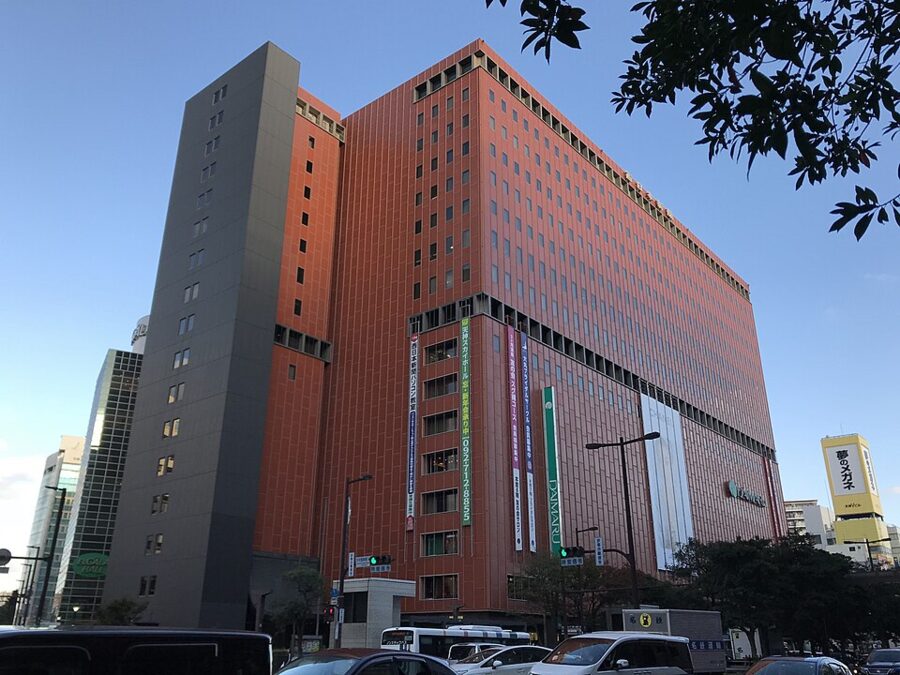
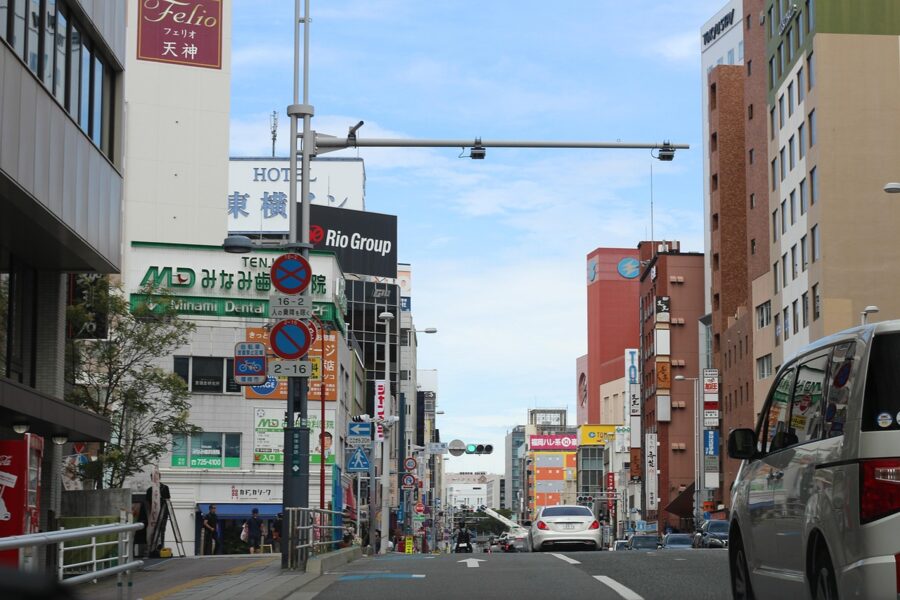
Two CARGO PASS counters in Tenjin take bags for same-day delivery. One is on B1F of the Daimaru Fukuoka Tenjin main building, next to the tax-free counter, 10:00–20:00. The other is on 5F of the Don Quijote store on Tenjin Nishi-dori, 09:00–21:00. A third, at the Don Quijote in Nakasu, keeps split hours: 09:00–12:00 and 17:00–23:00.

Sending the bag instead of storing it
For most trips the cheapest way to deal with a suitcase is to hand it over at the airport and collect it at the hotel. Three services do this from the international terminal, and they differ in where they deliver and how late you can drop the bag.
| Service | Drop at airport by | Arrives | Price per bag | Delivers to |
|---|---|---|---|---|
| CARGO PASS | 14:00 | 18:00 | ¥550 / ¥1,100 / ¥1,650 by size | Listed hotels in Chuo and Hakata wards, or its own counters |
| Sagawa | 16:00 | After 18:00 | ¥1,500 (60–160 cm) | Partner hotels in Fukuoka city |
| DELIBAG | Counter open 08:00–18:00 | 15:30–18:00, at your door | ¥1,700 for one, ¥1,200 each for two or more | Any stay, including ones with no front desk |
CARGO PASS is the cheapest by a distance for an ordinary case. If your hotel is not on its list, it delivers to its own counters at Daimaru, the two Don Quijote stores or Crosta Hakata instead. DELIBAG costs more, but it is the only one of the three that will meet you outside a flat or an unstaffed hotel.
The return trip works too. Some CARGO PASS partner hotels send bags back to the airport, and its list marks which. DELIBAG collects from your door between 09:00 and 11:00 and has the case at its international terminal counter by 12:30, where you pick it up any time until 18:00 and pay. Be more than ten minutes late for the driver and DELIBAG treats the booking as cancelled.
A layover or a day in Fukuoka off a Hong Kong flight
Holders of an HKSAR passport, and BN(O) passport holders with the right of residence in Hong Kong, can enter Japan without a visa for a short stay, according to the Ministry of Foreign Affairs visa exemption list as it stood in November 2026. A visitor on another passport should check the same list. Leaving the airport means clearing immigration and customs, so on a same-day connection the bag question only arises if you have time to go out.
The sums are short because the airport is close. Allow ten minutes on the shuttle, a few minutes to walk down to the platform and five minutes on the train to Hakata. With waits, that is about half an hour each way between the international terminal and Hakata, and a little more to Tenjin.
| Your day | Where to leave the bag | Cost | Why |
|---|---|---|---|
| Land in the morning, fly out of the international terminal in the evening | 1F Access Hall lockers, international terminal | ¥400–1,200 | The bag is where your flight leaves; no detour on the way back |
| Same, but the case is too big for a locker | Sagawa counter, international 1F | ¥1,000 | Takes up to 200 cm all round and is open until 21:40 |
| Land and stay in the city | CARGO PASS to your hotel | From ¥550 | Costs about the same as a locker and you travel into town with nothing |
| Last day, evening flight home | DELIBAG from your door, or a CARGO PASS hotel | ¥550–1,700 | The case is waiting at the airport; you are not crossing town to fetch it |
| Connecting to a domestic flight the next morning | B2F lockers, domestic terminal | ¥400–1,200 | Next to the subway, and the building opens at 05:30 |
My pick, for a day out on arrival with a flight home from the same terminal, is the north bank in the international Access Hall. It is the closest locker to the arrivals exit, and at ¥800 for a large locker it costs less than any staffed counter. If that bank is full or the case will not fit, go to the Sagawa counter on the same floor rather than hauling the bag into the city.
For a trip that starts in the city, skip the lockers. Hand the case to CARGO PASS before 14:00 and take the subway in with nothing. On the way home, if your stay has no front desk, book DELIBAG the day before.
Whichever it is, take a photo of the locker number and the bank, and note which of the two buildings you are in. The ¥400 locker in the Access Hall is the right one only if you are coming back through the international doors.