

A three-day tourist SIM in Hong Kong costs HK$48 or HK$58, and the cheapest one that works costs HK$28 for a single day. None of them will connect until you have photographed your passport for it. That second fact, not the price, is what decides whether you are online before the Airport Express doors close or still standing by the baggage carts refreshing a registration page.

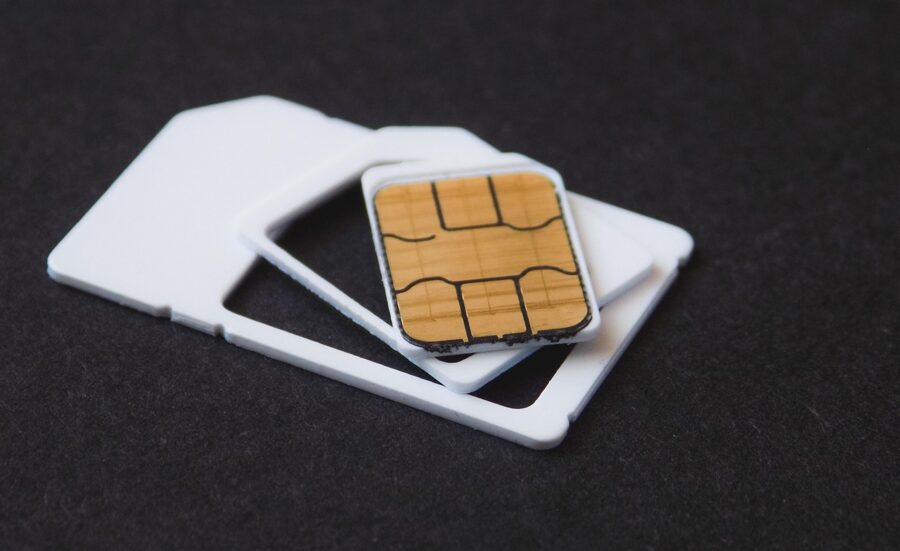
Hong Kong has four mobile networks that sell to visitors: csl (part of HKT), China Mobile Hong Kong (CMHK), SmarTone and 3 Hong Kong, plus a handful of cheaper sub-brands that ride on them. Every one of them now sells a card with a Hong Kong number that has to be real-name registered, and most sell an eSIM version you can install before you fly. The prices below are the operators’ own, checked in November 2026.
The short version, if you have a plane to catch. For a weekend, CMHK’s 3-day tourist card at HK$48 or csl’s 3-day Discover Hong Kong card at HK$58. For a week with a day in Shenzhen, csl’s 7-day card at HK$88, which leaves HK$30 of credit that buys exactly the 2GB mainland pass you need. For someone who comes back every few months, SmarTone’s HK$48 Multi-Trip card, which keeps its number for a year at a time.
Hong Kong itself is easy to stay online in. Free Wi-Fi covers most of the airport, every MTR station offers 15 minutes at a time, and the government’s Wi-Fi.HK network runs in museums, parks and ferry terminals. The trouble starts at the edges: a taxi you need to book, a QR code at a Shenzhen restaurant, an SMS code from your bank while you are on a ferry to Macau. That is what the card is for.

In this article
Real-name registration: what you actually do
Since 1 March 2022, every prepaid SIM sold in Hong Kong has to be registered to a named person before it will activate. The rule comes from the Telecommunications (Registration of SIM Cards) Regulation and is run by OFCA, the Office of the Communications Authority. It covers tourist cards, local cards and eSIMs with a Hong Kong number alike, and there is no visitor exemption. The registration is done online, on the phone, against your identity document.
OFCA’s registration page sets the limits. One person can register up to 10 prepaid cards with each network. In July 2025 the government proposed cutting that to three per network to make life harder for phone scammers; OFCA’s page still shows 10 as of November 2026, and either figure is far above what a visitor needs.
Which document you register with
Which document you use depends on what you hold, not on your nationality, so it is worth being precise.
- Visitor on a foreign passport: register with that passport. You will be asked to declare that you do not hold a Hong Kong identity card and have not registered with another document.
- Mainland visitor: register with the Exit-Entry Permit for travelling to and from Hong Kong and Macau, or a passport. SmarTone names the permit alongside the passport in its tourist offer.
- Hong Kong permanent resident on a foreign passport: you hold an HKID card, so you are not a visitor for this purpose. Register with the HKID, through the government’s iAM Smart app, which is the route OFCA asks HKID holders to use.
- HKSAR passport holder: the same; use your HKID card and iAM Smart.
The difference matters for speed. A card registered through iAM Smart is checked online. A card registered with a passport is checked by the network by hand, and csl’s own instructions say the SIM is only activated after verification is complete. No network publishes a turnaround time, so register while you are still on airport Wi-Fi rather than on the train.
The steps, on csl’s system
The networks run their own registration sites, but they work the same way. This is csl’s, the one you meet if you buy the Discover Hong Kong card.
- Put the SIM in the phone, or switch on the eSIM line. An SMS arrives with a link to the registration site.
- Choose “Not Real-name Registered Customer”, enter the prepaid mobile number, and request a verification code by SMS. Some cards ask for the 19-digit number printed on the SIM card instead.
- Pick the identity document. Visitors choose “Passport” or “Other Travel Document”.
- Photograph and upload the document, check the details the site has read from it, and tick the declarations.
- Submit, wait for the confirmation SMS, then restart the phone to bring the service up.
CMHK runs its own registration site, and OFCA sets the same basic steps for every network: confirm the number or card number, enter a one-time code, photograph the document, check the details, wait for the SMS. Keep the card’s plastic frame until you are done: the 19-digit number on it is the other way in if the SMS code does not arrive.
The voice alert on new SIMs
Since 31 December 2024, anyone you call from a newly activated Hong Kong prepaid card hears a recorded message first: “This call is made from a new pre-paid SIM card.” It is an anti-scam measure, OFCA says it lasts several months from activation, and it applies to every tourist card. A Hong Kong friend who hears it from an unknown number may let the call ring out, so send a WhatsApp first.
What registration does not cover
Travel eSIMs sold by international resellers usually come without a Hong Kong number. They run your data through a roaming profile, so there is nothing to register in Hong Kong. The Hong Kong networks’ own travel products draw the same line: SoSIM’s travel page says registration is not needed to use roaming data, but is needed to receive SMS or to use Hong Kong data and services. If you need a +852 number, for a restaurant booking, a ride-hailing app or a delivery, you need a registered local card.
The tourist SIMs, network by network
Four networks, four slightly different ideas of what a visitor wants. csl sells big data bundles with Macau included, and CMHK a daily allowance with one card for every trip length. SmarTone sells reusable cards with day packs on top. 3 Hong Kong sells a do-it-yourself card and, through its SoSIM brand, the cheapest 30-day deal in town.
csl: Discover Hong Kong Tourist SIM
This is the card the Hong Kong Tourism Board recommends on its own get-online page, and it is the one I would buy for most first visits. Three versions, all on csl’s 5G network, all with unlimited local voice calls, a 90-day card validity and HK$30 of stored value on top. The 7-day and 15-day cards are also sold as eSIMs.
- 3-Day, HK$58: 15GB, of which 10GB can be used in Hong Kong or Macau and 5GB in Hong Kong only.
- 7-Day, HK$88: 50GB, with 20GB usable in Hong Kong or Macau and 30GB in Hong Kong only.
- 15-Day, HK$118: 80GB, with 30GB usable in Hong Kong or Macau and 50GB in Hong Kong only.
csl says these allowances are valid until 31 December 2026, so check its Discover Hong Kong page if you travel after that. The HK$30 of stored value is the clever part. It pays for a 365-day pass with 2GB of data usable in the mainland, Hong Kong and Macau, which costs exactly HK$30; bigger passes cost HK$60 for 4GB and HK$150 for 12GB. When the main allowance runs out, the same 7-day and 15-day bundles can be bought again as top-ups for HK$88 and HK$118.
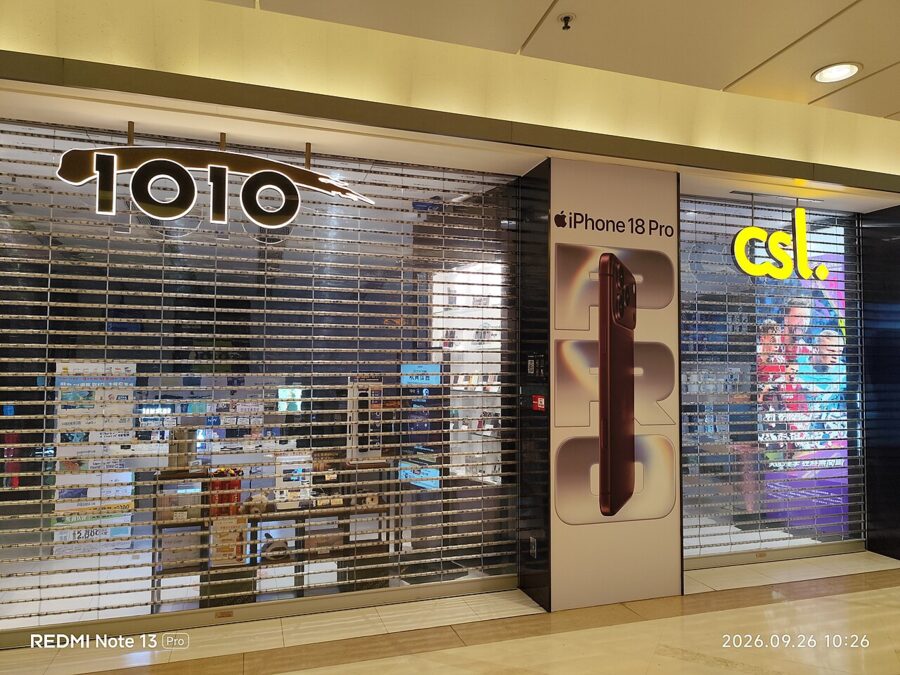
Where to buy it: any 1010 Centre or csl shop, more than 1,000 7-Eleven and Circle K stores, and the Tourism Board’s visitor centre in the Star Ferry Concourse at Tsim Sha Tsui. The card also gets you onto csl’s own Wi-Fi hotspots, found in selected Starbucks, Pacific Coffee, 7-Eleven and Circle K branches.
China Mobile Hong Kong: 5G Hong Kong Tourist SIM
CMHK’s tourist card is sold by the day, for anything between one and fifteen days, each with 5GB of local data per day, 500MB a day in Macau and 30 minutes of local calls in total. The 7, 10 and 15-day versions widen that daily 500MB to cover the mainland as well. It comes as a physical SIM or an eSIM through CMHK’s online shop, and the physical card asks you to pick a collection point.
- 1 day: HK$28
- 2 days: HK$38
- 3 days: HK$48
- 4 days: HK$58
- 5 days: HK$68
- 7 days: HK$78, with mainland data and HK$8 of credit for calls to the mainland
- 10 days: HK$98
- 15 days: HK$128
Two rules come with it. The card cannot be refilled, so when the days run out it is finished. And it cannot be activated in the mainland, so if you are arriving in Hong Kong over the land border from Shenzhen, buy it online and activate it once you are on the Hong Kong side. CMHK counts the days from the day after activation, ending at 23:59 on the last one.

CMHK also sells mainland data on its own. Its Chinese Mainland, Hong Kong and Macau eSIM data card gives 5GB shared across all three for 30 days, at a listed price of HK$38, and was on sale for HK$32 in November 2026.
SmarTone: three cards worth knowing
SmarTone has no card called a tourist SIM, but three of its prepaid cards do the job, and two of them are built for people who come and go.
HK$78 HK-Macau Prepaid SIM. 5GB of data shared between Hong Kong and Macau, plus 15 minutes of local calls, for 30 days. Visitors who register with a passport or the Exit-Entry Permit get an extra 7GB of Hong Kong and Macau data for 30 days, so in practice it is 12GB. After 30 days the HK$68 monthly charge is taken automatically from any stored value, so do not leave credit on it if you are not coming back.
HK$48 HK-Macau Multi-Trip Card. Two free days of Hong Kong and Macau data on activation (full speed up to 3GB) and 100 minutes of local calls valid for a year. After that you buy day packs: 1 day with 2GB, 3 days with 6GB or 7 days with 15GB, listed at HK$20, HK$40 and HK$76, with an exclusive-offer price of half that shown alongside; a 1-day mainland pack with 500MB costs HK$12. The card stays valid for 365 days from activation, and any top-up of HK$50 or more resets the clock.
HK$98 Chinese Mainland-HK-Macau Prepaid SIM. Data and local calls shared across all three: HK$18 for a day with 500MB, HK$38 for three days with 1GB, HK$68 for seven days with 2GB. The allowances are small, which tells you who it is for: someone crossing for meetings, not someone streaming on the bus.

3 Hong Kong and SoSIM
3 Hong Kong’s DIY Prepaid SIM works the other way round from csl’s: you buy the card, then choose the data. Local plans start at HK$10 for 24 hours, HK$50 for 30 days and HK$120 for 365 days, with mainland day passes from HK$10 and Macau day passes from HK$12. A Chinese Mainland, Hong Kong and Macau package runs HK$268 for a year.
SoSIM is the prepaid brand of HTHK, the company behind 3. Its HK$33 card gives new users 50GB of Hong Kong data at full speed (128kbps beyond that) and 1,500 minutes for the first 30 days. It is sold as a physical card or eSIM, online and at more than 500 outlets including Watsons and PARKnSHOP. For a stay of two weeks or more, nothing else here comes close on price.
The cards side by side
| Card | Price | Data | Days | Macau | Mainland | eSIM |
|---|---|---|---|---|---|---|
| csl Discover HK 3-Day | HK$58 | 15GB | 3 | 10GB shared | 2GB pass with the HK$30 credit | No |
| csl Discover HK 7-Day | HK$88 | 50GB | 7 | 20GB shared | 2GB pass with the HK$30 credit | Yes |
| csl Discover HK 15-Day | HK$118 | 80GB | 15 | 30GB shared | 2GB pass with the HK$30 credit | Yes |
| CMHK HK Tourist 3-day | HK$48 | 5GB a day | 3 | 500MB a day | No | Yes |
| CMHK HK Tourist 7-day | HK$78 | 5GB a day | 7 | 500MB a day, shared | Yes | |
| CMHK HK Tourist 15-day | HK$128 | 5GB a day | 15 | 500MB a day, shared | Yes | |
| SmarTone HK-Macau | HK$78 | 5GB + 7GB for visitors | 30 | Shared | No | Not stated |
| SmarTone Multi-Trip | HK$48 | 2 free days, then day packs | 365 (card) | Shared | HK$12 a day | Not stated |
| SoSIM | HK$33 | 50GB | 30 | Not stated | Not stated | Yes |
Prices are the networks’ own as listed in November 2026. A shop or travel agent selling the same card at a different price is not breaking any rule, so check the pack.
eSIMs: the networks’ own, or a reseller’s
An eSIM is the same service without the plastic, installed by scanning a QR code or tapping a link. In Hong Kong there are two kinds, and they behave differently enough that the choice matters.
The networks’ own eSIMs
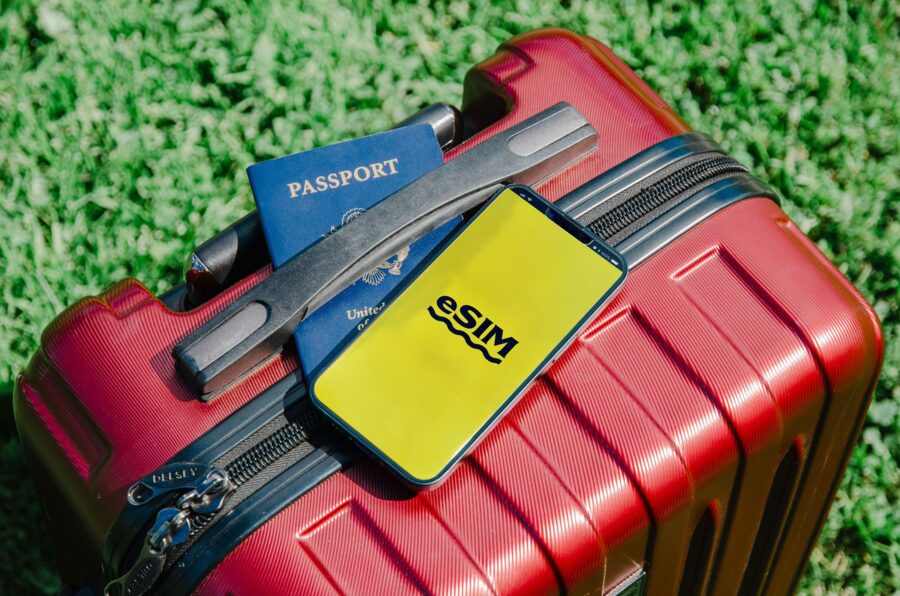
csl’s 7-day and 15-day Discover Hong Kong cards, CMHK’s tourist card and SoSIM all come as eSIMs. You get a real Hong Kong number on the local network, which means calls, SMS and anything that needs a +852 number all work. It also means registration, exactly as for a physical card. The advantage is timing: you can buy and install the eSIM at home, register on hotel Wi-Fi the night before, and land with the line ready.
Reseller eSIMs
The international eSIM shops sell data-only plans priced in US dollars, with no Hong Kong number. They are quick to set up and need no Hong Kong registration, because your phone is technically roaming. The trade-offs: no local calls or SMS, no +852 number for bookings, and usually less data for the money than a local card. Before buying, check which Hong Kong network a plan runs on, whether it includes Macau and the mainland, and whether it allows hotspot use.
I would use a reseller eSIM for a stopover of a day or two, and a local card or local eSIM for anything longer.
Which phones take an eSIM
The phone has to be free of any network lock and able to take an eSIM, and that is not a given for phones bought in this region. Apple’s own dual SIM page notes that certain iPhone models sold in mainland China, Hong Kong and Macau take two physical nano-SIMs instead of an eSIM, while some recent mainland models take eSIM only. If your phone came from Shenzhen, whatever the brand, look in Settings before you buy anything.
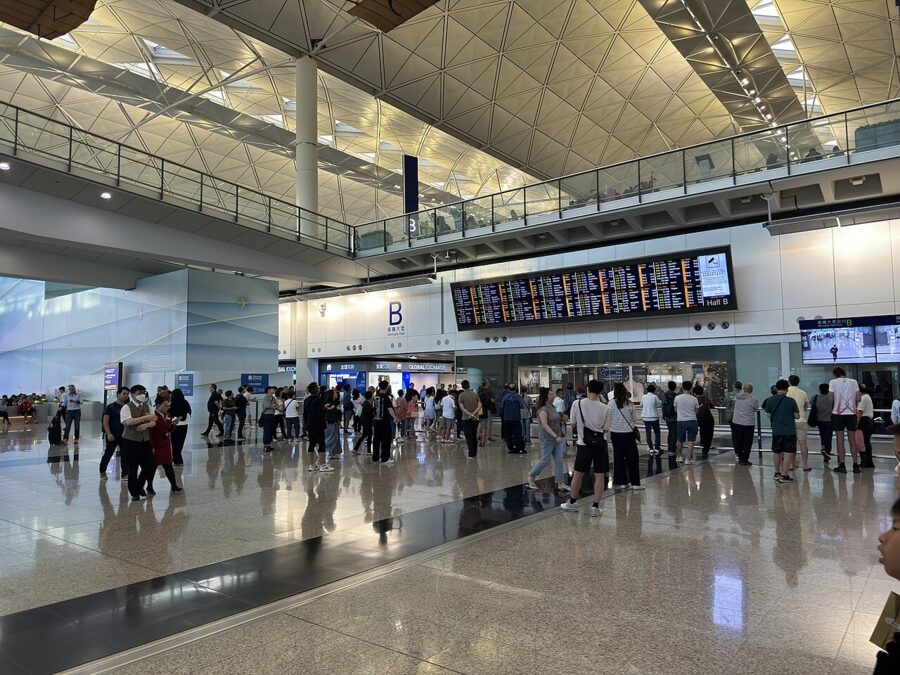

When the eSIM fails at the airport
Before assuming the eSIM is faulty, check the settings. Work down this list in order.
- Mobile data is still on your home line. In the phone’s SIM settings, set the new line as the one for mobile data.
- Data roaming is off. A reseller eSIM needs roaming switched on for that line. A Hong Kong network’s own eSIM does not, but switching it on does no harm.
- The registration is still pending. A passport registration is checked by hand. Look for the confirmation SMS; if it has not arrived, the line will not work yet.
- The phone has not restarted. csl’s instructions end with a restart for a reason. Do it.
- The APN is wrong. Most phones set it automatically. If not, the network’s user guide gives it; SmarTone’s, for example, is “Smartone” or “Internet”.
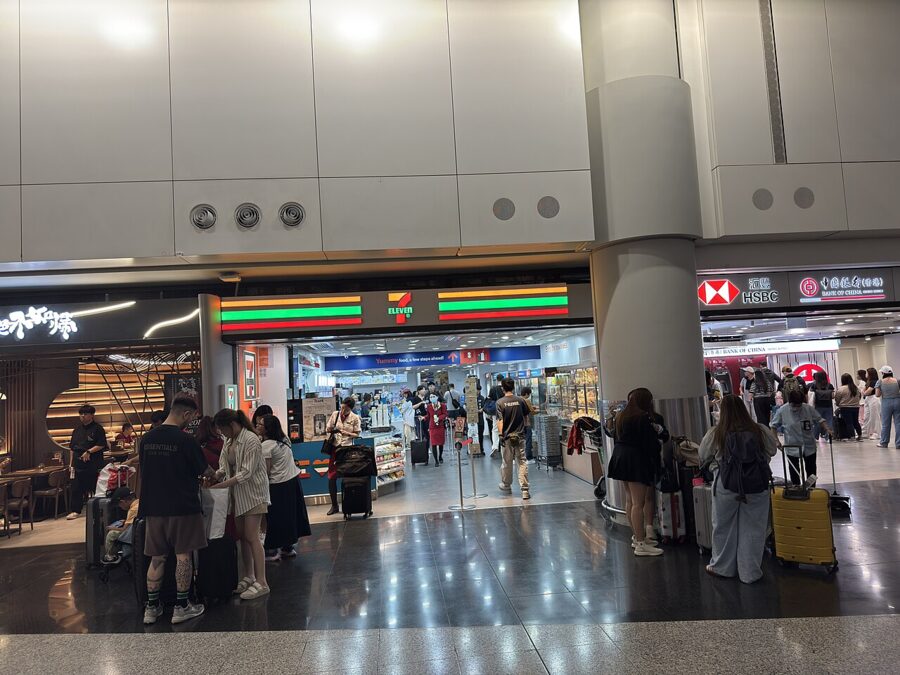
If none of that works, buy a physical card at the Level 5 7-Eleven and sort the eSIM out later on hotel Wi-Fi. Spending HK$48 to get online now beats an hour in the arrival hall.
Macau and the mainland on one card
Hong Kong, Macau and the mainland are three separate mobile markets, so on a Hong Kong card you are roaming the moment you cross. What decides the cost is whether your card has those places built in.
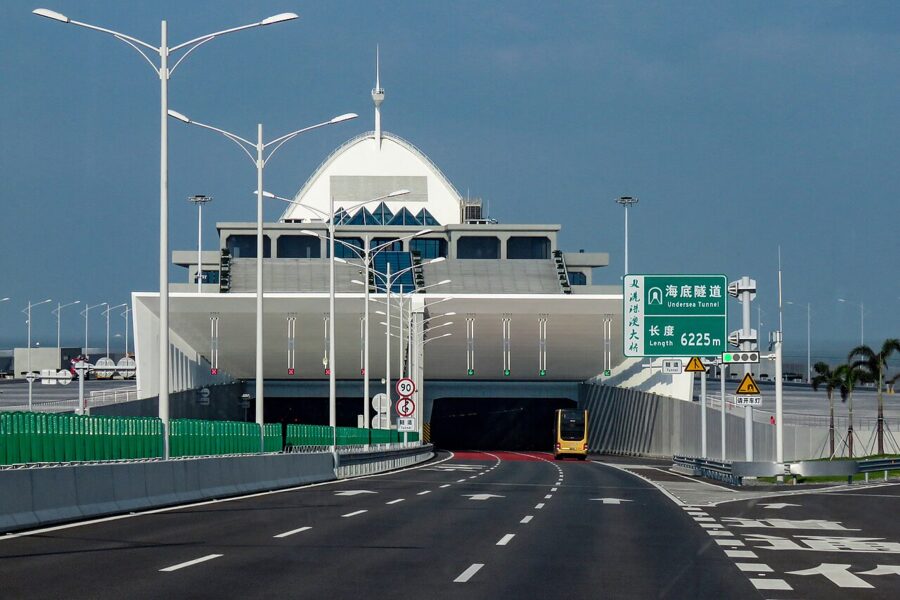

Macau
Macau is the easy one. csl’s Discover cards count Macau use against the shared part of the allowance (10GB, 20GB or 30GB), and CMHK’s tourist card adds 500MB a day in Macau. SmarTone’s HK-Macau cards share their data across both, though SmarTone notes that its Macau roaming is 4G and runs only on CTM, Macau’s main network. Turn on data roaming for the line before you board the ferry or bus.
Prices in Macau are in MOP, though many shops near the ferry terminals and casinos take Hong Kong dollars. None of that touches your phone bill: the card keeps charging in HK$.
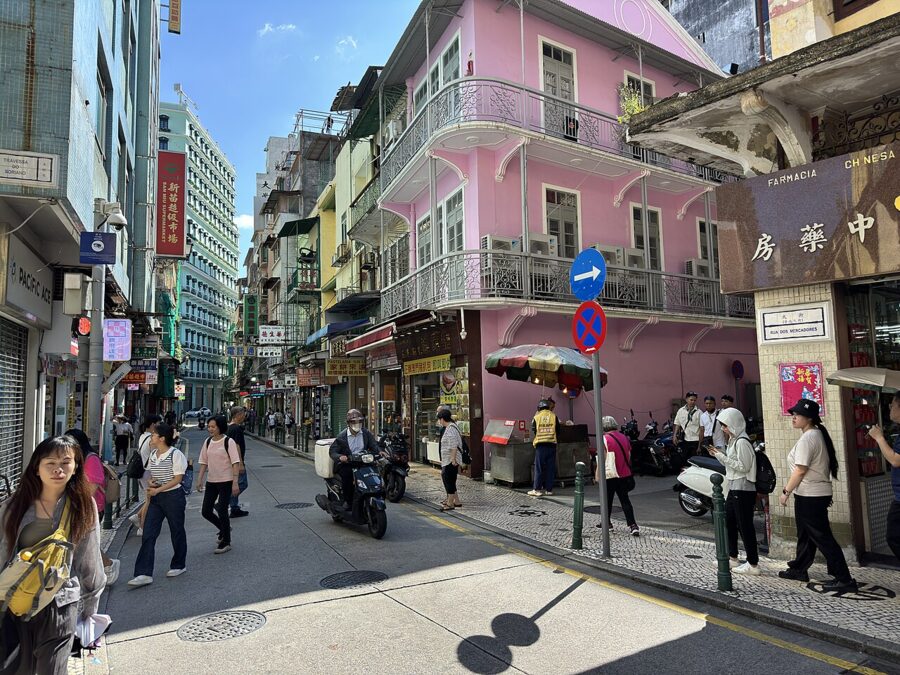

The mainland: Shenzhen and the Greater Bay Area
For a day in Shenzhen, or a few days around the Greater Bay Area, a Hong Kong card with mainland roaming data is the simplest thing you can carry. The options:
- CMHK tourist card, 7 days or longer: 500MB a day of mainland data already included.
- csl Discover Hong Kong: use the HK$30 of stored value for the 365-day 2GB pass.
- SmarTone Multi-Trip: HK$12 for a day with 500MB.
- 3 Hong Kong DIY: mainland day passes from HK$10.
- CMHK mainland, Hong Kong and Macau eSIM data card: 5GB for 30 days, listed at HK$38.
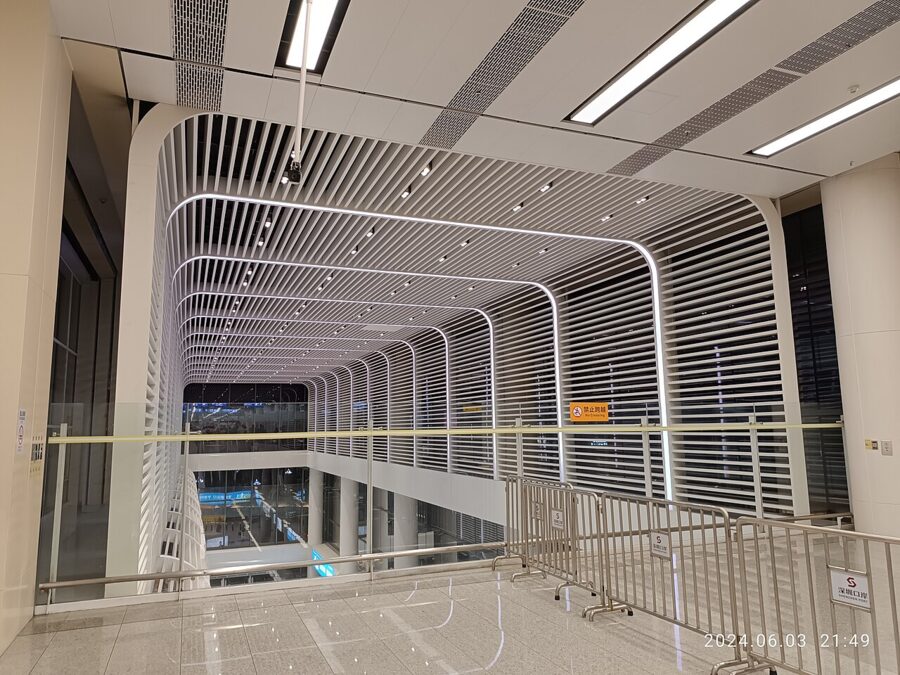
If you are going over on the visa on arrival in Shenzhen, the passport rules and the crossing you use are the hard part of the day. Data is the easy part, as long as it is sorted before you leave Hong Kong.
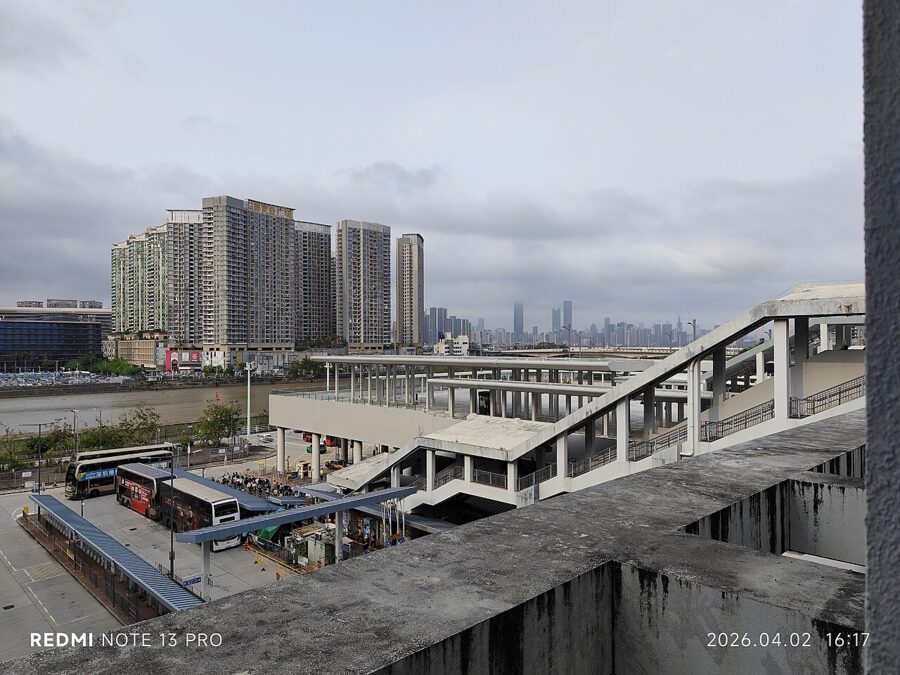
Activate before you cross
From 17 June 2026, China Mobile Hong Kong stopped allowing any of its prepaid cards to be activated in the mainland, and the rule is printed on CMHK’s own product pages. A card has to be activated in Hong Kong, or in another roaming destination, before you go north; once it is active, crossing with it is fine. Hong Kong press reports in June disagreed on whether eSIMs are covered, one saying they were exempt and another that China Mobile’s international arm had applied the same rule to its own eSIMs. Treat every card as if the rule applies.
The fix takes a few minutes. Before you leave Hong Kong, put the card in, turn on data roaming, and keep the phone on with a Hong Kong signal for three to five minutes; press reports also gave dialling *103*800# as a way to complete activation on a CMHK card. If you are buying a mainland data card in Sham Shui Po or Sheung Shui for later, activate it before you head for the border.
How a Hong Kong card behaves across the border
Roaming data on a Hong Kong card is routed back through Hong Kong, so the mainland’s blocks on Google, WhatsApp, Instagram and the rest do not apply to it. CMHK’s own product page for its mainland data card says it is “allowed to connect to any social network platform and Hong Kong website”. This is exactly why the cards are popular, and when the June 2026 activation change was reported, a Hong Kong IT industry figure was quoted reckoning that closing this gap for mainland users was part of the reason. For a visitor carrying a card bought in Hong Kong, nothing changes once the card is active.
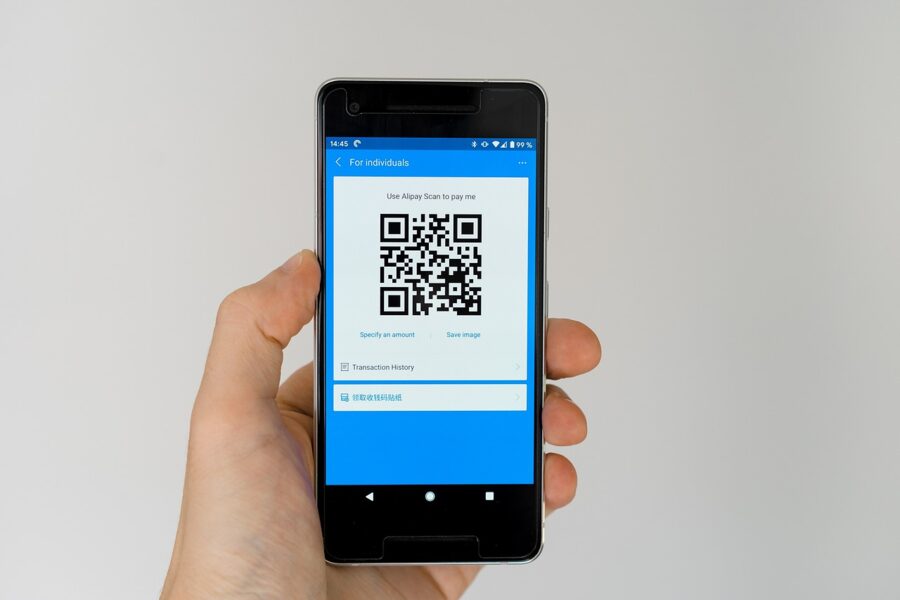
The flip side is the mainland apps. Alipay and WeChat Pay are how Shenzhen pays, and both need data at the till; roaming data covers that. Ride-hailing and food delivery apps work on the same connection. Some mainland services insist on a +86 number, and for those csl and CMHK sell add-on services that put a mainland number on a Hong Kong card.
If you are staying longer than a day trip, and especially beyond Shenzhen, it is worth sorting out the mainland visa in Hong Kong and the data at the same time. A week in Guangzhou will burn through 500MB a day faster than you expect, so buy the bigger pass up front.
Where to buy, and what to bring
Bring the passport you entered Hong Kong on, a phone that is not locked to your home network, and a SIM ejector pin or an unbent paper clip. That is the whole list. Everything else is a question of where you happen to be standing.
At the airport
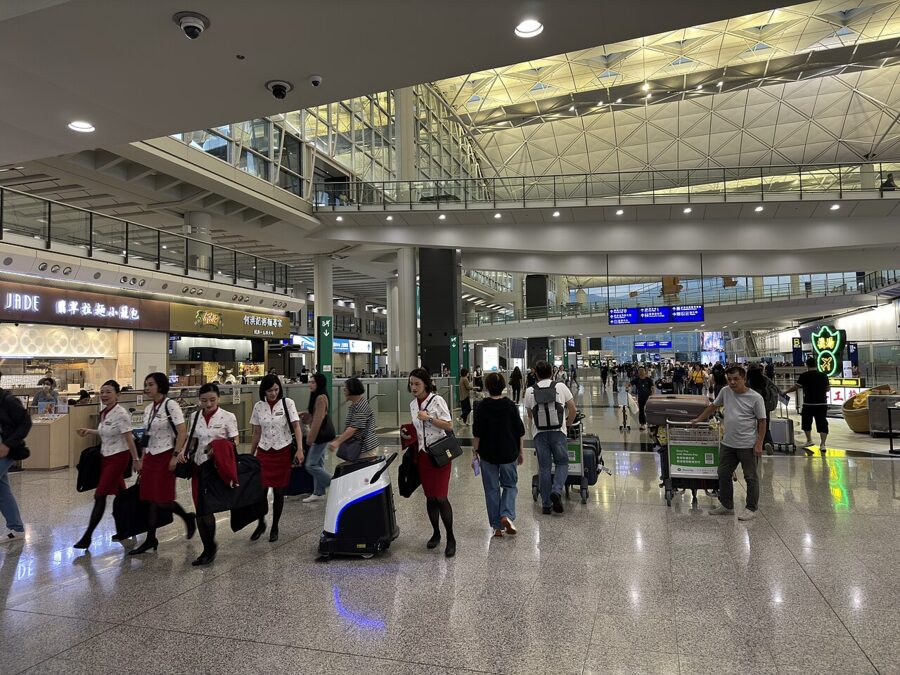
Hong Kong International Airport’s own SIM card page names three shops that sell local SIM cards: 7-Eleven, RELAY and Travelex Worldwide Money. It also lists two counters in Arrivals Hall A, A02 and A16, run by pocket Wi-Fi and roaming companies. The airport’s list does not include a network-run shop in the arrival hall as of November 2026, so if you want a network’s own staff to walk you through registration, that happens in town.
Compare the price on the pack with the networks’ list prices above before you pay. The airport’s free Wi-Fi covers most of the public areas of the terminal, which is all you need to register.
Convenience stores
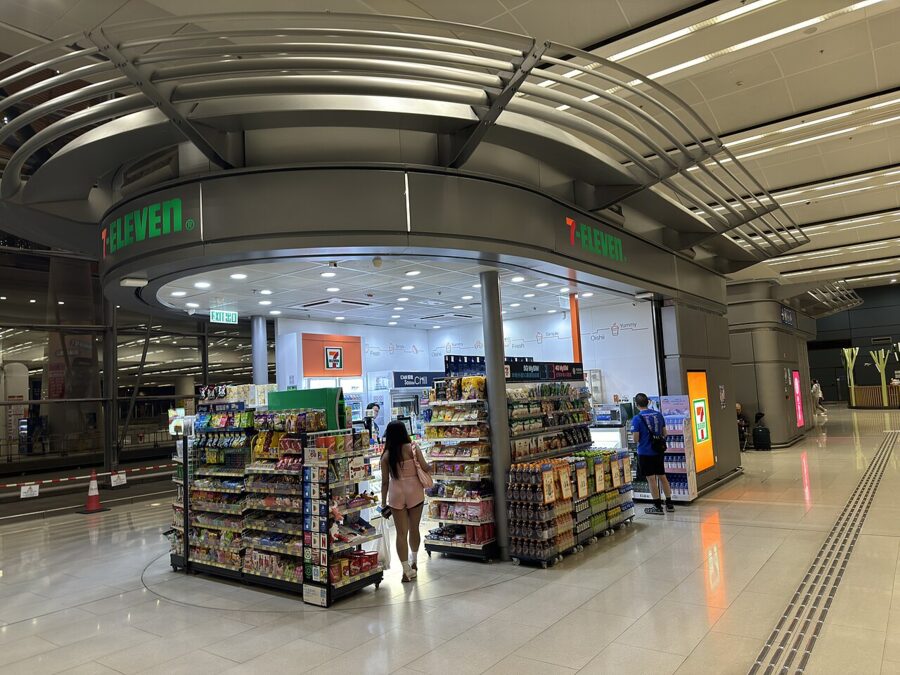
7-Eleven and Circle K are where most visitors end up, and the Tourism Board says the csl Discover card is stocked at more than 1,000 of them. 7-Eleven’s own prepaid page lists local cards, inbound visitor cards and refill e-vouchers, and reminds buyers that cards bought since 1 March 2022 need real-name registration. The staff sell the card; the registration is still on you.


Network shops
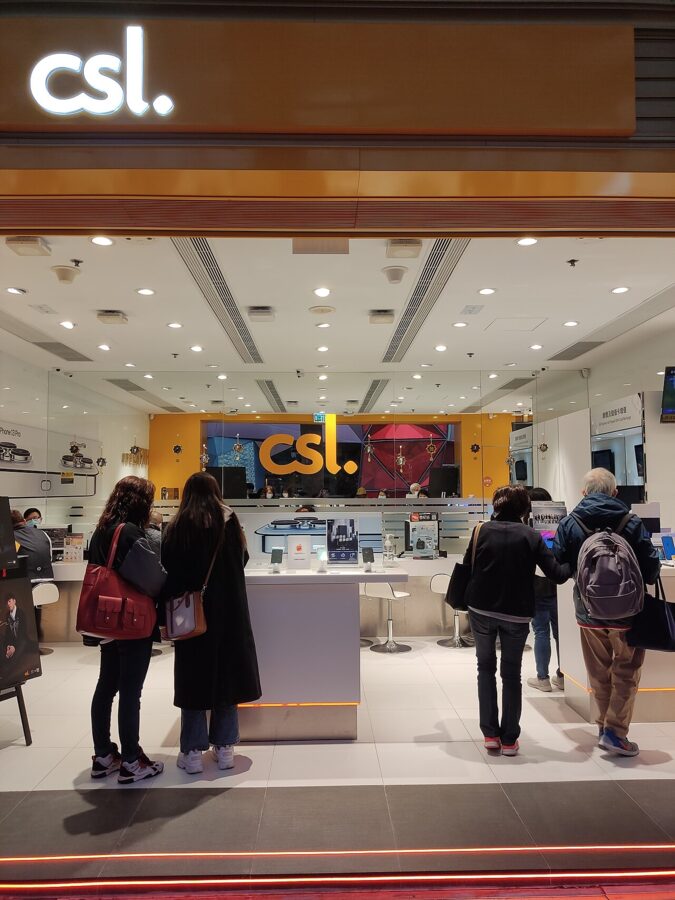
Every network has shops in the big malls and near the main MTR interchanges: 1010 and csl, China Mobile Hong Kong, SmarTone and 3Shop. Prices are the list prices. The reason to go to one is people, not price: if the registration site keeps rejecting your passport photo, or the card arrives with no signal, the staff will see it before you do.

Phone stalls and the independent shops
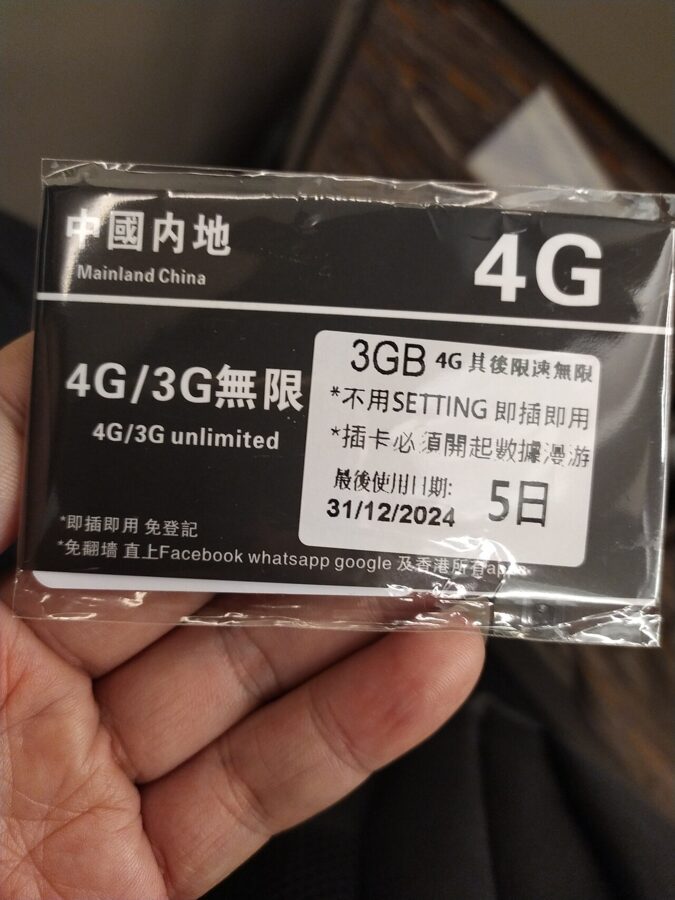
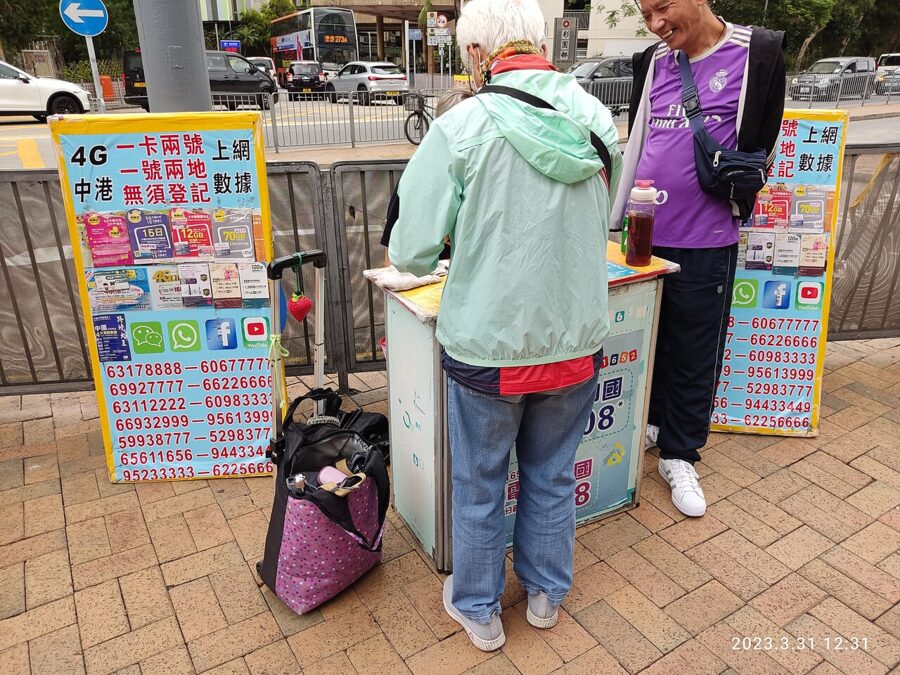
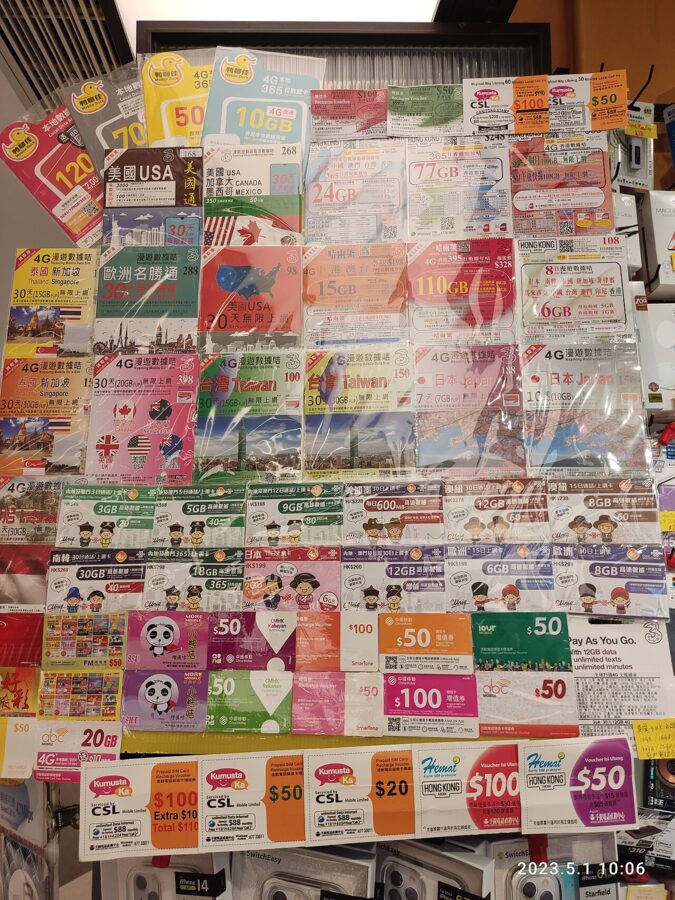
Sham Shui Po, Mong Kok and the streets of Sheung Shui near the border have stalls selling SIM cards from every network, plus mainland, Macau and Asia data cards. The registration is still yours to do on the phone. Check the use-by date printed on the pack, because a data card has to be activated before it, and stall stock is not always new.

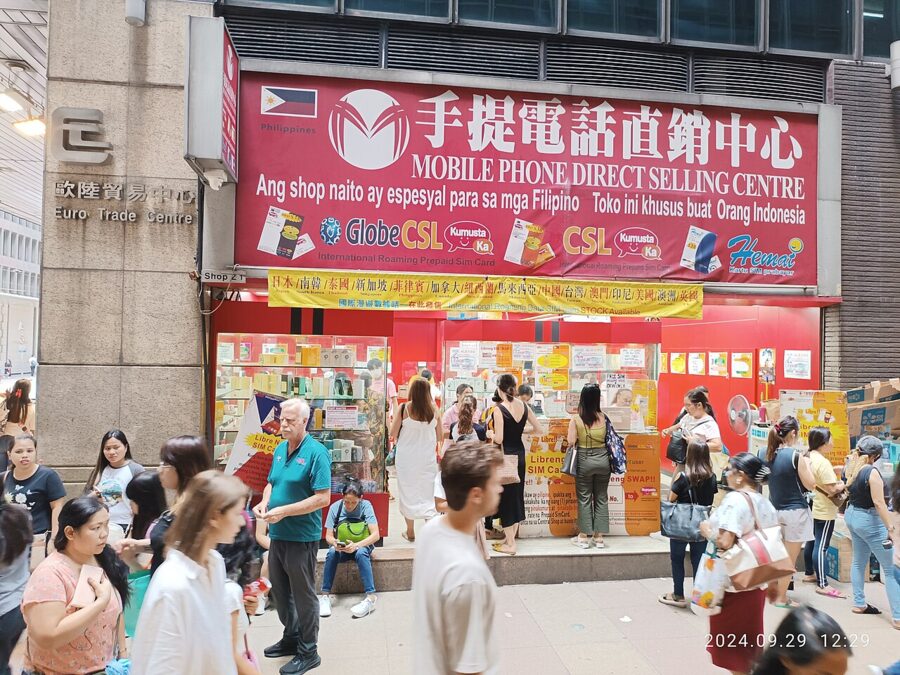
The shops that serve Hong Kong’s domestic helpers are another source. They sell cards from several networks, home-country roaming cards and refill vouchers, with signs in English, Tagalog and Bahasa Indonesia.
Online, before you fly
CMHK sells its tourist card and eSIMs through its online shop, csl sells its 7-day and 15-day Discover eSIMs online, and SoSIM sells both versions from its own shop. Buying ahead is the best way to arrive connected: install at home, register on hotel Wi-Fi the night before, switch the line on when the plane lands.

Roaming, top-ups and keeping a number
Roaming on your home plan
Your home network’s roaming is the zero-effort option, and for a one-night stopover it can be the right one. Look up its daily rate for Hong Kong before you fly, and check whether that rate also covers Macau and the mainland, which many plans treat as separate destinations. Then set it against CMHK’s HK$48 for three days: roaming rarely wins for more than a day or two, and it gives you no Hong Kong number.
Free Wi-Fi fills some of the gaps. MTR Free Wi-Fi gives 15 minutes per session, up to 10 sessions a day per device, in every station. Wi-Fi.HK covers museums, parks, ferry terminals and government buildings. It is enough for a map check, not for a day of moving around.
Topping up
Most cards here can be topped up somewhere other than the network’s shop. csl and CMHK sell top-ups in their apps and online; 3 Hong Kong lists credit card top-ups in its app, 7-Eleven e-vouchers and bank ATMs; 7-Eleven sells refill e-vouchers for prepaid cards at the till. The one card that cannot be refilled is CMHK’s tourist SIM: when its days end, buy another.
Watch the automatic charges. SmarTone’s HK$78 card takes HK$68 from your stored value every 30 days, whether you are in Hong Kong or not. If you are leaving and not coming back, use up the credit before you go.

Keeping a Hong Kong number between visits
A Hong Kong number is worth keeping if you come often: banks, airline accounts and restaurant bookings remember it, and registration is a one-off. The cheapest ways to keep one alive:
- SmarTone HK$48 Multi-Trip: valid 365 days from activation, reset by any top-up of HK$50 or more. Buy day packs only when you are in town.
- 3 Hong Kong DIY Prepaid SIM: a 365-day local plan from HK$120.
- csl Discover Hong Kong: the card is valid for 90 days and can be recharged, which suits two or three visits close together, not a yearly habit.
The number stays registered to you as long as the card is valid. Let the card lapse and the number goes with it, so put a reminder in your calendar a month before the validity date.
My pick for three trips
A weekend
Two or three nights, Hong Kong only, maybe a ferry to Macau. Buy CMHK’s 3-day tourist card for HK$48 as an eSIM before you leave, register it on hotel Wi-Fi, and switch it on when you land. 5GB a day is more than a weekend of maps, messaging and photos will use. If you would rather buy a physical card on arrival, csl’s 3-day Discover card at HK$58 is stocked at more than 1,000 7-Eleven and Circle K stores, has unlimited local calls, and comes with HK$30 of credit.
A week with a Shenzhen day
csl’s 7-day Discover card at HK$88. You get 50GB for Hong Kong, 20GB of it usable in Macau, and the HK$30 of stored value buys the 2GB mainland pass, which is plenty for a day of maps, Alipay and messaging in Shenzhen. Subscribe to the pass and check it shows in the csl app before you go to the border. CMHK’s 7-day card at HK$78 is the alternative, with 500MB of mainland data every day built in; I would pick csl for the bigger allowance and the free local calls.

A frequent visitor
SmarTone’s HK$48 Multi-Trip card. Register it once, top up HK$50 a year to keep the number, and buy a 3-day or 7-day data pack each time you arrive, plus the HK$12 mainland day pack when you cross. The 100 local minutes last a year, and the number stays yours. If you spend a few weeks at a time, add a SoSIM card for HK$33 as a second line for the data, and keep the SmarTone number for the bank.
Whichever you choose, the routine is the same. Get the card or eSIM, open the registration link while you are still on airport Wi-Fi, photograph the passport you landed with, and restart the phone when the confirmation SMS arrives. Then walk out to the Airport Express already online.