

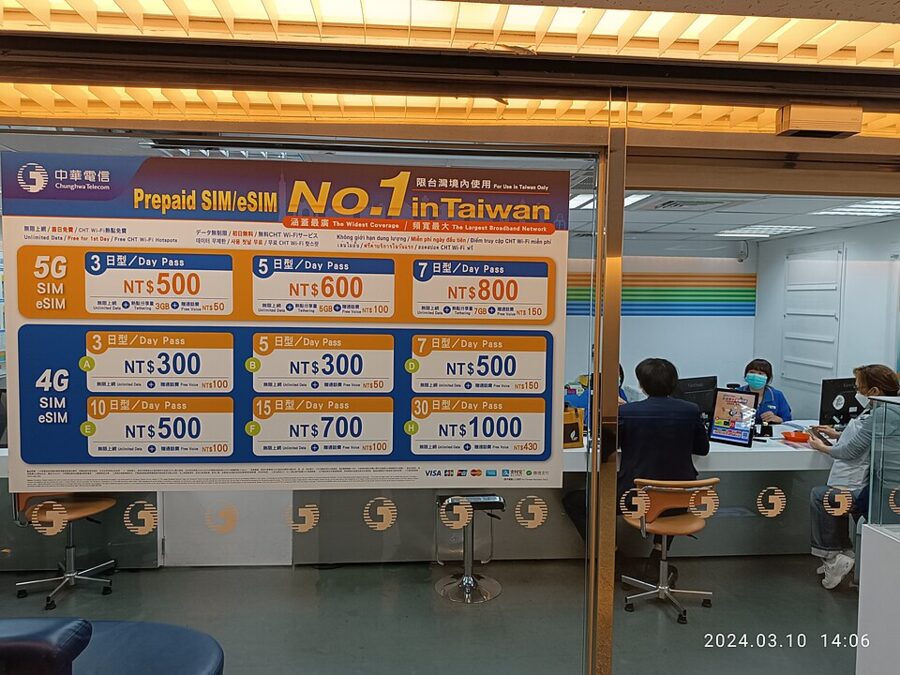
Chunghwa Telecom’s price board in the Terminal 1 arrival hall at Taoyuan Airport asks NT$300 for five days of unlimited 4G data, and Taiwan Mobile and Far EasTone charge exactly the same for exactly the same thing. The three networks have lined their tourist price lists up almost to the dollar. What separates them is which counter is still open when your bags come off the belt, what they will take as payment, and how they count a day.
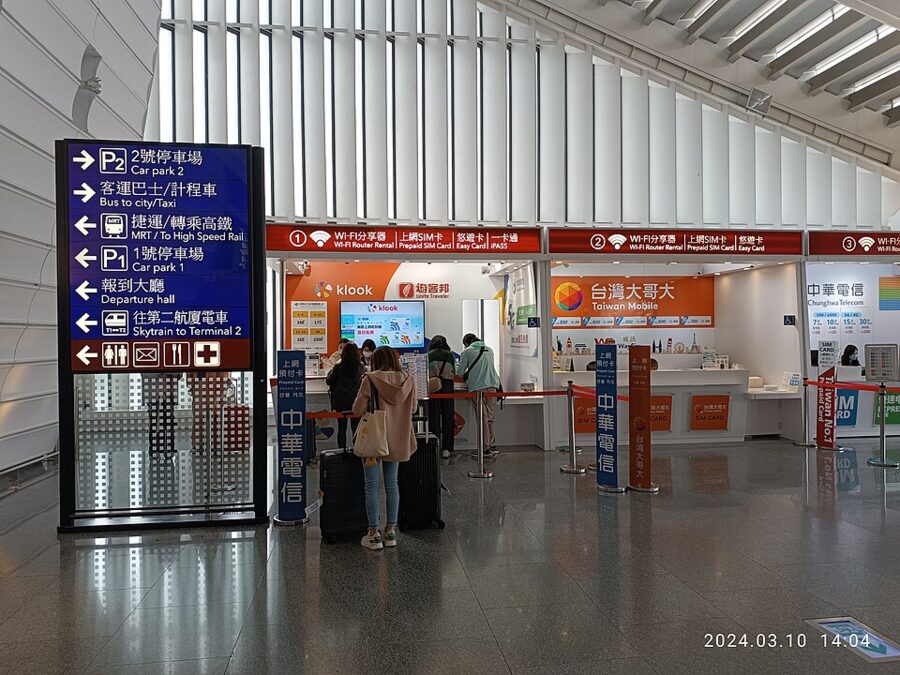
Taiwan Taoyuan International Airport (臺灣桃園國際機場, TPE) has desks for all three of Taiwan’s networks in each terminal, with different hours, payment rules and document checks, and on a late landing an eSIM installed in Hong Kong before you fly can be the better buy. Prices, hours and document rules below are the carriers’ own and the airport company’s, as of November 2026.
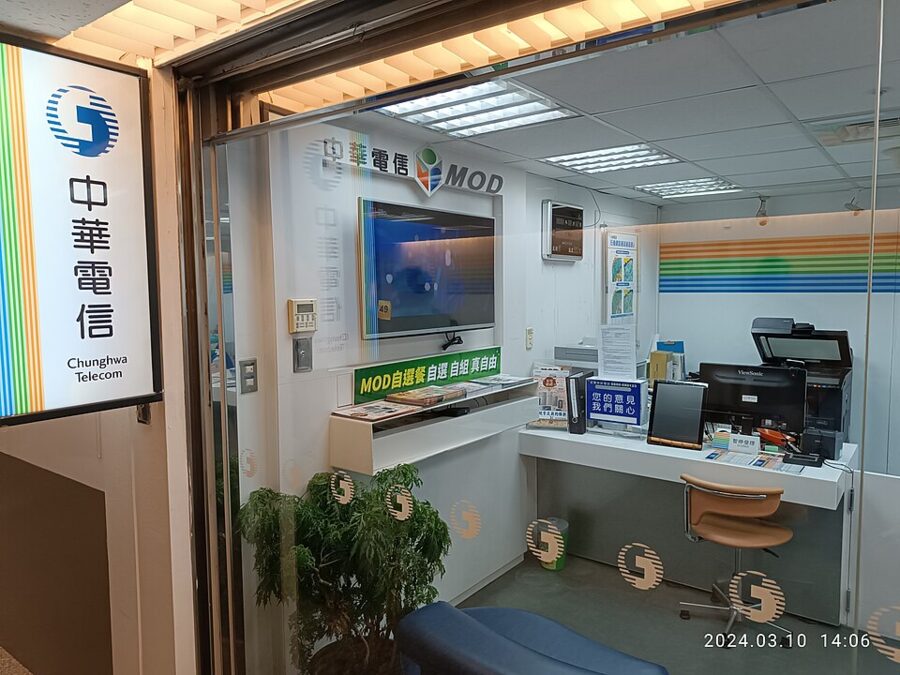
Every card below gives you a Taiwanese mobile number, unlimited domestic data for a fixed number of days and a little call credit. None of them works outside Taiwan, none can be extended, and every one needs two identity documents at the counter. Bring cash in New Taiwan dollars, because the biggest of the three will not take anything else.

In this article
One price list, three networks
Taiwan has three national networks that sell tourist cards: Chunghwa Telecom (中華電信), Taiwan Mobile (台灣大哥大) and Far EasTone (遠傳電信). Each sells a 5G range and a cheaper 4G range, all day passes with unlimited data inside Taiwan. The 5G cards come with a fixed allowance for sharing your connection as a hotspot; the 4G cards cost less and are plenty for maps, messaging and video calls.
Here are the prices from the tourist pages of Chunghwa Telecom, Taiwan Mobile and Far EasTone, side by side. The figure after the price is the free call credit that comes on the card, in NT$, and for 5G cards the hotspot allowance.
| Card | Chunghwa Telecom | Taiwan Mobile | Far EasTone |
|---|---|---|---|
| 5G, 3 days | NT$500 (50, 3GB) | NT$500 (50, 3GB) | NT$500 (50, 3GB) |
| 5G, 5 days | NT$600 (100, 5GB) | NT$600 (100, 5GB) | NT$600 (100, 5GB) |
| 5G, 7 days | NT$800 (150, 7GB) | NT$800 (150, 7GB) | NT$800 (150, 7GB) |
| 5G, 10 days | NT$1,000 (200, 10GB) | NT$1,000 (200, 10GB) | NT$1,000 (200, 10GB) |
| 5G, 15 days | NT$1,200 (200, 15GB) | NT$1,200 (200, 15GB) | NT$1,200 (200, 15GB) |
| 5G, 30 days | NT$1,600 (200, 30GB) | NT$1,600 (200, 30GB) | NT$1,600 (200, 30GB) |
| 4G, 3 days | NT$300 (100) | NT$300 (100) | NT$300 (100) |
| 4G, 5 days | NT$300 (50) | NT$300 (50) | NT$300 (50) |
| 4G, 5 days, more calls | not listed | NT$500 (300) | NT$500 (300) |
| 4G, 6 days | not listed | NT$400 (50) | not listed |
| 4G, 7 days | NT$500 (150) | NT$450 (100) | NT$450 (100) |
| 4G, 8 days | not listed | NT$450 (50) | NT$450 (50) |
| 4G, 10 days | NT$500 (100) | NT$500 (100) | NT$500 (100) |
| 4G, 15 days | NT$700 (100) | NT$700 (100) | NT$700 (100) |
| 4G, 30 days | NT$1,000 (430) | NT$1,000 (430) | NT$1,000 (430) |
Two lines in that table matter more than the rest. The 4G five-day card costs the same NT$300 as the three-day card; the only thing you give up is NT$50 of call credit you will probably never use. And the 4G ten-day card is NT$500 everywhere, which is what Chunghwa charges for seven days. If your trip is anywhere between six and ten days, the ten-day card is the one to ask for.
Whether you need 5G at all is a fair question. Unlimited is unlimited on both, and the practical difference for a visitor is the hotspot allowance: if you want to run a laptop or a second phone off your card, the 5G range puts a number on how much you can share. For one phone doing maps, LINE and the odd video call, I’d save the NT$200 to NT$300 and buy 4G.
Chunghwa Telecom: cash only, but the day is longer
Chunghwa’s tourist page says its cards can be bought only with NT$ cash. That catches out more people than anything else on this list, because the other counters will take a card. It is also the one with the most generous way of counting: its user guide says a card runs from the moment you first use it until 23:59:59 on the last day, not in 24-hour blocks, so a card first used in the evening gets that evening for nothing.
The day passes also include Chunghwa’s CHT Wi-Fi hotspots around Taiwan, in convenience stores, stations and fast-food outlets. Dial 5397 from the new number to switch it on, and allow about 15 minutes before it works. Call credit on a Chunghwa tourist card can be topped up with vouchers from 7-Eleven, FamilyMart, Hi-Life and OK, but the expiry date never moves, so a top-up only makes sense for a long call home.
Taiwan Mobile: the most choice, and card payment
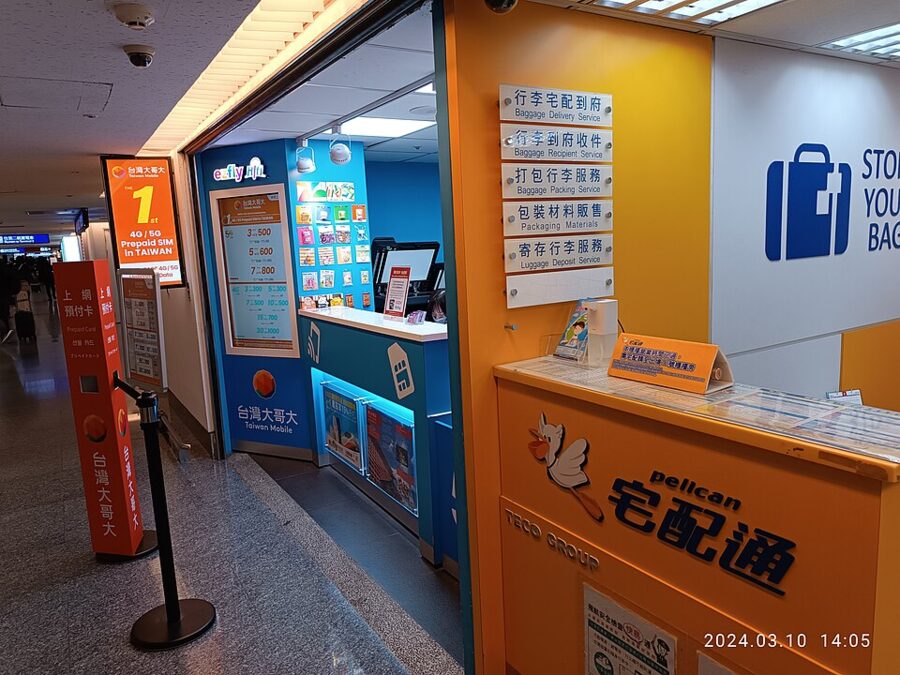
Taiwan Mobile lists the longest menu, including a six-day 4G card at NT$400 that neither rival sells and an eight-day card at NT$450 that Chunghwa does not. It takes NT$ cash, credit cards, UnionPay and Alipay, which makes it the default if you have landed without Taiwanese money. Its cards are sold as a physical SIM or as an eSIM, and they run in blocks of 24 hours from activation: a five-day card is 120 hours, no more.
Taiwan Mobile also lets you reserve a card online and collect it at one of its stores, and it is the one network whose tourist page sets out exactly what a Hong Kong or Macau resident should bring (more on that below). Its desks are in both terminals and in the international arrival hall at Kaohsiung.
Far EasTone: Taoyuan only, and no top-ups
Far EasTone’s tourist card is mostly an airport product. Its English page says it is sold at its Taoyuan Airport counters, and its Chinese pages add Far EasTone’s own direct stores around Taiwan. The prices match Taiwan Mobile’s almost line for line, including the eight-day card at NT$450, and you can choose a physical SIM or an eSIM.
The fine print is the strictest of the three. The card cannot be extended, cannot be topped up with either data or call credit, and runs in 24-hour blocks from activation. The 5G cards include the same hotspot allowances as the others. Far EasTone’s page says online reservation for tourist cards will open soon; until it does, you buy at the counter.
Where the counters are, and when they close
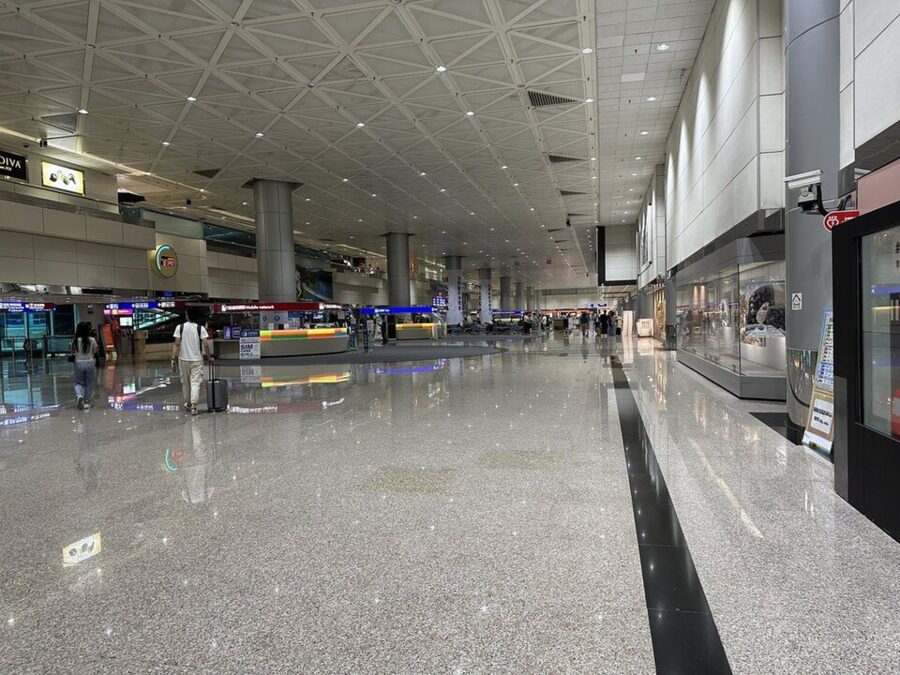
Each network publishes its own list of Taoyuan desks, and the airport company keeps a shops and services directory of its own. They do not use the same names for the same places, and in a couple of cases they give different hours for what looks like the same desk. The table follows each carrier’s own page where it has one, and the airport’s directory where it does not.
| Network | Terminal 1 | Terminal 2 |
|---|---|---|
| Chunghwa Telecom | 1F public area, two desks: 08:00–21:30 and 08:00–19:00; 3F arrival area: 08:30–18:30 | 1F arrival hall: 08:00–21:30; 3F departure hall: 08:00–19:00 |
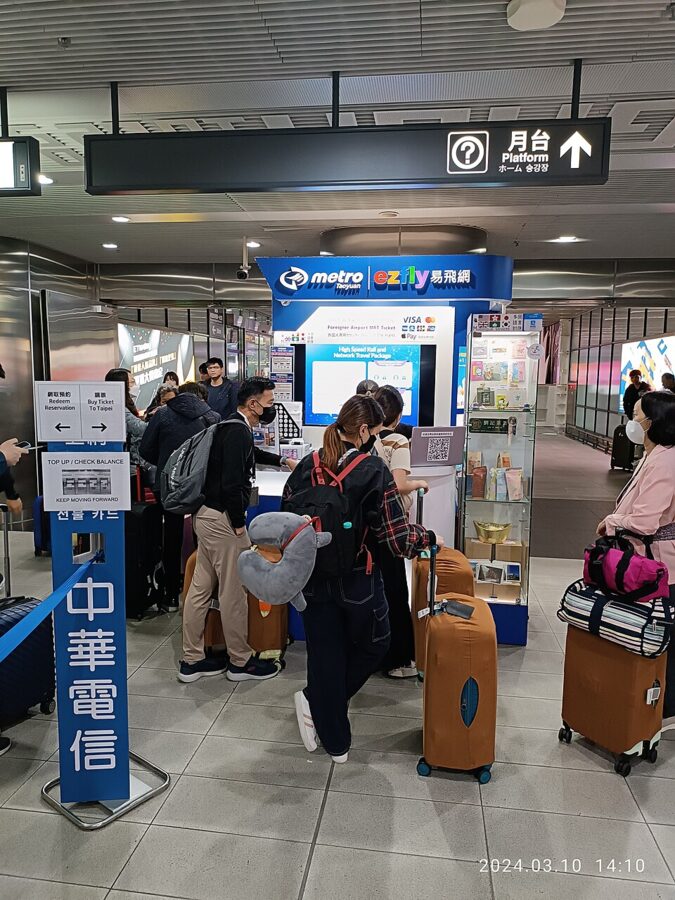
| Taiwan Mobile | 1F arrival hall, three outlets: 08:00–20:30, 11:00–20:00, 10:45–19:15; arrival restricted area: 08:30–17:30 and 04:30–20:45 | 1F arrival hall, three outlets: 09:00–20:30, 11:00–20:00, 04:30–23:00; arrival restricted area: 04:30–23:00 |
| Far EasTone | Before passport control: 08:30–18:00; past passport control: 08:00–21:00 | 1F arrival hall: 08:00–21:00 |
“Restricted area” means the arrivals side before you have cleared immigration and customs. Taoyuan has desks in the passport hall itself, so you can have the card working before you reach the immigration officer. Chunghwa’s hours above are the airport company’s; Chunghwa’s own page lists the same five desks without hours and says its airport hours change over Lunar New Year.
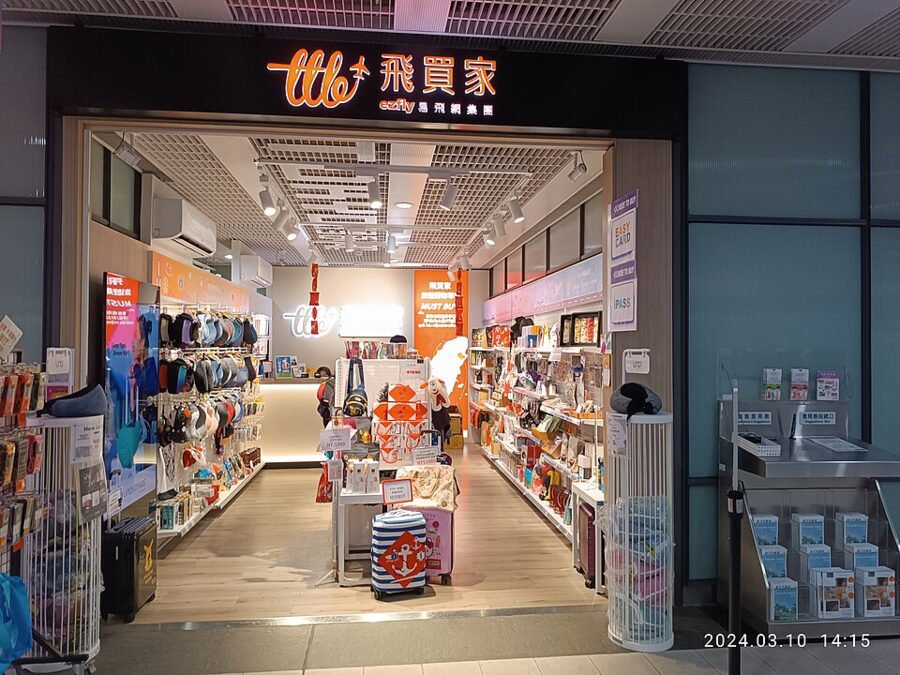
The 04:30 starts in Taiwan Mobile’s list match the agency counters in the airport’s directory rather than the carriers’ own desks. The directory lists two agencies, ezfly Hifi Travel To Buy and Unite Traveler, both open 04:30–23:00, and Taiwan Mobile sells its cards through outlets with exactly those hours. If you booked a card through an agency, its voucher will name one of these desks as the pick-up point.
Landing late
Taoyuan’s telecom desks are a daytime operation. In Terminal 1 the latest of them closes at 21:30 in the public hall and 20:45 in the passport hall; in Terminal 2 the agency outlets keep going until 23:00. After that, nothing at the airport sells a SIM until the first desks open again at 04:30.
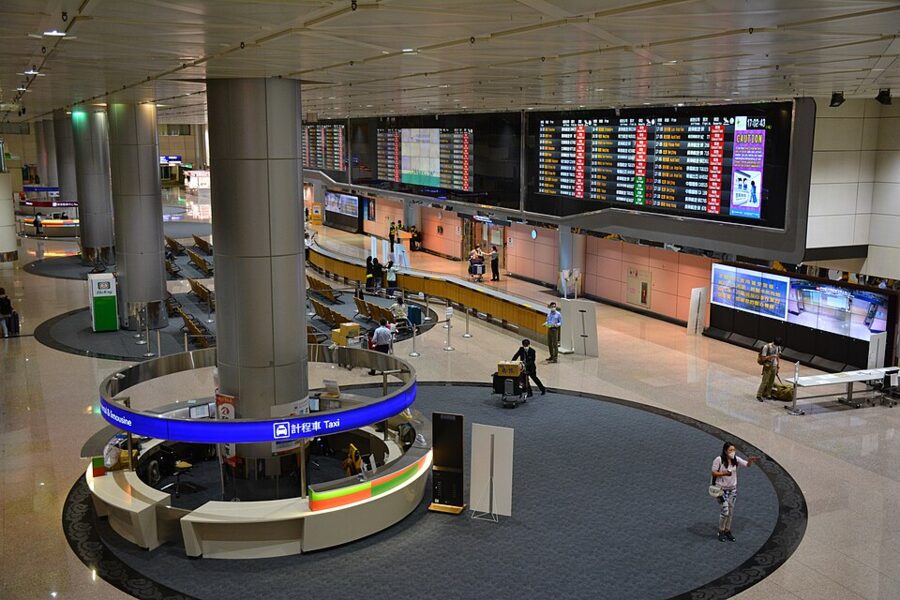

If your flight is due in after about 21:00, decide before you leave Hong Kong. Either install an eSIM at home (see below), turn on roaming for the first night, or accept airport Wi-Fi as far as the hotel and buy a card in the city the next morning. What I would not do is plan on a Terminal 1 counter for a 21:00 landing, because immigration and a late bag can easily eat the last half hour.
If your terminal’s desk is shut
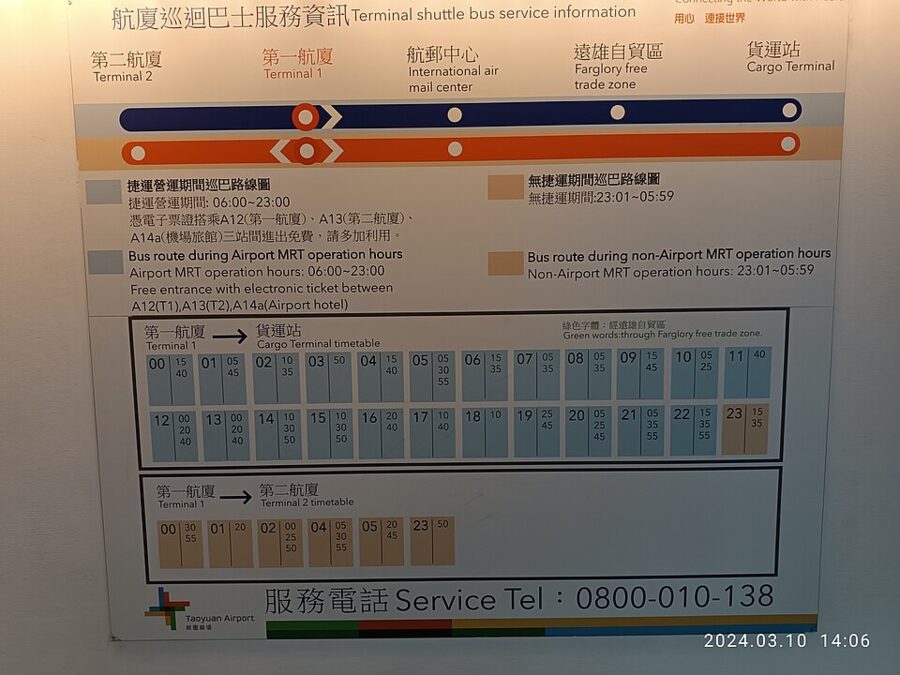
Which terminal you land in depends on the airline, and the left-luggage guide to Taoyuan’s two terminals sets out how to tell. Switching between them on the public side changed on 1 July 2026, when the landside Skytrain stopped running. You now take the Airport MRT, free between A12 Airport Terminal 1, A13 Airport Terminal 2 and A14a Airport Hotel as long as you tap in and out, or the free shuttle bus that runs 24 hours a day.
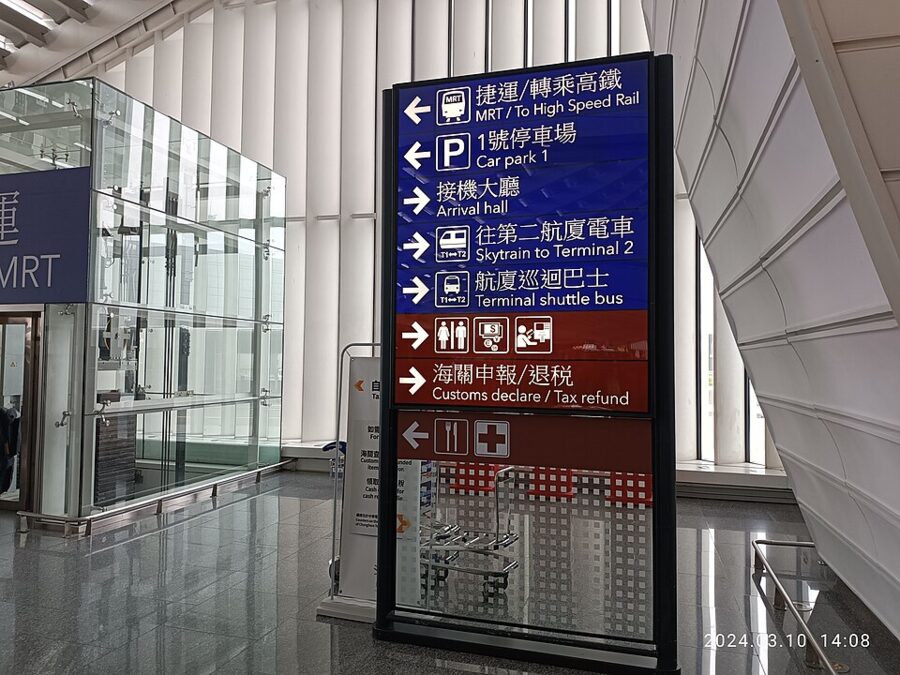
The shuttle runs about every 15 minutes in the daytime and every 20 minutes after 23:00, so the detour is short. At 22:30 in Terminal 1, it is the only way to buy a card at the airport at all.
What to bring to the counter
Taiwan’s telecoms regulator requires the carriers to check original identity documents for every new number, as an anti-fraud measure, and a tourist card is a new number. That means two documents, both originals, in your own name. Photocopies and photos on your phone do not count.
For a visitor on a foreign passport, the passport is the first document. The second is where the carriers’ rules differ, and it is the one people forget. Chunghwa’s document rules accept any of these:
- a Taiwanese visa or entry permit, a residence permit or a National Health Insurance card;
- a driving licence or a visa-exempt entry stamp;
- your boarding pass;
- for a short-term tourist card, any official photo ID from your own country that shows your name and date of birth, such as a national identity card or a driving licence.
Taiwan Mobile’s list for foreign visitors is shorter: a residence permit, a Taiwanese driving licence, an NHI card, a visa or an entry permit. Far EasTone’s tourist page does not set out a list at all, and its general prepaid rules ask for two documents from anyone 18 or over. Bring a second photo ID from home whichever counter you go to, and keep the boarding pass until the card is working.
On an HKSAR passport
This is where Hong Kong residents trip up. The HKSAR passport is not on Taiwan’s visa-exempt list, and Hong Kong and Macau residents enter on a permit from Taiwan’s National Immigration Agency instead. At the SIM counter, that permit is your first document, not the passport.
Chunghwa’s rules name three things it will take from a Hong Kong or Macau resident: the Exit and Entry Permit (中華民國臺灣地區入出境許可證), a Taiwan residence permit marked with the entry-exit wording and permit number, or the printed approval for the online entry application (網簽). Taiwan Mobile’s page puts it more bluntly: the foreign-passport line excludes mainland, Hong Kong and Macau passports, and residents of those places show the Entry/Exit Permit. Neither carrier spells out the second document for Hong Kong residents, so I would carry the HKSAR passport and the HKID card as well.
If you are a Hong Kong permanent resident who travels on a foreign passport and entered Taiwan on it, you are a foreign visitor at the counter, and the foreign passport is your first document. Your HKID card then works as the photo ID from home. The mistake is to arrive with the wrong combination: the permit on your phone, the passport in your bag and nothing printed.
Paying, and the under-18 rule
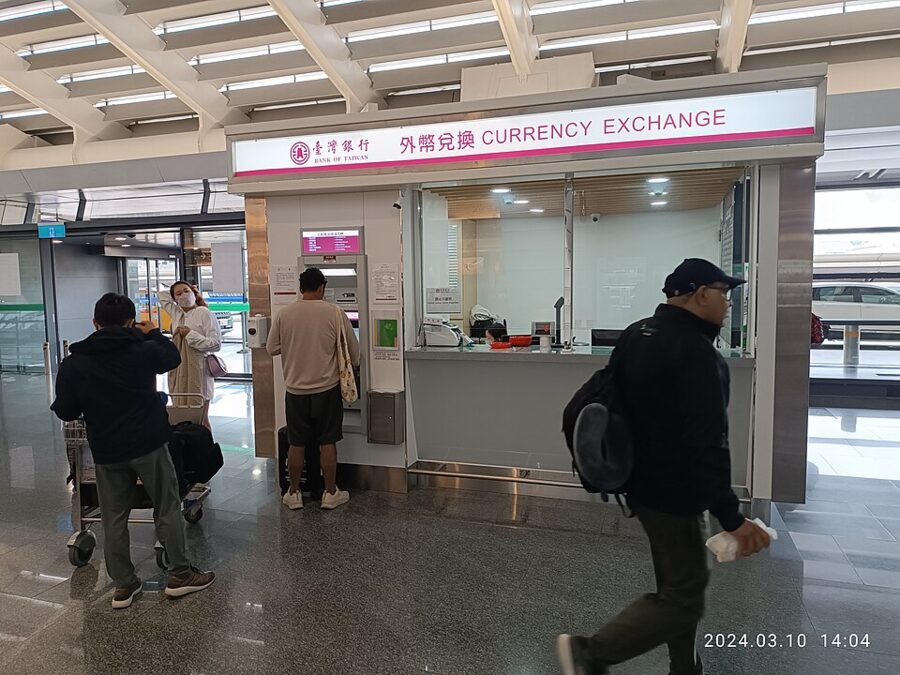
Chunghwa takes NT$ cash and nothing else at its tourist counters. Taiwan Mobile takes NT$ cash, credit cards, UnionPay and Alipay. Far EasTone’s tourist page does not list payment methods. If you land with only Hong Kong dollars, change some at a bank counter in the arrival area, or use an ATM at the airport or down at the Airport MRT station.
Chunghwa will not sell a tourist card to anyone under 18 alone; the parent or guardian comes to the counter and shows both sets of documents. For a family of four that is one card per adult phone, plus one for a teenager only if a parent is standing beside them. On a 5G card, the hotspot allowance is the easier way to get a child’s tablet online.
eSIMs: the networks’ own, or one from home
All three carriers sell their tourist cards as an eSIM as well as a plastic SIM. The price and the data are identical, and the counter staff set it up on your phone once your documents are checked. That is the catch: it is still a counter product, with the same queue, the same hours and the same document check.
The advantage of the carrier’s eSIM is that your Hong Kong SIM stays in the phone. With a dual-SIM phone you keep receiving bank codes and calls on your Hong Kong number while the Taiwanese eSIM carries the data. A physical Taiwanese SIM does the same in a dual-SIM phone, as long as one of the two slots is free for it.
Agency vouchers for the same cards
Travel agencies and booking sites sell vouchers for the carriers’ tourist cards, often Chunghwa’s, which you redeem at a Taoyuan desk. Some ask you to upload your passport in advance so the hand-over is quicker, and some bundle the card with an Airport MRT ticket or an EasyCard. You still collect in person, at the desk named on the voucher and in its hours, so check both before you pay.
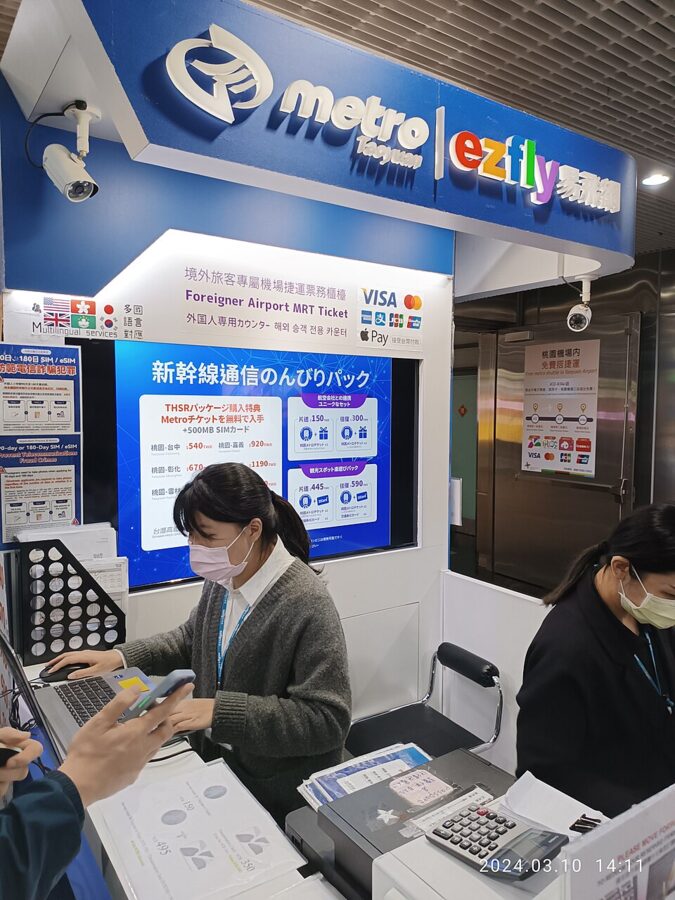
The voucher is worth it when it is genuinely cheaper than the counter price, or when it comes with something you were going to buy anyway. It is not worth it if it saves you nothing and ties you to one desk’s hours. The card you collect is the same one the carrier would have sold you over the counter.
Roaming eSIMs bought in Hong Kong
The other kind of eSIM comes from an international seller and is installed from an app or a QR code before you fly. It runs as a roaming connection on one of the Taiwanese networks, and it starts working when the plane lands, with no counter, no documents and no queue. Most are data only, so there is no Taiwanese number for a restaurant or a hotel to call back.
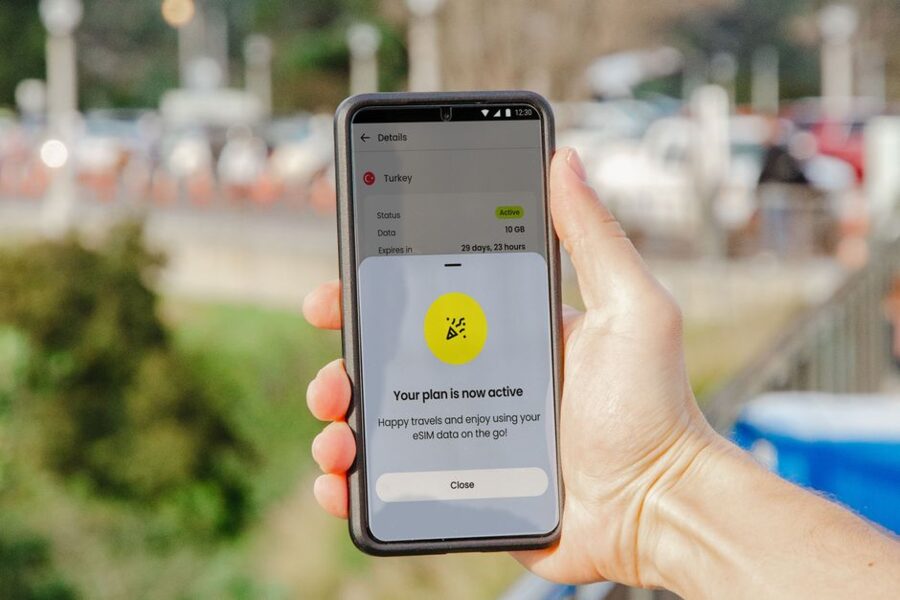
That is the right trade for a short trip, a late landing or anyone who hates queues. It is the wrong one for a long stay, where the carriers’ ten-day and fifteen-day cards are hard to beat on price per day. Whichever kind you buy, the phone must not be locked to a network and has to support eSIM; check under the mobile or cellular settings for an option to add an eSIM before you pay for one.
What goes wrong at the counter
Most problems at Taoyuan’s desks come down to the same handful of things, and all of them can be dealt with before you board in Hong Kong.
- The desk has closed. Check your arrival time against the table above. After 21:30 in Terminal 1 you are down to the agency outlets, and after 23:00 to nothing.
- No cash at Chunghwa. It sells for NT$ cash only. Change money first, or go to Taiwan Mobile.
- The wrong first document. On an HKSAR passport, the counter wants the entry permit. Print it.
- No second document. Carry a photo ID from home, and keep the boarding pass.
- Running out early. At Taiwan Mobile and Far EasTone a three-day card bought at 21:00 on Friday dies at 21:00 on Monday. Chunghwa’s runs to midnight.
- Buying 5G for one phone. Unless you need the hotspot allowance, the 4G card does the same job for less.
- Trying to extend the card. None of the three can be extended. If your trip gets longer, buy a new card.
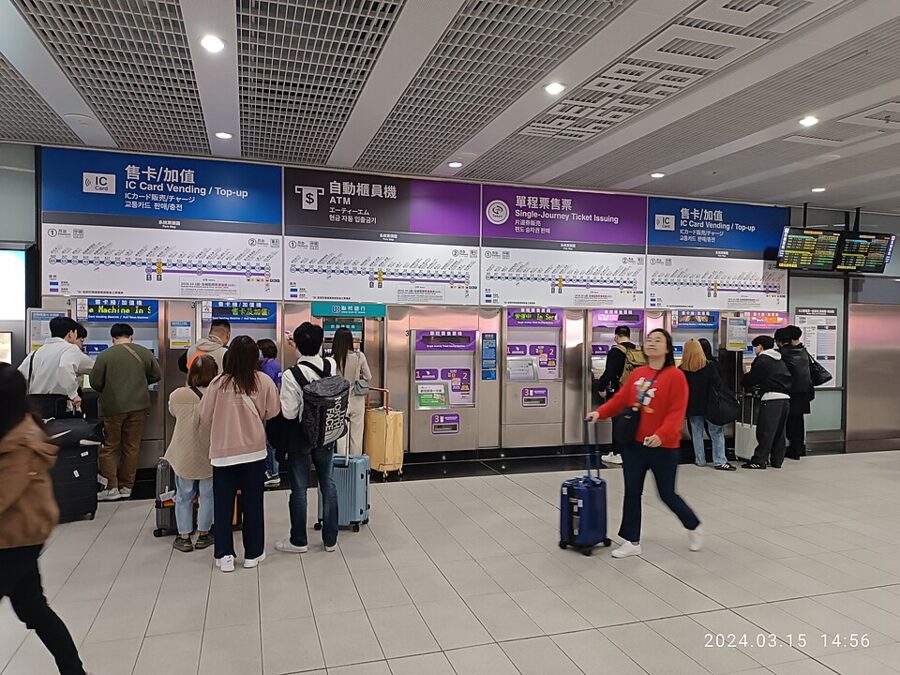
One last thing that is not a mistake but surprises people: the call credit on these cards is only for calls and texts within Taiwan and abroad, not for data, and anything left over disappears when the card expires. Use WhatsApp or LINE over data for calls home, and treat the credit as a buffer for ringing a hotel.
Songshan, Kaohsiung and buying in the city
Taoyuan is not the only airport with a counter. Chunghwa lists service centres at four airports: Taoyuan, Taipei Songshan (松山機場), Taichung and Kaohsiung (高雄國際機場). Its tourist page does not publish hours for the three smaller ones, so treat them as daytime desks.
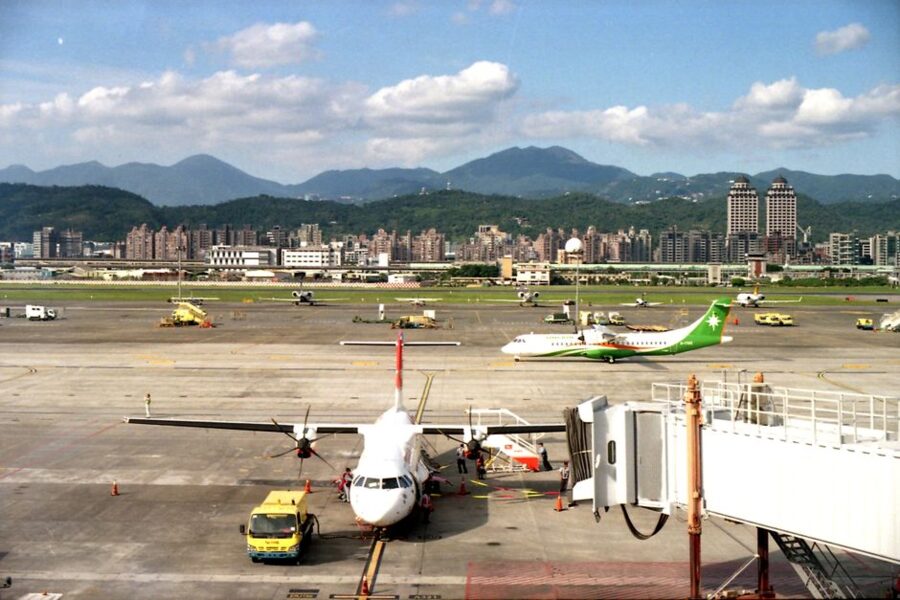
At Kaohsiung, Taiwan Mobile lists a desk in the international terminal’s 1F arrival hall, open 09:00–20:00, and Chunghwa lists a service centre at the airport. If you are flying straight from Hong Kong to the south, that is the whole choice at the airport, and both are daytime hours.
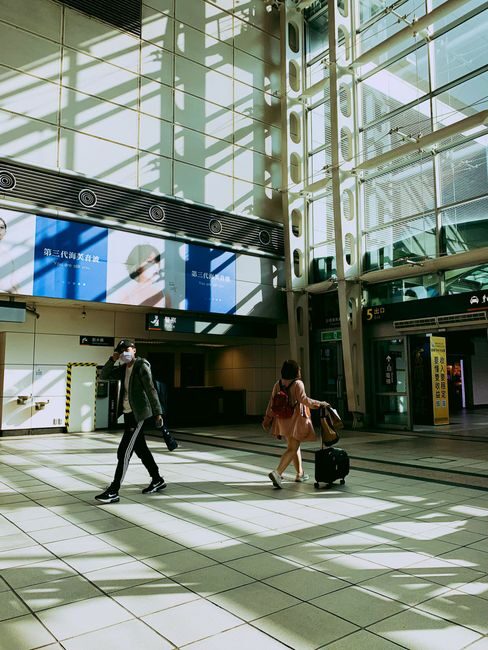
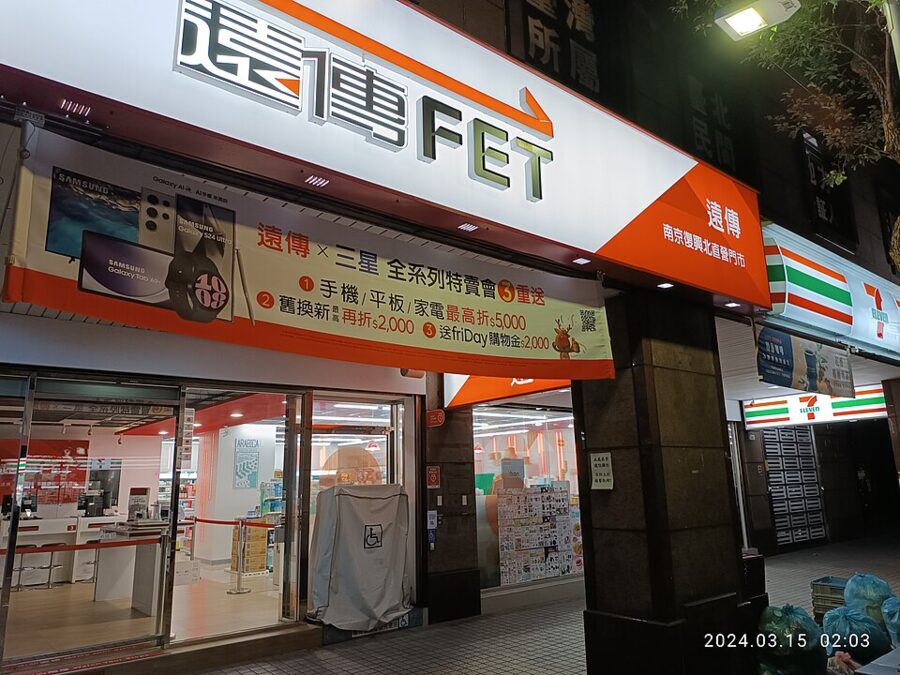
In the city, the carriers’ own stores sell the same tourist cards with the same document check. Chunghwa says its cards are sold at its service centres around Taiwan, Taiwan Mobile takes online reservations for collection at its stores, and Far EasTone points visitors to its direct stores. Far EasTone names its direct stores (直營門市) rather than its franchised shops, and Chunghwa its service centres (服務中心), so look for those words on the sign.
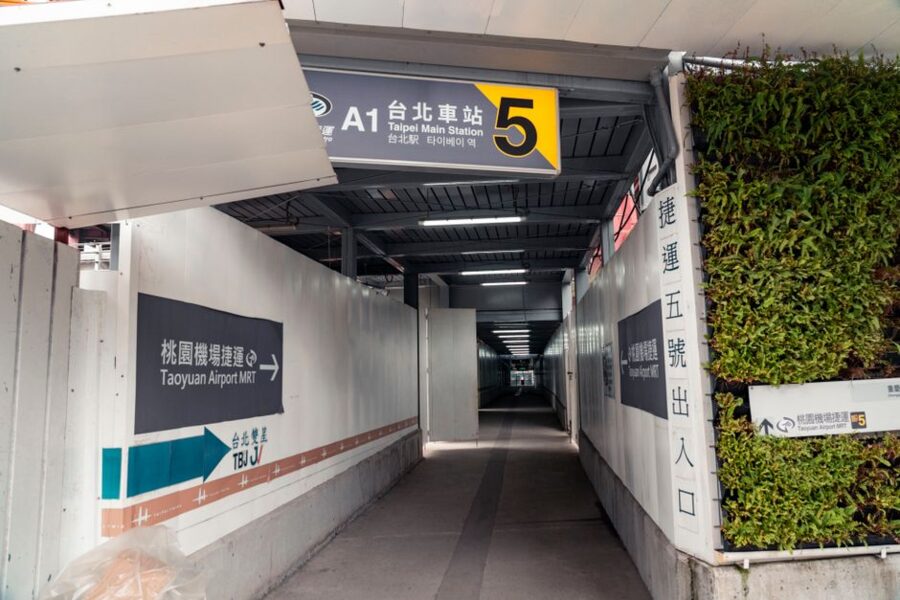
Convenience stores are a different matter. 7-Eleven, FamilyMart, Hi-Life and OK sell top-up vouchers for call credit, and that is all; a new number needs a carrier’s desk and the document check. If a tourist card is what you want, the airport counter or a carrier’s own store is where you get it.
Roaming on your Hong Kong number instead
For a trip of a night or two, the simplest answer may be the SIM already in your phone. Every Hong Kong network sells Taiwan roaming passes, and roaming keeps your own number for bank codes and calls, works the moment you land and needs no counter at all. The Hong Kong SIM and eSIM guide covers how the local networks charge for it. Compare your network’s Taiwan rate for the length of your stay with NT$300 for a five-day card, and buy the card only if it is cheaper by more than the queue is worth to you.
My picks
These assume one phone, a trip from Hong Kong, and a landing while the desks are open. If you land after 21:00, swap the counter card for a roaming eSIM installed at home.
A weekend in Taipei
Buy the 4G five-day card for NT$300, from Chunghwa if you have the cash. It costs the same as the three-day card, and Chunghwa counts to the end of the last day, so a five-day card started on a Friday evening covers a late Sunday flight with days to spare. If you have only Hong Kong dollars and a credit card, take Taiwan Mobile’s identical card and skip the exchange queue.
A week round the island
Buy the 4G ten-day card for NT$500. It is the same price at all three networks, and at Chunghwa it costs no more than the seven-day card, so the extra three days are free insurance against a delayed flight or a change of plan. I’d take it from Chunghwa for this trip because it has service centres around the island if anything goes wrong, and its Wi-Fi hotspots in stations and convenience stores are a backup in a dead spot.
If you are travelling with a laptop, or two people want to share one connection, step up to the 5G seven-day card at NT$800 with its 7GB hotspot allowance, or the ten-day one at NT$1,000 with 10GB. Two 4G cards cost NT$1,000 for ten days as well, and give each of you a number. For a couple I would buy two.
A layover
If you are staying airside, do not buy anything: use the airport’s free Wi-Fi. If you are leaving the airport for a few hours, the cheapest card at the desk is NT$300, which is a lot for an afternoon, so roam on your Hong Kong number or install a short roaming eSIM at home. Whether a layover is long enough to leave the airport at all comes down to hours: under about six, I would stay airside.
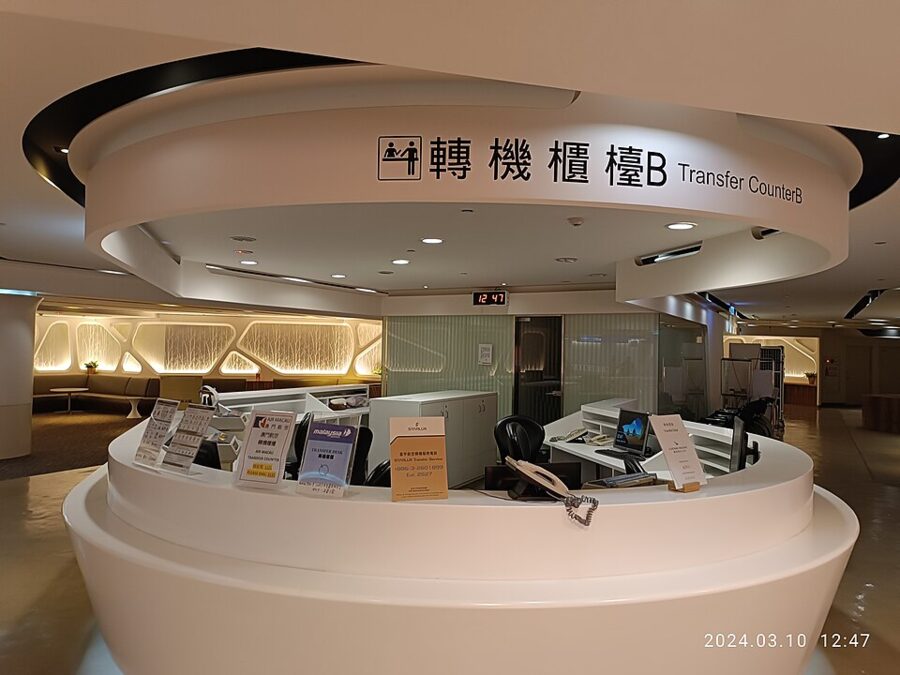
The exception is a long layover with a night in town. Arriving at 08:00 and leaving at 08:00 the next day, the NT$300 card is fair value: a day and a night of maps, messages and a number the hotel can ring. Buy it in the passport hall on the way in.
Back at the row of counters in Terminal 1, then: NT$300 at whichever desk has the shortest queue, NT$500 if you are staying more than five days, passport and a second photo ID in your hand, and cash if the sign over the desk says Chunghwa. If your flight lands after 21:00, install the eSIM the night before, in Hong Kong.